Month: May 2024

  • IELTS Reading Practice Test – Exercise 229

    Roman tunnels

    The Persians, who lived in present-day Iran, were one of the first civilizations to build tunnels that provided a reliable supply of water to human settlements in dry areas. In the early first millennium BCE, they introduced the qanat method of tunnel construction, which consisted of placing posts over a hill in a straight line, to ensure that the tunnel kept to its route, and then digging vertical shafts down into the ground at regular intervals. Underground, workers removed the earth from between the ends of the shafts, creating a tunnel. The excavated soil was taken up to the surface using the shafts, which also provided ventilation during the work. Once the tunnel was completed, it allowed water to flow from the top of a hillside down towards a canal, which supplied water for human use. Remarkably, some qanats built by the Persians 2,700 years ago are still in use today.

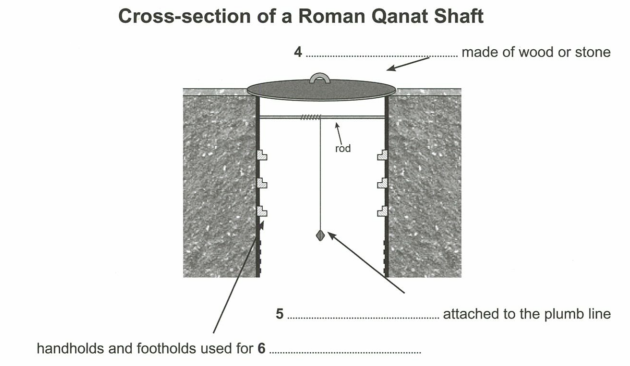
    They later passed on their knowledge to the Romans, who also used the qanat method to construct water-supply tunnels for agriculture. Roman qanat tunnels were constructed with vertical shafts dug at intervals of between 30 and 60 meters. The shafts were equipped with handholds and footholds to help those climbing in and out of them and were covered with a wooden or stone lid. To ensure that the shafts were vertical, Romans hung a plumb line from a rod placed across the top of each shaft and made sure that the weight at the end of it hung in the center of the shaft. Plumb lines were also used to measure the depth of the shaft and to determine the slope of the tunnel. The 5.6-kilometer-long Claudius tunnel, built in 41 CE to drain the Fucine Lake in central Italy, had shafts that were up to 122 meters deep, took 11 years to build and involved approximately 30,000 workers.

    By the 6th century BCE, a second method of tunnel construction appeared called the counter-excavation method, in which the tunnel was constructed from both ends. It was used to cut through high mountains when the qanat method was not a practical alternative. This method required greater planning and advanced knowledge of surveying, mathematics and geometry as both ends of a tunnel had to meet correctly at the center of the mountain. Adjustments to the direction of the tunnel also had to be made whenever builders encountered geological problems or when it deviated from its set path. They constantly checked the tunnel’s advancing direction, for example, by looking back at the light that penetrated through the tunnel mouth, and made corrections whenever necessary. Large deviations could happen, and they could result in one end of the tunnel not being usable. An inscription written on the side of a 428-meter tunnel, built by the Romans as part of the Saldae aqueduct system in modern-day Algeria, describes how the two teams of builders missed each other in the mountain and how the later construction of a lateral link between both corridors corrected the initial error.

    The Romans dug tunnels for their roads using the counter-excavation method, whenever they encountered obstacles such as hills or mountains that were too high for roads to pass over. An example is the 37-meter-long, 6-meter-high, Furlo Pass Tunnel built in Italy in 69-79 CE. Remarkably, a modern road still uses this tunnel today. Tunnels were also built for mineral extraction. Miners would locate a mineral vein and then pursue it with shafts and tunnels underground. Traces of such tunnels used to mine gold can still be found at the Dolaucothi mines in Wales. When the sole purpose of a tunnel was mineral extraction, construction required less planning, as the tunnel route was determined by the mineral vein.

    Roman tunnel projects were carefully planned and carried out. The length of time it took to construct a tunnel depended on the method being used and the type of rock being excavated. The qanat construction method was usually faster than the counter-excavation method as it was more straightforward. This was because the mountain could be excavated not only from the tunnel mouths but also from shafts. The type of rock could also influence construction times. When the rock was hard, the Romans employed a technique called fire quenching which consisted of heating the rock with fire, and then suddenly cooling it with cold water so that it would crack. Progress through hard rock could be very slow, and it was not uncommon for tunnels to take years, if not decades, to be built. Construction marks left on a Roman tunnel in Bologna show that the rate of advance through solid rock was 30 centimeters per day. In contrast, the rate of advance of the Claudius tunnel can be calculated at 1.4 meters per day. Most tunnels had inscriptions showing the names of patrons who ordered construction and sometimes the name of the architect. For example, the 1.4-kilometer Cevlik tunnel in Turkey, built to divert the floodwater threatening the harbor of the ancient city of Seleuceia Pieria, had inscriptions on the entrance, still visible today, that also indicate that the tunnel was started in 69 CE and was completed in 81 CE.

    Questions 1-6
    Label the diagram below. Choose ONE WORD ONLY from the passage for each answer.

    Questions 7-10
    Do the following statements agree with the information given in Reading Passage? In boxes 7-10 on your answer sheet, write

    TRUE                     if the statement agrees with the information
    FALSE                   if the statement contradicts the information
    NOT GIVEN       if there is no information on this

    7. The counter-excavation method completely replaced the qanat method in the 6th century BCE.
    8. Only experienced builders were employed to construct a tunnel using the counter-excavation method.
    9. The information about a problem that occurred during the construction of the Saldae aqueduct system was found in an ancient book.
    10. The mistake made by the builders of the Saldae aqueduct system was that the two parts of the tunnel failed to meet.

    Questions 11-13
    Answer the questions below. Choose NO MORE THAN TWO WORDS from the passage for each answer. Write your answers in boxes 11-13 on your answer sheet.

    11. What type of mineral were the Dolaucothi mines in Wales built to extract?
    12. In addition to the patron, whose name might be carved onto a tunnel?
    13. What part of Seleuceia Pieria was the Qevlik tunnel built to protect?

    Changes in reading habits

    Look around on your next plane trip. The iPad is the new pacifier for babies and toddlers. Younger school-aged children read stories on smartphones; older kids don’t read at all, but hunch over video games. Parents and other passengers read on tablets or skim a flotilla of email and news feeds. Unbeknown to most of us, an invisible, game-changing transformation links everyone in this picture: the neuronal circuit that underlies the brain’s ability to read is subtly, rapidly changing and this has implications for everyone from the pre-reading toddler to the expert adult.

    As work in neurosciences indicates, the acquisition of literacy necessitated a new circuit in our species’ brain more than 6,000 years ago. That circuit evolved from a very simple mechanism for decoding basic information, like the number of goats in one’s herd, to the present, highly elaborated reading brain. My research depicts how the present reading brain enables the development of some of our most important intellectual and affective processes: internalized knowledge, analogical reasoning, and inference; perspective-taking and empathy; critical analysis and the generation of insight. Research surfacing in many parts of the world now cautions that each of these essential ‘deep reading’ processes may be under threat as we move into digital- based modes of reading.

    This is not a simple, binary issue of print versus digital reading and technological innovation. As MIT scholar Sherry Turkle has written, we do not err as a society when we innovate but when we ignore what we disrupt or diminish while innovating. In this hinge moment between print and digital cultures, society needs to confront what is diminishing in the expert reading circuit, what our children and older students are not developing, and what we can do about it.

    We know from research that the reading circuit is not given to human beings through a genetic blueprint like vision or language; it needs an environment to develop. Further, it will adapt to that environment’s requirements – from different writing systems to the characteristics of whatever medium is used. If the dominant medium advantages processes that are fast, multi-task oriented and well-suited for large volumes of information, like the current digital medium, so will the reading circuit. As UCLA psychologist Patricia Greenfield writes, the result is that less attention and time will be allocated to slower, time-demanding deep reading processes.

    Increasing reports from educators and from researchers in psychology and the humanities bear this out. English literature scholar and teacher Mark Edmundson describes how many college students actively avoid the classic literature of the 19th and 20th centuries in favour of something simpler as they no longer have the patience to read longer, denser, more difficult texts. We should be less concerned with students’ ‘cognitive impatience’, however, than by what may underlie it: the potential inability of large numbers of students to read with a level of critical analysis sufficient to comprehend the complexity of thought and argument found in more demanding texts.

    Multiple studies show that digital screen use may be causing a variety of troubling downstream effects on reading comprehension in older high school and college students. In Stavanger, Norway, psychologist Anne Mangen and her colleagues studied how high school students comprehend the same material in different mediums. Mangen’s group asked subjects questions about a short story whose plot had universal student appeal; half of the students read the story on a tablet, the other half in paperback. Results indicated that students who read on print were superior in their comprehension to screen-reading peers, particularly in their ability to sequence detail and reconstruct the plot in chronological order.

    Ziming Liu from San Jose State University has conducted a series of studies which indicate that the ‘new norm’ in reading is skimming, involving word-spotting and browsing through the text. Many readers now use a pattern when reading in which they sample the first line and then word- spot through the rest of the text. When the reading brain skims like this, it reduces time allocated to deep reading processes. In other words, we don’t have time to grasp complexity, to understand another’s feelings, to perceive beauty, and to create thoughts of the reader’s own.

    The possibility that critical analysis, empathy and other deep reading processes could become the unintended ‘collateral damage’ of our digital culture is not a straightforward binary issue about print versus digital reading. It is about how we all have begun to read on various mediums and how that changes not only what we read, but also the purposes for which we read. Nor is it only about the young. The subtle atrophy of critical analysis and empathy affects us all equally. It affects our ability to navigate a constant bombardment of information. It incentivizes a retreat to the most familiar stores of unchecked information, which require and receive no analysis, leaving us susceptible to false information and irrational ideas.

    There’s an old rule in neuroscience that does not alter with age: use it or lose it. It is a very hopeful principle when applied to critical thought in the reading brain because it implies choice. The story of the changing reading brain is hardly finished. We possess both the science and the technology to identify and redress the changes in how we read before they become entrenched. If we work to understand exactly what we will lose, alongside the extraordinary new capacities that the digital world has brought us, there is as much reason for excitement as caution.

    Questions 14-17
    Choose the correct letter, A, B, C or D.

    14. What is the writer’s main point in the first paragraph?
    A Our use of technology is having a hidden effect on us.
    B Technology can be used to help youngsters to read.
    C Travellers should be encouraged to use technology on planes.
    D Playing games is a more popular use of technology than reading.

    15. What main point does Sherry Turkle make about innovation?
    A Technological innovation has led to a reduction in print reading.
    B We should pay attention to what might be lost when innovation occurs.
    C We should encourage more young people to become involved in innovation.
    D There is a difference between developing products and developing ideas.

    16. What point is the writer making in the fourth paragraph?
    A Humans have an inborn ability to read and write.
    B Reading can be done using many different mediums.
    C Writing systems make unexpected demands on the brain.
    D Some brain circuits adjust to whatever is required of them.

    17. According to Mark Edmundson, the attitude of college students
    A has changed the way he teaches.
    B has influenced what they select to read.
    C does not worry him as much as it does others.
    D does not match the views of the general public.

    Questions 18-22
    Complete the summary using the list of words, A-H, below. Write the correct letter, A-H, in boxes 18-22 on your answer sheet.

    Studies on digital screen use

    There have been many studies on digital screen use, showing some (18) ………………… trends. Psychologist Anne Mangen gave high-school students a short story to read, half using digital and half using print mediums. Her team then used a question-and-answer technique to find out how (19) ………………… each group’s understanding of the plot was. The findings showed a clear pattern in the responses, with those who read screens finding the order of information (20) ………………….. to recall. Studies by Ziming Liu show that students are tending to read (21) …………………. words and phrases in a text to save time. This approach, she says, gives the reader a superficial understanding of the (22) …………….content of material, leaving no time for thought.

    A fast
    B isolated
    C emotional
    D worrying
    E many
    F hard
    G combined
    H thorough

    Questions 23-26
    Do the following statements agree with the views of the writer in Reading Passage? In boxes 23-26 on your answer sheet, write

    YES                     if the statement agrees with the views of the writer
    NO                      if the statement contradicts the views of the writer
    NOT GIVEN    if it is impossible to say what the writer thinks about this

    23. The medium we use to read can affect our choice of reading content.
    24. Some age groups are more likely to lose their complex reading skills than others.
    25. False information has become more widespread in today’s digital era.
    26. We still have opportunities to rectify the problems that technology is presenting.

    Attitudes towards Artificial Intelligence

    A Artificial intelligence (AI) can already predict the future. Police forces are using it to map when and where crime is likely to occur. Doctors can use it to predict when a patient is most likely to have a heart attack or stroke. Researchers are even trying to give AI imagination so it can plan for unexpected consequences. Many decisions in our lives require a good forecast, and AI is almost always better at forecasting than we are. Yet for all these technological advances, we still seem to deeply lack confidence in AI predictions. Recent cases show that people don’t like relying on AI and prefer to trust human experts, even if these experts are wrong. If we want AI to really benefit people, we need to find a way to get people to trust it. To do that, we need to understand why people are so reluctant to trust AI in the first place.

    B Take the case of Watson for Oncology, one of technology giant IBM’s supercomputer programs. Their attempt to promote this program to cancer doctors was a PR disaster. The AI promised to deliver top-quality recommendations on the treatment of 12 cancers that accounted for 80% of the world’s cases. But when doctors first interacted with Watson, they found themselves in a rather difficult situation. On the one hand, if Watson provided guidance about a treatment that coincided with their own opinions, physicians did not see much point in Watson’s recommendations. The supercomputer was simply telling them what they already knew, and these recommendations did not change the actual treatment. On the other hand, if Watson generated a recommendation that contradicted the experts’ opinion, doctors would typically conclude that Watson wasn’t competent. And the machine wouldn’t be able to explain why its treatment was plausible because its machine-learning algorithms were simply too complex to be fully understood by humans. Consequently, this has caused even more suspicion and disbelief, leading many doctors to ignore the seemingly outlandish AI recommendations and stick to their own expertise.

    C This is just one example of people’s lack of confidence in AI and their reluctance to accept what AI has to offer. Trust in other people is often based on our understanding of how others think and having experience of their reliability. This helps create a psychological feeling of safety. AI, on the other hand, is still fairly new and unfamiliar to most people. Even if it can be technically explained (and that’s not always the case), AI’s decision-making process is usually too difficult for most people to comprehend. And interacting with something we don’t understand can cause anxiety and give us a sense that we’re losing control. Many people are also simply not familiar with many instances of AI actually working, because it often happens in the background. Instead, they are acutely aware of instances where AI goes wrong. Embarrassing AI failures receive a disproportionate amount of media attention, emphasising the message that we cannot rely on technology. Machine learning is not foolproof, in part because the humans who design it aren’t.

    D Feelings about AI run deep. In a recent experiment, people from a range of backgrounds were given various sci-fi films about AI to watch and then asked questions about automation in everyday life. It was found that, regardless of whether the film they watched depicted AI in a positive or negative light, simply watching a cinematic vision of our technological future polarised the participants’ attitudes. Optimists became more extreme in their enthusiasm for AI and sceptics became even more guarded. This suggests people use relevant evidence about AI in a biased manner to support their existing attitudes, a deep-rooted human tendency known as “confirmation bias”. As AI is represented more and more in media and entertainment, it could lead to a society split between those who benefit from AI and those who reject it. More pertinently, refusing to accept the advantages offered by AI could place a large group of people at a serious disadvantage.

    E Fortunately, we already have some ideas about how to improve trust in AI. Simply having previous experience with AI can significantly improve people’s opinions about the technology, as was found in the study mentioned above. Evidence also suggests the more you use other technologies such as the internet, the more you trust them. Another solution may be to reveal more about the algorithms which AI uses and the purposes they serve. Several high-profile social media companies and online marketplaces already release transparency reports about government requests and surveillance disclosures. A similar practice for AI could help people have a better understanding of the way algorithmic decisions are made.

    F Research suggests that allowing people some control over AI decision-making could also improve trust and enable AI to learn from human experience. For example, one study showed that when people were allowed the freedom to slightly modify an algorithm, they felt more satisfied with its decisions, more likely to believe it was superior and more likely to use it in the future. We don’t need to understand the intricate inner workings of AI systems, but if people are given a degree of responsibility for how they are implemented, they will be more willing to accept AI into their lives.

    Questions 27-32
    Reading Passage 3 has six sections, A-F. Choose the correct heading for each section from the list of headings below. Write the correct number, i-viii, in boxes 27-32 on your answer sheet.

    List of Headings
    i An increasing divergence of attitudes towards Al
    ii Reasons why we have more faith in human judgement than in Al
    iii The superiority of Al projections over those made by humans
    iv The process by which Al can help us make good decisions
    v The advantages of involving users in Al processes
    vi Widespread distrust of an Al innovation
    vii Encouraging openness about how Al functions
    viii A surprisingly successful Al application

    27. Section A
    28. Section B
    29. Section C
    30. Section D
    31. Section E
    32. Section F

    Questions 33-35
    Choose the correct letter, A, B, C or D.

    33. What is the writer doing in Section A?
    A providing a solution to a concern
    B justifying an opinion about an issue
    C highlighting the existence of a problem
    D explaining the reasons for a phenomenon

    34. According to Section C, why might some people be reluctant to accept Al?
    A They are afraid it will replace humans in decision-making jobs.
    B Its complexity makes them feel that they are at a disadvantage.
    C They would rather wait for the technology to be tested over a period of time.
    D Misunderstandings about how it works make it seem more challenging than it is.

    35. What does the writer say about the media in Section C of the text?
    A It leads the public to be mistrustful of Al.
    B It devotes an excessive amount of attention to Al.
    C Its reports of incidents involving Al are often inaccurate.
    D It gives the impression that Al failures are due to designer error.

    Questions 36-40
    Do the following statements agree with the claims of the writer in Reading Passage? In boxes 36-40 on your answer sheet, write

    YES                        if the statement agrees with the claims of the writer
    NO                         if the statement contradicts the claims of the writer
    NOT GIVEN      if it is impossible to say what the writer thinks about this

    36. Subjective depictions of Al in sci-fi films make people change their opinions about automation.
    37. Portrayals of Al in media and entertainment are likely to become more positive.
    38. Rejection of the possibilities of Al may have a negative effect on many people’s lives.
    39. Familiarity with Al has very little impact on people’s attitudes to the technology.
    40. Al applications which users are able to modify are more likely to gain consumer approval.

  • IELTS Reading Practice Test – Exercise 228

    Roman shipbuilding and navigation

    Shipbuilding today is based on science and ships are built using computers and sophisticated tools. Shipbuilding in ancient Rome, however, was more of an art relying on estimation, inherited techniques and personal experience. The Romans were not traditionally sailors but mostly land- based people, who learned to build ships from the people that they conquered, namely the Greeks and the Egyptians.

    There are a few surviving written documents that give descriptions and representations of ancient Roman ships, including the sails and rigging. Excavated vessels also provide some clues about ancient shipbuilding techniques. Studies of these have taught us that ancient Roman shipbuilders built the outer hull first, then proceeded with the frame and the rest of the ship. Planks used to build the outer hull were initially sewn together. Starting from the 6th century BCE, they were fixed using a method called mortise and tenon, whereby one plank locked into another without the need for stitching. Then in the first centuries of the current era, Mediterranean shipbuilders shifted to another shipbuilding method, still in use today, which consisted of building the frame first and then proceeding with the hull and the other components of the ship. This method was more systematic and dramatically shortened ship construction times. The ancient Romans built large merchant ships and warships whose size and technology were unequalled until the 16th century CE.

    Warships were built to be lightweight and very speedy. They had to be able to sail near the coast, which is why they had no ballast or excess load and were built with a long, narrow hull. They did not sink when damaged and often would lie crippled on the sea’s surface following naval battles. They had a bronze battering ram, which was used to pierce the timber hulls or break the oars of enemy vessels. Warships used both wind (sails) and human power (oarsmen) and were therefore very fast. Eventually, Rome’s navy became the largest and most powerful in the Mediterranean, and the Romans had control over what they therefore called Mare Nostrum meaning ‘our sea’.

    There were many kinds of warship. The ‘trireme’ was the dominant warship from the 7th to 4th century BCE. It had rowers in the top, middle and lower levels, and approximately 50 rowers in each bank. The rowers at the bottom had the most uncomfortable position as they were under the other rowers and were exposed to the water entering through the oar-holes. It is worth noting that contrary to popular perception, rowers were not slaves but mostly Roman citizens enrolled in the military. The trireme was superseded by larger ships with even more rowers.

    Merchant ships were built to transport lots of cargo over long distances and at a reasonable cost. They had a wider hull, double planking and a solid interior for added stability. Unlike warships, their V-shaped hull was deep underwater, meaning that they could not sail too close to the coast. They usually had two huge side rudders located off the stern and controlled by a small tiller bar connected to a system of cables. They had from one to three masts with large square sails and a small triangular sail at the bow. Just like warships, merchant ships used oarsmen, but coordinating the hundreds of rowers in both types of ship was not an easy task. In order to assist them, music would be played on an instrument, and oars would then keep time with this.

    The cargo on merchant ships included raw materials (e.g. iron bars, copper, marble and granite), and agricultural products (e.g. grain from Egypt’s Nile valley). During the Empire, Rome was a huge city by ancient standards of about one million inhabitants. Goods from all over the world would come to the city through the port of Pozzuoli situated west of the bay of Naples in Italy and through the gigantic port of Ostia situated at the mouth of the Tiber River. Large merchant ships would approach the destination port and, just like today, be intercepted by a number of towboats that would drag them to the quay.

    The time of travel along the many sailing routes could vary widely. Navigation in ancient Rome did not rely on sophisticated instruments such as compasses but on experience, local knowledge and observation of natural phenomena. In conditions of good visibility, seamen in the Mediterranean often had the mainland or islands in sight, which greatly facilitated navigation. They sailed by noting their position relative to a succession of recognisable landmarks. When weather conditions were not good or where land was no longer visible, Roman mariners estimated directions from the pole star or, with less accuracy, from the Sun at noon. They also estimated directions relative to the wind and swell. Overall, shipping in ancient Roman times resembled shipping today with large vessels regularly crossing the seas and bringing supplies from their Empire.

    Questions 1-5
    Do the following statements agree with the information given in Reading Passage? In boxes 1-5 on your answer sheet, write

    TRUE                    if the statement agrees with the information
    FALSE                  if the statement contradicts the information
    NOT GIVEN       if there is no information on this

    1. The Romans’ shipbuilding skills were passed on to the Greeks and the Egyptians.
    2. Skilled craftsmen were needed for the mortise and tenon method of fixing planks.
    3. The later practice used by Mediterranean shipbuilders involved building the hull before the frame.
    4. The Romans called the Mediterranean Sea Mare Nostrum because they dominated its use.
    5. Most rowers on ships were people from the Roman army.

    Questions 6-13
    Complete the summary below. Choose ONE WORD ONLY from the passage for each answer. Write your answers in boxes 6-13 on your answer sheet.
    Warships and merchant ships

    Warships were designed so that they were (6) ……………….. and moved quickly. They often remained afloat after battles and were able to sail close to land as they lacked any additional weight. A battering ram made of (7) ………………….. was included in the design for attacking and damaging the timber and oars of enemy ships. Warships, such as the ‘trireme’, had rowers on three different (8) ………………… Unlike warships, merchant ships had a broad (9) ………………….. that lay far below the surface of the sea. Merchant ships were steered through the water with the help of large rudders and a tiller bar. They had both square and (10) …………………… sails. On merchant ships and warships, (11) ……………….was used to ensure rowers moved their oars in and out of the water at the same time. Quantities of agricultural goods such as (12) ……………….. were transported by merchant ships to two main ports in Italy. The ships were pulled to the shore by (13) ………………….When the weather was clear and they could see islands or land, sailors used landmarks that they knew to help them navigate their route.

    Climate change reveals ancient artefacts in Norway’s glaciers

    A Well above the treeline in Norway’s highest mountains, ancient fields of ice are shrinking as Earth’s climate warms. As the ice has vanished, it has been giving up the treasures it has preserved in cold storage for the last 6,000 years – items such as ancient arrows and skis from Viking Age traders. And those artefacts have provided archaeologists with some surprising insights into how ancient Norwegians made their livings.

    B Organic materials like textiles and hides are relatively rare finds at archaeological sites. This is because unless they’re protected from the microorganisms that cause decay, they tend not to last long. Extreme cold is one reliable way to keep artefacts relatively fresh for a few thousand years, but once thawed out, these materials experience degradation relatively swiftly. With climate change shrinking ice cover around the world, glacial archaeologists need to race the clock to find newly revealed artefacts, preserve them, and study them. If something fragile dries and is windblown it might very soon be lost to science, or an arrow might be exposed and then covered again by the next snow and remain well-preserved. The unpredictability means that glacial archaeologists have to be systematic in their approach to fieldwork.

    C Over a nine-year period, a team of archaeologists, which included Lars Pilo of Oppland County Council, Norway, and James Barrett of the McDonald Institute for Archaeological Research, surveyed patches of ice in Oppland, an area of south-central Norway that is home to some of the country’s highest mountains. Reindeer once congregated on these icy patches in the later summer months to escape biting insects, and from the late Stone Age**, hunters followed. In addition, trade routes threaded through the mountain passes of Oppland, linking settlements in Norway to the rest of Europe. The slow but steady movement of glaciers tends to destroy anything at their bases, so the team focused on stationary patches of ice, mostly above 1,400 metres. That ice is found amid fields of frost-weathered boulders, fallen rocks, and exposed bedrock that for nine months of the year is buried beneath snow. ‘Fieldwork is hard work – hiking with all our equipment, often camping on permafrost – but very rewarding. You’re rescuing the archaeology, bringing the melting ice to wider attention, discovering a unique environmental history and really connecting with the natural environment,’ says Barrett.

    D At the edges of the contracting ice patches, archaeologists found more than 2,000 artefacts, which formed a material record that ran from 4,000 BCE to the beginnings of the Renaissance in the 14th century. Many of the artefacts are associated with hunting. Hunters would have easily misplaced arrows and they often discarded broken bows rather than take them all the way home. Other items could have been used by hunters traversing the high mountain passes of Oppland: all-purpose items like tools, skis, and horse tack.

    E Barrett’s team radiocarbon-dated 153 of the artefacts and compared those dates to the timing of major environmental changes in the region – such as periods of cooling or warming – and major social and economic shifts – such as the growth of farming settlements and the spread of international trade networks leading up to the Viking Age. They found that some periods had produced lots of artefacts, which indicates that people had been pretty active in the mountains during those times. But there were few or no signs of activity during other periods.

    F What was surprising, according to Barrett, was the timing of these periods. Oppland’s mountains present daunting terrain and in periods of extreme cold, glaciers could block the higher mountain passes and make travel in the upper reaches of the mountains extremely difficult. Archaeologists assumed people would stick to lower elevations during a time like the Late Antique Little Ice Age, a short period of deeper-than-usual cold from about 536-600 CE. But it turned out that hunters kept regularly venturing into the mountains even when the climate turned cold, based on the amount of stuff they had apparently dropped there. ‘Remarkably, though, the finds from the ice may have continued through this period, perhaps suggesting that the importance of mountain hunting increased to supplement failing agricultural harvests in times of low temperatures,’ says Barrett. A colder turn in the Scandinavian climate would likely have meant widespread crop failures, so more people would have depended on hunting to make up for those losses.

    G Many of the artefacts Barrett’s team recovered date from the beginning of the Viking Age, the 700s through to the 900s CE. Trade networks connecting Scandinavia with Europe and the Middle East were expanding around this time. Although we usually think of ships when we think of Scandinavian expansion, these recent discoveries show that plenty of goods travelled on overland routes, like the mountain passes of Oppland. And growing Norwegian towns, along with export markets, would have created a booming demand for hides to fight off the cold, as well as antlers to make useful things like combs. Business must have been good for hunters.

    H Norway’s mountains are probably still hiding a lot of history – and prehistory – in remote ice patches. When Barrett’s team looked at the dates for their sample of 153 artefacts, they noticed a gap with almost no artefacts from about 3,800 to 2,200 BCE. In fact, archaeological finds from that period are rare all over Norway. The researchers say that could be because many of those artefacts have already disintegrated or are still frozen in the ice. That means archaeologists could be extracting some of those artefacts from retreating ice in years to come.

    Questions 14-19
    Reading Passage 2 has eight sections, A-H. Which section contains the following information? Write the correct letter, A-H, in boxes 14-19 on your answer sheet.

    14. an explanation for weapons being left behind in the mountains
    15. a reference to the physical difficulties involved in an archaeological expedition
    16. an explanation of why less food may have been available
    17. a reference to the possibility of future archaeological discoveries
    18. examples of items that would have been traded
    19. a reference to the pressure archaeologists are under to work quickly

    Questions 20-22
    Complete the summary below. Choose ONE WORD ONLY from the passage for each answer. Write your answers in boxes 20-22 on your answer sheet.

    Interesting finds at an archaeological site

    Organic materials such as animal skins and textiles are not discovered very often at archaeological sites. They have little protection against (20) ………………….. , which means that they decay relatively quickly. But this is not always the case. If temperatures are low enough, fragile artefacts can be preserved for thousands of years. A team of archaeologists have been working in the mountains in Oppland in Norway to recover artefacts revealed by shrinking ice cover. In the past, there were trade routes through these mountains and (21) ……………….. gathered there in the summer months to avoid being attacked by (22) ………………. on lower ground. The people who used these mountains left things behind and it is those objects that are of interest to archaeologists.

    Questions 23 and 24
    Choose TWO letters, A-E. Write the correct letters in boxes 23 and 24 on your answer sheet.

    Which TWO of the following statements does the writer make about the discoveries of Barrett’s team?
    A Artefacts found in the higher mountain passes were limited to skiing equipment.
    B Hunters went into the mountains even during periods of extreme cold.
    C The number of artefacts from certain time periods was relatively low.
    D Radiocarbon dating of artefacts produced some unreliable results.
    E More artefacts were found in Oppland than at any other mountain site.

    Questions 25 and 26
    Choose TWO letters, A-E. Write the correct letters in boxes 25 and 26 on your answer sheet.

    Which TWO of the following statements does the writer make about the Viking Age?
    A Hunters at this time benefited from an increased demand for goods.
    B The beginning of the period saw the greatest growth in the wealth of Vikings.
    C Vikings did not rely on ships alone to transport goods.
    D Norwegian towns at this time attracted traders from around the world.
    E Vikings were primarily interested in their trading links with the Middle East.

    Plant ‘thermometer’ triggers springtime growth by measuring night-time heat

    A An international team of scientists led by the University of Cambridge has discovered that the ‘thermometer’ molecule in plants enables them to develop according to seasonal temperature changes. Researchers have revealed that molecules called phytochromes – used by plants to detect light during the day – actually change their function in darkness to become cellular temperature gauges that measure the heat of the night. The new findings, published in the journal Science, show that phytochromes control genetic switches in response to temperature as well as light to dictate plant development.

    B At night, these molecules change states, and the pace at which they change is ‘directly proportional to temperature’, say scientists, who compare phytochromes to mercury in a thermometer. The warmer it is, the faster the molecular change – stimulating plant growth.

    C Farmers and gardeners have known for hundreds of years how responsive plants are to temperature: warm winters cause many trees and flowers to bud early, something humans have long used to predict weather and harvest times for the coming year. The latest research pinpoints for the first time a molecular mechanism in plants that reacts to temperature – often triggering the buds of spring we long to see at the end of winter.

    D With weather and temperatures set to become ever more unpredictable due to climate change, researchers say the discovery that this light-sensing molecule also functions as the internal thermometer in plant cells could help us breed tougher crops. ‘It is estimated that agricultural yields will need to double by 2050, but climate change is a major threat to achieving this. Key crops such as wheat and rice are sensitive to high temperatures. Thermal stress reduces crop yields by around 10% for every one degree increase in temperature,’ says lead researcher Dr Philip Wigge from Cambridge’s Sainsbury Laboratory. ‘Discovering the molecules that allow plants to sense temperature has the potential to accelerate the breeding of crops resilient to thermal stress and climate change.’

    E In their active state, phytochrome molecules bind themselves to DNA to restrict plant growth. During the day, sunlight activates the molecules, slowing down growth. If a plant finds itself in shade, phytochromes are quickly inactivated – enabling it to grow faster to find sunlight again. This is how plants compete to escape each other’s shade. ‘Light-driven changes to phytochrome activity occur very fast, in less than a second,’ says Wigge. At night, however, it’s a different story. Instead of a rapid deactivation following sundown, the molecules gradually change from their active to inactive state. This is called ‘dark reversion’. ‘Just as mercury rises in a thermometer, the rate at which phytochromes revert to their inactive state during the night is a direct measure of temperature,’ says Wigge.

    F ‘The lower the temperature, the slower the rate at which phytochromes revert to inactivity, so the molecules spend more time in their active, growth-suppressing state. This is why plants are slower to grow in winter. Warm temperatures accelerate dark reversion, so that phytochromes rapidly reach an inactive state and detach themselves from the plant’s DNA – allowing genes to be expressed and plant growth to resume.’ Wigge believes phytochrome thermo-sensing evolved at a later stage, and co-opted the biological network already used for light-based growth during the downtime of night.

    G Some plants mainly use day length as an indicator of the season. Other species, such as daffodils, have considerable temperature sensitivity, and can flower months in advance during a warm winter. In fact, the discovery of the dual role of phytochromes provides the science behind a well-known rhyme long used to predict the coming season: oak before ash we’ll have a splash, ash before oak we’re in for a soak. Wigge explains: ‘Oak trees rely much more on temperature, likely using phytochromes as thermometers to dictate development, whereas ash trees rely on measuring day length to determine their seasonal timing. A warmer spring, and consequently a higher likeliness of a hot summer, will result in oak leafing before ash. A cold spring will see the opposite. As the British know only too well, a colder summer is likely to be a rain-soaked one.’

    H The new findings are the culmination of twelve years of research involving scientists from Germany, Argentina and the US, as well as the Cambridge team. The work was done in a model system, using a mustard plant called Arabidopsis, but Wigge says the phytochrome genes necessary for temperature sensing are found in crop plants as well. ‘Recent advances in plant genetics now mean that scientists are able to rapidly identify the genes controlling these processes in crop plants, and even alter their activity using precise molecular “scalpels”,’ adds Wigge. ‘Cambridge is uniquely well-positioned to do this kind of research as we have outstanding collaborators nearby who work on more applied aspects of plant biology, and can help us transfer this new knowledge into the field.’

    Questions 27 – 32
    Do the following statements agree with the information given in Reading Passage? In boxes 27-32 on your answer sheet, write

    TRUE                     if the statement agrees with the information
    FALSE                   if the statement contradicts the information
    NOT GIVEN       if there is no information on this

    27. The Cambridge scientists’ discovery of the ‘thermometer molecule’ caused surprise among other scientists.
    28. The target for agricultural production by 2050 could be missed.
    29. Wheat and rice suffer from a rise in temperatures.
    30. It may be possible to develop crops that require less water.
    31. Plants grow faster in sunlight than in shade.
    32. Phytochromes change their state at the same speed day and night.

    Questions 33-37
    Reading Passage 3 has eight sections, A-H. Which section contains the following information? Write the correct letter, A-H, in boxes 33-37 on your answer sheet.

    33. mention of specialists who can make use of the research findings
    34. a reference to a potential benefit of the research findings
    35. scientific support for a traditional saying
    36. a reference to people traditionally making plans based on plant behaviour
    37. a reference to where the research has been reported

    Questions 38-40
    Complete the sentences below. Choose NO MORE THAN TWO WORDS from the passage for each answer.
    Write your answers in boxes 38-40 on your answer sheet.

    38. Daffodils are likely to flower early in response to …………………… weather.
    39. If ash trees come into leaf before oak trees, the weather in …………………. will probably be wet.
    40. The research was carried out using a particular species of ……………………..

  • IELTS Reading Practice Test – Exercise 227

    The White Horse of Uffington

    The cutting of huge figures or ‘geoglyphs’ into the earth of English hillsides has taken place for more than 3,000 years. There are 56 hill figures scattered around England, with the vast majority on the chalk downlands of the country’s southern counties. The figures include giants, horses, crosses and regimental badges. Although the majority of these geoglyphs date within the last 300 years or so, there are one or two that are much older.

    The most famous of these figures is perhaps also the most mysterious – the Uffington White Horse in Oxfordshire. The White Horse has recently been re-dated and shown to be even older than its previously assigned ancient pre-Roman Iron Age date. More controversial is the date of the enigmatic Long Man of Wilmington in Sussex. While many historians are convinced the figure is prehistoric, others believe that it was the work of an artistic monk from a nearby priory and was created between the 11th and 15th centuries.

    The method of cutting these huge figures was simply to remove the overlying grass to reveal the gleaming white chalk below. However, the grass would soon grow over the geoglyph again unless it was regularly cleaned or scoured by a fairly large team of people. One reason that the vast majority of hill figures have disappeared is that when the traditions associated with the figures faded, people no longer bothered or remembered to clear away the grass to expose the chalk outline. Furthermore, over hundreds of years the outlines would sometimes change due to people not always cutting in exactly the same place, thus creating a different shape to the original geoglyph. The fact that any ancient hill figures survive at all in England today is testament to the strength and continuity of local customs and beliefs which, in one case at least, must stretch back over millennia.

    The Uffington White Horse is a unique, stylised representation of a horse consisting of a long, sleek back, thin disjointed legs, a streaming tail, and a bird-like beaked head. The elegant creature almost melts into the landscape. The horse is situated 2.5 km from Uffington village on a steep slope close to the Late Bronze Age* (c. 7th century BCE) hillfort of Uffington Castle and below the Ridgeway, a long-distance Neolithic** track.

    The Uffington Horse is also surrounded by Bronze Age burial mounds. It is not far from the Bronze Age cemetery of Lambourn Seven Barrows, which consists of more than 30 well-preserved burial mounds. The carving has been placed in such a way as to make it extremely difficult to see from close quarters, and like many geoglyphs is best appreciated from the air. Nevertheless, there are certain areas of the Vale of the White Horse, the valley containing and named after the enigmatic creature, from which an adequate impression may be gained. Indeed on a clear day the carving can be seen from up to 30 km away.

    The earliest evidence of a horse at Uffington is from the 1070s CE when ‘White Horse Hill’ is mentioned in documents from the nearby Abbey of Abingdon, and the first reference to the horse itself is soon after, in 1190 CE. However, the carving is believed to date back much further than that. Due to the similarity of the Uffington White Horse to the stylised depictions of horses on 1st century BCE coins, it had been thought that the creature must also date to that period.

    However, in 1995 Optically Stimulated Luminescence (OSL) testing was carried out by the Oxford Archaeological Unit on soil from two of the lower layers of the horse’s body, and from another cut near the base. The result was a date for the horse’s construction somewhere between 1400 and 600 BCE – in other words, it had a Late Bronze Age or Early Iron Age origin.

    The latter end of this date range would tie the carving of the horse in with occupation of the nearby Uffington hillfort, indicating that it may represent a tribal emblem marking the land of the inhabitants of the hillfort. Alternatively, the carving may have been carried out during a Bronze or Iron Age ritual. Some researchers see the horse as representing the Celtic*** horse goddess Epona, who was worshipped as a protector of horses, and for her associations with fertility. However, the cult of Epona was not imported from Gaul (France) until around the first century CE. This date is at least six centuries after the Uffington Horse was probably carved. Nevertheless, the horse had great ritual and economic significance during the Bronze and Iron Ages, as attested by its depictions on jewellery and other metal objects. It is possible that the carving represents a goddess in native mythology, such as Rhiannon, described in later Welsh mythology as a beautiful woman dressed in gold and riding a white horse.

    The fact that geoglyphs can disappear easily, along with their associated rituals and meaning, indicates that they were never intended to be anything more than temporary gestures. But this does not lessen their importance. These giant carvings are a fascinating glimpse into the minds of their creators and how they viewed the landscape in which they lived.

    Questions 1-8
    Do the following statements agree with the information given in Reading Passage? In boxes 1-8 on your answer sheet, write

    TRUE                  if the statement agrees with the information
    FALSE                if the statement contradicts the information
    NOT GIVEN     if there is no information on this

    1. Most geoglyphs in England are located in a particular area of the country.
    2. There are more geoglyphs in the shape of a horse than any other creature.
    3. A recent dating of the Uffington White Horse indicates that people were mistaken about its age.
    4. Historians have come to an agreement about the origins of the Long Man of Wilmington.
    5. Geoglyphs were created by people placing white chalk on the hillside.
    6. Many geoglyphs in England are no longer visible.
    7. The shape of some geoglyphs has been altered over time.
    8. The fame of the Uffington White Horse is due to its size.

    Questions 9-13
    Complete the notes below. Choose ONE WORD ONLY from the passage for each answer. Write your answers in boxes 9-13 on your answer sheet.

    The Uffington White Horse
    The location of the Uffington White Horse:
    • a distance of 2.5 km from Uffington village
    • near an ancient road known as the (9) ………………..
    • close to an ancient cemetery that has a number of burial mounds

    Dating the Uffington White Horse:
    • first reference to White Horse Hill appears in (10) ………………….. from the 1070s
    • horses shown on coins from the period 100 BCE – 1 BCE are similar in appearance
    • according to analysis of the surrounding (11) ………………….. the Horse is Late Bronze Age / Early Iron Age

    Possible reasons for creation of the Uffington White Horse:
    • an emblem to indicate land ownership
    • formed part of an ancient ritual
    • was a representation of goddess Epona – associated with protection of horses and (12) ………………..
    • was a representation of a Welsh goddess called (13) …………………

    I contain multitudes

    Microbes, most of them bacteria, have populated this planet since long before animal life developed and they will outlive us. Invisible to the naked eye, they are ubiquitous. They inhabit the soil, air, rocks and water and are present within every form of life, from seaweed and coral to dogs and humans. And, as Yong explains in his utterly absorbing and hugely important book, we mess with them at our peril.

    Every species has its own colony of microbes, called a ‘microbiome’, and these microbes vary not only between species but also between individuals and within different parts of each individual. What is amazing is that while the number of human cells in the average person is about 30 trillion, the number of microbial ones is higher – about 39 trillion. At best, Yong informs us, we are only 50 per cent human. Indeed, some scientists even suggest we should think of each species and its microbes as a single unit, dubbed a ‘holobiont’.

    In each human there are microbes that live only in the stomach, the mouth or the armpit and by and large they do so peacefully. So ‘bad’ microbes are just microbes out of context. Microbes that sit contentedly in the human gut (where there are more microbes than there are stars in the galaxy) can become deadly if they find their way into the bloodstream. These communities are constantly changing too. The right hand shares just one sixth of its microbes with the left hand. And, of course, we are surrounded by microbes. Every time we eat, we swallow a million microbes in each gram of food; we are continually swapping microbes with other humans, pets and the world at large.

    It’s a fascinating topic and Yong, a young British science journalist, is an extraordinarily adept guide. Writing with lightness and panache, he has a knack of explaining complex science in terms that are both easy to understand and totally enthralling. Yong is on a mission. Leading us gently by the hand, he takes us into the world of microbes – a bizarre, alien planet – in a bid to persuade us to love them as much as he does. By the end, we do.

    For most of human history we had no idea that microbes existed. The first man to see these extraordinarily potent creatures was a Dutch lens-maker called Antony van Leeuwenhoek in the 1670s. Using microscopes of his own design that could magnify up to 270 times, he examined a drop of water from a nearby lake and found it teeming with tiny creatures he called ‘animalcules’. It wasn’t until nearly two hundred years later that the research of French biologist Louis Pasteur indicated that some microbes caused disease. It was Pasteur’s ‘germ theory’ that gave bacteria the poor image that endures today.

    Yong’s book is in many ways a plea for microbial tolerance, pointing out that while fewer than one hundred species of bacteria bring disease, many thousands more play a vital role in maintaining our health. The book also acknowledges that our attitude towards bacteria is not a simple one. We tend to see the dangers posed by bacteria, yet at the same time we are sold yoghurts and drinks that supposedly nurture ‘friendly’ bacteria. In reality, says Yong, bacteria should not be viewed as either friends or foes, villains or heroes. Instead we should realise we have a symbiotic relationship, that can be mutually beneficial or mutually destructive.

    What then do these millions of organisms do? The answer is pretty much everything. New research is now unravelling the ways in which bacteria aid digestion, regulate our immune systems, eliminate toxins, produce vitamins, affect our behaviour and even combat obesity. ‘They actually help us become who we are,’ says Yong. But we are facing a growing problem. Our obsession with hygiene, our overuse of antibiotics and our unhealthy, low-fibre diets are disrupting the bacterial balance and may be responsible for soaring rates of allergies and immune problems, such as inflammatory bowel disease (IBD).

    The most recent research actually turns accepted norms upside down. For example, there are studies indicating that the excessive use of household detergents and antibacterial products actually destroys the microbes that normally keep the more dangerous germs at bay. Other studies show that keeping a dog as a pet gives children early exposure to a diverse range of bacteria, which may help protect them against allergies later.

    The readers of Yong’s book must be prepared for a decidedly unglamorous world. Among the less appealing case studies is one about a fungus that is wiping out entire populations of frogs and that can be halted by a rare microbial bacterium. Another is about squid that carry luminescent bacteria that protect them against predators. However, if you can overcome your distaste for some of the investigations, the reasons for Yong’s enthusiasm become clear. The microbial world is a place of wonder. Already, in an attempt to stop mosquitoes spreading dengue fever – a disease that infects 400 million people a year – mosquitoes are being loaded with a bacterium to block the disease. In the future, our ability to manipulate microbes means we could construct buildings with useful microbes built into their walls to fight off infections. Just imagine a neonatal hospital ward coated in a specially mixed cocktail of microbes so that babies get the best start in life.

    Questions 14-16
    Choose the correct letter, A, B, C or D.

    14. What point does the writer make about microbes in the first paragraph?
    A They adapt quickly to their environment.
    B The risk they pose has been exaggerated.
    C They are more plentiful in animal life than plant life.
    D They will continue to exist for longer than the human race.

    15. In the second paragraph, the writer is impressed by the fact that
    A each species tends to have vastly different microbes.
    B some parts of the body contain relatively few microbes.
    C the average individual has more microbial cells than human ones.
    D scientists have limited understanding of how microbial cells behave.

    16. What is the writer doing in the fifth paragraph?
    A explaining how a discovery was made
    B comparing scientists’ theories about microbes
    C describing confusion among scientists
    D giving details of how microbes cause disease

    Questions 17-20
    Complete the summary using the list of words, A-H, below. Write the correct letter, A-H, in boxes 17-20 on your answer sheet.

    We should be more tolerant of microbes

    Yong’s book argues that we should be more tolerant of microbes. Many have a beneficial effect, and only a relatively small number lead to (17) ……………….. And although it is misleading to think of microbes as ‘friendly’, we should also stop thinking of them as the enemy. In fact, we should accept that our relationship with microbes is one based on (18) ……………… New research shows that microbes have numerous benefits for humans. Amongst other things, they aid digestion, remove poisons, produce vitamins and may even help reduce obesity. However, there is a growing problem. Our poor (19) ………………, our overuse of antibiotics, and our excessive focus on (20) ……………………. are upsetting the bacterial balance and may be contributing to the huge increase in allergies and immune system problems.

    A solution
    B partnership
    C destruction
    D exaggeration
    E cleanliness
    F regulations
    G illness
    H nutrition

    Questions 21-26
    Do the following statements agree with the claims of the writer in Reading Passage? In boxes 21-26 on your answer sheet, write

    YES                      if the statement agrees with the claims of the writer
    NO                       if the statement contradicts the claims of the writer
    NOT GIVEN    if it is impossible to say what the writer thinks about this

    21. It is possible that using antibacterial products in the home fails to have the desired effect.
    22. It is a good idea to ensure that children come into contact with as few bacteria as possible.
    23. Yong’s book contains more case studies than are necessary.
    24. The case study about bacteria that prevent squid from being attacked may have limited appeal.
    25. Efforts to control dengue fever have been surprisingly successful.
    26. Microbes that reduce the risk of infection have already been put inside the walls of some hospital wards.

    How to make wise decisions

    Across cultures, wisdom has been considered one of the most revered human qualities. Although the truly wise may seem few and far between, empirical research examining wisdom suggests that it isn’t an exceptional trait possessed by a small handful of bearded philosophers after all – in fact, the latest studies suggest that most of us have the ability to make wise decisions, given the right context.

    ‘It appears that experiential, situational, and cultural factors are even more powerful in shaping wisdom than previously imagined,’ says Associate Professor Igor Grossmann of the University of Waterloo in Ontario, Canada. ‘Recent empirical findings from cognitive, developmental, social, and personality psychology cumulatively suggest that people’s ability to reason wisely varies dramatically across experiential and situational contexts. Understanding the role of such contextual factors offers unique insights into understanding wisdom in daily life, as well as how it can be enhanced and taught.’

    It seems that it’s not so much that some people simply possess wisdom and others lack it, but that our ability to reason wisely depends on a variety of external factors. ‘It is impossible to characterize thought processes attributed to wisdom without considering the role of contextual factors,’ explains Grossmann. ‘In other words, wisdom is not solely an “inner quality” but rather unfolds as a function of situations people happen to be in. Some situations are more likely to promote wisdom than others.’

    Coming up with a definition of wisdom is challenging, but Grossmann and his colleagues have identified four key characteristics as part of a framework of wise reasoning. One is intellectual humility or recognition of the limits of our own knowledge, and another is appreciation of perspectives wider than the issue at hand. Sensitivity to the possibility of change in social relations is also key, along with compromise or integration of different attitudes and beliefs.

    Grossmann and his colleagues have also found that one of the most reliable ways to support wisdom in our own day-to-day decisions is to look at scenarios from a third-party perspective, as though giving advice to a friend. Research suggests that when adopting a first-person viewpoint we focus on ‘the focal features of the environment’ and when we adopt a third-person, ‘observer’ viewpoint we reason more broadly and focus more on interpersonal and moral ideals such as justice and impartiality. Looking at problems from this more expansive viewpoint appears to foster cognitive processes related to wise decisions.

    What are we to do, then, when confronted with situations like a disagreement with a spouse or negotiating a contract at work, that require us to take a personal stake? Grossmann argues that even when we aren’t able to change the situation, we can still evaluate these experiences from different perspectives.

    For example, in one experiment that took place during the peak of a recent economic recession, graduating college seniors were asked to reflect on their job prospects. The students were instructed to imagine their career either ‘as if you were a distant observer’ or ‘before your own eyes as if you were right there’. Participants in the group assigned to the ‘distant observer’ role displayed more wisdom-related reasoning (intellectual humility and recognition of change) than did participants in the control group.

    In another study, couples in long-term romantic relationships were instructed to visualize an unresolved relationship conflict either through the eyes of an outsider or from their own perspective. Participants then discussed the incident with their partner for 10 minutes, after which they wrote down their thoughts about it. Couples in the ‘other’s eyes’ condition were significantly more likely to rely on wise reasoning – recognizing others’ perspectives and searching for a compromise – compared to the couples in the egocentric condition.

    ‘Ego-decentering promotes greater focus on others and enables a bigger picture, conceptual view of the experience, affording recognition of intellectual humility and change,’ says Grossmann.

    We might associate wisdom with intelligence or particular personality traits, but research shows only a small positive relationship between wise thinking and crystallized intelligence and the personality traits of openness and agreeableness. ‘It is remarkable how much people can vary in their wisdom from one situation to the next, and how much stronger such contextual effects are for understanding the relationship between wise judgment and its social and affective outcomes as compared to the generalized “traits”,’ Grossmann explains. ‘That is, knowing how wisely a person behaves in a given situation is more informative for understanding their emotions or likelihood to forgive [or] retaliate as compared to knowing whether the person may be wise “in general”.’

    Questions 27-30
    Choose the correct letter, A, B, C or D.

    27. What point does the writer make in the first paragraph?
    A Wisdom appears to be unique to the human race.
    B A basic assumption about wisdom may be wrong.
    C Concepts of wisdom may depend on the society we belong to.
    D There is still much to be discovered about the nature of wisdom.

    28. What does Igor Grossmann suggest about the ability to make wise decisions?
    A It can vary greatly from one person to another.
    B Earlier research into it was based on unreliable data.
    C The importance of certain influences on it was underestimated.
    D Various branches of psychology define it according to their own criteria.

    29. According to the third paragraph, Grossmann claims that the level of wisdom an individual shows
    A can be greater than they think it is.
    B will be different in different circumstances.
    C may be determined by particular aspects of their personality.
    D should develop over time as a result of their life experiences.

    30. What is described in the fifth paragraph?
    A a difficulty encountered when attempting to reason wisely
    B an example of the type of person who is likely to reason wisely
    C a controversial view about the benefits of reasoning wisely
    D a recommended strategy that can help people to reason wisely

    Questions 31-35
    Complete the summary using the list of words, A-J, below. Write the correct letter, A-J, in boxes 31-35 on your answer sheet.

    The characteristics of wise reasoning

    Igor Grossmann and colleagues have established four characteristics which enable us to make wise decisions. It is important to have a certain degree of (31) …………………. regarding the extent of our knowledge, and to take into account (32) ………………….. which may not be the same as our own. We should also be able to take a broad (33) …………………… of any situation. Another key characteristic is being aware of the likelihood of alterations in the way that people relate to each other. Grossmann also believes that it is better to regard scenarios with (34) ………………….. By avoiding the first-person perspective, we focus more on (35) …………………… and on other moral ideals, which in turn leads to wiser decision-making.

    A opinions
    B confidence
    C view
    D modesty
    E problems
    F objectivity
    G fairness
    H experiences
    I range
    J reasons

    Questions 36-40
    Do the following statements agree with the information given in Reading Passage? In boxes 36-40 on your answer sheet, write

    TRUE                    if the statement agrees with the information
    FALSE                  if the statement contradicts the information
    NOT GIVEN       if there is no information on this

    36. Students participating in the job prospects experiment could choose one of two perspectives to take.
    37. Participants in the couples experiment were aware that they were taking part in a study about wise reasoning.
    38. In the couples experiments, the length of the couples’ relationships had an impact on the results.
    39. In both experiments, the participants who looked at the situation from a more detached viewpoint tended to make wiser decisions.
    40. Grossmann believes that a person’s wisdom is determined by their intelligence to only a very limited extent.

  • IELTS Reading Practice Test – Exercise 226

    Why we need to protect polar bears

    Polar bears are being increasingly threatened by the effects of climate change, but their disappearance could have far-reaching consequences. They are uniquely adapted to the extreme conditions of the Arctic Circle, where temperatures can reach -40°C. One reason for this is that they have up to 11 centimetres of fat underneath their skin. Humans with comparative levels of adipose tissue would be considered obese and would be likely to suffer from diabetes and heart disease. Yet the polar bear experiences no such consequences.

    A 2014 study by Shi Ping Liu and colleagues sheds light on this mystery. They compared the genetic structure of polar bears with that of their closest relatives from a warmer climate, the brown bears. This allowed them to determine the genes that have allowed polar bears to survive in one of the toughest environments on Earth. Liu and his colleagues found the polar bears had a gene known as APoB, which reduces levels of low-density lipoproteins (LDLs) – a form of ‘bad’ cholesterol. In humans, mutations of this gene are associated with increased risk of heart disease. Polar bears may therefore be an important study model to understand heart disease in humans.

    The genome of the polar bear may also provide the solution for another condition, one that particularly affects our older generation: osteoporosis. This is a disease where bones show reduced density, usually caused by insufficient exercise, reduced calcium intake or food starvation. Bone tissue is constantly being remodelled, meaning that bone is added or removed, depending on nutrient availability and the stress that the bone is under. Female polar bears, however, undergo extreme conditions during every pregnancy. Once autumn comes around, these females will dig maternity dens in the snow and will remain there throughout the winter, both before and after the birth of their cubs. This process results in about six months of fasting, where the female bears have to keep themselves and their cubs alive, depleting their own calcium and calorie reserves. Despite this, their bones remain strong and dense.

    Physiologists Alanda Lennox and Allen Goodship found an explanation for this paradox in 2008. They discovered that pregnant bears were able to increase the density of their bones before they started to build their dens. In addition, six months later, when they finally emerged from the den with their cubs, there was no evidence of significant loss of bone density. Hibernating brown bears do not have this capacity and must therefore resort to major bone reformation in the following spring. If the mechanism of bone remodelling in polar bears can be understood, many bedridden humans, and even astronauts, could potentially benefit.

    The medical benefits of the polar bear for humanity certainly have their importance in our conservation efforts, but these should not be the only factors taken into consideration. We tend to want to protect animals we think are intelligent and possess emotions, such as elephants and primates. Bears, on the other hand, seem to be perceived as stupid and in many cases violent. And yet anecdotal evidence from the field challenges those assumptions, suggesting for example that polar bears have good problem-solving abilities. A male bear called GoGo in Tennoji Zoo, Osaka, has even been observed making use of a tool to manipulate his environment. The bear used a tree branch on multiple occasions to dislodge a piece of meat hung out of his reach. Problem-solving ability has also been witnessed in wild polar bears, although not as obviously as with GoGo. A calculated move by a male bear involved running and jumping onto barrels in an attempt to get to a photographer standing on a platform four metres high.

    In other studies, such as one by Alison Ames in 2008, polar bears showed deliberate and focussed manipulation. For example, Ames observed bears putting objects in piles and then knocking them over in what appeared to be a game. The study demonstrates that bears are capable of agile and thought-out behaviours. These examples suggest bears have greater creativity and problem-solving abilities than previously thought.

    As for emotions, while the evidence is once again anecdotal, many bears have been seen to hit out at ice and snow – seemingly out of frustration – when they have just missed out on a kill. Moreover, polar bears can form unusual relationships with other species, including playing with the dogs used to pull sleds in the Arctic. Remarkably, one hand-raised polar bear called Agee has formed a close relationship with her owner Mark Dumas to the point where they even swim together. This is even more astonishing since polar bears are known to actively hunt humans in the wild.

    If climate change were to lead to their extinction, this would mean not only the loss of potential breakthroughs in human medicine, but more importantly, the disappearance of an intelligent, majestic animal.

    Questions 1-7
    Do the following statements agree with the information given in Reading Passage? In boxes 1-7 on your answer sheet, write

    TRUE                       if the statement agrees with the information
    FALSE                    if the statement contradicts the information
    NOT GIVEN        if there is no information on this

    1. Polar bears suffer from various health problems due to the build-up of fat under their skin.
    2. The study done by Liu and his colleagues compared different groups of polar bears.
    3. Liu and colleagues were the first researchers to compare polar bears and brown bears genetically.
    4. Polar bears are able to control their levels of ‘bad’ cholesterol by genetic means.
    5. Female polar bears are able to survive for about six months without food.
    6. It was found that the bones of female polar bears were very weak when they came out of their dens in spring.
    7. The polar bear’s mechanism for increasing bone density could also be used by people one day.

    Questions 8-13
    Complete the table below. Choose ONE WORD ONLY from the passage for each answer. Write your answers in boxes 8-13 on your answer sheet.

    Reasons why polar bears should be protected
    People think of bears as unintelligent and (8) ……………………

    However, this may not be correct. For example:
    • In Tennoji Zoo, a bear has been seen using a branch as a (9) …………………… This allowed him to knock down some (10) ……………………
    • A wild polar bear worked out a method of reaching a platform where a (11) …………… was located.
    • Polar bears have displayed behaviour such as conscious manipulation of objects and activity similar to a (12) ……………………….

    Bears may also display emotions. For example:
    • They may make movements suggesting (13) ……………… if disappointed when hunting.

    The Step Pyramid of Djoser

    A The pyramids are the most famous monuments of ancient Egypt and still hold enormous interest for people in the present day. These grand, impressive tributes to the memory of the Egyptian kings have become linked with the country even though other cultures, such as the Chinese and Mayan, also built pyramids. The evolution of the pyramid form has been written and argued about for centuries. However, there is no question that, as far as Egypt is concerned, it began with one monument to one king designed by one brilliant architect: the Step Pyramid of Djoser at Saqqara.

    B Djoser was the first king of the Third Dynasty of Egypt and the first to build in stone. Prior to Djoser’s reign, tombs were rectangular monuments made of dried clay brick, which covered underground passages where the deceased person was buried. For reasons which remain unclear, Djoser’s main official, whose name was Imhotep, conceived of building a taller, more impressive tomb for his king by stacking stone slabs on top of one another, progressively making them smaller, to form the shape now known as the Step Pyramid. Djoser is thought to have reigned for 19 years, but some historians and scholars attribute a much longer time for his rule, owing to the number and size of the monuments he built.

    C The Step Pyramid has been thoroughly examined and investigated over the last century, and it is now known that the building process went through many different stages. Historian Marc Van de Mieroop comments on this, writing ‘Much experimentation was involved, which is especially clear in the construction of the pyramid in the center of the complex. It had several plans … before it became the first Step Pyramid in history, piling six levels on top of one another … The weight of the enormous mass was a challenge for the builders, who placed the stones at an inward incline in order to prevent the monument breaking up.’

    D When finally completed, the Step Pyramid rose 62 meters high and was the tallest structure of its time. The complex in which it was built was the size of a city in ancient Egypt and included a temple, courtyards, shrines, and living quarters for the priests. It covered a region of 16 hectares and was surrounded by a wall 10.5 meters high. The wall had 13 false doors cut into it with only one true entrance cut into the south-east corner; the entire wall was then ringed by a trench 750 meters long and 40 meters wide. The false doors and the trench were incorporated into the complex to discourage unwanted visitors. If someone wished to enter, he or she would have needed to know in advance how to find the location of the true opening in the wall. Djoser was so proud of his accomplishment that he broke the tradition of having only his own name on the monument and had Imhotep’s name carved on it as well.

    E The burial chamber of the tomb, where the king’s body was laid to rest, was dug beneath the base of the pyramid, surrounded by a vast maze of long tunnels that had rooms off them to discourage robbers. One of the most mysterious discoveries found inside the pyramid was a large number of stone vessels. Over 40,000 of these vessels, of various forms and shapes, were discovered in storerooms off the pyramid’s underground passages. They are inscribed with the names of rulers from the First and Second Dynasties of Egypt and made from different kinds of stone. There is no agreement among scholars and archaeologists on why the vessels were placed in the tomb of Djoser or what they were supposed to represent. The archaeologist Jean-Philippe Lauer, who excavated most of the pyramid and complex, believes they were originally stored and then given a ‘proper burial’ by Djoser in his pyramid to honor his predecessors. There are other historians, however, who claim the vessels were dumped into the shafts as yet another attempt to prevent grave robbers from getting to the king’s burial chamber.

    F Unfortunately, all of the precautions and intricate design of the underground network did not prevent ancient robbers from finding a way in. Djoser’s grave goods, and even his body, were stolen at some point in the past and all archaeologists found were a small number of his valuables overlooked by the thieves. There was enough left throughout the pyramid and its complex, however, to astonish and amaze the archaeologists who excavated it.

    G Egyptologist Miroslav Verner writes, ‘Few monuments hold a place in human history as significant as that of the Step Pyramid in Saqqara. It can be said without exaggeration that this pyramid complex constitutes a milestone in the evolution of monumental stone architecture in Egypt and in the world as a whole.’ The Step Pyramid was a revolutionary advance in architecture and became the archetype which all the other great pyramid builders of Egypt would follow.

    Questions 14-20
    Reading Passage 2 has seven paragraphs, A-G. Choose the correct heading for each paragraph from the list of headings below. Write the correct number, i-ix, in boxes 14-20 on your answer sheet.

    List of Headings
    i The areas and artefacts within the pyramid itself
    ii A difficult task for those involved
    iii A king who saved his people
    iv A single certainty among other less definite facts
    v An overview of the external buildings and areas
    vi A pyramid design that others copied
    vii An idea for changing the design of burial structures
    viii An incredible experience despite the few remains ix The answers to some unexpected questions

    14. Paragraph A
    15. Paragraph B
    16. Paragraph C
    17. Paragraph D
    18. Paragraph E
    19. Paragraph F
    20. Paragraph G

    Questions 21-24
    Complete the notes below. Choose ONE WORD ONLY from the passage for each answer. Write your answers in boxes 21-24 on your answer sheet.

    The Step Pyramid of Djoser

    The complex that includes the Step Pyramid and its surroundings is considered to be as big as an Egyptian (21) ……………… of the past. The area outside the pyramid included accommodation that was occupied by (22) …………………, long with many other buildings and features. A wall ran around the outside of the complex and a number of false entrances were built into this. In addition, a long (23) …………….. encircled the wall. As a result, any visitors who had not been invited were cleverly prevented from entering the pyramid grounds unless they knew the (24) ………………….. of the real entrance.

    Questions 25-26
    Choose TWO letters, A-E. Write the correct letters in boxes 25 and 26 on your answer sheet.

    Which TWO of the following points does the writer make about King Djoser?
    A Initially he had to be persuaded to build in stone rather than clay.
    B There is disagreement concerning the length of his reign.
    C He failed to appreciate Imhotep’s part in the design of the Step Pyramid.
    D A few of his possessions were still in his tomb when archaeologists found it.
    E He criticised the design and construction of other pyramids in Egypt.

    The future of work

    According to a leading business consultancy, 3-14% of the global workforce will need to switch to a different occupation within the next 10-15 years, and all workers will need to adapt as their occupations evolve alongside increasingly capable machines. Automation – or ‘embodied artificial intelligence’ (AI) – is one aspect of the disruptive effects of technology on the labour market. ‘Disembodied AI’, like the algorithms running in our smartphones, is another.

    Dr Stella Pachidi from Cambridge Judge Business School believes that some of the most fundamental changes are happening as a result of the ‘algorithmication’ of jobs that are dependent on data rather than on production – the so-called knowledge economy. Algorithms are capable of learning from data to undertake tasks that previously needed human judgement, such as reading legal contracts, analysing medical scans and gathering market intelligence.

    ‘In many cases, they can outperform humans,’ says Pachidi. ‘Organisations are attracted to using algorithms because they want to make choices based on what they consider is “perfect information”, as well as to reduce costs and enhance productivity.’

    ‘But these enhancements are not without consequences,’ says Pachidi. ‘If routine cognitive tasks are taken over by AI, how do professions develop their future experts?’ she asks. ‘One way of learning about a job is “legitimate peripheral participation” – a novice stands next to experts and learns by observation. If this isn’t happening, then you need to find new ways to learn.’

    Another issue is the extent to which the technology influences or even controls the workforce. For over two years, Pachidi monitored a telecommunications company. ‘The way telecoms salespeople work is through personal and frequent contact with clients, using the benefit of experience to assess a situation and reach a decision. However, the company had started using a[n] … algorithm that defined when account managers should contact certain customers about which kinds of campaigns and what to offer them.’

    The algorithm – usually built by external designers – often becomes the keeper of knowledge, she explains. In cases like this, Pachidi believes, a short-sighted view begins to creep into working practices whereby workers learn through the ‘algorithm’s eyes’ and become dependent on its instructions. Alternative explorations – where experimentation and human instinct lead to progress and new ideas – are effectively discouraged.

    Pachidi and colleagues even observed people developing strategies to make the algorithm work to their own advantage. ‘We are seeing cases where workers feed the algorithm with false data to reach their targets,’ she reports.

    It’s scenarios like these that many researchers are working to avoid. Their objective is to make AI technologies more trustworthy and transparent, so that organisations and individuals understand how AI decisions are made. In the meantime, says Pachidi, ‘We need to make sure we fully understand the dilemmas that this new world raises regarding expertise, occupational boundaries and control.’

    Economist Professor Hamish Low believes that the future of work will involve major transitions across the whole life course for everyone: ‘The traditional trajectory of full-time education followed by full-time work followed by a pensioned retirement is a thing of the past,’ says Low. Instead, he envisages a multistage employment life: one where retraining happens across the life course, and where multiple jobs and no job happen by choice at different stages.

    On the subject of job losses, Low believes the predictions are founded on a fallacy: ‘It assumes that the number of jobs is fixed. If in 30 years, half of 100 jobs are being carried out by robots, that doesn’t mean we are left with just 50 jobs for humans. The number of jobs will increase: we would expect there to be 150 jobs.’

    Dr Ewan McGaughey, at Cambridge’s Centre for Business Research and King’s College London, agrees that ‘apocalyptic’ views about the future of work are misguided. ‘It’s the laws that restrict the supply of capital to the job market, not the advent of new technologies that causes unemployment.’

    His recently published research answers the question of whether automation, AI and robotics will mean a ‘jobless future’ by looking at the causes of unemployment. ‘History is clear that change can mean redundancies. But social policies can tackle this through retraining and redeployment.’

    He adds: ‘If there is going to be change to jobs as a result of AI and robotics then I’d like to see governments seizing the opportunity to improve policy to enforce good job security. We can “reprogramme” the law to prepare for a fairer future of work and leisure.’ McGaughey’s findings are a call to arms to leaders of organisations, governments and banks to pre-empt the coming changes with bold new policies that guarantee full employment, fair incomes and a thriving economic democracy.

    ‘The promises of these new technologies are astounding. They deliver humankind the capacity to live in a way that nobody could have once imagined,’ he adds. ‘Just as the industrial revolution brought people past subsistence agriculture, and the corporate revolution enabled mass production, a third revolution has been pronounced. But it will not only be one of technology. The next revolution will be social.’

    Questions 27-30
    Choose the correct letter, A, B, C or D.

    27. The first paragraph tells us about
    A the kinds of jobs that will be most affected by the growth of Al.
    B the extent to which Al will alter the nature of the work that people do.
    C the proportion of the world’s labour force who will have jobs in Al in the future.
    D the difference between ways that embodied and disembodied Al will impact on workers.

    28. According to the second paragraph, what is Stella Pachidi’s view of the ‘knowledge economy’?
    A It is having an influence on the number of jobs available.
    B It is changing people’s attitudes towards their occupations.
    C It is the main reason why the production sector is declining.
    D It is a key factor driving current developments in the workplace.

    29. What did Pachidi observe at the telecommunications company?
    A staff disagreeing with the recommendations of Al
    B staff feeling resentful about the intrusion of Al in their work
    C staff making sure that Al produces the results that they want
    D staff allowing Al to carry out tasks they ought to do themselves

    30. In his recently published research, Ewan McGaughey
    A challenges the idea that redundancy is a negative thing.
    B shows the profound effect of mass unemployment on society.
    C highlights some differences between past and future job losses.
    D illustrates how changes in the job market can be successfully handled.

    Questions 31-34
    Complete the summary using the list of words, A-G, below. Write the correct letter, A-G, in boxes 31-34 on your answer sheet.

    The ‘algorithmication’ of jobs

    Stella Pachidi of Cambridge Judge Business School has been focusing on the ‘algorithmication’ of jobs which rely not on production but on (31) …………………..While monitoring a telecommunications company, Pachidi observed a growing (32) ……………………. on the recommendations made by Al, as workers begin to learn through the ‘algorithm’s eyes’. Meanwhile, staff are deterred from experimenting and using their own (33) ………………. and are therefore prevented from achieving innovation. To avoid the kind of situations which Pachidi observed, researchers are trying to make Al’s decision-making process easier to comprehend, and to increase users’ (34) …………………. with regard to the technology.

    A pressure
    B satisfaction
    C intuition
    D promotion
    E reliance
    F confidence
    G information

    Questions 35-40
    Look at the following statements (Questions 35-40) and the list of people below. Match each statement with the correct person, A, B or C. Write the correct letter, A, B or C, in boxes 35-40 on your answer sheet. NB You may use any letter more than once.

    35. Greater levels of automation will not result in lower employment.
    36. There are several reasons why Al is appealing to businesses.
    37. Al’s potential to transform people’s lives has parallels with major cultural shifts which occurred in previous eras.
    38. It is important to be aware of the range of problems that Al causes.
    39. People are going to follow a less conventional career path than in the past.
    40. Authorities should take measures to ensure that there will be adequately paid work for everyone.

    List of people
    A Stella Pachidi
    B Hamish Low
    C Ewan McGaughey

  • IELTS Reading Practice Test – Exercise 225

    The Return Of The Huarango

    The south coast of Peru is a narrow, 2,000-kilometre-long strip of desert squeezed between the Andes and the Pacific Ocean. It is also one of the most fragile ecosystems on Earth. It hardly ever rains there, and the only year-round source of water is located tens of metres below the surface. This is why the huarango tree is so suited to life there: it has the longest roots of any tree in the world. They stretch down 50-80 metres and, as well as sucking up water for the tree, they bring it into the higher subsoil, creating a water source for other plant life.

    Dr David Beresford-Jones, archaeobotanist at Cambridge University, has been studying the role of the huarango tree in landscape change in the Lower lea Valley in southern Peru. He believes the huarango was key to the ancient people’s diet and, because it could reach deep water sources, it allowed local people to withstand years of drought when their other crops failed. But over the centuries huarango trees were gradually replaced with crops. Cutting down native woodland leads to erosion, as there is nothing to keep the soil in place. So when the huarangos go, the land turns into a desert. Nothing grows at all in the Lower lea Valley now.

    For centuries the huarango tree was vital to the people of the neighbouring Middle lea Valley too. They grew vegetables under it and ate products made from its seed pods. Its leaves and bark were used for herbal remedies, while its branches were used for charcoal for cooking and heating, and its trunk was used to build houses. But now it is disappearing rapidly. The majority of the huarango forests in the valley have already been cleared for fuel and agriculture – initially, these were smallholdings, but now they’re huge farms producing crops for the international market.

    ‘Of the forests that were here 1,000 years ago, 99 per cent have already gone,’ says botanist Oliver Whaley from Kew Gardens in London, who, together with ethnobotanist Dr William Milliken, is rumiing a pioneering project to protect and restore the rapidly disappearing habitat. In order to succeed, Whaley needs to get the local people on board, and that has meant overcoming local prejudices. ‘Increasingly aspirational communities think that if you plant food trees in your home or street, it shows you are poor, and still need to grow your own food,’ he says. In order to stop the Middle lea Valley going the same way as the Lower lea Valley, Whaley is encouraging locals to love the huarangos again. ‘It’s a process of cultural resuscitation,’ he says. He has already set up a huarango festival to reinstate a sense of pride in their eco-heritage, and has helped local schoolchildren plant thousands of trees.

    ‘In order to get people interested in habitat restoration, you need to plant a tree that is useful to them,’ says Whaley. So, he has been working with local families to attempt to create a sustainable income from the huarangos by turning their products into foodstuffs. ‘Boil up the beans and you get this thick brown syrup like molasses. You can also use it in drinks, soups or stews.’ The pods can be ground into flour to make cakes, and the seeds roasted into a sweet, chocolatey ‘coffee’. ‘It’s packed full of vitamins and minerals,’ Whaley says.

    And some farmers are already planting huarangos. Alberto Benevides, owner of lea Valley’s only certified organic farm, which Whaley helped set up, has been planting the tree for 13 years. He produces syrup and flour, and sells these products at an organic farmers’ market in Lima. His farm is relatively small and doesn’t yet provide him with enough to live on, but he hopes this will change. ‘The organic market is growing rapidly in Peru,’ Benevides says. ‘I am investing in the future.’

    But even if Whaley can convince the local people to fall in love with the huarango again, there is still the threat of the larger farms. Some of these cut across the forests and break up the corridors that allow the essential movement of mammals, birds and pollen up and down the narrow forest strip. In the hope of counteracting this, he’s persuading farmers to let him plant forest corridors on their land. He believes the extra woodland will also benefit the farms by reducing their water usage through a lowering of evaporation and providing a refuge for bio-control insects.

    ‘If we can record biodiversity and see how it all works, then we’re in a good position to move on from there. Desert habitats can reduce down to very little,’ Whaley explains. ‘It’s not like a rainforest that needs to have this huge expanse. Life has always been confined to corridors and islands here. If you just have a few trees left, the population can grow up quickly because it’s used to exploiting water when it arrives.’ He sees his project as a model that has the potential to be rolled out across other arid areas around the world. ‘If we can do it here, in the most fragile system on Earth, then that’s a real message of hope for lots of places, including Africa, where there is drought and they just can’t afford to wait for rain.’

    Questions 1-5
    Complete the notes below. Choose ONE WORD ONLY from the passage for each answer.

    The importance of the huarango tree
    • its roots can extend as far as 80 metres into the soil
    • can access (1) …………….. deep below the surface
    • was a crucial part of local inhabitants’ (2) …………… a long time ago
    • helped people to survive periods of (3) ………………..
    • prevents (4) ………………. of the soil
    • prevents land from becoming a (5) ……………..

    Questions 6-8
    Complete the table below. Choose NO MORE THAN TWO WORDS from the passage for each answer.

    Traditional Uses Of The Huarango Tree
    Part of treeTraditional use
    (6)……………………Fuel
    (7)……………………and…………………..Medicine
    (8)…………………….Construction

    Questions 9-13
    Do the following statements agree with the information given in Reading Passage 1? In boxes 9-13, write

    TRUE                   if the statement agrees with the information
    FALSE                 if the statement contradicts the information
    NOT GIVEN     if there is no information on this

    9. Local families have told Whaley about some traditional uses of huarango products.
    10. Farmer Alberto Benevides is now making a good profit from growing huarangos.
    11. Whaley needs the co-operation of farmers to help preserve the area’s wildlife.
    12. For Whaley’s project to succeed, it needs to be extended over a very large area.
    13. Whaley has plans to go to Africa to set up a similar project.

    Silbo Gomero – The Whistle ‘Language’ Of The Canary Islands

    La Gomera is one of the Canary Islands situated in the Atlantic Ocean off the northwest coast of Africa. This small volcanic island is mountainous, with steep rocky slopes and deep, wooded ravines, rising to 1,487 metres at its highest peak. It is also home to the best known of the world’s whistle languages’, a means of transmitting information over long distances which is perfectly adapted to the extreme terrain of the island.

    This ‘language’, known as ‘Silbo’ or ‘Silbo Gomero’ – from the Spanish word for ‘whistle’ – is now shedding light on the language-processing abilities of the human brain, according to scientists. Researchers say that Silbo activates parts of the brain normally associated with spoken language, suggesting that the brain is remarkably flexible in its ability to interpret sounds as language.

    ‘Science has developed the idea of brain areas that are dedicated to language, and we are starting to understand the scope of signals that can be recognised as language,’ says David Corina, co-author of a recent study and associate professor of psychology at the University of Washington in Seattle.

    Silbo is a substitute for Spanish, with individual words recoded into whistles which have high- and low-frequency tones. A whistler – or silbador – puts a finger in his or her mouth to increase the whistle’s pitch, while the other hand can be cupped to adjust the direction of the sound. ‘There is much more ambiguity in the whistled signal than in the spoken signal,’ explains lead researcher Manuel Carreiras, psychology professor at the University of La Laguna on the Canary island of Tenerife. Because whistled ‘words’ can be hard to distinguish, silbadores rely on repetition, as well as awareness of context, to make themselves understood.

    The silbadores of Gomera are traditionally shepherds and other isolated mountain folk, and their novel means of staying in touch allows them to communicate over distances of up to 10 kilometres. Carreiras explains that silbadores are able to pass a surprising amount of information via their whistles. ‘In daily life they use whistles to communicate short commands, but any Spanish sentence could be whistled.’ Silbo has proved particularly useful when fires have occurred on the island and rapid communication across large areas has been vital.

    The study team used neuroimaging equipment to contrast the brain activity of silbadores while listening to whistled and spoken Spanish. Results showed the left temporal lobe of the brain, which is usually associated with spoken language, was engaged during the processing of Silbo. The researchers found that other key regions in the brain’s frontal lobe also responded to the whistles, including those activated in response to sign language among deaf people. When the experiments were repeated with non-whistlers, however, activation was observed in all areas of the brain.

    ‘Our results provide more evidence about the flexibility of human capacity for language in a variety of forms,’ Gorina says. ‘These data suggest that left-hemisphere language regions are uniquely adapted for communicative purposes, independent of the modality of signal. The non- Silbo speakers were not recognising Silbo as a language. They had nothing to grab onto, so multiple areas of their brains were activated.’

    Carreiras says the origins of Silbo Gomero remain obscure, but that indigenous Canary Islanders, who were of North African origin, already had a whistled language when Spain conquered the volcanic islands in the 15th century Whistled languages survive-today in Papua New Guinea, Mexico, Vietnam, Guyana, China, Nepal, Senegal, and a few mountainous pockets in southern Europe. There are thought to be as many as 70 whistled languages still in use, though only 12 have been described and studied scientifically. This form of communication is an adaptation found among cultures where people are often isolated from each other, according to Julien Meyer, a researcher at the Institute of Human Sciences in Lyon, France. ‘They are mostly used in mountains or dense forests,’ he says. ‘Whistled languages are quite clearly defined and represent an original adaptation of the spoken language for the needs of isolated human groups.’

    But with modern communication technology now widely available, researchers say whistled languages like Silbo are threatened with extinction. With dwindling numbers of Gomera islanders still fluent in the language, Canaries’ authorities are taking steps to try to ensure its survival. Since 1999, Silbo Gomero has been taught in all of the island’s elementary schools. In addition, locals are seeking assistance from the United Nations Educational, Scientific and Cultural Organization (UNESCO). ‘The local authorities are trying to get an award from the organisation to declare (Silbo Gomero) as something that should be preserved for humanity,’ Carreiras adds.

    Questions 14-19
    Do the following statements agree with the information given in Reading Passage 2? In boxes 14-19, write

    TRUE                  if the statement agrees with the information
    FALSE                if the statement contradicts the information
    NOT GIVEN    if there is no information on this

    14. La Gomera is the most mountainous of all the Canary Islands.
    15. Silbo is only appropriate for short and simple messages.
    16. In the brain-activity study, silbadores and non-whistlers produced different results.
    17. The Spanish introduced Silbo to the islands in the 15th century.
    18. There is precise data available regarding all of the whistle languages in existence today.
    19. The children of Gomera now learn Silbo.

    Questions 20-26
    Complete the notes below. Choose ONE WORD ONLY from the passage for each answer.

    Silbo Gomero

    How Silbo is produced
    • high- and low-frequency tones represent different sounds in Spanish (20) ………………
    • pitch of whistle is controlled using silbador’s (21) ………………
    • (22) ……………… is changed with a cupped hand

    How Silbo is used
    • has long been used by shepherds and people living in secluded locations
    • in everyday use for the transmission of brief (23) ……………..
    • can relay essential information quickly, e.g. to inform people about (24) ……………..

    The future of Silbo
    • future under threat because of new (25) ………………
    • Canaries’ authorities hoping to receive a UNESCO (26) ………………. to help preserve it

    Environmental Practices Of Big Businesses

    The environmental practices of big businesses are shaped by a fundamental fact that for many of us offends our sense of justice. Depending on the circumstances, a business may maximize the amount of money it makes, at least in the short term, by damaging the environment and hurting people. That is still the case today for fishermen in an unmanaged fishery without quotas, and for international logging companies with short-term leases on tropical rainforest land in places with corrupt officials and unsophisticated landowners. When government regulation is effective, and when the public is environmentally aware, environmentally clean big businesses may out-compete dirty ones, but the reverse is likely to be true if government regulation is ineffective and if the public doesn’t care.

    It is easy for the rest of us to blame a business for helping itself by hurting other people. But blaming alone is unlikely to produce change. It ignores the fact that businesses are not charities but profit-making companies, and that publicly owned companies with shareholders are under obligation to those shareholders to maximize profits, provided that they do so by legal means. US laws make a company’s directors legally liable for something termed ‘breach of fiduciary responsibility’ if they knowingly manage a company in a way that reduces profits. The car manufacturer Henry Ford was in fact successfully sued by shareholders in 1919 for raising the minimum wage of his workers to $5 per day: the courts declared that, while Ford’s humanitarian sentiments about his employees were nice, his business existed to make profits for its stockholders.

    Our blaming of businesses also ignores the ultimate responsibility of the public for creating the conditions that let a business profit through destructive environmental policies. In the long run, it is the public, either directly or through its politicians, that has the power to make such destructive policies unprofitable and illegal, and to make sustainable environmental policies profitable.

    The public can do that by suing businesses for harming them, as happened after the Exxon Valdez disaster, in which over 40,000 m3 of oil were spilled off the coast of Alaska. The public may also make their opinion felt by preferring to buy sustainably harvested products; by making employees of companies with poor track records feel ashamed of their company and complain to their own management; by preferring their governments to award valuable contracts to businesses with a good environmental track record; and by pressing their governments to pass and enforce laws and regulations requiring good environmental practices.

    In turn, big businesses can exert powerful pressure on any suppliers that might ignore public or government pressure. For instance, after the US public became concerned about the spread of a disease known as BSE, which was transmitted to humans through infected meat, the US government’s Food and Drug Administration introduced rules demanding that the meat industry abandon practices associated with the risk of the disease spreading. But for five years the meat packers refused to follow these, claiming that they would be too expensive to obey. However, when a major fast-food company then made the same demands after customer purchases of its hamburgers plummeted, the meat industry complied within weeks. The public’s task is therefore to identify which links in the supply chain are sensitive to public pressure: for instance, fast-food chains or jewelry stores, but not meat packers or gold miners.

    Some readers may be disappointed or outraged that I place the ultimate responsibility for business practices harming the public on the public itself. I also believe that the public must accept the necessity for higher prices for products to cover the added costs, if any, of sound environmental practices. My views may seem to ignore the belief that businesses should act in accordance with moral principles even if this leads to a reduction in their profits. But I think we have to recognize that, throughout human history, in all politically complex human societies, government regulation has arisen precisely because it was found that not only did moral principles need to be made explicit, they also needed to be enforced.

    To me, the conclusion that the public has the ultimate responsibility for the behavior of even the biggest businesses is empowering and hopeful, rather than disappointing. My conclusion is not a moralistic one about who is right or wrong, admirable or selfish, a good guy or a bad guy. In the past, businesses have changed when the public came to expect and require different behavior, to reward businesses for behavior that the public wanted, and to make things difficult for businesses practicing behaviors that the public didn’t want. I predict that in the future, just as in the past, changes in public attitudes will be essential for changes in businesses’ environmental practices.

    Questions 27-31
    Complete the summary using the list of words, A-I, below.

    Big businesses

    Many big businesses today are prepared to harm people and the environment in order to make money, and they appear to have no (27) …………………. Lack of (28) ……………….by governments and lack of public (29)……………….. can lead to environmental problems such as (30) …………….. or the destruction of (31)……………

    A funding
    B trees
    C rare species
    D moral standards
    E control
    F involvement
    G flooding
    H overfishing
    I worker support

    Questions 32-34
    Choose the correct letter, A, B, C or D.

    32. The main idea of the third paragraph is that environmental damage
    A requires political action if it is to be stopped.
    B is the result of ignorance on the part of the public.
    C could be prevented by the action of ordinary people.
    D can only be stopped by educating business leaders.

    33. In the fourth paragraph, the writer describes ways in which the public can
    A reduce their own individual impact on the environment.
    B learn more about the impact of business on the environment.
    C raise awareness of the effects of specific environmental disasters.
    D influence the environmental policies of businesses and governments.

    34. What pressure was exerted by big business in the case of the disease BSE?
    A Meat packers stopped supplying hamburgers to fast-food chains.
    B A fast-food company forced their meat suppliers to follow the law.
    C Meat packers persuaded the government to reduce their expenses.
    D A fast-food company encouraged the government to introduce legislation.

    Questions 35-39
    Do the following statements agree with the claims of the writer in Reading Passage 3? In boxes 35-39, write

    YES                     if the statement agrees with the claims of the writer
    NO                       if the statement contradicts the claims of the writer
    NOT GIVEN     if it is impossible to say what the writer thinks about this

    35. The public should be prepared to fund good environmental practices.
    36. There is a contrast between the moral principles of different businesses.
    37. It is important to make a clear distinction between acceptable and unacceptable behaviour.
    38. The public have successfully influenced businesses in the past.
    39. In the future, businesses will show more concern for the environment.

    Question 40
    Choose the correct letter, A, B, C or B.

    40. What would be the best subheading for this passage?
    A Will the world survive the threat caused by big businesses?
    B How can big businesses be encouraged to be less driven by profit?
    C What environmental dangers are caused by the greed of businesses?
    D Are big businesses to blame for the damage they cause the environment?

  • IELTS Reading Practice Test – Exercise 224

    Henry Moore (1898-1986)

    Henry Moore was born in Castleford, a small town near Leeds in the north of England. He was the seventh child of Raymond Moore and his wife Mary Baker. He studied at Castleford Grammar School from 1909 to 1915, where his early interest in art was encouraged by his teacher Alice Gostick. After leaving school, Moore hoped to become a sculptor, but instead he complied with his father’s wish that he train as a schoolteacher. He had to abandon his training in 1917 when he was sent to France to fight in the First World War.

    After the war, Moore enrolled at the Leeds School of Art, where he studied for two years. In his first year, he spent most of his time drawing. Although he wanted to study sculpture, no teacher was appointed until his second year. At the end of that year, he passed the sculpture examination and was awarded a scholarship to the Royal College of Art in London. In September 1921, he moved to London and began three years of advanced study in sculpture.

    Alongside the instruction he received at the Royal College, Moore visited many of the London museums, particularly the British Museum, which had a wide-ranging collection of ancient sculpture. During these visits, he discovered the power and beauty of ancient Egyptian and African sculpture. As he became increasingly interested in these ‘primitive’ forms of art, he turned away from European sculptural traditions.

    After graduating, Moore spent the first six months of 1925 travelling in France. When he visited the Trocadero Museum in Paris, he was impressed by a cast of a Mayan”‘ sculpture of the rain spirit. It was a male reclining figure with its knees drawn up together, and its head at a right angle to its body. Moore became fascinated with this stone sculpture, which he thought had a power and originality that no other stone sculpture possessed. He himself started carving a variety of subjects in stone, including depictions of reclining women, mother-and-child groups, and masks.

    Moore’s exceptional talent soon gained recognition, and in 1926 he started work as a sculpture instructor at the Royal College. In 1933, he became a member of a group of young artists called Unit One. The aim of the group was to convince the English public of the merits of the emerging international movement in modem art and architecture.

    Around this time, Moore moved away from the human figure to experiment with abstract shapes. In 1931, he held an exhibition at the Leicester Galleries in London. His work was enthusiastically welcomed by fellow sculptors, but the reviews in the press were extremely negative and turned Moore into a notorious figure. There were calls for his resignation from the Royal College, and the following year, when his contract expired, he left to start a sculpture department at the Chelsea School of Art in London.

    Throughout the 1930s, Moore did not show any inclination to please the British public. He became interested in the paintings of the Spanish artist Pablo Picasso, whose work inspired him to distort the human body in a radical way. At times, he seemed to abandon the human figure altogether. The pages of his sketchbooks from this period show his ideas for abstract sculptures that bore little resemblance to the human form.

    In 1940, during the Second World War, Moore stopped teaching at the Chelsea School and moved to a farmhouse about 20 miles north of London. A shortage of materials forced him to focus on drawing. He did numerous small sketches of Londoners, later turning these ideas into large coloured drawings in his studio. Tn 1942, he returned to Castleford to make a series of sketches of the miners who worked there.

    In 1944, Harlow, a town near London, offered Moore a commission for a sculpture depicting a family. The resulting work signifies a dramatic change in Moore’s style, away from the experimentation of the 1930s towards a more natural and humanistic subject matter. He did dozens of studies in clay for the sculpture, and these were cast in bronze and issued in editions of seven to nine copies each. In this way, Moore’s work became available to collectors all over the world. The boost to his income enabled him to take on ambitious projects and start working on the scale he felt his sculpture demanded.

    Critics who had begun to think that Moore had become less revolutionary were proven wrong by the appearance, in 1950, of the first of Moore’s series of standing figures in bronze, with their harsh and angular pierced forms and distinct impression of menace. Moore also varied his subject matter in the 1950s with such works as Warrior with Shield and Falling Warrior. These were rare examples of Moore’s use of the male figure and owe something to his visit to Greece in 1951, when he had the opportunity to study ancient works of art.

    In his final years, Moore created the Henry Moore Foundation to promote art appreciation and to display his work. Moore was the first modern English sculptor to achieve international critical acclaim and he is still regarded as one of the most important sculptors of the 20th century.

    Questions 1-7
    Do the following statements agree with the information given in Reading Passage 1? In boxes 1-7, write

    TRUE                    if the statement agrees with the information
    FALSE                  if the statement contradicts the information
    NOT GIVEN       if there is no information on this

    1. On leaving school, Moore did what his father wanted him to do.
    2. Moore began studying sculpture in his first term at the Leeds School of Art.
    3. When Moore started at the Royal College of Art, its reputation for teaching sculpture was excellent.
    4. Moore became aware of ancient sculpture as a result of visiting London museums.
    5. The Trocadero Museum’s Mayan sculpture attracted a lot of public interest.
    6. Moore thought the Mayan sculpture was similar in certain respects to other stone sculptures.
    7. The artists who belonged to Unit One wanted to make modern art and architecture more popular.

    Questions 8-13
    Complete the notes below. Choose ONE WORD ONLY from the passage for each answer.

    Moore’s career as an artist

    1930s
    • Moore’s exhibition at the Leicester Galleries is criticised by the press
    • Moore is urged to offer his (8) …………….. and leave the Royal College

    1940s
    • Moore turns to drawing because (9) ……………….. for sculpting are not readily available
    • While visiting his hometown, Moore does some drawings of (10) ………………
    • Moore is employed to produce a sculpture of a (11) ………………
    • (12) ………………… start to buy Moore’s work
    • Moore’s increased (13) …………….. makes it possible for him to do more ambitious sculptures

    1950s
    • Moore’s series of bronze figures marks a further change in his style

    The Desolenator: producing clean water

    A Travelling around Thailand in the 1990s, William Janssen was impressed with the basic rooftop solar heating systems that were on many homes, where energy from the sun was absorbed by a plate and then used to heat water for domestic use. Two decades later Janssen developed that basic idea he saw in Southeast Asia into a portable device that uses the power from the sun to purify water.

    B The Desolenator operates as a mobile desalination unit that can take water from different places, such as the sea, rivers, boreholes and rain, and purify it for human consumption. It is particularly valuable in regions where natural groundwater reserves have been polluted, or where seawater is the only water source available. Janssen saw that there was a need for a sustainable way to clean water in both the developing and the developed countries when he moved to the United Arab Emirates and saw large-scale water processing. ‘1 was confronted with the enormous carbon footprint that the Gulf nations have because of all of the desalination that they do,’ he says.

    C The Desolenator can produce 15 litres of drinking water per day, enough to sustain a family for cooking and drinking. Its main selling point is that unlike standard desalination techniques, it doesn’t require a generated power supply: just sunlight. It measures 120 cm by 90 cm, and is easy to transport, thanks to its two wheels. Water enters through a pipe, and flows as a thin film between a sheet of double glazing and the surface of a solar panel, where it is heated by the sun. The warm water flows into a small boiler (heated by a solar-powered battery) where it is converted to steam. When the steam cools, it becomes distilled water. The device has a very simple filter to trap particles, and this can easily be shaken to remove them. There are two tubes for liquid coming out: one for the waste – salt from seawater, fluoride, etc. – and another for the distilled water. The performance of the unit is shown on an LCD screen and transmitted to the company which provides servicing when necessary.

    D A recent analysis found that at least two-thirds of the world’s population lives with severe water scarcity for at least a month every year. Janssen says that by 2030 half of the world’s population will be living with water stress – where the demand exceeds the supply over a certain period of time. ‘It is really important that a sustainable solution is brought to the market that is able to help these people,’ he says. Many countries ‘don’t have the money for desalination plants, which are very expensive to build. They don’t have the money to operate them, they are very maintenance intensive, and they don’t have the money to buy the diesel to run the desalination plants, so it is a really bad situation.’

    E The device is aimed at a wide variety of users – from homeowners in the developing world who do not have a constant supply of water to people living off the grid in rural parts of the US. The first commercial versions of the Desolenator are expected to be in operation in India early next year, after field tests are carried out. The market for the self-sufficient devices in developing countries is twofold – those who cannot afford the money for the device outright and pay through microfinance, and middle- income homes that can lease their own equipment. ‘People in India don’t pay for a fridge outright; they pay for it over six months. They would put the Desolenator on their roof and hook it up to their municipal supply and they would get very reliable drinking water on a daily basis,’ Janssen says. In the developed world, it is aimed at niche markets where tap water is unavailable – for camping, on boats, or for the military, for instance.

    F Prices will vary according to where it is bought. In the developing world, the price will depend on what deal aid organisations can negotiate. In developed countries, it is likely to come in at $1,000 (£685) a unit, said Janssen. ‘We are a venture with a social mission. We are aware that the product we have envisioned is mainly finding application in the developing world and humanitarian sector and that this is the way we will proceed. We do realise, though, that to be a viable company there is a bottom line to keep in mind,’ he says.

    G The company itself is based at Imperial College London, although Janssen, its chief executive, still lives in the UAE. It has raised £340,000 in funding so far. Within two years, he says, the company aims to be selling 1,000 units a month, mainly in the humanitarian field. They are expected to be sold in areas such as Australia, northern Chile, Peru, Texas and California.

    Questions 14-20
    Reading Passage 2 has seven sections, A-G. Choose the correct heading for each section from the list of headings below. Write the correct number, i-x, in boxes 14-20.

    List of Headings
    i Getting the finance for production
    ii An unexpected benefit
    iii From initial inspiration to new product
    iv The range of potential customers for the device
    v What makes the device different from alternatives
    vi Cleaning water from a range of sources
    vii Overcoming production difficulties
    viii Profit not the primary goal
    ix A warm welcome for the device
    x The number of people affected by water shortages

    14. Section A
    15. Section B
    16. Section C
    17. Section D
    18. Section E
    19. Section F
    20. Section G

    Questions 21-26
    Complete the summary below. Choose ONE WORD ONLY from the passage for each answer.

    How the Desolenator works

    The energy required to operate the Desolenator comes from sunlight. The device can be used in different locations, as it has (21) …………………. Water is fed into a pipe, and a (22) ……………… of water flows over a solar panel. The water then enters a boiler, where it turns into steam. Any particles in the water are caught in a (23) …………………. The purified water comes out through one tube, and all types of (24) ………………… come out through another. A screen displays the (25) …………………. of the device, and transmits the information to the company so that they know when the Desolenator requires (26) …………………

    Why fairy tales are really scary tales

    People of every culture tell each other fairy tales but the same story often takes a variety of forms in different parts of the world. In the story of Little Red Riding Hood that European children are familiar with, a young girl on the way to see her grandmother meets a wolf and tells him where she is going. The wolf runs on ahead and disposes of the grandmother, then gets into bed dressed in the grandmother’s clothes to wait for Little Red Riding Hood. You may think you know the story – but which version? In some versions, the wolf swallows up the grandmother, while in others it locks her in a cupboard. In some stories Red Riding Hood gets the better of the wolf on her own, while in others a hunter or a woodcutter hears her cries and comes to her rescue.

    The universal appeal of these tales is frequently attributed to the idea that they contain cautionary messages: in the case of Little Red Riding Hood, to listen to your mother, and avoid talking to strangers. ‘It might be what we find interesting about this story is that it’s got this survival-relevant information in it,’ says anthropologist Jamie Tehrani at Durham University in the UK. But his research suggests otherwise. ‘We have this huge gap in our knowledge about the history and prehistory of storytelling, despite the fact that we know this genre is an incredibly ancient one,’ he says. That hasn’t stopped anthropologists, folklorists* and other academics devising theories to explain the importance of fairy tales in human society. Now Tehrani has found a way to test these ideas, borrowing a technique from evolutionary biologists. To work out the evolutionary history, development and relationships among groups of organisms, biologists compare the characteristics of living species in a process called ‘phylogenetic analysis’. Tehrani has used the same approach to compare related versions of fairy tales to discover how they have evolved and which elements have survived longest.

    Tehrani’s analysis focused on Little Red Riding Hood in its many forms, which include another Western fairy tale known as The Wolf and the Kids. Checking for variants of these two tales and similar stories from Africa, East Asia and other regions, he ended up with 58 stories recorded from oral traditions. Once his phylogenetic analysis had established that they were indeed related, he used the same methods to explore how they have developed and altered over time.

    First he tested some assumptions about which aspects of the story alter least as it evolves, indicating their importance. Folklorists believe that what happens in a story is more central to the story than the characters in it – that visiting a relative, only to be met by a scary animal in disguise, is ‘Folklorists: those who study traditional stories more fundamental than whether the visitor is a little girl or three siblings, or the animal is a tiger instead of a wolf.

    However, Tehrani found no significant difference in the rate of evolution of incidents compared with that of characters. ‘Certain episodes are very stable because they are crucial to the story, but there are lots of other details that can evolve quite freely,’ he says. Neither did his analysis support the theory that the central section of a story is the most conserved part. He found no significant difference in the flexibility of events there compared with the beginning or the end.

    But the really big surprise came when he looked at the cautionary elements of the story. ‘Studies on hunter-gatherer folk tales suggest that these narratives include really important information about the environment and the possible dangers that may be faced there – stuff that’s relevant to survival,’ he says. Yet in his analysis such elements were just as flexible as seemingly trivial details. What, then, is important enough to be reproduced from generation to generation?

    The answer, it would appear, is fear – blood-thirsty and gruesome aspects of the story, such as the eating of the grandmother by the wolf, turned out to be the best preserved of all. Why are these details retained by generations of storytellers, when other features are not? Tehrani has an idea: ‘In an oral context, a story won’t survive because of one great teller. It also needs to be interesting when it’s told by someone who’s not necessarily a great storyteller.’ Maybe being swallowed whole by a wolf, then cut out of its stomach alive is so gripping that it helps the story remain popular, no matter how badly it’s told.

    Jack Zipes at the University of Minnesota, Minneapolis, is unconvinced by Tehrani’s views on fairy tales. ‘Even if they’re gruesome, they won’t stick unless they matter,’ he says. He believes the perennial theme of women as victims in stories like Little Red Riding Hood explains why they continue to feel relevant. But Tehrani points out that although this is often the case in Western versions, it is not always true elsewhere. In Chinese and Japanese versions, often known as The Tiger Grandmother, the villain is a woman, and in both Iran and Nigeria, the victim is a boy.

    Mathias Clasen at Aarhus University in Denmark isn’t surprised by Tehrani’s findings. ‘Habits and morals change, but the things that scare us, and the fact that we seek out entertainment that’s designed to scare us – those are constant,’ he says. Clasen believes that scary stories teach us what it feels like to be afraid without having to experience real danger, and so build up resistance to negative emotions.

    Questions 27-31
    Complete each sentence with the correct ending, A-F, below. Write the correct letter, A-F, in boxes 27-31.

    27. In fairy tales, details of the plot
    28. Tehrani rejects the idea that the useful lessons for life in fairy tales
    29. Various theories about the social significance of fairy tales
    30. Insights into the development of fairy tales
    31. All the fairy tales analysed by Tehrani

    A may be provided through methods used in biological research.
    B are the reason for their survival.
    C show considerable global variation.
    D contain animals which transform to become humans.
    E were originally spoken rather than written.
    F have been developed without factual basis.

    Questions 32-36
    Complete the summary using the list of words, A-l, below. Write the correct letter, A-I, in boxes 32-36.

    Phylogenetic analysis of Little Red Riding Hood

    Tehrani used techniques from evolutionary biology to find out if (32) ………………. existed among 58 stories from around the world. He also wanted to know which aspects of the stories had fewest (33) ……………….., as he believed these aspects would be the most important ones. Contrary to other beliefs, he found that some (34) ………………… that were included in a story tended to change over time, and that the middle of a story seemed no more important than the other parts. He was also surprised that parts of a story which seemed to provide some sort of (35) ……………………. were unimportant. The aspect that he found most important in a story’s survival was (36) ……………….

    A ending
    B events
    C warning
    D links
    E records
    F variations
    G horror
    H people
    I plot

    Questions 37-40
    Choose the correct letter, A, B, C or D.

    37. What method did Jamie Tehrani use to test his ideas about fairy tales?
    A He compared oral and written forms of the same stories.
    B He looked at many different forms of the same basic story.
    C He looked at unrelated stories from many different countries.
    D He contrasted the development of fairy tales with that of living creatures.

    38. When discussing Tehrani’s views, Jack Zipes suggests that
    A Tehrani ignores key changes in the role of women.
    B stories which are too horrific are not always taken seriously.
    C Tehrani overemphasises the importance of violence in stories.
    D features of stories only survive if they have a deeper significance.

    39. Why does Tehrani refer to Chinese and Japanese fairy tales?
    A to indicate that Jack Zipes’ theory is incorrect
    B to suggest that crime is a global problem
    C to imply that all fairy tales have a similar meaning
    D to add more evidence for Jack Zipes’ ideas

    40. What does Mathias Clasen believe about fairy tales?
    A They are a safe way of learning to deal with fear.
    B They are a type of entertainment that some people avoid.
    C They reflect the changing values of our society.
    D They reduce our ability to deal with real-world problems.

  • IELTS Reading Practice Test – Exercise 223

    Could urban engineers learn from dance?

    A The way we travel around cities has a major impact on whether they are sustainable. Transportation is estimated to account for 30% of energy consumption in most of the world’s most developed nations, so lowering the need for energy-using vehicles is essential for decreasing the environmental impact of mobility. But as more and more people move to cities, it is important to think about other kinds of sustainable travel too. The ways we travel affect our physical and mental health, our social lives, our access to work and culture, and the air we breathe. Engineers are tasked with changing how we travel round cities through urban design, but the engineering industry still works on the assumptions that led to the creation of the energy-consuming transport systems we have now: the emphasis placed solely on efficiency, speed, and quantitative data. We need radical changes, to make it healthier, more enjoyable, and less environmentally damaging to travel around cities.

    B Dance might hold some of the answers. That is not to suggest everyone should dance their way to work, however healthy and happy it might make us, but rather that the techniques used by choreographers to experiment with and design movement in dance could provide engineers with tools to stimulate new ideas in city-making. Richard Sennett, an influential urbanist and sociologist who has transformed ideas about the way cities are made, argues that urban design has suffered from a separation between mind and body since the introduction of the architectural blueprint.

    C Whereas medieval builders improvised and adapted construction through their intimate knowledge of materials and personal experience of the conditions on a site, building designs are now conceived and stored in media technologies that detach the designer from the physical and social realities they are creating. While the design practices created by these new technologies are essential for managing the technical complexity of the modern city, they have the drawback of simplifying reality in the process.

    D To illustrate, Sennett discusses the Peachtree Center in Atlanta, USA, a development typical of the modernist approach to urban planning prevalent in the 1970s. Peachtree created a grid of streets and towers intended as a new pedestrian-friendly downtown for Atlanta. According to Sennett, this failed because its designers had invested too much faith in computer-aided design to tell them how it would operate. They failed to take into account that purpose-built street cafes could not operate in the hot sun without the protective awnings common in older buildings, and would need energy-consuming air conditioning instead, or that its giant car park would feel so unwelcoming that it would put people off getting out of their cars. What seems entirely predictable and controllable on screen has unexpected results when translated into reality.

    E The same is true in transport engineering, which uses models to predict and shape the way people move through the city. Again, these models are necessary, but they are built on specific world views in which certain forms of efficiency and safety are considered and other experiences of the city ignored. Designs that seem logical in models appear counter-intuitive in the actual experience of their users. The guard rails that will be familiar to anyone who has attempted to cross a British road, for example, were an engineering solution to pedestrian safety based on models that prioritise the smooth flow of traffic. On wide major roads, they often guide pedestrians to specific crossing points and slow down their progress across the road by using staggered access points to divide the crossing into two – one for each carriageway. In doing so they make crossings feel longer, introducing psychological barriers greatly impacting those that are the least mobile, and encouraging others to make dangerous crossings to get around the guard rails. These barriers don’t just make it harder to cross the road: they divide communities and decrease opportunities for healthy transport. As a result, many are now being removed, causing disruption, cost, and waste.

    F If their designers had had the tools to think with their bodies – like dancers – and imagine how these barriers would feel, there might have been a better solution. In order to bring about fundamental changes to the ways we use our cities, engineering will need to develop a richer understanding of why people move in certain ways, and how this movement affects them. Choreography may not seem an obvious choice for tackling this problem. Yet it shares with engineering the aim of designing patterns of movement within limitations of space. It is an art form developed almost entirely by trying out ideas with the body, and gaining instant feedback on how the results feel. Choreographers have deep understanding of the psychological, aesthetic, and physical implications of different ways of moving.

    G Observing the choreographer Wayne McGregor, cognitive scientist David Kirsh described how he ‘thinks with the body’. Kirsh argues that by using the body to simulate outcomes, McGregor is able to imagine solutions that would not be possible using purely abstract thought. This land of physical knowledge is valued in many areas of expertise, but currently has no place in formal engineering design processes. A suggested method for transport engineers is to improvise design solutions and get instant feedback about how they would work from their own experience of them, or model designs at full scale in the way choreographers experiment with groups of dancers. Above all, perhaps, they might learn to design for emotional as well as functional effects.

    Questions 1-6
    Reading Passage 1 has seven paragraphs, A-G. Which paragraph contains the following information?
    Write the correct letter, A-G, in boxes 1-6.

    1. reference to an appealing way of using dance that the writer is not proposing
    2. an example of a contrast between past and present approaches to building
    3. mention of an objective of both dance and engineering
    4. reference to an unforeseen problem arising from ignoring the climate
    5. why some measures intended to help people are being reversed
    6. reference to how transport has an impact on human lives

    Questions 7-13
    Complete the summary below. Choose ONE WORD ONLY from the passage for each answer.

    Guard rails

    Guard rails were introduced on British roads to improve the (7) ………………… of pedestrians, while ensuring that the movement of (8) …………………. Is not disrupted. Pedestrians are led to access points, and encouraged to cross one (9) ……………… at a time. An unintended effect is to create psychological difficulties in crossing the road, particularly for less (10) …………………….. people. Another result is that some people cross the road in a (11) …………………. way. The guard rails separate (12) ………………., and make it more difficult to introduce forms of transport that are (13) …………………

    Should we try to bring extinct species back to life?

    A The passenger pigeon was a legendary species. Flying in vast numbers across North America, with potentially many millions within a single flock, their migration was once one of nature’s great spectacles. Sadly, the passenger pigeon’s existence came to an end on 1 September 1914, when the last living specimen died at Cincinnati Zoo. Geneticist Ben Novak is lead researcher on an ambitious project which now aims to bring the bird back to life through a process known as ‘de-extinction’. The basic premise involves using cloning technology to turn the DNA of extinct animals into a fertilised embryo, which is carried by the nearest relative still in existence – in this case, the abundant band-tailed pigeon – before being born as a living, breathing animal. Passenger pigeons are one of the pioneering species in this field, but they are far from the only ones on which this cutting-edge technology is being trialled.

    B In Australia, the thylacine, more commonly known as the Tasmanian tiger, is another extinct creature which genetic scientists are striving to bring back to life. There is no carnivore now in Tasmania that fills the niche which thylacines once occupied,’ explains Michael Archer of the University of New South Wales. He points out that in the decades since the thylacine went extinct, there has been a spread in a ‘dangerously debilitating’ facial tumour syndrome which threatens the existence of the Tasmanian devils, the island’s other notorious resident. Thylacines would have prevented this spread because they would have killed significant numbers of Tasmanian devils. ‘If that contagious cancer had popped up previously, it would have burned out in whatever region it started. The return of thylacines to Tasmania could help to ensure that devils are never again subjected to risks of this kind.’

    C If extinct species can be brought back to life, can humanity begin to correct the damage it has caused to the natural world over the past few millennia? The idea of de-extinction is that we can reverse this process, bringing species that no longer exist back to life,’ says Beth Shapiro of University of California Santa Cruz’s Genomics Institute. ‘I don’t think that we can do this. There is no way to bring back something that is 100 per cent identical to a species that went extinct a long time ago.’ A more practical approach for long-extinct species is to take the DNA of existing species as a template, ready for the insertion of strands of extinct animal DNA to create something new; a hybrid, based on the living species, but which looks and/or acts like the animal which died out.

    D This complicated process and questionable outcome begs the question: what is the actual point of this technology? ‘For us, the goal has always been replacing the extinct species with a suitable replacement,’ explains Novak. ‘When it comes to breeding, band-tailed pigeons scatter and make maybe one or two nests per hectare, whereas passenger pigeons were very social and would make 10,000 or more nests in one hectare.’ Since the disappearance of this key species, ecosystems in the eastern US have suffered, as the lack of disturbance caused by thousands of passenger pigeons wrecking trees and branches means there has been minimal need for regrowth. This has left forests stagnant and therefore unwelcoming to the plants and animals which evolved to help regenerate the forest after a disturbance. According to Novak, a hybridised band-tailed pigeon, with the added nesting habits of a passenger pigeon, could, in theory, re-establish that forest disturbance, thereby creating a habitat necessary for a great many other native species to thrive.

    E Another popular candidate for this technology is the woolly mammoth. George Church, professor at Harvard Medical School and leader of the Woolly Mammoth Revival Project, has been focusing on cold resistance, the main way in which the extinct woolly mammoth and its nearest living relative, the Asian elephant, differ. By pinpointing which genetic traits made it possible for mammoths to survive the icy climate of the tundra, the project’s goal is to return mammoths, or a mammoth- like species, to the area. ‘My highest priority would be preserving the endangered Asian elephant,’ says Church, ‘expanding their range to the huge ecosystem of the tundra. Necessary adaptations would include smaller ears, thicker hair, and extra insulating fat, all for the purpose of reducing heat loss in the tundra, and all traits found in the now extinct woolly mammoth.’ This repopulation of the tundra and boreal forests of Eurasia and North America with large mammals could also be a useful factor in reducing carbon emissions – elephants punch holes through snow and knock down trees, which encourages grass growth. This grass growth would reduce temperatures, and mitigate emissions from melting permafrost.

    F While the prospect of bringing extinct animals back to life might capture imaginations, it is, of course, far easier to try to save an existing species which is merely threatened with extinction. ‘Many of the technologies that people have in mind when they think about de-extinction can be used as a form of ‘‘genetic rescue”,’ explains Shapiro. She prefers to focus the debate on how this emerging technology could be used to fully understand why various species went extinct in the first place, and therefore how we could use it to make genetic modifications which could prevent mass extinctions in the future. ‘I would also say there’s an incredible moral hazard to not do anything at all,’ she continues. ‘We know that what we are doing today is not enough, and we have to be willing to take some calculated and measured risks.’

    Questions 14-17
    Reading Passage 2 has six paragraphs, A-F. Which paragraph contains the following information?
    Write the correct letter, A-F, in boxes 14-17. NB You may use any letter more than once.

    14. a reference to how further disappearance of multiple species could be avoided
    15. explanation of a way of reproducing an extinct animal using the DNA of only that species
    16. reference to a habitat which has suffered following the extinction of a species
    17. mention of the exact point at which a particular species became extinct

    Questions 18-22
    Complete the summary below. Choose NO MORE THAN TWO WORDS from the passage for each answer.

    The woolly mammoth revival project

    Professor George Church and his team are trying to identify the (18) …………………..which enabled mammoths to live in the tundra. The findings could help preserve the mammoth’s close relative, the endangered Asian elephant. According to Church, introducing Asian elephants to the tundra would involve certain physical adaptations to minimise (19) ……………….. To survive in the tundra, the species would need to have the mammoth-like features of thicker hair, (20) …………………. of a reduced size and more (21) ………………. Repopulating the tundra with mammoths or Asian elephant/mammoth hybrids would also have an impact on the environment, which could help to reduce temperatures and decrease (22) ……………….

    Questions 23-26
    Match each statement with the correct person, A, B or C. Write the correct letter, A, B or C, in boxes 23-26 on your answer sheet. NB You may use any letter more than once.

    23. Reintroducing an extinct species to its original habitat could improve the health of a particular species living there.
    24. It is important to concentrate on the causes of an animal’s extinction.
    25. A species brought back from extinction could have an important beneficial impact on the vegetation of its habitat.
    26. Our current efforts at preserving biodiversity are insufficient.

    List of People
    A Ben Novak
    B Michael Archer
    C Beth Shapiro

    Having a laugh

    Humans start developing a sense of humour as early as six weeks old, when babies begin to laugh and smile in response to stimuli. Laughter is universal across all human cultures and even exists in some form in rats, chimps, and bonobos. Like other human emotions and expressions, laughter and humour provide psychological scientists with rich resources for studying human psychology, ranging from the development of language to the neuroscience of social perception.

    Theories focusing on the evolution of laughter point to it as an important adaptation for social communication. Take, for example, the recorded laughter in TV comedy shows. Back in 1950, US sound engineer Charley Douglass hated dealing with the unpredictable laughter of live audiences, so started recording his own ‘laugh tracks’. These were intended to help people at home feel like they were in a social situation, such as a crowded theatre. Douglass even recorded various types of laughter, as well as mixtures of laughter from men, women, and children. In doing so, he picked up on a quality of laughter that is now interesting researchers: a simple ‘haha’ communicates a remarkable amount of socially relevant information.

    In one study conducted in 2016, samples of laughter from pairs of English-speaking students were recorded at the University of California, Santa Cruz. A team made up of more than 30 psychological scientists, anthropologists, and biologists then played these recordings to listeners from 24 diverse societies, from indigenous tribes in New Guinea to city-dwellers in India and Europe. Participants were asked whether they thought the people laughing were friends or strangers. On average, the results were remarkably consistent: worldwide, people’s guesses were correct approximately 60% of the time.

    Researchers have also found that different types of laughter serve as codes to complex human social hierarchies. A team led by Christopher Oveis from the University of California, San Diego, found that high-status individuals had different laughs from low-status individuals, and that strangers’ judgements of an individual’s social status were influenced by the dominant or submissive quality of their laughter. In their study, 48 male college students were randomly assigned to groups of four, with each group composed of two low-status members, who had just joined their college fraternity group, and two high-status members, older students who had been active in the fraternity for at least two years. Laughter was recorded as each student took a turn at being teased by the others, involving the use of mildly insulting nicknames. Analysis revealed that, as expected, high-status individuals produced more dominant laughs and fewer submissive laughs relative to the low-status individuals. Meanwhile, low-status individuals were more likely to change their laughter based on their position of power; that is, the newcomers produced more dominant laughs when they were in the ‘powerful’ role of teasers. Dominant laughter was higher in pitch, louder, and more variable in tone than submissive laughter.

    A random group of volunteers then listened to an equal number of dominant and submissive laughs from both the high- and low-status individuals, and were asked to estimate the social status of the laugher. In line with predictions, laughers producing dominant laughs were perceived to be significantly higher in status than laughers producing submissive laughs. ‘This was particularly true for low-status individuals, who were rated as significantly higher in status when displaying a dominant versus submissive laugh,’ Oveis and colleagues note. ‘Thus, by strategically displaying more dominant laughter when the context allows, low-status individuals may achieve higher status in the eyes of others.’ However, high-status individuals were rated as high-status whether they produced their natural dominant laugh or tried to do a submissive one.

    Another study, conducted by David Cheng and Lu Wang of Australian National University, was based on the hypothesis that humour might provide a respite from tedious situations in the workplace. This ‘mental break’ might facilitate the replenishment of mental resources. To test this theory, the researchers recruited 74 business students, ostensibly for an experiment on perception. First, the students performed a tedious task in which they had to cross out every instance of the letter ‘e’ over two pages of text. The students then were randomly assigned to watch a video clip eliciting either humour, contentment, or neutral feelings. Some watched a clip of the BBC comedy Mr. Bean, others a relaxing scene with dolphins swimming in the ocean, and others a factual video about the management profession.

    The students then completed a task requiring persistence in which they were asked to guess the potential performance of employees based on provided profiles, and were told that making 10 correct assessments in a row would lead to a win. However, the software was programmed such that it was nearly impossible to achieve 10 consecutive correct answers. Participants were allowed to quit the task at any point. Students who had watched the Mr. Bean video ended up spending significantly more time working on the task, making twice as many predictions as the other two groups.

    Cheng and Wang then replicated these results in a second study, during which they had participants complete long multiplication questions by hand. Again, participants who watched the humorous video spent significantly more time working on this tedious task and completed more questions correctly than did the students in either of the other groups.

    ‘Although humour has been found to help relieve stress and facilitate social relationships, the traditional view of task performance implies that individuals should avoid things such as humour that may distract them from the accomplishment of task goals,’ Cheng and Wang conclude. ‘We suggest that humour is not only enjoyable but more importantly, energising.’

    Questions 27-31
    Choose the correct letter, A, B, C or D.

    27. When referring to laughter in the first paragraph, the writer emphasises
    A its impact on language.
    B its function in human culture.
    C its value to scientific research.
    D its universality in animal societies.

    28. What does the writer suggest about Charley Douglass?
    A He understood the importance of enjoying humour in a group setting.
    B He believed that TV viewers at home needed to be told when to laugh.
    C He wanted his shows to appeal to audiences across the social spectrum.
    D He preferred shows where audiences were present in the recording studio.

    29. What makes the Santa Cruz study particularly significant?
    A the various different types of laughter that were studied
    B the similar results produced by a wide range of cultures
    C the number of different academic disciplines involved
    D the many kinds of people whose laughter was recorded

    30. Which of the following happened in the San Diego study?
    A Some participants became very upset.
    B Participants exchanged roles.
    C Participants who had not met before became friends.
    D Some participants were unable to laugh.

    31. In the fifth paragraph, what did the results of the San Diego study suggest?
    A It is clear whether a dominant laugh is produced by a high- or low-status person.
    B Low-status individuals in a position of power will still produce submissive laughs.
    C The submissive laughs of low- and high-status individuals are surprisingly similar.
    D High-status individuals can always be identified by their way of laughing.

    Questions 32-36
    Complete the summary using the list of words, A-H, below.

    The benefits of humour

    In one study at Australian National University, randomly chosen groups of participants were shown one of three videos, each designed to generate a different kind of (32) ……………….. When all participants were then given a deliberately frustrating task to do, it was found that those who had watched the (33) …………………video persisted with the task for longer and tried harder to accomplish the task than either of the other two groups. A second study in which participants were asked to perform a particularly (34) ……………….. task produced similar results. According to researchers David Cheng and Lu Wang, these findings suggest that humour not only reduces (35) ………………………. and helps build social connections but it may also have a (36) …………….. effect on the body and mind.

    A laughter
    B relaxing
    C boring
    D anxiety
    E stimulating
    F emotion
    G enjoyment
    H amusing

    Questions 37-40
    Do the following statements agree with the claims of the writer in Reading Passage 3? In boxes 37-40 write

    YES                               if the statement agrees with the claims of the writer
    NO                                 if the statement contradicts the claims of the writer
    NOT GIVEN              if it is impossible to say what the writer thinks about this

    37. Participants in the Santa Cruz study were more accurate at identifying the laughs of friends than those of strangers.
    38. The researchers in the San Diego study were correct in their predictions regarding the behaviour of the high-status individuals.
    39. The participants in the Australian National University study were given a fixed amount of time to complete the task focusing on employee profiles.
    40. Cheng and Wang’s conclusions were in line with established notions regarding task performance.

  • IELTS Reading Practice Test – Exercise 222

    Nutmeg – A Valuable Spice

    The nutmeg tree, Myristica fragrans, is a large evergreen tree native to Southeast Asia. Until the late 18th century, it only grew in one place in the world: a small group of islands in the Banda Sea, part of the Moluccas – or Spice Islands – in northeastern Indonesia. The tree is thickly branched with dense foliage of tough, dark green oval leaves, and produces small, yellow, bell-shaped flowers and pale yellow pear-shaped fruits. The fruit is encased in a fleshy husk. When the fruit is ripe, this husk splits into two halves along a ridge running the length of the fruit. Inside is a purple-brown shiny seed, 2-3 cm long by about 2cm across, surrounded by a lacy red or crimson covering called an ‘aril’. These are the sources of the two spices nutmeg and mace, the former being produced from the dried seed and the latter from the aril.

    Nutmeg was a highly prized and costly ingredient in European cuisine in the Middle Ages, and was used as a flavouring, medicinal, and preservative agent. Throughout this period, the Arabs were the exclusive importers of the spice to Europe. They sold nutmeg for high prices to merchants based in Venice, but they never revealed the exact location of the source of this extremely valuable commodity. The Arab-Venetian dominance of the trade finally ended in 1512, when the Portuguese reached the Banda Islands and began exploiting its precious resources.

    Always in danger of competition from neighbouring Spain, the Portuguese began subcontracting their spice distribution to Dutch traders. Profits began to flow into the Netherlands, and the Dutch commercial fleet swiftly grew into one of the largest in the world. The Dutch quietly gained control of most of the shipping and trading of spices in Northern Europe. Then, in 1580, Portugal fell under Spanish rule, and by the end of the 16th century the Dutch found themselves locked out of the market. As prices for pepper, nutmeg, and other spices soared across Europe, they decided to fight back.

    In 1602, Dutch merchants founded the VOC, a trading corporation better known as the Dutch East India Company. By 1617, the VOC was the richest commercial operation in the world. The company had 50,000 employees worldwide, with a private army of 30,000 men and a fleet of 200 ships. At the same time, thousands of people across Europe were dying of the plague, a highly contagious and deadly disease. Doctors were desperate for a way to stop the spread of this disease, and they decided nutmeg held the cure. Everybody wanted nutmeg, and many were willing to spare no expense to have it. Nutmeg bought for a few pennies in Indonesia could be sold for 68,000 times its original cost on the streets of London. The only problem was the short supply. And that’s where the Dutch found their opportunity.

    The Banda Islands were ruled by local sultans who insisted on maintaining a neutral trading policy towards foreign powers. This allowed them to avoid the presence of Portuguese or Spanish troops on their soil, but it also left them unprotected from other invaders. In 1621, the Dutch arrived and took over. Once securely in control of the Bandas, the Dutch went to work protecting their new investment. They concentrated all nutmeg production into a few easily guarded areas, uprooting and destroying any trees outside the plantation zones. Anyone caught growing a nutmeg seedling or carrying seeds without the proper authority was severely punished. In addition, all exported nutmeg was covered with lime to make sure there was no chance a fertile seed which could be grown elsewhere would leave the islands. There was only one obstacle to Dutch domination. One of the Banda Islands, a sliver of land called Run, only 3 Ion long by less than 1 km wide, was under the control of the British. After decades of fighting for control of this tiny island, the Dutch and British arrived at a compromise settlement, the Treaty of Breda, in 1667. Intent on securing their hold over every nutmeg-producing island, the Dutch offered a trade: if the British would give them the island of Run, they would in turn give Britain a distant and much less valuable island in North America. The British agreed. That other island was Manhattan, which is how New Amsterdam became New York. The Dutch now had a monopoly over the nutmeg trade which would last for another century.

    Then, in 1770, a Frenchman named Pierre Poivre successfully smuggled nutmeg plants to safety in Mauritius, an island off the coast of Africa. Some of these were later exported to the Caribbean where they thrived, especially on the island of Grenada. Next, in 1778, a volcanic eruption in the Banda region caused a tsunami that wiped out half the nutmeg groves. Finally, in 1809, the British returned to Indonesia and seized the Banda Islands by force. They returned the islands to the Dutch in 1817, but not before transplanting hundreds of nutmeg seedlings to plantations in several locations across southern Asia. The Dutch nutmeg monopoly was over.

    Today, nutmeg is grown in Indonesia, the Caribbean, India, Malaysia, Papua New Guinea and Sri Lanka, and world nutmeg production is estimated to average between 10,000 and 12,000 tonnes per year.

    Questions 1-4
    Complete the notes below. Write ONE WORD ONLY from the passage for each answer.

    The nutmeg tree and fruit
    • The leaves of the tree are (1) ……………….. in shape
    • The (2) ………………. surrounds the fruit and breaks open when the fruit is ripe
    • The (3) ………………. is used to produce the spice nutmeg
    • The covering known as the aril is used to produce (4) ………………

    Questions 5-7
    Do the following statements agree with the information given in Reading Passage 1? In boxes 5-7, write

    TRUE            if the statement agrees with the information
    FALSE           if the statement contradicts the information
    NOT GIVEN if there is no information on this

    5. In the Middle Ages, most Europeans knew where nutmeg was grown.
    6. The VOC was the world’s first major trading company.
    7. Following the Treaty of Breda, the Dutch had control of all the islands where nutmeg grew.

    Questions 8-13
    Complete the table below. Choose ONE WORD ONLY from the passage.

    Middle agesNutmeg was brought to Europe by the (8)………………..
    16th centuryEuropean nations took control of the nutmeg trade
    17th centuryDemand for nutmeg grew, as it was believed to be effective against the disease known as the (9)……………
    The Dutch
    – took control of the Banda Islands
    – restricted nutmeg production to a few areas
    – put (10)……………..on nutmeg to avoid it being cultivated outside the islands
    – finally obtained the island of (11)………………from the British
    Late 18th century1770 – nutmeg plants were secretly taken to (12)……………..
    1778 – half the Banda Islands’ nutmeg plantations were destroyed by a (13)………………..
    Driverless Cars

    A The automotive sector is well used to adapting to automation in manufacturing. The implementation of robotic car manufacture from the 1970s onwards led to significant cost savings and improvements in the reliability and flexibility of vehicle mass production. A new challenge to vehicle production is now on the horizon and, again, it comes from automation. However, this time it is not to do with the manufacturing process, but with the vehicles themselves.

    Research projects on vehicle automation are not new. Vehicles with limited self-driving capabilities have been around for more than 50 years, resulting in significant contributions towards driver assistance systems. But since Google announced in 2010 that it had been trialling self-driving cars on the streets of California, progress in this field has quickly gathered pace.

    B There are many reasons why technology is advancing so fast. One frequently cited motive is safety; indeed, research at the UK’s Transport Research Laboratory has demonstrated that more than 90 percent of road collisions involve human error as a contributory factor, and it is the primary cause in the vast majority. Automation may help to reduce the incidence of this.

    Another aim is to free the time people spend driving for other purposes. If the vehicle can do some or all of the driving, it may be possible to be productive, to socialise or simply to relax while automation systems have responsibility for safe control of the vehicle. If the vehicle can do the driving, those who are challenged by existing mobility models – such as older or disabled travellers – may be able to enjoy significantly greater travel autonomy.

    C Beyond these direct benefits, we can consider the wider implications for transport and society, and how manufacturing processes might need to respond as a result. At present, the average car spends more than 90 percent of its life parked. Automation means that initiatives for car-sharing become much more viable, particularly in urban areas with significant travel demand. If a significant proportion of the population choose to use shared automated vehicles, mobility demand can be met by far fewer vehicles.

    D The Massachusetts Institute of Technology investigated automated mobility in Singapore, finding that fewer than 30 percent of the vehicles currently used would be required if fully automated car sharing could be implemented. If this is the case, it might mean that we need to manufacture far fewer vehicles to meet demand. However, the number of trips being taken would probably increase, partly because empty vehicles would have to be moved from one customer to the next.

    Modelling work by the University of Michigan Transportation Research Institute suggests automated vehicles might reduce vehicle ownership by 43 percent, but that vehicles’ average annual mileage would double as a result. As a consequence, each vehicle would be used more intensively, and might need replacing sooner. This faster rate of turnover may mean that vehicle production will not necessarily decrease.

    E Automation may prompt other changes in vehicle manufacture. If we move to a model where consumers are tending not to own a single vehicle but to purchase access to a range of vehicles through a mobility provider, drivers will have the freedom to select one that best suits their needs for a particular journey, rather than making a compromise across all their requirements.

    Since, for most of the time, most of the seats in most cars are unoccupied, this may boost production of a smaller, more efficient range of vehicles that suit the needs of individuals. Specialised vehicles may then be available for exceptional journeys, such as going on a family camping trip or helping a son or daughter move to university.

    F There are a number of hurdles to overcome in delivering automated vehicles to our roads. These include the technical difficulties in ensuring that the vehicle works reliably in the infinite range of traffic, weather and road situations it might encounter; the regulatory challenges in understanding how liability and enforcement might change when drivers are no longer essential for vehicle operation; and the societal changes that may be required for communities to trust and accept automated vehicles as being a valuable part of the mobility landscape.

    G It’s clear that there are many challenges that need to be addressed but, through robust and targeted research, these can most probably be conquered within the next 10 years. Mobility will change in such potentially significant ways and in association with so many other technological developments, such as telepresence and virtual reality, that it is hard to make concrete predictions about the future. However, one thing is certain: change is coming, and the need to be flexible in response to this will be vital for those involved in manufacturing the vehicles that will deliver future mobility.

    Questions 14-18
    Reading Passage 2 has seven sections, A-G. Which section contains the following information?
    Write the correct letter, A-G, in boxes 14-18.

    14. reference to the amount of time when a car is not in use
    15. mention of several advantages of driverless vehicles for individual road-users
    16. reference to the opportunity of choosing the most appropriate vehicle for each trip
    17. an estimate of how long it will take to overcome a number of problems
    18. a suggestion that the use of driverless cars may have no effect on the number of vehicles manufactured

    Questions 19-22
    Complete the summary below. Choose NO MORE THAN TWO WORDS from the passage for each answer.

    The impact of driverless cars

    Figures from the Transport Research Laboratory indicate that most motor accidents are partly due to (19) ……………., so the introduction of driverless vehicles will result in greater safety. In addition to the direct benefits of automation, it may bring other advantages. For example, schemes for (20) ………………… will be more workable, especially in towns and cities, resulting in fewer cars on the road. According to the University of Michigan Transportation Research Institute, there could be a 43 percent drop in (21) ……………..of cars. However, this would mean that the yearly (22) …………………. of each car would, on average, be twice as high as it currently is. This would lead to a higher turnover of vehicles, and therefore no reduction in automotive manufacturing.

    Questions 23 and 24
    Choose TWO letters, A-E.

    Which TWO benefits of automated vehicles does the writer mention?
    A Car travellers could enjoy considerable cost savings.
    B It would be easier to find parking spaces in urban areas.
    C Travellers could spend journeys doing something other than driving.
    D People who find driving physically difficult could travel independently.
    E A reduction in the number of cars would mean a reduction in pollution.

    Questions 25 and 26
    Choose TWO letters, A~E.

    Which TWO challenges to automated vehicle development does the writer mention?
    A making sure the general public has confidence in automated vehicles
    B managing the pace of transition from conventional to automated vehicles
    C deciding how to compensate professional drivers who become redundant
    D setting up the infrastructure to make roads suitable for automated vehicles
    E getting automated vehicles to adapt to various different driving conditions

    What Is Exploration?

    We are all explorers. Our desire to discover, and then share that new-found knowledge, is part of what makes us human – indeed, this has played an important part in our success as a species. Long before the first caveman slumped down beside the fire and grunted news that there were plenty of wildebeest over yonder, our ancestors had learnt the value of sending out scouts to investigate the unknown. This questing nature of ours undoubtedly helped our species spread around the globe, just as it nowadays no doubt helps the last nomadic Penan maintain their existence in the depleted forests of Borneo, and a visitor negotiate the subways of New York.

    Over the years, we’ve come to think of explorers as a peculiar breed – different from the rest of us, different from those of us who are merely ‘well travelled’, even; and perhaps there is a type of person more suited to seeking out the new, a type of caveman more inclined to risk venturing out. That, however, doesn’t take away from the fact that we all have this enquiring instinct, even today; and that in all sorts of professions – whether artist, marine biologist or astronomer – borders of the unknown are being tested each day.

    Thomas Hardy set some of his novels in Egdon Heath, a fictional area of uncultivated land, and used the landscape to suggest the desires and fears of his characters. He is delving into matters we all recognise because they are common to humanity. This is surely an act of exploration, and into a world as remote as the author chooses. Explorer and travel writer Peter Fleming talks of the moment when the explorer returns to the existence he has left behind with his loved ones. The traveller ‘who has for weeks or months seen himself only as a puny and irrelevant alien crawling laboriously over a country in which he has no roots and no background, suddenly encounters his other self, a relatively solid figure, with a place in the minds of certain people’.

    In this book about the exploration of the earth’s surface, I have confined myself to those whose travels were real and who also aimed at more than personal discovery. But that still left me with another problem: the word ‘explorer’ has become associated with a past era. We think back to a golden age, as if exploration peaked somehow in the 19th century – as if the process of discovery is now on the decline, though the truth is that we have named only one and a half million of this planet’s species, and there may be more than 10 million – and that’s not including bacteria. We have studied only 5 per cent of the species we know. We have scarcely mapped the ocean floors, and know even less about ourselves; we fully understand the workings of only 10 per cent of our brains.

    Here is how some of today’s ‘explorers’ define the word. Ran Fiennes, dubbed the ‘greatest living explorer’, said, ‘An explorer is someone who has done something that no human has done before – and also done something scientifically useful.’ Chris Bonington, a leading mountaineer, felt exploration was to be found in the act of physically touching the unknown: ‘You have to have gone somewhere new.’ Then Robin Hanbury-Tenison, a campaigner on behalf of remote so-called ‘tribal’ peoples, said, ‘A traveller simply records information about some far-off world, and reports back; but an explorer changes the world.’ Wilfred Thesiger, who crossed Arabia’s Empty Quarter in 1946, and belongs to an era of unmechanised travel now lost to the rest of us, told me, ‘If I’d gone across by camel when I could have gone by car, it would have been a stunt.’ To him, exploration meant bringing back information from a remote place regardless of any great self-discovery.

    Each definition is slightly different – and tends to reflect the field of endeavour of each pioneer. It was the same whoever I asked: the prominent historian would say exploration was a thing of the past, the cutting-edge scientist would say it was of the present. And so on. They each set their own particular criteria; the common factor in their approach being that they all had, unlike many of us who simply enjoy travel or discovering new things, both a very definite objective from the outset and also a desire to record their findings.

    I’d best declare my own bias. As a writer, I’m interested in the exploration of ideas. I’ve done a great many expeditions and each one was unique. I’ve lived for months alone with isolated groups of people all around the world, even two ‘uncontacted tribes’. But none of these things is of the slightest interest to anyone unless, through my books, I’ve found a new slant, explored a new idea. Why? Because the world has moved on. The time has long passed for the great continental voyages – another walk to the poles, another crossing of the Empty Quarter. We know how the land surface of our planet lies; exploration of it is now down to the details – the habits of microbes, say, or the grazing behaviour of buffalo. Aside from the deep sea and deep underground, it’s the era of specialists. However, this is to disregard the role the human mind has in conveying remote places; and this is what interests me: how a fresh interpretation, even of a well-travelled route, can give its readers new insights.

    Questions 27-32
    Choose the correct letter, A, B, C or D.

    27. The writer refers to visitors to New York to illustrate the point that
    A exploration is an intrinsic element of being human.
    B most people are enthusiastic about exploring.
    C exploration can lead to surprising results.
    D most people find exploration daunting.

    28. According to the second paragraph, what is the writer’s view of explorers?
    A Their discoveries have brought both benefits and disadvantages.
    B Their main value is in teaching others.
    C They act on an urge that is common to everyone.
    D They tend to be more attracted to certain professions than to others.

    29. The writer refers to a description of Egdon Heath to suggest that
    A Hardy was writing about his own experience of exploration.
    B Hardy was mistaken about the nature of exploration.
    C Hardy’s aim was to investigate people’s emotional states.
    D Hardy’s aim was to show the attraction of isolation.

    30. In the fourth paragraph, the writer refers to ‘a golden age’ to suggest that
    A the amount of useful information produced by exploration has decreased.
    B fewer people are interested in exploring than in the 19th century.
    C recent developments have made exploration less exciting.
    D we are wrong to think that exploration is no longer necessary.

    31. In the sixth paragraph, when discussing the definition of exploration, the writer argues that
    A people tend to relate exploration to their own professional interests.
    B certain people are likely to misunderstand the nature of exploration.
    C the generally accepted definition has changed over time.
    D historians and scientists have more valid definitions than the general public.

    32. In the last paragraph, the writer explains that he is interested in
    A how someone’s personality is reflected in their choice of places to visit.
    B the human ability to cast new light on places that may be familiar.
    C how travel writing has evolved to meet changing demands.
    D the feelings that writers develop about the places that they explore.

    Questions 33-37
    Look at the following statements (Questions 33-37) and the list of explorers below. Match each statement with the correct explorer, A-E. Write the correct letter, A-E, in boxes 33-37. NB You may use any letter more than once.

    33. He referred to the relevance of the form of transport used.
    34. He described feelings on coming back home after a long journey.
    35. He worked for the benefit of specific groups of people.
    36. He did not consider learning about oneself an essential part of exploration.
    37. He defined exploration as being both unique and of value to others.

    List of Explorers
    A Peter Fleming
    B Ran Fiennes
    C Chris Bonington
    D Robin Hanbury-Tenison
    E Wilfred Thesiger

    Questions 38-40
    Complete the summary below. Choose NO MORE THAN TWO WORDS from the passage for each answer.

    The writer’s own bias

    The writer has experience of a large number of (38) …………………. , and was the first stranger that certain previously (39) …………………… people had encountered. He believes there is no need for further exploration of Earth’s (40) …………………, except to answer specific questions such as how buffalo eat.

  • IELTS Reading Practice Test – Exercise 221

    ALBERT EINSTEIN

    Albert Einstein is perhaps the best-known scientist of the 20th century. He received the Nobel Prize in Physics in 1921 and his theories of special and general relativity are of great importance to many branches of physics and astronomy. He is well known for his theories about light, matter, gravity, space and time. His most famous idea is that energy and mass are different forms of the same thing.

    Einstein was born in Wurttemberg, Germany on 14th March 1879. His family was Jewish but he had not been very religious in his youth although he became very interested in Judaism in later life.

    It is well documented that Einstein did not begin speaking until after the age of three. In fact, he found speaking so difficult that his family were worried that he would never start to speak. When Einstein was four years old, his father gave him a magnetic compass. It was this compass that inspired him to explore the world of science. He wanted to understand why the needle always pointed north whichever way he turned the compass. It looked as if the needle was moving itself. But the needle was inside a closed case, so no other force (such as the wind) could have been moving it. And this is how Einstein became interested in studying science and mathematics.

    In fact, he was so clever that at the age of 12 he taught himself Euclidean geometry. At fifteen, he went to school in Munich which he found very boring. he finished secondary school in Aarau, Switzerland and entered the Swiss Federal Institute of Technology in Zurich from which he graduated in 1900. But Einstein did not like the teaching there either. He often missed classes and used the time to study physics on his own or to play the violin instead. However, he was able to pass his examinations by studying the notes of a classmate. His teachers did not have a good opinion of him and refused to recommend him for a university position. So, he got a job in a patent office in Switzerland. While he was working there, he wrote the papers that first made him famous as a great scientist.

    Einstein had two severely disabled children with his first wife, Mileva. His daughter (whose name we do not know) was born about a year before their marriage in January 1902. She was looked after by her Serbian grandparents until she died at the age of two. It is generally believed that she died from scarlet fever but there are those who believe that she may have suffered from a disorder known as Down Syndrome. But there is not enough evidence to know for sure. In fact, no one even knew that she had existed until Einstein’s granddaughter found 54 love letters that Einstein and Mileva had written to each other between 1897 and 1903. She found these letters inside a shoe box in their attic in California. Einstein and Mileva’s son, Eduard, was diagnosed with schizophrenia. He spent decades in hospitals and died in Zurich in 1965. Just before the start of World War I, Einstein moved back to Germany and became director of a school there. But in 1933, following death threats from the Nazis, he moved to the United States, where he died on 18th April 1955.

    Questions 1-8
    Do the following statements agree with the information given in the text? For questions 1-8, write:

    TRUE                      if the statement agrees with the information
    FALSE                    if the statement contradicts the information
    NOT GIVEN         if there is no information on this

    1. The general theory of relativity is a very important theory in modern physics.
    2. Einstein had such difficulty with language that those around him thought he would never learn how to speak.
    3. It seemed to Einstein that nothing could be pushing the needle of the compass around except the wind.
    4. Einstein enjoyed the teaching methods in Switzerland.
    5. Einstein taught himself how to play the violin.
    6. His daughter died of schizophrenia when she was two.
    7. The existence of a daughter only became known to the world between 1897 and 1903.
    8. In 1933 Einstein moved to the United States where he became an American citizen.

    Questions 9-10
    Complete the sentences below. Choose NO MORE THAN THREE WORDS from the text for each answer.

    He tried hard to understand how the needle could seem to move itself so that it always (9)……………….

    He often did not go to classes and used the time to study physics (10)…………………..or to play music.

    Questions 11-13
    Choose the correct letter, A, B, C or D.

    11. The name of Einstein’s daughter
    A was not chosen by him.
    B is a mystery.
    C is shared by his granddaughter.
    D was discovered in a shoe box.

    12. His teachers would not recommend him for a university position because
    A they did not think highly of him.
    B they thought he was a Nazi.
    C his wife was Serbian.
    D he seldom skipped classes.

    13. The famous physicist Albert Einstein was of
    A Swiss origin.
    B Jewish origin.
    C American origin.
    D Austrian origin.

    DRINKING FILTERED WATER

    A The body is made up mainly of water. This means that the quality of water that we drink every day has an important effect on our health. Filtered water is healthier than tap water and some bottled water. This is because it is free of contaminants, that is, of substances that make it dirty or harmful. Substances that settle on the bottom of a glass of tap water and microorganisms that carry diseases (known as bacteria or germs) are examples of contaminants. Filtered water is also free of poisonous metals and chemicals that are common in tap water and even in some bottled water brands.

    B The authorities know that normal tap water is full of contaminants and they use chemicals, such as chlorine and bromine in order to disinfect it. But such chemicals are hardly safe. Indeed, their use in water is associated with many different conditions and they are particularly dangerous for children and pregnant women. For example, consuming bromine for a long time may result in low blood pressure, which may then bring about poisoning of the brain, heart, kidneys and liver. Filtered water is typically free of such water disinfectant chemicals.

    C Filtered water is also free of metals, such as mercury and lead. Mercury has ended up in our drinking water mainly because the dental mixtures used by dentists have not been disposed of safely for a long time. Scientists believe there is a connection between mercury in the water and many allergies and cancers as well as disorders, such as ADD, OCD, autism and depression.

    D Lead, on the other hand, typically finds its way to our drinking water due to pipe leaks. Of course, modern pipes are not made of lead but pipes in old houses usually are. Lead is a well-known carcinogen and is associated with pregnancy problems and birth defects. This is another reason why children and pregnant women must drink filtered water.

    E The benefits of water are well known. We all know, for example, that it helps to detoxify the body, So, the purer the water we drink, the easier it is for the body to rid itself of toxins. The result of drinking filtered water is that the body does not have to use as much of its energy on detoxification as it would when drinking unfiltered water. This means that drinking filtered water is good for our health in general. That is because the body can perform all of its functions much more easily and this results in improved metabolism, better weight management, improved joint lubrication as well as efficient skin hydration.

    F There are many different ways to filter water and each type of filter targets different contaminants. For example, activated carbon water filters are very good at taking chlorine out. Ozone water filters, on the other hand, are particularly effective at removing germs.

    G For this reason, it is very important to know exactly what is in the water that we drink so that we can decide what type of water filter to use. A Consumer Confidence Report (CCR) should be useful for this purpose. This is a certificate that is issued by public water suppliers every year, listing the contaminants present in the water. If you know what these contaminants are, then it is easier to decide which type of water filter to get.

    Questions 14-20
    The text has seven paragraphs, A-G.

    Which paragraph contains the following information?

    14. a short summary of the main points of the text
    15. a variety of methods used for water filtration
    16. making it easier for the body to get rid of dangerous chemicals
    17. finding out which contaminants your water filter should target
    18. allergies caused by dangerous metals
    19. a dangerous metal found in the plumbing of old buildings
    20. chemicals of cleaning products that destroy bacteria

    Questions 21-26
    Do the following statements agree with the information given in the text? For questions 21-26, write:

    TRUE                        if the statement agrees with the information
    FALSE                      if the statement contradicts the information
    NOT GIVEN           if there is no information on this

    21. The type of water you consume on a regular basis has a great impact on your overall health and wellness.
    22. Filtered water typically contains water disinfectant chemicals.
    23. Exposure to disinfectant chemicals is linked with poisoning of the vital organs.
    24. Drinking tap water helps minimise your exposure to harmful elements.
    25. People wearing artificial teeth are more likely to be contaminated.
    26. People who are depressed often suffer from dehydration.

    SPEECH DYSFLUENCY AND POPULAR FILLERS

    A speech dysfluency is any of various breaks, irregularities or sound-filled pauses that we make when we are speaking, which are commonly known as fillers. These include words and sentences that are not finished, repeated phrases or syllables, instances of speakers correcting their own mistakes as they speak and “words” such as ‘huh’, ‘uh’, ‘erm’, ‘urn’, ‘hmm’, ‘err’, ‘like’, ‘you know’ and ‘well’.

    Fillers are parts of speech which are not generally recognised as meaningful and they include speech problems, such as stuttering (repeating the first consonant of some words). Fillers are normally avoided on television and films, but they occur quite regularly in everyday conversation, sometimes making up more than 20% of “words” in speech. But they can also be used as a pause for thought.

    Research in linguistics has shown that fillers change across cultures and that even the different English speaking nations use different fillers. For example, Americans use pauses such as ‘um’ or ’em’ whereas the British say ‘uh’ or ‘eh’. Spanish speakers say ‘ehhh’ and in Latin America (where they also speak Spanish) but not Spain, ‘este’ is used (normally meaning ‘this’).

    Recent linguistic research has suggested that the use of ‘uh’ and ‘um’ in English is connected to the speaker’s mental and emotional state. For example, while pausing to say ‘uh’ or ‘um’ the brain may be planning the use of future words. According to the University of Pennsylvania linguist Mark Liberman, ‘um’ generally comes before a longer or more important pause than ‘uh’. At least that’s what he used to think.

    Liberman has discovered that as Americans get older, they use ‘uh’ more than ‘um’ and that men use ‘uh’ more than women no matter their age. But the opposite is true of ‘um’. The young say ‘um’ more often than the old. And women say ‘um’ more often than men at every age. This was an unexpected result because scientists used to think that fillers had to do more with the amount of time a speaker pauses for, rather than with who the speaker is.

    Liberman mentioned his finding to fellow linguists in the Netherlands and this encouraged the group to look for a pattern outside American English. They studied British and Scottish English, German, Danish, Dutch and Norwegian and found that women and younger people said ‘um’ more than ‘uh’ in those languages as well.

    Their conclusion is that it is simply a case of language change in progress and that women and younger people are leading the change. And there is nothing strange about this. Women and young people normally are the typical pioneers of most language change. What is strange, however, is that ‘um’ is replacing ‘uh’ across at least two continents and five Germanic languages. Now this really is a mystery.

    The University of Edinburgh sociolinguist Josef Fruehwald may have an answer. In his view, ‘um’ and ‘uh’ are pretty much equivalent. The fact that young people and women prefer it is not significant. This often happens in language when there are two options. People start using one more often until the other is no longer an option. It’s just one of those things.

    As to how such a trend might have gone from one language to another, there is a simple explanation, according to Fruehwald. English is probably influencing the other languages. We all know that in many countries languages are constantly borrowing words and expressions of English into their own language so why not borrow fillers, too? Of course, we don’t know for a fact whether that’s actually what’s happening with ‘um’ but it is a likely story.

    Questions 27-34
    Do the following statements agree with the information given in the text? For questions 27-34, write

    TRUE                  if the statement agrees with the information
    FALSE                if the statement contradicts the information
    NOT GIVEN     if there is no information on this

    27. Fillers are usually expressed as pauses and probably have no linguistic meaning although they may have a purpose.
    28. In general, fillers vary across cultures.
    29. Fillers are uncommon in everyday language.
    30. American men use ‘uh’ more than American women do.
    31. Younger Spaniards say ‘ehhh’ more often than older Spaniards.
    32. In the past linguists did not think that fillers are about the amount of time a speaker hesitates.
    33. During a coffee break Liberman was chatting with a small group of researchers.
    34. Fruehwald does not believe that there are age and gender differences related to ‘um’ and ‘uh’.

    Questions 35-40
    Choose the correct letter, A, B, C or D.

    35. Fillers are not
    A used to give the speaker time to think.
    B phrases that are restated.
    C used across cultures.
    D popular with the media.

    36. It had originally seemed to Mark Liberman that
    A ‘um’ was followed by a less significant pause than ‘uh’.
    B ‘uh’ was followed by a shorter pause than ‘um’.
    C ‘uh’ was followed by a longer pause than ‘um’.
    D the use of ‘um’ meant the speaker was sensitive.

    37. Contrary to what linguists used to think, it is now believed that the choice of filler
    A may have led to disagreements.
    B depends on the characteristics of the speaker.
    C has nothing to do with sex.
    D only matters to older people.

    38. According to Liberman, it’s still a puzzle why
    A a specific language change is so widely spread.
    B the two fillers are comparable.
    C we have two options.
    D ‘um’ is preferred by women and young people.

    39. Concerning the normal changes that all languages go through as time goes by,
    A old men are impossible to teach.
    B men in general are very conservative.
    C young men simply copy the speech of young women.
    D women play a more important role than men.

    40. According to Fruehwald, the fact that ‘um’ is used more than ‘uh’
    A proves that ‘um’ is less important.
    B shows that young people have low standards.
    C shows that they have different meanings.
    D is just a coincidenc

  • IELTS Reading Practice Test – Exercise 220

    Daydreaming

    Everyone daydreams sometimes. We sit or lie down, close our eyes and use our imagination to think about something that might happen in the future or could have happened in the past. Most daydreaming is pleasant. We would like the daydream to happen and we would be very happy if it did actually happen. We might daydream that we are in another person’s place, or doing something that we have always wanted to do, or that other people like or admire us much more than they normally do.

    Daydreams are not dreams, because we can only daydream if we are awake. Also, we choose what our daydreams will be about, which we cannot usually do with dreams. With many daydreams, we know that what we imagine is unlikely to happen. At least, if it does happen, it probably will not do so in the way we want it to. However, some daydreams are about things that are likely to happen. With these, our daydreams often help us to work out what we want to do, or how to do it to get the best results. So, these daydreams are helpful. We use our imagination to help us understand the world and other people.

    Daydreams can help people to be creative. People in creative or artistic careers, such as composers, novelists and filmmakers, develop new ideas through daydreaming. This is also true of research scientists and mathematicians. In fact, Albert Einstein said that imagination is more important than knowledge because knowledge is limited whereas imagination is not.

    Research in the 1980s showed that most daydreams are about ordinary, everyday events. It also showed that over 75% of workers in so-called ‘boring jobs’, such as lorry drivers and security guards, spend a lot of time daydreaming in order to make their time at work more interesting. Recent research has also shown that daydreaming has a positive effect on the brain. Experiments with MRI brain scans show that the parts of the brain linked with complex problem-solving are more active during daydreaming. Researchers conclude that daydreaming is an activity in which the brain consolidates learning. In this respect, daydreaming is the same as dreaming during sleep.

    Although there do seem to be many advantages with daydreaming, in many cultures it is considered a bad thing to do. One reason for this is that when you are daydreaming, you are not working. In the 19th century, for example, people who daydreamed a lot were judged to be lazy. This happened in particular when people started working in factories on assembly lines. When you work on an assembly line, all you do is one small task again and again, every time exactly the same. It is rather repetitive and, obviously, you cannot be creative. So many people decided that there was no benefit in daydreaming.

    Other people have said that daydreaming leads to ‘escapism’ and that this is not healthy, either. Escapist people spend a lot of time living in a dream world in which they are successful and popular, instead of trying to deal with the problems they face in the real world. Such people often seem to be unhappy and are unable or unwilling to improve their daily lives. Indeed, recent studies show that people who often daydream have fewer close friends than other people. In fact, they often do not have any close friends at all.

    Questions 1-8
    Do the following statements agree with the information given in the text? For questions 1-8, write

    TRUE                     if the statement agrees with the information
    FALSE                  if the statement contradicts the information
    NOT GIVEN        if there is no information on this

    1. People usually daydream when they are walking around.
    2. Some people can daydream when they are asleep.
    3. Some daydreams help us to be more successful in our lives.
    4. Most lorry drivers daydream in their jobs to make them more interesting.
    5. Factory workers daydream more than lorry drivers.
    6. Daydreaming helps people to be creative.
    7. Old people daydream more than young people.
    8. Escapist people are generally very happy.

    Questions 9-10
    Complete the sentences below. Choose NO MORE THAN THREE WORDS from the text for each answer.

    Writers, artists and other creative people use daydreaming to (9)……………….

    The areas of the brain used in daydreaming are also used for complicated (10)…………..

    Questions 11-13
    Choose the correct letter, A, B, C or D.

    11. Daydreams are
    A dreams that we have when we fall asleep in daytime.
    B about things that happened that make us sad.
    C often about things that we would like to happen.
    D activities that only a few people are able to do.

    12. In the nineteenth century, many people believed that daydreaming was
    A helpful in factory work.
    B a way of avoiding work.
    C something that few people did.
    D a healthy activity.

    13. People who daydream a lot
    A usually have creative jobs.
    B are much happier than other people.
    C are less intelligent than other people.
    D do not have as many friends as other people.

    TRICKY SUMS AND PSYCHOLOGY

    A In their first years of studying mathematics at school, children all over the world usually have to learn the times table, also known as the multiplication table, which shows what you get when you multiply numbers together. Children have traditionally learned their times table by going from ‘1 times 1 is 1′ all the way up to ’12 times 12 is 144’.

    B Times tables have been around for a very long time now. The oldest known tables using base 10 numbers, the base that is now used everywhere in the world, are written on bamboo strips dating from 305 BC, found in China. However, in many European cultures the times table is named after the Ancient Greek mathematician and philosopher Pythagoras (570-495 BC). And so it is called the Table of Pythagoras in many languages, including French and Italian.

    C In 1820, in his book The Philosophy of Arithmetic, the mathematician John Leslie recommended that young pupils memories the times table up to 25 x 25. Nowadays, however, educators generally believe it is important for children to memorise the table up to 9 x 9, 10 x 10 or 12 x12.

    D The current aim in the UK is for school pupils to know all their times tables up to 12 x 12 by the age of nine. However, many people do not know them, even as adults. Recently, some politicians have been asked arithmetical questions of this kind. For example, in 1998, the schools minister Stephen Byers was asked the answer to 7 x 8. He got the answer wrong, saying 54 rather than 56, and everyone laughed at him.

    E In 2014, a young boy asked the UK Chancellor George Osborne the exact same question. As he had passed A-level maths and was in charge of the UK’s economic policies at the time, you would expect him to know the answer. However, he simply said, ‘I’ve made it a rule in life not to answer such questions.’

    F Why would a politician refuse to answer such a question? It is certainly true that some sums are much harder than others. Research has shown that learning and remembering sums involving 6,7,8 and 9 tends to be harder than remembering sums involving other numbers. And it is even harder when 6,7,8 and 9 are multiplied by each other. Studies often find that the hardest sum is 6×8, with 7×8 not far behind. However, even though 7×8 is a relatively difficult sum, it is unlikely that George Osborne did not know the answer. So there must be some other reason why he refused to answer the question.

    G The answer is that Osborne was being ‘put on the spot’ and he didn’t like it. It is well known that when there is a lot of pressure to do something right, people often have difficulty doing something that they normally find easy. When you put someone on the spot and ask such a question, it causes stress. The person’s heart beats faster and their adrenalin levels go up. As a result, people will often make mistakes that they would not normally make. This is called ‘choking’. Choking often happens in sport, such as when a footballer takes a crucial penalty. In the same way, the boy’s question put Osborne under great pressure. He knew it would be a disaster for him if he got the answer to such a simple question wrong and feared that he might choke. And that is why he refused to answer the question.

    Questions 14-19
    The text has seven paragraphs, A-G.

    Which paragraph contains the following information?

    14. a 19th-century opinion of what children should learn
    15. the most difficult sums
    16. the effect of pressure on doing something
    17. how children learn the times table
    18. a politician who got a sum wrong
    19. a history of the times table

    Questions 20-25
    Do the following statements agree with the information given in the text? For questions 20-25, write

    TRUE                    if the statement agrees with the information
    FALSE                  if the statement contradicts the information
    NOT GIVEN       if there is no information on this

    20. Pythagoras invented the times table in China.
    21. Stephen Byers and George Osborne were asked the same question.
    22. All children in the UK have to learn the multiplication table.
    23. George Osborne did not know the answer to 7 X 8.
    24. 7 X 8 is the hardest sum that children have to learn.
    25. Stephen Byers got the sum wrong because he choked.

    Care in the Community

    ‘Bedlam’ is a word that has become synonymous in the English language with chaos and disorder. The term itself derives from the shortened name for a former 16th century London institution for the mentally ill, known as St. Mary of Bethlehem. This institution was so notorious that its name was to become a byword for mayhem. Patient ‘treatment’ amounted to little more than legitimised abuse. Inmates were beaten and forced to live in unsanitary conditions, whilst others were placed on display to a curious public as a side-show. There is little indication to suggest that other institutions founded at around the same time in other European countries were much better.

    Even up until the mid-twentieth century, institutions for the mentally ill were regarded as being more places of isolation and punishment than healing and solace. In popular literature of the Victorian era that reflected true-life events, individuals were frequently sent to the ‘madhouse’ as a legal means of permanently disposing of an unwanted heir or spouse. Later, in the mid-twentieth century, institutes for the mentally ill regularly carried out invasive brain surgery known as a ‘lobotomy’ on violent patients without their consent. The aim was to ‘calm’ the patient but ended up producing a patient that was little more than a zombie. Such a procedure is well documented to devastating effect in the film ‘One Flew Over the Cuckoo’s Nest’. Little wonder then that the appalling catalogue of treatment of the mentally ill led to a call for change from social activists and psychologists alike.

    Improvements began to be seen in institutions from the mid-50s onwards, along with the introduction of care in the community for less severely ill patients. Community care was seen as a more humane and purposeful approach to dealing with the mentally ill. Whereas institutionalised patients lived out their existence in confinement, forced to obey institutional regulations, patients in the community were free to live a relatively independent life. The patient was never left purely to their own devices as a variety of services could theoretically be accessed by the individual. In its early stages, however, community care consisted primarily of help from the patient’s extended family network. In more recent years, such care has extended to the provision of specialist community mental health teams (CMHTs) in the UK. Such teams cover a wide range of services from rehabilitation to home treatment and assessment. In addition, psychiatric nurses are on hand to administer prescription medication and give injections. The patient is therefore provided with the necessary help that they need to survive in the everyday world whilst maintaining a degree of autonomy.

    Often, though, when a policy is put into practice, its failings become apparent. This is true for the policy of care in the community. Whilst back-up services may exist, an individual may not call upon them when needed, due to reluctance or inability to assess their own condition. As a result, such an individual may be alone during a critical phase of their illness, which could lead them to self-harm or even become a threat to other members of their community. Whilst this might be an extreme-case scenario, there is also the issue of social alienation that needs to be considered. Integration into the community may not be sufficient to allow the individual to find work, leading to poverty and isolation. Social exclusion could then cause a relapse as the individual is left to battle mental health problems alone. The solution, therefore, is to ensure that the patient is always in touch with professional helpers and not left alone to fend for themselves. It should always be remembered that whilst you can take the patient out of the institution, you can’t take the institution out of the patient.

    When questioned about care in the community, there seems to be a division of opinion amongst members of the public and within the mental healthcare profession itself. Dr. Mayalla, practising clinical psychologist, is inclined to believe that whilst certain patients may benefit from care in the community, the scheme isn’t for everyone. ‘Those suffering moderate cases of mental illness stand to gain more from care in the community than those with more pronounced mental illness. I don’t think it’s a one-size-fits-all policy. But I also think that there is a far better infrastructure of helpers and social workers in place now than previously and the scheme stands a greater chance of success than in the past.’

    Anita Brown, mother of three, takes a different view. ‘As a mother, I’m very protective towards my children. As a result, I would not put my support behind any scheme that I felt might put my children in danger… I guess there must be assessment methods in place to ensure that dangerous individuals are not let loose amongst the public but I’m not for it at all. I like to feel secure where I live, but more to the point, that my children are not under any threat.’

    Bob Ratchett, a former mental health nurse, takes a more positive view on community care projects. ‘Having worked in the field myself, I’ve seen how a patient can benefit from living an independent life, away from an institution. Obviously, only individuals well on their way to recovery would be suitable for consideration as participants in such a scheme. If you think about it, is it really fair to condemn an individual to a lifetime in an institution when they could be living a fairly fulfilled and independent life outside the institution?’

    Questions 26-31
    Choose the correct letter, A, B, C or D.

    26. Which of the following statements is accurate?
    A In the 20th century, illegal surgical procedures were carried out on the mentally ill.
    B The Victorian era saw an increase in mental illness amongst married couples.
    C Mental institutions of the past were better-equipped for dealing with the mentally ill.
    D In the past, others often benefitted when a patient was sent to a mental asylum.

    27. What does the writer mean by patient treatment being ‘legitimised abuse’?
    A There were proper guidelines for the punishment of mentally ill patients.
    B Maltreatment of mentally ill patients was not illegal and so was tolerated.
    C Only those who were legally entitled to do so could punish mentally ill patients.
    D Physical abuse of mentally ill patients was a legal requirement of mental institutions.

    28. What brought about changes in the treatment of mentally ill patients?
    A A radio documentary exposed patient maltreatment.
    B People rebelled against the consistent abuse of mentally ill patients.
    C Previous treatments of mentally ill patients were proved to be ineffective.
    D The maltreatment of mentally ill patients could never be revealed.

    29. What was a feature of early care in the community schemes?
    A Patient support was the responsibility more of relatives than professionals.
    B Advanced professional help was available to patients.
    C All mentally ill patients could benefit from the scheme.
    D Patients were allowed to enjoy full independence.

    30. What is true of care in the community schemes today?
    A They permit greater patient autonomy.
    B More professional services are available to patients.
    C Family support networks have become unnecessary.
    D All patients can now become part of these schemes.

    31. What can be said of the writer’s attitude towards care in the community?
    A He believes that the scheme has proved to be a failure.
    B He believes that it can only work under certain circumstances.
    C He believes that it will never work as mentally ill patients will always be disadvantaged.
    D He believes it has failed due to patient neglect by professional helpers.

    Questions 32-36
    Look at the following statements, 32-36, and the list of people, A-C.

    Match each statement to the correct person.

    A Dr. Mayalla
    B Anita Brown
    C Bob Ratchett

    32. This person acknowledges certain inadequacies in the concept of care in the community, but recognises that attempts have been made to improve on existing schemes.
    33. This person whilst emphasising the benefits to the patient from care in the community schemes is critical of traditional care methods.
    34. This person’s views have been moderated by their professional contact with the mentally ill.
    35. This person places the welfare of others above that of the mentally ill.
    36. This person acknowledges that a mistrust of care in the community schemes may be unfounded.

    Questions 37-40
    Do the following statements agree with the information given in the text? For questions 37-40, write

    TRUE                   if the statement agrees with the information
    FALSE                 if the statement contradicts the information
    NOT GIVEN      if there is no information on this

    37. There is a better understanding of the dynamics of mental illness today.
    38. Community care schemes do not provide adequate psychological support for patients.
    39. Dr. Mayalla believes that the scheme is less successful than in the past.
    40. The goal of community care schemes is to make patients less dependent on the system.