Author: theieltsbridge

  • The charts below show the number of Japanese tourists 

    Question – The charts below show the number of Japanese tourists travelling abroad between 1985 and 1995 and Australia’s share of the Japanese tourist market.
    Write a report for a university lecturer describing the information shown below. You should write at least 150 words.


    Japanese tourists traveling abroad between 1985 and 1995
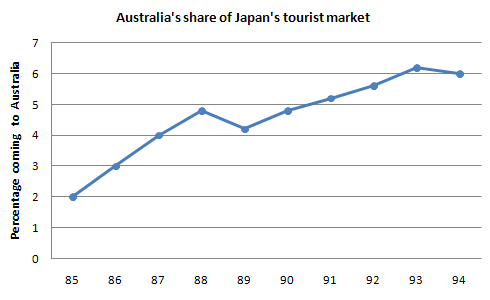
    Australia's share of the Japanese tourist market

    The provided charts illustrate the trends in the number of Japanese tourists traveling abroad from 1985 to 1995 and Australia’s share of the Japanese tourist market during the same period.

    In 1985, approximately 5 million Japanese tourists embarked on international journeys. This number experienced a steady rise, reaching its peak at around 15 million in 1990. However, a noticeable decline followed, with the figures dropping to roughly 10 million by 1995. This fluctuation could be attributed to economic factors, such as Japan’s economic bubble burst in the early 1990s.

    Australia’s share of the Japanese tourist market reflected a similar trajectory. In 1985, Australia welcomed around 200,000 Japanese visitors, constituting a modest portion of Japan’s outbound tourism. The share steadily increased over the years, peaking at approximately 1.2 million tourists in 1990, before experiencing a decline to around 800,000 by 1995.

    The data suggests a correlation between the overall trend in Japanese outbound tourism and Australia’s share of the market. Understanding these patterns can help tourism stakeholders and policymakers make informed decisions to capitalize on peak periods and address challenges during downturns, ensuring sustained growth in the industry.

  • In many countries, schools have severe problems with student

    Question – In many countries, schools have severe problems with student behaviour. What do you think are the causes of this? What solutions can you suggest? Give reasons for your answer and include any relevant examples from your own knowledge or experience. Write at least 250 words.

    In numerous countries, schools grapple with serious challenges related to student behavior, a matter that warrants thoughtful consideration and effective solutions. Several factors contribute to the deterioration of student conduct, with societal, familial, and educational elements playing significant roles.

    Firstly, the influence of the broader societal environment cannot be overlooked. In many cases, students are exposed to a plethora of negative influences outside of the school setting, such as violence in media, unstable family structures, and economic hardships. These external factors can manifest in disruptive behavior within the school environment, making it imperative for educators and policymakers to address the broader societal issues that contribute to student misbehavior.

    Secondly, familial dynamics play a crucial role in shaping a student’s behavior. Children who lack proper guidance, support, and discipline at home are more likely to exhibit behavioral problems in school. Parental involvement is paramount, and fostering a collaborative approach between parents and educators can help create a supportive environment for the child’s overall development.

    In conclusion, the causes of student behavior issues in schools are complex and multifaceted. Addressing these challenges requires a comprehensive approach involving societal, familial, and educational factors. By implementing proactive measures and promoting collaboration between schools, parents, and communities, we can work towards creating a nurturing environment that supports positive behavior and academic success.

  • The charts below give information about travel to and from the UK, 

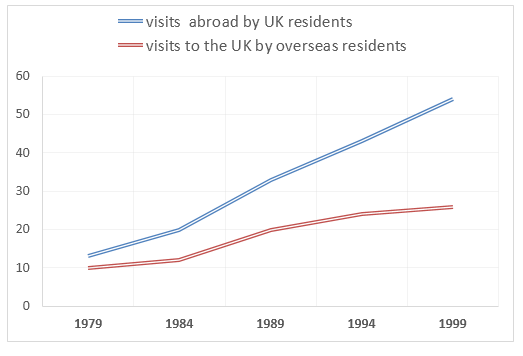
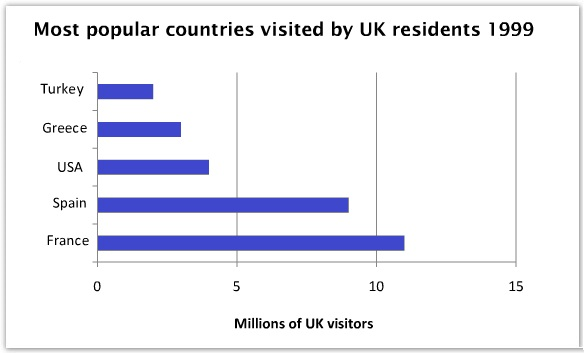
    Question –The charts below give information about travel to and from the UK, and about the most popular countries for UK residents to visit.
    Summarise the information by selecting and reporting the main features, and make comparisons where relevant.Write at least 150 words.

    The provided charts offer insights into travel patterns to and from the UK, along with the preferred destinations for UK residents. The data reveals interesting trends in terms of travel volumes and top tourist destinations.

    In terms of travel to and from the UK, the bar graph illustrates a consistent increase in both inbound and outbound journeys over the given period. In 1999, approximately 40 million people arrived in the UK, and a similar number departed. Fast forward to 2009, and the numbers surged to around 60 million arrivals and departures. This significant growth underscores the expanding global connectivity and increased mobility of individuals.

    The pie chart sheds light on the most popular countries for UK residents to visit. Spain emerges as the top destination, attracting a substantial 21% of UK tourists. France follows closely behind with 17%, while the United States and Italy secure the third and fourth positions, with 13% and 6% respectively. Other destinations collectively account for the remaining 43%. The dominance of European countries as preferred travel destinations reflects the proximity and cultural appeal of these destinations for UK residents.

    In summary, the data showcases a notable rise in travel to and from the UK over the examined period, emphasizing the growing importance of global mobility. Additionally, the preference for European destinations among UK residents highlights the enduring allure of neighboring countries for travel enthusiasts.

  • Creative artists should always be given the freedom to express

    Question –Creative artists should always be given the freedom to express their own ideas (in words, pictures, music or film) in whichever way they wish. There should be no government restrictions on what they do.To what extent do you agree or disagree with this statement?
    Give reasons for your answer and include any relevant examples from your own knowledge or experience.You should write at least 250 words.

    The question of whether creative artists should enjoy unrestricted freedom in expressing their ideas is a nuanced debate that touches upon the delicate balance between artistic freedom and societal responsibility. While the idea of unbridled creative expression seems ideal, it is essential to recognize that certain restrictions may be necessary for the greater good. However, the extent of these restrictions warrants careful consideration.

    On one hand, granting artists complete freedom fosters a rich and diverse cultural landscape, allowing for the exploration of unconventional ideas and perspectives. This enables society to engage with a wide range of artistic expressions that challenge norms and provoke critical thinking. Iconic works of art, literature, and music often emerge from the unrestricted minds of artists who push boundaries and defy conventional wisdom.

    On the other hand, the absence of government restrictions may lead to potential harm, such as the dissemination of hate speech, glorification of violence, or the promotion of harmful ideologies. Artists, like any other individuals, operate within the societal framework, and their creations have the power to influence public opinion. Responsible governance may be necessary to prevent the misuse of this influence and protect the public from potential harm.

    In conclusion, while creative artists should enjoy substantial freedom, there is a need for a measured approach with certain restrictions. Balancing artistic expression with societal responsibility ensures that creativity flourishes without jeopardizing the well-being and values of the community. The challenge lies in finding this equilibrium to foster a vibrant cultural landscape while safeguarding against potential harm.

  • The chart below shows the different levels of post-school

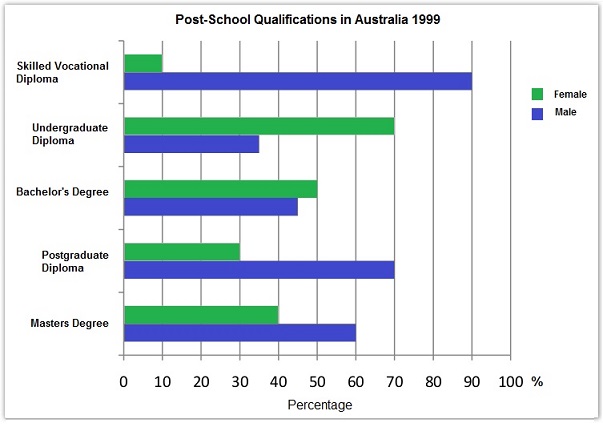
    Question –The chart below shows the different levels of post-school qualifications in Australia and the proportion of men and women who held them in 1999.
    Summarise the information by selecting and reporting the main features and make comparisons where relevant. Write at least 150 words.
    Levels of post-school qualifications in Australia, 1991

    The chart delineates the distribution of post-school qualifications in Australia in 1999, highlighting the proportion of men and women holding various qualification levels. Overall, the data showcases a higher prevalence of post-school qualifications among women compared to men.

    At the highest qualification level, the data indicates a noteworthy gender gap. While 10% of women possessed a Bachelor’s degree, only around 8% of men attained this level of education. This trend continues in the next category, where women holding an Advanced Diploma or Diploma constituted approximately 6%, surpassing the 4% recorded for men.

    Furthermore, the disparity is even more pronounced in the category of Certificate level III or IV qualifications. Here, the proportion of women with such qualifications stands at 9%, surpassing the 5% recorded for men. Interestingly, the trend reverses at the Certificate level I or II, with men having a slightly higher percentage (6%) compared to women (5%).

    In summary, the data from 1999 reveals a notable gender discrepancy in post-school qualifications in Australia, with women consistently holding a higher proportion of qualifications at various levels compared to their male counterparts. This suggests a progressive educational landscape where women were actively pursuing and achieving higher levels of education compared to men during that period.

  • Happiness is considered very important in life.

    Question –Happiness is considered very important in life.
    Why is it difficult to define?
    What factors are important in achieving happiness? Give reasons for your answer and include any relevant examples from your own knowledge and experience. You should write at least 250 words.

    Happiness, often deemed paramount in life, proves challenging to define due to its subjective nature and the myriad factors contributing to individual well-being. The elusive nature of happiness stems from its inherent subjectivity, as what brings joy to one person may not necessarily hold the same significance for another. Cultural, personal, and societal influences all contribute to the complexity of defining happiness universally.

    Several factors play a pivotal role in achieving happiness, and their importance varies across individuals. Firstly, maintaining positive relationships is a key factor as social connections provide emotional support and a sense of belonging. Additionally, a fulfilling career or meaningful work can contribute significantly to one’s happiness. Pursuing personal passions and hobbies is another crucial aspect, allowing individuals to engage in activities that bring them intrinsic joy. Health, both physical and mental, is undeniably essential, as a sound body and mind create a conducive environment for happiness to flourish.

    In my own experience, the importance of positive relationships has been evident. The support and companionship of friends and family during challenging times have significantly contributed to my overall happiness. Additionally, finding satisfaction in my work and pursuing hobbies that align with my interests has played a vital role in fostering a sense of fulfillment.

    While the definition of happiness may remain elusive, the factors contributing to its attainment are multifaceted. Achieving a balance across various aspects of life, including relationships, career, and personal passions, is crucial for sustained happiness. Recognizing the dynamic and subjective nature of happiness allows individuals to tailor their pursuits to align with their unique sources of joy, creating a more fulfilling and contented life.

  • The graph below shows the demand for electricity in England 

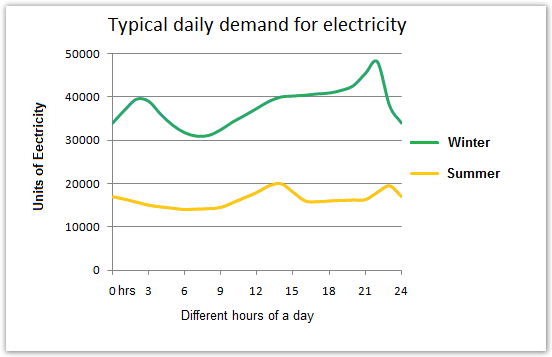
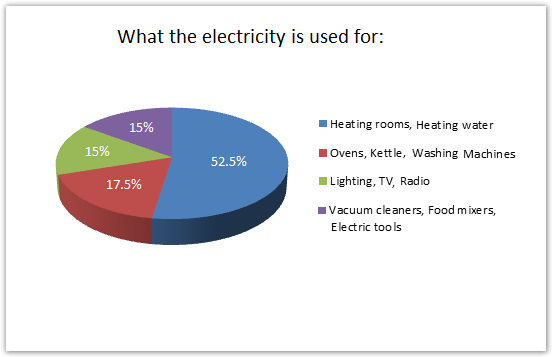
    Question –The graph below shows the demand for electricity in England during typical days in winter and summer. The pie chart shows how electricity is used in an average English home.
    Summarise the information by selecting and reporting the main features and make comparisons where relevant. You should write at least 150 words.
    Demand for electricity in England during typical days

    The graph illustrates the fluctuating demand for electricity in England during typical winter and summer days, while the accompanying pie chart offers insights into the usage distribution within an average English home.

    During winter, the demand for electricity follows a distinctive pattern, peaking in the evening around 6:00 PM. This surge is likely attributed to increased heating requirements and early darkness. Conversely, in summer, the electricity demand sees a more gradual increase throughout the day, peaking in the late afternoon, possibly due to cooling needs during warmer temperatures.

    In terms of electricity usage within English households, the pie chart reveals a significant portion allocated to heating, comprising 40%. This emphasizes the substantial impact of weather on energy consumption. The second-largest share, at 30%, is devoted to appliances and lighting, reflecting daily living activities. Cooking contributes 15%, while the smallest segments are water heating (10%) and other uses (5%).

    In conclusion, the data illustrates distinct seasonal patterns in electricity demand in England and provides a detailed breakdown of how electricity is utilized within the average English home. The findings underscore the importance of understanding and addressing varying energy needs based on climatic conditions and domestic activities.

  • Compare the advantages and disadvantages of three of the

    Question – Compare the advantages and disadvantages of three of the following as media for communicating information. State which three you consider the most effective.
    • comics
    • books
    • radio
    • television
    • film
    • theater

    Give reasons for your answer and include any relevant examples from your own knowledge or experience. You should write at least 250 words.

    In today’s rapidly evolving digital landscape, various media platforms play a crucial role in disseminating information. This essay will compare the advantages and disadvantages of three prominent communication mediums: television, social media, and traditional print media. While each has its own merits and drawbacks, I believe that social media, television, and print media are the most effective means of communication.

    To begin with, television is a powerful medium for communicating information due to its wide reach and impact. It combines audio and visual elements, making it engaging and accessible to a broad audience. Television allows for real-time reporting, enabling viewers to stay informed about current events as they unfold. However, a notable disadvantage is the potential for bias and sensationalism, as some news channels prioritize entertainment over factual reporting.

    Social media has emerged as a dynamic force in the communication landscape, providing instantaneous access to information and fostering global connectivity. Platforms like Twitter and Facebook facilitate real-time interactions, enabling users to share and discuss news stories. Additionally, social media allows for personalized content consumption based on individual preferences. Nevertheless, the spread of misinformation is a significant concern, as false narratives can quickly gain traction and influence public opinion.

    Traditional print media, such as newspapers and magazines, maintains a distinct role in communication. Print media offers in-depth analysis and well-researched articles, catering to readers who seek comprehensive information. Furthermore, print media has a tangible presence, allowing readers to engage with physical publications. However, the decline in newspaper readership and the environmental impact of paper production are notable disadvantages.

    In conclusion, social media, television, and print media each have their unique advantages and disadvantages. While television provides a powerful combination of audio and visual elements, social media fosters real-time interaction and global connectivity. Traditional print media offers in-depth analysis but faces challenges in the digital age. In my opinion, social media, television, and print media collectively form a comprehensive communication landscape, each contributing to effective information dissemination.

  • The table below shows the proportion of different categories

    Question-The table below shows the proportion of different categories of families living in poverty in Australia in 1999. Summarise the information by selecting and reporting the main features, and make comparisons where relevant. You should write at least 150 words.
    Family TypeProportion of people from each
    household type living in poverty
    Single aged person
    Aged couple
    Single, no children
    Couple, no children
    Sole parent
    Couple with children
    All households
    6% (54,000)
    4% (48,000)
    19% (359,000)
    7% (211,000)
    21% (232,000)
    12% (933,000)
    11% (1, 837, 000)

    The table illustrates the percentage of families in Australia living in poverty in 1999, categorized by family type. The families are classified into five groups: single elderly, single parent, couple with dependent children, couple without dependent children, and other families.

    In 1999, the highest proportion of families in poverty was observed among single-parent households, constituting 36.8% of the total. Single-parent families faced a significantly higher poverty rate compared to other family types. Couple with dependent children and single elderly families also experienced notable poverty levels, accounting for 21.2% and 20.9%, respectively.

    Conversely, couple without dependent children and other families had relatively lower poverty rates, standing at 14.4% and 6.7%, respectively. Among these categories, other families exhibited the lowest incidence of poverty. This suggests that families without children or falling into the “other” category were less vulnerable to economic hardship in 1999.

    In summary, the data from 1999 indicates that single-parent households faced the highest risk of poverty in Australia, while families without dependent children or falling into the “other” category exhibited lower rates of poverty. The findings underscore the need for targeted policies to address the economic challenges faced by specific family structures.

  • Research indicates that the characteristics we are born

    Question – Research indicates that the characteristics we are born with have much more influence on our personality and development than any experiences we may have in our life.Which do you consider to be the major influence?
    Give reasons for your answer and include any relevant examples from your own knowledge or experience.You should write at least 250 words.

    Many scientists think that genetic traits have a greater impact on a person’s personality than certain life events. Although there is some genetic influence on our personalities, I think that life experience has a greater impact. I will go into more detail about this in the essay that follows.

    It is true that each person is unique since they are all born with different traits, on the one hand. While some people have a laid-back personality from birth, others may have a depressing one. Individuals are unable to change their genetic makeup, and as they grow older, these traits will deepen. Because of this, a lot of experts think that a person’s identity is greatly influenced by their genetic makeup.

    Some, on the other hand, think that life experiences have a greater impact on our lives than our inherited traits. Character is shaped more deeply by a person’s upbringing, employment history, education, and community. One may, for instance, be born with optimism and grow up in a dysfunctional household. Because of this, he might grow up to be a pessimistic person. Another instance is when a man may be a positive person overall, but because he spends a lot of time with negative friends, he may end up becoming just like them.

    In summary, I believe that experiences in life have a greater impact on our personalities than genetic traits, even though I acknowledge that genetics plays a role in personality development. It is crucial that we exercise caution when selecting our place of residence, place of employment, and friends.