Author: theieltsbridge

  • The graph below shows the consumption of fish and some different 

    Question-The graph below shows the consumption of fish and some different kinds of meat in a European country between 1979 and 2004.
    Summarise the information by selecting and reporting the main features, and make comparisons where relevant. Write at least 150 words.
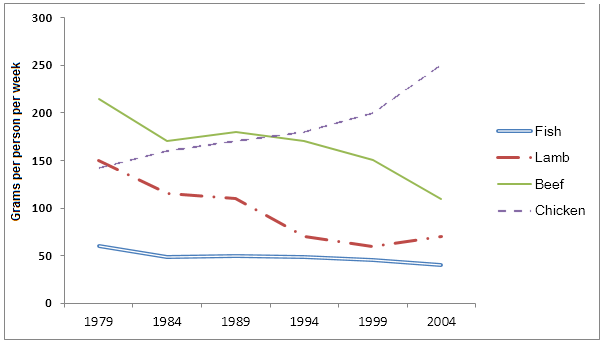
    The graph illustrates the changing patterns of meat and fish consumption in a European country over a 25-year period, from 1979 to 2004. Several key trends emerge from the data, offering insights into the dietary preferences of the population during this time span.

    From 1979 to 1989, beef was the dominant meat choice, with consumption peaking at approximately 220 grams per capita. However, a notable decline ensued, dropping to around 180 grams by 2004. Conversely, chicken consumption exhibited a steady rise, almost doubling from 100 grams in 1979 to nearly 200 grams in 2004, reflecting a shift towards poultry in the diet.

    Fish consumption displayed a more stable trajectory over the years. Starting at approximately 130 grams per capita in 1979, it experienced a slight increase before plateauing around 150 grams in 2004. This suggests that, despite fluctuations in meat preferences, fish remained a consistent part of the country’s diet throughout the period.

    The most intriguing aspect of the graph is the inverse relationship between beef and chicken consumption. As beef consumption dwindled, chicken consumption soared, indicating a clear substitution effect. This shift may be attributed to changing dietary preferences influenced by health considerations, economic factors, or cultural influences.

    In conclusion, the graph illustrates a dynamic shift in meat preferences in the examined European country between 1979 and 2004. The decline in beef consumption, the rise of chicken as a popular choice, and the consistent presence of fish in the diet reflect the multifaceted factors shaping the culinary landscape over the years.
  • It is generally believed that some people are born with certain

    Question –It is generally believed that some people are born with certain talents, for instance for sports or music, and others are not. However, it is sometimes claimed that any child can be taught to become a good sports person or musician. Discuss both these views and give your own opinion.
    Give reasons for your answer and include any relevant examples from your own knowledge or experience. Write at least 250 words.

    The perennial debate surrounding innate talent versus acquired skills is a topic that has fascinated scholars and experts across various fields. While some argue that certain individuals are born with innate talents, especially in areas like sports or music, others contend that any child can be taught to excel in these domains through proper training and education. This essay will explore both perspectives and offer a nuanced viewpoint.

    On one hand, proponents of the innate talent theory assert that genetics play a pivotal role in determining an individual’s prowess in specific fields. For example, a child born into a family of musicians may have a genetic predisposition for musical aptitude. Similarly, athletes from families with a history of sporting excellence may inherit physical attributes conducive to success in sports. This viewpoint suggests that no amount of training can replace the inherent abilities that some individuals possess from birth.

    Conversely, advocates for the teachability of skills argue that with the right training and guidance, any child can develop proficiency in sports or music. They emphasize the importance of early exposure, quality education, and dedicated practice in honing skills. Educational programs and coaching, according to this perspective, can unlock hidden potential in individuals who may not have exhibited innate talent initially.

    In my opinion, while innate abilities may provide a head start, the nurturing and development of skills through education and training are equally crucial. A child born with a natural inclination for music may find it easier to grasp musical concepts initially, but sustained effort, practice, and exposure are indispensable for mastery. In conclusion, a harmonious blend of inherent talent and systematic training is likely the most effective formula for producing exceptional sportspeople and musicians.

  • The table below gives information on consumer spending on

    Question –The table below gives information on consumer spending on different items in five different countries in 2002.
    Summarise the information by selecting and reporting the main features, and make comparisons where relevant.
    Write at least 150 words.

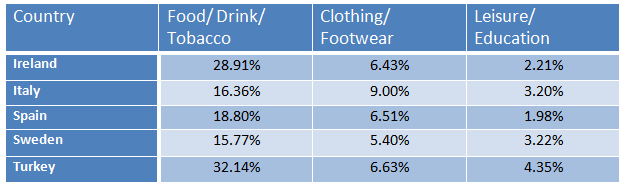
    In 2002, consumer spending varied significantly across five diverse countries, as depicted in the table. The data reveals insights into the allocation of financial resources on various items, offering a glimpse into the economic priorities of these nations.

    The first observation from the table is that the United States led in overall consumer spending with a total of $6.2 trillion. Housing expenses claimed the lion’s share at $1.8 trillion, reflecting the importance Americans placed on accommodation. In contrast, the United Kingdom exhibited a noteworthy emphasis on recreation and culture, spending $280 billion, significantly higher than the other countries.

    While all countries allocated a substantial portion of their budget to food and beverages, Japan stood out with a remarkable $760 billion expenditure in this category. Germany, on the other hand, demonstrated a frugal approach, spending a mere $420 billion on the same.

    The data concludes with a clear indication that despite commonalities, each country had unique spending patterns shaped by cultural, economic, and societal factors. Understanding these variations is crucial for policymakers and businesses alike, providing valuable insights into the preferences and priorities of consumers across the globe.

  • In some countries the average weight of people is

    Question – In some countries the average weight of people is increasing and their levels of health and fitness are decreasing.
    What do you think are the causes of these problems and what measures could be taken to solve them?
    Give reasons for your answer and include any relevant examples from your own knowledge or experience.Write at least 250 words.

    In recent years, the world has witnessed a concerning trend—declining health and fitness levels accompanied by a surge in the number of overweight individuals. This article seeks to delve into the root causes of these issues and propose effective solutions to promote a healthier lifestyle.

    The increasing prevalence of fast food consumption contributes significantly to the surge in average body weight. Fast food establishments often serve meals high in fat and sugar, becoming a leading factor in weight gain and associated health problems. The era of globalization and demanding work schedules has intensified competition and led to longer workweeks. This, in turn, limits the time available for individuals to engage in physical activities, further exacerbating the health crisis.

    Encouraging individuals to make informed dietary choices is paramount. Steering clear of fast food and opting for wholesome ingredients such as whole grains, vegetables, and fruits can contribute significantly to better health. Highlight the importance of avoiding high-cholesterol options like fried foods. Promoting regular physical activity is crucial in counteracting sedentary lifestyles. Suggest alternatives such as altering transportation modes, like choosing bicycles over cars for commuting, to incorporate exercise into daily routines.

    In conclusion, the global rise in obesity and declining health necessitates proactive measures. By making mindful dietary choices and prioritizing physical activity, individuals can combat the detrimental effects of unhealthy lifestyles. It is imperative to raise awareness and empower people to take control of their well-being, fostering a healthier and more active global community.

  • The graph below shows the quantities of goods transported

    Question – The graph below shows the quantities of goods transported in the UK between 1974 and 2002 by four different modes of transport.
    Summarise the information by selecting and reporting the main features, and make comparisons where relevant. Write at least 150 words.

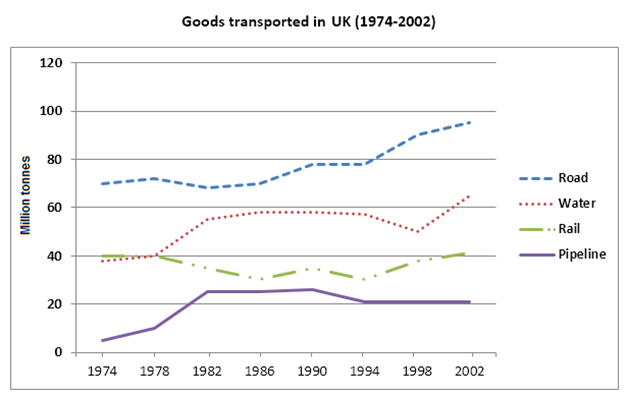
    From 1974 to 2002, the line charts illustrate the four distinct transportation modes in the UK: road, rail, water, and pipeline quality. The charts quantify the amount of goods transported in million tonnes.

    In the UK, roads and waterways surpassed pipelines and railroads in the overall amount of goods carried. Rail and water transport accounted for 40 million tonnes in 1974, remaining constant for four years, while road transportation dominated with 70 million tonnes. Following a notable fluctuation, the water mode peaked at 62 million tonnes in 2002, marking an increase of about 19 million tonnes since 1978 and remaining stable for 12 years. However, rail transport experienced a slight decline after four years of consistent demand, reaching 30 million tonnes in 1986. After a period of gradual fluctuation, it returned to the same million tonnes in 2002 as in the initial year. Additionally, the road stands out as the primary mode of transportation, showing growth.

    Pipelines were less preferred initially, with only 1 million tonnes in 1974. This amount increased to 21 million in 1982, maintaining stability for a decade before dropping to just 1 million in 1994 and remaining unchanged for an additional period.

    Significantly, there was an 80 million-tonne difference between 1990 and 1994, with 22 million tonnes more in 2002 than in 1974.

  • Increasing the price of petrol is the best way to solve

    Question – Increasing the price of petrol is the best way to solve the growing traffic and pollution problems.
    To what extent do you agree or disagree with the statement?
    What other measures do you think might be effective? Give reasons for your answer and include any relevant examples from your own knowledge or experience.
    Write at least 250 words.

    One of the most significant strategies for curbing the escalating issues of traffic and pollution involves raising the price of gasoline. However, I strongly believe that relying on other renewable energy sources, such as solar, wind, and hydro, can play a pivotal role in tackling these challenges.

    While some argue that an increase in gasoline prices would lead to a decrease in its use, consequently mitigating pollution and traffic congestion, it is essential to recognize that people will continue to rely on gasoline due to the lack of practical alternatives to power vehicles. Consequently, this approach may not have a substantial impact on addressing to the growing pollution and traffic problems. In fact, the escalating transportation expenses could contribute to a rise in the cost of goods, negatively affecting the economy.

    On the contrary, adopting less harmful gases like carbon monoxide and CFC can significantly reduce air pollution if we shift to using more renewable energy sources, such as solar, wind, and hydropower, to power factories and automobiles. Additionally, transitioning public transportation to solar energy can lead to reduced fares, promoting the use of affordable, environmentally friendly trams, trains, and buses.

    In conclusion, raising the price of gasoline is not the most effective method to address the increasing issues of pollution and traffic congestion. The integration of additional renewable energy sources into the public transportation system emerges as an efficient solution, with the potential to drastically reduce traffic and pollution problems.

  • The diagrams below show the stages and equipment

    Question – The diagrams below show the stages and equipment used in the cement-making process, and how cement is used to produce concrete for building purposes.
    Summarise the information by selecting and reporting the main features, and make comparisons where relevant.

    Write at least 150 words.

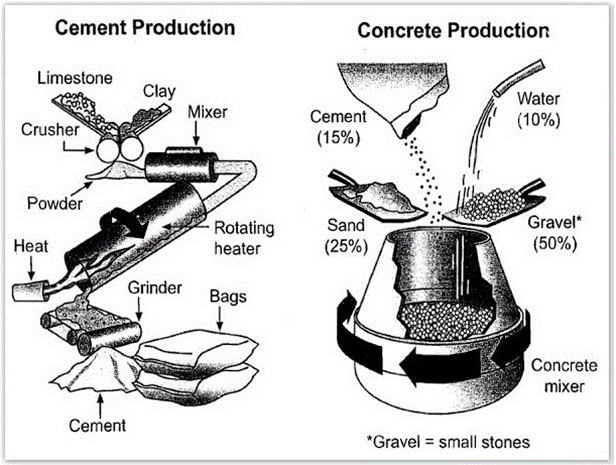
    The drawings illustrate the process of manufacturing cement and showcase an application where cement is used to create concrete for construction purposes.

    To produce cement, operators begin by combining raw materials like limestone and clay, which are then processed in a crusher. The resulting mixture is carefully blended to achieve the optimal combination. Following this, the mixture undergoes a heating process through rotation. Heat is applied from the end of the rotating heater tube before the blend is discharged onto the grinder. After completing the systematic process, the mixture transforms into cement and is subsequently sealed into bags.

    Simultaneously, a concrete mixer is employed to blend materials such as gravel, cement, water, and sand to create concrete. Among these materials, gravel or small stones constitute 50%, making it the most crucial component. Additional materials, including sand, which is the second most commonly used material after gravel, along with cement and water, contribute to the mix. Cement comprises 15% of all the materials required for constructing a new building. The concrete mixer efficiently combines all these materials.

    In essence, the production of concrete involves the straightforward mixing of necessary ingredients in the correct ratio using a simpler machine. On the other hand, manufacturing cement entails a more intricate process with multiple steps and sophisticated equipment. It’s essential to note that concrete production necessitates heat, which must be introduced into the mixture during the mixing process.

  • Nowadays the way many people interact with each other has

    Question – Nowadays the way many people interact with each other has changed because of technology.
    In what ways has technology affected the types of relationships people make?
    Has this become a positive or negative development?
    Give reasons for your answer and include any relevant examples from your own knowledge or experience. Write at least 250 words.

    Face-to-face communication and enough time to get to know each other well are prerequisites for a real relationship. People all like to feel wanted, even if it’s a false sense, despite what other people may believe. The perception that one can be whoever one wants to be online has been shaped by the digital age. But I think that relationships people form virtually and the way people get to know each other online have changed, mostly negatively.

    Most are becoming more inward-focused and have forgotten what it means to be a true friend to those around them, rather than being genuine friends. People are emotional creatures who occasionally feel sad and aren’t always happy, but the Internet only shares positive experiences, preventing people from knowing each other completely. Nowadays, people tend to form fast and transient friendships. In real life friendships, individuals support one another through each other’s highs and lows. This is not at all like a friendship on social media. Because the Internet cannot take the place of in-person interactions and shared experiences, getting to know someone requires spending time together.

    It is only fitting that life be experienced fully, forming bonds with the physical presence of others. Rather than truly being friends with those in their immediate vicinity, they are utilizing social media to establish connections. I consider this to be a drawback of the digital age.

    In conclusion, the digital age may have brought about benefits like reaching out to old friends and forming new ones, but it has also had unfavorable effects on our moral, social, and personal lives due to our growing reliance on technology and the ways we pretend to keep up our online friendships.

  • The three pie charts below show the changes in annual spending

    Question – The three pie charts below show the changes in annual spending by a particular UK school in 1981, 1991 and 2001.
    Summarise the information by selecting and reporting the main features, and make comparisons where relevant. Write at least 150 words.

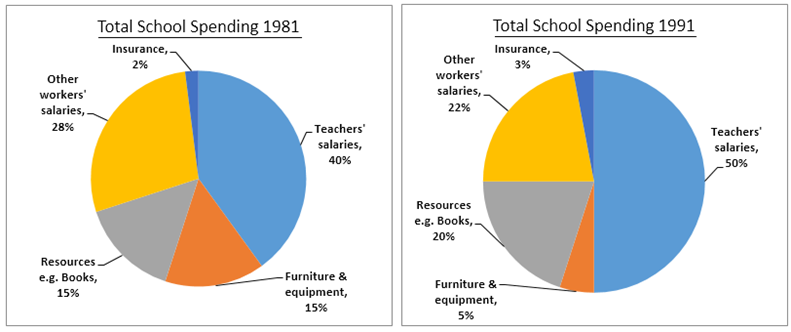
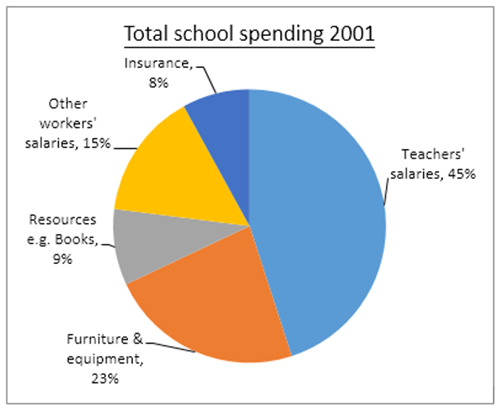
    The three distinct years of 1981, 1991, and 2001 are represented by pie charts that show the overall information regarding the change in annual spending at a particular UK school. All things considered, when it came to expenditures in the years under consideration, the portion of educators’ paychecks was the highest. In contrast, insurance contributed the least in terms of actual financial outlay.

    First off, in 1981, the salary of educators was precisely forty percent. It rose to half of the total expenditure ten years later. Nonetheless, expenditure in the same category decreased slightly to 45% in 2001.

    Furthermore, after the salaries of educators, the salaries of other employees also revealed a significant budgetary proportion. Between 28% in 1981, 22% in 1991, and only 15% in 2001, this area saw a slight decline in the observed years.

    Nonetheless, one field saw a steady improvement in yearly spending. The one that kept going up was insurance. In 1981, 1991, and 2001, the corresponding percentages were 2%, 3%, and 8%. Between 1991 and 2001, there was a notable 5% increase in improvement. Insurance, however, continued to be the least expensive sector in terms of spending.

  • Some people think that parents should teach children

    Question – Some people think that parents should teach children how to be good members of society. Others, however, believe that school is the place to learn this.
    Discuss both these views and give your own opinion. Give reasons for your answer and include any relevant examples from your own knowledge or experience. Write at least 250 words.

    Socialism and belonging to the community are essential values in today’s world. Everyone wants to make a good contribution to society. While some believe that it is the responsibility of the school, others see it as the duty of parents to encourage their children to participate in society and be members of it. Before coming to a decision, all sides of this argument will be examined.

    On the one hand, there are those who advocate for parents to teach their kids how to be decent members of society. Parents might, for instance, feed the hungry as a way of teaching and guiding their kids to help the underprivileged. This instance demonstrates how parents can take the initiative to help their kids grow up to be good people who are respected by society. As a result, many people agree with this notion. As a result of their closer relationship, parents are better able to impart to their children the values of being well-adjusted members of society. Since most kids imitate what their parents do, parents are in a better position to set a positive example for their children.

    Nonetheless, a lot of people think that education is a child’s life’s best guide. For example, a school might plan a campaign encouraging students to clean up specific areas of the city. Children who adopt this mindset gain firsthand experience making contributions to society. Therefore, a lot of people contend that it would be best to let the school handle this. Teaching pupils these responsibilities is a major responsibility of the teachers on behalf of the school. Students are more likely to follow their teachers’ instructions because they pay attention to their advice and commands. Lastly, in order to raise students’ awareness, these subjects may be covered in the curriculum and textbooks.

    In summary, the argument over who should be assigned this responsibility will never go away between the two sides. Since the kids spend the majority of the day in school, I believe that the schools should be the ones to take on this responsibility.