Author: theieltsbridge

  • IELTS Reading Practice Test – Exercise 215

    The Construction Of Roads And Bridges

    Roads
    Although there were highway links in Mesopotamia from as early as 3500 bc, the Romans were probably the first road-builders with fixed engineering standards. At the peak of the Roman Empire in the first century ad, Rome had road connections totalling about 85,000 kilometres. Roman roads were constructed with a deep stone surface for stability and load-bearing. They had straight alignments and therefore were often hilly. The Roman roads remained the main arteries of European transport for many centuries, and even today many roads follow the Roman routes. New roads were generally of inferior quality, and the achievements of Roman builders were largely unsurpassed until the resurgence of road-building in the eighteenth century.

    With horse-drawn coaches in mind, eighteenth-century engineers preferred to curve their roads to avoid hills. The road surface was regarded as merely a face to absorb wear, the load-bearing strength being obtained from a properly prepared and well-drained foundation. Immediately above this, the Scottish engineer John McAdam (1756-1836) typically laid crushed stone, to which stone dust mixed with water was added, and which was compacted to a thickness of just five centimetres, and then rolled. McAdam’s surface layer – hot tar onto which a layer of stone chips was laid – became known as ‘tarmacadam’, or tarmac. Roads of this kind were known as flexible pavements.

    By the early nineteenth century – the start of the railway age – men such as John McAdam and Thomas Telford had created a British road network totalling some 200,000 km, of which about one sixth was privately owned toll roads called turnpikes. In the first half of the nineteenth century, many roads in the US were built to the new standards, of which the National Pike from West Virginia to Illinois was perhaps the most notable. In the twentieth century, the ever-increasing use of motor vehicles threatened to break up roads built to nineteenth-century standards, so new techniques had to be developed.

    On routes with heavy traffic, flexible pavements were replaced by rigid pavements, in which the top layer was concrete, 15 to 30 centimetres thick, laid on a prepared bed. Nowadays steel bars are laid within the concrete. This not only restrains shrinkage during setting, but also reduces expansion in warm weather. As a result, it is, possible to lay long slabs without danger of cracking.

    The demands of heavy traffic led to the concept of high-speed, long-‘distance roads, with access – or slip-lanes – spaced widely apart. The US Bronx River Parkway of 1925 was followed by several variants – Germany’s autobahns and the Pan American Highway. Such roads – especially the intercity autobahns with their separate multi-lane carriageways for each direction – were the predecessors of today’s motorways.

    Bridges
    The development by the Romans of the arched bridge marked the beginning of scientific bridge-building; hitherto, bridges had generally been crossings in the form of felled trees or flat stone blocks. Absorbing the load by compression, arched bridges are very strong. Most were built of stone, but brick and timber were also used. A fine early example is at Alcantara in Spain, built of granite by the Romans in AD 105 to span the River Tagus. In modern times, metal and concrete arched bridges have been constructed. The first significant metal bridge, built of cast iron in 1779, still stands at Ironbridge in England.

    Steel, with its superior strength-to-weight ratio, soon replaced iron in metal bridge-work. In the railway age, the truss (or girder) bridge became popular. Built of wood or metal, the truss beam consists of upper and lower horizontal booms joined by vertical or inclined members.

    The suspension bridge has a deck supported by suspenders that drop from one or more overhead cables. It requires strong anchorage at each end to resist the inward tension of the cables, and the deck is strengthened to control distortion by moving loads or high winds. Such bridges are nevertheless light, and therefore the most suitable for very long spans. The Clifton Suspension Bridge in the UK, designed by Isambard Kingdom Brunei (1806—59) to span the Avon Gorge in England, is famous both for its beautiful setting and for its elegant design. The 1998 Akashi Kaikyo Bridge in Japan has a span of 1,991 metres, which is the longest to date.

    Cantilever bridges, such as the 1889 Forth Rail Bridge in Scotland, exploit the potential of steel construction to produce a wide clearwater space. The spans have a central supporting pier and meet midstream. The downward thrust, where the spans meet, is countered by firm anchorage of the spans at their other ends. Although the suspension bridge can span a wider gap, the cantilever is relatively stable, and this was important for nineteenth-century railway builders. The world’s longest cantilever span – 549 metres – is that of the Quebec rail bridge in Canada, constructed in 1918.

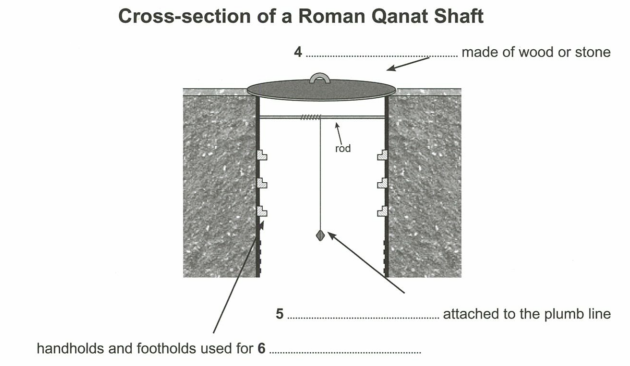
    Questions 1-3
    Label the diagram below. Choose NO MORE THAN TWO WORDS AND/OR A NUMBER from the passage for each answer.

    Questions 4-7
    Do the following statements agree with the information given in Reading Passage 1? Write

    TRUE if the statement agrees with the information
    FALSE if the statement contradicts the information
    NOT GIVEN If there is no information on this

    4. Road construction improved continuously between the first and eighteenth centuries.
    5. In Britain, during the nineteenth century, only the very rich could afford to use toll roads.
    6. Nineteenth-century road surfaces were inadequate for heavy motor traffic.
    7. Traffic speeds on long-distance highways were unregulated in the early part of the twentieth century.

    Questions 8-13
    Complete the table below. Use ONE WORD ONLY from the passage for each answer.

    Type of bridgeFeaturesExamples
    Arched bridge– introduced by the (8)…………………
    – very strong
    – usually made of (9)………………..
    Alcantara, Spain, Ironbridge, UK
    Truss bridge– made of wood or metal
    – popular for railways
    Suspension bridge– has a suspended deck
    – strong but (10)………………..
    Clifton, UK, Akashi Kaikyo, Japan (currently the (11)………………Spain)
    Cantilever bridge– made of (12)……………..
    – more (13)………………than the suspension bridge
    Quebec, Canada
    Neanderthals And Modern Humans

    A The evolutionary processes that have made modern humans so different from other animals are hard to determine without an ability to examine human species that have not achieved similar things. However, in a scientific masterpiece, Svante Paabo and his colleagues from the Max Planck Institute for Evolutionary Anthropology, in Leipzig, have made such a comparison possible. In 2009, at a meeting of the American Association for the Advancement of Science, they made public an analysis of the genome of Neanderthal man.

    B Homo neanderthalensis, to give its proper name, lived in Europe and parts of Asia from 400,000 years ago to 30,000 years ago. Towards the end of this period it shared its range with interlopers in the form of Homo sapiens, who were spreading out from Africa. However, the two species did not settle down to a stable cohabitation. For reasons which are as yet unknown, the arrival of Homo sapiens in a region was always quickly followed by the disappearance of Neanderthals.

    C Before 2009, Dr Paabo and his team had conducted only a superficial comparison between the DNA of Neanderthals and modern humans. Since then, they have performed a more thorough study and, in doing so, have shed a fascinating light on the intertwined history of the two species. That history turns out to be more intertwined than many had previously believed.

    D Dr Paabo and his colleagues compared their Neanderthal genome (painstakingly reconstructed from three bone samples collected from a cave in Croatia) with that of five living humans from various parts of Africa and Eurasia. Previous genetic analysis, which had only examined DNA passed from mother to child in cellular structures called mitochondria, had suggested no interbreeding between Neanderthals and modern humans. The new, more extensive examination, which looks at DNA in the cell nucleus rather than in the mitochondria, shows this conclusion is wrong. By comparing the DNA in the cell nucleus of Africans (whose ancestors could not have crossbred with Neanderthals, since they did not overlap with them) and various Eurasians (whose ancestors could have crossbred with Neanderthals), Dr Paabo has shown that Eurasians are between one percent and four percent Neanderthal.

    E That is intriguing. It shows that even after several hundred thousand years of separation, the two species were inter-fertile. It is strange, though, that no Neanderthal mitochondrial DNA has turned up in modern humans, since the usual pattern of invasion in historical times was for the invaders’ males to mate with the invaded’s females. One piece of self-knowledge, then – at least for non-Africans – is that they have a dash of Neanderthal in them. But Dr Paabo’s work also illuminates the differences between the species. By comparing modem humans, Neanderthals, and chimpanzees, it is possible to distinguish genetic changes which are shared by several species of human in their evolution away from the great-ape lineage, from those which are unique to Homo sapiens.

    F More than 90 percent of the ‘human accelerated regions’ that have been identified in modem people are found in Neanderthals too. However, the rest are not. Dr Paabo has identified 212 parts of the genome that seem to have undergone significant evolution since the species split. The state of genome science is still quite primitive, and it is often unclear what any given bit of DNA is actually doing. But an examination of the 20 largest regions of DNA that have evolved in this way shows that they include several genes which are associated with cognitive ability, and whose malfunction causes serious mental problems. These genes therefore look like good places to start the search for modern humanity’s essence.

    G The newly evolved regions of DNA also include a gene called RUNX2, which controls bone growth. That may account for differences in the shape of the skull and the rib cage between the two species. By contrast an earlier phase of the study had already shown that Neanderthals and moderns share the same version of a gene called FOXP2, which is involved in the ability to speak, and which differs in chimpanzees. It is all, then, very promising – and a second coup in quick succession for Dr Paabo. Another of his teams has revealed the existence of a hitherto unsuspected species of human, using mitochondrial DNA found in a little-finger bone. If that species, too, could have its full genome read, humanity’s ability to know itself would be enhanced even further.

    Questions 14-18
    Look at the following characteristics (Questions 14-18) and the list of species below. Match each feature with the correct species, A, B or C. NB You may use any letter more than once.

    14. Once lived in Europe and Asia.
    15. Originated in Africa.
    16. Did not survive long after the arrival of immigrants.
    17. Interbred with another species.
    18. Appears not to have passed on mitochondrial DNA to another species.

    List of species
    A Homo neanderthalensis
    B Homo sapiens
    C both Homo neanderthalensis and Homo sapiens

    Questions 19-23
    Reading Passage 2 has seven paragraphs, A-G. Which paragraph contains the following information?

    19. an account of the rejection of a theory
    20. reference to an unexplained link between two events
    21. the identification of a skill-related gene common to both Neanderthals and modern humans
    22. the announcement of a scientific breakthrough
    23. an interesting gap in existing knowledge

    Questions 24-26
    Complete the summary below. Choose NO MORE THAN THREE WORDS from the passage for each answer.

    The nature of modern humans

    Recent work in the field of evolutionary anthropology has made it possible to compare modern humans with other related species. Genetic analysis resulted in several new findings.

    First, despite the length of time for which Homo sapiens and Homo neanderthalensis had developed separately, (24)……………………..did take place.

    Secondly, genes which evolved after modern humans split from Neanderthals are connected with cognitive ability and skeletal (25)…………………….

    The potential for this line of research to shed light on the nature of modern humans was further strengthened when analysis of a (26)………………….led to the discovery of a new human species.

    The Future Of Fish

    The face of the ocean has changed completely since the first commercial fishers cast their nets and hooks over a thousand years ago. Fisheries intensified over the centuries, but even by the nineteenth century it was still felt, justifiably, that the plentiful resources of the sea were for the most part beyond the reach of fishing, and so there was little need to restrict fishing or create protected areas. The twentieth century heralded an escalation in fishing intensity that is unprecedented in the history of the oceans, and modern fishing technologies leave fish no place to hide. Today, the only refuges from fishing are those we deliberately create. Unhappily, the sea trails far behind the land in terms of the area and the quality of protection given.

    For centuries, as fishing and commerce have expanded, we have held onto the notion that the sea is different from the land. We still view it as a place where people and nations should be free to come and go at will, as well as somewhere that should be free for us to exploit. Perhaps this is why we have been so reluctant to protect the sea. On land, protected areas have proliferated as human populations have grown. Here, compared to the sea, we have made greater headway in our struggle to maintain the richness and variety of wildlife and landscape. Twelve percent of the world’s land is now contained in protected areas, whereas the corresponding figure for the sea is but three-fifths of one percent. Worse still, most marine protected areas allow some fishing to continue. Areas off-limits to all exploitation cover something like one five-thousandth of the total area of the world’s seas.

    Today, we are belatedly coming to realise that ‘natural refuges’ from fishing have played a critical role in sustaining fisheries, and maintaining healthy and diverse marine ecosystems. This does not mean that marine reserves can rebuild fisheries on their own – other management measures are also required for that. However, places that are off-limits to fishing constitute the last and most important part of our package of reform for fisheries management. They underpin and enhance all our other efforts. There are limits to protection though.

    Reserves cannot bring back what has died out. We can never resurrect globally extinct species, and restoring locally extinct animals may require reintroductions from elsewhere, if natural dispersal from remaining populations is insufficient. We are also seeing, in cases such as northern cod in Canada, that fishing can shift marine ecosystems into different states, where different mixes of species prevail. In many cases, these species are less desirable, since the prime fishing targets have gone or are much reduced in numbers, and changes may be difficult to reverse, even with a complete moratorium on fishing. The Mediterranean sailed by Ulysses, the legendary king of ancient Greece, supported abundant monk seals, loggerhead turtles and porpoises. Their disappearance through hunting and overfishing has totally restructured food webs, and recovery is likely to be much harder to achieve than their destruction was. This means that the sooner we act to protect marine life, the more certain will be our success.

    To some people, creating marine reserves is an admission of failure. According to their logic, reserves should not be necessary if we have done our work properly in managing the uses we make of the sea. Many fisheries managers are still wedded to the idea that one day their models will work, and politicians will listen to their advice. Just give the approach time, and success will be theirs. How much time have we got? This approach has been tried and refined for the last 50 years. There have been few successes which to feather the managers’ caps, but a growing litany of failure. The Common Fisheries Policy, the European Union’s instrument for the management of fisheries and aquaculture, exemplifies the worst pitfalls: flawed models, flawed advice, watered-down recommendations from government bureaucrats and then the disregard of much of this advice by politicians. When it all went wrong, as it inevitably had to, Europe sent its boats to other countries in order to obtain fish for far less than they were actually worth.

    We are squandering the wealth of oceans. If we don’t break out of this cycle of failure, humanity will lose a key source of protein, and much more besides. Disrupting natural ecosystem processes, such as water purification, nutrient cycling, and carbon storage, could have ramifications for human life itself. We can go a long way to avoiding this catastrophic mistake with simple common sense management. Marine reserves lie at the heart of the reform. But they will not be sufficient if they are implemented only here and there to shore up the crumbling edifice of the ‘rational fisheries management’ envisioned by scientists in the 1940s and 1950s. They have to be placed centre stage as a fundamental underpinning for everything we do in the oceans. Reserves are a first resort, not a final resort when all else fails.

    Questions 27-31
    Do the following statements agree with the views of the writer in Reading Passage 3? Write

    YES if the statement agrees with the views of the writer
    NO if the statement contradicts the views of the writer
    NOT GIVEN if it is impossible to say what the writer thinks about this

    27. It is more than a thousand years since people started to catch fish for commercial use.
    28. In general, open access to the oceans is still regarded as desirable.
    29. Sea fishing is now completely banned in the majority of protected areas.
    30. People should be encouraged to reduce the amount of fish they eat.
    31. The re-introduction of certain mammals to the Mediterranean is a straightforward task.

    Questions 32-34
    Choose the correct letter, A, B, C or D.

    32. What does the writer mean with the question, ‘How much time have we got?’ in the fifth paragraph?
    A Fisheries policies are currently based on uncertain estimates.
    B Accurate predictions will allow governments to plan properly.
    C Fisheries managers should provide clearer information.
    D Action to protect fish stocks is urgently needed

    33. What is the writer’s comment on the Common Fisheries Policy?
    A Measures that it advocated were hastily implemented.
    B Officials exaggerated some of its recommendations.
    C It was based on predictions which were inaccurate.
    D The policy makers acquired a good reputation

    34. What is the writer’s conclusion concerning the decline of marine resources?
    A The means of avoiding the worst outcomes needs to be prioritised.
    B Measures already taken to avoid a crisis are probably sufficient.
    C The situation is now so severe that there is no likely solution.
    D It is no longer clear which measures would be most effective.

    Questions 35-40
    Complete the summary using the list of words/phrases, A-J, below.

    Measures to protect the oceans

    Up till the twentieth century the world’s supply of fish was sufficient for its needs.

    It was unnecessary to introduce (35)………………….of any kind, because large areas of the oceans were inaccessible.

    However, as (36)……………….improved, this situation changed, and in the middle of the twentieth century, policies were introduced to regulate (37)…………………..

    These policies have not succeeded. Today, by comparison with (38)………………….the oceans have very little legal protection.

    Despite the doubts that many officials have about the concept of (39)……………………., these should be at the heart of any action taken.

    The consequences of further (40)…………………..are very serious, and may even affect our continuing existence.

    A action
    B controls
    C failure
    D fish catches
    E fish processing
    F fishing techniques
    G large boats
    H marine reserves
    I the land
    J the past

  • IELTS Reading Practice Test – Exercise 214

    Trends in the Indian fashion and textile industries

    During the 1950s, the Indian fashion scene was exciting, stylish and very graceful. There were no celebrity designers or models, nor were there any labels that were widely recognised. The value of a garment was judged by its style and fabric rather than by who made it. It was regarded as perfectly acceptable, even for high-society women, to approach an unknown tailor who could make a garment for a few rupees, providing the perfect fit, finish and style. They were proud of getting a bargain, and of giving their own name to the end result.

    The 1960s was an era full of mischievousness and celebration in the arts, music and cinema. The period was characterised by freedom from restrictions and, in the fashion world, an acceptance of innovative types of material such as plastic and coated polyester. Tight-fitting kurtas and churidars and high coiffures were a trend among women.

    The following decade witnessed an increase in the export of traditional materials, and the arrival in India of international fashion. Synthetics became trendy, and the disco culture affected the fashion scene.

    It was in the early 80s when the first fashion store ‘Ravissant’ opened in Mumbai. At that time garments were retailed for a four-figure price tag. American designers like Calvin Klein became popular. In India too, contours became more masculine, and even the salwar kameez was designed with shoulder pads.

    With the evolution of designer stores came the culture of designer fashion, along with its hefty price tags. Whatever a garment was like, consumers were convinced that a higher price tag signified elegant designer fashion, so garments were sold at unbelievable prices. Meanwhile, designers decided to get themselves noticed by making showy outfits and associating with the right celebrities. Soon, fashion shows became competitive, each designer attempting to out-do the other in theme, guest list and media coverage.

    In the last decade of the millennium, the market shrank and ethnic wear made a comeback. During the recession, there was a push to sell at any cost. With fierce competition the inevitable occurred: the once hefty price tags began their downward journey, and the fashion-show industry followed suit. However, the liveliness of the Indian fashion scene had not ended – it had merely reached a stable level.

    At the beginning of the 21st century, with new designers and models, and more sensible designs, the fashion industry accelerated once again. As far as the global fashion industry is concerned, Indian ethnic designs and materials are currently in demand from fashion houses and garment manufacturers. India is the third largest producer of cotton, the second largest producer of silk, and the fifth largest producer of man-made fibres in the world.

    The Indian garment and fabric industries have many fundamental advantages, in terms of a cheaper, skilled work force, cost-effective production, raw materials, flexibility, and a wide range of designs with sequins, beadwork, and embroidery. In addition, that India provides garments to international fashion houses at competitive prices, with a shorter lead time, and an effective monopoly on certain designs, is accepted the whole world over. India has always been regarded as the default source in the embroidered garments segment, but changes in the rate of exchange between the rupee and the dollar has further depressed prices, thereby attracting more buyers. So the international fashion houses walk away with customised goods, and craftwork is sold at very low rates.

    As far as the fabric market is concerned, the range available in India can attract as well as confuse the buyer. Much of the production takes place in the small town of Chapa in the eastern state of Bihar, a name one might never have heard of. Here fabric-making is a family industry; the range and quality of raw silks churned out here belie the crude production methods and equipment. Surat in Gujarat, is the supplier of an amazing set of jacquards, moss crepes and georgette sheers – all fabrics in high demand. Another Indian fabric design that has been adopted by the fashion industry is the ‘Madras check’, originally utilised for the universal lungi, a simple lower-body wrap worn in southern India. This design has now found its way on to bandannas, blouses, home furnishings and almost anything one can think of. Ethnic Indian designs with batik and hand-embroidered motifs have also become popular across the world. Decorative bead work is another product in demand in the international market. Beads are used to prepare accessory items like belts and bags, and beadwork is now available for haute couture evening wear too.

    Questions 1-7
    Complete the notes below. Choose ONE WORD ONLY from the passage for each answer.

    Indian fashion: 1950-2000

    1950s
    • No well-known designers, models or (1)……………….
    • Elegant clothing cost little
    • Women were pleased to get clothes for a (2)………………price

    1960s
    • New materials, e.g. (3)………………..and polyester
    • Fitted clothing and tall hairstyles

    1970s
    • Overseas sales of (4)………………….fabrics rose
    • Influence of international fashion

    1980s
    • Opening of fashion store in Mumbai
    • Popularity of American designers
    • Clothing had a (5)………………..shape
    • Designers tried to attract attention by presenting (6)……………….clothes and mixing with stars

    1990s
    • Fall in demand for expensive fashion wear
    • Return to (7)…………………….clothing

    Questions 8-13
    Do the following statements agree with the information given in Reading Passage 1? Write

    TRUE if the statement agrees with the information
    FALSE if the statement contradicts the information
    NOT GIVEN If there is no information on this

    8. At the start of the 21st century, key elements in the Indian fashion industry changed.
    9. India now exports more than half of the cotton it produces.
    10. Conditions in India are generally well suited to the manufacture of clothing.
    11. Indian clothing exports have suffered from changes in the value of its currency.
    12. Modern machinery accounts for the high quality of Chapa’s silk.
    13. Some types of Indian craftwork which are internationally popular had humble origins.

    Sustainable growth at Didcot The outline of a report by South Oxfordshire District Council

    A The UK Government’s South East Plan proposes additional housing growth in the town of Didcot, which has been a designated growth area since 1979. We in South Oxfordshire District Council consider that, although Didcot does have potential for further growth, such development should be sustainable, well-planned, and supported by adequate infrastructure and community services.

    B Recent experience in Didcot has demonstrated that large greenfield [1] developments cannot resource all the necessary infrastructure and low-cost housing requirements. The ensuing compromises create a legacy of local transport, infrastructure and community services deficits, with no obvious means of correction. We wish to ensure that there is greater recognition of the cost attached to housing growth, and that a means is found to resource the establishment of sustainable communities in growth areas.

    C Until the 1950s, the development of job opportunities in the railway industry, and in a large, military ordnance depot, was the spur to Didcot’s expansion. Development at that time was geared to providing homes for the railway and depot workers, with limited investment in shopping and other services for the local population. Didcot failed to develop Broadway as a compact town centre, and achieved only a strip of shops along one side of the main street hemmed in by low density housing and service trade uses.

    D From the 1970s, strategic planning policies directed significant new housing development to Didcot. Planners recognised Didcot’s potential, with rapid growth in local job opportunities and good rail connections for those choosing to work farther afield. However, the town is bisected by the east-west railway, and people living in Ladygrove, the urban extension to the north which has been built since the 1980s, felt, and still feel, cut off from the town and its community.

    E Population growth in the new housing areas failed to spark adequate private-sector investment in town centre uses, and the limited investment which did take place – Didcot Market Place development in 1982, for instance – did not succeed in delivering the number and range of town centre uses needed by the growing population. In 1990, public-sector finance was used to buy the land required for the Orchard Centre development, comprising a superstore, parking and a new street of stores running parallel to Broadway. The development took 13 years to complete.

    F The idea that, by obliging developers of new housing to contribute to the cost of infrastructure and service requirements, all the necessary finance could be raised, has proved unachievable. Substantial public finance was still needed to deliver major projects such as the new link road to the A34 on the outskirts of the town at Milton, the improved railway crossing at Marsh Bridge and new schools. Such projects were delayed due to difficulties in securing public finance. The same problem also held back expansion of health and social services in the town.

    G In recent years, government policy, in particular the requirement for developers that forty percent of the units in a new housing development should be low cost homes, has had a major impact on the economics of such development, as it has limited the developers’ contribution to the costs of infrastructure. The planning authorities are facing difficult choices in prioritising the items of infrastructure which must be funded by development, and this, in turn, means that from now on public finance will need to provide a greater proportion of infrastructure project costs.

    H The Government’s Sustainable Communities Plan seeks a holistic approach to new urban development in which housing, employment, services and infrastructure of all kinds are carefully planned and delivered in a way which avoids the infrastructure deficits that have occurred in places like Didcot in the past. This report, therefore, is structured around the individual components of a sustainable community, and shows the baseline position for each component.

    I Didcot has been identified as one of the towns with which the Government is working to evaluate whether additional growth will strengthen the economic potential of the town, deliver the necessary infrastructure and improve environmental standards. A programme of work, including discussions with the local community about their aspirations for the town as well as other stakeholders, will be undertaken over the coming months, and will lead to the development of a strategic master plan. The challenge will be in optimising scarce resources to achieve maximum benefits for the town.

    Questions 14-19
    Reading Passage 2 has 9 paragraphs, A-l. Which paragraph contains the following information?

    14. reference to the way the council’s report is organised
    15. the reason why inhabitants in one part of Didcot are isolated
    16. a statement concerning future sources of investment
    17. the identification of two major employers at Didcot
    18. reference to groups who will be consulted about a new development plan
    19. an account of how additional town centre facilities were previously funded

    Questions 20-23
    Look at the following places and the list of statements below. Match each place with the correct statement, A-F.

    20. Broadway
    21. Market Place
    22. Orchard Centre
    23. Marsh Bridge

    List of statements
    A It provided extra facilities for shopping and cars.
    B Its location took a long time to agree
    C Its layout was unsuitable.
    D Its construction was held up due to funding problems.
    E It was privately funded.
    F It failed to get Council approval at first.

    Questions 24-26
    Complete the sentences below. Choose NO MORE THAN THREE WORDS from the passage for each answer.

    A certain proportion of houses in any new development now have to be of the (24)…………………type.

    The government is keen to ensure that adequate (25)………………..will be provided for future housing developments.

    The views of Didcot’s inhabitants and others will form the basis of a (26)…………………for the town.

    Language diversity

    One of the most influential ideas in the study of languages is that of universal grammar (UG). Put forward by Noam Chomsky in the 1960s, it is widely interpreted as meaning that all languages are basically the same, and that the human brain is born language-ready, with an in-built programme that is able to interpret the common rules underlying any mother tongue. For five decades this idea prevailed, and influenced work in linguistics, psychology and cognitive science. To understand language, it implied, you must sweep aside the huge diversity of languages, and find their common human core.

    Since the theory of UG was proposed, linguists have identified many universal language rules. However, there are almost always exceptions. It was once believed, for example, that if a language had syllables that begin with a vowel and end with a consonant (VC), it would also have syllables that begin with a consonant and end with a vowel (CV). This universal lasted until 1999, when linguists showed that Arrernte, spoken by Indigenous Australians from the area around Alice Springs in the Northern Territory, has VC syllables but no CV syllables.

    Other non-universal universals describe the basic rules of putting words together. Take the rule that every language contains four basic word classes: nouns, verbs, adjectives and adverbs. Work in the past two decades has shown that several languages lack an open adverb class, which means that new adverbs cannot be readily formed, unlike in English where you can turn any adjective into an adverb, for example ‘soft’ into ‘softly’. Others, such as Lao, spoken in Laos, have no adjectives at all. More controversially, some linguists argue that a few languages, such as Straits Salish, spoken by indigenous people from north-western regions of North America, do not even have distinct nouns or verbs. Instead, they have a single class of words to include events, objects and qualities.

    Even apparently indisputable universals have been found lacking. This includes recursion, or the ability to infinitely place one grammatical unit inside a similar unit, such as ‘Jack thinks that Mary thinks that … the bus will be on time’. It is widely considered to be the most essential characteristic of human language, one that sets it apart from the communications of all other animals. Yet Dan Everett at Illinois State University recently published controversial work showing that Amazonian Piraha does not have this quality.

    But what if the very diversity of languages is the key to understanding human communication? Linguists Nicholas Evans of the Australian National University in Canberra, and Stephen Levinson of the Max Planck Institute for Psycholinguistics in Nijmegen, the Netherlands, believe that languages do not share a common set of rules. Instead, they say, their sheer variety is a defining feature of human communication – something not seen in other animals. While there is no doubt that human thinking influences the form that language takes, if Evans and Levinson are correct, language in turn shapes our brains. This suggests that humans are more diverse than we thought, with our brains having differences depending on the language environment in which we grew up. And that leads to a disturbing conclusion: every time a language becomes extinct, humanity loses an important piece of diversity.

    If languages do not obey a single set of shared rules, then how are they created? ‘Instead of universals. you get standard engineering solutions that languages adopt again and again, and then you get outliers.’ says Evans. He and Levinson argue that this is because any given language is a complex system shaped by many factors, including culture, genetics and history. There- are no absolutely universal traits of language, they say, only tendencies. And it is a mix of strong and weak tendencies that characterises the ‘bio-cultural’ mix that we call language.

    According to the two linguists, the strong tendencies explain why many languages display common patterns. A variety of factors tend to push language in a similar direction, such as the structure of the brain, the biology of speech, and the efficiencies of communication. Widely shared linguistic elements may also be ones that build on a particularly human kind of reasoning. For example, the fact that before we learn to speak we perceive the world as a place full of things causing actions (agents) and things having actions done to them (patients) explains why most languages deploy these grammatical categories.

    Weak tendencies, in contrast, are explained by the idiosyncrasies of different languages. Evans and Levinson argue that many aspects of the particular natural history of a population may affect its language. For instance, Andy Butcher at Flinders University in Adelaide, South Australia, has observed that indigenous Australian children have by far the highest incidence of chronic middle-ear infection of any population on the planet, and that most indigenous Australian languages lack many sounds that are common in other languages, but which are hard to hear with a middle-ear infection. Whether this condition has shaped the sound systems of these languages is unknown, says Evans, but it is important to consider the idea.

    Levinson and Evans are not the first to question the theory of universal grammar, but no one has summarised these ideas quite as persuasively, and given them as much reach. As a result, their arguments have generated widespread enthusiasm, particularly among those linguists who are tired of trying to squeeze their findings into the straitjacket of ‘absolute universals’. To some, it is the final nail in UG’s coffin. Michael Tomasello, co-director of the Max Planck Institute for Evolutionary Anthropology in Leipzig, Germany, has been a long-standing critic of the idea that all languages conform to a set of rules. ‘Universal grammar is dead,’ he says.

    Questions 27-32
    Do the following statements agree with the views of the writer in Reading Passage 3? Write

    YES if the statement agrees with the views of the writer
    NO if the statement contradicts the views of the writer
    NOT GIVEN if it is impossible to say what the writer thinks about this

    27. In the final decades of the twentieth century, a single theory of language learning was dominant.
    28. The majority of UG rules proposed by linguists do apply to all human languages.
    29. There is disagreement amongst linguists about an aspect of Straits Salish grammar.
    30. The search for new universal language rules has largely ended.
    31. If Evans and Levinson are right, people develop in the same way no matter what language they speak.
    32. The loss of any single language might have implications for the human race.

    Questions 33-37
    Choose the correct letter, A, B, C or D.

    33. Which of the following views about language are held by Evans and Levinson?
    A Each of the world’s languages develops independently.
    B The differences between languages outweigh the similarities.
    C Only a few language features are universal.
    D Each language is influenced by the characteristics of other languages.

    34. According to Evans and Levinson, apparent similarities between languages could be due to
    A close social contact.
    B faulty analysis.
    C shared modes of perception.
    D narrow descriptive systems.

    35. In the eighth paragraph, what does the reference to a middle-ear infection serve as?
    A A justification for something.
    B A contrast with something.
    C The possible cause of something.
    D The likely result of something.

    36. What does the writer suggest about Evans’ and Levinson’s theory of language development?
    A It had not been previously considered.
    B It is presented in a convincing way.
    C It has been largely rejected by other linguists.
    D It is not supported by the evidence.

    37. Which of the following best describes the writer’s purpose?
    A To describe progress in the field of cognitive science.
    B To defend a long-held view of language learning.
    C To identify the similarities between particular languages.
    D To outline opposing views concerning the nature of language.

    Questions 38-40
    Complete each sentence with the correct ending, A-E, below.

    38. The Arrernte language breaks a ‘rule’ concerning
    39. The Lao language has been identified as lacking
    40. It has now been suggested that Amazonia Piraha does not have

    A words of a certain grammatical type.
    B a sequence of sounds predicted by UG.
    C words which can have more than one meaning.
    D the language feature regarded as the most basic.
    E sentences beyond a specified length.

  • IELTS Reading Practice Test – Exercise 213

    The economic importance of coral reefs

    A lot of people around the world are dependent, or partly dependent, on coral reefs for their livelihoods. They often live adjacent to the reef, and their livelihood revolves around the direct extraction, processing and sale of reef resources such as shell fish and seaweeds. In addition, their homes are sheltered by the reef from wave action.

    Reef flats and shallow reef lagoons are accessible on foot, without the need for a boat, and so allow women, children and the elderly to engage directly in manual harvesting, or ‘reef-gleaning’. This is a significant factor distinguishing reef-based fisheries from near-shore sea fisheries. Near-shore fisheries are typically the domain of adult males, in particular where they involve the use of boats, with women and children restricted mainly to shore-based activities. However, in a coral-reef fishery the physical accessibility of the reef opens up opportunities for direct participation by women, and consequently increases their independence and the importance of their role in the community. It also provides a place for children to play, and to acquire important skills and knowledge for later in life. For example, in the South West Island of Tobi, in the Pacific Ocean, young boys use simple hand lines with a loop and bait at the end to develop the art of fishing on the reef. Similarly, in the Surin Islands of Thailand, young Moken boys spend much of their time playing, swimming and diving in shallow reef lagoons, and in doing so build crucial skills for their future daily subsistence.

    Secondary occupations, such as fish processing and marketing activities, are often dominated by women, and offer an important survival strategy for households with access to few other physical assets (such as boats and gear), for elderly women, widows, or the wives of infirm men. On Ulithi Atoll in the western Pacific, women have a distinct role and rights in the distribution of fish catches. This is because the canoes, made from mahogany logs from nearby Yap Island, are obtained through the exchange of cloth made by the women of Ulithi. Small-scale reef fisheries support the involvement of local women traders and their involvement can give them greater control over the household income, and in negotiating for loans or credit. Thus their role is not only important in providing income for their families, it also underpins the economy of the local village.

    Poor people with little access to land, labour and financial resources are particularly reliant on exploiting natural resources, and consequently they are vulnerable to seasonal changes in availability of those resources. The diversity of coral reef fisheries, combined with their physical accessibility and the protection they provide against bad weather, make them relatively stable compared with other fisheries, or land-based agricultural production.

    In many places, the reef may even act as a resource bank, used as a means of saving food for future times of need. In Manus, Papua New Guinea, giant clams are collected and held in walled enclosures on the reef, until they are needed during periods of rough weather. In Palau, sea cucumbers are seldom eaten during good weather in an effort to conserve their populations for months during which rough weather prohibits good fishing.

    Coral reef resources also act as a buffer against seasonal lows in other sectors, particularly agriculture. For example, in coastal communities in northern Mozambique, reef harvests provide key sources of food and cash when agricultural production is low, with the peak in fisheries production coinciding with the period of lowest agricultural stocks. In Papua New Guinea, while agriculture is the primary means of food production, a large proportion of the coastal population engage in sporadic subsistence fishing.

    In many coral-reef areas, tourism is one of the main industries bringing employment, and in many cases is promoted to provide alternatives to fisheries-based livelihoods, and to ensure that local reef resources are conserved. In the Caribbean alone, tours based on scuba-diving have attracted 20 million people in one year. The upgrading of roads and communications associated with the expansion of tourism may also bring benefits to local communities. However, plans for development must be considered carefully. The ability of the poorer members of the community to access the benefits of tourism is far from guaranteed, and requires development guided by social, cultural and environmental principles. There is growing recognition that sustainability is a key requirement, as encompassed in small-scale eco-tourism activities, for instance. Where tourism development has not been carefully planned, and the needs and priorities of the local community have not been properly recognised, conflict has sometimes arisen between tourism and local, small-scale fishers.

    Questions 1-7
    Do the following statements agree with the information given in Reading Passage 1? Write

    TRUE if the statement agrees with the information
    FALSE if the statement contradicts the information
    NOT GIVEN If there is no information on this

    1. In most places, coral-reef gleaning is normally carried out by men.
    2. Involvement in coral-reef-based occupations raises the status of women.
    3. Coral reefs provide valuable learning opportunities for young children.
    4. The women of Ulithi Atoll have some control over how fish catches are shared out.
    5. Boats for use by the inhabitants of Ulithi are constructed on Yap Island.
    6. In coral reef fisheries, only male traders can apply for finance.
    7. Coral reefs provide a less constant source of income than near-shore seas.

    Questions 8-13
    Complete the notes below. Choose NO MORE THAN TWO WORDS from the passage for each answer.

    How coral-reef-based resources protect people during difficult times

    Coral reefs can provide
    • a resource bank, e.g. for keeping clams and (8)……………………
    • a seasonal back-up, when (9)…………………products are insufficient
    • e.g. in northern Mozambique, a tourist attraction, e.g. (10)……………….tours in the Caribbean.

    Benefits for local people include:
    • The creation of jobs.
    • Improvements to roads and (11)…………………

    Important considerations:
    • Development must be based on appropriate principles.
    • Need for (12)……………

    Poorly-planned development can create (13)………………..with local fishers.

    Acquiring the principles of mathematics and science

    A It has been pointed out that learning mathematics and science is not so much learning facts as learning ways of thinking. It has also been emphasised that in order to learn science, people often have to change the way they think in ordinary situations. For example, in order to understand even simple concepts such as heat and temperature, ways of thinking of temperature as a measure of heat must be abandoned and a distinction between ‘temperature’ and ‘heat’ must be learned. These changes in ways of thinking are often referred to as conceptual changes. But how do conceptual changes happen? How do young people change their ways of thinking as they develop and as they learn in school?

    B Traditional instruction based on telling students how modern scientists think does not seem to be very successful. Students may learn the definitions, the formulae, the terminology, and yet still maintain their previous conceptions. This difficulty has been illustrated many times, for example, when instructed students are interviewed about heat and temperature. It is often identified by teachers as a difficulty in applying the concepts learned in the classroom; students may be able to repeat a formula but fail to use the concept represented by the formula when they explain observed events.

    C The psychologist Piaget suggested an interesting hypothesis relating to the process of cognitive change in children. Cognitive change was expected to result from the pupils’ own intellectual activity. When confronted with a result that challenges their thinking – that is, when faced with conflict – pupils realise that they need to think again about their own ways of solving problems, regardless of whether the problem is one in mathematics or in science. He hypothesised that conflict brings about disequilibrium, and then triggers equilibration processes that ultimately produce cognitive change. For this reason, according to Piaget and his colleagues, in order for pupils to progress in their thinking they need to be actively engaged in solving problems that will challenge their current mode of reasoning. However, Piaget also pointed out that young children do not always discard their ideas in the face of contradictory evidence. They may actually discard the evidence and keep their theory.

    D Piaget’s hypothesis about how cognitive change occurs was later translated into an educational approach which is now termed ‘discovery learning’. Discovery learning initially took what is now considered the Tone learner’ route. The role of the teacher was to select situations that challenged the pupils’ reasoning; and the pupils’ peers had no real role in this process. However, it was subsequently proposed that interpersonal conflict, especially with peers, might play an important role in promoting cognitive change. This hypothesis, originally advanced by Perret-Clermont (1980) and Doise and Mugny (1984), has been investigated in many recent studies of science teaching and learning.

    E Christine Howe and her colleagues, for example, have compared children’s progress in understanding several types of science concepts when they are given the opportunity to observe relevant events. In one study, Howe compared the progress of 8 to 12-year-old children in understanding what influences motion down a slope. In order to ascertain the role of conflict in group work, they created two kinds of groups according to a pre-test: one in which the children had dissimilar views, and a second in which the children had similar views. They found support for the idea that children in the groups with dissimilar views progressed more after their training sessions than those who had been placed in groups with similar views. However, they found no evidence to support the idea that the children worked out their new conceptions during their group discussions, because progress was not actually observed in a post-test immediately after the sessions of group work, but rather in a second test given around four weeks after the group work.

    F In another study, Howe set out to investigate whether the progress obtained through pair work could be a function of the exchange of ideas. They investigated the progress made by 12-15-year-old pupils in understanding the path of falling objects, a topic that usually involves conceptual difficulties. In order to create pairs of pupils with varying levels of dissimilarity in their initial conceptions, the pupils’ predictions and explanations of the path of falling objects were assessed before they were engaged in pair work. The work sessions involved solving computer-presented problems, again about predicting and explaining the paths of falling objects. A post-test, given to individuals, assessed the progress made by pupils in their conceptions of what influenced the path of falling objects.

    Questions 14-19
    Reading Passage 2 has SIX paragraphs, A-F. Choose the correct heading for paragraphs A-F from the list of headings below.

    List of Headings
    i A suggested modification to a theory about learning.
    ii The problem of superficial understanding.
    iii The relationship between scientific understanding and age.
    iv The rejection of a widely held theory.
    v The need to develop new concepts in daily life.
    vi The claim that a perceived contradiction can assist mental development.
    vii Implications for the training of science teachers.
    viii An experiment to assess the benefits of exchanging views with a partner.
    ix Evidence for the delayed benefits of disagreement between pupils.

    14. Paragraph A
    15. Paragraph B
    16. Paragraph C
    17. Paragraph D
    18. Paragraph E
    19. Paragraph F

    Questions 20-21
    Choose TWO letters, A-E.

    The list below contains some possible statements about learning.

    Which TWO of these statements are attributed to Piaget by the writer of the passage?
    A teachers can assist learning by explaining difficult concepts
    B mental challenge is a stimulus to learning
    C repetition and consistency of input aid cognitive development
    D children sometimes reject evidence that conflicts with their preconceptions
    E children can help each other make cognitive progress

    Questions 22-23
    Choose TWO letters, A-E.

    Which TWO of these statements describe Howe’s experiment with 8-12-year-olds?
    A the children were assessed on their ability to understand a scientific problem
    B all the children were working in mixed ability groups
    C the children who were the most talkative made the least progress
    D the teacher helped the children to understand a scientific problem
    E the children were given a total of three tests at different times

    Questions 24-26
    Complete the summary below. Choose NO MORE THAN TWO WORDS from the passage for each answer.

    How children learn

    Piaget proposed that learning takes place when children encounter ideas that do not correspond to their current beliefs. The application of this theory gave rise to a teaching method known as (24)……………..

    At first this approach only focused on the relationship between individual pupils and their (25)…………………

    Later, researchers such as Perret-Clermont became interested in the role that interaction with (26)………………might also play in a pupil’s development.

    Learning lessons from the past

    Many past societies collapsed or vanished, leaving behind monumental ruins such as those that the poet Shelley imagined in his sonnet, Ozymandias. By collapse, I mean a drastic decrease in human population size and/or political/economic/social complexity, over a considerable area, for an extended time. By those standards, most people would consider the following past societies to have been famous victims of full-fledged collapses rather than of just minor declines: the Anasazi and Cahokia within the boundaries of the modern US, the Maya cities in Central America, Moche and Tiwanaku societies in South America, Norse Greenland, Mycenean Greece and Minoan Crete in Europe, Great Zimbabwe in Africa, Angkor Wat and the Harappan Indus Valley cities in Asia, and Easter Island in the Pacific Ocean.

    The monumental ruins left behind by those past societies hold a fascination for all of us. We marvel at them when as children we first learn of them through pictures. When we grow up, many of us plan vacations in order to experience them at first hand. We feel drawn to their often spectacular and haunting beauty, and also to the mysteries that they pose. The scales of the ruins testify to the former wealth and power of their builders. Yet these builders vanished, abandoning the great structures that they had created at such effort. How could a society that was once so mighty end up collapsing?

    It has long been suspected that many of those mysterious abandonments were at least partly triggered by ecological problems: people inadvertently destroying the environmental resources on which their societies depended. This suspicion of unintended ecological suicide (ecocide) has been confirmed by discoveries made in recent decades by archaeologists, climatologists, historians, paleontologists, and palynologists (pollen scientists). The processes through which past societies have undermined themselves by damaging their environments fall into eight categories, whose relative importance differs from case to case: deforestation and habitat destruction, soil problems, water management problems, overhunting, overfishing, effects of introduced species on native species, human population growth, and increased impact of people.

    Those past collapses tended to follow somewhat similar courses constituting variations on a theme. Writers find it tempting to draw analogies between the course of human societies and the course of individual human lives – to talk of a society’s birth, growth, peak, old age and eventual death. But that metaphor proves erroneous for many past societies: they declined rapidly after reaching peak numbers and power, and those rapid declines must have come as a surprise and shock to their citizens. Obviously, too, this trajectory is not one that all past societies followed unvaryingly to completion: different societies collapsed to different degrees and in somewhat different ways, while many societies did not collapse at all.

    Today many people feel that environmental problems overshadow all the other threats to global civilisation. These environmental problems include the same eight that undermined past societies, plus four new ones: human-caused climate change, build up of toxic chemicals in the environment, energy shortages, and full human utilisation of the Earth’s photosynthetic capacity. But the seriousness of these current environmental problems is vigorously debated. Are the risks greatly exaggerated, or conversely are they underestimated? Will modern technology solve our problems, or is it creating new problems faster than it solves old ones? When we deplete one resource (e.g. wood, oil, or ocean fish), can we count on being able to substitute some new resource (e.g. plastics, wind and solar energy, or farmed fish)? Isn’t the rate of human population growth declining, such that we’re already on course for the world’s population to level off at some manageable number of people?

    Questions like this illustrate why those famous collapses of past civilisations have taken on more meaning than just that of a romantic mystery. Perhaps there are some practical lessons that we could learn from all those past collapses. But there are also differences between the modern world and its problems, and those past societies and their problems. We shouldn’t be so naive as to think that study of the past will yield simple solutions, directly transferable to our societies today. We differ from past societies in some respects that put us at lower risk than them; some of those respects often mentioned include our powerful technology (i.e. its beneficial effects), globalisation, modern medicine, and greater knowledge of past societies and of distant modern societies. We also differ from past societies in some respects that put us at greater risk than them: again, our potent technology (i.e., its unintended destructive effects), globalisation (such that now a problem in one part of the world affects all the rest), the dependence of millions of us on modern medicine for our survival, and our much larger human population. Perhaps we can still learn from the past, but only if we think carefully about its lessons.

    Questions 27-29
    Choose the correct letter, A, B, C or D.

    27. When the writer describes the impact of monumental ruins today, he emphasises
    A the income they generate from tourism.
    B the area of land they occupy.
    C their archaeological value.
    D their romantic appeal

    28. Recent findings concerning vanished civilisations have
    A overturned long-held beliefs.
    B caused controversy amongst scientists.
    C come from a variety of disciplines.
    D identified one main cause of environmental damage.

    29. What does the writer say about ways in which former societies collapsed?
    A The pace of decline was usually similar.
    B The likelihood of collapse would have been foreseeable.
    C Deterioration invariably led to total collapse.
    D Individual citizens could sometimes influence the course of events.

    Questions 30-34
    Do the following statements agree with the views of the writer in Reading Passage 3? Write

    YES if the statement agrees with the views of the writer
    NO if the statement contradicts the views of the writer
    NOT GIVEN if it is impossible to say what the writer thinks about this

    30. It is widely believed that environmental problems represent the main danger faced by the modern world.
    31. The accumulation of poisonous substances is a relatively modern problem.
    32. There is general agreement that the threats posed by environmental problems are very serious.
    33. Some past societies resembled present-day societies more closely than others.
    34. We should be careful when drawing comparisons between past and present.

    Questions 35-39
    Complete each sentence with the correct ending, A-F, below.

    35. Evidence of the greatness of some former civilisations
    36. The parallel between an individual’s life and the life of a society
    37. The number of environmental problems that societies face
    38. The power of technology
    39. A consideration of historical events and trends

    A is not necessarily valid.
    B provides grounds for an optimistic outlook.
    C exists in the form of physical structures.
    D is potentially both positive and negative.
    E will not provide direct solutions for present problems.
    F is greater now than in the past.

    Question 40
    Choose the correct letter, A, B, C or D.

    40. What is the main argument of Reading Passage 3?
    A There are differences as well as similarities between past and present societies.
    B More should be done to preserve the physical remains of earlier civilisations.
    C Some historical accounts of great civilisations are inaccurate.
    D Modern societies are dependent on each other for their continuing survival.

  • IELTS Reading Practice Test – Exercise 212

    Geoff Brash

    Geoff Brash, who died in 2010, was a gregarious Australian businessman and philanthropist who encouraged the young to reach their potential. Born in Melbourne to Elsa and Alfred Brash, he was educated at Scotch College. His sister, Barbara, became a renowned artist and printmaker. His father, Alfred, ran the Brash retail music business that had been founded in 1862 by his grandfather, the German immigrant Marcus Brasch, specialising in pianos. It carried the slogan ‘A home is not a home without a piano.’

    In his young days, Brash enjoyed the good life, playing golf and sailing, and spending some months travelling through Europe, having a leisurely holiday. He worked for a time at Myer department stores before joining the family business in 1949, where he quickly began to put his stamp on things. In one of his first management decisions, he diverged from his father’s sense of frugal aesthetics by re-carpeting the old man’s office while he was away. After initially complaining of his extravagance, his father grew to accept the change and gave his son increasing responsibility in the business.

    After World War II (1939-1945), Brash’s had begun to focus on white goods, such as washing machines and refrigerators, as the consumer boom took hold. However, while his father was content with the business he had built, the younger Brash viewed expansion as vital. When Geoff Brash took over as managing director in 1957, the company had two stores, but after floating it on the stock exchange the following year, he expanded rapidly and opened suburban stores, as well as buying into familiar music industry names such as Allans, Palings and Suttons. Eventually, 170 stores traded across the continent under the Brash’s banner.

    Geoff Brash learned from his father’s focus on customer service. Alfred Brash had also been a pioneer in introducing a share scheme for his staff, and his son retained and expanded the plan following the float.

    Geoff Brash was optimistic and outward looking. As a result, he was a pioneer in both accessing and selling new technology, and developing overseas relationships. He sourced and sold electric guitars, organs, and a range of other modern instruments, as well as state-of-the-art audio and video equipment. He developed a relationship with Taro Kakehashi, the founder of Japan’s Roland group, which led to a joint venture that brought electronic musical devices to Australia.

    In 1965, Brash and his wife attended a trade fair in Guangzhou, the first of its kind in China; they were one of the first Western business people allowed into the country following Mao Zedong’s Cultural Revolution. He returned there many times, helping advise the Chinese in establishing a high quality piano factory in Beijing; he became the factory’s agent in Australia. Brash also took leading jazz musicians Don Burrows and James Morrison to China, on a trip that reintroduced jazz to many Chinese musicians.

    He stood down as Executive Chairman of Brash’s in 1988, but under the new management debt became a problem, and in 1994 the banks called in administrators. The company was sold to Singaporean interests and continued to trade until 1998, when it again went into administration. The Brash name then disappeared from the retail world. Brash was greatly disappointed by the collapse and the eventual disappearance of the company he had run for so long. But it was not long before he invested in a restructured Allan’s music business.

    Brash was a committed philanthropist who, in the mid-1980s, established the Brash Foundation, which eventually morphed, with other partners, into the Soundhouse Music Alliance. This was a not-for-profit organisation overseeing and promoting multimedia music making and education for teachers and students. The Soundhouse offers teachers and young people the opportunity to get exposure to the latest music technology, and to use this to compose and record their own music, either alone or in collaboration. The organisation has now also established branches in New Zealand, South Africa and Ireland, as well as numerous sites around Australia.

    Questions 1-5
    Do the following statements agree with the information given in Reading Passage 1? Write

    TRUE if the statement agrees with the information
    FALSE if the statement contradicts the information
    NOT GIVEN If there is no information on this

    1. The Brash business originally sold pianos.
    2. Geoff Brash’s first job was with his grandfather’s company.
    3. Alfred Brash thought that his son wasted money.
    4. By the time Geoff Brash took control, the Brash business was selling some electrical products.
    5. Geoff Brash had ambitions to open Brash stores in other countries.

    Questions 6-10
    Answer the questions below. Choose NO MORE THAN THREE WORDS OR A NUMBER from the passage for each answer.

    6. Which arrangement did Alfred Brash set up for his employees?
    7. Which Japanese company did Geoff Brash collaborate with?
    8. What type of event in China marked the beginning of Geoff Brash’s relationship with that country?
    9. What style of music did Geoff Brash help to promote in China?
    10. When did the Brash company finally stop doing business?

    Questions 11-13
    Complete the notes below. Choose ONE WORD ONLY from the passage for each answer.

    Soundhouse Music Alliance

    Grew out of the Brash Foundation.

    A non-commercial organisation providing support for music and music (11)…………………

    Allows opportunities for using up-to-date (12)………………………..

    Has (13)…………………..in several countries.

    Early occupations around the river Thames

    A In her pioneering survey, Sources of London English, Laura Wright has listed the variety of medieval workers who took their livings from the river Thames. The baillies of Queenhithe and Billingsgate acted as customs officers. There were conservators, who were responsible for maintaining the embankments and the weirs, and there were the garthmen who worked in the fish garths (enclosures). Then there were galleymen and lightermen and shoutmen, called after the names of their boats, and there were hookers who were named after the manner in which they caught their fish. The searcher patrolled the Thames in search of illegal fish weirs, and the tideman worked on its banks and foreshores whenever the tide permitted him to do so.

    B All of these occupations persisted for many centuries, as did those jobs that depended upon the trade of the river. Yet, it was not easy work for any of the workers. They carried most goods upon their backs, since the rough surfaces of the quays and nearby streets were not suitable for wagons or large carts; the merchandise characteristically arrived in barrels which could be rolled from the ship along each quay. If the burden was too great to be carried by a single man, then the goods were slung on poles resting on the shoulders of two men. It was a slow and expensive method of business.

    C However, up to the eighteenth century, river work was seen in a generally favourable light. For Langland, writing in the fourteenth century, the labourers working on river merchandise were relatively prosperous. And the porters of the seventeenth and early eighteenth centuries were, if anything, aristocrats of labour, enjoying high status. However, in the years from the late eighteenth to the early nineteenth century, there was a marked change in attitude. This was in part because the working river was within the region of the East End of London, which in this period acquired an unenviable reputation. By now, dockside labour was considered to be the most disreputable, and certainly the least desirable form of work.

    D It could be said that the first industrial community in England grew up around the Thames. With the host of river workers themselves, as well as the vast assembly of ancillary trades such as tavern-keepers and laundresses, food-sellers and street-hawkers, shopkeepers and marine store dealers – there was a workforce of many thousands congregated in a relatively small area. There were more varieties of business to be observed by the riverside than, in any other part of the city. As a result, with the possible exception of the area known as Seven Dials, the East End was also the most intensively inhabited region of London.

    E It was a world apart, with its own language and its own laws. From the sailors in the opium dens of Limehouse to the smugglers on the malarial flats of the estuary, the workers of the river were not part of any civilised society. The alien world of the river had entered them. That alienation was also expressed in the slang of the docks, which essentially amounted to backslang, or the reversal of ordinary words. This backslang also helped in the formulation of Cockney rhyming slang*, so that the vocabulary of Londoners was directly’affected by the life of the Thames.

    F The reports in the nineteenth-century press reveal a heterogeneous world of dock labour, in which the crowds of casuals waiting for work at the dock gates at 7.45 a.m. include penniless refugees, bankrupts, old soldiers, broken-down gentlemen, discharged servants, and ex-convicts. There were some 400-500 permanent workers who earned a regular wage and who were considered to be the patricians of dockside labour. However, there were some 2,500 casual workers who were hired by the shift. The work for which they competed fiercely had become ever more unpleasant. Steam power could not be used for the cranes, for example, because of the danger of fire. So the cranes were powered by treadmills. Six to eight men entered a wooden cylinder and, laying hold of ropes, would tread the wheel round. They could lift nearly 20 tonnes to an average height of 27 feet (8.2 metres), forty times in an hour. This was part of the life of the river unknown to those who were intent upon its more picturesque aspects.

    Questions 14-19
    Reading Passage 2 has SIX paragraphs, A-F. Choose the correct heading, A-F, from the list of headings below.

    List of Headings
    i A mixture of languages and nationalities
    ii The creation of an exclusive identity
    iii The duties involved in various occupations
    iv An unprecedented population density
    v Imports and exports transported by river
    vi Transporting heavy loads manually
    vii Temporary work for large numbers of people
    viii Hazards associated with riverside work
    ix The changing status of riverside occupations

    14. Paragraph A
    15. Paragraph B
    16. Paragraph C
    17. Paragraph D
    18. Paragraph E
    19. Paragraph F

    Questions 20-21
    Choose TWO letters, A-E.

    Which TWO statements are made about work by the River Thames before the eighteenth century?

    A goods were transported from the river by cart
    B the workforce was very poorly paid
    C occupations were specialised
    D workers were generally looked down upon
    E physical strength was required

    Questions 22-23
    Choose TWO letters, A-E.

    Which TWO statements are made about life by the River Thames in the early nineteenth century?

    A the area was very crowded
    B there was an absence of crime
    C casual work was in great demand
    D several different languages were in use
    E inhabitants were known for their friendliness

    Questions 24-26
    Complete the sentences below. Use NO MORE THAN TWO WORDS from the passage for each answer.

    In the nineteenth century, only a minority of dock workers received a (24)……………………

    Cranes were operated manually because (25)………………..created a risk of fire.

    Observers who were unfamiliar with London’s docks found the River Thames (26)…………….

    Video game research

    Although video games were first developed for adults, they are no longer exclusively reserved for the grown ups in the home. In 2006, Rideout and Hamel reported that as many as 29 percent of preschool children (children between two and six years old) in the United States had played console video games, and 18 percent had played hand-held ones. Given young children’s insatiable eagerness to learn, coupled with the fact that they are clearly surrounded by these media, we predict that preschoolers will both continue and increasingly begin to adopt video games for personal enjoyment. Although the majority of gaming equipment is still designed for a much older target audience, once a game system enters the household it is potentially available for all family members, including the youngest. Portable systems have done a particularly good job of penetrating the younger market.

    Research in the video game market is typically done at two stages: some time close to the end of the product cycle, in order to get feedback from consumers, so that a marketing strategy can be developed; and at the very end of the product cycle to ‘fix bugs’ in the game. While both of those types of research are important, and may be appropriate for dealing with adult consumers, neither of them aids in designing better games, especially when it comes to designing for an audience that may have particular needs, such as preschoolers or senior citizens. Instead, exploratory and formative research has to be undertaken in order to truly understand those audiences, their abilities, their perspective, and their needs. In the spring of 2007, our preschool-game production team at Nickelodeon had a hunch that the Nintendo DS – with its new features, such as the microphone, small size and portability, and its relatively low price point – was a ripe gaming platform for preschoolers. There were a few games on the market at the time which had characters that appealed to the younger set, but our game producers did not think that the game mechanics or design were appropriate for preschoolers. What exactly preschoolers could do with the system, however, was a bit of a mystery. So we set about doing a study to answer the query: What could we expect preschoolers to be capable of in the context of hand-held game play, and how might the child development literature inform us as we proceeded with the creation of a new outlet for this age group?

    Our context in this case was the United States, although the games that resulted were also released in other regions, due to the broad international reach of the characters. In order to design the best possible DS product for a preschool audience we were fully committed to the ideals of a ‘user-centered approach’, which assumes that users will be at least considered, but ideally consulted during the development process. After all, when it comes to introducing a new interactive product to the child market, and particularly such a young age group within it, we believe it is crucial to assess the range of physical and cognitive abilities associated with their specific developmental stage.

    Revelle and Medoff (2002) review some of the basic reasons why home entertainment systems, computers, and other electronic gaming devices, are often difficult for preschoolers to use. In addition to their still developing motor skills (which make manipulating a controller with small buttons difficult), many of the major stumbling blocks are cognitive. Though preschoolers are learning to think symbolically, and understand that pictures can stand for real-life objects, the vast majority are still unable to read and write. Thus, using text-based menu selections is not viable. Mapping is yet another obstacle since preschoolers may be unable to understand that there is a direct link between how the controller is used and the activities that appear before them on screen. Though this aspect is changing, in traditional mapping systems real life movements do not usually translate into game-based activity.

    Over the course of our study, we gained many insights into how preschoolers interact with various platforms, including the DS. For instance, all instructions for preschoolers need to be in voice-over, and include visual representations, and this has been one of the most difficult areas for us to negotiate with respect to game design on the DS. Because the game cartridges have very limited memory capacity, particularly in comparison to console or computer games, the ability to capture large amounts of voice-over data via sound files or visual representations of instructions becomes limited. Text instructions take up minimal memory, so they are preferable from a technological perspective. Figuring out ways to maximise sound and graphics files, while retaining the clear visual and verbal cues that we know are critical for our youngest players, is a constant give and take. Another of our findings indicated that preschoolers may use either a stylus, or their fingers, or both although they are not very accurate with either. One of the very interesting aspects of the DS is that the interface, which is designed to respond to stylus interactions, can also effectively be used with the tip of the finger. This is particularly noteworthy in the context of preschoolers for two reasons. Firstly, as they have trouble with fine motor skills and their hand-eye coordination is still in development, they are less exact with their stylus movements; and secondly, their fingers are so small that they mimic the stylus very effectively, and therefore by using their fingers they can often be more accurate in their game interactions.

    Questions 27-31
    Do the following statements agree with the claims of the writer in Reading Passage 3? Write

    YES if the statement agrees with the views of the writer
    NO if the statement contradicts the views of the writer
    NOT GIVEN if it is impossible to say what the writer thinks about this

    27. Video game use amongst preschool children is higher in the US than in other countries.
    28. The proportion of preschool children using video games is likely to rise.
    29. Parents in the US who own gaming equipment generally allow their children to play with it.
    30. The type of research which manufacturers usually do is aimed at improving game design.
    31. Both old and young games consumers require research which is specifically targeted

    Questions 32-36
    Complete the summary using the list of words/phrases, A-l, below.

    Problems for preschool users of video games

    Preschool children find many electronic games difficult, because neither their motor skills nor their (32)……………are sufficiently developed.

    Certain types of control are hard for these children to manipulate, for example, (33)……………………can be more effective than styluses.

    Also, although they already have the ability to relate (34)………………..to real-world objects, preschool children are largely unable to understand the connection between their own (35)……………….and the movements they can see on the screen. Finally, very few preschool children can understand (36)………………..

    A actions
    B buttons
    C cognitive skills
    D concentration
    E fingers
    F pictures
    G sounds
    H spoken instructions
    I written menus

    Questions 37-40
    Choose the correct letter, A, B, C or D

    37. In 2007, what conclusion did games producers at Nickelodeon come to?
    A The preschool market was unlikely to be sufficiently profitable.
    B One of their hardware products would probably be suitable for preschoolers.
    C Games produced by rival companies were completely inappropriate for preschoolers.
    D They should put their ideas for new games for preschoolers into practice.

    38. The study carried out by Nickelodeon
    A was based on children living in various parts of the world.
    B focused on the kinds of game content which interests preschoolers.
    C investigated the specific characteristics of the target market.
    D led to products which appealed mainly to the US consumers.

    39. Which problem do the writers highlight concerning games instructions for young children?
    A Spoken instructions take up a lot of the available memory.
    B Written instructions have to be expressed very simply.
    C The children do not follow instructions consistently.
    D The video images distract attention from the instructions.

    40. Which is the best title for Reading Passage 3?
    A An overview of video games software for the preschool market
    B Researching and designing video games for preschool children
    C The effects of video games on the behaviour of young children
    D Assessing the impact of video games on educational achievement

  • IELTS Reading Practice Test – Exercise 211

    The Rufous Hare-Wallaby

    The Rufous Hare-Wallaby is a species of Australian kangaroo, usually known by its Aboriginal name, ‘mala’. At one time, there may have been as many as ten million of these little animals across the arid and semi-arid landscape of Australia, but their populations, like those of so many other small endemic species, were devastated when cats and foxes were introduced – indeed, during the 1950s it was thought that the mala was extinct. But in 1964, a small colony was found 450 miles northwest of Alice Springs in the Tanami Desert. And 12 years later, a second small colony was found nearby. Very extensive surveys were made throughout historical mala range – but no other traces were found.

    Throughout the 1970s and 1980s, scientists from the Parks and Wildlife Commission of the Northern Territory monitored these two populations. At first it seemed that they were holding their own. Then in late 1987, every one of the individuals of the second and smaller of the wild colonies was killed. From examination of the tracks in the sand, it seemed that just one single fox had been responsible. And then, in October 1991, a wild-fire destroyed the entire area occupied by the remaining colony. Thus the mala was finally pronounced extinct in the wild.

    Fortunately, ten years earlier, seven individuals had been captured, and had become the founders of a captive breeding programme at the Arid Zone Research Institute in Alice Springs; and that group had thrived. Part of this success is due to the fact that the female can breed when she is just five months old and can produce up to three young a year. Like other kangaroo species, the mother carries her young – known as a joey – in her pouch for about 15 weeks, and she can have more than one joey at the same time.

    In the early 1980s, there were enough mala in the captive population to make it feasible to start a reintroduction programme. But first it was necessary to discuss this with the leaders of the Yapa people. Traditionally, the mala had been an important animal in their culture, with strong medicinal powers for old people. It had also been an important food source, and there were concerns that any mala returned to the wild would be killed for the pot. And so, in 1980, a group of key Yapa men was invited to visit the proposed reintroduction area. The skills and knowledge of the Yapa would play a significant and enduring role in this and all other mala projects.

    With the help of the local Yapa, an electric fence was erected around 250 acres of suitable habitat, about 300 miles’ northwest of Alice Springs so that the mala could adapt while protected from predators. By 1992, there were about 150 mala in their enclosure, which became known as the Mala Paddock. However, all attempts to reintroduce mala from the paddocks into the unfenced wild were unsuccessful, so in the end the reintroduction programme was abandoned. The team now faced a situation where mala could be bred, but not released into the wild again.

    Thus, in 1993, a Mala Recovery Team was established to boost mala numbers, and goals for a new programme were set: the team concentrated on finding suitable predator-free or predator-controlled conservation sites within the mala’s known range. Finally, in March 1999, twelve adult females, eight adult males, and eight joeys were transferred from the Mala Paddock to Dryandra Woodland in Western Australia. Then, a few months later, a second group was transferred to Trimouille, an island off the coast of western Australia. First, it had been necessary to rid the island of rats and cats – a task that had taken two years of hard work.

    Six weeks after their release into this conservation site, a team returned to the island to find out how things were going. Each of the malas had been fitted with a radio collar that transmits for about 14 months, after which it falls off. The team was able to locate 29 out of the 30 transmitters – only one came from the collar of a mala that had died of unknown causes. So far the recovery programme had gone even better than expected. Today, there are many signs suggesting that the mala population on the island is continuing to do well.

    Questions 1-5
    Complete the flow chart below. Choose NO MORE THAN THREE WORDS AND/OR A NUMBER from the passage for each answer.

    The Wild Australian mala

    • Distant past: total population of up to (1)……………………..in desert and semi-desert regions
    • Populations of malas were destroyed by (2)…………………….
    • 1964/1976: two surviving colonies were discovered
    • Scientists (3)……………………….the colonies
    • 1987: one of the colonies was completely destroyed
    • 1991: the other colony was destroyed by (4)………………………
    • The wild mala was declared (5)………………..

    Questions 6-9
    Answer the questions below. Choose NO MORE THAN THREE WORDS AND/OR A NUMBER from the passage for each answer.

    6. At what age can female malas start breeding?
    7. For about how long do young malas stay inside their mother’s pouch?
    8. Apart from being a food source, what value did malas have for the Yapa people?
    9. What was the Yapa’s lasting contribution to the mala reintroduction programme?

    Questions 10-13
    Do the following statements agree with the information given in Reading Passage 1? Write

    TRUE if the statement agrees with the information
    FALSE if the statement contradicts the information
    NOT GIVEN If there is no information on this

    10. Natural defences were sufficient to protect the area called Mala Paddock.
    11. Scientists eventually gave up their efforts to release captive mala into the unprotected wild.
    12. The mala population which was transferred to Dryandra Woodland quickly increased in size.
    13. Scientists were satisfied with the initial results of the recovery programme.

    Measures to combat infectious disease in tsarist Russia

    A In the second half of the seventeenth century, Russian authorities began implementing controls at the borders of their empire to prevent the importation of plague, a highly infectious and dangerous disease. Information on disease outbreak occurring abroad was regularly reported to the tsar’s court through various means, including commercial channels (travelling merchants), military personnel deployed abroad, undercover agents, the network of Imperial Foreign Office embassies and representations abroad, and the customs offices. For instance, the heads of customs offices were instructed to question foreigners entering Russia about possible epidemics of dangerous diseases in their respective countries.

    B If news of an outbreak came from abroad, relations with the affected country were suspended. For instance, foreign vessels were not allowed to dock in Russian ports if there was credible information about the existence of epidemics in countries from whence they had departed. In addition, all foreigners entering Russia from those countries had to undergo quarantine. In 1665, after receiving news about a plague epidemic in England, Tsar Alexei wrote a letter to King Charles II in which he announced the cessation of Russian trade relations with England and other foreign states. These protective measures appeared to have been effective, as the country did not record any cases of plague during that year and in the next three decades. It was not until 1692 that another plague outbreak was recorded in the Russian province of Astrakhan. This epidemic continued for five months and killed 10,383 people, or about 65 percent of the city’s population. By the end of the seventeenth century, preventative measures had been widely introduced in Russia, including the isolation of persons ill with plague, the imposition of quarantines, and the distribution of explanatory public health notices about plague outbreaks.

    C During the eighteenth century, although none of the occurrences was of the same scale as in the past, plague appeared in Russia several times. For instance, from 1703 to 1705, a plague outbreak that had ravaged Istanbul spread to the Podolsk and Kiev provinces in Russia, and then to Poland and Hungary. After defeating the Swedes in the battle of Poltava in 1709, Tsar Peter I (Peter the Great) dispatched part of his army to Poland, where plague had been raging for two years. Despite preventive measures, the disease spread among the Russian troops. In 1710, the plague reached Riga (then part of Sweden, now the capital of Latvia), where it was active until 1711 and claimed 60,000 lives. During this period, the Russians besieged Riga and, after the Swedes had surrendered the city in 1710, the Russian army lost 9.800 soldiers to the plague. Russian military chronicles of the time note that more soldiers died of the disease after the capture of Riga than from enemy fire during the siege of that city.

    D Tsar Peter I imposed strict measures to prevent the spread of plague during these conflicts. Soldiers suspected of being infected were isolated and taken to areas far from military camps. In addition, camps were designed to separate divisions, detachments, and smaller units of soldiers. When plague reached Narva (located in present-day Estonia) and threatened to spread to St. Petersburg, the newly built capital of Russia, Tsar Peter I ordered the army to cordon off the entire boundary along the Luga River, including temporarily halting all activity on the river. In order to prevent the movement of people and goods from Narva to St Petersburg and Novgorod, roadblocks and checkpoints were set up on all roads. The tsar’s orders were rigorously enforced, and those who disobeyed were hung.

    E However, although the Russian authorities applied such methods to contain the spread of the disease and limit the number of victims, all of the measures had a provisional character: they were intended to respond to a specific outbreak, and were not designed as a coherent set of measures to be implemented systematically at the first sign of plague. The advent of such a standard response system came a few years later.

    F The first attempts to organise procedures and carry out proactive steps to control plague date to the aftermath of the 1727- 1728 epidemic in Astrakhan. In response to this, the Russian imperial authorities issued several decrees aimed at controlling the future spread of plague. Among these decrees, the ‘Instructions for Governors and Heads of Townships’ required that all governors immediately inform the Senate – a government body created by Tsar Peter I in 1711 to advise the monarch – if plague cases were detected in their respective provinces. Furthermore, the decree required that governors ensure the physical examination of all persons suspected of carrying the disease and their subsequent isolation. In addition, it was ordered that sites where plague victims were found had to be encircled by checkpoints and isolated for the duration of the outbreak. These checkpoints were to remain operational for at least six weeks. The houses of infected persons were to be burned along with all of the personal property they contained, including farm animals and cattle. The governors were instructed to inform the neighbouring provinces and cities about every plague case occurring on their territories. Finally, letters brought by couriers were heated above a fire before being copied.

    G The implementation by the authorities of these combined measures demonstrates their intuitive understanding of the importance of the timely isolation of infected people to limit the spread of plague.

    Questions 14-19
    Reading Passage 2 has SEVEN sections, A-G. Choose the correct heading for sections A-F from the list of headings below.

    List of Headings
    i Outbreaks of plague as a result of military campaigns.
    ii Systematic intelligence-gathering about external cases of plague.
    iii Early forms of treatment for plague victims.
    iv The general limitations of early Russian anti-plague measures.
    v Partly successful bans against foreign states affected by plague.
    vi Hostile reactions from foreign states to Russian anti-plague measures.
    vii Various measures to limit outbreaks of plague associated with war.
    viii The formulation and publication of preventive strategies.

    14. Section A
    15. Section B
    16. Section C
    17. Section D
    18. Section E
    19. Section F

    Questions 20-21
    Choose TWO letters, A—E.

    Which TWO measures did Russia take in the seventeenth century to avoid plague outbreaks?
    A cooperation with foreign leaders
    B spying
    C military campaigns
    D restrictions on access to its ports
    E expulsion of foreigners

    Questions 22-23
    Choose TWO letters, A-E.

    Which TWO statements are made about Russia in the early eighteenth century?
    A plague outbreaks were consistently smaller than before
    B military casualties at Riga exceeded the number of plague victims
    C the design of military camps allowed plague to spread quickly
    D the tsar’s plan to protect St Petersburg from plague was not strictly implemented
    E anti-plague measures were generally reactive rather than strategic

    Questions 24-26
    Complete the sentences below. Choose ONE WORD ONLY from the passage for each answer.

    An outbreak of plague in (24)…………………….prompted the publication of a coherent preventative strategy.

    Provincial governors were ordered to burn the (25)………………….and possessions of plague victims.

    Correspondence was held over a (26)…………………….prior to copying it.

    Recovering a damaged reputation

    In 2009, it was revealed that some of the information published by the University of East Anglia’s Climatic Research Unit (CRU) in the UK, concerning climate change, had been inaccurate. Furthermore, it was alleged that some of the relevant statistics had been withheld from publication. The ensuing controversy affected the reputation not only of that institution, but also of the Intergovernmental Panel on Climate Change (IPCC), with which the CRU is closely involved, and of climate scientists in general. Even if the claims of misconduct and incompetence were eventually proven to be largely untrue, or confined to a few individuals, the damage was done. The perceived wrongdoings of a few people had raised doubts about the many.

    The response of most climate scientists was to cross their fingers and hope for the best, and they kept a low profile. Many no doubt hoped that subsequent independent inquiries into the IPCC and CRU would draw a line under their problems. However, although these were likely to help, they were unlikely to undo the harm caused by months of hostile news reports and attacks by critics.

    The damage that has been done should not be underestimated. As Ralph Cicerone, the President of the US National Academy of Sciences, wrote in an editorial in the journal Science: ‘Public opinion has moved toward the view that scientists often try to suppress alternative hypotheses and ideas and that scientists will withhold data and try to manipulate some aspects of peer review to prevent dissent.’ He concluded that ‘the perceived misbehavior of even a few scientists can diminish the credibility of science as a whole.’

    An opinion poll taken at the beginning of 2010 found that the proportion of people in the US who trust scientists as a source of information about global warming had dropped from 83 percent, in 2008, to 74 percent. Another survey carried out by the British Broadcasting Corporation in February 2010 found that just 26 percent of British people now believe that climate change is confirmed as being largely human-made, down from 41 percent in November 2009.

    Regaining the confidence and trust of the public is never easy. Hunkering down and hoping for the best – climate science’s current strategy – makes it almost impossible. It is much better to learn from the successes and failures of organisations that have dealt with similar blows to their public standing. In fact, climate science needs professional help to rebuild its reputation. It could do worse than follow the advice given by Leslie Gaines-Ross, a ‘reputation strategist’ at Public Relations (PR) company Webef Shandwick, in her recent book Corporate Reputation: 12 Steps to Safeguarding and Recovering Reputation. Gaines-Ross’s strategy is based on her analysis of how various organisations responded to crises, such as desktop-printer firm Xerox, whose business plummeted during the 1990s, and the USA’s National Aeronautics and Space Administration (NASA) after the Columbia shuttle disaster in 2003.

    The first step she suggests is to ‘take the heat – leader first’. In many cases, chief executives who publicly accept responsibility for corporate failings can begin to reverse the freefall of their company’s reputations, but not always. If the leader is held at least partly responsible for the fall from grace, it can be almost impossible to convince critics that a new direction can be charted with that same person at the helm.
    This is the dilemma facing the heads of the IPCC and CRU. Both have been blamed for their organisations’ problems, not least for the way in which they have dealt with critics, and both have been subjected to public calls for their removal. Yet both organisations appear to believe they can repair their reputations without a change of leadership.

    The second step outlined by Gaines-Ross is to ‘communicate tirelessly’. Yet many climate researchers have avoided the media and the public, at least until the official enquiries have concluded their reports. This reaction may be understandable, but it has backfired. Journalists following the story have often been unable to find spokespeople willing to defend climate science. In this case, ‘no comment’ is commonly interpreted as an admission of silent, collective guilt.

    Remaining visible is only a start, though; climate scientists also need to be careful what they say. They must realise that they face doubts not just about their published results, but also about their conduct and honesty. It simply won’t work for scientists to continue to appeal to the weight of the evidence, while refusing to discuss the integrity of their profession. The harm has been increased by a perceived reluctance to admit even the possibility of mistakes or wrongdoing.

    The third step put forward by Gaines-Ross is ‘don’t underestimate your critics and competitors’. This means not only recognising the skill with which the opponents of climate research have executed their campaigns through Internet blogs and other media, but also acknowledging the validity of some of their criticisms. It is clear, for instance, that climate scientists need better standards of transparency, to allow for scrutiny not just by their peers, but also by critics from outside the world of research.

    It is also important to engage with those critics. That doesn’t mean conceding to unfounded arguments which are based on prejudice rather than evidence, but there is an obligation to help the public understand the causes of climate change, as well as the options for avoiding and dealing with the consequences.

    To begin the process of rebuilding trust in their profession, climate scientists need to follow these three seeps. But that is just the start. Gaines-Ross estimates that it typically takes four years for a company to rescue and restore a broken reputation. Winning back public confidence is a marathon, not a sprint, but you can’t win at all if you don’t step up to the starting line.

    Questions 27-32
    Do the following statements agree with the views of the writer in Reading Passage 3? Write

    YES if the statement agrees with the views of the writer
    NO if the statement contradicts the views of the writer
    NOT GIVEN if it is impossible to say what the writer thinks about this

    27. If a majority of scientists at the CRU were cleared of misconduct, the public would be satisfied.
    28. In the aftermath of the CRU scandal, most scientists avoided attention.
    29. Journalists have defended the CRU and the IPCC against their critics.
    30. Ralph Cicerone regarded the damage caused by the CRU as extending beyond the field of climate science.
    31. Since 2010, confidence in climate science has risen slightly in the US.
    32. Climate scientists should take professional advice on regaining public confidence.

    Questions 33-36
    Choose the correct letter, A, B, C or D.

    33. In accordance with Gaines-Ross’s views, the heads of the CRU and IPCC should have
    A resigned from their posts.
    B accepted responsibility and continued in their posts.
    C shifted attention onto more junior staff.
    D ignored the criticisms directed at them.

    34. Which mistake have staff at the CRU and IPCC made?
    A They have blamed each other for problems.
    B They have publicly acknowledged failings.
    C They have avoided interviews with the press.
    D They have made conflicting public statements.

    35. People who challenge the evidence of climate change have generally
    A presented their case poorly.
    B missed opportunities for publicity.
    C made some criticisms which are justified.
    D been dishonest in their statements.

    36. What does the reference to ‘a marathon’ indicate in the final paragraph?
    A The rate at which the climate is changing.
    B The competition between rival theories of climate change.
    C The ongoing need for new climate data.
    D The time it might take for scientists to win back confidence

    Questions 37-40
    Complete the summary using the list of words/phrases, A-H, below.

    Controversy about climate science

    The revelation, in 2009, that scientists at the CRU had presented inaccurate information and concealed some of their (37)………………………….had a serious effect on their reputation. In order to address the problem, the scientists should turn to experts in (38)…………………………..

    Leslie Gaines-Ross has published (39)……………………based on studies of crisis management in commercial and public-sector organisations. Amongst other things, Gaines-Ross suggests that climate scientists should confront their (40)…………………….

    A critics
    B corruption
    C statistics
    D guidelines
    E managers
    F public relations
    G sources
    H computer modelling

  • IELTS Reading Practice Test – Exercise 210

    Sport Science in Australia

    The professional career paths available to graduates from courses relating to human movement and sport science are as diverse as the graduate’s imagination. However, undergraduate courses with this type of content, in Australia as well as in most other Western countries, were originally designed as preparation programmes for Physical Education (PE) teachers. The initial programmes commenced soon after the conclusion of World War II in the mid-1940s. One of the primary motives for these initiatives was the fact that, during the war effort, so many of the men who were assessed for military duty had been declared unfit. The government saw the solution in the providing of Physical Education programmes in schools, delivered by better prepared and specifically educated PE teachers.

    Later, in the 1970s and early 1980s, the surplus of Australians graduating with a PE degree obliged institutions delivering this qualification to identify new employment opportunities for their graduates, resulting in the first appearance of degrees catering for recreation professionals. In many instances, this diversity of programme delivery merely led to degrees, delivered by physical educators, as a sideline activity to the production of PE teachers.

    Whilst the need to produce Physical Education teachers remains a significant social need, and most developed societies demand the availability of quality leisure programmes for their citizens, the career options of graduates within this domain are still developing. The two most evident growth domains are in the area of the professional delivery of sport, and the role of a physical lifestyle for community health.

    The sports industry is developing at an unprecedented rate of growth. From a business perspective, sport is now seen as an area with the potential for high returns. It is quite significant that the businessman Rupert Murdoch broadened his business base from media to sport, having purchased an American baseball team and an Australian Rugby League competition, as well as seeking opportunities to invest in an English football club. No business person of such international stature would see fit to invest in sport unless he was satisfied that this was a sound business venture with ideal revenue-generating opportunities.

    These developments have confirmed sport as a business with professional management structures, marketing processes, and development strategies in place. They have indicated new and developing career paths for graduates of human movement science, sport science, exercise science and related degrees. Graduates can now visualise career paths extending into such diverse domains as sport management, sport marketing, event and facility management, government policy development pertaining to sport, sport journalism, sport psychology, and sport or athletic coaching.

    Business leaders will only continue their enthusiasm for sport if they receive returns for their money. Such returns will only be forthcoming if astute, enthusiastic and properly educated professionals are delivering the programs that earn appropriate financial returns. The successful universities of the 21st century will be those that have responded to this challenge by delivering such degrees.

    A second professional growth area for this group of graduates is associated with community health. The increasing demand for government expenditure within health budgets is reaching the stage where most governments are simply unable to function in a manner that is satisfying their constituents. One of the primary reasons for this problem is the unhelpful emphasis on treatment in medical care programmes. Governments have traditionally given their senior health official the title of ‘Minister for Health’, when in fact this officer has functioned as ‘Minister for Sickness and the Construction of Hospitals’. Government focus simply has to change. If the change is not brought about for philosophical reasons, it will occur naturally, because insufficient funding will be available to address the ever-increasing costs of medical support.

    Graduates of human movement, exercise science and sport science have the potential to become major players in this shift in policy focus. It is these graduates who already have the skills, knowledge and understanding to initiate community health education programmes to reduce cardio-vascular disease, to reduce medical dependency upon diabetes, to improve workplace health leading to increased productivity, to initiate and promote programmes of activity for the elderly that reduce medical dependency, and to maintain an active lifestyle for the unemployed and disadvantaged groups in society. This is the graduate that governments will be calling upon to shift the community focus from medical dependency to healthy lifestyles in the decades ahead.

    The career paths of these graduates are developing at a pace that is not evident in other professions. The contribution that these graduates can make to society, and the recognition of this contribution is at an unprecedented high, and all indications are that it will continue to grow.

    Questions 1-5
    Complete the flow chart below. Choose NO MORE THAN TWO WORDS from the passage for each answer.

    The history of sports and physical science in Australia

    • A lot of people identified as being (1)……………….
    • Introduction of PE to (2)………………….
    • Special training programmes for (3)…………………
    • (4)……………….. of PE graduates
    • Identification of alternative (5)…………………
    • Diversification of course delivery

    Questions 6-13
    Do the following statements agree with the information given in Reading Passage 1? Write

    TRUE if the statement agrees with the information
    FALSE if the statement contradicts the information
    NOT GIVEN If there is no information on this

    6. Sport is generally regarded as a profitable area for investment.
    7. Rupert Murdoch has a personal as well as a business interest in sport.
    8. The range of career opportunities available to sport graduates is increasing.
    9. The interests of business and the interests of universities are linked.
    10. Governments have been focusing too much attention on preventative medicine.
    11. It is inevitable that government priorities for health spending will change.
    12. Existing degree courses are unsuitable for careers in community health.
    13. Funding for sport science and related degrees has been increased considerably.

    An assessment of micro-wind turbines

    A In terms of micro-renewable energy sources suitable for private use, a 15-kilowatt (kW) turbine is at the biggest end of the spectrum. With a nine metre diameter and a pole as high as a four-storey house, this is the most efficient form of wind micro­turbine, and the sort of thing you could install only if you had plenty of space and money. According to one estimate, a 15-kW micro-turbine (that’s one with the maximum output), costing £41,000 to purchase and a further £9,000 to install, is capable of delivering 25,000 kilowatt-hours (kWh)’ of electricity each year if placed on a suitably windy site.

    B I don’t know of any credible studies of the greenhouse gas emissions involved in producing and installing turbines, so my estimates here are going to be even more broad than usual. However, it is worth trying. If turbine manufacture is about as carbon intensive per pound sterling of product as other generators and electrical motors, which seems a reasonable assumption, the carbon intensity of manufacture will be around 640 kilograms (kg) per £1,000 of value. Installation is probably about as carbon intensive as typical construction, at around 380 kg per £1,000. That makes the carbon footprint (the total amount of greenhouse gases that installing a turbine creates) 30 tonnes.

    C The carbon savings from wind-powered electricity generation depend on the carbon intensity of the electricity that you’re replacing. Let’s assume that your generation replaces the coal-fuelled part of the country’s energy mix. In other words, if you live in the UK, let’s say that rather than replacing typical grid electricity, which comes from a mix of coal, gas, oil and renewable energy sources, the effect of your turbine is to reduce the use of coal-fired power stations. That’s reasonable, because coal is the least preferable source in the electricity mix. In this case the carbon saving is roughly one kilogram per kWh, so you save 25 tonnes per year and pay back the embodied carbon in just 14 months – a great start.

    D The UK government has recently introduced a subsidy for renewable energy that pays individual producers 24p per energy unit on top of all the money they save on their own fuel bill, and on selling surplus electricity back to the grid at approximately 5p per unit. With all this taken into account, individuals would get back £7,250 per year on their investment. That pays back the costs in about six years. It makes good financial sense and, for people who care about the carbon savings for their own sake, it looks like a fantastic move. The carbon investment pays back in just over a year, and every year after that is a 25-tonne carbon saving. (It’s important to remember that all these sums rely on a wind turbine having a favourable location)

    E So, at face value, the turbine looks like a great idea environmentally, and a fairly good long-term investment economically for the person installing it. However, there is a crucial perspective missing from the analysis so far. Has the government spent its money wisely? It has invested 24p per unit into each micro-turbine. That works out at a massive £250 per tonne of carbon saved. My calculations tell me that had the government invested its money in offshore wind farms, instead of subsidising smaller domestic turbines, they would have broken even after eight years. In other words, the micro-turbine works out as a good investment for individuals, but only because the government spends, and arguably wastes, so much money subsidising it. Carbon savings are far lower too.

    F Nevertheless, although the micro-wind turbine subsidy doesn’t look like the very best way of spending government resources on climate change mitigation, we are talking about investing only about 0.075 percent per year of the nation’s GDP to get a one percent reduction in carbon emissions, which is a worthwhile benefit. In other words, it could be much better, but it could be worse. In addition, such investment helps to promote and sustain developing technology.

    G There is one extra favourable way of looking at the micro-wind turbine, even if it is not the single best way of investing money in cutting carbon. Input- output modelling has told us that it is actually quite difficult to spend money without having a negative carbon impact. So if the subsidy encourages people to spend their money on a carbon-reducing technology such as a wind turbine, rather than on carbon-producing goods like cars, and services such as overseas holidays, then the reductions in emissions will be greater than my simple sums above have suggested.

    Questions 14-20
    Reading Passage 2 has SEVEN paragraphs, A-G. Choose the correct heading for each paragraph from the list of headings below.

    List of Headings
    i A better use for large sums of money.
    ii The environmental costs of manufacture and installation.
    iii Estimates of the number of micro-turbines in use.
    iv The environmental benefits of running a micro-turbine.
    v The size and output of the largest type of micro-turbine.
    vi A limited case for subsidising micro-turbines.
    vii Recent improvements in the design of micro-turbines.
    viii An indirect method of reducing carbon emissions.
    ix The financial benefits of running a micro-turbine.

    14. Paragraph A
    15. Paragraph B
    16. Paragraph C
    17. Paragraph D
    18. Paragraph E
    19. Paragraph F
    20. Paragraph G

    Questions 21-22
    Choose TWO letters, A-E.

    The list below contains some possible statements about micro wind-turbines.

    Which TWO of these statements are made by the writer of the passage?

    A in certain areas permission is required to install them
    B their exact energy output depends on their position
    C they probably take less energy to make than other engines
    D the UK government contributes towards their purchase cost
    E they can produce more energy than a household needs

    Questions 23-26
    Complete the sentences below. Choose NO MORE THAN THREE WORDS from the passage for each answer.

    (23)………………………would be a more effective target for government investment than micro-turbines.

    An indirect benefit of subsidising micro-turbines is the support it provides for (24)……………………..

    Most spending has a (25)……………………..effect on the environment.

    If people buy a micro-turbine, they have less money to spend on things like foreign holidays and (26)……………..

    Pottery production in ancient Akrotiri

    Excavations at the site of prehistoric Akrotiri, on the coast of the Aegean Sea, have revealed much about the technical aspects of pottery manufacture, indisputably one of the basic industries of this Greek city. However, considerably less is known about the socio-economic context and the way production was organised.

    The bulk of pottery found at Akrotiri is locally made, and dates from the late fifteenth century BC. It clearly fulfilled a vast range of the settlement’s requirements: more than fifty different types of pots can be distinguished. The pottery found includes a wide variety of functional types like storage jars, smaller containers, pouring vessels, cooking pots, drinking vessels and so on, which all relate to specific activities and which would have been made and distributed with those activities in mind. Given the large number of shapes produced and the relatively high degree of standardisation, it has generally been assumed that most, if not all, of Akrotiri pottery was produced by specialised craftsmen in a non­domestic context. Unfortunately neither the potters’ workshops nor kilns have been found within the excavated area. The reason may be that the ceramic workshops were located on the periphery of the site, which has not yet been excavated. In any event, the ubiquity of the pottery, and the consistent repetition of the same types in different sizes, suggests production on an industrial scale.

    The Akrotirian potters seem to have responded to pressures beyond their households, namely to the increasing complexity of regional distribution and exchange systems. We can imagine them as full­time craftsmen working permanently in a high production-rate craft such as pottery manufacture, and supporting themselves entirely from the proceeds of their craft. In view of the above, one can begin to speak in terms of mass-produced pottery and the existence of organised workshops of craftsmen during the period 1550-1500 BC. Yet, how pottery production was organised at Akrotiri remains an open question, as there is no real documentary evidence. Our entire knowledge comes from the ceramic material itself, and the tentative conclusions which can be drawn from it.

    The invention of units of quantity and of a numerical system to count them was of capital importance for an exchange-geared society such as that of Akrotiri. In spite of the absence of any written records, the archaeological evidence reveals that concepts of measurements, both of weight and number, had been formulated. Standard measures may already have been in operation, such as those evidenced by a graduated series of lead weights – made in disc form – found at the site. The existence of units of capacity in Late Bronze Age times is also evidenced by the notation of units of a liquid measure for wine on excavated containers.

    It must be recognised that the function of pottery vessels plays a very important role in determining their characteristics. The intended function affects the choice of clay, the production technique, and the shape and the size of the pots. For example, large storage jars (pithoi) would be needed to store commodities, whereas smaller containers would be used for transport. In fact, the length of a man’s arm limits the size of a smaller pot to a capacity of about twenty litres; that is also the maximum a man can comfortably carry.

    The various sizes of container would thus represent standard quantities of a commodity, which is a fundamental element in the function of exchange. Akrotirian merchants handling a commodity such as wine would have been able to determine easily the amount of wine they were transporting from the number of containers they carried in their ships, since the capacity of each container was known to be 14-18 litres. (We could draw a parallel here with the current practice in Greece of selling oil in 17 kilogram tins)

    We may therefore assume that the shape, capacity, and, sometimes decoration of vessels are indicative of the commodity contained by them. Since individual transactions would normally involve different quantities of a given commodity, a range of ‘standardised’ types of vessel would be needed to meet traders’ requirements.

    In trying to reconstruct systems of capacity by measuring the volume of excavated pottery, a rather generous range of tolerances must be allowed. It seems possible that the potters of that time had specific sizes of vessel in mind, and tried to reproduce them using a specific type and amount of clay. However, it would be quite difficult for them to achieve the exact size required every time, without any mechanical means of regulating symmetry and wall thickness, and some potters would be more skilled than others. In addition, variations in the repetition of types and size may also occur because of unforeseen circumstances during the throwing process. For instance, instead of destroying the entire pot if the clay in the rim contained a piece of grit, a potter might produce a smaller pot by simply cutting off the rim. Even where there is no noticeable external difference between pots meant to contain the same quantity of a commodity, differences in their capacity can actually reach one or two litres. In one case the deviation from the required size appears to be as much as 10-20 percent.

    The establishment of regular trade routes within the Aegean led to increased movement of goods; consequently a regular exchange of local, luxury and surplus goods, including metals, would have become feasible as a result of the advances in transport technology. The increased demand for standardised exchanges, inextricably linked to commercial transactions, might have been one of the main factors which led to the standardisation of pottery production. Thus, the whole network of ceramic production and exchange would have depended on specific regional economic conditions, and would reflect the socio-economic structure of prehistoric Akrotiri.

    Questions 27-28
    Choose the correct letter, A, B, C or D.

    27. What does the writer say about items of pottery excavated at Akrotiri?
    A There was very little duplication.
    B They would have met a big variety of needs.
    C Most of them had been imported from other places.
    D The intended purpose of each piece was unclear.

    28. The assumption that pottery from Akrotiri was produced by specialists is partly based on
    A the discovery of kilns.
    B the central location of workshops.
    C the sophistication of decorative patterns.
    D the wide range of shapes represented.

    Questions 29-32
    Complete each sentence with the correct ending, A-F, below.

    29. The assumption that standard units of weight were in use could be based on
    30. Evidence of the use of standard units of volume is provided by
    31. The size of certain types of containers would have been restricted by
    32. Attempts to identify the intended capacity of containers are complicated by

    A the discovery of a collection of metal discs.
    B the size and type of the sailing ships in use.
    C variations in the exact shape and thickness of similar containers.
    D the physical characteristics of workmen.
    E marks found on wine containers.
    F the variety of commodities for which they would have been used.

    Questions 33-38
    Do the following statements agree with the views of the writer in Reading Passage 3? Write

    YES if the statement agrees with the views of the writer
    NO if the statement contradicts the views of the writer
    NOT GIVEN if it is impossible to say what the writer thinks about this

    33. There are plans to excavate new areas of the archaeological site in the near future.
    34. Some of the evidence concerning pottery production in ancient Akrotiri comes from written records.
    35. Pots for transporting liquids would have held no more than about 20 litres.
    36. It would have been hard for merchants to calculate how much wine was on their ships.
    37. The capacity of containers intended to hold the same amounts differed by up to 20 percent.
    38. Regular trading of goods around the Aegean would have led to the general standardisation of quantities.

    Questions 39-40
    Choose the correct letter, A, B, C or D.

    39. What does the writer say about the standardisation of container sizes?
    A Containers which looked the same from the outside often varied in capacity.
    B The instruments used to control container size were unreliable.
    C The unsystematic use of different types of clay resulted in size variations.
    D Potters usually discarded containers which were of a non-standard size.

    40. What is probably the main purpose of Reading Passage 3?
    A To evaluate the quality of pottery containers found in prehistoric Akrotiri.
    B To suggest how features of pottery production at Akrotiri reflected other developments in the region.
    C To outline the development of pottery-making skills in ancient Greece.
    D To describe methods for storing and transporting household goods in prehistoric societies.

  • IELTS Reading Practice Test – Exercise 209

    Reducing electricity consumption on the Isle of Eigg

    Background
    The Isle of Eigg is situated off the West Coast of Scotland, and is reached by ferry from the mainland. For the island community of about a hundred residents, it has always been expensive to import products, materials and skilled labour from the mainland, and this has encouraged a culture of self-sufficiency and careful use of resources. Today, although the island now has most modern conveniences, CO2 emissions per household are 20 percent lower than the UK average, and electricity use is 50 percent lower.

    When Eigg designed its electricity grid, which was switched on in February 2008, it quickly became apparent that in order to keep the capital building costs down, it would be necessary to manage demand. This would also allow the island to generate most of its electricity from renewable sources, mainly water, wind and solar power. This goal was overseen by the Eigg Heritage Trust (EHT).

    The technology
    Eigg manages electricity demand mainly by capping the instantaneous power that can be used to five kilowatts (kW) for a household and ten kW for a business. If usage goes over the limit, the electricity supply is cut off and the maintenance team must be called to come and switch it back on again. All households and businesses have energy monitors, which display current and cumulative electricity usage, and sound an alarm when consumption reaches a user-defined level, usually set a few hundred watts below the actual limit. The result is that Eigg residents have a keen sense of how much power different electrical appliances use, and are careful to minimise energy consumption.

    Demand is also managed by warning the entire island when renewable energy generation is lower than demand, and diesel generators are operating to back it up – a so-called ‘red light day’, as opposed to ‘green light days’ when there is sufficient renewable energy. Residents then take steps to temporarily reduce electricity demand further still, or postpone demand until renewable energy generation has increased.

    Energy use on the island has also been reduced through improved wall and loft insulation in homes, new boilers, solar water heating, car­sharing and various small, energy-saving measures in households. New energy supplies are being developed, including sustainably harvested forests to supply wood for heating.

    Eigg Heritage Trust has installed insulation in all of its own properties at no cost to the tenants, while private properties have paid for their own insulation to be installed. The same applies for installations of solar water heating, although not all Trust properties have received this as yet. The Trust also operates a Green Grants scheme, where residents can claim 50 percent of the cost of equipment to reduce carbon emissions, up to a limit of £300. Purchases included bikes, solar water heating, secondary glazing, thicker curtains, and greenhouses to grow food locally, rather than importing it.

    Environmental benefits
    Prior to the installation of the new electricity grid and renewable energy generation, most households on Eigg used-diesel generators to supply electricity, resulting in significant carbon emissions. Homes were also poorly insulated and had old, inefficient oil-burning boilers, or used coal for heating.

    The work by the Eigg Heritage Trust to reduce energy use has resulted in significant reductions in carbon emissions from the island’s households and businesses. The average annual electricity use per household is just 2,160 kilowatt hours (kWh), compared to a UK average in 2008 of 4,198 kWh. Domestic carbon emissions have fallen by 47 percent, from 8.4 to 4.45 tonnes per year. This compares to average UK household emissions of 5.5 to 6 tonnes per year. The emissions should fall even further over the next few years as the supply of wood for heating increases.

    Social benefits
    The completion of Eigg’s electricity grid has made a significant difference to the island’s residents, freeing them from dependence on diesel generators and providing them with a stable and affordable power supply. A reliable electricity supply has brought improvements in other areas, for example, better treatment of drinking water in some houses, and the elimination of the constant noise of diesel generators. Improved home insulation and heating has also yielded benefits, making it more affordable to keep homes at a comfortable temperature. One of the incentives for capping electricity use, rather than charging different amounts according to usage, was to make access to energy equitable. Every household has the same five kW cap, irrespective of income, so distributing the available resources equally across the island’s population.

    Economic and employment benefits
    Eigg’s electricity grid supports four part-time maintenance jobs on the island, and residents have also been employed for building work to improve Trust-owned houses and other buildings. Likewise, the start of organised harvesting of wood for heating has created several forestry jobs for residents. A part-time ‘green project manager’ post has also been created. A wider economic impact has come from having a reliable and affordable electricity supply, which has enabled several new businesses to start up, including restaurants, shops, guest houses and self-catering accommodation. As Eigg has become known for cutting carbon emissions and protecting the environment, an increasing number of visitors have come to the island to learn about its work, bringing a further economic benefit to the residents.

    Questions 1-7
    Answer the questions below. Choose NO MORE THAN TWO WORDS AND/OR A NUMBER from the passage for each answer.

    1. Approximately how many people live on Eigg?
    2. What proportion of a UK household’s electricity consumption does an Eigg household consume?
    3. Apart from wind and sun, where does most of Eigg’s electricity come from?
    4. What device measures the amount of electricity Eigg’s households are using?
    5. When renewable energy supplies are insufficient, what backs them up?
    6. What has EHT provided free of charge in all the houses it owns?
    7. Which gardening aid did some Eigg inhabitants claim grants for?

    Questions 8-13
    Do the following statements agree with the information given in Reading Passage 1? Write

    TRUE if the statement agrees with the information
    FALSE if the statement contradicts the information
    NOT GIVEN If there is no information on this

    8. Electricity was available for the first time on Eigg when a new grid was switched on.
    9. Eigg’s carbon emissions are now much lower than before.
    10. Wood will soon be the main source of heating on Eigg.
    11. Eigg is quieter as a result of having a new electricity supply.
    12. Well-off households pay higher prices for the use of extra electricity.
    13. The new electricity grid has created additional employment opportunities on Eigg.

    Change in business organisations

    A The forces that operate to bring about change in organisations can be thought of as winds which are many and varied – from small summer breezes that merely disturb a few papers, to mighty howling gales which cause devastation to structures and operations, causing consequent reorientation of purpose and rebuilding. Sometimes, however, the winds die down to give periods of relative calm, periods of relative organisational stability. Such a period was the agricultural age, which Goodman (1995) maintains prevailed in Europe and western societies as a whole until the early 1700s. During this period, wealth was created in the context of an agriculturally based society influenced mainly by local markets (both customer and labour) and factors outside people’s control, such as the weather. During this time, people could fairly well predict the cycle of activities required to maintain life, even if that life might be at little more than subsistence level.

    B To maintain the meteorological metaphor, stronger winds of change blew to bring in the Industrial Revolution and the industrial age. Again, according to Goodman, this lasted for a long time, until around 1945. It was characterised by a series of inventions and innovations that reduced the number of people needed to work the land and, in turn, provided the means of production of hitherto rarely obtainable goods; for organisations, supplying these in ever increasing numbers became the aim. To a large extent, demand and supply were predictable, enabling . companies to structure their organisations along what Burns and Stalker (1966) described as mechanistic lines, that is as systems of strict hierarchical structures and firm means of control.

    C This situation prevailed for some time, with demand still coming mainly from the domestic market and organisations striving to fill the ‘supply gap’. Thus the most disturbing environmental influence on organisations of this time was the demand for products, which outstripped supply. The saying attributed to Henry Ford that ‘You can have any colour of car so long as it is black’, gives a flavour of the supply-led state of the market. Apart from any technical difficulties of producing different colours of car, Ford did not have to worry about customers’ colour preferences: he could sell all that he made. Organisations of this period can be regarded as ‘task-oriented’, with effort being put into increasing production through more effective and efficient production processes.

    D As time passed, this favourable period for organisations began to decline. In the neo-industrial age, people became more discriminating in the goods and services they wished to buy and, as technological advancements brought about increased productivity, supply overtook demand. Companies began, increasingly, to look abroad for additional markets.

    E At the same time, organisations faced more intensive competition from abroad for their own products and services. In the West, this development was accompanied by a shift in focus from manufacturing to service, whether this merely added value to manufactured products, or whether it was service in-its own right. In the neo-industrial age of western countries, the emphasis moved towards adding value to goods and services – what Goodman calls the value-oriented time, as contrasted with the task- oriented and products/services-oriented times of the past.

    F Today, in the post-industrial age, most people agree that organisational life is becoming ever more uncertain, as the pace of change quickens and the future becomes less predictable. Writing in 1999, Nadler and Tushman, two US academics, said: ‘Poised on the eve of the next century, we are witnessing a profound transformation in the very nature of our business organisations. Historic forces have converged to fundamentally reshape the scope, strategies, and structures of large enterprises.’ At a less general level of analysis, Graeme Leach, Chief Economist at the British Institute of Directors, claimed in the Guardian newspaper (2000) that: ‘By 2020, the nine-to-five rat race will be extinct and present levels of self-employment, commuting and technology use, as well as age and sex gaps, will have changed beyond recognition.’ According to the article, Leach anticipates that: ‘In 20 years time, 20-25 percent of the workforce will be temporary workers and many more will be flexible, … 25 percent of people will no longer work in a traditional office and … 50 percent will work from home in some form.’ Continuing to use the ‘winds of change’ metaphor, the expectation’s of damaging gale-force winds bringing the need for rebuilding that takes the opportunity to incorporate new ideas and ways of doing things.

    G Whether all this will happen is arguable. Forecasting the future is always fraught with difficulties. For instance, Mannermann (1998) sees future studies as part art and part science and notes: ‘The future is full of surprises, uncertainty, trends and trend breaks, irrationality and rationality, and it is changing and escaping from our hands as time goes by. It is also the result of actions made by innumerable more or less powerful forces.’ What seems certain is that the organisational world is changing at a fast rate – even if the direction of change is not always predictable. Consequently, it is crucial that organisational managers and decision makers are aware of, and able to analyse the factors which trigger organisational change.

    Questions 14-18
    Reading Passage 2 has SEVEN paragraphs, A-G. Which paragraph contains the following information?

    14. some specific predictions about businesses and working practices
    15. reference to the way company employees were usually managed
    16. a warning for business leaders
    17. the description of an era notable for the relative absence of change
    18. a reason why customer satisfaction was not a high priority

    Questions 19-23
    Look at the following characteristics (Questions 19-23) and the list of periods below. Match each characteristic with the correct period, A, B or C. NB You may use any letter more than once.

    19. a surplus of goods.
    20. an emphasis on production quantity.
    21. the proximity of consumers to workplaces.
    22. a focus on the quality of goods.
    23. new products and new ways of working.

    List of periods
    A The agricultural age.
    B The industrial age.
    C The neo-industrial age.

    Questions 24-26
    Complete the summary below. Choose ONE WORD ONLY from the passage for each answer.

    Businesses in the 21st century

    It is generally agreed that changes are taking place more quickly now, and that organisations are being transformed. One leading economist suggested that by 2020, up to a quarter of employees would be (24)………………….and half of all employees would be based in the (25)……………………….Although predictions can be wrong, the speed of change is not in doubt, and business leaders need to understand the (26)……………….that will be influential.

    The creation of lasting memories

    Many studies of the brain processes underlying the creation of memory consolidation (lasting memories) have involved giving various human and animal subjects treatment, while training them to perform a task. These have contributed greatly to our understanding.

    In pioneering studies using goldfish, Bernard Agranoff found that protein synthesis inhibitors injected after training caused the goldfish to forget what they had learned. In other experiments, he administered protein synthesis inhibitors immediately before the fish were trained. The remarkable finding was that the fish learned the task completely normally, but forgot it within a few hours – that is, the protein synthesis inhibitors blocked memory consolidation, but did not influence short-term memory.

    There is now extensive evidence that short-term memory is spared by many kinds of treatments, including electro-convulsive therapy (ECT), that block memory consolidation. On the other hand, and equally importantly, neuroscientist Ivan Izquierdo found that many drug treatments can block short-term memory without blocking memory consolidation. Contrary to the hypothesis put forward by Canadian psychologist Donald Hebb, in 1949, long-term memory does not require short-term memory, and vice versa.

    Such findings suggest that our experiences create parallel, and possibly independent stages of memory, each with a different life span. All of this evidence from clinical and experimental studies strongly indicates that the brain handles recent and remote memory in different ways; but why does it do that?

    We obviously need to have memory that is created rapidly: reacting to an ever and rapidly changing environment requires that. For example, most current building codes require that the heights of all steps in a staircase be equal. After taking a couple of steps, up or down, we implicitly remember the heights of the steps and assume that the others will be the same. If they are not the same, we are very likely to trip and fall. Lack of this kind of rapidly created implicit memory would be bad for us and for insurance companies, but perhaps good for lawyers. It would be of little value to us if we remembered the heights of the steps only after a delay of many hours, when the memory becomes consolidated.

    The hypothesis that lasting memory consolidates slowly over time is supported primarily by clinical and experimental evidence that the formation of long-term memory is influenced by treatments and disorders affecting brain functioning. There are also other kinds of evidence indicating more directly that the memories consolidate over time after learning. Avi Kami and Dov Sagi reported that the performance of human subjects trained in a visual skill did not improve until eight hours after the training was completed, and that improvement was even greater the following day. Furthermore, the skill was retained for several years.

    Studies using human brain imaging to study changes in neural activity induced by learning have also reported that the changes continue to develop for hours after learning. In an innovative study using functional imaging of the brain, Reza Shadmehr and Henry Holcomb examined brain activity in several brain regions shortly after human subjects were trained in a motor learning task requiring arm and hand movements. They found that while the performance of the subjects remained stable for several hours after completion of the training, their brain activity did not; different regions of the brain were predominantly active at different times over a period of several hours after the training. The activity shifted from the prefrontal cortex to two areas known to be involved in controlling movements, the motor cortex and cerebellar cortex. Consolidation of the motor skill appeared to involve activation of different neural systems that increased the stability of the brain processes underlying the skill.

    There is also evidence that learning-induced changes in the activity of neurons in the cerebral cortex continue to increase for many days after the training. In an extensive series of studies using rats with electrodes implanted in the auditory cortex, Norman Weinberger reported that, after a tone of specific frequency was paired a few times with footshock, neurons in the rats’ auditory cortex responded more to that specific tone and less to other tones of other frequencies. Even more interestingly, the selectivity of the neurons’ response to the specific tone used in training continued to increase for several days after the training was terminated.

    It is not intuitively obvious why our lasting memories consolidate slowly. Certainly, one can wonder why we have a form of memory that we have to rely on for many hours, days or a lifetime, that is so susceptible to disruption shortly after it is initiated. Perhaps the brain system that consolidates long-term memory over time was a late development in vertebrate evolution. Moreover, maybe we consolidate memories slowly because our mammalian brains are large and enormously complex. We can readily reject these ideas. All species of animals studied to date have both short and long-term memory; and all are susceptible to retrograde amnesia. Like humans, birds, bees, and molluscs, as well as fish and rats, make long-term memory slowly. Consolidation of memory clearly emerged early in evolution, and was conserved.

    Although there seems to be no compelling reason to conclude that a biological system such as a brain could not quickly make a lasting memory, the fact is that animal brains do not. Thus, memory consolidation must serve some very important adaptive function or functions. There is considerable evidence suggesting that the slow consolidation is adaptive because it enables neurobiological processes occurring shortly after learning to influence the strength of memory for experiences. The extensive evidence that memory can be enhanced, as well as impaired, by treatments administered shortly after training, provides intriguing support for this hypothesis.

    Questions 27-31
    Choose the correct letter, A, B, C or D.

    27. Experiments by Bernard Agranoff described in Reading Passage 3 involved
    A injecting goldfish at different stages of the experiments.
    B training goldfish to do different types of task.
    C using different types of treatment on goldfish.
    D comparing the performance of different goldfish on certain tasks.

    28. Most findings from recent studies suggest that
    A drug treatments do not normally affect short-term memories.
    B long-term memories build upon short-term memories.
    C short and long-term memories are formed by separate processes.
    D ECT treatment affects both short-and long-term memories.

    29. In the fifth paragraph, what does the writer want to show by the example of staircases?
    A Prompt memory formation underlies the performance of everyday tasks.
    B Routine tasks can be carried out unconsciously.
    C Physical accidents can impair the function of memory.
    D Complex information such as regulations cannot be retained by the memory.

    30. Observations about memory by Kami and Sagi
    A cast doubt on existing hypotheses.
    B related only to short-term memory.
    C were based on tasks involving hearing.
    D confirmed other experimental findings.

    31. What did the experiment by Shadmehr and Holcomb show?
    A Different areas of the brain were activated by different tasks.
    B Activity in the brain gradually moved from one area to other areas.
    C Subjects continued to get better at a task after training had finished.
    D Treatment given to subjects improved their performance on a task.

    Questions 32-36
    Do the following statements agree with the views of the writer in Reading Passage 3? Write

    YES if the statement agrees with the views of the writer
    NO if the statement contradicts the views of the writer
    NOT GIVEN if it is impossible to say what the writer thinks about this

    32. The training which Kami and Sagi’s subjects were given was repeated over several days.
    33. The rats in Weinberger’s studies learned to associate a certain sound with a specific experience.
    34. The results of Weinberger’s studies indicated that the strength of the rats’ learned associations increases with time.
    35. It is easy to see the evolutionary advantage of the way lasting memories in humans are created.
    36. Long-term memories in humans are more stable than in many other species.

    Questions 37-40
    Complete the summary using the list of words, A-l, below

    Long-term memory

    Various researchers have examined the way lasting memories are formed. Laboratory experiments usually involve teaching subjects to do something (37)………………and treating them with mild electric shocks or drugs. Other studies monitor behaviour after a learning experience, or use sophisticated equipment to observe brain activity.

    The results are generally consistent: they show that lasting memories are the result of a (38)…………….and complex biological process.

    The fact that humans share this trait with other species, including animals with (39)………………brains, suggests that it developed (40)……………….in our evolutionary history.

    A early
    B easy
    C large
    D late
    E lengthy
    F new
    G recently
    H small
    I quick

  • IELTS Reading Practice Test – Exercise 208

    Astronaut ice cream, anyone?

    Freeze-drying is like suspended animation for food: you can store a freeze-dried meal for years, and then, when you’re finally ready to eat it. you can completely revitalise it with a little hot water. Even after several years, the original foodstuff will be virtually unchanged. The technique basically involves completely removing the water from some material, such as food while leaving the rest of the material virtually intact. The main reason for doing this is either to preserve the food or to reduce its weight. Removing the water from food keeps it from spoiling, because the microorganisms such as bacteria that cause spoiling cannot survive without it. Similarly, the enzymes which occur naturally in food cannot cause ripening without water, so removing water from food will also stop the ripening process.

    Freeze-drying significantly reduces the total weight of the food because most food is largely made up of water; for example, many fruits are more than 80 00% water. Removing this makes the food much lighter and therefore makes transportation less difficult. The military and camping-supply companies freeze-dry foods to make them easier for an individual to carry and NASA has also freeze-dried foods for the cramped quarters on board spacecraft.

    The process is also used to preserve other sorts of material, such as pharmaceuticals. Chemists can greatly extend pharmaceutical shelf life by freeze-drying the material and storing it in a container free of oxygen and water. Similarly, research scientists may use freeze-drying to preserve biological samples for long periods of time. Even valuable manuscripts that had been water damaged have been saved by using this process.

    Freeze-drying is different from simple drying because it is able to remove almost all the water from materials, whereas simple drying techniques can only remove 90-95%. This means that the damage caused by bacteria and enzymes can virtually be stopped rather than just slowed down. In addition, the composition and structure of the material is not significantly changed, so materials can be revitalised without compromising the quality of the original.

    This is possible because in freeze-drying, solid water – ice – is converted directly into water vapour, missing out the liquid phase entirely. This is called ‘sublimation’, the shift from a solid directly into a gas. Just like evaporation, sublimation occurs when a molecule gains enough energy to break free from the molecules around it. Water will sublime from a solid (ice) to a gas (vapour) when the molecules have enough energy to break free but the conditions aren’t right for a liquid to form. These conditions arc determined by heat and atmospheric pressure. When the temperature is above freezing point, so that ice can thaw, but the atmospheric pressure is too low for a liquid to form (below 0.06 atmospheres (ATM)) then it becomes a gas.

    This is the principle on which a freeze-drying machine is based. The material to be preserved is placed in a freeze-drying chamber which is connected to a freezing coil and refrigerator compressor. When the chamber is sealed the compressor lowers the temperature inside it. I he material is frozen solid, which separates the water from everything around it on a molecular level, even though the water is still present. Next, a vacuum pump forces air out of the chamber, lowering the atmospheric pressure below to 0.06 ATM. The heating units apply a small amount of heat to the shelves in the chamber, causing the ice to change phase. Since the pressure in the chamber is so low, the ice turns directly into water vapour, which leaves the freeze-drying chamber, and flows past the freezing coil. The water vapour condenses onto the freezing coil in the form of solid ice, in the same way that water condenses as frost on a cold day.

    The process continues for many hours (even days) while the material gradually dries out. This time is necessary to avoid overheating, which might affect the structure of the material. Once it has dried sufficiently, it is sealed in a moisture-free package. As long as the package is secure, the material can sit on a shelf for years and years without degrading, until it is restored to its original form with a little hot water. If everything works correctly, the material will go through the entire process almost completely unscathed.

    In fact, freeze-drying, as a general concept, is not new but has been around for centuries. The ancient Incas of Peru used mountain peaks along the Andes as natural food preservers. The extremely cold temperatures and low pressure at those high altitudes prevented food from spoiling in the same basic way as a modern freeze-drying machine and a freezer.

    Questions 1-5
    Complete the notes below. Choose NO MORE THAN THREE WORDS from the passage for each answer.

    Uses of freeze-drying:
    • food preservation
    • easy (1)………………….. of food items
    • long-term storage of (2)………………..and biological samples
    • preservation of precious (3)………………

    Freeze-drying
    • is based on process of (4)…………………… is more efficient than (5)………………….

    Questions 6-9
    Label the diagram below. Choose NO MORE THAN TWO WORDS from the passage for each answer.

    Questions 10-13
    Complete the summary below. Choose NO MORE THAN THREE WORDS AND/OR A NUMBER from the passage for each answer.

    Freeze-drying prevents food from going bad by stopping the activity of microorganisms or (10)………………….Its advantages are that the food tastes and feels the same as the original because both the (11)………………….and structure are preserved. The process is carried out slowly in order to ensure that (12)…………………does not take place. The people of one ancient mountain civilisation were able to use this method of food preservation because the conditions needed were present at (13)………………….

    THE WILD SIDE OF TOWN

    The past half century has seen an interesting reversal in the fortunes of much of Britain’s wildlife. Whilst the rural countryside has become poorer and poorer, wildlife habitat in towns has burgeoned. Now, if you want to hear a deafening dawn chorus of birds or familiarise yourself with foxes, you can head for the urban forest. Whilst species that depend on wide open spaces such as the hare, the eagle and the red deer may still be restricted to remote rural landscapes, many of our wild plants and animals find the urban ecosystem ideal. This really should be no surprise, since it is the fragmentation and agrochemical pollution in the farming lowlands that has led to the catastrophic decline of so many species.

    By contrast, most urban open spaces have escaped the worst of the pesticide revolution, and they are an intimate mosaic of interconnected habitats. Over the years, the cutting down of hedgerows on farmland has contributed to habitat isolation and species loss. In towns, the tangle of canals, railway embankments, road verges and boundary hedges lace the landscape together, providing first-class ecological corridors for species such as hedgehogs, kingfishers and dragonflies.

    Urban parks and formal recreation grounds are valuable for some species, and many of them are increasingly managed with wildlife in mind. But in many places their significance is eclipsed by the huge legacy of post-industrial land demolished factories, waste tips, quarries, redundant railway yards and other so-called ‘brownfield’ sites. In Merseyside, South Yorkshire and the West Midlands, much of this has been spectacularly colonised with birch and willow woodland, herb-rich grassland and shallow wetlands. As a consequence, there are song birds and predators in abundance over these once-industrial landscapes.

    There are fifteen million domestic gardens in the UK. and whilst some are still managed as lifeless chemical war zones, most benefit the local wildlife, either through benign neglect or positive encouragement. Those that do best tend to be woodland species, and the garden lawns and flower borders, climber-covered fences, shrubberies and fruit trees are a plausible alternative. Indeed, in some respects gardens are rather better than the real thing, especially with exotic flowers extending the nectar season. Birdfeeders can also supplement the natural seed supply, and only the millions of domestic cats may spoil the scene.

    As Britain’s gardeners have embraced the idea of ‘gardening with nature’, wildlife’s response has been spectacular. Between 1990 and the year 2000. the number of different bird species seen at artificial feeders in gardens increased from 17 to an amazing 81. The BUGS project (Biodiversity in Urban Gardens in Sheffield) calculates that there are 25.000 garden ponds and 100.000 nest boxes in that one city alone.

    We are at last acknowledging that the wildlife habitat in towns provides a valuable life support system. The canopy of the urban forest is filtering air pollution, and intercepting rainstorms, allowing the water to drip more gradually to the ground. Sustainable urban drainage relies on ponds and wetlands to contain storm water runoff, thus reducing the risk of flooding, whilst reed beds and other wetland wildlife communities also help to clean up the water. We now have scientific proof that contact with wildlife close to home can help to reduce stress and anger. Hospital patients with a view of natural green space make a more rapid recovery and suffer less pain.

    Traditionally, nature conservation in the UK has been seen as marginal and largely rural. Now we are beginning to place it at the heart of urban environmental and economic policy. There are now dozens of schemes to create new habitats and restore old ones in and around our big cities. Biodiversity is big in parts of London. thanks to schemes such as the London Wetland Centre in the south west of the city. This is a unique scheme masterminded by the Wildfowl and Wetlands Trust to create a wildlife reserve out of a redundant Victorian reservoir. Within five years of its creation the Centre has been hailed as one of the top sites for nature in England and made a Site of Special Scientific Interest. It consists of a 105-acre wetland site, which is made up of different wetland habitats of shallow, open water and grazing marsh. The site attracts more than 104 species of bird, including nationally important rarities like the bittern. We need to remember that if we work with wildlife, then wildlife will work for us and this is the very essence of sustainable development.

    Questions 14-19
    Do the following statements agree with the information given in Reading Passage 2? In boxes 14-19 on your answer sheet write

    TRUE if the statement agrees with the information
    FALSE if the statement contradicts the information
    NOT GIVEN If there is no information on this

    14. There is now more wildlife in UK cities than in the countryside.
    15. Rural wildlife has been reduced by the use of pesticides on farms.
    16. In the past, hedges on farms used to link up different habitats.
    17. New urban environments are planned to provide ecological corridors for wildlife.
    18. Public parks and gardens are being expanded to encourage wildlife.
    19. Old industrial wastelands have damaged wildlife habitats in urban areas.

    Questions 20-23
    Answer the questions below, using NO MORE THAN THREE WORDS AND/OR A NUMBER from the passage for each answer.

    20. Which type of wildlife benefits most from urban gardens?
    21. What type of garden plants can benefit birds and insects?
    22. What represents a threat to wildlife in urban gardens?
    23. At the last count, how many species of bird were spotted in urban gardens?

    Question 24-26
    Choose THREE letters A-G.

    In which THREE ways can wildlife habitats benefit people living in urban areas?

    A they can make the cities greener
    B they can improve the climate
    C they can promote human well being
    D they can extend the flowering season
    E they can absorb excess water
    F they can attract wildlife
    G they can help clean the urban atmosphere

    Question 27
    Choose the correct answer, A, B, C or D.

    27. The writer believes that sustainable development is dependent on
    A urban economic policy.
    B large restoration schemes.
    C active nature conservation.
    D government projects.

    Running on empty

    A For almost a century, scientists have presumed, not unreasonably, that fatigue – or exhaustion in athletes originates in the muscles. Precise explanations have varied but all have been based on the ‘limitations theory’. In other words, muscles tire because they hit a physical limit: they either run out of fuel or oxygen or they drown in toxic by-products.

    B In the past few years, however, Timothy Noakes and Alan St Clair Gibson from the University of Cape Town, South Africa, have examined this standard theory. The deeper they dig, the more convinced they have become that physical fatigue simply isn’t the same as a car running out of petrol. Fatigue, they argue, is caused not by distress signals springing from overtaxed muscles, but is an emotional response which begins in the brain. The essence of their new theory is that the brain, using a mix of physiological, subconscious and conscious cues, paces the muscles to keep them well back from the brink of exhaustion. When the brain decides its time to quit, it creates the distressing sensations we interpret as unbearable muscle fatigue. This ‘central governor* theory remains controversial, but it does explain many puzzling aspects of athletic performance.

    C A recent discovery that Noakes calls the ‘lactic acid paradox’ made him start researching this area seriously. Lactic acid is a by-product of exercise, and its accumulation is often cited as a cause of fatigue. But when research subjects exercise in conditions simulating high altitude, they become fatigued even though lactic acid levels remain low. Nor has the oxygen content of their blood fallen too low for them to keep going. Obviously, Noakes deduced, something else was making them tire before they hit either of these physiological limits.

    D Probing further, Noakes conducted an experiment with seven cyclists who had sensors taped to their legs to measure the nerve impulses travelling through their muscles. It has long been known that during exercise, the body never uses 100% of the available muscle fibres in a single contraction. The amount used varies, but in endurance tasks such as this cycling test the body calls on about 30%.

    E Noakes reasoned that if the limitations theory was correct and fatigue was due to muscle fibres hitting some limit, the number of fibres used for each pedal stroke should increase as the fibres tired and the cyclist’s body attempted to compensate by recruiting an ever-larger proportion of the total. But his team found exactly the opposite. As fatigue set in, the electrical activity in the cyclists’ legs declined – even during sprinting, when they were striving to cycle as fast as they could.

    F To Noakes, this was strong evidence that the old theory was wrong. ‘The cyclists may have felt completely exhausted,’ he says, ‘but their bodies actually had considerable reserves that they could theoretically tap by using a greater proportion of the resting fibres.’ This, he believes, is proof that the brain is regulating the pace of the workout to hold the cyclists well back from the point of catastrophic exhaustion.

    G More evidence comes from the fact that fatigued muscles don’t actually run out of anything critical. Levels of glycogen, which is the muscles’ primary fuel, and ATP. the chemical they use for temporary energy storage, decline with exercise but never bottom out. Even at the end of a marathon, ATP levels are 80-90% of the resting norm, and glycogen levels never get to zero.

    H Further support for the central regulator comes from the fact that top athletes usually manage to go their fastest at the end of a race, even though, theoretically, that’s when their muscles should be closest to exhaustion. But Noakes believes the end spurt makes no sense if fatigue is caused by muscles poisoning themselves with lactic acid as this would cause racers to slow down rather than enable them to sprint for the finish line. In the new theory, the explanation is obvious. Knowing the end is near, the brain slightly relaxes its vigil, allowing the athlete to tap some of the body’s carefully hoarded reserves.

    I But the central governor theory does not mean that what’s happening in the muscles is irrelevant. The governor constantly monitors physiological signals from the muscles, along with other information, to set the level of fatigue. A large number of signals are probably involved but, unlike the limitations theory, the central governor theory suggests that these physiological factors are not the direct determinants of fatigue, but simply information to take into account.

    J Conscious factors can also intervene. Noakes believes that the central regulator evaluates the planned workout, and sets a pacing strategy accordingly. Experienced runners know that if they set out on a 10-kilometre run. the first kilometre feels easier than the first kilometre of a 5-kilometre run, even though there should be no difference. That, Noakes says, is because the central governor knows you have farther to go in the longer run and has programmed itself to dole out fatigue symptoms accordingly.

    K St Clair Gibson believes there is a good reason why our bodies arc designed to keep something back. That way, there’s always something left in the tank for an emergency. In ancient times, and still today, life would be too dangerous if our bodies allowed us to become so tired that we couldn’t move quickly when faced with an unexpected need.

    Questions 28-33
    Reading Passage 3 has eleven paragraphs A-K. Choose the correct heading for Paragraphs A-F from the list of headings below.

    List of headings
    i Avoiding tiredness in athletes
    ii Puzzling evidence raises a question
    iii Traditional explanations
    iv Interpreting the findings
    v Developing muscle fibres
    vi A new hypothesis
    vii Description of a new test
    viii Surprising results in an endurance test

    28. Paragraph A
    29. Paragraph B
    30. Paragraph C
    31. Paragraph D
    32. Paragraph E
    33. Paragraph F

    Questions 34-40
    Classify the following ideas as relating to

    A the Limitations Theory
    B the Central Governor Theory
    C both the Limitations Theory and the Central Governor Theory

    34. Lactic acid is produced in muscles during exercise.
    35. Athletes can keep going until they use up all their available resources.
    36. Mental processes control the symptoms of tiredness.
    37. The physiological signals from an athlete’s muscles are linked to fatigue.
    38. The brain plans and regulates muscle performance in advance of a run.
    39. Athletes’ performance during a race may be affected by lactic acid build-up.
    40. Humans are genetically programmed to keep some energy reserves.

  • IELTS Reading Practice Test – Exercise 207

    Sustainable architecture – lessons from the ant

    Africa owes its termite mounds a lot. Trees and shrubs take root in them. Prospectors mine them, looking for specks of gold carried up by termites from hundreds of metres below. And of course, they are a special treat to aardvarks and other insectivores. Now, Africa is paying an offbeat tribute to these towers of mud. The extraordinary Eastgate Building in Harare, Zimbabwe’s capital city, is said to be the only one in the world to use the same cooling and heating principles as the termite mound.

    Termites in Zimbabwe build gigantic mounds inside which they farm a fungus that is their primary food source. This must be kept at exactly 30.5°C, while the temperatures on the African veld outside can range from 1.5°C at night only just above freezing to a baking hot 40°C during the day. The termites achieve this remarkable feat by building a system of vents in the mound. Those at the base lead down into chambers cooled by wet mud carried up from water tables far below, and others lead up through a flue to the peak of the mound. By constantly opening and closing these heating and cooling vents over the course of the day the termites succeed in keeping the temperature constant in spite of the wide fluctuations outside.

    Architect Mick Pearce used precisely the same strategy when designing the Eastgate Building, which has no air conditioning and virtually no heating. The building the country’s largest commercial and shopping complex uses less than 10% of the energy of a conventional building ns size. These efficiencies translated directly to the bottom line: the Eastgate’s owners saved $3.5 million on a $36 million building because an air- conditioning plant didn’t have to be imported. These savings were also passed on to tenants: rents are 20% lower than in a new building next door. The complex is actually two buildings linked by bridges across a shady, glass-roofed atrium open to the breezes. Fans suck fresh air in from the atrium, blow it upstairs through hollow spaces under the floors and from there into each office through baseboard vents. As it rises and warms, it is drawn out via ceiling vents and finally exits through forty- eight brick chimneys. To keep the harsh, highveld sun from heating the interior, no more than 25% of the outside is glass, and all the windows are screened by cement arches that just out more than a metre.

    During summer’s cool nights, big fans flush air through the building seven times an hour to chill the hollow floors. By day, smaller fans blow two changes of air an hour through the building, to circulate the air which has been in contact with the cool floors. For winter days, there are small heaters in the vents. This is all possible only because Harare is 1600 feet above sea level, has cloudless skies, little humidity and rapid temperature swings days as warm as 31°C commonly drop to 14°C at night. ‘You couldn’t do this in New York, with its fantastically hot summers and fantastically cold winters,’ Pearce said. But then his eyes lit up at the challenge.’ Perhaps you could store the summer’s heat in water somehow.

    The engineering firm of Ove Amp & Partners, which worked with him on the design, monitors daily temperatures outside, under the floors and at knee, desk and ceiling level. Ove Arup’s graphs show that the temperature of the building has generally stayed between 23″C and 25°C. with the exception of the annual hot spell just before the summer rains in October, and three days in November, when a janitor accidentally switched off the fans at night. The atrium, which funnels the winds through, can be much cooler. And the air is fresh far more so than in air-conditioned buildings, where up to 30% of the air is recycled.

    Pearce, disdaining smooth glass skins as ‘igloos in the Sahara’, calls his building, with its exposed girders and pipes, ‘spiky’. The design of the entrances is based on the porcupine-quill headdresses of the local Shona tribe. Elevators are designed to look like the mineshaft cages used in Zimbabwe’s diamond mines. The shape of the fan covers, and the stone used in their construction, are echoes of Great Zimbabwe, the ruins that give the country its name. Standing on a roof catwalk, peering down inside at people as small as termites below. Pearce said he hoped plants would grow wild in the atrium and pigeons and bats would move into it. like that termite fungus, further extending the whole ‘organic machine’ metaphor. The architecture, he says, is a regionalised style that responds to the biosphere, to the ancient traditional stone architecture of Zimbabwe’s past, and to local human resources.

    Questions 1-5
    Choose the correct answer, A, B, C or D.

    1. Why do termite mounds have a system of vents?
    A to allow the termites to escape from predators
    B to enable the termites to produce food
    C to allow the termites to work efficiently
    D to enable the termites to survive at night

    2. Why was Eastgate cheaper to build than a conventional building?
    A Very few materials were imported.
    B Its energy consumption was so low.
    C Its tenants contributed to the costs.
    D No air conditioners were needed.

    3. Why would a building like Eastgate not work efficiently in New York?
    A Temperature change occurs seasonally rather than daily.
    B Pollution affects the storage of heat in the atmosphere.
    C Summer and winter temperatures are too extreme.
    D Levels of humidity affect cloud coverage.

    4. What does Ove Arup’s data suggest about Eastgate’s temperature control system?
    A It allows a relatively wide range of temperatures.
    B The only problems are due to human error.
    C It functions well for most of the year.
    D The temperature in the atrium may fall too low

    5. Pearce believes that his building would be improved by
    A becoming more of a habitat for wildlife.
    B even closer links with the history of Zimbabwe.
    C giving people more space to interact with nature.
    D better protection from harmful organisms.

    Questions 6-10
    Complete the sentences below with words taken from Reading Passage 1. Use NO MORE THAN THREE WORDS for each answer.

    Warm air leaves the offices through (6)……………………….

    The warm air leaves the building through (7)……………….

    Heat from the sun is prevented from reaching the windows by (8)…………………..

    When the outside temperature drops (9)……………….bring air in from outside.

    On cold days (10)……………………raise the temperature in the offices.

    Questions 11-13
    Answer the question below, using NO MORE THAN THREE WORDS from the passage for each answer.

    Which three parts of the Eastgate Building reflect important features of Zimbabwe’s history and culture?

    A entrances
    B quill
    C cages
    D elevators
    E fan covers
    F stone

    Inside the mind of the consumer

    A MARKETING people are no longer prepared to take your word for it that you favour one product over another. They want to scan your brain to see which one you really prefer. Using the tools of neuroscientists, such as electroencephalogram (EEG) mapping and functional magnetic-resonance imaging (fMRI), they are trying to learn more about the mental processes behind purchasing decisions. The resulting fusion of neuroscience and marketing is inevitably, being called ‘neuromarketing’.

    B The first person to apply brain-imaging technology in this way was Gerry Zaltman of Harvard University, in the late 1990s. The idea remained in obscurity until 2001, when BrightHouse, a marketing consultancy based in Atlanta, Georgia, set up a dedicated neuromarketing arm, BrightHouse Neurostrategies Group. (BrightHouse lists Coca-Cola, Delta Airlines and Home Depot among its clients.) But the company’s name may itself simply be an example of clever marketing. BrightHouse does not scan people while showing them specific products or campaign ideas, but bases its work on the results of more general fMRI-based research into consumer preferences and decision-making carried out at Emory University in Atlanta.

    C Can brain scanning really be applied to marketing? The basic principle is not that different from focus groups and other traditional forms of market research. A volunteer lies in an fMRI machine and is shown images or video clips. In place of an interview or questionnaire, the subject’s response is evaluated by monitoring brain activity. fMRI provides real-time images of brain activity, in which different areas “light up” depending on the level of blood flow. This provides clues to the subject’s subconscious thought patterns. Neuroscientists know, for example, that the sense of self is associated with an area of the brain known as the medial prefrontal cortex. A flow of blood to that area while the subject is looking at a particular logo suggests that he or she identifies with that brand.

    D At first, it seemed that only companies in Europe were prepared to admit that they used neuromarketing. Two carmakers, DaimlerChrysler in Germany and Ford’s European arm, ran pilot studies in 2003. But more recently, American companies have become more open about their use of neuromarketing. Lieberman Research Worldwide, a marketing firm based in Los Angeles, is collaborating with the California Institute of Technology (Caltech) to enable movie studios to market-test film trailers. More controversially, the New York Times recently reported that a political consultancy, FKF Research, has been studying the effectiveness of campaign commercials using neuromarketing techniques.

    E Whether all this is any more than a modern-day version of phrenology, the Victorian obsession with linking lumps and bumps in the skull to personality traits, is unclear. There have been no large-scale studies, so scans of a handful of subjects may not be a reliable guide to consumer behaviour in general. Of course, focus groups and surveys are flawed too: strong personalities can steer the outcomes of focus groups, and people do not always tell opinion pollsters the truth. And even honest people cannot always explain their preferences.

    F That is perhaps where neuromarketing has the most potential. When asked about cola drinks, most people claim to have a favourite brand, but cannot say why they prefer that brand’s taste. An unpublished study of attitudes towards two well- known cola drinks. Brand A and Brand 13. carried out last year in a college of medicine in the US found that most subjects preferred Brand B in a blind tasting fMRI scanning showed that drinking Brand B lit up a region called the ventral putamen, which is one of the brain s ‘reward centres’, far more brightly than Brand A. But when told which drink was which, most subjects said they preferred Brand A, which suggests that its stronger brand outweighs the more pleasant taste of the other drink.

    G “People form many unconscious attitudes that are obviously beyond traditional methods that utilise introspection,” says Steven Quartz, a neuroscientist at Caltech who is collaborating with Lieberman Research. With over $100 billion spent each year on marketing in America alone, any firm that can more accurately analyse how customers respond to products, brands and advertising could make a fortune.

    H Consumer advocates are wary. Gary Ruskin of Commercial Alert, a lobby group, thinks existing marketing techniques are powerful enough. “Already, marketing is deeply implicated in many serious pathologies,” he says. “That is especially true of children, who are suffering from an epidemic of marketing- related diseases, including obesity and type-2 diabetes. Neuromarketing is a tool to amplify these trends.”

    I Dr Quartz counters that neuromarketing techniques could equally be used for benign purposes. “There are ways to utilise these technologies to create more responsible advertising,” he says. Brain-scanning could, for example, be used to determine when people are capable of making free choices, to ensure that advertising falls within those bounds.

    J Another worry is that brain-scanning is an invasion of privacy and that information on the preferences of specific individuals will be misused. But neuromarketing studies rely on small numbers of volunteer subjects, so that seems implausible. Critics also object to the use of medical equipment for frivolous rather than medical purposes. But as Tim Ambler, a neuromarketing researcher at the London Business School, says: ‘A tool is a tool, and if the owner of the tool gets a decent rent for hiring it out, then that subsidises the cost of the equipment, and everybody wins.’ Perhaps more brain-scanning will some day explain why some people like the idea of neuromarketing, but others do not.

    Questions 14-19
    Reading Passage 2 has ten paragraphs A-J. Choose the correct heading for Paragraphs B-G from the list of headings below.

    14. Paragraph B
    15. Paragraph C
    16. Paragraph D
    17. Paragraph E
    18. Paragraph F
    19. Paragraph G

    List of Headings
    i A description of the procedure
    ii An international research project
    iii An experiment to investigate consumer responses
    iv Marketing an alternative name
    v A misleading name
    vi A potentially profitable line of research
    vii Medical dangers of the technique
    viii Drawbacks to marketing tools
    ix Broadening applications
    x What is neuromarketing?

    Questions 20-22
    Look at the following people (Questions 20-22) and the list of opinions below. Match each person with the opinion credited to him.

    20. Steven Quartz
    21. Gary Ruskin
    22. Tim Ambler

    List of opinions
    A Neuromarketing could be used lo contribute towards the cost of medical technology.
    B Neuromarketing could use introspection as a tool in marketing research.
    C Neuromarketing could be a means of treating medical problems.
    D Neuromarketing could make an existing problem worse.
    E Neuromarketing could lead to the misuse of medical equipment.
    F Neuromarketing could be used to prevent the exploitation of consumers.

    Questions 23-26
    Complete the summary below using words from the passage. Choose ONE WORD ONLY from the passage for each answer.

    Neuromarketing can provide valuable information on attitudes to particular (23)…………………It may be more reliable than surveys, where people can be (24)……………………..or focus groups, where they may be influenced by others. It also allows researchers to identify the subject’s (25)…………………thought patterns. However, some people are concerned that it could lead to problems such as an increase in disease among (26)………………..

    The accidental rainforest

    When PeterOsbeck. a Swedish priest, stopped off at the mid-Atlantic island of Ascension in 1752 on his way home from China, he wrote of ‘a heap of ruinous rocks’ with a bare, white mountain in the middle. All it boasted was a couple of dozen species of plant, most of them ferns and some of them unique to the island.

    And so it might have remained. But in 1843 British plant collector Joseph Hooker made a brief call on his return from Antarctica. Surveying the bare earth, he concluded that the island had suffered some natural calamity that had denuded it of vegetation and triggered a decline in rainfall that was turning the place into a desert. The British Navy, which by then maintained a garrison on the island, was keen to improve the place and asked Hooker’s advice. He suggested an ambitious scheme for planting trees and shrubs that would revive rainfall and stimulate a wider ecological recovery. And, perhaps lacking anything else to do, the sailors set to with a will.

    In 1845, a naval transport ship from Argentina delivered a batch of seedlings. In the following years, more than 200 species of plant arrived from South Africa, from England came 700 packets of seeds, including those of two species that especially liked the place: bamboo and prickly pear. With sailors planting several thousand trees a year, the bare white mountain was soon cloaked in green and renamed Green Mountain, and by the early twentieth century the mountain’s slopes were covered with a variety of trees and shrubs from all over the world.

    Modern ecologists throw up their hands in horror at what they see as Hookers environmental anarchy. The exotic species wrecked the indigenous ecosystem, squeezing out the islands endemic plants. In fact. Hooker knew well enough what might happen. However, he saw greater benefit in improving rainfall and encouraging more prolific vegetation on the island.

    But there is a much deeper issue here than the relative benefits of sparse endemic species versus luxuriant imported ones. And as botanist David Wilkinson of Liverpool John Moores University in the UK pointed out after a recent visit to the island, it goes to the heart of some of the most dearly held tenets of ecology. Conservationists’ understandable concern for the fate of Ascension’s handful of unique species has, he says, blinded them to something quite astonishing the fact that the introduced species have been a roaring success.

    Today’s Green Mountain, says Wilkinson, is ‘a fully functioning man-made tropical cloud forest’ that has grown from scratch from a ragbag of species collected more or less at random from all over the planet. But how could it have happened? Conventional ecological theory says that complex ecosystems such as cloud forests can emerge only through evolutionary processes in which each organism develops in concert with others to fill particular niches. Plants evolve with their pollinators and seed dispersers, while microbes in the soil evolve to deal with the leaf litter. But that’s not what happened on Green Mountain. And the experience suggests that perhaps natural rainforests are constructed far more by chance than by evolution. Species, say some ecologists, don’t so much evolve to create ecosystems as make the best of what they have. ‘The Green Mountain system is a man-made system that has produced a tropical rainforest without any co-evolution between its constituent species,’ says Wilkinson.

    Not everyone agrees. Alan Gray, an ecologist at the University of Edinburgh in the UK. argues that the surviving endemic species on Green Mountain, though small in number, may still form the framework of the new’ ecosystem. The new arrivals may just be an adornment, with little structural importance for the ecosystem. But to Wilkinson this sounds like clutching at straws. And the idea of the instant formation of rainforests sounds increasingly plausible as research reveals that supposedly pristine tropical rainforests from the Amazon to south-east Asia may in places be little more titan the overgrown gardens of past rainforest civilisations.

    The most surprising thing of all is that no ecologists have thought to conduct proper research into this human-made rainforest ecosystem. A survey of the island’s flora conducted six years ago by the University of Edinburgh was concerned only with endemic species. They characterised everything else as a threat. And the Ascension authorities are currently turning Green Mountain into a national park where introduced species, at least the invasive ones, are earmarked for culling rather than conservation. Conservationists have understandable concerns, Wilkinson says. At least four endemic species have gone extinct on Ascension since the exotics started arriving. But in their urgency to protect endemics, ecologists are missing out on the study of a great enigma.

    ‘As you walk through the forest, you see lots of leaves that have had chunks taken out of them by various insects. There are caterpillars and beetles around.’ says Wilkinson. ‘But where did they come from? Are they endemic or alien? If alien, did they come with the plant on which they feed or discover it on arrival?’ Such questions go to the heart of how- rainforests happen. The Green Mountain forest holds many secrets. And the irony is that the most artificial rainforest in the world could tell us more about rainforest ecology than any number of natural forests.

    Questions 27-32
    Do the following statements agree with the information given in Reading Passage 3? In boxes 27-32 on your answer sheet write

    TRUE if the statement agrees with the information
    FALSE if the statement contradicts the information
    NOT GIVEN If there is no information on this

    27. When Peter Osbeck visited Ascension, he found no inhabitants on the island.
    28. The natural vegetation on the island contained some species which were found nowhere else.
    29. Joseph Hooker assumed that human activity had caused the decline in the island’s plant life.
    30. British sailors on the island took part in a major tree planting project.
    31. Hooker sent details of his planting scheme to a number of different countries.
    32, The bamboo and prickly pear seeds sent from England were unsuitable for Ascension.

    Questions 33-37
    Complete each sentence with the correct ending A-G from the list below.

    33. The reason for modern conservationists’ concern over Hooker’s tree planting programme is that
    34. David Wilkinson says the creation of the rainforest in Ascension is important because it shows that
    35. Wilkinson says the existence of Ascension’s rainforest challenges the theory that
    36. Alan Gray questions Wilkinson’s theory, claiming that
    37. Additional support for Wilkinson’s theory comes from findings that

    A other rainforests may have originally been planted by man.
    B many of the island’s original species were threatened with destruction.
    C the species in the original rainforest were more successful than the newer arrivals.
    D rainforests can only develop through a process of slow and complex evolution.
    E steps should be taken to prevent the destruction of the original ecosystem.
    F randomly introduced species can coexist together.
    G the introduced species may have less ecological significance than the original ones.

    Questions 38-40
    Choose the correct letter, A, B, C or D

    38. Wilkinson suggests that conservationists’ concern about the island is misguided because
    A it is based on economic rather than environmental principles.
    B it is not focusing on the most important question.
    C it is encouraging the destruction of endemic species.
    D it is not supported by the local authorities.

    39. According to Wilkinson, studies of insects on the island could demonstrate
    A the possibility of new ecological relationships.
    B a future threat to the ecosystem of the island.
    C the existence of previously unknown species.
    D a chance for the survival of rainforest ecology.

    40. Overall, what feature of the Ascension rainforest does the writer stress?
    A the conflict of natural and artificial systems
    B the unusual nature of its ecological structure
    C the harm done by interfering with nature
    D the speed and success of its development

  • IELTS Reading Practice Test – Exercise 206

    Green virtues of green sand

    A For the past 100 years special high grade white sand dug from the ground at Leighton Buzzard in the UK. has been used to filter tap water to remove bacteria and impurities but this may no longer be necessary. A new factory that turns used wine bottles into green sand could revolutionise the recycling industry and help to filter Britain’s drinking water. Backed by $1.6m from the European Union and the Department for Environment, Food and Rural Affairs (Defra), a company based in Scotland is building the factory, which will turn beverage bottles back into the sand from which they were made in the first place. The green sand has already been successfully tested by water companies and is being used in 50 swimming pools in Scotland to keep the water clean.

    B The idea is not only to avoid using up an increasingly scarce natural resource, sand but also to solve a crisis in the recycling industry. Britain uses 5.5m tonnes of glass a year, but recycles only 750,000 tonnes of it. The problem is that half the green bottle glass in Britain is originally from imported wine and beer bottles. Because there is so much of it, and it is used less in domestic production than other types, green glass is worth only $25 a tonne. Clear glass, which is melted down and used for whisky bottles, mainly for export, is worth double that amount.

    C Howard Drvden. a scientist and managing director of the company. Drvden Aqua, of Bonnyrigg, near Edinburgh, has spent six years working on the product he calls Active Filtration Media, or AFM. He concedes that he has given what is basically recycled glass a ‘fancy name’ to remove the stigma of what most people would regard as an inferior product. He says he needs bottles that have already contained drinkable liquids to be sure that drinking water filtered through the AFM would not be contaminated. Crushed down beverage glass has fewer impurities than real sand and it performed better in trials. *The fact is that tests show that AFM does the job better than sand, it is easier to clean and reuse and has all sorts of properties that make it ideal for other applications.’ he claimed.

    D The factory is designed to produce 100 tonnes of AFM a day, although Mr Dryden regards this as a large-scale pilot project rather than full production. Current estimates of the UK market for this glass for filtering drinking water, sewage, industrial water, swimming pools and fish farming are between 175.000 to 217.000 tonnes a year, which will use up most of the glass available near the factory. So he intends to build five or six factories in cities where there are large quantities of bottles, in order to cut down on transport costs.

    E The current factory will be completed this month and is expected to go into full production on January 14th next year. Once it is providing a ‘regular’ product, the government’s drinking water inspectorate will be asked to perform tests and approve it for widespread use by water companies. A Defra spokesman said it was hoped that AFM could meet approval within six months. The only problem that they could foresee was possible contamination if some glass came from sources other than beverage bottles.

    F Among those who have tested the glass already is Caroline Fitzpatrick of the civil and environmental engineering department of University College London. ‘We have looked at a number of batches and it appears to do the job.’ she said. ‘Basically, sand is made of glass and Mr Dryden is turning bottles back into sand. It seems a straightforward idea and there is no reason we can think of why it would not work. Since glass from wine bottles and other beverages has no impurities and clearly did not leach any substances into the contents of the bottles, there was no reason to believe there would be a problem,’ Dr Fitzpatrick added.

    G Mr Dryden has set up a network of agents round the world to sell AFM. It is already in use in central America to filter water on banana plantations where the fruit has to be washed before being despatched to European markets. It is also in use in sewage works to filter water before it is returned to rivers, something which is becoming legally necessary across the European Union because of tighter regulations on sewage works. So there are a great number of applications involving cleaning up water. Currently, however, AFM costs $670 a tonne, about four times as much as good quality sand. ‘Hut that is because we haven’t got large-scale production. Obviously, when we get going it will cost a lot less, and be competitive with sand in price as well.’ Mr Dryden said. ‘I believe it performs better and lasts longer than sand, so it is going to be better value too.’

    H If AFM takes off as a product it will be a big boost for the government agency which is charged with finding a market for recycled products. Crushed glass is already being used in road surfacing and in making tiles and bricks. Similarly. AFM could prove to have a widespread use and give green glass a cash value.

    Questions 1-10
    Reading Passage 1 has 8 paragraphs labelled A-H Which paragraph contains the following information? NB You may use any letter more than once.

    1. a description of plans to expand production of AFM
    2. the identification of a potential danger in the raw material for AFM
    3. an example of AFM use in the export market
    4. a comparison of the value of green glass and other types of glass
    5. a list of potential applications of AFM in the domestic market
    6. the conclusions drawn from laboratory checks on the process of AFM production
    7. identification of current funding for the production of green sand
    8. an explanation of the chosen brand name for crushed green glass
    9. a description of plans for exporting AFM
    10. a description of what has to happen before AFM is accepted for general use

    Questions 11-14
    Complete the summary below. Choose NO MORE THAN TWO WORDS from the passage for each answer.

    Green sand
    The use of crushed green glass (AFM) may have two significant impacts: it may help to save a diminishing (11)…………………….while at the same time solving a major problem for the (12)…………………..in the UK. However, according to Howard Dryden, only glass from bottles that have been used for (13)……………………..can be used in the production process. AFM is more effective than (14)…………………….as a water filter, and also has other uses.

    NATURAL CHOICE Coffee and chocolate

    When scientists from London’s Natural History Museum descended on the coffee farms of the tiny Central American republic of El Salvador, they were astonished to find such diversity of insect and plant species. During 18 months’ work on 12 farms, they found a third more species of parasitic wasp than are known to exist in the whole country of Costa Rica. They described four new species and are aware of a fifth. On 24 farms, they found nearly 300 species of tree when they had expected to find about 100.

    El Salvador has lost much of its natural forest, with coffee farms covering nearly 10% of the country. Most of them use the ‘shade-grown’ method of production, which utilises a semi-natural forest ecosystem. Alex Munro, the museum’s botanist on the expedition, says: ‘Our findings amazed our insect specialist. There’s a very sophisticated food web present. The wasps, for instance, may depend on specific species of tree.’

    It’s the same the world over. Species diversity is much higher where coffee is grown in shade conditions. In addition, coffee (and chocolate) is usually grown in tropical rainforest – regions that are biodiversity hotspots. ‘These habitats support up to 70% of the planets plant and animal species, and so the production methods of cocoa and coffee can have a hugely significant impact,’ explains Dr Paul Donald of the Royal Society for the. Protection of Birds.

    So what does ‘shade-grown’ mean, and why is it good for wildlife? Most of the world’s coffee is produced by poor farmers in the developing world. Traditionally they have grown coffee (and cocoa) under the shade of selectively thinned tracts of rain forest in a genuinely sustainable form of farming. Leaf fall from the canopy provides a supply of nutrients and acts as a mulch that suppresses weeds. The insects that live in the canopy pollinate the cocoa and coffee and prey on pests. The trees also provide farmers with fruit and wood for fuel.

    Bird diversity in shade-grown coffee plantations rivals that found in natural forests in the same region.’ says Robert Rice from the Smithsonian Migratory Bird Center. In Ghana, West Africa – one of the world’s biggest producers of cocoa – 90% of the cocoa is grown under shade, and these forest plantations are a vital habitat for wintering European migrant birds. In the same way, the coffee forests of Central and South America are a refuge for wintering North American migrants.

    More recently, a combination of the collapse in the world market for coffee and cocoa and a drive to increase yields by producer countries has led to huge swathes of shade-grown coffee and cocoa being cleared to make way for a highly intensive, monoculture pattern of production known as ‘full sun’. But this system not only reduces the diversity of flora and fauna, it also requires huge amounts of pesticides and fertilisers. In Cote d’Ivoire, which produces more than half the world’s cocoa, more than a third of the crop is now grown in full-sun conditions.

    The loggers have been busy in the Americas too, where nearly 70% of all Colombian coffee is now produced using full-sun production. One study carried out in Colombia and Mexico found that, compared with shade coffee, full-sun plantations have 95% fewer species of birds.

    In El Salvador, Alex Munro says shade-coffee farms have a cultural as well as ecological significance and people are not happy to see them go. But the financial pressures are great, and few of these coffee farms make much money. ‘One farm we studied, a cooperative of 100 families, made just $10,000 a year, $100 per family and that’s not taking labour costs into account.’

    The loss of shade-coffee forests has so alarmed a number of North American wildlife organisations that they are now harnessing consumer power to help save these threatened habitats. They are promoting a ‘certification’ system that can indicate to consumers that the beans have been grown on shade plantations. Bird-friendly coffee, for instance, is marketed by the Smithsonian Migratory Bird Center. The idea is that the small extra cost is passed directly on to the coffee farmers as a financial incentive to maintain their shade-coffee farms.

    Not all conservationists agree with such measures, however. Some say certification could be leading to the loss not preservation of natural forests. John Rappole of the Smithsonian Conservation and Research Center, for example, argues that shade-grown marketing provides ‘an incentive to convert existing areas of primary forest that are too remote or steep to be converted profitably to other forms of cultivation into shade-coffee plantations’.

    Other conservationists, such as Stacey Philpott and colleagues, argue the case for shade coffee. But there are different types of shade growing. Those used by subsistence farmers are virtually identical to natural forest (and have a corresponding diversity), while systems that use coffee plants as the understorey and cacao or citrus trees as the overstorey may be no more diverse than full-sun farms. Certification procedures need to distinguish between the two. and Ms.Philpott argues that as long as the process is rigorous and offers financial gains to the producers, shade growing does benefit the environment.

    Questions 15-19
    Do the following statements agree with the information given in Reading Passage 2? In boxes 15-19 on your answer sheet write

    TRUE if the statement agrees with the information
    FALSE if the statement contradicts the information
    NOT GIVEN If there is no information on this

    15. More species survive on the farms studied by the researchers than in the natural El Salvador forests.
    16. Nearly three-quarters of the Earth’s wildlife species can be found in shade- coffee plantations.
    17. Farmers in El Salvador who have tried both methods prefer shade-grown plantations.
    18. Shade plantations are important for migrating birds in both Africa and the Americas.
    19. Full-sun cultivation can increase the costs of farming.

    Questions 20-23
    Look at the following opinions (Questions 20-23) and the list of people below. Match each opinion to the person credited with it. NB You can write any letter more than once.

    20. Encouraging shade growing may lead to farmers using the natural forest for their plantations.
    21. If shade-coffee farms match the right criteria, they can be good for wildlife.
    22. There may be as many species of bird found on shade farms in a particular area, as in natural habitats there.
    23. Currently, many shade-coffee farmers earn very little.

    A Alex Munroe
    B Paul Donald
    C Robert Rice
    D John Rappole
    E Stacey Philpott

    Questions 24-27
    Classify the features described below as applying to

    24. can be used on either coffee or cocoa plantations
    25. is expected to produce bigger crops
    26. documentation may be used to encourage sales
    27. can reduce wildlife diversity

    A the shade-grown method
    B the full-sun method
    C both shade-grown and full-sun methods

    Painters of time

    A The works of Aboriginal artists are now much in demand throughout the world, and not just in Australia, where they are already fully recognised: the National Museum of Australia, which opened in Canberra in 2001, designated 40% of its exhibition space to works by Aborigines. In Europe their art is being exhibited at a museum in Lyon, France, while the future Quai Branly museum in Paris, which will be devoted to arts and civilisations of Africa. Asia, Oceania and the Americas, plans to commission frescoes by artists from Australia.

    B Their artistic movement began about 30 years ago. but its roots go back to time immemorial. All the works refer to the founding myth of the Aboriginal culture, ‘the Dreaming’. That internal geography, which is rendered with a brush and colours, is also the expression of the Aborigines’ long quest to regain the land which was stolen from them when Europeans arrived in the nineteenth century. ‘Painting is nothing without history.’ says one such artist. Michael Nelson Tjakamarra.

    C There are now fewer than 400.000 Aborigines living in Australia. They have been swamped by the country’s 17.5 million immigrants. These original ‘natives’ have been living in Australia for 50.000 years, but they were undoubtedly maltreated by the newcomers. Driven back to the most barren lands or crammed into slums on the outskirts of cities, the Aborigines were subjected to a policy of ‘assimilation’, which involved kidnapping children to make them better ‘integrated’ into European society, and herding the nomadic Aborigines by force into settled communities.

    D It was in one such community, Papunya, near Alice Springs, in the central desert, that Aboriginal painting first came into its own. In 1971, a white schoolteacher. Geoffrey Bardon, suggested to a group of Aborigines that they should decorate the school walls with ritual motifs. so as to pass on to the younger generation the myths that were starting to fade from their collective memory, the gave them brushes. colours and surfaces to paint on cardboard and canvases. He was astounded by the result. But their art did not come like a bolt from the blue: for thousands of years Aborigines had been ‘painting’ on the ground using sands of different colours, and on rock faces. They had also been decorating their bodies for ceremonial purposes. So there existed a formal vocabulary.

    E This had already been noted by Europeans. In the early twentieth century. Aboriginal communities brought together by missionaries in northern Australia had been encouraged to reproduce on tree bark the motifs found on rock faces. Artists turned out a steady stream of works, supported by the churches, which helped to sell them to the public, and between 1950 and I960 Aboriginal paintings began to reach overseas museums. Painting on bark persisted in the north, whereas the communities in the central desert increasingly used acrylic paint, and elsewhere in Western Australia women explored the possibilities of wax painting and dyeing processes, known as ‘batik’.

    F What Aborigines depict are always elements of the Dreaming, the collective history that each community is both part of and guardian of. The Dreaming is the story of their origins, of their ‘Great Ancestors’, who passed on their knowledge, their art and their skills (hunting, medicine, painting, music and dance) to man. ‘The Dreaming is not synonymous with the moment when the world was created.’ says Stephane Jacob, one of the organisers of the Lyon exhibition. ‘For Aborigines, that moment has never ceased to exist. It is perpetuated by the cycle of the seasons and the religious ceremonies which the Aborigines organise. Indeed the aim of those ceremonies is also to ensure the permanence of that golden age. The central function of Aboriginal painting, even in its contemporary manifestations, is to guarantee the survival of this world. The Dreaming is both past, present and future.’

    G Each work is created individually, with a form peculiar to each artist, but it is created within and on behalf of a community who must approve it. An artist cannot use a ‘dream’ that does not belong to his or her community, since each community is the owner of its dreams, just as it is anchored to a territory marked out by its ancestors, so each painting can be interpreted as a kind of spiritual road map for that community.

    H Nowadays, each community is organised as a cooperative and draws on the services of an art adviser, a government-employed agent who provides the artists with materials, deals with galleries and museums and redistributes the proceeds from sales among the artists. Today, Aboriginal painting has become a great success. Some works sell for more than $25,000, and exceptional items may fetch as much as $180,000 in Australia. ‘By exporting their paintings as though they were surfaces of their territory, by accompanying them to the temples of western art. the Aborigines have redrawn the map of their country, into whose depths they were exiled, says Yves Le Fur. of the Quai Branlv museum. ‘Masterpieces have been created. Their undeniable power prompts a dialogue that has proved all too rare in the history of contacts between the two cultures’.

    Questions 28-33
    Reading Passage 3 has nine paragraphs A-l. Choose the most suitable heading for paragraphs A-F from the list of headings below.

    28. Paragraph A
    29. Paragraph B
    30. Paragraph C
    31. Paragraph D
    32. Paragraph E
    33. Paragraph F

    List of Headings
    i Amazing results from a project
    ii New religious ceremonies
    iii Community art centres
    iv Early painting techniques and marketing systems
    v Mythology and history combined
    vi The increasing acclaim for Aboriginal art
    vii Belief in continuity
    viii Oppression of a minority people

    Questions 34-37
    Complete the flow chart below. Choose NO MORE THAN THREE WORDS from the passage for each answer.

    • For (34)…………………….Aborigines produced ground and rock paintings.
    • Early twentieth century: churches first promoted the use of (35)………………for paintings.
    • Mid-twentieth century: Aboriginal paintings were seen in (36)……………………
    • Early 1970s: Aboriginal painted traditional patterns on (37)…………………..in one commodity

    Questions 38-40
    Choose the correct answer, A, B, C or D

    38. In Paragraph G, the writer suggests that an important feature of Aboriginal art is
    A its historical context.
    B its significance to the group.
    C its religious content.
    D its message about the environment.

    39. In Aboriginal beliefs, there is a significant relationship between
    A communities and lifestyles.
    B images and techniques.
    C culture and form.
    D ancestors and territory.

    40. In Paragraph I. the writer suggests that Aboriginal art invites Westerners to engage with
    A the Australian land.
    B their own art.
    C Aboriginal culture.
    D their own history.