Author: theieltsbridge

  • IELTS Reading Practice Test – Exercise 195

    It’s Only A Cockroach

    I turn on the light in my kitchen that night, and then I see it. I draw back, and my first instinct is to scream. I control myself with difficulty, but find myself shuddering, unable to deal with the creature before me. It’s only a cockroach, but its large size, long antennae, shiny appearance, and spiny legs, all present a particularly disgusting appearance. And this is not just to me, but to everyone it seems, even to the point of phobic responses.

    This is certainly the over-riding reason I want these creatures totally eradicated from my apartment, but with their offensive odour, passive transportation of microbes, and trails of droppings, they also pose a distinct threat to domestic hygiene. Clearly, cohabitation is not possible. So, I do all I can to keep these pests away. Food is stored in sealed containers, garbage cans have tight lids, my kitchen is kept spotlessly clean, and my apartment swept and mopped nightly. I have also sealed up possible entry points, but still, these loathsome things find their way inside. I need a way to kill them.

    The most precise cockroach killer is, typically, another insect. A specific species of wasp targets these creatures. With a quick accurate swoop, it bites the cockroach at the main nerve centre of its body, which results in a temporary paralysis. This is very necessary, as we all know just how fast cockroaches can run. The wasp has only a few minutes to prepare its next sting, in the exact area of the brain which controls the cockroaches’ instinct to escape. After the paralysis departs, the cockroach is subdued and docile, and doomed. The wasp bites off the antennae to further discourage flight, then drags its victim away.

    Faced with such predation, cockroaches usually conceal themselves during the day, and with their ability to flatten their bodies, they can disappear into just about any tiny nook, crevice, and cranny. There, they wait patiently for darkness before emerging to search for food, and will usually run away when exposed to light. Given this, I am told that the slim and agile house centipede is probably the most effective cockroach predator, able to track down and root out the most carefully hidden prey. Unfortunately, I would say that centipedes are even more disgusting to have in one’s house, if that’s possible. I just can’t win this game.

    Can anyone win? These insects are just about the hardiest, on the planet. Some can wait for up to three months before meals, some can survive on the barest hint of nutrition (such as the glue on the back of postage stamps), and some can live without air for over half an hour. They do not, however, handle cold weather well, preferring the warm conditions and security found within buildings.

    Hidden there, the female lays egg capsules containing around 40 eggs, and with the insect’s relatively long lifespan (about a year), some 300 to 400 offspring can ultimately be produced. The result: once these insects have infested a building, they are very difficult to eradicate.

    Cockroaches do, however, have some subtleties. They leave chemical messages in their droppings, as well as emit airborne pheromones to signal other cockroaches about sources of food and water, and alert them to their own presence. The latter is more important, for these insects are actually somewhat gregarious. Research has shown that cockroaches make group-based decisions, and tend to co-operate. One study placed a large number of cockroaches in a dish with three small shelters, and the insects divided themselves equally between two of them, leaving the third one empty. When these shelters were exchanged for two very large ones, all the cockroaches arranged themselves in just one. These creatures, it seems, prefer the company of others, and a rather fair al location of resources.

    Should I therefore feel any admiration? It is hard – in fact, in Western culture, cockroaches are almost universally depicted as repulsive and dirty pests. In the insect’s most famous literary appearance – Franz Kafka’s ‘The Metamorphosis’ – a man, Gregor, is transformed overnight into a monstrous insect, probably a cockroach (although the story never quite makes that clear). Gregor’s transformation results in very predictable responses from his family and friends, who can never accept him again. He eventually dies, outcast and lonely, despised and mistreated – a potent symbol of alienation and rejection. Yet in the Pixar animated feature ‘Wall-E’, a cockroach provides essential companionship to a lone robot living on a planet scorched by a nuclear holocaust.

    Whatever the case, I am faced with a big problem: a large ugly cockroach crawling slowly across my sink, antennae waving as it explores around. If I try to grab it, it will dart away, and I doubt whether I’ll be able to catch it before it disappears into the numerous cracks and crevices of my old apartment. So, I carefully remove my slipper, determined to squash the insect, but then almost scream again as it lifts on its legs, raises membranous wings, and with a loud buzzing noise, flies away. Oh, just what I need they can fly, too.

    Questions 1-4
    Answer the questions. Choose NO MORE THAN TWO WORDS from the passage for each answer

    1. What aspect of cockroaches makes the author want them removed from the home?
    2. What human aspect do they endanger?
    3. Which insect is the best cockroach killer?
    4. What can cockroaches do to easily hide?

    Questions 5-8
    Do the following statements agree with the information given in Reading Passage One? Write

    TRUE if the statement agrees with the information
    FALSE if the statement contradicts the information
    NOT GIVEN If there is no information on this

    5. The author finds cockroaches more repulsive than centipedes.
    6. Cockroaches live longer than many other insects.
    7. Cockroaches will fight over food.
    8. Cockroaches are often the subject of research.

    Questions 9-11
    Complete the summary of the second half of the passage. Choose ONE WORD from the passage for each answer.

    Cockroaches use (9)………………..in the air to communicate, and show a willingness to (10)……………….yet the author struggles to feel (11)………………….for these insects.

    Questions 12-13
    Choose the correct letter, A, B, C, or D.

    12. Gregor
    A becomes a cockroach.
    B is a famous character.
    C despises his friends.
    D needs companionship.

    13. The author wants to
    A catch the cockroach.
    B kill the cockroach.
    C touch the cockroach.
    D fly like a cockroach.

    Such A Fascinating Game

    It is one of the world’s most popular games, played by millions of people at home, in clubs, online, by correspondence, and in tournaments. It is chess, a humble arrangement where two players stare at a checkered board with 64 squares arranged in an eight-by-eight grid, eyeing their 16 pieces each as the first move is played. When the opponent’s king is checkmated, the game is over, but between the beginning and the end, a wealth of elegant, complicated, and fascinating moves and combinations can unfold.

    The origins of chess lie in Northwest India, around the 6th century. At that time there existed a game known as caturanga, which means ‘four division’, those divisions being of the military, represented by the infantry, cavalry, elephants, and chariotry. These pieces were eventually to become the pawn, knight, bishop, and rook, respectively, in the modern descendant of the game. Around 600 AD, caturanga spread to Persia, then, after the Muslim conquest of that region (beginning around that time), the game gained ground throughout the Islamic world, from where it eventually spread to Europe.

    Around 1200 AD, Southern Europe began modifying the rules, and within 300 years the game had become recognisably the one we play today. The queen had long replaced the earlier vizier to become the most powerful piece, while the pawns were given the option of advancing two squares on the first move in order to accelerate play. These new rules quickly spread across Western Europe, creating the game now known as ‘western chess’ or ‘international chess’, to distinguish it from older or regional variants of the game.

    As for the players themselves, one world think that the best of them are necessarily smart, with extremely high IQs; however, research has not been able to confirm this link. Some studies have shown that good chess players may have strong IQs, but there appears to be no direct correlation between this and chess ability. Paradoxically, the academically brilliant may even be less able at chess, and vice versa. Evidently, there are other factors involved, such as spacio-visual insight and subliminal memory, not necessarily picked up by conventional intelligence tests, readily noticeable, or even useful in real life.

    But there are non-mental factors which clearly play a role. No one can doubt that raw talent is necessary, but even the best and brightest must systematically undergo at least 10 to 15 years of theoretical study and competitive practice before reaching world championship levels. The American chess genius, Bobby Fischer, was only 13 when he produced the ‘Game of the Century’, but he was not world champion until he was 29. The Russian chess player, Garry Kasparov, was the youngest world champion ever, at 22, but he began dedicated state-sponsored training from the age of ten onwards, complete with personal chess coaches.

    All this shows the fixed place chess has in western culture, meaning also that this region has, historically, produced all the greatest players. However, interest in chess is now growing in the East, although there is one problem being the stiff competition it faces with local board games, such as Xiangqi and Go. These are more popular by a wide margin, but regarding China for example, with its huge population and state-sponsored training, it is fast becoming a major chess power. The reigning women’s world chess champion is Chinese, and the country performs well in chess Olympiads. The future for the game in this country looks bright indeed.

    Talking about the future inevitably leads to the subject of computer chess. Serious chess-playing machines began to emerge in the 1970s and 1980s, but their abilities were far below that of the top human players. Progress, although slow, was steady, and with increasing memory and faster processing, it was inevitable that one day a computer would be able to match humans. Yet this is merely by brutally going through all the possible moves, millions per second, deeper and deeper into the position. The final move-choices give the appearance of intuition and long-term strategy, when in actual fact they are simply based on an unthinking and directionless material count.

    In 1989, the computer ‘Deep Thought’ scored some wins against top human players, although the world champion at that time, Garry Kasparov, easily defeated the machine in some arranged games. In 1996, however, IBM brought out the next generation computer, ‘Deep Blue’ , Pitting it in s match with this same player. Although it managed to score the first win against a reigning world champion, by losing three and drawing two of the remaining games, it lost the match. However, a return match the following year saw Kasparov facing an even better machine, ‘Deeper Blue’. This time, the computer triumphed 3 1/2 – 2 1/2. And they are only getting better.

    As impressive as these results seem, most people agree that it is similar to a forklift beating a weightlifter – somehow not a valid contest, and of little significance. Yes, computers can win games, but creativity and intelligence are still the province of human players. It is these factors, as well as the tense psychological struggle of minds and the personalities involved, together with the limitless artistry of the positions themselves, which will always make chess such a fascinating game.

    Questions 14-16
    Do the following statements agree with the information given in Reading Passage Two? Write

    TRUE if the statement agrees with the information
    FALSE if the statement contradicts the information
    NOT GIVEN If there is no information on this

    14. There are 32 pieces at the beginning of a chess game.
    15. Caturanga was more complicated than modern chess.
    16. The popularity of caturanga increased after the Muslims took control.

    Questions 17-19
    Answer the questions. Choose NO MORE THAN THREE WORDS from the passage for each answer.

    17. Which piece replaced the elephant?
    18. Why were pawns given an extra ability?
    19. Who was the youngest world champion?

    Questions 20-24
    Give TWO examples of the following categories. Choose NO MORE THAN TWO WORDS from the passage for each example.

    CategoriesAn exampleAnother example
    Mental abilities which great chess players must havespacio-visual insight(20)…………………..
    Requirements, apart from talent which create great chess players(21)………………..competitive practice
    Reasons accounting for China’s chess success(22)………………..state-sponsored training
    Factors which enable computers to equal human chess playersincreasing memory(23)……………….
    Assets which human players have that computers do notcreativity(24)……………..


    Questions 25-26
    Choose the correct letter, A, B, C, or D.

    25. Deep Blue
    A was stronger than Deeper Blue.
    B was stronger than Deep Thought.
    C won several games against Kasparov.
    D eventually triumphed over Kasparov.

    26. Computers
    A have significant creativity.
    B provide tense psychological struggles.
    C are comparable to forklifts.
    D analyse billions of positions per second.

    What’s In Blood?

    A Blood is the most specialised fluid within living animals, playing an absolutely critical role. It symbolises life (‘new blood’), health (‘get your blood running’), personality (‘good or bad blood’), and family (‘your bloodline’). This red fluid itself is something which most people would rather not see, yet it contains such a complex soup of proteins, sugars, ions, hormones, gases, and basic cellular components that it is certainly worth considering in some detail.

    B By volume, half of blood is the liquid part, called plasma. The rest comprises specialised components, the main one being red blood cells (technically known as erythrocytes). These transport oxygen molecules throughout the body, and also give blood its colour (from the hemoglobin protein within, which turns red when combined with oxygen). Red blood cells, as with all cells in the human body, have a limited operating life. They are produced within the marrow of bones, principally the larger ones, and live for about four months before they fall inactive, to be then reabsorbed by the spleen and liver, with waste products absorbed into the urine.

    C This contrasts with the other main cells of human blood: the white blood cells, technically known as leukocytes. Similarly produced in the bone marrow, they are active only for three or four days, yet they are essential in defending the body against infections. White blood cells come in many different types, each designed to deal with a different sort of invader bacteria, virus, fungus, or parasite. When one of these enters the body, the white blood cells quickly determine its nature, then, after mustering sufficient numbers of a specific type (the period in which you are sick), they launch themselves into the fight, enveloping each individual invasive cell, and breaking it down (leading to recovery).

    D That leaves the last main component of blood: platelets. Their technical name is thrombocytes, and they are much smaller than red and white blood cells. Also circulating freely, they are responsible for clotting the blood, and this is necessary to heal both external and internal injuries. Again, they are produced in the bone marrow, and have the interesting ability to change shape. There are several diseases related to the breakdown in the regulation of their numbers. If too low, excessive bleeding can occur, yet if too high, internal clotting may result, causing potentially catastrophic blockages in parts of the body and medical ailments we know as strokes, heart attacks, and embolisms.

    E Blood’s complexity presents particular difficulties in the advent of emergency transfusions. These are avoided whenever possible in order to lower the risk of reactions due to blood incompatibility. Unexpected antigens can trigger antibodies to attack blood components, with potentially lethal results. Thus, if transfusions are to take place, a thorough knowledge and classification of blood is essential, yet with 30 recognised blood-group systems, containing hundreds of antigens, this presents quite a challenge. The ABO system is the most important. On top of this is the Rhesus factor, which is not as simple as positive or negative (as most people think), but comprises scores of antigens. These can, however, be clustered together into groups which cause similar responses, creating some order.

    F Of course, the simplest system to avoid adverse transfusion reactions is for patients to receive their own blood – for example, in a series of blood donations in anticipation of an operation scheduled some months in advance. The second best system is to undertake cross-matching, which involves simply mixing samples of the patients’ blood with the donors’, then checking microscopically for clumping – a key sign of incompatibility. Both of these systems are obviously impractical in an emergency situation, which is why meticulous testing, documentation, and labeling of blood are necessary.

    G In a true emergency, a blood bank is needed, with an array of various types of blood on hand. Hence, blood donations must be a regular occurrence among a significant segment of the population. In the developed world, unpaid volunteers provide most of the blood for the community, whereas in less developed nations, families or friends are mostly involved. In the era of HIV and other insidious blood-borne diseases, potential donors are carefully screened and tested, and a period of about two months is recommended before successive whole blood donations.

    H Given the vital role which blood plays, it is strange to think that for almost 2000 years bloodletting was a widespread medical practice. It was based on the belief that blood carried ‘humours’, whose imbalances resulted in medical illnesses. Bleeding a patient was supposed to remove an undesirable excess of one of these. Furthermore, the fact that blood circulated around the body was unknown. It was instead assumed to be quickly created, and equally quickly exhausted of its value, after which it could stagnant unhealthily in the bodily extremities. Although the logic was there, it goes without saying that very few patients responded positively to such treatment.

    Questions 27-33
    Reading Passage Three has eight paragraphs, A-H. Choose the correct heading for Paragraphs B-H from the list of headings.

    List of headings
    i Not as big, but needing just enough
    ii Some attitudes to blood
    iii Good, but not so quick
    iv Two ideas see a wrong conclusion
    v Complicated identification
    vi An interesting treatment
    vii A shorter life, but just as important
    viii The Principal part that adds some colour
    ix Bone marrow and blood
    x Maintaining supplies

    Example Paragraph A Answer ii

    27. Paragraph B
    28. Paragraph C
    29. Paragraph D
    30. Paragraph E
    31. Paragraph F
    32. Paragraph G
    33. Paragraph H

    Questions 34-37
    Complete the table. Choose NO MORE THAN THREE WORDS from the passage for each answer.

    Blood componentAssociated fact
    Red cellsupon dying, dealt with by (34)……………………
    White cellsrequire (35)……………….before attacking invaders
    Plateletstheir numbers need careful (36)……………….
    (37)………………..many varieties exist

    Questions 38-40
    Do the following statements agree with the information given in Reading Passage Three? Write

    TRUE if the statement agrees with the information
    FALSE if the statement contradicts the information
    NOT GIVEN If there is no information on this

    38. Blood cross-matching can be done without special equipment.
    39. In poorer countries, family members often donate blood.
    40. Bleeding people was a painful process.

  • IELTS Reading Practice Test – Exercise 194

    The Dams That Changed Australia

    SECTION ONE
    Inland Australia has had a problem with drought from the time of white settlement in 1788 until today, and this is why the Snowy Mountains Scheme was conceived and founded. Before the Snowy Scheme a large proportion of the snowfields on Australia’s highest mountains (the Snowy Mountains) melted into the Snowy River every year. Hence, Snowy River water flowed, ultimately, into the sea, not toward the dry interior of the country, where people needed it so desperately. This was first recognised by the Polish geologist and explorer Strezlecki in 1840, who commented that there could be no development of the inland without adequate water supply. The rivers would have to be diverted if irrigation were to succeed.

    Before Federation in 1901, Australia consisted of a group of colonies, all anxious to protect their own interests. After Federation the states retained rights to the water, and thus to what might happen to the rivers. Arguments between New South Wales, Victoria and South Australia led to a deadlocked Premiers’ Conference in 1947. Despite this serious dispute, the Federal Parliament passed the Snowy Mountains Hydro-electric Power Act just two years later, on July 7. The project was officially commenced on October 17 that year, barely three months after the act had been passed.

    The scheme set out to harness water for electricity and to divert it back to the dry inland areas for irrigation. To do this, thousands of kilometres of tunnels had to be drilled through the mountains, and sixteen major dams and seven hydro-electric power stations built over a period of nineteen years. The first of these was Guthega Power Station, which was commissioned in 1954. and the last one to be finished was Tumut III.

    SECTION TWO
    The Snowy Mountains Scheme was to alter the face of Australia forever. One important change was the recruitment of people from outside Australia to work on the scheme. In 1949, while the world was still recovering from the effects of World War II (1939 to 1945), the Australian government needed immense numbers of people to work on the Snowy. It sought labour from overseas, and 60,000 of the 100,000 people who worked on the scheme came from outside the country.

    They came from thirty different countries: from Italy, Yugoslavia, and Germany, from sophisticated cities like Budapest, Paris and Vienna, and from tiny hamlets. These European workers left countries which had fought against each other during the war, and which had vastly different cultures, and they found themselves in a country which was still defining itself. They were adventurous young men, some highly skilled, some not, and they came to a place which offered both enormous challenges and primitive conditions. Many were housed in tents in the early days of the scheme, although some fortunate men were placed in barracks. The food was basic, female company extremely scarce and entertainment lacking.

    SECTION THREE
    Many new arrivals spoke only limited English, and were offered English classes after work. The men needed primarily to understand safety instructions, and safety lectures were conducted in English and other languages. In fact, a great deal of communication underground was by sign language, especially when the conditions were noisy. The signs were peculiar to the business at hand: for instance, a thumb placed near the mouth meant water, but did not indicate whether the water was needed on the drill the man was using, or for a drink.

    The constant reference to the men who worked on the Snowy is appropriate because few women worked on the scheme, and those who were employed usually held office jobs. Women, however, were active in the community, and the members of the Country Women’s Association gave English lessons. Other English instruction was provided by the Australian Broadcasting Commission, which ran daily broadcasts to help the newcomers with the language.

    SECTION FOUR
    These circumstances could have caused great social trouble, but there were relatively few serious problems. The men worked long and hard, and many saved their money with a view to settling in Australia or returning home. At a reunion in 1999 many were happy to remember the hardships of those days, but it was all seen through a glow of achievement. This satisfaction was felt not only by the men who worked directly on the project, but by the women, many of whom had been wives and mothers during the scheme, and indicated that they had felt very much part of it.

    The children of these couples went to school in Happy Jack, a town notable for having the highest school in Australia, and the highest birth rate. In one memorable year there were thirty babies born to the eighty families in Happy Jack. Older children went to school in Cooma, the nearest major town.

    SECTION FIVE
    The scheme is very unlikely to be repeated. The expense of putting the power stations underground would now be prohibitive, and our current information about ecology would require a different approach to the treatment of the rivers. Other hydro-electric schemes like the Tennessee Valley Authority preceded the Snowy Mountains Scheme, and others have followed. The Snowy Mountains Scheme is the only hydro-electric scheme in the world to be totally financed from the sale of its electricity.

    As well as being a great engineering feat, the scheme is a monument to people from around the world who dared to change their lives. Some are living and working in Australia, many have retired there, some have returned to their countries of origin. Every one of them contributed to altering Australian society forever.

    Questions 1-5
    Reading Passage 1 contains five sections. Choose the correct heading for Sections One to Five from the fist of headings below.

    List of Headings
    i Using sign language on the Snowy Mountains
    ii The workers and their families
    iii Development of inland Australia
    iv The cost of the Snowy Mountains Scheme
    v The unique nature of the scheme
    vi Housing the Snowy Mountains’ workforce
    vii Why the Snowy Mountains Scheme began
    viii Learning new ways to communicate
    ix Recruiting people for the Snowy Mountains Scheme
    x Social problems of the workers

    1. Section One
    2. Section Two
    3. Section Three
    4. Section Four
    5. Section Five

    Questions 6-10
    Complete the table below. Choose ONE WORD AND/OR A NUMBER from Reading Passage 1 for each answer.

    YearEvent
    1788white settlement begins
    1840awareness that the (6)……………….could not be developed without irrigation
    1901federation
    1947dispute between the states on the rivers’ future, resulting in a (7)…………………Premiers’ Conference
    (8)………………..snowy mountains scheme begins recruitment of (9)………………people from abraod
    1954work on Guthega Power Stations begins
    (10)……………..Tumut III Power Station completed

    Questions 11-13
    Complete the sentences. Choose NO MORE THAN THREE WORDS from the passage for each answer.

    Communicating using (11)………………..was necessary for the labourers because of the conditions.

    The workers reminisced about the (12)…………………endured in the early days at their reunion.

    The Snowy Mountains Scheme was considered an (13)………………which altered Australian society thereafter.

    Power From The Earth

    A Geothermal power refers to the generation of electrical power by making use of heat sources found well below the earth’s surface. As is well-known, if a hole were to be drilled deep into the earth, extremely hot, molten rock would soon be encountered. At depths of 30 to 50 km, temperatures exceeding 1000 degrees Celsius prevail. Obviously, accessing such temperatures would provide a wonderful source for geothermal power. The problem is, such depths are too difficult to access: drilling down some 30 or more kilometres is simply too costly with today’s technology.

    B Fortunately, sufficiently hot temperatures are available at considerably shallower depths. In certain areas, where the earth’s surface has been altered over time—through, for example, volcanic activity-temperatures exceeding 300 degrees Celsius can be found at depths of a mere 1 to 3 km, which can be feasibly accessed. These particular areas are potentially ideal for the generation of electricity through geothermal means.

    C It is possible to explain geothermal power generation as a steam power system that utilizes the earth itself as a boiler. When water is sent down to the depths of 1 to 3 km, it returns to the surface as steam and is capable of generating electricity. Electricity generated in this manner hardly produces any carbon dioxide or other waste materials. If the steam and hot water are routed back underground, the generation of electricity can be semi-permanent in nature.

    D Furthermore, geothermal power can provide a stable supply of electricity unlike other natural energy sources such as solar power and wind power, which both rely heavily on weather conditions. Accordingly, the generation of electricity through geothermal power is four to five times more efficient than through solar power. As for wind power, geothermal power is some two times more cost effective. Only the generation of hydroelectric power comes close— the cost of power production from each is about the same.

    E Although geothermal power generation appears to be a most attractive option, development has been slow. The world’s first successful attempt at geothermal power generation was accomplished in Italy in 1904. Power generation in Japan first started in 1925 at Beppu City. Since that time, countries as diverse as Iceland and New Zealand have joined the list of nations making use of this valuable source of energy. In the year 2000, Beppu City hosted the World Geothermal Congress, whose goal was to promote the adoption of geothermal energy production throughout the world.

    F The international geothermal community at the World Geothermal Congress 2000 called upon the governments of nations to make strong commitments to the development of their indigenous geo-thermal resources for the benefit of their own people, humanity and the environment. However, several factors are still hindering the development of geothermal power generation. Firstly, it has a low density of energy which makes it unsuitable for large-scale production in which, for example, over 1,000,000 kilowatts need to be produced. Secondly, the cost is still high when compared to today’s most common sources of energy production: fossil fuels and atomic energy.

    G A further consideration is the amount of risk involved in successfully setting up a new geothermal power production facility. The drilling that must extend 2,000 to 3,000 m below the surface must be accurate to within a matter of just a few metres one side or the other of the targeted location. To achieve this, extensive surveys, drilling expertise and time are needed. It is not uncommon for a project to encompass ten years from its planning stage to the start of operations. The extent of the risks involved is clear.

    H Although it has long been considered a resource-poor nation, Japan, which is thought to have about 10% of the world’s geothermal resources, may well have considerable advantages for tapping into geothermal power. It does have one of the longest serving power stations using geothermal energy. The station, built in 1966, pointed the way to the future when the country was affected by the two global oil shocks in the 1970s. Now there are some 17 plants in operation throughout the country which are responsible for a total output of over 530,000 kilowatts. This figure, though impressive, accounts for a mere 0.4% of Japan’s total generation of electricity.

    I Clearly then, further progress needs to be made in the development of geothermal energy. As long as costs remain high in comparison to other sources of energy, geothermal power wilt struggle to match the efficiency of existing power sources. Further research and innovation in the field, as well as government support and a sense of urgency, are needed to help propel geothermal energy towards its promising future.

    Questions 14-19
    Reading Passage 2 has nine paragraphs, A-l. Which paragraph contains the following information?

    14. the history of the development of geothermal power
    15. one country’s use of geothermal power
    16. a comparison between various energy sources
    17. how geothermal energy can produce electricity
    18. conditions which permit access to geothermal power
    19. problems of geothermal exploration

    Questions 20-26
    Do the following statements agree with the writer s claims in Reading Passage 2? In boxes 20-26 on your answer sheet, write:

    YES if the statement agrees with the views of the writer
    NO if the statement contradicts the views of the writer
    NOT GIVEN if it is impossible to say what the writer thinks about this

    20. Accessing geothermal energy at depths greater than 3 km is currently not possible.
    21. The generation of geothermal power produces a considerable amount of by-products that can be damaging to the environment.
    22. The World Geothermal Congress has been able to raise money for research in this area.
    23. Geothermal energy is still relatively expensive lo generate.
    24. It can take a decade to develop a single geothermal power station.
    25. Japan is capable of generating one quarter of its energy needs using geothermal energy.
    26. The future of geothermal energy depends upon the decline of fossil fuel resources.

    Are We Managing To Destroy Science?

    The government in the UK was concerned about the efficiency of research institutions and set up a Research Assessment Exercise (RAE) to consider what was being done in each university. The article which follows is a response to the imposition of the RAE. In the year ahead, the UK government is due to carry out the next Research Assessment Exercise (RAE ). The goal of this regular five-yearly check-up of the university sector is easy to understand: to increase productivity within public sector research. But striving for such productivity can lead to unfortunate consequences. In the case of the RAE, one risk attached to this is the creation of an overly controlling management culture that threatens the future of imaginative science.

    Academic institutions are already preparing for the RAE with some anxiety—understand-ably so, for the financial consequences of failure are severe. Departments with a current rating of four or five (research is rated on a five point scale, with five the highest) must maintain their score or face a considerable loss of funding. Meanwhile, those with ratings of two or three are fighting for their survival. The pressures are forcing research management onto the defensive. Common strategies for increasing academic output include grading individual researchers every year according to RAE criteria, pressurising them to publish anything regardless of quality, diverting funds from key and expensive laboratory science into areas of study such as management, and even threatening to close departments. Another strategy being readily adopted is to remove scientists who appear to be less active in research and replace them with new, probably younger, staff.

    Although such measures may deliver results in the RAE , they are putting unsustainable pressure on academic staff. Particularly insidious is the pressure to publish. Put simply, RAE committees in the laboratory sciences must produce four excellent peer-reviewed publications per member of staff to meet the assessment criteria. Hence this is becoming a minimum requirement for existing members of staff, and a benchmark against which to measure new recruits. But prolific publication does not necessarily add up to good science. Indeed, one young researcher was told in an interview for a lectureship that, although your publications are excellent, unfortunately, there are not enough of them. You should not worry so much about the quality of your publications.’

    In a recent letter to Nature, the publication records of ten senior academics in the area of molecular microbiology were analysed. Each of these academics is now in very senior positions in universities or research institutes, with careers spanning a total of 262 years. All have achieved considerable status and respect within the UK and worldwide. However, their early publication records would preclude them from academic posts if the present criteria were applied.

    Although the quality of their work was clearly outstanding—they initiated novel and perhaps risky projects early in their careers, which have since been recognised as research of international importance— they generally produced few papers over the first ten years after completing their PhDs. Indeed, over this period, they have an average gap of 3-8 years without the publication or production of a cited paper. In one case there was a five-year gap. Although these enquiries were limited to a specific area of research, it seems that this model of career progression is widespread in all of the chemical and biological sciences.

    It seems that the atmosphere surrounding the RAE may be stifling talented young researchers or driving them out of science altogether. There urgently needs to be a more considered and careful nurturing of our young scientific talent. A new member of academic staff in the chemical or biological laboratory sciences surely needs a commitment to resources over a five- to ten-year period to establish their research. Senior academics managing this situation might be well advised to demand a long-term view from the government.

    Unfortunately, management seems to be pulling in the opposite direction. Academics have to deal with more students than ever and the paperwork associated with the assessment of the quality of teaching is increasing. On top of that, the salary for university lecturers starts at only £32,665 (rising to £58,048). Tenure is rare, and most contracts are offered on a temporary contract basis. With the mean starting salary for new graduates now close to £36,000, it is surprising that anybody still wants a job in academia.

    It need not be like this. Dealings with the many senior research managers in the chemical and water industries at the QUESTOR Centre (Queen’s University Environmental Science and Technology Research Centre) provided some insight. The overall impression is that the private sector has a much more sensible and enlightened long-term view of research priorities. Why can the universities not develop the same attitude?

    All organisations need managers, yet these managers will make sure they survive even when those they manage are lost. Research management in UK universities is in danger of evolving into such an overly controlled state that it will allow little time for careful thinking and teaching, and will undermine the development of imaginative young scientists.

    Questions 27-34
    Complete the summary. Choose NO MORE THAN ONE WORD from the passage for each answer.

    In the UK, every five years, the Research Assessment Exercise (RAE) inspects research institutions to determine their rate of (27)…………………….This tends to cause (28)…………………….in academic institutions because any failure would lead to (29)…………………..financial consequences. RAE’s purpose, however, is to increase the academic output within research institutions. In response to the (30)………………..of RAE, the research institutions are changing the way they do things. Some are forcing their research staff to (31)……………..almost anything, while others are moving (32)…………………from a laboratory focus to that of management. Another common approach utilised by management is to remove and (33)………………….underperforming research staff. The authors of this paper feel that the pressure on UK research institutions is (34)…………….

    Questions 35-38
    Do the following statements agree with the writer’s claims in Reading Passage 3? In boxes 35-38 on your answer sheet, write

    TRUE if the statement agrees with the information
    FALSE if the statement contradicts the information
    NOT GIVEN If there is no information on this

    35. Good researchers are usually prolific publishers.
    36. People in industry seem to understand the long-term nature of research.
    37. The private sector has produced more in the way of quality research than universities.
    38. Management may be the only winners under the new system.

    Questions 39-40
    Choose the appropriate letter, A, B, C or D.

    39. The early publishing records of senior researchers would
    A prevent institutions from employing them.
    B rule out their chances of achieving any status using the current standards.
    C support their application for an academic posting under the present criteria.
    D hinder their academic prospects under the current criteria.

    40. Gifted new scientists need to be
    A managed over a decade by senior academics.
    B guided over a ten-year period to develop their research.
    C supported with resources over a decade to establish their research.
    D advised of the government’s long-term view on research.

  • IELTS Reading Practice Test – 193

    Hazardous Compound Helps To Preserve Crumbling Books

    Librarians may be able to save millions of books from slowly crumbling with a new chemical process that uses a hazardous flammable compound, diethyl zinc (DEZ). Chemists in the US have successfully completed an 18-month trial of the technique, which neutralises the acids in paper which cause books to decay. The method was developed by the Dutch chemical giant, Akzo, in collaboration with the US Library of Congress. It can treat 1,000 books at a time at a fraction of the cost of digitising. The world’s libraries and archives are today stocked mainly with books that are destroying themselves because of a new way of making paper that was introduced over a hundred years ago. In this process, wood pulp became the main source of the cellulose from which paper was made, replacing the cotton or linen rags used previously.

    Unfortunately, book publishers were unaware that the slightly acidic nature of wood pulp would eventually threaten their work. The acid attacks the cellulose polymer of paper, breaking it down into shorter and shorter pieces until the paper’s structure collapses. The only answer is to neutralise the acids in the paper by chemical means. This has generally been done by unbinding the book, treating it page by page with a carbonate solution, and then rebinding it. The cost can be as much as £200 per volume. Akzo’s method can be done without taking the binding off the book.

    On the face of it, DEZ would seem the last chemical that should be brought in contact with paper. This volatile liquid bursts into flames when it comes in contact with air. However, it is not DEZ’s sensitivity to oxidation which is the key to its use as a preserving agent, but its ability to neutralise acids by forming zinc salts with them. Because DEZ is volatile, it permeates the pores in paper. When it meets an acid molecule, such as sulphuric acid, it reacts to form zinc sulphate and ethane gas. DEZ is such a strong base that it will react with any acid, including the weaker organic ones. It will also react with any residual water in the paper to form zinc oxide. This is an added bonus for the book conservators, since it buffers the paper against future attack by acidic gases from the atmosphere, such as sulphur dioxide.

    Not only will DEZ protect against acid attack, but it is also capable of neutralising alkalis, which threaten some kinds of paper, it can do this because zinc oxide is amphoteric — capable of reacting with either acids or alkalis. The Akzo method treats books that are closed, yet protects every page. It adds about two per cent of zinc oxide to the weight of the book. Much of this is deposited near the edges of the pages, the parts which are most affected by the acid from readers’ fingers or environmental pollution. The only risk in the Akzo process comes from the DEZ itself; this compound caused a fire at NASA’s Goddard Space Flight Center where earlier tests on the method were carried out.

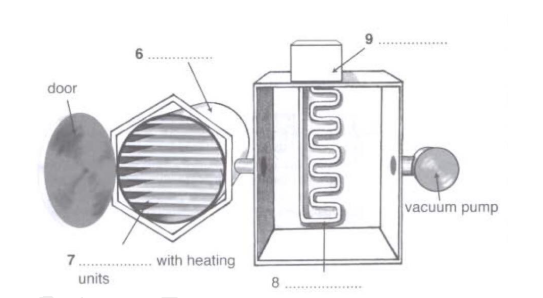
    For the process, the books are gently heated under vacuum for a day to remove residual traces of moisture. The chamber is then flushed with dry nitrogen gas for five hours to remove the remaining air before DEZ is introduced at a low pressure into the gas stream. DEZ is passed through for about eight hours. Unreacted DEZ is trapped out of the exit gases and recycled, while the ethane is burned off. When the process is complete, the chamber is purged with nitrogen to remove residual DEZ. The whole process takes about three days. The cost per book is about £2, considerably less than the £40 for digitising.

    This work was originally funded by the US Library of Congress, which has over 10 million books now at risk. According to Dick Miller, Akzo’s director for book preservation, tests have shown that the method can deal with hundreds of books at a time. A million books a year could be rescued by the new process, for which Akzo has been granted exclusive rights. The treated books should then survive for hundreds of years. Another national institution, the British Library, launched an adopt-a-book scheme to help it meet the costs of processing books. The British Library has so far raised over £80,000. But if the traditional method were used, this would barely cover a twentieth of one per cent of the two million books the Library needs to treat. Edmund King of the British Library’s preservation service says that the Library has developed another method which coats the individual fibres of the paper with ethyl acrylate polymer, protecting the books not only against acid attack but actually making them stronger. The British Library is now seeking an industrial partner to exploit its work.

    Questions 1-4
    Do the following statements agree with the information given in Reading Passage 1? In boxes 1-4 on your answer sheet, write

    TRUE if the statement agrees with the information
    FALSE if the statement contradicts the information
    NOT GIVEN If there is no information on this

    1. The Akzo preservation method is more expensive than other techniques.
    2. DEZ’s ability to neutralise acids is the reason why it is used as a preserving agent.
    3. The US Library of Congress has exclusive rights to the new book preserving process.
    4. Preservation scheme of the British Library is more efficient than the scheme of the US Library of Congress.

    Questions 5-8
    Choose FOUR letters A-H.

    Which FOUR of the following attributes describing diethyl zinc (DEZ) are mentioned in the passage?

    A it bursts into flames when it comes in contact with an
    B it forms a protective layer of zinc oxide on the surface of the paper
    C it changes acid into zinc sulphate throughout the paper
    D it reacts with acids to produce zinc salts and water
    E it can react with both acids and alkalis
    F the chemical reactions it causes make books heavier
    G it coats the fibres of the paper with ethyl acrylate polymer
    H it tends to retain water within the paper structure

    Questions 9-13
    Complete the flow chart below. Choose NO MORE THAN TWO WORDS from the passage for each answer.

    AKZO BOOK PRESERVING METHOD
    books are heated under vacuum in chambermoisture removed
    (9)………………..is circulated for five hoursresidual air removed
    diethyl zinc is channelled into (10)…………………..
    DEZ is circulatedleftover diethyl zinc is removed and (11)……………..ethane is removed and (12)…………..
    chamber is flushed using (13)…………………remaining diethyl zinc is removed
    Drugs And Obesity

    A Thin is in, in America. Not only fashion magazines, but also doctors proclaim the importance of a slim, healthy body. Yet despite the current obsession with the trim, taut and terrific body, Americans are putting on weight. In studies conducted in 1995, one quarter of Americans were found to be overweight. Fifteen years later, that number had risen to one third of the population.

    B In the past, doctors have always recommended a combination of diet and exercise to combat obesity. With the increase in the number of people who are overweight, however, this solution is increasingly being seen to be ineffective.

    C Given that diet and exercise often do not help produce weight loss, scientists are becoming convinced that, for many, obesity is a genetic disorder. In fact, a research group at Rockefeller University discovered in experiments on mice what is now called the obesity, or ‘ob’ gene. In turn, this discovery led to the identification of a hormone, leptin, that signals to the brain the amount of fat stored in the body. When injected into the rodents, the hormone reduced appetite and increased the body’s utilisation of calories, the energy produced by food which the body may convert to fat. With findings like these, a large number of medical experts are turning to a selection of drugs which appear to be safe and effective in reducing weight and maintaining lower weight levels.

    D Because they see obesity as an illness, these authorities claim that treatment should involve not only diet and exercise but drugs as well. What they have in mind is not just a short course of medication to produce small degrees of weight loss. They want to prescribe longterm, perhaps lifetime, drug therapies, just as they might for high blood pressure or diabetes. Obesity’s victims, these doctors hope, will not only be able to lose weight, but will also keep that weight off forever.

    E Not everyone in the medical community is satisfied with the new therapies. Conservatives are seriously worried that the new drugs are, in fact, merely placebos (‘medicines’ that have no medical effect but may benefit the patient psychologically), or, worse, are actually detrimental to patients’ health. Their concerns are understandable.

    F In the past, amphetamines—nicknamed ‘uppers’ or ‘speed’—were widely prescribed to control weight. Patients became slimmer, but suffered from tension and irritability, higher pulse rates, and sleepless nights, side effects that may have outweighed the medical benefits of lower body weight. Conservatives also point out that risky as amphetamines were, they were generally prescribed only for temporary use. Advocates of new drug treatments leave open the possibility that the medications will be prescribed for a lifetime.

    G While there are at least five now diet drugs waiting approval by the US Drug and Food Administration, at the moment, the only diet medication that is normally used in the US is ‘fen-phen’, a combination of the drugs fenfluramine and phentermine. Fenfluramine boosts serotonin, which elevates mood, while phentermine mimics other substances in the brain. Together, the drugs suppress appetite and increase the rate of burning of calories. As its success becomes more widely known, demand for this medication is increasing.

    H For several reasons, however, fen-phen is not the perfect diet medication. First, there is some debate over safety, although most fen-phen researchers say the drugs pose minor health risks compared with amphetamines. For most patients the short-term side effects are negligible; phentermine heightens alertness while persuading the body to burn more calories, and fenfluramine, thought to cut cravings for starches and sweets, can cause drowsiness. But some users experience a racing heartbeat and, although rarely, high blood pressure. While its effects are milder than those of amphetamines, the feeling of higher energy that fen-phen creates can be habit forming. Used alone, phentermine has enough of a positive psychological effect to appeal to recreational drug users, who call it ‘bumblebee’. Perhaps even more importantly for dieters, while the drug may cause initial weight loss, over a period of several years, subjects taking the drugs tended to regain some of the weight they had lost—although at a slower rate than those who did not take fen-phen.

    I Many conservative doctors, moreover, still remain reluctant to diagnose obesity as a disease. In a survey of 318 physicians, two thirds said their obese patients lacked self-control, and 39% described them as lazy. This traditional view holds that obesity results from a lack of discipline, correctable by diet and exercise.

    Since studies show that most dieters eat more than they say—or even think—they do, there is probably some truth in this view.

    J On the other hand, the traditional view is challenged by the discovery of the ‘ob’ gene, which would seem to place significant weight loss outside the individual’s control. Then there is the problem of the ever-increasing numbers of obese people, with the resulting increase in hypertension, and diabetes, leading to kidney failure and heart disease. All of these conditions require medication, and perhaps even costly equipment and surgery. If all of these effects of obesity must be treated with medication, then why not use medical treatment to help control body weight. Prevention is considered better than a cure, generally.

    Questions 14-20
    Reading Passage 2 has ten paragraphs, A-J. Which paragraph contains the following information?

    14. the traditionalist viewpoint under attack
    15. research findings concerning obesity as an illness
    16. details of the effects of fen-phen on dieters
    17. one group’s assessment of the new drugs
    18. conservative view on the causes of obesity
    19. data on weight gain within the population
    20. an explanation of the diet medication currently available

    Questions 21-26
    Complete the sentences. Choose NO MORE THAN THREE WORDS from the passage for each answer.

    The traditional weight-loss methods were seen as an (21)……………….solution to combating obesity.

    There was evidence to suggest that obesity is related to the body’s production of (22)………………and therefore is an illness.

    Some authorities are hopeful that long-term drug therapies will help (23)……………….sustain weight loss.

    The kind of (24)……………………..caused by amphetamines may have counteracted the medical benefits of weight loss.

    The heightened feeling some drugs create can be (25)…………………

    The discovery of the obesity gene seems to put the responsibility for losing weight outside (26)……………….

    The Development Of Artificial Life

    They come into a world where they must struggle to survive. Over many generations, they evolve. But are they alive? Of course, one might say. But the discussion is not about amoebae, ants or alligators. Rather, it’s about computer programs. The occurrence of artificial life’ exists only within PCs and more powerful computers, but its existence in the electronic universe parallels many elements of life in the biological world. Some programs flock like birds. Others organise like bees. Some mutate swiftly from chaotic hordes to complex, stable populations in a process similar to Darwinian evolution.

    As a group, artificial life programs represent the most exciting work on the edge of computer research. Study of artificial life holds promise for new ways of solving complex problems and fresh opportunities to model biology and society. Perhaps, far in the future, such research will yield the ability to blueprint living organisms. The basics behind artificial life are surprisingly simple. The programs follow a few simple rules, applying them with a speed and persistence that’s possible only inside a computer. When many such programs are run simultaneously, amazingly complex patterns can emerge. In many cases, these patterns seem like strange replications of natural behaviours.

    Programs work together against common enemies and devise new ways of surviving when their environment changes. These results aren’t surprising when you consider that biological life itself consists of nothing more than variations on four simple bits of code: the four compounds that constitute DNA, the building block of all genes and therefore all life. In artificial life, computer instructions take the place of DNA code. The father of modern artificial life, research, Christopher Langton of the Los Alamos National Laboratory in the U.S., sees his work this way: ‘For us, artificial life is the study of man-made systems that exhibit behaviours characteristic of natural living systems. We’re attempting to abstract logical forms of life, not matter. We can obtain some of the same dynamics as life, albeit with different materials.’

    Langton took up the study of self-replicating programs begun earlier by John von Neumann, a Hungarian mathematician whose theories contributed to the development of the programmable digital computer. An example of how programs mimic biology can be found in cellular automata (cell-like machines): structures that arise from tiny programs that each display a seemingly independent existence based on a few simple rules. Analogies between programs like this and actual life forms are inevitable. When simulated organisms cluster together, leaving rectilinear tracks on the screen, researchers call them ants’. When they do this in a three-dimensional model, they’re called ‘bees’. And perhaps the most disturbing analogy with biological life can be found in computer viruses’, self-replicating programs that display purposeful behaviour and tolerate any small physical changes in their environment.

    Although some scientists regard viruses as the first programs capable of existing without the wilful cooperation of humans, the fact is that without humans to design them, they wouldn’t exist at all. Still, some of the work demonstrated at a recent gathering of the artificial life research group evoked confused excitement. ‘During five intense days’, said Langton, ‘we saw a wide variety of models of living systems, including mathematical models for the origins of life, self-reproducing automata, computer programs using the mechanisms of Darwinian evolution to produce co-adapted ecosystems, simulations of flocking birds and schooling fish, the growth and development of artificial plants, and much, much more.’

    Craig Reynolds of Symbolics demonstrated his ‘boids’, computer-animated, bird-shaped creatures that flock like real birds. Reynolds programmed the ‘boids’ to follow three simple rules: they maintain a minimum distance from the nearest object; they match velocity with the nearby flock; and they fly toward the greatest concentration of the flock. The resulting flocking behaviour is shockingly real. ‘Ants’, the creation of David Jefferson and Robert Collins, also appeared. Colonies of these randomly generated creatures have developed the ability to navigate electronic mazes and search for symbols that represent food.

    Independent programmer John Nagle argued that the next generation of supercomputers should challenge researchers to create ‘squirrels’, computer models with the intelligence level of a biological rodent with one gram of brain mass. Langton’s contribution, ‘Computation at the edge of chaos’, was one of the most unusual presentations. Biologists maintain that life began in a spontaneous outburst of activity that occurred when Earth’s environment reached critical thresholds of heat, atmosphere and chemical composition. A few variations on any of these variables would have altered the course of the planet into either chaos or barrenness.

    Langton’s presentation was based on a computer model demonstrating similar principles. Changing a parameter in the model acts like changing the temperature of a computer-generated petri dish of single-cell creatures. When this variable passes a critical threshold, the colonies of Langton’s artificial life programs neither freeze nor evaporate but settle into recurring patterns conducive to the orderly transmission of information. ‘At one end, activity freezes; at the other end, it’s too volatile,’ notes Langton. As a result, he wonders whether ‘computation may emerge spontaneously and come to dominate the dynamics of physical systems’ much as life has. In fact, Langton speculates that life itself may have started as a chance computation on the cusp of liquid and gaseous states.

    Questions 27-33
    Complete the summary below. Choose NO MORE THAN THREE WORDS from the passage for each answer.

    Research has shown there are possible similarities between the ‘real’ or (27)……………….and computer programs. In studying so-called (28)……………………. scientists have found that images from computer-generated graphics seem to imitate the behaviour of insects and birds, while others mutate from the disorderly into highly organised populations much like in (29)…………………Artificial life programs may allow researchers to re-evaluate models of biology and society, and may even provide the possibility to (30)…………………….living organisms. Patterns which can emerge from such programs replicate (31)…………………. Being able to adapt to environmental changes, these programs mimic (32)…………………….which, essentially, is built upon four basic codes of information. The only difference, however, is that their DNA code is replaced by (33)……………….

    Questions 34-37
    Look at the following artificial life programs (Questions 34 37) and the list of descriptions below. Match each artificial life program with the appropriate: description, A-H.

    34. Bees
    35. Boids
    36. Squirrels
    37. Ants

    List of Descriptions

    A can match the intelligence of a bird
    B can group together in a rectangular form
    C can cluster together moving in straight lines in 3D
    D will have a gram of intelligence
    E can keep a minimum distance from another object
    F are able to group and form a track in 3D
    G will be as intelligent as a rodent…..
    H are capable of locating symbols depicting food

    Questions 38-40
    Choose the appropriate letter, A, B or C.

    38. Researchers studying artificial life are trying to
    A find how life forms impact on computer programs.
    B study behavioural characteristics exhibited by man.
    C identify logical forms which correspond to living matter.

    39. Computer virus programs
    A can change behaviour to suit their environment,
    B resemble biological life closely but need human input,
    C can create biological life independently of humans,

    40. Researchers argue that life itself started
    A on the basis of chemical variations.
    B by chance, spontaneously in a particular environment.
    C by a spontaneous computation of physical activity.

  • IELTS Reading Practice Test – Exercise 192

    Myths About Public Speaking

    A Fear of public speaking results not only from what one does not know or understand about public communication, but also from misconceptions and myths about public encounters. These misconceptions and myths persist among professional people as well as the general public. Persistent myths about public communication simply increase fear in people and prevent their development into competent public speakers.

    B Perhaps the most persistent myth about public communication is that it is a ‘special’ activity reserved for unusual occasions. After all, public speeches are not made that often. There are only a few special occasions during the year when even an outgoing professional person will step behind a podium to give a public speech, and many professional people can count on one hand the number of public speeches given in a career. Surely, then, public communication is a rare activity reserved for especially important occasions. This argument, of course, ignores the true nature of public communication and the nature of the occasions in which it occurs. To engage with people whom one does not know well, to solve problems, share understanding and perspectives, advocate points of view, or seek stimulation, means to engage in public speaking. Public communication, therefore, is a familiar, daily activity which occurs in the streets, restaurants, boardrooms, courtrooms, parks, offices, factories and meetings. Contrary to widespread misunderstandings, public speaking is not an unusual activity reserved for special occasions and restricted to the lectern or the platform. Rather it is, and should be developed as, an everyday activity occurring in any location where people come together.

    C A related misconception about public communication is the belief that the public speaker is a specially gifted individual with innate abilities and God-given propensities. While most professional people would reject the idea that public speakers are born, not made, they never the less often feel that the effective public communicator has developed unusual personal talents to a remarkable degree. At the heart of this misconception—like the myth of public speaking as a ‘special’ activity—is an overly narrow view of what a public person is and does. Development as an effective public communicator begins with the understanding that it is not necessary to be a nationally-known, speak-for-pay, professional platform speaker to be a competent public person. The public speaker is an ordinary person who confronts the necessity of being a public person and uses common abilities.

    D A less widespread but serious misconception of public speaking is reflected in the belief that public speeches have a lasting purpose. A public speech is something viewed as an historical event which will be part of a continuing and generally available public record. Some public speeches are faithfully recorded, transcribed, reproduced and made part of broadly available historical records. Those instances are rare compared to the thousands of unrecorded public speeches made’ every day. Public communication is usually situation-specific and ephemeral. Most audiences do well if they remember as much as 40 per cent of what a speaker says immediately after the speaker concludes; even less is retained as time goes by. This fact is both reassuring and challenging to the public communicator. On the one hand, it suggests that there is room for human error in making public pronouncements; on the other hand, it challenges the public speaker to overcome the poor listening habits of most audiences.

    E Finally, professional people, perhaps more than other groups, often subscribe to the misconception that public communication must be an exact science, that if it is done properly it will succeed. The troublesome corollary to this reasoning is that if public communication fails, it is because it was improperly prepared or executed. This argument unfortunately ignores the uncertainties of human interaction. Public speakers achieve their goals through their listeners, and the only truly predictable aspect of human listeners is their unpredictability. Further, public messages may succeed despite inadequate preparation and dreadful delivery.

    F It should be added that professional people often mismanage their fears of public communication. However, once an understanding of what public encounters assume and demand, once the myths which handicap the growth of a public person are unburdened, development as a competent public communicator can properly begin.

    Questions 1-5
    Reading Passage 1 has six sections, A-F. Which section contains the following information?

    1. A person’s ability to be a public speaker
    2. Conditions under which one begins developing as a public speaker
    3. A definition of public speaking
    4. The relationship of preparation to success in public speaking
    5. Reasons why public speaking is feared

    Questions 6-11
    Do the following statements agree with the claims of the writer in Reading Passage 1? In boxes 6-11 on your answer sheet, write:

    YES if the statement agrees with the views of the writer
    NO if the statement contradicts the views of the writer
    NOT GIVEN if it is impossible to say what the writer thinks about this

    6. An ongoing misunderstanding about public communication is that it is an uncommon activity.
    7. Expressing a point of view does not fall into the category of engaging in public communication.
    8. Most professional people believe that good public communicators are born, not made.
    9. There is little place for public speaking in the life of the ordinary person.
    10. Public speaking can be learned at specially designated schools.
    11. It is impossible to predict how a speech will be received.

    Questions 12-13
    Complete the sentences below. Choose NO MORE THAN THREE WORDS from the passage for each answer.

    The writer defines public speaking as any activity where people jointly explore problems, knowledge and opinions, or look for (12)…………………..

    One of the most difficult challenges facing a public speaker is dealing with the (13)…………………..of audiences.

    Environmental Effects Of Offshore Drilling And Production

    A main public concern about petroleum exploration and production seems to be that a blowout will cause a major oil spill.

    Oil often exists in the subsurface at great pressure and, in the early days, when wells were drilled with only air or water in the hole, the oil could rush into and up the hole and ‘blowout’ at the surface.

    For reasons of economy and safety, the early oil men soon put a. stop to that practice. Rotary drilling technology developed rapidly, including special drilling fluids with additives to control their density and consistency, and counterbalance the pressure of inflowing oil or gas. Modern drilling rigs are also fitted with blowout prevention controls: complex systems of metal clamps and shutters which can be used to seal the hole if unexpected high pressures are encountered.

    There can be no denying that major blowouts still occur, and cause loss of life, as well as severe ecological trauma and economic loss.

    AUSTRALIAN DRILLING RECORD
    • Total number of incident on offshore facilities over a 30-year period, involving spills 320 litres, or causing injury or damage – 51
    • Platform oil spills – 27
    • Explosions and fires – 13
    • Blowout – 6
    • Pipeline breaks and leaks – 2
    • Other – 3
    • Total number of wells drilled – 1.100
    • Total number of kilolitres (barrels) of oil produced – 480,000,000 (3,100,000,000)
    • Total number of kilolitres (barrels) of oil spilt – 70 (440)
    • Largest single spill in kilolitres (barrels) – 10 (63)

    Source: Oil Spills in the Commonwealth of Australia offshore areas connected with Petroleum Exploration and Development Activities. Department of Primary Industries and Energy. Fortunately, the available technology and proper precautions make them very rare events. Since offshore drilling commenced in Australia in the mid-twentieth century, there has not been a single oil blowout.

    On the other hand, six gas blowouts occurred during that time: five in Bass Strait and one in the Timor Sea. The Bass Strait blowouts were all controlled relatively quickly; the Petrel well in the Timor Sea flowed gas for 15 months.

    It is a comment on improving technology and safety procedures that four of the incidents occurred in the initial decades of offshore drilling. The number of incidents, however, declined progressively over time.

    The statistics on oil spills from offshore exploration and production in Australian Commonwealth waters are shown in the adjacent table. The total spill- age, over a 30-year period, is roughly equivalent in size to a large backyard swimming pool (70 kilolitres). The main spills have actually occurred in the loading of fuel onto production platforms; they had nothing to do with the oil well itself.

    In addition to the oil spill issue, there are concerns about other discharges from the drilling and production facilities: sanitary and kitchen wastes, drilling fluid, cuttings and produced water. Putrescible sanitary and kitchen wastes are discharged into the ocean but must be processed in accordance with regulations set by the Federal government. This material is diluted rapidly and contributes to the local food chain, without any risk of nutrient oversupply. All solid waste must be brought ashore. The cuttings are sieved out of the drilling fluid and usually discharged into the ocean. In shallower waters they form a low mound near the rig; in deeper water a wider-spread layer forms, generally within one kilometre of the drill site, although this depends on a number of factors. Some benthic (bottom-dwelling) organisms may be smothered, but this effect is local and variable, generally limited to within about 100 metres of the discharge point. Better-adapted organisms soon replace them and storm-driven wave activity frequently sweeps away the material.

    Drilling fluid is also discharged directly into the ocean. Most of the common constituents of water-based fluids used in Australia have low-to-nil toxicity to marine organisms. Some additives are toxic but are used in small concentrations and infrequently. The small amounts of heavy metals present are not absorbed into the bodies of marine organisms, and therefore it is unlikely that they would pose a problem for animals higher up the food chain. Field studies have shown that dilution is normally very rapid, ranging to 1,000-fold within 3 metres of the discharge point. At Rivoli-1 well in Exmouth Gulf, the input was chemically undetectable 560 metres away.

    Oil-based drilling fluids have a more toxic component, and discharge to the marine environment is more significant. However, they are used only rarely in Australia, and the impact remains relatively local. At Woodside’s North Rankin A Platform offshore Western Australia, the only facility currently using oil-based fluids, the discharge is diluted 2,000-fold within 1 kilometre downcurrent, and undetectable beyond 200 metres either side. In the event of a discovery, the presence of a permanent production facility and the discharge of ‘produced water are additional concerns. Produced water is the water associated with the oil or gas deposit, and typically contains some petroleum, dissolved organic matter and trace elements. Most produced water is effectively non-toxic but, even when relatively toxic, is quickly diluted to background levels.

    The impact occurs mainly within about 20 metres of the discharge point, but is observable in some instances for about 1 kilometre downcurrent. Government regulations limit the oil content allowed to be discharged, and the produced water is treated on the platforms to meet those specifications, The discharge points are carefully selected to maximise dispersion and dilution, and avoid any particularly sensitive local environments. Ultimately the best test of the real environmental effect of drilling and producing operations may be the response of the environment to the fixed production platforms. In many areas the platforms quickly become artificial reefs, with the underwater supports of the platforms providing a range of habitats, from sea-bottom to surface, and quickly colonised by a wide range of marine plants and animals.

    Questions 14-16
    Choose the appropriate letter, A, B, C or D.

    14. Oil sometimes ‘blows out’ of a drilling hole because
    A The technology has developed too quickly.
    B Special drilling fluids are used.
    C The surface pressure is not stable.
    D Oil exists under pressure under the ground.

    15. Sudden high pressure can be controlled using
    A Special valves which seal any holes.
    B Metal clamps and shutters fitted to the rig.
    C Water to counterbalance the pressure of the oil.
    D Rubber pressure valves fitted to the rig.

    16. Since offshore drilling began in Australia
    A Oil and gas blowouts have been a major problem.
    B Oil blowouts have occurred occasionally.
    C Most gas blowouts were rapidly controlled.
    D Gas blowouts have occurred regularly up to the present,

    Questions 17-19
    Answer the questions below. Choose NO MORE THAN THREE WORDS AND/OR A NUMBER from the passage for each answer.

    17. How much oil was spilt in the largest accident on offshore facilities?
    18. How many incidents were the result of blowouts?
    19. According to the table, what was the major cause of spillage of oil?

    Questions 20-27
    Complete the table. Choose NO MORE THAN THREE WORDS from the passage for each answer.

    Types of dischargeSource/ locationComments
    Putrescible wastesthe oceannutrients for the (20)………………
    (21)…………………….on shoreno discharging into the ocean
    (22)…………………..the oceanimpact on benthic organisms is (23)………………..
    Drilling fluidwater based fluidstoxic additives, such as (24)…………………not absorbed by marine organisms
    (25)……………..impact of toxins on marine environment is local
    Produced wateroil or (26)……………….mostly non-toxic which are quickly reduced in strength to (27)……………….
    Garbage In Garbage Out

    There are many ways of obtaining an understanding of people’s behaviour. One of these is to study the objects discarded by a community, objects used in daily lives. The study of the refuse of a society is the basis for the science of archaeology in which the lives and behaviour of past societies are minutely examined. Some recent studies have indicated the degree to which rubbish is socially defined.

    For several years the University of Arizona, USA, has been running a Garbage Project, in which garbage is collected, sorted out and noted. It began with an arrangement whereby the City of Tucson collected for analysis garbage from randomly selected households in designated census collection districts. Since then the researchers have studied other cities, both in the USA and Mexico, refining their techniques and procedures in response to the challenges of validating and understanding the often unexpected results they have obtained. Garbage is sorted according to an extremely detailed schedule, a range of data for each item is recorded on a standardised coding form, and the researchers cross-tabulate their findings with information from census and other social surveys.

    This project arose out of courses designed to teach students at the University the principles of archaeological methodology and to sensitise them to the complex and frequently surprising links between cultural assumptions and physical realities. Often a considerable discrepancy exists between what people say they do—or even think they do—and what they actually do. In one Garbage Project study, none of the Hispanic (Spanish-speaking) women in the sample admitted to using as much as a single serving of commercially-prepared baby food, clearly reflecting cultural expectations about proper mothering. Yet garbage from the Hispanic households with infants contained just as many baby food containers as garbage from non-Hispanic households with infants.

    The project leaders then decided to took not only at what was thrown away, but what happened to it after that. In many countries waste is disposed of in landfills; the rubbish is compacted and buried in the ground. So the project expanded its activities to include the excavation of landfills across the United States and Canada. Surprisingly, no-one had ever attempted such excavations before.

    The researchers discovered that far from being sites of chemical and biological activity, the interiors of waste landfills are rather inactive, with the possible exception of those established in swamps. Newspapers buried 20 or more years previously usually remained perfectly legible, and a remarkable amount of food wastes of similar age also remained intact.

    While discarded household products such as paints, pesticides, cleaners and cosmetics result in a fair amount of hazardous substances being contained in municipal landfills, toxic leachates pose considerably less danger than people fear, provided that a landfill is properly sited and constructed. Garbage Project researchers have found that the leachates do not migrate far, and tend to get absorbed by the other materials in the immediate surrounds.

    The composition of landfills is also strikingly different from what is commonly believed. In a recent US survey people were asked whether particular items were a major cause of garbage problems. Disposable nappies (baby diapers) were identified as a major cause by 41 per cent of the survey respondents, plastic bottles by 29 per cent, all forms of paper by six per cent, and construction debris by zero per cent. Yet Garbage Project data shows that disposable nappies make up less than two per cent of the volume of landfills and plastic bottles less than one per cent. On the other hand, over 40 per cent of the volume of landfills is composed of paper and around 12 per cent is construction debris.

    Packaging—the paper and plastic wrapping around goods bought— has also been seen as a serious cause of pollution. But while some packaging is excessive, the Garbage Project researchers note that most manufacturers use as little as possible, because less is cheaper. They also point out that modern product packaging frequently functions to reduce the overall size of the solid-waste stream.

    This apparent paradox is illustrated by the results of a comparison of garbage from a large and socially diverse sample of households in Mexico City with a similarly large and diverse sample in three United States cities. Even after correcting for differences in family size,

    US households generated far less garbage than the Mexican ones. Because they are much more dependent on processed and packaged foods than Mexican households, US households produce much less food debris. (And most of the leaves, husks, etc. that the US processor has removed from the food can be used in the manufacture of other products, rather than entering the waste stream as is the likely fate with fresh produce purchased by households.)

    One criticism made of Western societies is that the people are wasteful, and throw things away while they are still useable. This, however, does not seem to be true. Garbage Project data showed that furniture and consumer appliances were entering the solid waste stream at a rate very much less than would be expected from production and service-life figures. So the researchers set up a study to track the fate of such items and thus gained an insight into the huge informal and commercial trade in used goods that rarely turns up in official calculations and statistics.

    The Garbage Project’s work shows how many misconceptions exist about garbage. The researchers are therefore critical of attempts to promote one type of waste management, such as source reduction or recycling, over others, such as incineration or landfilling. Each has its advantages and disadvantages, and what may be appropriate for one locality may not be appropriate for another.

    Questions 28-34
    Complete the summary. Choose NO MORE THAN THREE WORDS from the passage for each answer. Write your answers in boxes 28-34 on your answer sheet.

    THE GARBAGE PROJECT

    Studying the (28)……………………of a community is one means by which an understanding of peoples behaviour can be obtained. Researchers running a Garbage Project found from their initial analysis of collected garbage that it was necessary to refine their techniques and procedures because of the difficulties they faced in substantiating some (29)……………………. The investigation involved entering data on a standardised coding form and comparing these results with those from other (30)…………………. The Garbage Project actually came about through courses aimed at teaching archaeological methodology and making students aware of the often unexpected connection between (31)………………………and what in fact happens in reality. This kind of (32)…………………was observed in a sample of Hispanic women who claimed not to have used store-bought baby food, obviously expressing that which would be culturally expected insofar as (33)…………………….is concerned. Their household garbage, however, told another story. It had the same quantity of (34)………………. as the non-Hispanic households with infants.

    Questions 35-40
    Look at the following misconceptions about garbage and the list of counter arguments below. Match each misconception with the appropriate counter argument.

    35. Certain household items are a major cause of garbage problems in landfills.
    36. Western households generate far more waste than others.
    37. Germs and bacteria are active and widespread in landfills.
    38. Western societies waste many useable items.
    39. Harmful substances are widespread in municipal landfills.
    40. Paper wrapping is wasteful and causes excess garbage.

    List of Counter Arguments
    A Toxins are contained in designated sites only.
    B Fresh food creates less debris.
    C Perishable items are often almost unchanged, even after long periods of time
    D It is used sparingly in the manufacturing industry
    E Businesses process food debris into other products.
    F Household goods constituted a smaller-than-expected part of solid waste
    G Disposable nappies make up less than 2% of landfills
    H Leachates are confined to surrounding areas.
    I It is used far more efficiently by manufactures these days.
    J Paper constitutes 6% of landfill.

  • IELTS Reading Practice Test – Exercise 191

    Weathering In The Desert

    A In the deserts, as elsewhere, rocks at the earth’s surface are changed by weathering, which may be defined as the disintegration of rocks where they lie. Weathering processes are either chemical, when alteration of some of the constituent particles is involved; or mechanical, when there is merely the physical breaking apart and fragmentation of rocks. Which process will dominate depends primarily on the mineralogy and texture of the rock and the local climate, but several individual processes usually work together to the common end of rock disintegration.

    B The great daily changes in temperature of deserts have long been supposed to be responsible for the disintegration of rocks, either by the differential heating of the various rock-forming minerals or by differential heating between the outer and inner parts of rock masses. However, both field observations and laboratory experiments have led to a reassessment of the importance of ’ exposure to the sun’s rays in desert weathering. Almost half a century ago Barton remarked that the buried parts of some of the ancient monuments in Egypt were more weathered than were those parts fully exposed to the sun’s rays, and attributed this to the effects of water absorption below the ground surface. Laboratory experiments have shown that rocks subjected to many cycles of large temperature oscillations (larger than those experienced in nature) display no evidence of fissuring or fragmentation, as a result. However, when marked fluctuations of temperature occur in moist conditions small rock fragments quickly form.

    C The expansive action of crystallising salts is often alleged to exert sufficient force to disintegrate rocks. Few would dispute that this mechanism is capable of disrupting fissile or well-cleaved rocks or rocks already weakened by other weathering agencies; wood is splintered, terracotta tiles disintegrated and clays disturbed by the mechanism, but its importance when acting upon fresh and cohesive crystalline rocks remains uncertain.

    D Weathering achieves more than the disintegration of rocks, though this is its most important geomorphic effect. It causes specific landforms to develop. Many boulders possess a superficial hard layer of iron oxide and/or silica, substances which have migrated in solution from the inside of the block towards the surface. Not only is the exterior thus case-hardened but the depleted interior disintegrates easily. When weathering penetrates the shell the inside is rapidly attacked and only the hard outer layer remains to give hollowed or ‘tortoiseshell’ rocks.

    E Another superficial layer, the precise nature of which is little understood, is the well-known desert varnish or patina, a shiny coat on the surface of rocks and pebbles and characteristic of arid environments. Some varnishes are colourless, others light brown, yet others so dark a brown as to be virtually black. It’s origin is unknown but is significant, for it has been suggested that the varnish grows darker with the passage of time; obviously before such a criterion could be used with confidence as a chronological tool its origin must be known with precision. Its formation is so slow that in Egypt, for example, it has been estimated that a light brown coating requires between 2,000 and 5,000 years to develop, a fully formed blackish veneer between 20,000 and 50,000 years.

    F The development of relatively impermeable soil horizons that are subsequently exposed at the surface because of erosion of once overlying, easily eroded materials, and which thus become surface crusts, is widespread in arid regions, although it is also known outside the deserts, and indeed many of the examples in arid lands probably originated in former periods of humid climate. The crusts prevent the waters of occasional torrential downpours from penetrating deeply into the soil, and thus they contribute to the rapid run-off associated with desert storms. Also, after erosion has cut through the crust and exposed underlying soil layers, the hard layer forms a resistant capping (duricrust) on plateaux and mesas, such as are common in many parts of arid and semi-arid Australia.

    G Some duricrust layers have been used as time markers for landforms and geological formations. The necessary conditions for this are that the crust forms fairly rapidly, and that it is sufficiently distinct in appearance to preclude the possibility of confusion with other crusts formed at other times. The Barrilaco calcrete of Mexico for instance is believed to date from about 7,000 B.C. The main silcrete of the northern districts of South Australia is believed to date from the Lower Miocene, the laterite of northern Australia to be of the Lower or Middle Miocene age.

    Questions 1-7
    Reading Passage 1 has seven sections, A-G. Which paragraph contains the following information?

    1. the idea that crystalline salts may not disintegrate solid rock as easily as other substances
    2. the fact that daily temperature changes cause rocks to weather may not be as important as supposed
    3. the regions where weathering creates a thick layer of earth that water cannot penetrate easily
    4. the fact that weathering not only breaks down rocks, but also shapes the landscape
    5. the idea of using impenetrable layers of earth to measure chronology
    6. the two different kinds of weathering in rocks
    7. the possibility of using the colour of the shiny surface on rocks to measure chronology

    Questions 8-13
    Do the following statements agree with the information given in Reading Passage 1? In boxes 8-13 on your answer sheet, write

    TRUE if the statement agrees with the information
    FALSE if the statement contradicts the information
    NOT GIVEN If there is no information on this

    8. Desert rocks can become weathered when there is a chemical reaction within the rock.
    9. The parts of Egyptian monuments exposed to sunlight were found to be affected by the weather more than those below the ground.
    10. Granite which has been subjected to huge temperature swings tends not to exhibit any signs of disintegration as a result.
    11. It is estimated that dark patina originated between 2,000 and 5,000 years ago.12. Because of surface crusts, water from torrential rains cannot be fully absorbed into the ground and as a result causes run offs in arid regions.
    13. Duricrust layering is no longer used as an indicator of time because of the confusion with similar crusts.

    Fashion And Society: A Historical Perspective

    In all societies the body is ‘dressed’, and everywhere dress and adornment play symbolic and aesthetic roles. The colour of clothing often has special meaning: a white wedding dress symbolising purity; or black clothing indicating remembrance for a dead relative. Uniforms symbolise association with a particular profession. For many centuries purple, the colour representing royalty, was to be worn by no one else. And of course, dress has always been used to emphasise the wearer’s beauty, although beauty has taken many different forms in different societies. In the 16th century in Europe, for example, Flemish painters celebrated women with bony shoulders, protruding stomachs and long faces, while women shaved or plucked their hairlines to obtain the fashionable egg-domed forehead. These traits are considered ugly by today’s fashion.

    The earliest forms of ‘clothing’ seem to have been adornments such as body painting, ornaments, scarifications (scarring), tattooing, masks and often constricting neck and waist bands. Many of these deformed, reformed or otherwise modified the body. The bodies of men and of children, not just those of women, were altered: there seems to be a widespread human desire to transcend the body’s limitations, to make it what it is, by nature, not.

    Dress in general seems then to fulfil a number of social functions. This is true of modern as of ancient dress. What is added to dress as we ourselves know it in the west is fashion, of which the key feature is rapid and continual changing of styles. The growth of the European city in the 14th century saw the birth of fashion. Previously, loose robes had been worn by both sexes, and styles were simple and unchanging. Dress distinguished rich from poor, rulers from ruled, only in that working people wore more wool and no silk, rougher materials and less ornamentation than their masters.

    However, by the 14th century, with the expansion in trade, the growth of city life, and the increasing sophistication of the royal and aristocratic courts, rapidly changing styles appeared in western Europe. These were associated with developments in tailored and fitted clothing; once clothing became fitted, it was possible to change the styling of garments almost endlessly. By the 15th and 16th centuries it began to seem shameful to wear outdated clothing. So those who could afford to do so began discarding unfashionable clothing simply because it was not in style. Cloth, which was enormously expensive, was literally, and symbolised, wealth in medieval society.

    In modern western societies there is no form of clothing which has not felt the impact of fashion: fashion sets the terms of all dress behaviour. Even uniforms have been designed by some of the top fashion houses; even the dress code in the workplace has shifted from formal, business attire to the more relaxed, smart casual look; even the less affluent enjoy haute couture – they wear cheaper versions of the top designs and top labels.

    Even the unfashionable wear clothes that represent a reaction against what is in fashion. To be unfashionable is not to ignore fashion; it is rather to protest against the social values of the fashionable. Last century the hippies of the 1960s created a unique appearance out of an assortment of second hand clothes, craft work and army surplus, as a protest against the wastefulness of the consumer society. They rejected the way mass production ignored individuality, and also the wastefulness of luxury.

    Looked at in historical perspective, the styles of fashion display a mad relativism. At one time the rich wear cloth of gold embroidered with pearls, at another beige cashmere and grey suiting. In one epoch men parade in elaborately curled hair, high heels and rouge, at another to do so is to court outcast status and physical abuse. It is in some sense inherently ironic that a new fashion starts from rejection of the old and often an eager embracing of what was previously considered ugly. A case in point is the outlandish, fashion statement made by the non-conforming, rebellious youth of today who have tattoos, metal studs and body piercings. They defied mainstream fashion only to see their defiance become the fashion of the day in the broader community. Moreover, having once defined style in centuries past, these adornments have now come full circle.

    Despite its apparent irrationality, fashion cements social solidarity and imposes group norms. It forces us to recognise that the human body is not only a biological entity, but an organism in culture. To dress the way that others do is to signal that we share many of their morals and values. Conversely, deviations in dress are usually considered shocking and disturbing. In western countries a man wearing a pink suit to a job interview would not be considered for a position at a bank. He would not be taken seriously. Likewise, even in these ‘liberated’ times, a man in a skirt in many western cultures causes considerable anxiety, hostility or laughter.

    However, while fashion in every age is normative, there is still room for clothing to express individual taste. In any period, within the range of stylish clothing, there is some choice of colour, fabric and style. This was even more true last century, because in the 20th century, fashion, without losing its obsession with the new and the different, was mass produced. Originally, fashion was largely for the rich, but since the industrial period the mass production of fashionably styled clothes has made possible the use of fashion as a means of self-enhancement and self-expression for the majority.

    Questions 14-19
    Complete the table below. Use NO MORE THAN THREE WORDS AND/OR A NUMBER from the passage for each answer.

    PeriodClothing behaviorTypes of clothing
    Earliest timeswearing (14)…………………body painting, tattooing, masks
    Pre- (15)………………simple, unchanging styles(16)……………….
    14th century(17)…………………….(18)…………………
    15th-16th century(19)……………………use of cloth

    Questions 20-23
    Complete each sentence with the appropriate ending, A-J, below.

    20. The styling of apparel
    21. Wearing outdated clothing
    22. The impact of fashion
    23. Mass production of fashionable clothing

    A allowed the less affluent to buy styled clothes.
    B was fell by top designers seeing fake, less expensive designer clothing on the market.
    C was made possible with the development of tailored and fitted clothing.
    D gave the individual a means of self-expression.
    E caused anxiety and hostility in western cultures.
    F was made possible with the increase in sophistication of the royal courts.
    G was seen as something shameful in earlier times.
    H had little effect on nonconforming youth.
    I distinguished the rich from the poor in earlier times.
    J was felt in the workforce with the change to informal wear.

    Questions 24-26
    Answer the questions below. Choose NO MORE THAN ONE WORDS from the passage for each answer. Write your answers in boxes 24-26 on your answer sheet.

    24. A kind of adornment worn by defiant young people these days besides body piercings and metal studs
    25. What was a symbol of wealth in medieval times?
    26. Name ONE group of people who protested against the social values of the fashionable.

    Mass Production

    Car manufacturer Henry Ford s 1908 Model T automobile was his twentieth design over a five-year period that began with the production of the original Model A in 1903. With his Model T, Ford finally achieved two objectives. He had a car that was designed for manufacture, and one that was easily operated and maintained by the owner. These two achievements laid the groundwork for the revolutionary change in direction for the entire motor vehicle industry.

    The key to mass production wasn’t the moving, or continuous, assembly line. Rather, it was the complete and consistent interchangeability of parts and the simplicity of attaching them to each other. These were the manufacturing innovations that made the assembly line possible. To achieve interchangeability, Ford insisted that the same gauging system be used for every part all the way through the entire manufacturing process. Previously, each part had been made to a slightly different gauge, so skilled fitters had to file each part individually to fit onto the other parts of the car. Ford’s insistence on working to gauge throughout was driven by his realisation of the payoff he would get in the form of savings on assembly costs. Ford also benefited from recent advances in machine tools able to work on pre-hardened metals. The warping or distortion that occurred as machined parts were being hardened had been the bane of previous attempts to standardise parts. Once the warping problem was solved, Ford was able to develop innovative designs that reduced the number of parts needed and made these parts easy to attach. For example, Ford’s four-cylinder engine block consisted of a single, complex casting. Competitors cast each cylinder separately and bolted the four together. Taken together, interchangeability, simplicity, and ease of attachment gave Ford tremendous advantages over his competition.

    Ford’s first efforts to assemble his cars, beginning in 1903, involved setting up assembly stands on which a whole car was built, often by one fitter. In 1908, on the eve of the introduction of the Model T, a Ford assembler’s average task cycle, that is the amount of time he worked before repeating the same operations, totalled 514 minutes, or 8.56 hours. Each worker would assemble a large part of a car before moving on to the next. For example, a worker might put all the mechanical parts, such as wheels, springs, motor, transmission and generator, on the chassis (body), a set of activities that took a whole day to complete. The assembler/fitters performed the same set of activities over and over at their stationary assembly stands. They had to get the necessary parts, file them down so they would fit (Ford hadn’t yet achieved perfect interchangeability of parts), then bolt them in place.

    The first step Ford took to make this process more efficient was to deliver the parts to each workstation. Now the assemblers could

    remain at the same spot all day. Later in 1908, when Ford finally achieved perfect part interchangeability, he decided that the assembler would perform only a single task and move from vehicle to vehicle around the assembly hall. By August of 1913, just before the moving assembly line was introduced, the task cycle for the average Ford assembler had been reduced from 514 to 2.3 minutes. Naturally, this reduction spurred a remarkable increase in productivity, partly because complete familiarity with a single task meant the worker could perform it faster, but also because all filing and adjusting of parts had by now been eliminated. Workers simply popped on parts that fitted every time.

    Ford soon recognised the problem with moving the worker from assembly stand to assembly stand: walking, even if only for a yard or two, took time, and jam-ups frequently resulted as faster workers overtook the slower workers in front of them. Ford’s stroke of genius in the spring of 1913, at his new Highland Park plant in Detroit, was the introduction of the moving assembly line, which brought the car past the stationary worker. This innovation cut cycle time from 2.3 minutes to 1.19 minutes; the difference lay in the time saved in the worker’s standing still rather than walking and in the faster work pace which the moving line could enforce. The moving assembly sped up production so dramatically that the savings Ford could realise from reducing the inventory of parts waiting to be assembled far exceeded this trivial outlay.

    Even more striking, Ford’s discovery simultaneously reduced the amount of human effort needed to assemble an automobile. What’s more, the more vehicles Ford produced, the more the cost per vehicle fell. Even when it was introduced in 1908, Ford’s Model T, with its fully interchangeable parts, cost less than its rivals. By the time Ford reached peak production volume of 2 million identical vehicles a year in the early 1920s, he had cut the real cost to the consumer by an additional two-thirds.

    To appeal to his target market of average consumers, Ford had also designed unprecedented ease of operation and maintainability into his car. He assumed that his buyer would be a farmer with a modest tool kit and the kinds of mechanical skills needed for fixing farm machinery. So the Model T’s owner’s manual explained in 64 pages how the owner could use simple tools to solve any of the 140 problems likely to occur with the car.

    Ford’s competitors were as amazed by this designed-in repairability as by the moving assembly line. This combination of competitive advantages catapulted Ford to the head of the world’s motor industry and virtually eliminated craft-production companies unable to match its manufacturing economies.

    Questions 27-32
    Complete the flow chart below. Choose NO MORE THAN THREE WORDS from the passage for each answer. Write your answers in boxes 27-32 on your answer sheet.

    IMPROVING PRODUCTIVITY
    • Manufacturing innovations gave Ford a huge advantage over the (27)…………………

    ASSEMBLING THE CAR
    • Assembly stands set up
    • (28)………………………..performed repeatedly.

    MAKING THE PROCESS MORE EFFICIENT
    • Parts delivered to (29)…………………….
    • Fitter remained stationary all day.

    ACHIEVING PERFECT (30)………………
    • Fitter carried out a single task only.
    • Assembler moved around the hall from car to car.
    • Reduction in the (31)…………………….increased productivity.

    INTRODUCING THE MOVING ASSEMBLY LINE
    • Vehicle moved from one workstation to the next
    • Increase in (32)……………………….implemented because of the stationary assembler.

    Questions 33-37
    According to the passage, classify the following characteristics of mass production as relating to

    A an advantage
    B a disadvantage
    C neither an advantage nor a disadvantage

    33. shaping each part to fit individually with all other parts
    34. having a single, complex casting for the four-cylinder engine block
    35. designing 20 Ford automobiles within a five-year period
    36. hardening of machined parts for standardisation
    37. using identical gauges for each part throughout the production

    Questions 38-40
    Choose the appropriate letter, A, B, C or D.

    38. Which graph best describes the change in task time resulting from workers performing a single task only?

    39. Which graph best describes the cost of building a moving assembly line in comparison to the money saved?

    40. Which graph best describes the relationship between the number of vehicles produced and the cost of the vehicles?

  • IELTS Listening Practice Test – Exercise 196

    Part 1: Questions 1-10
    Complete the notes below. Write ONE WORD AND/ OR A NUMBER ONLY for each answer.

    Job details from employment agency

    Role: (1) 
    Location: Fordham (2)  Centre, (3)  Road, Fordham

    Work involves
    • dealing with enquiries
    • making (4)  and reorganising them
    • maintaining the internal (5) 
    • general administration

    Requirements
    • (6)  (essential)
    • a calm and (7)  manner
    • good IT skills

    Other information
    • a (8)  job – further opportunities may be available
    • hours: 7.45 am to (9)  p.m. Monday to Friday
    • (10)  is available onsite

    Part 2: Questions 11-14
    Choose the correct letter, A, B or C.

    11. The museum building was originally
    A a factory.
    B a private home.
    C a hall of residence.

    12. The university uses part of the museum building as
    A teaching rooms.
    B a research library.
    C administration offices.

    13. What does the guide say about the entrance fee?
    A Visitors decide whether or not they wish to pay.
    B Only children and students receive a discount.
    C The museum charges extra for special exhibitions.

    14. What are visitors advised to leave in the cloakroom?
    A cameras
    B coats
    C bags

    Questions 15-20
    What information does the speaker give about each of the following areas of the museum? Choose SIX answers from the box and write the correct letter, A-H, next to Questions 15-20.

    Information
    A Parents must supervise their children.
    B There are new things to see.
    C It is closed today.
    D This is only for school groups.
    E There is a quiz for visitors.
    F It features something created by students.
    G An expert is here today.
    H There is a one-way system.

    Areas of museum
    15. Four Seasons 
    16. Farmhouse Kitchen 
    17. A Year on the Farm 
    18. Wagon Walk 
    19. Bees are Magic 
    20. The Pond 

    Part 3: Questions 21 and 22
    Choose TWO letters, A-E. Which TWO educational skills were shown in the video of children doing origami?

    A solving problems
    B following instructions
    C working cooperatively
    D learning through play
    E developing hand-eye coordination

    Questions 23-27
    Which comment do the students make about each of the following children in the video? Choose FIVE answers from the box and write the correct letter, A-G, next to Questions 23-27.

    Comments
    A demonstrated independence
    B asked for teacher support
    C developed a competitive attitude
    D seemed to find the activity calming
    E seemed pleased with the results
    F seemed confused
    G seemed to find the activity easy

    Children
    23. Sid 
    24. Jack 
    25. Naomi 
    26. Anya 
    27. Zara 

    Questions 28-30
    Choose the correct letter, A, B or C.

    28. Before starting an origami activity in class, the students think it is important for the teacher to
    A make models that demonstrate the different stages.
    B check children understand the terminology involved.
    C tell children not to worry if they find the activity difficult.

    29. The students agree that some teachers might be unwilling to use origami in class because
    A they may not think that crafts are important.
    B they may not have the necessary skills.
    C they may worry that it will take up too much time.

    30. Why do the students decide to use origami in their maths teaching practice?
    A to correct a particular misunderstanding
    B to set a challenge
    C to introduce a new concept

    Part 4: Questions 31-40
    Complete the notes below. Write ONE WORD ONLY for each answer.

    Victor Hugo
    His novel, Les Miserables
    • It has been adapted for theatre and cinema.
    • We know more about its overall (31)  than about its author.

    His early career
    • In Paris, his career was successful and he led the Romantic movement.
    • He spoke publicly about social issues, such as (32)  and education.
    • Napoleon III disliked his views and exiled him.

    His exile from France
    • Victor Hugo had to live elsewhere in (33) 
    • He used his income from the sale of some (34)  he had written to buy a house on Guernsey.

    His house on Guernsey
    • Victor Hugo lived in this house until the end of the Empire in France.
    • The ground floor contains portraits, (35)  and tapestries that he valued.
    • He bought cheap (36)  made of wood and turned this into beautiful wall carvings.
    • The first floor consists of furnished areas with wallpaper and (37)  that have a Chinese design.
    • The library still contains many of his favourite books.
    • He wrote in a room at the top of the house that had a view of the (38) 
    • He entertained other writers as well as poor (39)  in his house.
    • Victor Hugo’s (40)  gave ownership of the house to the city of Paris in 1927. ‘

  • IELTS Listening Practice Test – Exercise 195

    Part 1: Questions 1-5
    Complete the notes below. Write ONE WORD ONLY for each answer.

    Wayside Camera Club Membership Form

    Name: Dan Green
    Email address: dan1068@market.com
    Home address: 52 (1)  Street, Peacetown
    Heard about us: from a (2) 
    Reasons for joining: to enter competitions and to (3) 
    Type of membership: (4)  membership (£ 30)

    Questions 5-10
    Complete the table below. Write NO MORE THAN TWO WORDS for each answer.

    Photography competitions
    Title of competitionInstructionsFeedback to Dan
     (5)……………… A scene in the home The picture’s composition was not good
     ‘Beautiful Sunsets’ Scene must show some (6)…………… The (7)……………. was wrong
     (8)……………… Scene must show (9)…………….. The photograph was too (10) ……..

    (5) 
    (6) 
    (7) 
    (8) 
    (9) 
    (10) 

    Part 2: Questions 11 and 12
    Choose TWO letters, A-E. Which TWO warnings does Dan give about picking mushrooms?

    A Don’t pick more than one variety of mushroom at a time.
    B Don’t pick mushrooms near busy roads.
    C Don’t eat mushrooms given to you.
    D Don’t eat mushrooms while picking them.
    E Don’t pick old mushrooms.

    Questions 13 and 14
    Choose TWO letters, A-E. Which TWO ideas about wild mushrooms does Dan say are correct?

    A Mushrooms should always be peeled before eating.
    B Mushrooms eaten by animals may be unsafe.
    C Cooking destroys toxins in mushrooms.
    D Brightly coloured mushrooms can be edible.
    E All poisonous mushrooms have a bad smell.

    Questions 15-20
    Choose the correct letter, A, B or C.

    15. What advice does Dan give about picking mushrooms in parks?
    A Choose wooded areas.
    B Don’t disturb wildlife.
    C Get there early.

    16. Dan says it is a good idea for beginners to
    A use a mushroom app.
    B join a group.
    C take a reference book.

    17. What does Dan say is important for conservation?
    A selecting only fully grown mushrooms
    B picking a limited amount of mushrooms
    C avoiding areas where rare mushroom species grow

    18. According to Dan, some varieties of wild mushrooms are in decline because there is
    A a huge demand for them from restaurants.
    B a lack of rain in this part of the country.
    C a rise in building developments locally.

    19. Dan says that when storing mushrooms, people should
    A keep them in the fridge for no more than two days.
    B keep them in a brown bag in a dark room.
    C leave them for a period after washing them.

    20. What does Dan say about trying new varieties of mushrooms?
    A Experiment with different recipes.
    B Expect some to have a strong taste.
    C Cook them for a long time.

    Part 3: Questions 21 and 22
    Choose TWO letters, A-E. Which TWO opinions about the Luddites do the students express?

    A Their actions were ineffective.
    B They are still influential today.
    C They have received unfair criticism.
    D They were proved right.
    E Their attitude is understandable.

    Questions 23 and 24
    Choose TWO letters, A-E. Which TWO predictions about the future of work are the students doubtful about?

    A Work will be more rewarding.
    B Unemployment will fall.
    C People will want to delay retiring.
    D Working hours will be shorter.
    E People will change jobs more frequently.

    Questions 25-30
    What comment do the students make about each of the following jobs? Choose SIX answers from the box and write the correct letter, A—G, next to Questions 25-30.

    Comments
    A These jobs are likely to be at risk.
    B Their role has become more interesting in recent years.
    C The number of people working in this sector has fallen dramatically.
    D This job will require more qualifications.
    E Higher disposable income has led to a huge increase in jobs.
    F There is likely to be a significant rise in demand for this service.
    G Both employment and productivity have risen.

    Jobs
    25. Accountants 
    26. Hairdressers 
    27. Administrative staff 
    28. Agricultural workers 
    29. Care workers 
    30. Bank clerks 

    Part 4: Questions 31-40
    Complete the notes below. Write ONE WORD ONLY for each answer.

    Space Traffic Management

    A Space Traffic Management system
    • is a concept similar to Air Traffic Control, but for satellites rather than planes.
    • would aim to set up legal and (31)  ways of improving safety.
    • does not actually exist at present.

    Problems in developing effective Space Traffic Management
    • Satellites are now quite (32)  and therefore more widespread (e.g. there are constellations made up of (33)  of satellites).
    • At present, satellites are not required to transmit information to help with their (34) 
    • There are few systems for (35)  satellites.
    • Small pieces of debris may be difficult to identify.
    • Operators may be unwilling to share details of satellites used for (36)  or commercial reasons.
    • It may be hard to collect details of the object’s (37)  at a given time.
    • Scientists can only make a (38)  about where the satellite will go.

    Solutions
    1. Common standards should be agreed on for the presentation of information.
    2. The information should be combined in one (39) 
    3. A coordinated system must be designed to create (40)  in its users.

  • IELTS Listening Practice Test – Exercise 194

    Part 1: Questions 1-5
    Complete the notes below. Write ONE WORD ONLY for each answer.

    Working at Milo’s Restaurants

    Benefits
    • (1)  provided for all staff
    • (2)  during weekdays at all Milo’s Restaurants
    • (3)  provided after midnight

    Person specification
    • must be prepared to work well in a team
    • must care about maintaining a high standard of (4) 
    • must have a qualification in (5) 

    Question 6-10
    Complete the table below. Write ONE WORD AND/ OR A NUMBER for each answer.

    LocationJob titleResponsibilities includedPay and conditions
     (6) ……………… Street Breakfast supervisor Checking portions, etc. are correct Making sure (7) …………. is clean Salary starting (8) £ …… per hour Start work at 5.30 am
     City Road Junior chef Supporting senior chefs Maintaining stock and organising   (9) ……………. Annual salary £ 23,000 No work on a (10) ……. once a   month

    (6) 
    (7) 
    (8) 
    (9) 
    (10) 

    Part 2: Questions 11 and 12
    Choose TWO letters, A-E. What are the TWO main reasons why this site has been chosen for the housing development?

    A It has suitable geographical features.
    B There is easy access to local facilities.
    C It has good connections with the airport.
    D The land is of little agricultural value.
    E It will be convenient for workers.

    Questions 13 and 14
    Choose TWO letters, A-E. Which TWO aspects of the planned housing development have people given positive feedback about?

    A the facilities for cyclists
    B the impact on the environment
    C the encouragement of good relations between residents
    D the low cost of all the accommodation
    E the rural location

    Questions 15-20
    Label the map below. Write the correct letter, A-l, next to Questions 15-20.

    15. School 
    16. Sports centre 
    17. Clinic 
    18. Community centre 
    19. Supermarket 
    20. Playground 

    Part 3: Questions 21-24
    Choose the correct letter, A, B or C.

    21. Why do the students think the Laki eruption of 1783 is so important?
    A It was the most severe eruption in modern times.
    B It led to the formal study of volcanoes.
    C It had a profound effect on society.

    22. What surprised Adam about observations made at the time?
    A the number of places producing them
    B the contradictions in them
    C the lack of scientific data to support them

    23. According to Michelle, what did the contemporary sources say about the Laki haze?
    A People thought it was similar to ordinary fog.
    B It was associated with health issues.
    C It completely blocked out the sun for weeks.

    24. Adam corrects Michelle when she claims that Benjamin Franklin
    A came to the wrong conclusion about the cause of the haze.
    B was the first to identify the reason for the haze.
    C supported the opinions of other observers about the haze.

    Questions 25 and 26
    Choose TWO letters, A-E. Which TWO issues following the Laki eruption surprised the students?

    A how widespread the effects were
    B how long-lasting the effects were
    C the number of deaths it caused
    D the speed at which the volcanic ash cloud spread
    E how people ignored the warning signs

    Questions 27-30
    What comment do the students make about the impact of the Laki eruption on the following countries?
    Choose FOUR answers from the box and write the correct letter, A-F, next to Questions 27-30.

    Comments
    A This country suffered the most severe loss of life.
    B The impact on agriculture was predictable.
    C There was a significant increase in deaths of young people.
    D Animals suffered from a sickness.
    E This country saw the highest rise in food prices in the world.
    F It caused a particularly harsh winter.

    Countries
    27. Iceland 
    28. Egypt 
    29. UK 
    30. USA 

    Part 4: Questions 31-40
    Complete the notes below. Write ONE WORD ONLY for each answer.

    Pockets

    Reason for choice of subject
    • They are (31)  but can be overlooked by consumers and designers.

    Pockets in men’s clothes
    • Men started to wear (32)  in the 18th century.
    • A (33)  sewed pockets into the lining of the garments.
    • The wearer could use the pockets for small items.
    • Bigger pockets might be made for men who belonged to a certain type of (34) 

    Pockets in women’s clothes
    • Women’s pockets were less (35)  than men’s.
    • Women were very concerned about pickpockets.
    • Pockets were produced in pairs using (36)  to link them together.
    • Pockets hung from the women’s (37)  under skirts and petticoats.
    • Items such as (38)  could be reached through a gap in the material.
    • Pockets, of various sizes, stayed inside clothing for many decades.
    • When dresses changed shape, hidden pockets had a negative effect on the (39)  of women.
    • Bags called ‘pouches’ became popular, before women carried a (40) 

  • IELTS Listening Practice Test – Exercise 193

    Part 1: Questions 1-10
    Complete the notes below. Write ONE WORD AND/ OR A NUMBER for each answer.

    Transport Survey

    Name: Sadie Jones
    Year of birth: 1991
    Postcode: (1) 

    Traveling by bus
    Date of bus journey: (2) 
    Reason for trip: shopping and visit to the (3) 

    Travelled by bus because cost of (4)  too high
    Got on bus at (5)  Street
    Complaints about bus service bus today was (6) 
    Frequency of buses in the (7) 

    Traveling by car
    Goes to the (8)  By car

    Traveling by bicycle
    Dislikes traveling by bike in the city centre because of the (9) 
    Doesn’t own a bike because of a lack of (10) 

    Part 2: Questions 11-13
    Choose the correct letter, A, B or C.

    Becoming a volunteer for ACE

    11. Why does the speaker apologise about the seats?
    A They are too small.
    B There are not enough of them.
    C Some of them are very close together.

    12. What does the speaker say about the age of volunteers?
    A The age of volunteers is less important than other factors.
    B Young volunteers are less reliable than older ones.
    C Most volunteers are about 60 years old.

    13. What does the speaker say about training?
    A It is continuous.
    B It is conducted by a manager.
    C It takes place online.

    Questions 14 and 15
    Choose TWO letters, A-E. Which TWO issues does the speaker ask the audience to consider before they apply to be volunteers?

    A their financial situation
    B their level of commitment
    C their work experience
    D their ambition
    E their availability

    Questions 16-20
    What does the speaker suggest would be helpful for each of the following areas of voluntary work? Choose FIVE answers from the box and write the correct letter, A-G, next to Questions 16-20.

    Helpful things volunteers might offer
    A experience on stage
    B original, new ideas
    C parenting skills
    D an understanding of food and diet
    E retail experience
    F a good memory
    G a good level of fitness

    Area of voluntary work
    16. Fundraising 
    17. Litter collection 
    18. ‘Playmates’ 
    19. Story club 
    20. First aid 

    Part 3: Questions 21-26
    Choose the correct letter, A, B or C.

    Talk on Jobs in fashion design

    21. What problem did Chantal have at the start of the talk?
    A Her view of the speaker was blocked.
    B She was unable to find an empty seat.
    C The students next to her were talking.

    22. What were Hugo and Chantal surprised to hear about the job market?
    A It has become more competitive than it used to be.
    B There is more variety in it than they had realised.
    C Some areas of it are more exciting than others.

    23. Hugo and Chantal agree that the speaker’s message was
    A unfair to them at times.
    B hard for them to follow.
    C critical of the industry.

    24. What do Huao and Chantal criticise about their school careers advice?
    A when they received the advice
    B how much advice was given
    C who gave the advice

    25. When discussing their future, Hugo and Chantal disagree on
    A which is the best career in fashion.
    B when to choose a career in fashion.
    C why they would like a career in fashion.

    26. How does Hugo feel about being an unpaid assistant?
    A He is realistic about the practice.
    B He feels the practice is dishonest.
    C He thinks others want to change the practice.

    Questions 27 and 28
    Choose TWO letters, A-E. Which TWO mistakes did the speaker admit she made in her first job?

    A being dishonest to her employer
    B paying too much attention to how she looked
    C expecting to become well-known
    D trying to earn a lot of money
    E openly disliking her client

    Questions 29 and 30
    Choose TWO letters, A-E. Which TWO pieces of retail information do Hugo and Chantal agree would be useful?

    A the reasons people return fashion items
    B how much time people have to shop for clothes
    C fashion designs people want but can’t find
    D the best time of year for fashion buying
    E the most popular fashion sizes

    Part 4: Questions 31-40
    Complete the notes below. Write ONE WORD ONLY for each answer.

    Elephant translocation

    Reasons for overpopulation at Majete National Park
    • strict enforcement of anti-poaching laws
    • successful breeding

    Problems caused by elephant overpopulation
    • greater competition, causing hunger for elephants
    • damage to (31)  in the park

    The translocation process
    • a suitable group of elephants from the same (32)  was selected
    • vets and park staff made use of (33)  to help guide the elephants into an open plain
    • elephants were immobilised with tranquilisers
    o this process had to be completed quickly to reduce (34) 
    o elephants had to be turned on their (35)  to avoid damage to their lungs
    o elephants’ (36)  had to be monitored constantly
    o tracking devices were fitted to the matriarchs
    o data including the size of their tusks and (37)  was taken
    • elephants were taken by truck to their new reserve

    Advantages of translocation at Nkhotakota Wildlife Park
    • (38)  opportunities
    • a reduction in the number of poachers and (39) 
    • an example of conservation that other parks can follow
    • an increase in (40)  as a contributor to GDP

  • IELTS Listening Practice Test – Exercise 192

    Part 1: Questions 1-10
    Complete the notes below. Write ONE WORD AND/ OR A NUMBER for each answer.

    Easy life cleaning services

    Basic cleaning package offered
    • Cleaning all surfaces
    • Cleaning the (1)  throughout the apartment
    • Cleaning shower, sinks toilets etc.

    Additional service agreed
    • Every week
    o Cleaning the (2) 
    o Ironing clothes – (3)  only
    • Every month
    o Cleaning all the (4)  from the inside
    o Washing down the (5) 

    Oher possibilities
    • They can organise a plumber or an (6)  if necessary
    • A special cleaning service is available for customers who are allergic to (7) 

    Information on the cleaners
    • Before being hired, all cleaners have a background check carried out by the (8) 
    • References are required
    • All cleaners are given (9)  for two weeks
    • Customers send a (10)  after each visit

    Part 2: Questions 11-14
    Choose the correct letter, A, B or C.

    11. Many hotel managers are unaware that their staff often
     A a lack of training.
     B long hours.
     C low pay.

    12. What is the impact of high staff turnover on managers?
     A an increased workload
     B low morale
     C an inability to meet targets

    13. What mistake should managers always avoid?
     A failing to treat staff equally
     B reorganising shifts without warning
     C neglecting to have enough staff during busy periods

    14. What unexpected benefit did Dunwich hotel notice after improving staff retention rates?
     A a fall in customer complaints
     B an increase in loyalty club membership
     C a rise in spending per customer

    Questions 15-20
    Which way of reducing staff turnover was used in each of the following hotels? Write the correct letter, A, B or C, next to Questions 15-20.

    Ways of reducing staff turnover
    A improving relationships and teamwork
    B offering incentives and financial benefits
    C providing career opportunities

    Hotels
    15. The Sun Club 
    16. The Portland 
    17. Bluewater Hotels 
    18. Pentlow Hotels 
    19. Green Planet 
    20. The Amesbury 

    Part 3: Questions 21 and 22
    Choose TWO letters, A-E.

    Which TWO points do Thomas and Jeanne make about Thomas’s sporting activities at school?
     A He should have felt more positive about them.
     B The training was too challenging for him.
     C He could have worked harder at them.
     D His parents were disappointed in him.
     E His fellow students admired him.

    Questions 23 and 24
    Choose TWO letters, A-E.

    Which TWO feelings did Thomas experience when he was in Kenya?
     A disbelief
     B relief
     C stress
     D gratitude
     E homesickness

    Questions 25-30
    What comment do the students make about the development of each of the following items of sporting equipment? Choose SIX answers from the box and write the correct letter, A-H, next to Questions 25-30.

    Comments about the development of the equipment
    A It could cause excessive sweating.
    B The material was being mass produced for another purpose.
    C People often needed to make their own.
    D It often had to be replaced.
    E The material was expensive.
    F It was unpopular among spectators.
    G It caused injuries.
    H No one using it liked it at first.

    Items of sporting equipment
    25. the table tennis bat 
    26. the cricket helmet 
    27. the cycle helmet 
    28. the golf club 
    29. the hockey stick 
    30. the football 

    Part 4: Questions 31-40
    Complete the notes below. Write ONE WORD ONLY for each answer.

    Maple Syrup
    What is maple syrup
    • Made from the sap of the maple tree
    • Color described as (31) 
    • Added to food or used in cooking
    • Very (32)  compared to refined sugar

    The maple tree
    • Has many species
    • Needs sunny days and cool nights
    • Best growing conditions and (33)  are in Canada and North America

    Early maple sugar producers
    • Made holes in tree trunks
    • Used hot (34)  to heat the sap

    Today’s maple syrup
    • The trees
    o Tree trunks may not have the correct (35)  until they have been growing for 40 years
    • The production
    o A tap is drilled into the trunk and a (36)  carries the sap into a bucket
    o Large pens of sap called evaporators are heated by means of a (37) 
    o A lot of (38)  is produced during the evaporation process
    o Sugar sand is removed because it makes the syrup look (39)  and affects the taste
    o A huge quantity of sap is needed to make a (40)  of maple syrup