Category: IELTS Reading

  • IELTS Reading Practice Test – Exercise 268

    READING PASSAGE 1

    You should spend about 20 minutes on Questions 1-13, which are based on Reading Passage 1 below.

    Phi Phi Island Resort

    The “Phi Phi Island Resort” is located in Phi Phi Leh island in Thailand, between the large island of Phuket and the west Strait of Malacca coast of the mainland. Phi Phi consists of six small islands 46km south of Phuket. Fine sandy beaches give way to soaring limestone cliffs to form spectacular scenery. Add crystal clear water, a refreshing lack of roads, plus a laid-back lifestyle, and it’s easy to see why Phi Phi is one of southern Thailand’s most popular destinations.

    The islands are administratively part of Krabi province. Ko Phi Phi is the largest island of the group, and is the most populated island of the group, although the beaches of the second largest island, Ko Phi Phi Leh are visited by many people as well. The rest of the islands in the group, including Bida Nok, Bida Noi, and Bamboo Island are not much more than large limestone rocks jutting out of the sea. The Islands are reachable by speedboats or Long-tail boats most often from Krabi Town or from various piers in Phuket Province.

    The islands came to worldwide prominence when Ko Phi Phi was used as a location for the 2000 British-American film The Beach. This attracted criticism, with claims that the film company had damaged the island’s environment, since the producers bulldozed beach areas and planted palm trees to make it resemble description in the book, an accusation the film’s makers contest. An increase in tourism was attributed to the film’s release, which resulted in increases in waste on the Islands, and more developments in and around the Phi Phi Don Village.

    Unlike its larger brother Ko Phi Phi, Phi Phi Leh is a virgin island – it is almost untouched by human civilization. Surrounded by sheer limestone walls dotted with caves and passages the island’s shallow blue-green lagoons and coral gardens are a snorkeler’s paradise. The island also has two magnificent beaches, Loh Samah and Maya Bay.

    The climate on Phi Phi Leh island is influenced by tropical monsoon winds. There are two seasons: the rainy season from May till December and the hot season from January till April. Average temperature ranges between 17–37 degrees Celsius. Average rainfall per year is about 2,231 millimetres, wettest in July and driest in February.

    The “Phi Phi Island Resort” is an eco-friendly hotel that aims at providing excellent service without hurting the local environment. This dreamy lodging in Thailand is as environmentally friendly as it gets. The building itself is built with natural materials, such as local stone and wood. Moreover, all utilities (such as cutlery, hygiene items, towels, kitchen utensils) are made of bio-degradable materials.

    The pool is created in the local stone quarry, so that the harmony of local landscape was not infringed. Since the water in the pool is replete with natural salts and minerals, there is no need in further disinfection with chlorinated compounds and the pool is absolutely chemical-free.

    The hotel provides soaps, gels and creams, which are all natural and organic. Waste is recycled to the garden via a bio-cycle septic system, and “Phi Phi Island Resort” uses hydro-electricity from a Pelton wheel and solar power.

    The restaurant values locally sourced products. That’s why only locally grown vegetables and fruits along with natural sea products are served. The resort ensures that fishing and croppage don’t contravene the local equilibrium of the island.

    Diving and snorkeling at Phi Phi Leh Island are excellent. Many dive companies offer all-inclusive trips only in this location. And other little secluded islands are accessible from “Phi Phi Island Resort” by long-tail boats. Visitors can take advantage of the free bike rentals, free shuttle service in an electric vehicle and even green spa, with all organic products.

    On the other hand, this beautiful resort combines the seclusion much sought after in Thailand with refinement of a 4.5 star resort. Privacy is certain on 70 tranquil acres of swaying coconut palms, fragrant gardens, and a half-mile of sparkling shore overlooking the crystal Andaman Sea. Spacious and secluded bungalows conform comfortably to the natural surroundings, welcoming stunning coastal vistas and cool sea breezes. Stylish furnishings, gracious hospitality and a private 800 metres stretch of pristine white sand beach lapped by the turquoise waters of the Andaman Sea create an idyllic setting for a green and calm holiday.

    Questions 1-8

    Do the following statements agree with the information in the IELTS reading text?

    In boxes 1-8 on your answer sheet, write

    TRUE if the statement agrees with the information

    FALSE if the statement contradicts the information

    NOT GIVEN if there is no information on this

    1. Phi Phi is located 46km south of Phuket.            TRUE           FALSE           NOT GIVEN         

    2. Ko Phi Phi is the largest, though not the most populated island of the group.            TRUE           FALSE           NOT GIVEN         

    3. Islands gained their popularity after Ko Phi Phi was used for a famous film.            TRUE           FALSE           NOT GIVEN         

    4. The increase in tourism had a negative effect on the Ko Phi Phi island.            TRUE           FALSE           NOT GIVEN         

    5. Unlike its larger brother Phi Phi Leh, Ko Phi Phi is a virgin island.            TRUE           FALSE           NOT GIVEN         

    6. There are two seasons on the Phi Phi Leh island: rainy and hot.            TRUE           FALSE           NOT GIVEN         

    7. July is the hottest month on the Phi Phi Leh.            TRUE           FALSE           NOT GIVEN         

    8. The “Phi Phi Island Resort” is very environmentally friendly.            TRUE           FALSE           NOT GIVEN         

    Questions 9-13

    Complete the sentences below.

    Write NO MORE THAN TWO WORDS from the passage for each answer.

    Write your answers in boxes 9-13 on your answer sheet.

    9. Due to the fact that the pool is rich in natural salts and minerals, there is no need to use  for further disinfection.

    10. The “Phi Phi Island Resort” uses a bio-cycle  to recycle waste.

    11. The restaurant serves only natural  products.

    12. Visitors can take free bike rentals, free shuttle service and even  .

    13. Phi Phi Island Resort has a refinement of a 4.5  .
  • IELTS Reading Practice Test – Exercise 267

    READING PASSAGE 3

    You should spend about 20 minutes on Questions 28-40, which are based on Reading Passage 3 below.

    Structure and function of cell membranes

    (A) Human body is made up of millions of cells – little building blocks of life. Each cell contains many functional subunits (organelles) that enable its proper functioning and is protected from the external environment by a cell membrane. While structure and function of organelles are extensively covered in various biology courses, the importance of study of cell membranes is often underrated. This article is dedicated to provide a short introduction into the basic functions and anatomy of a cell membrane.

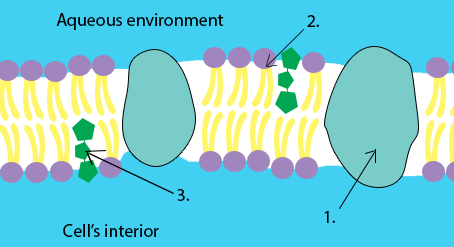
    (B) Cell membranes protect and organize cells. Most importantly they serve as barriers, discriminating the cell’s interior from the outer milieu. Because cells always exist in aqueous environment their membranes should be structured in such way so they do not solve in water. This function is ideally carried by special chemical molecules – phospholipids. These molecules are constructed from two parts: tails made up of 2 molecules of fat that ‘avoid’ water and heads that have an affinity for water. For this specific behaviour the phospholipid’s tails are called hydrophobic (‘hydro’ means water and ‘phobia’ means fear) and heads are called hydrophilic (‘philos’ means love). When phospholipids are added to water, they self-assemble into double-layered structures, shielding their hydrophobic portions from water and exposing their hydrophilic portions to the environment. This phospholipid bilayer may resemble a sandwich, where phospholipid heads are bread rolls and tails are the sandwich filling.

    (C) In addition to lipids, membranes are loaded with proteins. They usually go through the lipid bilayer and are exposed to both aqueous environment and cell’s interior. In fact, proteins account for roughly half the mass of most cellular membranes. They make the membrane semi-permeable, which means that some molecules can diffuse across the lipid bilayer but others cannot. Small hydrophobic molecules and gases like oxygen and carbon dioxide cross membranes rapidly. Small molecules, such as water and ethanol, can also pass through membranes, but they do so more slowly. On the other hand, cell membranes restrict diffusion of highly charged molecules, such as ions, and large molecules, such as sugars and amino acids. The passage of these molecules relies on specific transport proteins embedded in the membrane.

    (D) Membrane transport proteins are specific and selective for the molecules they move, and they often use energy to enhance passage. Also, these proteins transport some nutrients against the concentration gradient, which requires additional energy. The ability to maintain concentration gradients and sometimes move materials against them is vital to cell health and maintenance. Thanks to membrane barriers and transport proteins, the cell can accumulate nutrients in higher concentrations than exist in the environment and, conversely, dispose of waste products.

    (E) Other membrane-embedded proteins have communication-related jobs. Large molecules from the extracellular environment, such as hormones or immune mediators, bind to the receptor proteins on the cell membrane. Such binding causes a conformational change in the protein that transmits a signal to intracellular messenger molecules. Like transport proteins, receptor proteins are specific and selective for the molecules they bind.

    (F) Another important type of membrane’s components are cholesterol molecules, which account for about 20 percent of the lipids in animal cell plasma membranes. However, cholesterol is not present in bacterial membranes or mitochondrial membranes. The cholesterol molecules are embedded in place of phospholipid molecules and help to regulate the stiffness of membranes. To function properly, the cell membrane should be in fluid state. Cholesterol reduces membrane fluidity at moderate temperatures by reducing the moving of phospholipids. But at low temperatures, it hinders solidification by disrupting the regular packing of phospholipids.

    Questions 28-30

    Label the diagram below.
    Write NO MORE THAN ONE WORD from the passage for each answer. Do not write the articles.

    Which elements of cell membrane correspond to the numbers in the diagram?

    IELTS Reading text - cell

    Questions 31-35

    Reading Passage 3 has six paragraphs, A-F.

    Which paragraph contains the following information?

    Write the correct letter, A–F, in boxes 31–35 on your answer sheet.

    31. Specific proteins transport nutrients from the external environment against the concentration gradient. 

    32. The barrier function of cell membranes is supported by a bilayer of phospholipids. 

    33. The level of membrane fluidity is regulated by cholesterol molecules. 

    34. The importance of cell membranes are often underestimated. 

    35. Proteins make the membrane semi-permeable. 

    Questions 36–40

    Complete the summary below.

    Choose ONLY ONE WORD from the passage for each answer.
    Write your answers in boxes 36–40 on your answer sheet.

    Cell membranes protect cells and organize their activities. The first main function of cell membrane – barrier function – is carried by phospholipids. These molecules don’t solve in water and, thus, are ideal for cells that always exist in 36.  environment.

    In addition to lipids, membranes are loaded with 37.  that make the membrane 38.  , which means that some molecules can diffuse across the lipid bilayer but others cannot. One of the most important types of membrane proteins are 39.  proteins and receptor proteins.

    The last type of membrane elements are cholesterol molecules, which are embedded in place of 40.  molecules and help to regulate the stiffness of membranes.

  • IELTS Reading Practice Test – Exercise 266

    READING PASSAGE 2

    You should spend about 20 minutes on Questions 15-27, which are based on Reading Passage 2 below.

    How I was floored by a tick

    When Allan Little began to feel ill, he knew almost immediately what it was – Lyme Disease. But getting a medical diagnosis, and treatment, took a lot longer. I’d been going for years to the same little town in New England and Lyme Disease is everywhere there. You can’t walk more than a few hundred metres in the countryside without coming across a public health notice warning you not to get bitten by a deer tick.

    So the intense headache, the aching limbs, the burning joints, the ferocious fever and night sweats that hit me in a matter of hours, a few days after I’d got back to London, were all consistent with what I’d read about the condition. I went to a London GP, who wasn’t convinced. She took a blood sample and advised me to go home, rest, and take paracetamol. The next day, the blood test came back. It was negative for Lyme. My condition grew worse. I could hardly stand up. I called another doctor, who came to my house. He was also sceptical. He took another blood test. This too came back negative. But he gave me a prescription for powerful painkillers which made me feel well enough to get on a train to Edinburgh, my home town.Within three hours of arriving at Waverley Station I was an in-patient in the Infectious Diseases Department of the city’s Western General Hospital: diagnosis, Acute Lyme Disease. By now I had found the tick bite and the distinctive livid red rash, about six inches in diameter. (To be fair to those London GPs, I hadn’t noticed it when I’d consulted them.)

    “It’s attacked your liver,” the Edinburgh Consultant said. “You have three distinct kinds of liver inflammation”. I made a lame sick-bed joke: “You’re sure that’s not like Lager-and-Lime Disease then?” She laughed politely and reassured me that that would look quite different. Why then had both blood tests come back negative? Dr Roger Evans of Raigmore Hospital in Inverness is one of the UK’s leading Lyme Disease researchers. “In early Lyme Disease,” he told me, “the test is not reliable because no antibodies have been produced. In the first few weeks of infection, you could test negative, but still have Lyme Disease.”

    This is a problem for GPs, especially in urban centres where Lyme Disease is unfamiliar. Lyme is not a viral infection. It’s bacterial. GPs will not prescribe antibiotics if they think you’re showing symptoms of a viral infection – and it does look and feel like a bad case of flu, or chronic fatigue syndrome, neither of which can, or should, be treated with antibiotics. “In the early weeks of infection, when the blood test is not reliable,” says Evans, “the GP needs to assess the patient clinically, looking for other symptoms that identify Lyme Disease.” In other words, symptoms that distinguish it from flu.

    If you have been bitten:

    • Remove the tick as soon as possible – the safest way is to use a pair of fine-tipped tweezers, or a tick removal tool
    • Grasp the tick as close to the skin as possible, pull upwards slowly and firmly, as mouthparts left in the skin can cause a local infection
    • Once removed, apply antiseptic to the bite area, or wash with soap and water and keep an eye on it for several weeks for any changes
    • Contact your GP if you begin to feel unwell and remember to tell them you were bitten by a tick or have recently spent time outdoors

    Catching it early is vital. Angela Howard fell ill with Lyme Disease in the 1990s. She had never heard of it. Her doctor, she says, told her to go home and see whether her symptoms persisted. It was only when a visiting American friend saw the distinctive rash – concentric red rings around the place where the tick bite had occurred that she realised she might have Lyme Disease. She says her doctor was still reluctant to diagnose Lyme. “Doctors say you can only get this abroad – that it comes from overseas. But I hadn’t been abroad. I’d been picnicking in Wiltshire.” She was not treated early and her symptoms have persisted for years.

    There is an accumulation of anecdotal evidence that Lyme Disease often goes undiagnosed. One problem is that no-one knows how prevalent it now is. It is not a notifiable disease in the National Health Service – doctors are not required to inform a central database when they diagnose it. So there is no reliable evidence of how widespread it is, or where in the country you are most likely to get it. Roger Evans at Raigmore Hospital wants to remedy that.

    “We’re using Scotland as a pilot study,” he said. “We’re trying to create maps of areas where there’s a risk of tick exposure. We’re using satellite data from the European Space Agency to create an app that will give information, but which will also be interactive, so that users can put in information about where they’ve been bitten and whether the Lyme Disease rash has appeared.” Why has Lyme, which 30 years ago seemed largely limited to a small area of New England – Lyme is the town in Connecticut where it was first identified – now so prevalent across the continental USA and in Europe? One theory is climate change: that small gradations in climate can create new habitats for micro-organisms, or keep them alive and active for longer.

    I was struck, at the time of my own treatment, that awareness was far greater in Scotland than in England and Wales. And awareness of the condition is vital to catching it early. For when you catch it early, treatment is easy and in most cases successful. It floors you though. It took me four or five months to get my strength and stamina back. It is a debilitating and dangerous illness and there is no doubt that it is getting more common. You can get it in the Scottish Highlands, in Devon and Cornwall, in Richmond Park in London and probably in your own back garden – anywhere where there are small furry animals on whose skins a deer tick can live. If you get it, you can get treatment. But take it from me: it really helps if you know what it is you’ve got.

    Questions 15-22

    Do the following statements agree with the information given in Reading Passage 1?

    In boxes 15-22 on your answer sheet, write

    TRUE                          if the statement agrees with the information

    FALSE                        if the statement contradicts the information

    NOT GIVEN                if there is no information on this

    15. Alan had no doubt about his illness from the beginning.                TRUE               FALSE               NOT GIVEN          

    16. Both blood tests were negative for Lyme Disease.                TRUE               FALSE               NOT GIVEN          

    17. Alan didn’t become a Waverley Station patient for more than 3 hours.                TRUE               FALSE               NOT GIVEN          

    18. Blood tests were inaccurate because they were taken unprofessionaly.                TRUE               FALSE               NOT GIVEN          

    19. Lyme Disease is very unfamiliar in the UK.                TRUE               FALSE               NOT GIVEN          

    20. When bitten, you should remove the tick, preferably with a tool.                TRUE               FALSE               NOT GIVEN             

    21. After you remove the tick and apply antiseptic, you should take paracetamol.                  TRUE                 FALSE                 NOT GIVEN               

    22. It is advise to contact a doctor, if you feel ill after removing the tick.                TRUE               FALSE               NOT GIVEN          

    Questions 23-27

    Complete the sentences below.

    Write NO MORE THAN TWO WORDS from the passage for each answer.

    Write your answers in boxes 23-27 on your answer sheet.

    23. Angela’s friend recognized the Lyme Disease as soon as she saw the  rash.

    24. One problem is, it’s unknown how  Lyme Disease is nowadays.

    25. Roger Evans says that they try to create maps of Scotland where there’s a risk of  .

    26. The one possible reason for Lyme Diseaes to move all over the world is  .

    27. You can catch the disease even in your own back  .

  • IELTS Reading Practice Test – Exercise 265

    READING PASSAGE 1

    You should spend about 20 minutes on Questions 1-13, which are based on Reading Passage 1 below.

    We French do love to demonstrate

    (A) Josiane Bertrand has a small family business – a neighbourhood charcuterie selling sausage, poached pigs’ trotters, pate and jellied pig snouts. Her ham, she says, is the best in Paris and her queue of customers is long. Despite the ceaseless rain outside – among all its other woes, France is now flooding – it’s a convivial crowd waiting to be served, and the animated conversation is all about strikes.

    (B) If the opinion pages of Le Monde are to be believed, the charcuterie queue is a pretty accurate reflection of the mood of the country. Split, roughly half and half, between those for the Work Bill and those against. Philippe’s 28. He’s landed what most French would regard as a dream job. He’s a fonctionnaire working in local government. A fonctionnaire is an employee of the French state in almost any form of public administration and service. It’s a job for life – with solid pay and conditions, fixed working hours, a good pension, generous holidays. So, what many young French people aspire to is not to change the world – explore, create, set-up alone – but, with self-employment difficult and taxes punitive, they dream of becoming steadily employed bureaucrats.

    (C) Philippe knows he’s lucky. And he’s against any change. “I’m happy,” he says. “I know exactly where I am and where I’ll be in 40 years’ time, with a good pension.” Eleonore, who has four children, two of them dancing around the shop as they wait, is in her early 40s. As a secondary school teacher she has also got a job for life and generous state benefits. But, unlike Philippe, she’s all for change. “It can’t go on like this. For every person like me, there are 20 or more with no hope at all,” she says.

    (D) A quarter of all French people under 25, many of them well-qualified, have no work. A large number of those are from immigrant families, making their chances of employment even slimmer. These are the kind of people who voted Francois Hollande into the presidency in 2012, with his pledge to end the country’s employment troubles.

    (E) Now he’s made a new promise, putting his own political career on the line – he’s not running for re-election next spring unless he cuts unemployment. A bold move for a president with an approval rating of only 14% in a country riven by industrial disputes. Along with his prime minister, Manuel Valls, and Pierre Gattaz – known as the “boss of bosses”, president of Medef, the largest federation of employers in France – Hollande stands against the combined power of the country’s two biggest unions.

    (F) The proposed Work Bill runs to over 500 pages. It aims to simplify and liberalise the French Work Code which, at 3,689 pages, is a vast labyrinth beset with perils for employers. The unions won’t even consider negotiations until the bill is removed from parliament. The president and his allies refuse to change a word of it. “It’s a good law, good for France,” says Hollande. The result? Total stalemate. An ongoing siege. Just after one o’clock on the glassed-in terrace of a popular restaurant on the Boulevard Montparnasse, and everything begins to go quiet. The traffic disappears from the street. Cordons of riot police move in, three columns deep, flanked by armoured vans. There’s a whirr of helicopters overhead.

    (G) In the distance, a gathering roar and blare – the protesters. The noise becomes deafening. The riot police take up positions. Frederique, the waiter, temporarily locks the doors – and those having lunch find themselves exhibits in a kind of transparent, gastronomic showcase along with various grilled fish, bottles of wine and assorted desserts. Looking in from the outside, hundreds of protesters passing down the boulevard, some marching, others ambling, a few dancing to music booming from the accompanying floats. Looking out from the inside, the lunchers. The lunchers comment on the demonstrators, the demonstrators wave cheerily at the lunchers. There’s general resigned, amused talk amid the eating – “Here we go again,” and “Where will this round end?” And self-deprecating comments such as, “We French do love to demonstrate…”

    (H) Then it all subsides, passes on, the noise, the marchers, the red balloons and pounding music, leaving a trailing wake of litter. Frederique unlocks the doors. The conversation leaves the political, returns to the personal. Similar reforms have already been implemented in Italy and Spain. Germany did so long ago – its unemployment, at 5%, is less than half that of France, which according to some commentators here now stands alone as the last bastion of 20th Century-style socialism in Europe.

    Questions 1-8

    Reading Passage 1 has eight paragraphs, A-H.

    Which paragraph contains what information? Choose the headings and write the correct letter, A-H, in boxes 1-8 on your answer sheet.

    1. A bold promise 

    2. Similar reforms in other countries 

    3. A refusal to change the law 

    4. Unemployment rate statistics 

    5. The dream of young French people 

    6. Different opinions 

    7. Best ham in all Paris 

    8. The demonstration itself 

    Questions 9-13

    Do the following statements agree with the information given in Reading Passage 1?

    In boxes 9-13 on your answer sheet, write

    TRUE if the statement agrees with the information

    FALSE if the statement contradicts the information

    NOT GIVEN if there is no information on this

    9. Most french would say that Philippe has a very good job.            TRUE           FALSE           NOT GIVEN         

    10. Eleonore and Philippe have same views on the situation.            TRUE           FALSE           NOT GIVEN         

    11. 25% of all people in France have no job.            TRUE           FALSE           NOT GIVEN         

    12. Francois Hollande might not run for re-election next year.            TRUE           FALSE           NOT GIVEN         

    13. The French Work Code is concidered simplier than the proposed Work Bill.            TRUE           FALSE           NOT GIVEN         

    14. The unemployment rate in Spain is less than in Italy.            TRUE           FALSE           NOT GIVEN         

  • IELTS Reading Practice Test – Exercise 264

    READING PASSAGE 3

    You should spend about 20 minutes on Questions 26-40, which are based on Reading Passage 3 below.

    Cognitive dissonance

    (A) Charles Darwin said, “This not the strongest of the species that survive, nor the most intelligent, but the one most responsive to change.” So you’ve sold your home, quit your job, shunned your colleagues, abandoned your friends and family. The end of the world is nigh, and you ‘know for a fact’ that you are one of the chosen few who will be swept up from the ‘great flood’ approaching on 21st December at midnight to be flown to safety on a far off planet. And then midnight on 21st December comes around and there is no flood. No end of the world. No flying saucer to the rescue. What do you do? Admit you were wrong? Acknowledge that you gave up position, money, friends – for nothing? Tell yourself and others you have been a schmuck? Not on your life.

    (B) Social psychologist Leon Festinger infiltrated a flying saucer doomsday cult in the late 1950s. The members of this cult had given up everything on the premise that the world was about to self destruct and that they, because of their faith, would be the sole survivors. In the lead up to the fateful day, the cult shunned publicity and shied away from journalists. Festinger posed as a cultist and was present when the space ship failed to show up. He was curious about what would happen. How would the disappointed cultists react to the failure of their prophecy? Would they be embarrassed and humiliated? What actually happened amazed him.

    (C) Now, after the non-event, the cultists suddenly wanted publicity. They wanted media attention and coverage. Why? So they could explain how their faith and obedience had helped save the planet from the flood. The aliens had spared planet earth for their sake – and now their new role was to spread the word and make us all listen. This fascinated Festinger. He observed that the real driving force behind the cultists’ apparently inexplicable response was the need, not to face the awkward and uncomfortable truth and ‘change their minds’, but rather to ‘make minds comfortable’ – to smooth over the unacceptable inconsistencies.

    (D) Festinger coined the term ‘cognitive dissonance’ to describe the uncomfortable tension we feel when we experience conflicting thoughts or beliefs (cognitions), or engage in behavior that is apparently opposed to our stated beliefs. What is particularly interesting is the lengths to which people will go to reduce the inner tension without accepting that they might, in fact, be wrong. They will accept almost any form of relief, other than admitting being at fault, or mistaken. Festinger quickly realized that our intolerance for ‘cognitive dissonance’ could explain many mysteries of human behavior.

    (E) In a fascinating experiment Festinger and his colleagues paid some subjects twenty dollars to tell a specific lie, while they paid another group of subjects only one dollar to do the same. Those who were paid just one dollar were far more likely to claim, after the event, that they had actually believed in the lie they were told to tell. Why? Well, because it’s just so much harder to justify having done something that conflicts with your own sense of being ‘an honest person’ for a mere pittance. If you get more money, you can tell yourself: ‘Yeah, I lied, but I got well paid! It was justified.’ But for one dollar? That’s not a good enough reason to lie, so what you were saying must have been true in the first place, right?

    (F) Emotional factors influence how we vote for our politicians much more than our careful and logical appraisal of their policies, according to Drew Westen, a professor of psychiatry and psychology. This may come as little surprise to you, but what about when we learn that our favored politician may be dishonest? Do we take the trouble to really find out what they are supposed to have done, and so possibly have to change our opinions (and our vote), or do we experience that nasty cognitive dissonance and so seek to keep our minds comfortable at the possible cost of truth?

    (G) Cognitive dissonance is essentially a matter of commitment to the choices one has made, and the ongoing need to satisfactorily justify that commitment, even in the face of convincing but conflicting evidence. This is why it can take a long time to leave a cult or an abusive relationship – or even to stop smoking. Life’s commitments, whether to a job, a social cause, or a romantic partner, require heavy emotional investment, and so carry significant emotional risks. If people didn’t keep to their commitments, they would experience uncomfortable emotional tension. In a way, it makes sense that our brains should be hard-wired for monitoring and justifying our choices and actions – so as to avoid too much truth breaking in at once and overwhelming us.

    (H) I guess we can’t really develop unless we start to get a grip and have some personal honesty about what really motivates us. This is part of genuine maturity. If I know I am being lazy, and can admit it to myself, that at least is a first step to correcting it. If, however, I tell myself it’s more sensible to wait before vacuuming, then I can go around with a comfortable self-concept of ‘being sensible’ while my filthy carpets and laziness remain unchanged. Cognitive dissonance can actually help me mature, if I can bring myself, first, to notice it (making it conscious) and second, to be more open to the message it brings me, in spite of the discomfort. As dissonance increases, providing I do not run away into self-justification, I can get a clearer and clearer sense of what has changed, and what I need to do about it.
    And then I can remember what Darwin had to say about who will survive…

    Questions 26-33

    Reading Passage 3 has eight paragraphs, A–H. Choose the most suitable headings for these paragraphs from the list of ten headings below. Write the appropriate number i-x in the text boxes 26-33. There are more paragraph headings than paragraphs, so you will not use them all.

    List of headings:

    i. Leon Festinger: On being stood up by the aliens
    ii. Dishonest politicians? Never!
    iii. Mind manipulation: the true reason of strange behaviour
    iv. You can’t handle the truth!
    v. The catastrophe of 21st December
    vi. Grow up – make cognitive dissonance work for you
    vii. How many dollars would you take to tell a lie?
    viii. Revealing mysteries: Darwin was right.
    ix. Cognitive dissonance: who are you kidding?
    x. The high cost of commitment exposes us to cognitive dissonance

    26. Passage A 

    27. Passage B 

    28. Passage C 

    29. Passage D 

    30. Passage E 

    31. Passage F 

    32. Passage G 

    33. Passage H 

    Questions 34-40

    Choose the correct letter, A, B, C or D.

    Write the correct letter in boxes 34-40 on your answer sheet.

    34. After the space ship didn’t show up on the fateful day, the members of flying saucer doomsday cult

    1.  didn’t want to admit the uncomfortable truth and still believed that the world would self destruct.
    2.  were embarrassed and humiliated because of their failure.
    3.  wanted media attention to say that they saved the planet.

    35. The main reason why people fight cognitive dissonance is

    1.  a desire to reduce the inner tension.
    2.  people’s unwillingness to accept their mistakes.
    3.  wish to avoid the awkward feeling of lying for not a good reason.

    36 During the experiment, people who were telling lies were more likely to claim that they believed in the lie if

    1.  they were paid less.
    2.  they were paid more.
    3.  they felt uncomfortable because of lying

    37. Commitment to the choices someone has made, and the ongoing need to justify that commitment, despite the conflicting evidence can be explained by the fact that

    1.  it causes uncomfortable emotional tension.
    2.  commitments require heavy emotional investment.
    3.  our brain always justifies our choices.

    38. The big part of genuine maturity is the ability of

    1.  sensible reasoning.
    2.  disregarding cognitive dissonance.
    3.  being honest with yourself.

    39. According to the text, which of the situations below is NOT an example of cognitive dissonance?

    1.  A man learns that his favored politician is dishonest, but continues to vote for him.
    2.  A woman doesn’t want to do vacuuming, but convinces herself that otherwise her carpet will remain filthy and finally does it.
    3.  A woman has been dating with her boyfriend for five years. Everyone tells her that it’s an abusive relationship because he often beats and humiliates her, but she doesn’t want to leave her romantic partner.

    40. Charles Darwin quote from the beginning of the text implies that

    1.  cognitive dissonance helps us to change and therefore makes us more enduring species
    2.  people often accept almost any form of relief, rather than admitting being at fault, to survive.
    3.  fighting the discomfort caused by cognitive dissonance is a survival mechanism developed during the evolution.
  • IELTS Reading Practice Test – Exercise 263

    READING PASSAGE 2

    You should spend about 20 minutes on Questions 14-25, which are based on Reading Passage 2 below.

    Making sense of scent

      With every whiff you take as you walk by a bakery, a cloud of chemicals comes swirling up your nose. Identifying the smell as freshly baked bread is a complicated process. But, compared to the other senses, the sense of smell is often underappreciated.

      In a survey of 7,000 young people around the world, about half of those between the age of 16 and 30 said that they would rather lose their sense of smell than give up access to technology like laptops or cell phones.

      We’re not that acutely aware of our use of olfaction in daily living. In fact, mammals have about a thousand genes that code for odor reception. And even though humans have far fewer active odor receptor genes, 5 percent of our DNA is devoted to olfaction, a fact that emphasizes how important our sense of smell is.

     Smell begins at the back of nose, where millions of sensory neurons lie in a strip of tissue called the olfactory epithelium. Molecules of odorants pass through the superior nasal concha of the nasal passages and come down on the epithelium. The tips of the epithelium cells contain proteins called receptors that bind odor molecules. The receptors are like locks and the keys to open these locks are the odor molecules that float past, explains Leslie Vosshall, a scientist who studies olfaction.

      People have about 450 different types of olfactory receptors. (For comparison, dogs have about two times as many.) Each receptor can be activated by many different odor molecules, and each odor molecule can activate several different types of receptors. However, the forces that bind receptors and odor molecules can vary greatly in strength, so that some interactions are better “fits” than others.

      The complexity of receptors and their interactions with odor molecules are what allow us to detect a wide variety of smells. And what we think of as a single smell is actually a combination of many odor molecules acting on a variety of receptors, creating an intricate neural code that we can identify as the scent of a rose or freshly-cut grass.

     This neural code begins with the nose’s sensory neurons. Once an odor molecule binds to a receptor, it initiates an electrical signal that travels from the sensory neurons to the olfactory bulb, a structure at the base of the forebrain that relays the signal to other brain areas for additional processing.

      One of these areas is the piriform cortex, a collection of neurons located just behind the olfactory bulb that works to identify the smell. Smell information also goes to the thalamus, a structure that serves as a relay station for all of the sensory information coming into the brain. The thalamus transmits some of this smell information to the orbitofrontal cortex, where it can then be integrated with taste information. What we often attribute to the sense of taste is actually the result of this sensory integration.

      “The olfactory system is critical when we’re appreciating the foods and beverages we consume,” says Monell Chemical Senses Center scientist Charles Wysocki. This coupling of smell and taste explains why foods seem lackluster with a head cold.

      You’ve probably experienced that a scent can also conjure up emotions and even specific memories, like when a whiff of cologne at a department store reminds you of your favorite uncle who wears the same scent. This happens because the thalamus sends smell information to the hippocampus and amygdala, key brain regions involved in learning and memory.

      Although scientists used to think that the human nose could identify about 10,000 different smells, Vosshall and her colleagues have recently shown that people can identify far more scents. Starting with 128 different odor molecules, they made random mixtures of 10, 20, and 30 odor molecules, so many that the smell produced was unrecognizable to participants. The researchers then presented people with three vials, two of which contained identical mixtures while the third contained a different concoction, and asked them to pick out the smell that didn’t belong.

      Predictably, the more overlap there was between two types of mixtures, the harder they were to tell apart. After calculating how many of the mixtures the majority of people could tell apart, the researchers were able to predict how people would fare if presented with every possible mixture that could be created from the 128 different odor molecules. They used this data to estimate that the average person can detect at least one trillion different smells, a far cry from the previous estimate of 10,000.

      This number is probably an underestimation of the true number of smells we can detect, said Vosshall, because there are far more than 128 different types of odor molecules in the world. And our olfaction is quite powerful comparing to other mammals. For example, marine animals can detect only water-soluble odorants.

      No longer should humans be considered poor smellers. “It’s time to give our sense of smell the recognition it deserves,” said Vosshall.

    Questions 14-19

    Do the following statements agree with the information given in Reading Passage 1?

    In boxes 14-19 on your answer sheet, write

    TRUE if the statement agrees with the information

    FALSE if the statement contradicts the information

    NOT GIVEN if there is no information on this

    14. In general, olfaction and sense of taste are considered equally important.                TRUE               FALSE               NOT GIVEN          

    15. About 7,000 young people around the world would prefer losing their sense of smell than access to laptops.                TRUE               FALSE               NOT GIVEN          

    16. Odor reception is an integral function of all mammals.                TRUE               FALSE               NOT GIVEN          

    17. Superior nasal concha is compared to a lock and odor molecules are like keys that are used to open it.                TRUE               FALSE               NOT GIVEN          

    18. Cats have two times as many olfactory receptors as humans.                TRUE               FALSE               NOT GIVEN          

    19. We are able to detect a lot of different scents because of a variety of odor receptors, which translate impact of molecules into a neural code.                TRUE               FALSE               NOT GIVEN          

    Questions 20-25

    Complete the sentences below.

    Write NO MORE THAN TWO WORDS from the passage for each answer.

    Write your answers in boxes 20-25 on your answer sheet.

    20. The part of our brain responsible for identifying the smell is called  .

    21. The  is a region in our brain that serves as a transition station for all sensory information that we receive.

    22. Sense of smell is closely related to  .

    23.  and  are involved in arousing memories caused by specific smells.

    24. The experiment proved that the average person can discriminate between at least  smells.

    25. Sea mammals can smell only odorants that are  in water.

  • IELTS Reading Practice Test – Exercise 262

    READING PASSAGE 1

    You should spend about 20 minutes on Questions 1-12, which are based on Reading Passage 1 below.

    Harsh marks ‘put pupils off languages’

    (A) Harsh and inconsistent marking is putting pupils in England off studying languages beyond age 14, a report says. The dawn of more rigorous GCSEs will further reduce interest in languages, research by the British Council and Education Development Trust suggests. It says a focus on maths and sciences, as well as a perception languages are a hard option, is also de-motivating pupils and teachers.

    (B) Exams watchdog Ofqual said last year’s languages results were “very stable”. From September 2016, new GCSE and A-level modern language syllabuses will be taught in England, and new exams will be taken in the summer of 2018. The Language Trends Survey, in its 14th year of charting the state of language learning in England’s schools, suggests these changes – particularly at A-level – will deter pupils from studying languages. It says: “The exam system is seen as one of the principal barriers to the successful development of language teaching. “The comparative difficulty of exams in languages in relation to other subjects, and widely reported harsh and inconsistent marking, are deeply de-motivating for both pupils and teachers.”

    (C) The report says the EBacc, where pupils have to study English, a language, maths, science and history or geography to GCSE, “appears to be having very little impact on the numbers of pupils taking languages post-16”. Uptake after GCSE is found to be a particular concern, with some state schools suggesting the small numbers of students opting to take languages at A-level means the subject is becoming “financially unviable”.

    (D) The proportion of the total cohort sitting a GCSE in a language dropped by one percentage point (to 48%) between 2014 and 2015, ending the rise in entries seen from 2012 onward, when the EBacc was brought in. Entries for each of the three main languages fell this year compared with 2014, French is down 6%, German is down 10% and Spanish is down 3%. Overall entries for languages at A-level are at 94% of their 2002 level, and they declined by 3% between 2014 and 2015 – French uptake declined by 1% and German by 2.5% while Spanish uptake rose by almost 15%.

    (E) The report does note some positive developments, particularly at primary level, saying just over half of England’s primary schools now have access to specialist expertise in the teaching of languages. But primary schools report finding it hard to fit languages into the curriculum time available and to recruit suitably qualified teaching staff. Teresa Tinsley, co-author of the report, said: “Languages are already one of the harder GCSEs, and teachers fear that with the new exams it will be even tougher for pupils to get a good grade. “Combine this with the expectation that a wider range of pupils will be sitting the exam and it is not surprising that teachers feel embattled. “Improving their morale and confidence in the exam system is crucial if languages are to thrive in our schools.”

    (F) A spokesman for the exam regulator, Ofqual, said: “We are committed to ensuring that all GCSEs, AS- and A-levels, including those in modern foreign languages, are sufficiently valid, produce fair and reliable results and have a positive impact on teaching and learning. “Last year’s results in modern foreign languages were very stable, with only small changes in the proportions achieving each grade compared to the previous year. “We have looked into concerns that it is harder for students to achieve the highest grades in A level languages. “We found this is because of the way the exams are designed, rather than the nature of the subject content. “We are keeping this under review and will be further publishing information shortly.”

    (G) Referring to the new modern foreign language A-levels and GCSEs being taught from this September, the spokesman added: “Before we accredit a qualification, we check the exams will be designed to allow good differentiation – including that the best students will be able to achieve the highest grades – and whether they are properly based on the new subject content.”

    (H) Mark Herbert, head of schools programmes at the British Council, said: “The country’s current shortage of language skills is estimated to be costing the economy tens of billions in missed trade and business opportunities every year. “Parents, schools and businesses can all play their part in encouraging our young people to study languages at school and to ensure that language learning is given back the respect and prominence that it deserves.” Tony McAleavy, director of research and development at the Education Development Trust, said: “The reduction in pupils opting for GCSE and A-level languages is concerning, particularly coupled with teachers’ lack of faith in the exam system. “Solutions are required to give languages a firmer place in the curriculum, to make languages more compelling for pupils who find the examination process a barrier and to boost teacher morale.”

    Questions 1-8

    Reading Passage 1 has eight paragraphs, A-H.

    Choose the most suitable paragraph headings from the list of headings and write the correct letter, A-H, in boxes 1-8 on your answer sheet.

    1. Data about studying 

    2. Stable results 

    3. Heavy economic losses 

    4. Fairness of the exams 

    5. A hard option 

    6. A-level changings 

    7. The most important thing for languages to be able to prosper 

    8. Weak influence on pupils 

    Questions 9-13

    Classify the events with the following dates.

    A. 2018

    B. 2016

    C. 2014-2015

    D. None of the above

    In boxes 9-13 on your answer sheet, write either A, B, C or D.

    9. A Drop of GCSE to 48% 

    10. New syllabus system arrives in England 

    11. The start of new exams 

    12. The rise in entries 

    13. The decline of French by 1 percent 

  • IELTS Reading Practice Test – Exercise 261

    READING PASSAGE 3

    You should spend about 20 minutes on Questions 29–40, which are based on Reading Passage 3 below.

    The Truth About ART

    Modern art has had something of a bad press recently – or, to be more precise, it has always had a bad press in certain newspapers and amongst certain sectors of the public. In the public mind, it seems, art (that is, graphic art – pictures – and spatial art – sculpture) is divided into two broad categories. The first is ‘classic’ art, by which is meant representational painting, drawing and sculpture; the second is ‘modern’ art, also known as abstract or non-representational. British popular taste runs decidedly in favour of the former, if one believes a recent survey conducted by Charlie Moore, owner of the Loft Gallery and Workshops in Kent, and one of Britain’s most influential artistic commentators. He found that the man (or woman) in the street has a distrust of cubism, abstracts, sculptures made of bricks and all types of so-called ‘found’ art, He likes Turner and Constable, the great representatives of British watercolour and oil painting respectively, or the French Impressionists, and his taste for statues is limited to the realistic figures of the great and good that litter the British landscape – Robin Hood in Nottingham and Oliver Cromwell outside the Houses of Parliament. This everyman does not believe in primary colours, abstraction and geometry in nature – the most common comment is that such-and-such a painting is “something a child could have done”.

    Lewis Williams, director of the Beaconsfield Galleries in Hampshire, which specialises in modern painting, agrees. “Look around you at what art is available every day,” he says. “Our great museums and galleries specialise in work which is designed to appeal to the lowest common denominator. It may be representational, it may be ‘realistic’ in one sense, but a lot of it wouldn’t make it into the great European galleries. Britain has had maybe two or three major world painters in the last 1000 years, so we make up the space with a lot of second-rate material.”

    Williams believes that our ignorance of what modern art is has been caused by this lack of exposure to truly great art. He compares the experience of the average British city-dweller with that of a citizen of Italy, France or Spain.

    “Of course, we don’t appreciate any kind of art in the same way because of the paucity of good art in Britain. We don’t have galleries of the quality of those in Madrid, Paris, Versailles, Florence, New York or even some places in Russia. We distrust good art – by which I mean both modern and traditional artistic forms – because we don’t have enough of it to learn about it. In other countries, people are surrounded by it from birth. Indeed they take it as a birthright, and are proud of it. The British tend to be suspicious of it. It’s not valued here.”

    Not everyone agrees. Emily Cope, who runs the Osborne Art House, believes that while the British do not have the same history of artistic experience as many European countries, their senses are as finely attuned to art as anyone else’s.

    “Look at what sells – in the great art auction houses, in greetings cards, in posters. Look at what’s going on in local amateur art classes up and down the country. Of course, the British are not the same as other countries, but that’s true of all nationalities. The French artistic experience and outlook is not the same as the Italian. In Britain, we have artistic influences from all over the world. There’s the Irish, Welsh, and Scottish influences, as well as Caribbean, African and European. We also have strong links with the Far East, in particular the Indian subcontinent. All these influences come to bear in creating a British artistic outlook. There’s this tendency to say that British people only want garish pictures of clowns crying or ships sailing into battle, and that anything new or different is misunderstood. That’s not my experience at all. The British public is poorly educated in art, but that’s not the same as being uninterested in it.”

    Cope points to Britain’s long tradition of visionary artists such as William Blake, the London engraver and poet who died in 1827. Artists like Blake tended to be one-offs rather than members of a school, and their work is diverse and often word-based so it is difficult to export.

    Perhaps, as ever, the truth is somewhere in between these two opinions. It is true that visits to traditional galleries like the National and the National Portrait Gallery outnumber attendance at more modern shows, but this is the case in every country except Spain, perhaps because of the influence of the two most famous non-traditional Spanish painters of the 20th century, Picasso and Dali. However, what is also true is that Britain has produced a long line of individual artists with unique, almost unclassifiable styles such as Blake, Samuel Palmer and Henry Moore.

    Questions 29–37

    Classify the following statements as referring to

    Charlie Moore

    B Lewis Williams

    Emily Cope

    Write the appropriate letters AB or C in boxes 29-37 on your answer sheet.

    29. British people don’t appreciate art because they don’t see enough art around them all the time. 

    30. British museums aim to appeal to popular tastes in art. 

    31. The average Englishman likes the works of Turner and Constable. 

    32. Britain, like every other country, has its own view of what art is. 

    33. In Britain, interest in art is mainly limited to traditional forms such as representational painting. 

    34. British art has always been affected by other cultures. 

    35. Galleries in other countries are of better quality that those in Britain. 

    36. People are not raised to appreciate art. 

    37. The British have a limited knowledge of art. 

    Questions 38–40

    Choose the correct letter, A, B, C or D.

    Write the correct letter in boxes 38-40 on your answer sheet.

    1. Many British artists
      1.  are engravers or poets
      2.  are great but liked only in Britain
      3.  do not belong to a school or general trend
      4.  are influenced by Picasso and Dali
    2. Classic’ art can be described as
      1.  sentimental, realistic paintings with geometric shapes
      2.  realistic paintings with primary colours
      3.  abstract modern paintings and sculptures
      4.  realistic, representational pictures and sculptures
    3. In Spain, people probably enjoy modern art because
      1.  their artists have a classifiable style
      2.  the most renowned modern artists are Spanish
      3.  they attend many modern exhibitions
      4.  they have different opinions on art
  • IELTS Reading Practice Test – Exercise 260

    READING PASSAGE 2

    You should spend about 20 minutes on Questions 17-28, which are based on Reading Passage 2 below.

    Museum of Lost Objects: The Lion of al-Lat

      (A) Two thousand years ago a statue of a lion watched over a temple in the ancient Syrian city of Palmyra. More recently, after being excavated in the 1970s, it became an emblem of the city and a favourite with tourists. But it was one of the first things destroyed during military fightings in the country. It’s said that there are more than 300 words for lion in Arabic. That’s a measure of the importance of the lion in the history of the Middle East. For Bedouin tribes, the lion represented the biggest danger in the wild – until the last one in the region died, some time in the 19th Century.

      (B) The animal was feared and admired and this must explain why a statue of a lion twice as high as a human being, weighing 15 tonnes, was fashioned by artists in ancient Palmyra. With spiralling, somewhat loopy eyes, and thick whiskers swept back angrily along its cheek bones, the lion was clearly a fighter, but it was also a lover. In between its legs, it held a horned antelope. The antelope stretched a delicate hoof over the lion’s monstrous paws, and perhaps it was safe. The lion was a symbol of protection – it was both marking and protecting the entrance to the temple. But no-one could protect the lion when *IS arrived and wrecked it in May 2015. “It was a real shock, because you know, in a way, it was our lion,” says Polish archaeologist Michal Gawlikowski, whose team unearthed it in 1977.

      (C) For well over 1,000 years, the statue had lain buried in the ruins of the ancient city, though parts had been used as foundations stones in other buildings. “You could hardly see what it was. I could see it was a sculpture and an old one for Palmyra, so we decided it was necessary to put it together immediately. It wasn’t apparent from the beginning what this was – and then we found the head, and it became obvious.”

      (D) Here are 30 of the approximately 300 Arabic words for “lion”: Ghazhanfar, haidera, laith, malik al-ghaab (king of the jungle), qasha’am, asumsum, hatam, abu libdeh, hamza, nebras, basel, jasaas, assad, shujaa, rihab, seba’a, mayyas, khunafis, aabas, aafras, abu firas, qaswarah, ward, raheeb, ghadi, abu harith, dargham, hammam, usama, jaifer, qasqas… Most describe different moods of the lion. For example, hatam the destroyer, rihab the fearsome, ghazhanfar the warrior, abu libdeh the one with the fur, or the mane. As luck would have it, Michal had on his team that year the sculptor Jozef Gazy, who enthusiastically took on the job of restoring the lion. By 2005, though, the lion had become unbalanced and another restoration job – again led by a Polish team – rebuilt the statue to resemble as closely as possible what is thought to be the ancient design, with the lion appearing to leap out of the temple wall. After this it was placed in front of the Palmyra museum.

      (E) Across the left paw of the lion is a Palmyrene inscription: “May al-Lat bless whoever does not spill blood on this sanctuary.” The goddess al-Lat was a pre-Islamic female deity popular throughout Arabia, the descendant of earlier Mesopotamian goddesses such as Ishtar Inanna. “Ishtar Inanna is goddess of warfare and also love and sex, particularly sex outside marriage,” says Augusta McMahon, lecturer of archaeology at Cambridge University. Al-Lat shared most of these attributes, and like Ishtar Inanna she was associated with lions. “It’s very interesting to find a lion and a female figure in such close association, and no male deities have the lion – so this is something which is unique to her,” says McMahon.

      (F) The region’s kings, however, were keen to be associated with lions, even if male deities weren’t. Some of the earliest known representations of Mesopotamian leaders, from around 3,500 BC, depict them engaged in combat with the creatures. “They’re not shown fighting or killing other people because that’s almost demeaning,” says Augusta McMahon. “They have to have a lion who is the not-quite-equal-but-near rival – because they’re incredibly powerful and sort of unpredictable.” This tradition continues right up to the medieval and early modern period, when Islamic miniatures would often show scenes of the hunt, of brave princes struggling with lions. The lion was both regal and untameable, the quintessence of strength and man’s ultimate opponent. And today, fathers still love to name their sons and heirs after this fearsome predator – Osama for example.

      (G) The family of Syria’s current ruling dynasty went even further. Al-Assad means “the lion” and different stories are told about how, a few generations ago, they adopted this name. One version says that Sulayman, great-grandfather of current president Bashar al-Assad, had been given the name al-Wahhish, or “the wild beast”, because of his exploits while waging war on the Ottomans. This had negative connotations, though – so Sulayman swapped al-Wahhish for al-Assad “the lion”. In neighbouring Iraq, Saddam Hussein even more directly channelled the rulers of times gone by. Some of his fanciful propaganda – often seen in newspapers or even city billboards – would show him posing as an Assyrian king, trampling on lions while shooting at American missiles with a bow and arrow.

      (H) But Saddam didn’t have full control over his lion symbolism. One of the many words referring to lion in Arabic can connote “brazenness” and “audacity”, and it was this lion-word that many Iraqis applied to him. “The lion has several names and one of them is seba’a,” says the Iraqi archaeologist Lamia al-Gailani. “It was considered one the worst things in the culture of the Iraqis this word seba’a because it gives license to be corrupt. When Saddam did things, people said [they were] seba’a and what he did was so wrong, so illegal, but he was able to get away with it.”

      (I) For most people who went to Palmyra, the Lion of al-Lat provided a key photo opportunity. For London-based Syrian sculptor Zahed Tajeddin, it also provided artistic inspiration. In the early 1990s Tajeddin held an exhibition in Germany where he produced miniature sculptures of his favourite archaeological monuments from Syria – including the lion – but by 2015 all had been sold. Fatefully, though, during the week in May 2015 when IS took Palmyra and destroyed the Lion of al-Lat, he found the moulds.

      (J) “And I thought, OK, that’s a message,” he says. “And so I reproduced three and put them next to each other and I painted them in white, red and black to represent the Syrian flag.” The lion was often a symbol of vanity and masculine power. It was the badge of self-aggrandising kings and presidents. But in Tajeddin’s reproductions of the lion of al-Lat, the lion becomes something else – a protest against the devastation engulfing his country and its ancient heritage.

    *IS – Islamic State (of Iraq and the Levant), a terrorist organisation.

    Questions 17–25

    Reading Passage 2 has ten paragraphs, A-J.

    Which paragraph contains the following information?

    Write the correct letter, A-J, in boxes 17-25 on your answer sheet. Note that one paragraph is not used.

    17. Goddess, associated with lions 

    18. One of the worst words 

    19. An emblem of the city 

    20. History of the family name 

    21. Art exhibition 

    22. The description of the lion statue 

    23. Symbolic meaning of the lion’s reproduction by Tajeddin 

    24. Synonyms for word lion 

    25. Representations of leaders 

    Questions 26–28

    Complete the sentences below.

    Write NO MORE THAN TWO WORDS from the passage for each answer.

    Write your answers in boxes 26–28 on your answer sheet.

    26.  Most words for the lion describe different  of the animal.

    27. You could often see  struggling with lions in Islamic miniatures.

    28. The Lion of al-Lat provided an  for sculptor Zahed Tajeddin.

  • IELTS Reading Practice Test – Exercise 259

    READING PASSAGE 1

    You should spend about 20 minutes on Questions 1–16, which are based on Reading Passage 1 below.

    How bacteria invented gene editing

    This week the UK Human Fertilisation and Embryology Authority okayed a proposal to modify human embryos through gene editing. The research, which will be carried out at the Francis Crick Institute in London, should improve our understanding of human development. It will also undoubtedly attract controversy – particularly with claims that manipulating embryonic genomes is a first step towards designer babies. Those concerns shouldn’t be ignored. After all, gene editing of the kind that will soon be undertaken at the Francis Crick Institute doesn’t occur naturally in humans or other animals.

    It is, however, a lot more common in nature than you might think, and it’s been going on for a surprisingly long time – revelations that have challenged what biologists thought they knew about the way evolution works. We’re talking here about one particular gene editing technique called CRISPR-Cas, or just CRISPR. It’s relatively fast, cheap and easy to edit genes with CRISPR – factors that explain why the technique has exploded in popularity in the last few years. But CRISPR wasn’t dreamed up from scratch in a laboratory. This gene editing tool actually evolved in single-celled microbes.

    CRISPR went unnoticed by biologists for decades. It was only at the tail end of the 1980s that researchers studying Escherichia coli noticed that there were some odd repetitive sequences at the end of one of the bacterial genes. Later, these sequences would be named Clustered Regularly Interspaced Short Palindromic Repeats – CRISPRs. For several years the significance of these CRISPRs was a mystery, even when researchers noticed that they were always separated from one another by equally odd ‘spacer’ gene sequences.

    Then, a little over a decade ago, scientists made an important discovery. Those ‘spacer’ sequences look odd because they aren’t bacterial in origin. Many are actually snippets of DNA from viruses that are known to attack bacteria. In 2005, three research groups independently reached the same conclusion: CRISPR and its associated genetic sequences were acting as a bacterial immune system. In simple terms, this is how it works. A bacterial cell generates special proteins from genes associated with the CRISPR repeats (these are called CRISPR associated – Cas – proteins). If a virus invades the cell, these Cas proteins bind to the viral DNA and help cut out a chunk. Then, that chunk of viral DNA gets carried back to the bacterial cell’s genome where it is inserted – becoming a spacer. From now on, the bacterial cell can use the spacer to recognise that particular virus and attack it more effectively.

    These findings were a revelation. Geneticists quickly realised that the CRISPR system effectively involves microbes deliberately editing their own genomes – suggesting the system could form the basis of a brand new type of genetic engineering technology. They worked out the mechanics of the CRISPR system and got it working in their lab experiments. It was a breakthrough that paved the way for this week’s announcement by the HFEA. Exactly who took the key steps to turn CRISPR into a useful genetic tool is, however, the subject of a huge controversy. Perhaps that’s inevitable – credit for developing CRISPR gene editing will probably guarantee both scientific fame and financial wealth.

    Beyond these very important practical applications, though, there’s another CRISPR story. It’s the account of how the discovery of CRISPR has influenced evolutionary biology. Sometimes overlooked is the fact that it wasn’t just geneticists who were excited by CRISPR’s discovery – so too were biologists. They realised CRISPR was evidence of a completely unexpected parallel between the way humans and bacteria fight infections. We’ve known for a long time that part of our immune system “learns” about the pathogens it has seen before so it can adapt and fight infections better in future. Vertebrate animals were thought to be the only organisms with such a sophisticated adaptive immune system. In light of the discovery of CRISPR, it seemed some bacteria had their own version. In fact, it turned out that lots of bacteria have their own version. At the last count, the CRISPR adaptive immune system was estimated to be present in about 40% of bacteria. Among the other major group of single-celled microbes – the archaea – CRISPR is even more common. It’s seen in about 90% of them. If it’s that common today, CRISPR must have a history stretching back over millions – possibly even billions – of years. “It’s clearly been around for a while,” says Darren Griffin at the University of Kent.

    The animal adaptive immune system, then, isn’t nearly as unique as we thought. And there’s one feature of CRISPR that makes it arguably even better than our adaptive immune system: CRISPR is heritable. When we are infected by a pathogen, our adaptive immune system learns from the experience, making our next encounter with that pathogen less of an ordeal. This is why vaccination is so effective: it involves priming us with a weakened version of a pathogen to train our adaptive immune system. Your children, though, won’t benefit from the wealth of experience locked away in your adaptive immune system. They have to experience an infection – or be vaccinated – first hand before they can learn to deal with a given pathogen.

    CRISPR is different. When a microbe with CRISPR is attacked by a virus, the record of the encounter is hardwired into the microbe’s DNA as a new spacer. This is then automatically passed on when the cell divides into daughter cells, which means those daughter cells know how to fight the virus even before they’ve seen it. We don’t know for sure why the CRISPR adaptive immune system works in a way that seems, at least superficially, superior to ours. But perhaps our biological complexity is the problem, says Griffin. “In complex organisms any minor [genetic] changes cause profound effects on the organism,” he says. Microbes might be sturdy enough to constantly edit their genomes during their lives and cope with the consequences – but animals probably aren’t. The discovery of this heritable immune system was, however, a biologically astonishing one. It means that some microbes write their lifetime experiences of their environment into their genome and then pass the information to their offspring – and that is something that evolutionary biologists did not think happened.

    Darwin’s theory of evolution is based on the idea that natural selection acts on the naturally occurring random variation in a population. Some organisms are better adapted to the environment than others, and more likely to survive and reproduce, but this is largely because they just happened to be born that way. But before Darwin, other scientists had suggested different mechanisms through which evolution might work. One of the most famous ideas was proposed by a French scientist called Jean-Bapteste Lamarck. He thought organisms actually changed during their life, acquiring useful new adaptations non-randomly in response to their environmental experiences. They then passed on these changes to their offspring.

    People often use giraffes to illustrate Lamarck’s hypothesis. The idea is that even deep in prehistory, the giraffe’s ancestor had a penchant for leaves at the top of trees. This early giraffe had a relatively short neck, but during its life it spent so much time stretching to reach leaves that its neck lengthened slightly. The crucial point, said Lamarck, was that this slightly longer neck was somehow inherited by the giraffe’s offspring. These giraffes also stretched to reach high leaves during their lives, meaning their necks lengthened just a little bit more, and so on. Once Darwin’s ideas gained traction, Lamarck’s ideas became deeply unpopular. But the CRISPR immune system – in which specific lifetime experiences of the environment are passed on to the next generation – is one of a tiny handful of natural phenomena that arguably obeys Lamarckian principles.

    “The realisation that Lamarckian type of evolution does occur and is common enough, was as startling to biologists as it seems to a layperson,” says Eugene Koonin at the National Institutes of Health in Bethesda, Maryland, who explored the idea with his colleagues in 2009, and does so again in a paper due to be published later this year. This isn’t to say that all of Lamarck’s thoughts on evolution are back in vogue. “Lamarck had additional ideas that were important to him, such as the inherent drive to perfection that to him was a key feature of evolution,” says Koonin. No modern evolutionary biologist goes along with that idea. But the discovery of the CRISPR system still implies that evolution isn’t purely the result of Darwinian random natural selection. It can sometimes involve elements of non-random Lamarckism too – a “continuum”, as Koonin puts it. In other words, the CRISPR story has had a profound scientific impact far beyond the doors of the genetic engineering lab. It truly was a transformative discovery.

    Questions 1–5

    Do the following statements agree with the information given in Reading Passage 1?

    In boxes 1–5 on your answer sheet, write

    TRUE                          if the statement agrees with the information

    FALSE                        if the statement contradicts the information

    NOT GIVEN                if there is no information on this

    1. The research carried out at the Francis Crick Institute in London is likely to be controversial.            TRUE           FALSE           NOT GIVEN         
    2. Gene editing, like the one in the upcoming research, can happen naturally in humans or other animals.            TRUE           FALSE           NOT GIVEN         
    3. CRISPR-Cas is a gene editing technique.            TRUE           FALSE           NOT GIVEN         
    4. CRISPR was noticed when the researchers saw some odd repetitive sequences at the ends of all bacterial genes.                  TRUE           FALSE           NOT GIVEN       
    5. A group of American researchers made an important revelation about the CRISPR.            TRUE           FALSE           NOT GIVEN         

    Questions 6–9

    Choose the correct letter, A, B, C or D.

    Write the correct letter in boxes 6–9 on your answer sheet.

    1. ‘Spacer’ sequences look odd because:
      1.  they are a bacterial immune system
      2.  they are DNA from viruses
      3.  they aren’t bacterial in origin
      4.  all of the above
    2. The ones, who were excited about the CRISPR’s discovery, were:
      1.  biologists
      2.  geneticists
      3.  physicists
      4.  A and B
    3. Word “learns” in the line 44, 6th paragraph means:
      1.  determines
      2.  gains awarness
      3.  adapts
      4.  studies
    4. What makes CRISPR better than even our adaptive immune system?
      1.  long history of existence
      2.  immortality
      3.  heritability
      4.  adaptiveness

    Questions 10–16

    Complete the sentences below.

    Write NO MORE THAN TWO WORDS from the passage for each answer.

    Write your answers in boxes 10–16 on your answer sheet.

    10.  Vaccination is so effective, because it involves  with a weakened version of a pathogen .

    11.  CRISPR adaptive immune system works in a way that seems, at least superficially, superior to ours. But perhaps our  is the problem, according to Griffin.

    12.  Some microbes write their experience into the genome and pass the information to their  .

    13.  Before Darwin, one of the most famous idea was proposed by a  scientist, Lamarck.

    14.    are often used to demonstrate Lamarck’s hypothesis.

    15.   Lamarck’s ideas became deeply unpopular as soon as Darwin’s ideas  .

    16.  No  biologist agrees with Lamarck’s idea that inherent drive to perfection is the key feature of evolution.