Category: IELTS Reading

  • IELTS Reading Practice Test – Exercise 74

    How To Handle The Sun

    The medical world appears to be divided on the effects of the sun upon the human body. From statements like, “There is no known relationship between a tan and health” to “perhaps sun-tanned skin absorbs the ultraviolet rays and converts them into helpful energy”, there are some things which are still the topic of research. Doctors agree on one of the benefits of the sun – vitamin D. It is well known that vitamin D is acquired from the direct rays of the sun – an entirely separate miracle from sun tanning. The sun’s ultraviolet rays penetrate only a tiny amount into the human skin, but in the process they irradiate an element in the skin called ergosterol, which is the substance that stores up reserves of vitamin D received from the sun. This is both healthful and beneficial for human skin.

    All around the Western World, people have developed an obsession with the sun. In many western countries, a sun tan has become the trade-mark of a healthy, active, outdoor person. The basic reddish hue just beneath the surface of our skin is the outward reflection of the millions of red corpuscles flowing through tiny blood vessels. This is most noticeable in the pure skin of a baby which can change in a moment from porcelain white (with anger or a switch in temperature) to crimson. In Caucasians, this colouring is somewhat hidden by an acquired layer of sun-made pigment, which varies in tone according to the complexion and occupation of the individual.

    Locale plays a big part in the effectiveness of the sun tan. Mountain tops and beaches are nonpareil sun spas because they receive far purer sunlight than the rest of the land. Urban areas with their smoke and smog act as a filter removing all the healthful properties of the sun. Perhaps the seashore is best of all, with its air estimated to have at least a fifth of a percent more oxygen than inland ether – free of city and inland dust, tars, pollen and allergens.

    The sun has long been called nature’s greatest health giver and healer and has played a chief role at health resorts ever since August Rollier, the Swiss father of heliotherapy, opened his first high-Alps sanatorium in 1903. Dr. W.W. Coblentz suggests that the sun cure is a major factor in the treatment of at least 23 skin diseases, ranging from acne and eczema to ulcers and wounds. Another specialist, Dr. Richard Kovacs writes, “Sun treatment is often helpful to persons suffering from general debility – repeated colds, respiratory diseases, influenza and the like”. After a long winter, the return to the sun writes Dr. Leonard Dodds, the British sunlight scholar, “is a general stimulus to the body, more potent if applied after a period when it has been lacking which gradually loses its effect if exposure is over prolonged, even when not excessive”.

    Over many years of study dermatologists have proven that excessive exposure to sunlight over a period of years is responsible for a large proportion of skin cancer amongst the population. Those with the greatest chance of doing permanent damage to their skin are the year-round outdoor workers – 90% of which occurs on the heavily exposed hands and face. The first line of defence against permanent sun damage is the skins’ own natural fatty matter and sweat, which combine to form an oily acid surface shield against the ultra violet rays. At the beach, the salt water washes away this natural oily coat, the hot sun overworks the sweat glands so that the excess becomes ineffective and the dry wind and hot sun combine to dehydrate the skin itself. Over the years, women have shown far greater wisdom in the care of their skin than men. Since the ladies of ancient Egypt first began to apply the fat of the so-called sacred temple cats to their faces, women have been tireless in waging this battle against damage to the skin from the sun. Both sexes now contribute annually to a multi-million dollar global sun screen business.

    Other parts of the human body which tend to suffer from exposure to the sun are the eyes and hair. Many years ago, optometrists undertook studies in America to examine the influence of the sun upon the eyes by studying Atlantic City lifeguards and found that even a few hours in the bright sun without sunglasses could cause a significant loss of vision – a loss that might take several weeks from which to recover. So gradual was the change that the lifeguards were unaware that their sight had been affected. The solution to this problem was to introduce sunglasses as a standard part of the lifeguard uniform. These were dark enough to absorb the sun’s harmful UV rays and most of its infrared and ultraviolet rays.

    Of a lesser impact is the effect of the sun upon hair. The penalty of the sun’s parching is a brittle dryness. Hair care professionals recommend a nutritional cream treatment with a substance containing lanolin to bring your hair back its natural softness, these usually come in the form of leave-in conditioners, and should be applied frequently, just as you would a sunscreen for the skin. Or, easier still, wear a hat. Wearing a hat has a dual effect: it protects the hair and helps to prevent the most dangerous of outdoor afflictions: sunstroke.

    Questions 1-4
    Look at the following people (Questions 1-4) and the list of statements below.
    Match each person with the correct statement.

    1 Richard Kovacs
    2 August Rollier
    3 W.W. Coblentz
    4 Leonard Dodds

    A believes that the benefits of the sun are not scientifically provable
    B claims to have discovered the vitamin released in the skin by the sun
    C suggests that the sun is an excellent healer
    D invented the first sun screen
    E suggests that the sun assists with common illnesses
    F thinks that initially the sun is of great benefit to the body
    G is unsure about the benefits of the sun
    H was one of the pioneers of sun healing therapy

    Questions 5-9
    Do the following statements agree with the information given in Reading Passage 1? In boxes 5-9 on your answer sheet write

    TRUE                          if the statement agrees with the information
    FALSE                        if the statement contradicts the information
    NOT GIVEN             if there is no information on this

    5 Most doctors are in agreement when it comes to the health benefits of the sun.
    6 Beaches are best for a sun tan because the air has far less pollution.
    7 Women applied fat to their skin for protection from the sun.
    8 Extended exposure of the eyes to the sun can lead to blindness.
    9 The human eye cannot heal itself when it is damaged by the sun.

    Questions 10-14
    Complete the summary using the words from the box. Write your answers in boxes 10-14 on your answer sheet.

    overcomequicklyarrangementmaintainingextended
    surprisinglylocatedcaringaffectedslowly
    mindingsucceedtriumphprolongedcombined
    mixedblend

    Handling the Sun
    Many doctors agree that skin cancer can be caused by excessive exposure to the sun. As far as the human body is concerned, it is primarily the face and hands that are (10)………………………………… When human skin is exposed to the sun, the body has a defence: a (11) ……………………….of the skin’s natural oils and acids. For some time, women have been more effective than men in (12)………………………………..for their skin. Eyes are a significant part of the body which are negatively affected by the sun. The damage often goes undetected because it happens quite (13)…………………………….. On the other hand, hair becomes quite dry and brittle when exposed to the sun for an extended period. A lanolin-based conditioner is recommended by hair care professionals to (14)……………………………..this problem. Perhaps a simple hat may be the best solution for hair.

    New Directions – Map Making

    A “A map may lie, but it never jokes” wrote poet Howard McCordin. When it comes to getting to our destinations on time, there are few things more important than an uncluttered and accurate map. By definition, maps show the features of the earth graphically, to scale, on a two-dimensional surface. They may be thematic – showing vegetation, wildlife, geology; navigational – showing hydrographic, aeronautical or automotive routes; topographic – showing the natural and man-made features of the land or any other of a number of variations. Their creation is a work of art and science involving a merger between creativity and precision.

    B One of the biggest influences upon map creation or cartography was World War II. In the war zone, maps of targets and terrain played a huge part and so topographers and members of the air force alike were engaged in the production of them. The need to accurately measure distances using air photos gave birth to the process of photogrammetry. Great cartographic and mathematical skill was required in a process that was initially limited by a lack of photographic coverage. Planes flying at a constant altitude flew in grid patterns with cameras mounted on them, facing straight down. When the weather was good, this process provided photos in the perpendicular axis – the preferred optical axis for mapping. In order to include both sides of the horizon, some cameras were specially designed to take three pictures at once – one vertical and two side-looking obliques. It was a difficult task to keep the plane running smoothly but the latest refinements of map-making techniques were put to immediate use.

    C Using a novel combination of optics and the overlapping of air photos to create three-dimensional pictures of terrain, the stereoscope was the next refinement in map making which was of limited value. Shortly thereafter, the photogrammetric stereoplotter improved upon the technology used by the stereoscope allowing cartographers to precisely measure the elevation of features in air photos and then transfer them to paper. After World War II had ended, this new technology led to an increased interest in cartography. Mappers began to use newly invented devices such as tellurometers, air profile recorders, magnetometers and scintillation counters. From these precision instruments came maps packed with information.

    D In 1957, the Soviet satellite Sputnick 1 joined the moon in orbit around the earth. Although it only operated for 21 days, it began the ‘space race’ and shortly after a number of American and other Russian rockets were put into orbit progressing cartography into an even more sophisticated realm. Only a few years later in 1959 the first space photograph of earth was received. Pageos 1, launched by the United States in 1966, was the first satellite with an instrument package on board specifically designed for surveying the earth. Two years later, the American Satnav system was launched utilising six carefully positioned Transit satellites which fed back information for mapping based upon the Doppler effect. The Landsat 1 satellite launched in 1972 was the first satellite to collect data specifically on the earth’s surface and natural resources. More than 20 other equally spaced satellites now orbit the earth every 12 hours at an altitude of 20,000 kilometres. Navstar, the U.S. military’s global-positioning system can determine geodesic positioning accurate within millimetres anywhere on earth. What took months to plot and record in the past can now be easily done in an hour.

    E In addition to all the advances in aerial satellite technology, some very advanced computer hardware has been designed to aide cartographers in map production. Storing trillions of bits of information and working with a Geographic Information System (GIS), the system uses geographic position as a common thread. Although it became popular in the 1990s, GISs were developed in the early 1960s. Programmed with topographic information – lakes, roads, rivers and place names – taken from existing sheets and updated from new surveys, a GIS was the next gigantic leap forward for cartographers. Maps, air photos, municipal plans and a host of other things can be scanned and entered and later on, updated and revised in an infinite number of ways on a computer terminal to create a virtually custom-made map every time. The distinction between map producer and map user becomes blurred with a GIS. A map of an urban neighbourhood may be brought up on the screen and by zooming in or out, streets, buildings, fields, lakes, street lamps, bus stops, even sewers can be displayed. But it goes even further: an associated database enables the operator to ascertain the number of people who live in the household, even property values can be listed. There is basically an unlimited amount of information which can be superimposed on a map using this system.

    F A brief history of cartography shows that map types have changed to reflect the needs of the time. Thus, early maps depicted concrete, tangible features such as coastlines, rivers, mountains, roads and towns. Later, the focus moved to the spatial distribution of environmental phenomena – vegetation, soils, geology, and climate. Societal issues such as population and disease have also been closely examined. Most recently, attention has shifted to short-lived phenomena such as tornados, air pollution and floods, and to visualization of the results of conceptual modelling of environmental phenomena such as groundwater contamination. The trend has been one of shifting from simply mapping obvious features to discovering relationships and implications between different levels and layers of geographic information. It is clear today that cartography is closely associated with the broader field of scientific visualization. This technique takes the map-reader beyond the printed page and shows them terrain as if they were flying in a helicopter.

    Questions 15-19
    Reading Passage 2 has six paragraphs A-F.
    Choose the correct heading for sections B-F from the list of headings below. Write the appropriate numbers i-x in boxes 15-19 on your answer sheet.

    List of headings
    i transferring air photos to paper maps
    ii computers make map production easy
    iii maps for seeing into the future
    iv the role of weather in map-making photography
    v interest grows in map-making
    vi map-making responsible for space programs
    vii new process enables calculation of distance
    viii the future of cartography rests with helicopters
    ix the impact of satellites on map-making
    x defining map making

    Example: Section A             Answer x

    15 Section B
    16 Section C
    17 Section D
    18 Section E
    19 Section F

    Questions 20-23
    Classify the following as first occurring
    A between 1955 and 1960
    B between 1960 and 1965
    C between 1965 and 1970
    D after 1970

    Write the correct letter A, B, C or D in boxes 20-23 on your answer sheet.
    20 The first images of the earth are taken in space.
    21 Parts of the earth are mapped through use of radio waves.
    22 A satellite is launched in search of forests, lakes and rivers.
    23 Work began on what would be the most advanced map-making system in the future.

    Questions 24-26
    The list below gives possible factors that contributed to improvements in cartography.

    Which THREE of these factors are mentioned in the text?
    A magnetometers
    B Sputnick 1
    C World War II
    D stereoplotters
    E aeroplanes and helicopters
    F stereoscopes

    How Children Learn

    The way in which children learn is an ever-growing area of study. It is obvious that children differ from adult learners in many ways, but what is interesting is that there are also quite a number of surprising commonalities across all learners of all ages. A study of young children fulfils two purposes: it helps to highlight the strengths and weaknesses of the learners who populate a nation’s schools, and it offers a window into the development of learning that cannot be seen if one considers only well-established learning patterns and expertise. When an observer studies the development of children over time, a dynamic picture of learning unfolds. An understanding of infant thinking mental processes or cognition and how young children from 2 to 5 years old add information to their knowledge ‘data base’ helps child psychologists to better equip students for their transition into formal school settings.

    For much of the 20th century, most psychologists accepted the traditional thesis that a newborn’s mind is a tabula rasa or blank slate upon which the record of experience is gradually impressed. It was further thought that verbal communication was a prerequisite for abstract thought and so, in its absence, a baby could not have comprehension. Since babies are born with a limited range of behaviours and spend most of their early months asleep, they certainly appear passive and unknowing. Therefore, it was commonly thought that infants lack the ability to form complex ideas. Until recently, there was no obvious way for them to demonstrate anything to the contrary to researchers.

    In time however, challenges to this view arose. It became clear that with carefully designed scientific procedures, psychologists could find ways to pose rather complex questions about how much infants and young children know and what they are capable of doing. Psychologists began to employ new methodologies and began to gather a substantial amount of data about the remarkable abilities that young children possess. Their research stood in great contrast to the older emphases which focussed almost entirely on what children lacked. The mind of young children came to life through this research, it became clear that very young children are both competent and active when it comes to their conceptual development.

    A major move away from the earlier tabula rasa view of the infant mind was taken by the Swiss psychologist Jean Piaget. Beginning in the 1920s, Piaget argued that the young human mind could best be described in terms of complex cognitive or ‘thinking’ structures. From close observations of infants and careful questioning of children, he concluded that the development of the mind proceeds through certain stages, each involving radically different thinking processes. Piaget observed that infants actually seek stimulation from their surroundings thus promoting their intellectual development. He showed that their initial representations of such things as space and time as well as awareness of objects and self are constructed only gradually during the first 2 years. He concluded that understanding in young infants is built up through the gradual coordination of sight, sound and touch.

    After Piaget, perceptual learning theorists studied how newborns begin to integrate sight and sound and explore their surroundings. They saw that learning in infants proceeded rapidly when they were given the opportunity to explore the objects and events they encountered. Theories were developed which attempted to describe how the brain processes information. It was around this time that the metaphor of the mind as computer came into wide usage.

    In order to study what babies know and can learn about readily, researchers needed to develop techniques of ‘asking’ infants what they know. Because infants are so limited physically and verbally, experimenters interested in finding out how babies think had to find methods suitable to an infant’s motor capabilities. New ways were developed for measuring what infants prefer to look at and detecting changes in events to which they are sensitive. Three such methods that were used were sucking, habituation, and visual expectation.

    Although theories put forward during this time differed in many ways, they shared an emphasis on considering children as active learners, those who actually assemble and organise information. Therefore, primarily cognitive development involves the acquisition of organised knowledge such as, an early understanding of basic physics, some biological concepts and early number sense. In addition, cognitive development involves gradually learning strategies for solving problems, understanding and remembering.

    The active role of learners was also emphasized by Vygotsky, who focused on the role of social support in learning. According to Vygotsky, all cognitive skills and patterns of thinking are not primarily determined by the skills people are born with; they are the products of the activities practiced in the social environment in which the individual grows up. From Vygotsky’s research into the role of the social environment in the development of thinking came what he called a zone of proximal development. This zone which refers to tasks learners can do with the assistance of others, had a big impact upon developmental psychology. This line of work has drawn attention to the roles of parents, and teachers in challenging and extending children’s efforts to understand. It has also contributed to an understanding of the relationship between formal and informal teaching as well as learning situations and cognition.

    Questions 27-30
    Answer the questions below using NO MORE THAN FIVE WORDS for each answer.

    27 What did early research into child capabilities focus on?
    28 Who thought infants needed to communicate verbally in order to show advanced comprehension?
    29 In what period of their growth do infants develop an awareness of time?
    30 What TWO things is the infant mind compared to?

    Questions 31-35
    Do the following statements agree with the information given in Reading Passage 3?
    In boxes 31-35 on your answer sheet write

    TRUE                          if the statement agrees with the information
    FALSE                        if the statement contradicts the information
    NOT GIVEN             if there is no information on this

    31 In many ways, children learn the same way adults learn.
    32 20th century psychologists thought infants were unintelligent because they were usually asleep.
    33 The focus of early research methods in child development have been similar to those conducted more recently.
    34 Piaget showed that each new stage of learning builds upon the previous one.
    35 Vygotsky’s research has had a positive impact upon many primary school teachers.

    Questions 36-40
    Complete the sentences below with words taken from Reading Passage 3. Use NO MORE THAN TWO WORDS.

    36 When it comes to learning new concepts, recent research has shown that children are both competent and……………….
    37 Not only are young children capable of assembling information they are also able to………………
    38 ONE of the ways scientists measured infant preference was through…………………..
    39 An indicator of cognitive development is that knowledge must be……………….
    40 Vygotsky believed that the key to learning lay in the individual’s………………….
  • IELTS Reading Practice Test – Exercise 73

    Running Dry

    A Government water commission maps in Mexico show 96 overexploited aquifers. Seawater has polluted 17 others because of too much pumping, while toxic seepage is spreading fast. According to the World Health Organization (WHO), Mexican children are contracting digestive diseases due to poor water storage. Mexico City, built eight centuries ago atop vast lagoons, cannot adequately supply water for its 22 million inhabitants. Like many cities in the world, less than half of the city’s waste is treated. The rest sinks into underground lakes or flows toward the Gulf of Mexico, turning rivers into sewers. This presents an extremely difficult prospect for Mexico’s future. The Mexican National Water Commission lists some 35 cities that must shrink dramatically unless more water can be found. A forced exodus from parched cities seems far-fetched, and no one suggests it will happen next week but it is a spectre haunting Mexico’s future.

    B Much of the water that Mexico depends upon is the same water that is badly needed in California, Arizona, New Mexico and Texas. One forecast is that Corpus Christi, Texas (population: 277, 454), will run out of water around 2018. In the meantime the problem is getting worse. Deputy director of the Mexican National Water Commission Cantu Suarez reports, “In Oaxaca, south of Mexico City, women line up at dawn to fill a few plastic containers from a passing water truck. In Alamos, far to the north, ancient aquifers are pumped at five times the sustainable rate.”

    C Mexico is only one example of desperation in a world running short of water. Parts of the earth are dying, with fields poisoned by salt and village wells running dry. And there are legal battles looming. The Colorado River, drained by 10 U.S. states with their own water crises, is a muddy trickle by the time it reaches the rich farmland of Baja California. Under complex water agreements with the United States, Mexico can take water from the Rio Grande but must pay it back. President Vicante Fox has promised to pay the debt, which amounts to enough to put the state of Delaware under a flood of water. But with Mexico already so short of water, it is not realistic to think it can happen.

    D Canada with its thousands of lakes and rivers would be viewed by most people as having an inexhaustible water supply. In comparison to Africa and other dry places, most of Canada’s waters are pristine. But the cumulative effect of mistreatment over the years has taken an evident toll. The cities of Victoria on the west coast and Halifax on the east still dump billions of litres of raw sewage into their oceans. The world’s biggest freshwater basin, the Great Lakes, are described as a chemical soup not fit to drink from or swim in. Some concerned experts view them as loaded with toxic chemicals, heavy metals, pesticides and sewage. Far too many rivers and streams in Canada have been badly contaminated by industrial activity.

    E Humans can live about a month without food but only a few days without water. Because 70 percent of the human body is water, weight loss in some quick diets is dramatic due to water loss. Of all the water in the world, only about 2.5 percent is fresh and two thirds of this is locked up in glaciers and ice caps. Nobody knows how much water is underground or in permafrost. All life on earth is sustained by a fraction of one percent of the world’s water. If a five-litre jug (about 1? gallons) represented the world’s water, the available fresh water would not quite fill a teaspoon.

    F Overall, in most parts of the planet there is enough water to supply human needs. The huge problem however, is the rapidly increasing populations in places that lack adequate water resources, as well as mismanagement of available resources. Canada, with only 0.5 percent of the world’s population, has 5.6 percent of its usable fresh water supply. China, with 22 percent of the population on earth, has only 5.7 percent of usable fresh water. We cannot just move fresh water to where it is most needed – like in the Sahara, Ethiopia, Somalia or India.

    G In January 2000, the Newfoundland government identified a dozen of its communities with high levels of potentially dangerous THMs (trihalomethanes) in water supplies. In an attempt to solve this issue the main solution put forward by scientists is sterilisation of the water. However, this approach can also be the cause of problems. Drinking such water over a long period can cause bladder and colon cancers, but health experts maintain the benefits far outweigh these risks. As a result, the bottled water business is booming. In just one decade, sales have surged from $2.6 billion to $7.7 billion in the United States of America alone. This represents a 10 percent growth rate for the past 10 years. But is it safe? Canadian standards for testing bottled water are lower than those for municipal supplies, so there are no assurances that bottled water is any better than tap water.

    H At the start of the 20th century, there were 1.65 billion people; 100 years later there are more than 6 billion, and the United Nations estimates there will be nearly 9 billion by 2050. But the annual supply of renewable fresh water will remain the same, so the amount of water available to each person decreases and the population grows, raising the possibility of water shortages. The supply of water to the future is a major issue that will confront tomorrow’s leaders.

    Questions 1-4
    Reading Passage 1 has eight paragraphs A-H. Which paragraph contains the following information?
    Write the correct letter A-H in boxes 1-4 on your answer sheet. NB You may use any letter more than once.

    1 where most fresh water is located in the world
    2 a way Mexican women obtain water
    3 the effect of waste upon Mexican rivers
    4 Mexico’s financial commitment for its water

    Questions 5-8
    Do the following statements agree with the claims of the writer in Reading Passage 2? In boxes 5-8 on your answer sheet write

    YES                      if the statement reflects the claims of the writer
    NO                        if the statement contradicts the claims of the writer
    NOT GIVEN     if it is impossible to say what the writer thinks about this

    5 Unhealthy water is causing illness amongst Mexican children.
    6 Mexicans are moving to other cities because of water shortages.
    7 Mexican food crops will fail without water from America.
    8 Drinking water in Canada, has been polluted by industry.

    Questions 9-13
    Complete the summary of paragraphs F-H below. Chose NO MORE THAN THREE WORDS OR A NUMBER from the passage for each answer.

    The main issue that confronts cities with poor water supplies is their growing (9)……………………….Canada, which contains (10)…………………………of the world’s fresh water, has dealt with water pollution in some cities through a process of (11)………………………….. Although treated for dangerous pollution, some health experts believe city water to be a cause of (12)…………………………………Not all people are content to drink town water and this has added to a demand for (13)………………………

    How to Reduce Employee Turnover

    A The chief executive of a large hotel became aware that his company was experiencing annual employee turnover of about 60 percent, at an annual cost estimated between $10 to $15 million. This large amount of money was calculated based on three factors: the money spent hiring and training replacements; the cost to the business in lower productivity due to employees becoming familiar with the requirements of their new job; and reduced occupancy rates, due to poor guest satisfaction levels.

    B The Chief Executive knew that in order to save his company, he had to reduce the high turnover costs. Making up for the lost income due to turnover is not an easy task and many companies have not declared war on unwanted employee turnover because they have not taken the time to work out the costs of lost revenues and productivity. But the hotel boss decided to tackle the issue head-on by implementing a 4 point plan. The hotel first took the time to calculate their turnover costs; secondly to evaluate the main causes for the staff turnover and; thirdly to discuss some of the solutions to the problems and lastly to prioritise actions and evaluate future returns following implemented changes.

    C Within a two-year period, the results were significant. The annual employee turnover was reduced by 78 percent and this impacted upon down time due to training and guest satisfaction. The result was a $10 million savings for the company.

    D Because most do not know the root causes of employee turnover and costs have often not been accurately estimated, causes are usually not known. As a result, solutions are commonly not targeted at a company’s individual, specific causes. The following is an examination of what the Chief Executive did to turn the hotel around.

    E Two factors were considered in relation to the calculation of costs: those departments who had the highest rates of turnover and those whose turnover had the greatest potential effect on profit. After some investigation it was shown that some of the positions with the highest turnover rates such as cleaners and gardeners did not carry with them high associated costs. In fact, what was revealed was that only 6 percent of employees accounted for 43 percent of the turnover. Positions that involved a substantial amount of time in training were the ones that attracted the highest costing. Analysis revealed that those positions within the hotel which had the greatest impact on profit were people like the front office receptionists and those working in accounts.

    F As unusual as it may sound, it is now a common understanding that offering employees more money is not necessarily a good solution to high employee turnover – often they leave because they simply dislike the work. Therefore, it was important to tackle the analysis from the perspective of what were the chief causes for staff leaving. A holistic approach was undertaken and several key findings emerged. The hotel found that fundamentally they adopted poor recruiting and selection practices. For example, it was shown that almost 35 percent of the cleaning staff left after the first week and a further 25 during the first month. Candidates were being over-sold the job by recruiters and left soon after they encountered unrealistic job expectations.

    G Devising solutions to these issues was the other half of the equation. As far as recruiting was concerned, they changed their approach by getting personnel from the hotel to handle it. Once this change was made, the attrition rates decreased substantially. To add to employee motivation, new staff were made aware of the mission and goals of the organisation and how they would be paid above industry standard for striving to attain to hotel values. New staff were shown where the hotel was heading and how they would have a guaranteed, stable employment situation with a major force in the hotel industry – it was even suggested that after a period of employment, new staff might be given the opportunity to contribute to organisational goal setting. They had been losing many of their employees during the first month or two of employment, so they made new staff aware that bonuses would be offered to newly-hired employees at the end of their first three months which greatly assisted in goal setting. Staff luncheons and the in-house volleyball and basketball competitions remained an effective part of staff unity and development and a support program was also introduced to help all staff with any job-related issues which gave employees a heightened sense of being cared for by the establishment.

    H Another area of change which proved successful was the introduction of the Valuable Employee Program (VEP). When a person was employed in the past they were assigned a senior member of staff who assisted them with getting used to their new job. Due to the limitations of the senior member’s position however, they were often not in a position to explain any details regarding future advancement. Now, when staff are employed, they are clearly told what is expected in the job and where it might lead for the right candidate. Hotel surveys revealed that over 30 percent of employees were not satisfied with the career opportunities in their current jobs so the articulation of the definite and realistic opportunity for advancement through the VEP led to a major decrease in employee attrition.

    I Once the ship had been righted and the relative returns on human resource investments had been calculated, setting priorities became a formality. Although at first a daunting task, the enormous cost of employee turnover offered an excellent opportunity for the hotel to improve profitability. F As unusual as it may sound, it is now a common understanding that offering employees more money is not necessarily a good solution to high employee turnover – often they leave because they simply dislike the work. Therefore, it was important to tackle the analysis from the perspective of what were the chief causes for staff leaving. A holistic approach was undertaken and several key findings emerged. The hotel found that fundamentally they adopted poor recruiting and selection practices. For example, it was shown that almost 35 percent of the cleaning staff left after the first week and a further 25 during the first month. Candidates were being over-sold the job by recruiters and left soon after they encountered unrealistic job expectations.

    Questions 14-18
    Complete the summary below of paragraphs A-D of Reading Passage 2. Choose ONE OR TWO WORDS from the passage for each answer.

    Training new employees; down time as new employees get used to their new job; and unfavourable guest satisfaction levels all led to a large (14)………………………….for a large hotel. It was determined that the solution to these problems, was in the reduction of the company’s (15)…………………………The hotel addressed these issues in 4 ways through the implementation of a (16)…………………………The efforts of the hotel chief executive decreased down time and reduced employee turnover which, in turn resulted in improvements in (17)………………………….The company position was improved by $10 million. It is not common for big companies to experience such (18)………………………because most have difficulty in determining the why these things happen.

    Questions 19-21
    Do the following statements reflect the claims of the writer in Reading Passage 2?
    In boxes 19-21 on your answer sheet write

    YES                           if the statement reflects the claims of the writer
    NO                             if the statement contradicts the claims of the writer
    NOT GIVEN         if it is impossible to say what the writer thinks about this

    19 It was surprising that positions with the highest turnover were not connected to high costs.
    20 There was a clear connection between high costs and length of training.
    21 New employees were given an incorrect description of their job.

    Questions 22-26
    Reading Passage 2 gives FIVE effective changes that the hotel introduced for staff. Choose these changes from the list A-K below. Write the appropriate letters A-K in boxes 22-26 on your answer sheet.

    CHANGES
    A discussed future plans
    B introduced regular staff luncheons
    C started a regular sports program
    D clearly defined job expectations
    E did their own staff recruiting
    F built new sporting facilities
    G involved new staff in goal setting
    H offered bonuses to proven, committed new staff
    I began meeting regularly with new staff
    J implemented a support program
    K began recruiting through an employment service

    Reading Passage 3

    A Political and family values within society have impacted upon the modern family structure. Traditionally, it has been the man’s role to be the breadwinner for the family – providing the funds to pay for food and shelter. However, due to the many new and unique responsibilities placed upon families, in numerous cases both men and women – fathers and mothers – have had to enter the workforce. Generally, the reasons for both being involved in the workforce revolve around the need to add to the family’s current financial base. To a lesser extent, the need to interact with ‘adults’ in a stimulating work environment is another popular reason. Whatever their reasons, for many families, the decision for father and mother to go out of the home and join the labour force has led to a number of side effects within the home which, in turn, impact upon their performance as employees.

    B Many researchers agree that attitudes towards work are carried over into family life. This spillover can be positive or negative. Positive spillover refers to the spread of satisfaction and positive stimulation at work resulting in high levels of energy and satisfaction at home. If the amount of research is to be taken as an indication, it would seem that positive spillover is not a dominant occurrence in the workplace with most research focussing on the effects of negative spillover. Often pointing out the incompatible nature of work and family life, the research focuses on problems and conflict at work which has the effect of draining and preoccupying the individual, making it difficult for him or her to participate fully in family life.

    C Social scientists have devised a number of theories in an attempt to explain the work-family dynamic. Compensation theory is one which has been widely used. It assumes that the relationship between work and family is negative by pointing out that high involvement in one sphere – invariably the work sphere – leads to low involvement in the other. As an individual advances within a career, demands typically fluctuate from moderate to more demanding and if the advancing worker has younger children, this shift in work responsibilities will usually manifest itself in the form of less time spent with the family. Researchers subscribing to this theory point out that the drain on family time is significantly related to work-family conflict with an escalation in conflict as the number of family members increase.

    D The human state is one of change. In exploring the work-family dynamic it can be clearly seen that as the pattern of adult development for men and women differs and as family and career demands fluctuate, individuals may link work and family roles differently at different stages of their life. Hence, the relationship between work and family is constantly changing over a person’s life. The developmental approach therefore adopts a psychological-developmental framework to explore the dynamics of the relationship between individual, family, and career developments in the life-span of a worker.

    E Interpersonal climates influence motivation of both family and work-related activities in the family and the workplace. Within the family, the feeling of being valued by one’s partner directly affects a person’s self-determination, while at the same time within the workplace, the feeling of being autonomy-supported by one’s employer was shown to have an effect on one’s self-determined motivation towards work related activities. Studies built on the theory of self-determination point out that if people have a high level of self-determination, they decide which activities to devote themselves to and thus participate in a positive way, making it difficult for family alienation to occur.

    F Segmentation theory proposes that work and family are actually two entirely separate domains and individuals are able to maintain a clear demarcation between the two. Theorists subscribing to this view maintain that emotions, attitudes and behaviours enlisted in the two different environments are separate and will not have any impact upon work or family. While this theory is certainly applicable for some, apparently not all men and women are able to neatly divide the two experiences. Winthrope points out that, “Even though a woman may enter the workforce, research has shown that within the context of the family, the care of her husband and children as well as the living quarters is still heavily the woman’s domain.” This kind of idea is tied up in the old adage; a woman’splace is in the home. She is seen as the one who takes care of all domestic duties whereas, stereotypically, it is the man who brings home the food for the family. The degree to which this is felt is certainly based upon societal expectations and behavioural norms. Despite this, there has been no positive link shown that one sex experiences greater difficulty in managing work-family conflicts over another.

    G Perhaps the most positive relation that could be established between work and conflict was in regard to irregular work hours. Factors such as having to work on weekends, having to work longer than nine hours per day or having to work during vacation periods all added to the conflict dynamic. Additionally, rank or position and thus expectations of workers and time demands all showed a negative impact upon family and work relations. Many have conducted empirical research in relation to work-family conflict and job satisfaction with significantly varying results. However, one generally recognised outcome about which few researchers disagree is that when work-family conflict arises, job satisfaction decreases.

    Questions 27-30
    Choose the correct letter A, B, C or D.

    27 The main reason fathers and mothers join the workforce is
    A they want to escape the boring environment of home
    B they want to be able to retire comfortably
    C they need extra money
    D they need the mature interaction that goes on between adults

    28 ‘Spillover’ is
    A mostly positive when it comes to the workplace
    B a term researchers use to describe work life
    C a dominant area of scientific research
    D a term which relates to how work life affects family life

    29 The significance of Winthrope’s comment is that working women
    A should not do the work of men
    B are heavily relied upon to do household duties
    C should not work outside of the home
    D leave household work for their husbands to do

    30 Regarding work and family the writer concludes that
    A work itself plays an important role in job satisfaction
    B more empirically-based theories are yet to be offered by researchers
    C family relationships have a significant affect upon job satisfaction
    D work and family are best kept separate from each other

    Questions 31-34
    Look at the following list of theories (Questions 31-34) and the list of definitions below. Match each theory with the correct definition. Write the correct letter A-D in boxes 31-34 on your answer sheet.

    31 Segmentation
    32 Self-determination
    33 Compensation
    34 Developmental

    A work and family are totally unrelated
    B the relationship between work and family is always varying
    C high work involvement results in family neglect
    D positive support in work and home leads to success in both

    Questions 35-39
    Do the following statements agree with the views of the writer in Reading Passage 3? In boxes 35-39 on your answer sheet write

    TRUE                           if the statement agrees with the information
    FALSE                         if the statement contradicts the information
    NOT GIVEN             if there is no information on this

    35 Lack of money is the main reason both fathers and mothers enter the workforce.
    36 Conflict between work and family increases according to the size of the family.
    37 High income earners balance work and family life better than low income earners.
    38 Men handle work stresses better than women.
    39 Work-family conflict is due largely to constant changes in work hours.

    Question 40
    Choose the correct letter, A, B, C or D. Write your answer in box 40 on your answer sheet.

    What is the best title for Reading Passage 3?
    A Family relationships and job promotion
    B The psychological effects of work
    C Theories on family and work
    D Work-family conflict and job satisfaction

  • IELTS Reading Practice Test – Exercise 72

    The Grapes of Winter

    A Icewine, or Eiswein as the Germans call it, is the product of frozen grapes. A small portion of the vineyard is left unpicked during the fall harvest’ those grapes are left on the vine until the mercury drops to at least -7°C. At this temperature, the sugar-rich juice begins to freeze. If the grapes are picked in their frozen state and pressed while they are as hard as marbles, the small amount of juice recovered is intensely sweet and high in acidity. The amber dessert wine made from this juice is an ambrosia fit for Dionysus himself – very sweet, it combines savours of peach and apricot.

    B The discovery of icewine, like most epicurean breakthroughs was accidental. In 1794, wine producers in the German duchy of Franconia made virtue of necessity by pressing juice from frozen grapes. They were amazed by an abnormally high concentration of sugars and acids which until then had been achieved only by drying the grapes on straw mats before pressing or by the effects of Botrytis cinerea, a disease known as ‘root rot’. Botrytis cinerea afflicts grapes in autumn, usually in regions where there is early morning fog and humid, sunny afternoons. A mushroom-like fungus attaches itself to the berries, puncturing their skins and allowing the juice to evaporate. The world’s great dessert wines, such as Sauternes, Riesling and Tokay Aszy Essentia, are made from grapes afflicted by this benign disease.

    C It was not until the mid- 19th century in the Rheingau region of northwestern Germany that winegrowers made conscious efforts to produce icewine on a regular basis. But they found they could not make it every year since the subzero cold spell must last several days to ensure that the berries remain frozen solid during picking and the pressing process, which alone can take up to three days or longer. Grapes are 80 percent water; when this water is frozen and driven off under pressure and shards of ice, the resulting juice is wonderfully sweet. If the ice melts during a sudden thaw, the sugar in each berry is diluted.

    D To ensure the right temperature is maintained, in Germany the pickers must be out well before dawn to harvest the grapes. Not all grapes are suitable for icewine. Only the thick-skinned, late-maturing varieties such as Riesling and Vidal can resist such predators as grey rot, powdery mildew, unseasonable warmth, wind, rain and the variety of fauna craving a sweet meal. Leaving grapes on the vine once they have ripened is an enormous gamble. If birds and animals don’t get them, mildew and rot or a sudden storm might. So growers reserve only a small portion of their Vidal or Riesling grapes for icewine, a couple of hectares of views at most. A vineyard left for icewine is a sorry sight. The mesh-covered vines are denuded of leaves and the grapes are brown and shrivelled, dangling like tiny bats from the frozen canes. The stems of the grape clusters are dry and brittle. A strong wind or an ice storm could easily knock the fruit to the ground. A twist of the wrist is all that is needed to pick the grapes. But wine the wind howls through the vineyard, driving the snow before it and the wind chill factor can make a temperature of -10° seem like -40°, harvesting icewine grapes becomes a decidedly uncomfortable business. Pickers fortified with tea and brandy, brave the elements for two hours at a time before rushing back to the winery to warm up.

    E Once the tractor delivers the precious boxes of grapes to the winery, the really hard work begins. Since the berries must remain frozen, the pressing is done either outdoors or inside the winery with the doors left open. The presses have to be worked slowly otherwise the bunches will turn to a solid block of ice yielding nothing. Some producers throw rice husks into the press to pierce the skins of the grapes and create channels for the juice to flow through the mass of ice. Sometimes it takes two or three hours before the first drop of juice appears.

    F A kilogram of unfrozen grapes normally produces sufficient juice to ferment into one bottle of wine. The juice from a kilogram of icewine grapes produces one-fifth of that amount or less depending on the degree of dehydration caused by wind and winter sunshine. The longer the grapes hang on the vine, the less juice there is. So grapes harvested during a cold snap in December will yield more icewine than if they are picked in February. The oily juice, once extracted from the marble-hard berries, is allowed to settle for three or four days. It is then clarified of dust and debris by racking from one tank to another. A special yeast is added to activate fermentation in the stainless steel tanks since the colourless liquid is too cold to ferment on its own. Because of the high sugars, the fermentation is slow and can take months. But when the wine is finally bottled, it has the capacity to age for a decade or more.

    G While Germany may be recognised as the home of icewine, its winemakers cannot produce it every year. Canadian winemakers can and are slowly becoming known for this expensive rarity as the home-grown product garners medals at international wine competitions. Klaus Reif of the Reif Winery at Niagara-on-the-Lake has produced icewine in both countries. While studying oenology, the science of winemaking, he worked at a government winery in Neustadt in the West German state of Rheinland-Pfalz. In 1983 he made his first Canadian icewine from Riesling grapes. Four years later he made ice-wine from Vidal grapes grown in his uncle’s vineyard at Niagara-on-the-Lake. “The juice comes out like honey here” says Reif, “in Germany it drops like ordinary wine”.

    Questions 1-7
    From the list of headings below, choose the most suitable heading for each paragraph.

    List of Headings
    i. Award-winning wine
    ii. Temperature vital to production
    iii. Early caution and challenge
    iv. A delicious taste
    v. Picking the grapes, the only easy step
    vi. From grape to wine
    vii. The juice flows quickly
    viii. Disease brings benefits
    ix. The role of climate in taste
    x. Obstacles to production

    1 Paragraph A
    2 Paragraph B
    3 Paragraph C
    4 Paragraph D
    5 Paragraph E
    6 Paragraph F
    7 Paragraph G

    Questions 8-10
    Choose the correct letter, A, B, C or D.

    8 Growers set aside only a small area for icewine grapes because
    A not all grapes are suitable
    B nature attacks them in various ways
    C not many grapes are needed
    D the area set aside makes the vineyard look extremely untidy

    9 Rice husks are used because they
    A stop the grapes from becoming ice blocks
    B help the berries to remain frozen
    C create holes in the grapes
    D help producers create different tastes

    10 According to Klaus Reif, Canadian icewine
    A flows more slowly than German wine
    B tastes a lot like German icewine
    C is better than German icewine
    D is sweeter than German icewine

    Questions 11-14
    Complete each of the following statements (questions 11-14) with the best ending A-G from the box below.

    11 Franconia icewine makers
    12 Famous dessert winemakers
    13 Icewine grape pickers in Germany
    14 Canadian icewine makers

    A use diseased grapes to produce their wine.
    B enjoy working in cool climates.
    C can produce icewine every year.
    D were surprised by the high sugar content in frozen grapes.
    E made a conscious effort to produce ice wine.
    F drink tea and brandy during their work.

    Islands That Float

    Islands are not known for their mobility but, occasionally it occurs. Natural floating islands have been recorded in many parts of the world (Burns et al 1985). Longevity studies in lakes have been carried out by Hesser, and in rivers and the open sea by Boughey (Smithsonian Institute 1970). They can form in two common ways: landslides of (usually vegetated) peaty soils into lakes or seawater or as a flotation of peat soils (usually bound by roots of woody vegetation) after storm surges, river floods or lake level risings.

    The capacity of the living part of a floating island to maintain its equilibrium in the face of destructive forces, such as fire, wave attack or hogging and sagging while riding sea or swell waves is a major obstacle. In general, ocean-going floating islands are most likely to be short-lived; wave wash-over gradually eliminates enough of the island’s store of fresh water to deplete soil air and kill vegetation around the edges which, in turn, causes erosion and diminishes buoyancy and horizontal mobility.

    The forces acting on a floating island determine the speed and direction of movement and are very similar to those acting on floating mobile ice chunks during the partially open-water season (Peterson 1965). In contrast to such ice rafts, many floating islands carry vegetation, perhaps including trees which act as sails. Burns et al examined the forces acting and concluded that comparatively low wind velocities are required to mobilise free-floating islands with vegetation standing two meters or more tall.

    The sighting of floating islands at sea is a rare event; such a thing is unscheduled, short-lived and usually undocumented. On July 4th, 1969, an island some 15 meters in diameter with 10-15 trees 10-12 meters tall was included in the daily notice to mariners as posing a shipping navigation hazard between Cuba and Haiti. McWhirter described the island as looking “…as though it were held together by a mangrove-type matting; there was some earth on it but it looked kind of bushy around the bottom, like there was dead foliage, grass-like material or something on the island itself. The trees were coming up out of that. It looked like the trees came right out of the surface brown layer. No roots were visible”. By the 14th of July the island had apparently broken up and the parts had partially submerged so that only the upper tree trunks were above the water. By July 19th, no trace of the island was found after an intensive six hour search.

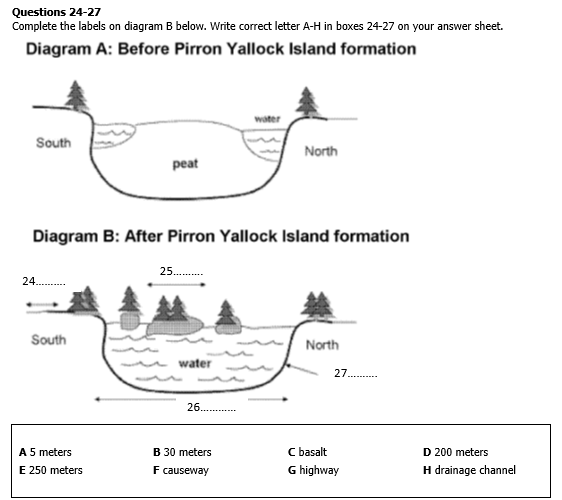
    Another example albeit freshwater, can be found in Victoria, Australia – the floating islands of Pirron Yallock. Accounts of how the floating islands were formed have been given by local residents. These accounts have not been disputed in the scientific literature. Prior to 1938, the lake was an intermittent swamp which usually dried out in summer. A drainage channel had been excavated at the lowest point of the swamp at the northern part of its perimeter. This is likely to have encouraged the development or enlargement of a peat mat on the floor of the depression. Potatoes were grown in the centre of the depression where the peat rose to a slight mound. The peat was ignited by a fire in 1938 which burned from the dry edges towards a central damp section. A track was laid through the swamp last century and pavement work was carried out in 1929/30. This causeway restricted flow between the depression and its former southern arm. These roadworks, plus collapse and partial infilling of the northern drainage channel, created drainage conditions conducive to a transition from swamp to permanent lake.

    The transformation from swamp to lake was dramatic, occurring over the winter of 1952 when rainfall of around 250mm was well above average. Peat is very buoyant and the central raised section which had been isolated by the fire, broke away from the rocky, basalt floor as the water level rose in winter. The main island then broke up into several smaller islands which drifted slowly for up to 200 meters within the confines of the lake and ranged in size from 2 to 30 meters in diameter. The years immediately following experienced average or above average rainfall and the water level was maintained. Re-alignment of the highway in 1963 completely blocked the former southern outlet of the depression, further enhancing its ability to retain water. The road surface also provided an additional source of runoff to the depression.

    Anecdotal evidence indicates that the islands floated uninterrupted for 30 years following their formation. They generally moved between the NW and NE sides of the lake in response to the prevailing winds. In 1980, the Rural Water Commission issued a nearby motel a domestic licence to remove water from the lake and occasionally water is taken for the purpose of firefighting. The most significant amount taken for firefighting was during severe fires in February 1983. Since then, the Pirron Yallock islands have ceased to float, and this is thought to be related to a drop in the water level of approximately 600 mm over the past 10-15 years. The islands have either run aground on the bed or the lagoon or vegetation has attached them to the bed.

    Floating islands have attracted attention because they are uncommon and their behaviour has provided not only explanations for events in myth and legend but also great scope for discussion and speculation amongst scientific and other observers.

    Questions 15-19
    Do the following statements agree with the information given in Reading Passage 2?
    In boxes 15-19 on your answer sheet write

    TRUE                        if the statement agrees with the information
    FALSE                      if the statement contradicts the information
    NOT GIVEN           if there is no information on this

    15 Natural floating islands occur mostly in lakes.
    16 Floating Islands occur after a heavy storm or landslide.
    17 The details of the floating island at sea near Cuba and Haiti were one of many sea-going islands in that area.
    18 Floating islands at sea sink because the plants on them eventually die.
    19 Scientists and local residents agree on how the Pirron Yallock Islands were formed.

    Questions 20-23
    Look at the following people (questions 20-23) and the list of statements below. Match each person to the correct statement. Write the correct letter A-G in boxes 1-4 on your answer sheet.

    20 Burns
    21 Peterson
    22 McWhirter
    23 Hesser

    A compared floating islands to floating blocks of ice
    B documented the break up of a sea-going island
    C floating islands last longer when confined to a limited area
    D studied the effect of rivers on floating islands
    E like floating islands, floating mobile ice chunks carry vegetation
    F even comparatively light winds can create a floating island
    G recorded the appearance of a sea-going floating island
    H tall trees increase floating island mobility

    Ocean Plant life in decline

    A Scientists have discovered plant life covering the surface of the world’s oceans is disappearing at a dangerous rate. This plant life called phytoplankton is a vital resource that helps absorb the worst of the ‘greenhouse gases’ involved in global warming. Satellites and ships at sea have confirmed the diminishing productivity of the microscopic plants, which oceanographers say is most striking in the waters of the North Pacific – ranging as far up as the high Arctic. “Whether the lost productivity of the phytoplankton is directly due to increased ocean temperatures that have been recorded for at least the past 20 years remains part of an extremely complex puzzle”, says Watson W. Gregg, a NASA biologist at the Goddard Space Flight Center in the USA, but it surely offers a fresh clue to the controversy over climate change. According to Gregg, the greatest loss of phytoplankton has occurred where ocean temperatures have risen most significantly between the early 1980s and the late 1990s. In the North Atlantic summertime, sea surface temperatures rose about 1.3 degrees Fahrenheit during that period, while in the North Pacific the ocean’s surface temperatures rose about .07 of a degree.

    B While the link between ocean temperatures and the productivity of plankton is striking, other factors can also affect the health of the plants. They need iron as nourishment, for example, and much of it reaches them in powerful winds that sweep iron-containing dust across the oceans from continental deserts. When those winds diminish or fail, plankton can suffer. According to Gregg and his colleagues, there have been small but measurable decreases in the amount of iron deposited over the oceans in recent years.

    C The significant decline in plankton productivity has a direct effect on the world’s carbon cycle. Normally, the ocean plants take up about half of all the carbon dioxide in the world’s environment because they use the carbon, along with sunlight, for growth, and release oxygen into the atmosphere in a process known as photosynthesis. Primary production of plankton in the North Pacific has decreased by more than 9 percent during the past 20 years, and by nearly 7 percent in the North Atlantic, Gregg and his colleagues determined from their satellite observations and shipboard surveys. Studies combining all the major ocean basins of the world, has revealed the decline in plankton productivity to be more than 6 percent.

    D The plankton of the seas are a major way in which the extra carbon dioxide emitted in the combustion of fossil fuels is eliminated. Whether caused by currently rising global temperatures or not, the loss of natural plankton productivity in the oceans also means the loss of an important factor in removing much of the principal greenhouse gas that has caused the world’s climate to warm for the past century or more. “Our combined research shows that ocean primary productivity is declining, and it may be the result of climate changes such as increased temperatures and decreased iron deposits into parts of the oceans. This has major implications for the global carbon cycle” said Gregg.

    E At the same time, Stanford University scientists using two other NASA satellites and one flown by the Defense Department have observed dramatic new changes in the vast ice sheets along the west coast of Antarctica. These changes, in turn, are having a major impact on phytoplankton there. They report that a monster chunk of the Ross Ice Shelf – an iceberg almost 20 miles wide and 124 miles long – has broken off the west face of the shelf and is burying a vast ocean area of phytoplankton that is the base of the food web in an area exceptionally rich in plant and animal marine life.

    F Although sea surface temperatures around Western Antarctica are remaining stable, the loss of plankton is proving catastrophic to all the higher life forms that depend on the plant masses, say Stanford biological oceanographers Arrigo and van Dijken. Icebergs in Antarctica are designated by letters and numbers for aerial surveys across millions of square miles of the southern ocean, and this berg is known as C-19. “We estimate from satellite observations that C-19 in the Ross Sea has covered 90 percent of all the phytoplankton there” said Arrigo.

    G Huge as it is, the C-19 iceberg is only the second-largest recorded in the Ross Sea region. An even larger one, dubbed B-15, broke off, or ‘calved’ in 2001. Although it also blotted out a large area of floating phytoplankton on the sea surface, it only wiped out about 40 percent of the microscopic plants. Approximately 25 percent of the world’s populations of emperor penguins and 30 percent of the Adelie penguins nest in colonies in this area. This amounts to hundreds of thousands of Adelie and emperor penguins all endangered by the huge iceberg, which has been stuck against the coast ever since it broke off from the Ross Ice Shelf last year. Whales, seals and the millions of shrimp-like sea creatures called krill are also threatened by the loss of many square miles of phytoplankton.

    Questions 28-32
    The passage has seven paragraphs labelled A-G. Which paragraph contains the following information?
    Write the correct letter A-G in boxes 28-32 on your answer sheet. NB: You may use any letter more than once.

    28 the role of plankton in dealing with carbon dioxide from vehicles
    29 the effect on land and marine creatures when icebergs break off
    30 the impact of higher temperatures upon the ocean
    31 the system used in naming icebergs
    32 the importance of phytoplankton in the food chain

    Questions 33-36
    Complete the sentences below with words taken from Reading Passage 3. Use NO MORE THAN TWO WORDS for each answer.

    33 Much needed iron for plant life is transported to the ocean by………………..
    34 An increase in greenhouse gasses is due to a decrease in…………………..
    35 Phytoplankton forms the………………………………of the food web.
    36 The technical term used when a piece of ice detached from the main block is…………………..

    Questions 37-40
    Complete the summary of paragraphs A-C below. Choose NO MORE THAN THREE WORDS from the passage for each answer.

    A decline in the plant life located in the world’s oceans has been validated by (37)………………………………..The most obvious decline in plant life has been in the North Pacific. A rise in ocean temperatures in the early 1980s and late 1990s led to a decline in (38)………………………………… In addition to higher ocean temperatures, deficiencies in (39)………………………. can also lead to a decline in plankton numbers. This, in turn, impacts upon the world’s (40)……………

  • IELTS Reading Practice Test – Exercise 71

    Seaweeds Of New Zealand

    A Seaweed is a particularly wholesome food, which absorbs and concentrates traces of a wide variety of minerals necessary to the body’s health. Many elements may occur in seaweed – aluminium, barium, calcium, chlorine, copper, iodine and iron, to name but a few – traces normally produced by erosion and carried to the seaweed beds by river and sea currents. Seaweeds are also rich in vitamins; indeed, Inuits obtain a high proportion of their bodily requirements of vitamin C from the seaweeds they eat. The health benefits of seaweed have long been recognised. For instance, there is a remarkably low incidence of goitre among the Japanese, and also among New Zealand’s indigenous Maori people, who have always eaten seaweeds, and this may well be attributed to the high iodine content of this food. Research into historical Maori eating customs shows that jellies were made using seaweeds, nuts, fuchsia and tutu berries, cape gooseberries, and many other fruits both native to New Zealand and sown there from seeds brought by settlers and explorers. As with any plant life, some seaweeds are more palatable than others, but in a survival situation, most seaweeds could be chewed to provide a certain sustenance.

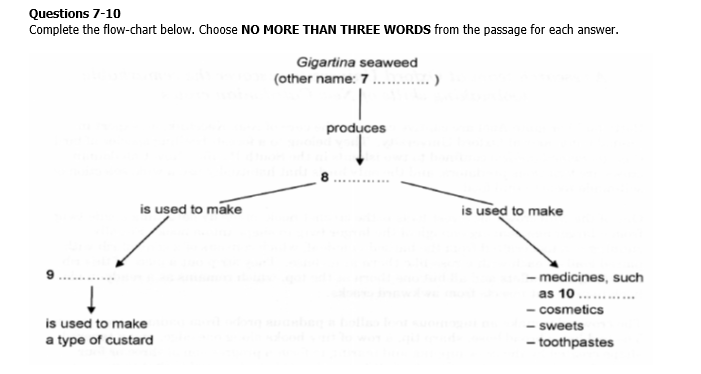
    B New Zealand lays claim to approximately 700 species of seaweed, some of which have no representation outside that country. Of several species grown worldwide, New Zealand also has a particularly large share. For example, it is estimated that New Zealand has some 30 species of Gigartina, a close relative of carrageen or Irish moss. These are often referred to as the New Zealand carrageens. The substance called agar which can be extracted from these species gives them great commercial application in the production of seameal, from which seameal custard (a food product) is made, and in the canning, paint and leather industries. Agar is also used in the manufacture of cough mixtures, cosmetics, confectionery and toothpastes. In fact, during World War II, New Zealand Gigartina were sent to Australia to be used in toothpaste.

    C New Zealand has many of the commercially profitable red seaweeds, several species of which are a source of agar (Pterocladia, Gelidium, Chondrus, Gigartina). Despite this, these seaweeds were not much utilised until several decades ago. Although distribution of the Gigartina is confined to certain areas according to species, it is only on the east coast of the North Island that its occurrence is rare. And even then, the east coast, and the area around Hokianga, have a considerable supply of the two species of Pterocladia from which agar is also made. New Zealand used to import the Northern Hemisphere Irish moss (Chondrus crispus) from England and ready-made agar from Japan.

    D Seaweeds are divided into three classes determined by colour – red, brown and green – and each tends to live in a specific position. However, except for the unmistakable sea lettuce (Ulva), few are totally one colour; and especially when dry, some species can change colour significantly – a brown one may turn quite black, or a red one appear black, brown, pink or purple. Identification is nevertheless facilitated by the fact that the factors which determine where a seaweed will grow are quite precise, and they tend therefore to occur in very well-defined zones. Although there are exceptions, the green seaweeds are mainly shallow-water algae; the browns belong to the medium depths; and the reds are plants of the deeper water, furthest from the shore. Those shallow-water species able to resist long periods of exposure to sun and air are usually found on the upper shore, while those less able to withstand such exposure occur nearer to, or below, the low-water mark. Radiation from the sun, the temperature level, and the length of time immersed also play a part in the zoning of seaweeds. Flat rock surfaces near mid-level tides are the most usual habitat of sea-bombs, Venus’ necklace, and most brown seaweeds. This is also the home of the purple laver or Maori karengo, which looks rather like a reddish-purple lettuce. Deep-water rocks on open coasts, exposed only at very low tide, are usually the site of bull-kelp, strapweeds and similar tough specimens. Kelp, or bladder kelp, has stems that rise to the surface from massive bases or ‘holdfasts’, the leafy branches and long ribbons of leaves surging with the swells beyond the line of shallow coastal breakers or covering vast areas of calmer coastal water.

    E Propagation of seaweeds occurs by seed-like spores, or by fertilisation of egg cells. None have roots in the usual sense; few have leaves; and none have flowers, fruits or seeds. The plants absorb their nourishment through their leafy fronds when they are surrounded by water; the holdfast of seaweeds is purely an attaching organ, not an absorbing one.

    F Some of the large seaweeds stay on the surface of the water by means of air- filled floats; others, such as bull-kelp, have large cells filled with air. Some which spend a good part of their time exposed to the air, often reduce dehydration either by having swollen stems that contain water, or they may (like Venus’ necklace) have swollen nodules, or they may have a distinctive shape like a sea-bomb. Others, like the sea cactus, are filled with a slimy fluid or have a coating of mucilage on the surface. In some of the larger kelps, this coating is not only to keep the plant moist, but also to protect it from the violent action of waves.

    Questions 1-6
    Reading Passage 1 has six paragraphs, A-F.
    Choose the correct heading for each paragraph from the list of headings below.

    List of Headings
    i The appearance and location of different seaweeds
    ii The nutritional value of seaweeds
    iii How seaweeds reproduce and grow
    iv How to make agar from seaweeds
    v The under-use of native seaweeds
    vi Seaweed species at risk of extinction
    vii Recipes for how to cook seaweeds
    viii The range of seaweed products
    ix Why seaweeds don’t sink or dry out

    1 Paragraph A
    2 Paragraph B
    3 Paragraph C
    4 Paragraph D
    5 Paragraph E
    6 Paragraph F

    Questions 7-10
    Complete the flow-chart below. Choose NO MORE THAN THREE WORDS from the passage for each answer.

    Questions 11-13
    Classify the following characteristics as belonging to
    A brown seaweed
    B green seaweed
    C red seaweed

    Write the correct letter, A, B or C, in boxes 11-13 on your answer sheet.
    11 can survive the heat and dryness at the high-water mark
    12 grow far out in the open sea
    13 share their site with karengo seaweed

    Two Wings And A Toolkit

    Betty and her mate Abel are captive crows in the care of Alex Kacelnik, an expert in animal behaviour at Oxford University. They belong to a forest-dwelling species of bird (Corvus rnoneduloides) confined to two islands in the South Pacific. New Caledonian crows are tenacious predators, and the only birds that habitually use a wide selection of self-made tools to find food.

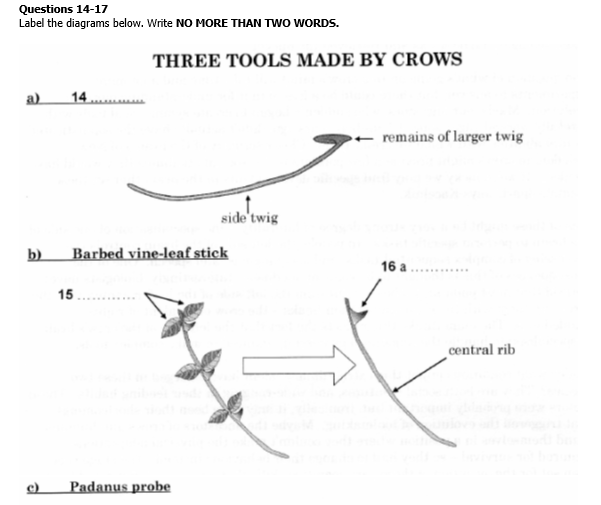
    One of the wild crows’ cleverest tools is the crochet hook, made by detaching a side twig from a larger one, leaving enough of the larger twig to shape into a hook. Equally cunning is a tool crafted from the barbed vine-leaf, which consists of a central rib with paired leaflets each with a rose-like thorn at its base. They strip out a piece of this rib, removing the leaflets and all but one thorn at the top, which remains as a ready-made hook to prise out insects from awkward cracks.

    The crows also make an ingenious tool called a padanus probe from padanus tree leaves. The tool has a broad base, sharp tip, a row of tiny hooks along one edge, and a tapered shape created by the crow nipping and tearing to form a progression of three or four steps along the other edge of the leaf. What makes this tool special is that they manufacture it to a standard design, as if following a set of instructions. Although it is rare to catch a crow in the act of clipping out a padanus probe, we do have ample proof of their workmanship: the discarded leaves from which the tools are cut. The remarkable thing that these ‘counterpart’ leaves tell us is that crows consistently produce the same design every time, with no in-between or trial versions. It’s left the researchers wondering whether, like people, they envisage the tool before they start and perform the actions they know are needed to make it. Research has revealed that genetics plays a part in the less sophisticated toolmaking skills of finches in the Galapagos islands. No one knows if that’s also the case for New Caledonian crows, but it’s highly unlikely that their toolmaking skills are hardwired into the brain. ‘The picture so far points to a combination of cultural transmission – from parent birds to their young – and individual resourcefulness,’ says Kacelnik.

    In a test at Oxford, Kacelnik’s team offered Betty and Abel an original challenge – food in a bucket at the bottom of a ‘well’. The only way to get the food was to hook the bucket out by its handle. Given a choice of tools – a straight length of wire and one with a hooked end – the birds immediately picked the hook, showing that they did indeed understand the functional properties of the tool.

    But do they also have the foresight and creativity to plan the construction of their tools? It appears they do. In one bucket-in-the-well test, Abel carried off the hook, leaving Betty with nothing but the straight wire. ‘What happened next was absolutely amazing,’ says Kacelnik. She wedged the tip of the wire into a crack in a plastic dish and pulled the other end to fashion her own hook. Wild crows don’t have access to pliable, bendable material that retains its shape, and Betty’s only similar experience was a brief encounter with some pipe cleaners a year earlier. In nine out of ten further tests, she again made hooks and retrieved the bucket.

    The question of what’s going on in a crow’s mind will take time and a lot more experiments to answer, but there could be a lesson in it for understanding our own evolution. Maybe our ancestors, who suddenly began to create symmetrical tools with carefully worked edges some 1.5 million years ago, didn’t actually have the sophisticated mental abilities with which we credit them. Closer scrutiny of the brains of New Caledonian crows might provide a few pointers to the special attributes they would have needed. ‘If we’re lucky we may find specific developments in the brain that set these animals apart,’ says Kacelnik.

    One of these might be a very strong degree of laterality – the specialisation of one side of the brain to perform specific tasks. In people, the left side of the brain controls the processing of complex sequential tasks, and also language and speech. One of the consequences of this is thought to be right-handedness. Interestingly, biologists have noticed that most padanus probes are cut from the left side of the leaf, meaning that the birds clip them with the right side of their beaks – the crow equivalent of right- handedness. The team thinks this reflects the fact that the left side of the crow’s brain is specialised to handle the sequential processing required to make complex tools.

    Under what conditions might this extraordinary talent have emerged in these two species? They are both social creatures, and wide-ranging in their feeding habits. These factors were probably important but, ironically, it may have been their shortcomings that triggered the evolution of toolmaking. Maybe the ancestors of crows and humans found themselves in a position where they couldn’t make the physical adaptations required for survival – so they had to change their behaviour instead. The stage was then set for the evolution of those rare cognitive skills that produce sophisticated tools. New Caledonian crows may tell us what those crucial skills are.

    Questions 14-17
    Label the diagrams below. Write NO MORE THAN TWO WORDS.

    Questions 18-23
    Do the following statements agree with the information given in Reading Passage 2? In boxes 18-23 on your answer sheet, write

    TRUE                             if the statement agrees with the information
    FALSE                           if the statement contradicts the information
    NOT GIVEN               if there is no information on this

    18 There appears to be a fixed pattern for the padanus probe’s construction.
    19 There is plenty of evidence to indicate how the crows manufacture the padanus probe.
    20 Crows seem to practise a number of times before making a usable padanus probe.
    21 The researchers suspect the crows have a mental image of the padanus probe before they create it.
    22 Research into how the padanus probe is made has helped to explain the toolmaking skills of many other bird species.
    23 The researchers believe the ability to make the padanus probe is passed down to the crows in their genes.

    Questions 24-26
    Choose THREE letters, A-G.

    According to the information in the passage, which THREE of the following features are probably common to both New Caledonian crows and human beings?
    A keeping the same mate for life
    B having few natural predators
    C having a bias to the right when working
    D being able to process sequential tasks
    E living in extended family groups
    F eating a variety of foodstuffs
    G being able to adapt to diverse habitats

    How Did Writing Begin?

    The Sumerians, an ancient people of the Middle East, had a story explaining the invention of writing more than 5,000 years ago. It seems a messenger of the King of Uruk arrived at the court of a distant ruler so exhausted that he was unable to deliver the oral message. So the king set down the words of his next messages on a clay tablet. A charming story, whose retelling at a recent symposium at the University of Pennsylvania amused scholars. They smiled at the absurdity of a letter which the recipient would not have been able to read. They also doubted that the earliest writing was a direct rendering of speech. Writing more likely began as a separate, symbolic system of communication and only later merged with spoken language.

    Yet in the story the Sumerians, who lived in Mesopotamia, in what is now southern Iraq, seemed to understand writing’s transforming function. As Dr Holly Pittman, director of the University’s Center for Ancient Studies, observed, writing ‘arose out of the need to store and transmit information … over time and space’.

    In exchanging interpretations and information, the scholars acknowledged that they still had no fully satisfying answers to the questions of how and why writing developed. Many favoured an explanation of writing’s origins in the visual arts, pictures becoming increasingly abstract and eventually representing spoken words. Their views clashed with a widely held theory among archaeologists that writing developed from the pieces of clay that Sumerian accountants used as tokens to keep track of goods.

    Archaeologists generally concede that they have no definitive answer to the question of whether writing was invented only once, or arose independently in several places, such as Egypt, the Indus Valley, China, Mexico and Central America. The preponderance of archaeological data shows that the urbanizing Sumerians were the first to develop writing, in 3,200 or 3,300 BC. These are the dates for many clay tablets in an early form of cuneiform, a script written by pressing the end of a sharpened stick into wet clay, found at the site of the ancient city of Uruk. The baked clay tablets bore such images as pictorial symbols of the names of people, places and things connected with government and commerce. The Sumerian script gradually evolved from the pictorial to the abstract, but did not at first represent recorded spoken language.

    Dr Peter Damerow, a specialist in Sumerian cuneiform at the Max Planck Institute for the History of Science in Berlin, said, ‘It is likely that there were mutual influences of writing systems around the world. However, their great variety now shows that the development of writing, once initiated, attains a considerable degree of independence and flexibility to adapt to specific characteristics of the sounds of the language to be represented.’ Not that he accepts the conventional view that writing started as a representation of words by pictures. New studies of early Sumerian writing, he said, challenge this interpretation. The structures of this earliest writing did not, for example, match the structure of spoken language, dealing mainly in lists and categories rather than in sentences and narrative.

    For at least two decades, Dr Denise Schmandt-Besserat, a University of Texas archaeologist, has argued that the first writing grew directly out of a system practised by Sumerian accountants. They used clay tokens, each one shaped to represent a jar of oil, a container of grain or a particular kind of livestock. These tokens were sealed inside clay spheres, and then the number and type of tokens inside was recorded on the outside using impressions resembling the tokens. Eventually, the token impressions were replaced with inscribed signs, and writing had been invented.

    Though Dr Schmandt-Besserat has won much support, some linguists question her thesis, and others, like Dr Pittman, think it too narrow. They emphasise that pictorial representation and writing evolved together. ‘There’s no question that the token system is a forerunner of writing,’ Dr Pittman said, ‘but I have an argument with her evidence for a link between tokens and signs, and she doesn’t open up the process to include picture making.’

    Dr Schmandt-Besserat vigorously defended her ideas. ‘My colleagues say that pictures were the beginning of writing/ she said, ‘but show me a single picture that becomes a sign in writing. They say that designs on pottery were the beginning of writing, but show me a single sign of writing you can trace back to a pot – it doesn’t exist.’ In its first 500 years, she asserted, cuneiform writing was used almost solely for recording economic information, and after that its uses multiplied and broadened.

    Yet other scholars have advanced different ideas. Dr Piotr Michalowski, Professor of Near East Civilizations at the University of Michigan, said that the proto-writing of Sumerian Uruk was ‘so radically different as to be a complete break with the past’. It no doubt served, he said, to store and communicate information, but also became a new instrument of power. Some scholars noted that the origins of writing may not always have been in economics. In Egypt, most early writing is high on monuments or deep in tombs. In this case, said Dr Pascal Vernus from a university in Paris, early writing was less administrative than sacred. It seems that the only certainty in this field is that many questions remain to be answered.

    Questions 27-30
    Choose the correct letter, A, B, C or D.

    27 The researchers at the symposium regarded the story of the King of Uruk as ridiculous because
    A writing probably developed independently of speech
    B clay tablets had not been invented at that time
    C the distant ruler would have spoken another language
    D evidence of writing has been discovered from an earlier period

    28 According to the writer, the story of the King of Uruk
    A is a probable explanation of the origins of writing
    B proves that early writing had a different function to writing today
    C provides an example of symbolic writing
    D shows some awareness amongst Sumerians of the purpose of writing

    29 There was disagreement among the researchers at the symposium about
    A the area where writing began
    B the nature of early writing materials
    C the way writing began
    D the meaning of certain abstract images

    30 The opponents of the theory that writing developed from tokens believe that it
    A grew out of accountancy
    B evolved from pictures
    C was initially intended as decoration
    D was unlikely to have been connected with commerce

    Questions 31-36
    Look at the following statements (Questions 31-36) and the list of people below.
    Match each statement with the correct person, A-E.

    31 There is no proof that early writing is connected to decorated household objects.
    32 As writing developed, it came to represent speech.
    33 Sumerian writing developed into a means of political control.
    34 Early writing did not represent the grammatical features of speech.
    35 There is no convincing proof that tokens and signs are connected.
    36 The uses of cuneiform writing were narrow at first, and later widened.

    List of People
    A Dr Holly Pittman
    B Dr Peter Damerow
    C Dr Denise Schmandt-Besserat
    D Dr Piotr Michalowski
    E Dr Pascal Vernus

    Questions 37-40
    Complete the summary using the list of words, A-N, below.

    The earliest form of writing
    Most archaeological evidence shows that the people of (37)……………………………invented writing in around 3,300 BC. Their script was written on (38)……………………………and was called (39)………………………………..Their script originally showed images related to political power and business, and later developed to become more (40)………………………….

    A cuneiformB pictorialC tomb wallsD urbanE legible
    F stone blocksG simpleH MesopotamiaI abstractJ papyrus sheets
    K decorativeL clay tabletsM EgyptN Uruk

  • IELTS Reading Practice Test – Exercise 70

    Spider silk cuts weight of bridges

    A Scientists have succeeded in copying the silk-producing genes of the Golden Orb Weaver spider and are using them to create a synthetic material which they believe is the model for a new generation of advanced bio-materials. The new material, biosilk, which has been spun for the first time by researchers at DuPont, has an enormous range of potential uses in construction and manufacturing.

    B The attraction of the silk spun by the spider is a combination of great strength and enormous elasticity, which man-made fibres have been unable to replicate. On an equal-weight basis, spider silk is far stronger than steel and it is estimated that if a single strand could be made about 10m in diameter, it would be strong enough to stop a jumbo jet in flight. A third important factor is that it is extremely light. Army scientists are already looking at the possibilities of using it for lightweight, bullet-proof vests and parachutes.

    C For some time, biochemists have been trying to synthesise the drag-line silk of the Golden Orb Weaver. The drag-line silk, which forms the radial arms of the web, is stronger than the other parts of the web and some biochemists believe a synthetic version could prove to be as important a material as nylon, which has been around for 50 years, since the discoveries of Wallace Carothers and his team ushered in the age of polymers.

    D To recreate the material, scientists, including Randolph Lewis at the University of Wyoming, first examined the silk-producing gland of the spider. ‘We took out the glands that produce the silk and looked at the coding for the protein material they make, which is spun into a web. We then went looking for clones with the right DNA,’ he says.

    E At DuPont, researchers have used both yeast and bacteria as hosts to grow the raw material, which they have spun into fibres. Robert Dorsch, DuPont’s director of biochemical development, says the globules of protein, comparable with marbles in an egg, are harvested and processed. ‘We break open the bacteria, separate out the globules of protein and use them as the raw starting material. With yeast, the gene system can be designed so that the material excretes the protein outside the yeast for better access,’ he says.

    F ‘The bacteria and the yeast produce the same protein, equivalent to that which the spider uses in the drag lines of the web. The spider mixes the protein into a water- based solution and then spins it into a solid fibre in one go. Since we are not as clever as the spider and we are not using such sophisticated organisms, we substituted manmade approaches and dissolved the protein in chemical solvents, which are then spun to push the material through small holes to form the solid fibre.’

    G Researchers at DuPont say they envisage many possible uses for a new biosilk material. They say that earthquake-resistant suspension bridges hung from cables of synthetic spider silk fibres may become a reality. Stronger ropes, safer seat belts, shoe soles that do not wear out so quickly and tough new clothing are among the other applications. Biochemists such as Lewis see the potential range of uses of biosilk as almost limitless. ‘It is very strong and retains elasticity; there are no man-made materials that can mimic both these properties. It is also a biological material with all the advantages that has over petrochemicals,’ he says.

    H At DuPont’s laboratories, Dorsch is excited by the prospect of new super-strong materials but he warns they are many years away. ‘We are at an early stage but theoretical predictions are that we will wind up with a very strong, tough material, with an ability to absorb shock, which is stronger and tougher than the man-made materials that are conventionally available to us,’ he says.

    I The spider is not the only creature that has aroused the interest of material scientists. They have also become envious of the natural adhesive secreted by the sea mussel. It produces a protein adhesive to attach itself to rocks. It is tedious and expensive to extract the protein from the mussel, so researchers have already produced a synthetic gene for use in surrogate bacteria.

    Questions 1-5
    Reading Passage 1 has nine paragraphs, A-l. Which paragraph contains the following information?

    1 a comparison of the ways two materials are used to replace silk-producing glands
    2 predictions regarding the availability of the synthetic silk
    3 ongoing research into other synthetic materials
    4 the research into the part of the spider that manufactures silk
    5 the possible application of the silk in civil engineering

    Questions 6-10
    Complete the flow-chart below. Choose NO MORE THAN TWO WORDS from the passage for each answer.

    Synthetic gene grown in (6)…………………………or (7)……………………..

    Globules of (8)…………………………….

    Dissolved in (9)………………………

    Passed through (10)………………………….

    To produce a solid fibre

    Questions 11-13
    Do the following statements agree with the information given in Reading Passage 1? In boxes 11-13 on your answer sheet, write

    TRUE                       if the statement agrees with the information
    FALSE                     if the statement contradicts the information
    NOT GIVEN          if there is no information on this

    11 Biosilk has already replaced nylon in parachute manufacture.
    12 The spider produces silk of varying strengths.
    13 Lewis and Dorsch co-operated in the synthetic production of silk.

    Revolutions in Mapping

    Today, the mapmaker’s vision is no longer confined to what the human eye can see. The perspective of mapmaking has shifted from the crow’s nest of the sailing vessel, mountain top and airplane to new orbital heights. Radar, which bounces microwave radio signals off a given surface to create images of its contours and textures, can penetrate jungle foliage and has produced the first maps of the mountains of the planet Venus. And a combination of sonar and radar produces charts of the seafloor, putting much of Earth on the map for the first time. ‘Suddenly it’s a whole different world for us,’ says Joel Morrison, chief of geography at the U.S. Bureau of the Census. ‘Our future as mapmakers – even ten years from now – is uncertain.’

    The world’s largest collection of maps resides in the basement of the Library of Congress in Washington, D.C. The collection, consisting of up to 4.6 million map sheets and 63,000 atlases, includes magnificent bound collections of elaborate maps – the pride of the golden age of Dutch cartography. In the reading room scholars, wearing thin cotton gloves to protect the fragile sheets, examine ancient maps with magnifying glasses. Across the room people sit at their computer screens, studying the latest maps. With their prodigious memories, computers are able to store data about people, places and environments – the stuff of maps – and almost instantly information is displayed on the screen in the desired geographic context, and at the click of a button, a print-out of the map appears.

    Measuring the spherical Earth ranks as the first major milestone in scientific cartography. This was first achieved by the Greek astronomer Eratosthenes, a scholar at the famous Alexandrian Library in Egypt in the third century BC. He calculated the Earth’s circumference as 25,200 miles, which was remarkably accurate. The longitudinal circumference is known today to be 24,860 miles.

    Building on the ideas of his predecessors, the astronomer and geographer Ptolemy, working in the second century AD, spelled out a system for organising maps according to grids of latitude and longitude. Today, parallels of latitude are often spaced at intervals of 10 to 20 degrees and meridians at 15 degrees, and this is the basis for the width of modern time zones. Another legacy of Ptolemy’s is his advice to cartographers to create maps to scale. Distance on today’s maps is expressed as a fraction or ratio of the real distance. But mapmakers in Ptolemy’s time lacked the geographic knowledge to live up to Ptolemy’s scientific principles. Even now, when surveyors achieve accuracies down to inches and satellites can plot potential missile targets within feet, maps are not true pictures of reality.

    However, just as the compass improved navigation and created demand for useful charts, so the invention of the printing press in the 15th century put maps in the hands of more people, and took their production away from monks, who had tended to illustrate theology rather than geography. Ocean-going ships launched an age of discovery, enlarging both what could and needed to be mapped, and awakened an intellectual spirit and desire for knowledge of the world.

    Inspired by the rediscovered Ptolemy, whose writing had been preserved by Arabs after the sacking of the Alexandrian Library in AD 931, mapmakers in the 15th century gradually replaced theology with knowledge of faraway places, as reported by travelling merchants like Marco Polo.

    Gerhardus Mercator, the foremost shipmaker of the 16th century, developed a technique of arranging meridians and parallels in such a way that navigators could draw straight lines between two points and steer a constant compass course between them. This distortion formula, introduced on his world map of 1569, created the ‘Greenland problem’. Even on some standard maps to this day, Greenland looks as large as South America – one of the many problems when one tries to portray a round world on a flat sheet of paper. But the Mercator projection was so practical that it is still popular with sailors.

    Scientific mapping of the land came into its own with the achievements of the Cassini family – father, son, grandson and great-grandson. In the late 17th century, the Italian-born founder, Jean-Dominique, invented a complex method of determining longitude based on observations of Jupiter’s moons. Using this technique, surveyors were able to produce an accurate map of France. The family continued to map the French countryside and his great- grandson finally published their famous Cassini map in 1793 during the French Revolution. While it may have lacked the artistic appeal of earlier maps, it was the model of a social and geographic map showing roads, rivers, canals, towns, abbeys, vineyards, lakes and even windmills. With this achievement, France became the first country to be completely mapped by scientific methods.

    Mapmaking has come a long way since those days. Today’s surveyors rarely go into the field without being linked to navigation satellites. Their hand-held receivers are the most familiar of the new mapping technologies, and the satellite system, developed and still operated by the US Defense Department, is increasingly used by surveyors. Even ordinary hikers, sailors and explorers can tap into it for data telling them where they are. Simplified civilian versions of the receivers are available for a few hundred dollars and they are also the heart of electronic map displays available in some cars. Cartography is pressing on to cosmic frontiers, but its objective is, and always has been, to communicate a sense of ‘here’ in relation to ‘there’, however far away ‘there’ may be.

    Questions 14-18
    Choose the correct letter, A, B, C or D. Write the correct letter in boxes 14-18 on your answer sheet.

    14 According to the first paragraph, mapmakers in the 21st century
    A combine techniques to chart unknown territory
    B still rely on being able to see what they map
    C are now able to visit the darkest jungle
    D need input from experts in other fields

    15 The Library of Congress offers an opportunity to
    A borrow from their collection of Dutch maps
    B learn how to restore ancient and fragile maps
    C enjoy the atmosphere of the reading room
    D create individual computer maps to order

    16 Ptolemy alerted his contemporaries to the importance of
    A measuring the circumference of the world
    B organising maps to reflect accurate ratios of distance
    C working out the distance between parallels of latitude
    D accuracy and precision in mapping

    17 The invention of the printing press
    A revitalised interest in scientific knowledge
    B enabled maps to be produced more cheaply
    C changed the approach to mapmaking
    D ensured that the work of Ptolemy was continued

    18 The writer concludes by stating that
    A mapmaking has become too specialized
    B cartographers work in very harsh conditions
    C the fundamental aims of mapmaking remain unchanged
    D the possibilities of satellite mapping are infinite

    Questions 19-21
    Look at the following list of achievements (Questions 19-21) and the list of mapmakers below.
    Match each achievement with the correct mapmaker, A, B, C or D.

    19 came very close to accurately measuring the distance round the Earth
    20 produced maps showing man-made landmarks
    21 laid the foundation for our modern time zones

    List of Mapmakers
    A Mercator
    B Ptolemy
    C Cassini family
    D Eratosthenes

    Questions 22-26
    Complete the summary below. Choose NO MORE THAN TWO WORDS from the passage for each answer.

    Ancient maps allow us to see how we have come to make sense of the world. They also reflect the attitudes and knowledge of the day. The first great step in mapmaking took place in (22)…………………………………….in the 3rd century BC. Work continued in this tradition until the 2nd century AD but was then abandoned for over a thousand years, during which time maps were the responsibility of (23)………………………………..rather than scientists. Fortunately, however, the writings of (24)………………………………..had been kept, and interest in scientific mapmaking was revived as scholars sought to produce maps, inspired by the accounts of travellers. These days, (25)………………………………….are vital to the creation of maps and radar has allowed cartographers to map areas beyond our immediate world. In addition, this high-tech equipment is not only used to map faraway places, but cheaper versions have also been developed for use in (26)…………………………

    Hypnotism — is it real or just a circus trick?

    A Hypnosis has been shown through a number of rigorously controlled studies to reduce pain, control blood pressure, and even make warts go away. But because very few studies have attempted to define the actual processes involved, most scientists are sceptical of its power and uses. That scepticism has driven David Spiegel, a professor of psychiatry at Stanford University School of Medicine, USA, and other researchers to take a hard look at what happens in the brain during hypnosis.

    Among researchers there are two schools of thought. One claims that hypnosis fundamentally alters subjects’ state of mind: they enter a trance, which produces changes in brain activity. The other believes that hypnosis is simply a matter of suggestibility and relaxation. Spiegel belongs to the first school and over the years has had a debate with two scientists on the other side, Irving Kirsch, a University of Connecticut psychologist, and Stephen Kosslyn, a Harvard professor.

    B Kirsch often uses hypnosis in his practice and doesn’t deny that it can be effective. ‘With hypnosis you do put people in altered states,’ he says. ‘But you don’t need a trance to do it.’ To illustrate the point, Kirsch demonstrates how a subject holding a small object on a chain can make it swing in any direction by mere suggestion, the chain responding to minute movements in the tiny muscles of the fingers. ‘You don’t have to enter a trance for your subconscious and your body to act upon a suggestion,’ Kirsch says. ‘The reaction is the result of your focusing on moving the chain in a particular direction.’

    Spiegel disagrees. One of his best known studies found that when subjects were hypnotised and given suggestions their brain wave patterns changed, indicating that they had entered a trance. In one of his studies, people under hypnosis were told their forearms were numb, then given light electrical shocks to the wrists. They didn’t flinch or respond in any way, and their brain waves resembled those of people who experienced a much weaker shock. To Kirsch this still wasn’t enough to prove the power of trance, but Stephen Kosslyn was willing to be convinced. Many external factors could have been responsible for the shift in the subjects’ state of mind, but Kosslyn wondered, ‘Is there really something going on in the brain?’

    C To find out, Spiegel and Kosslyn decided to collaborate on a study focusing on a part of the brain that is well understood: the circuit which has been found to process the perception of colour. Spiegel and Kosslyn wanted to see if subjects could set off the circuit by visualising colour while under hypnosis. They selected eight people for the experiment conducted at Massachusetts General Hospital. The subjects were put in a scanner and shown a slide with coloured rectangles while their brain activity was mapped. Then they were shown a black and white slide and told to imagine its having colour. Both tasks were then repeated under hypnosis.

    The results were striking. When the subjects truly saw the coloured rectangles, the circuit lit up on both sides of the brain; when they only had to imagine the colour, the circuit lit up only in the right hemisphere. Under hypnosis, however, both sides of the brain became active, just as in regular sight; imagination seemed to take on the quality of a hallucination.

    After the experiment, Kosslyn was forced to admit, ‘I’m absolutely convinced now that hypnosis can boost what mental imagery does.’ But Kirsch remained sceptical, saying, ‘The experiments demonstrate that people are experiencing the effects of hypnotic suggestion but don’t prove that they are entering a trance.’ He also argued that subjects were told to see the card in colour when they were hypnotised but only to imagine it in colour when they weren’t. ‘Being told to pretend you’re having an experience is different from the suggestion to have the experience.’

    D Spiegel, however, is a clinician first and a scientist second. He believes the most important thing is that doctors recognise the power of hypnosis and start to use it. Working with Elvira Lang, a radiologist at a Harvard Medical Centre, he is testing the use of hypnosis in the operating room just as he and Kosslyn did in the scanner. Spiegel and Lang took 241 patients scheduled for surgery and divided them into three groups. One group received standard care, another standard care with a sympathetic care provider and the third received standard care, a sympathetic care provider and hypnosis. Every 15 minutes the patients were asked to rate their pain and anxiety levels. They were also hooked up to painkilling medication which they could administer to themselves.

    On average, Spiegel and Lang found the hypnotised subjects used less medication, experienced less pain and felt far less anxiety than the other two groups. Original results published in The Lancet have been further supported by ongoing studies conducted by Lang.

    E Spiegel’s investigations into the nature of hypnosis and its effects on the brain continue. However, if hypnosis is ever to work its way into mainstream medicine and everyday use, physicians will need to know there is solid science behind what sounds like mysticism. Only then will their reluctance to using such things as mind over matter be overcome. ‘I agree that the medical use of hypnotism should be based on data rather than belief,’ says Spiegel, ‘but in the end it doesn’t really matter why it works, as long as it helps our patients.’

    Questions 27-31
    Reading Passage 3 has five sections, A-E. Choose the correct heading for each section from the list of headings below.
    Write the correct number, i-vii, in boxes 27-31 on your answer sheet.

    List of Headings
    i An experiment using people who are receiving medical treatment
    ii The experiment that convinced all the researchers
    iii Medical benefits of hypnosis make scientific proof less important
    iv Lack of data leads to opposing views of hypnotism
    v The effects of hypnosis on parts of the brain involved in vision
    vi Inducing pain through the use of hypnotism
    vii Experiments used to support conflicting views

    27 Paragraph A
    28 Paragraph B
    29 Paragraph C
    30 Paragraph D
    31 Paragraph E

    Questions 32-36
    Choose the correct letter A, B, C or D.

    32 Kirsch uses a small object on a chain to demonstrate that
    A inducing a trance is a simple process
    B responding to a suggestion does not require a trance
    C muscles respond as a result of a trance
    D it is difficult to identify a trance

    33 Spiegel disagrees with Kirsch because the subjects in Spiegel’s experiment
    A believed what they were told
    B showed changes in brain activity
    C responded as expected to shocks
    D had similar reactions to control subjects

    34 Kosslyn’s response to Spiegel’s electric shock experiment was to
    A challenge the results because of external factors
    B work with Kirsch to disprove Spiegel’s results
    C reverse his previous position on trance
    D accept that Spiegel’s ideas might be correct

    35 Spiegel and Kosslyn’s experiment was designed to show that hypnosis
    A affects the electrical responses of the brain
    B could make colour appear as black and white
    C has an effect on how shapes are perceived
    D can enhance the subject’s imagination

    36 Kirsch thought Spiegel and Kosslyn’s results
    A were worthy of further investigation
    B had nothing to do with hypnotic suggestion
    C showed that the possibility of trance existed
    D were affected by the words used in the instructions

    Questions 37-40
    Do the following statements agree with the information given in Reading Passage 3? In boxes 37-40 on your answer sheet, write

    TRUE                        if the statement agrees with the information
    FALSE                      if the statement contradicts the information
    NOT GIVEN           if there is no information on this

    37 Spiegel is more interested in scientific research than medical practice.
    38 Patients in the third group in Spiegel and Lang’s experiment were easily hypnotised.
    39 In Spiegel and Lang’s experiment, a smaller amount of painkiller was needed by the hypnotised patients than by the other two groups.
    40 Spiegel feels that doctors should use hypnotism only when it is fully understood.

  • IELTS Reading Practice Test – Exercise 69

    Global Warming

    A The Stern Review Report on The Economics of Climate Change, published in 2006, the same year as Al Gore’s highly-acclaimed film and book, An Inconvenient Truth, made it clear that governments need to take the issue of global warming very seriously indeed. The Stern Review examined the issue of climate change from an economic perspective, looking at what it would cost the government to take appropriate action, and what it would cost if appropriate action were not taken. The report also highlighted a number of catastrophes that would occur if urgent measures were not taken to stop the carbon dioxide production that is heating up the planet. The report indicates that in the last 200 years, average temperatures on the planet have increased by less than one degree Celsius; however, if we do not control the rising carbon dioxide levels over the next 100 years, a rise of up to five degrees Celsius can be expected. This will have an enormous impact on global economic growth and will cause many potentially disastrous changes, including the following:

    B Melting glaciers—Beginning in the Andes, and then extending to the huge glaciers of the Himalayas, the ice will begin to disappear, threatening the water supply of billions of people. Sea levels will also rise, flooding huge areas of the world, including cities such as London and Tokyo.

    C Melting ice sheets—Not only will glaciers melt, but as the planet warms up, the huge Antarctic Ice Sheets and the floating sea ice of the Arctic will begin to melt, again resulting in catastrophic rises in sea levels. It is estimated that Arctic summers will be ice-free within 10 years, and the landscapes of the Antarctic will change beyond recognition by 2050. The vast ice plains of Greenland are also under threat.

    D The acidity resulting from the huge amounts of CO2 that the oceans will absorb will lead to the extinction of hundreds of species as marine ecosystems are destroyed; this will also threaten the fishing industry as thousands of millions of fish die off. This in turn will destroy the livelihood of thousands of fishing communities that depend on already overfished coastal areas.

    E Accompanying the floods will be an increasing occurrence of droughts, with a decrease of up to 30% in water availability in Africa, and similar decreases in Australia. This will, of course, result in crop failure and malnutrition the world over. It will also lead to an increase in disease, particularly in tropical regions. Large cities in dry regions will find it increasingly difficult to provide enough water for their populations.

    F Hurricanes, cyclones and tidal waves—Both A1 Gore’s book and the Stern Review indicate that if global temperatures continue to rise, we can expect a greater number of extreme weather phenomena, of an increased severity. Hurricane Katrina, which devastated the United States in 2005, is cited as just one example of the kind of environmental and economic havoc that will result from unchecked global warming. Typhoons, which often cause extensive flooding, are becoming more frequent and devastating in South East Asia.

    G Up to 50% of animal and plant species on the planet, beginning with those living in fragile environments such as coral reefs, tropical rainforest and alpine tundra, will become extinct. Climate change will eventually affect every ecosystem on the planet as temperatures increase, rainforest is destroyed and sea levels rise, leading to flooding and drought. The impact on ecosystems will be so dramatic that they will never recover from the damage caused by rising temperatures.

    H Does all this sound too depressing even to contemplate? Well, don’t despair: if you are optimistic by nature, there are two approaches to tackling the problem of global warming you could take.

    I The first approach is to begin to act locally to do your bit to reduce CO2 emissions and minimise pollution, at the same time hoping that governments will listen to the recommendations of the Stern Review, which, while recognising the seriousness of the threat, clearly indicates that if action is taken now, the right balance between economic growth and environmental conservation may be achieved. The Report is significant, both in its scope and its depth, and it does offer a positive outcome that allows economic growth to continue—so perhaps this will convince governments to take the action necessary to save the planet from environmental and economic disaster.

    J The second approach you could take, if you wish to remain optimistic, is to disregard the warnings of A1 Gore, the Stern Review team and other like-minded harbingers of doom, and instead opt for the much more positive and less dramatic stance taken by a very different group of scientists and economists. With its nominal leader the Danish economist, Bjorn Lomborg, the Omgivelse group believes that many of the predictions of the environmentalists are hugely exaggerated. Like Stern, Lomborg takes a pragmatic economic approach to the environmental situation and argues for investment in environmental research and development, rather than quick-fix’ measures that would not, he claims, solve the problem. With significantly less investment than that recommended in the Kyoto Accord or by the Stern Review Report, Lomborg believes the planet can be saved.

    Questions 1-3
    Complete the summary below. Choose NO MORE THAN THREE WORDS from the passage for each answer.

    The Stern Review Report emphasised the (1)…………………….to assess seriously the problem of global warming from (2)…………………………..point of view. It also focused on a number of environmental (3)…………………….that would happen if governments do not act to prevent climate change.

    Questions 4-12
    Reading Passage 1 has ten paragraphs, A – J. Choose the most suitable heading, i – xiii, for each paragraph from the list of the headings below. Write the correct numbers, i – xiii, next to Questions 4-12.

    List of headings
    i Long term solutions
    ii A balancing act
    iii Killing wildlife
    iv Extreme weather
    v Water crisis
    vi Endangering sea life
    vii Sinking cities
    viii Intensive farming
    ix Trouble at the poles
    x Alarming studies
    xi Two outlooks
    xii Arctic wildlife
    xii Burning coal

    Example: Paragraph H                 Answer xi

    4 Paragraph A
    5 Paragraph B
    6 Paragraph C
    7 Paragraph D
    8 Paragraph E
    9 Paragraph F
    10 Paragraph G
    11 Paragraph I
    12 Paragraph J

    Questions 13 and 14
    Complete each of the following statements with the best ending, A – H, from the list of endings below.
    Write the correct letters, A – H, next to Questions 13-14.

    13 The Stern Review points out that it is not too late……………………….
    14 More optimistic commentators like Bjorn Lomborg believe that politicians and scientists need………………..

    List of endings
    A to sign international environmental treaties
    B to strike the balance between economy and environment
    C to take personal responsibility for reducing CO2 emissions
    D to stop exaggerating the issue
    E save the planet
    F to find a solution to the problem
    G the issue of global warming
    H the problem of water pollution

    Cure-All Pills: Myths Or Reality?

    Browse the shelves of any health food shop or pharmacy and you’ll find dozens of dietary supplements—vitamins, antioxidants, minerals—along with a seemingly endless range of homeopathic remedies. There is always something new, some ‘miracle ingredient’ offering the promise of a longer, healthier, happier life. There are extracts of every kind of fruit and vegetable you can imagine—tomato, celery, carrot, papaya and cranberry—along with green tea potion, red wine extract and vitamins A-K in every colour and form. And all of these supplements claim to assist us in the constant battle against ageing, cancer, cardio-vascular disease, and a cornucopia of other afflictions. However, recent research may show it is all too good to be true.

    So how real are these claims? Vitamin tablets have been around forever, but antioxidants are the latest miracle cure; the question is, do they work? If the hype is true, then what antioxidants do is work to neutralise the free radicals in our bodies and later excrete them. Free radicals are atoms or molecules that have at least one unpaired electron and are therefore unstable and highly reactive. In animal tissue they are believed to accelerate the progression of cardio-vascular and age-related diseases, such as dementia and cancer. Antioxidants in fresh fruit and vegetables have been shown to combine with free radicals and neutralise them, preventing the oxidation which may lead to disease.

    An apple a day keeps the doctor away’—if eaten alongside four other portions of fresh fruit and vegetables! It is clear that those who eat more fruit and vegetables—and the recommended daily intake is at least five portions—are less prone to disease and live longer, healthier lives. Over the last 20-30 years, scientists have worked to isolate the active ingredients in fruit and vegetables— believed to be the antioxidants—and have conducted controlled tests of antioxidants, which revealed that they do indeed appear to have the ability to halt some of the chemical processes that cause disease. Thus the multimillion dollar industry of bottled antioxidants to supplement the diets of the busy and the stressed was born.

    Antioxidants were first cast into doubt during a major clinical trial in the US, in which a very common antioxidant, beta-carotene, also known as pro-vitamin A (found in yellow and green vegetables, milk and fish), was being tested for its efficacy against lung cancer in high-risk subjects. To the surprise and concern of the scientists conducting the experiment, those individuals taking the supplement—intended to reduce the risk of cancer—were at a significantly higher risk of developing lung cancer. This startling discovery led to the abandonment of the trials mid-way through the experimental process.

    Since this experiment in the mid-90s, other studies have similarly indicated that antioxidants and vitamin supplements are of dubious health value at best, and may possibly be harmful. It seems that even common vitamin supplements such as vitamin C may, in large doses, actually exacerbate the risk of cardio-vascular disease or cancer.

    As a result of these recent alarming studies, the US Food and Drug Administration (FDA) and its European equivalent, the European Medicine Agency (EMEA), have taken the decision to prohibit the production and sale of a number of the higher-dose supplements currently on the market.

    Another aspect of the increasingly complex picture to take into account is that recent research findings have also called into question some previously held beliefs concerning free radicals. It is possible, some scientists believe, that free radicals actually play a role in preventing disease. Professor Jennifer Horton at the University of West Wyoming is one of a number of scientists who has found that in small amounts, the free radicals may help stimulate the antioxidant systems in our bodies. It is also becoming apparent that free radicals may play a fundamental role in the fight against disease; recent research in the UIC suggests that they kill off harmful bacteria and even cancerous cells.

    Clearly, then, the use of bottled supplements with your diet is a practice to approach warily; and it is essential to keep abreast of new developments in research. Ironically, those health-conscious individuals who already eat large quantities of fresh fruit and vegetables, whose diet does not include junk food and who get plenty of regular exercise and have less need for dietary supplements tend to be the ones who are most likely to use them.

    Questions 15-18
    Choose the correct letter A, B or C.

    15 When introducing his discussion on antioxidant diet supplements, the writer notes that
    A most supplements sold in pharmacies or health food shops have at least some proven health benefits.
    B very few diet supplements are regulated by government health agencies.
    C there is evidence that some dietary supplements can be bad for your health.
    D only a few products offer real protection against ageing, heart disease and cancer.

    16 In the fourth paragraph, the writer’s main point is that
    A very high doses of antioxidant supplements can harm the liver.
    B US doctors prescribe pro-vitamin A to patients.
    C the clinical trials did not produce any conclusive results.
    D antioxidant supplements can increase the risk of some cancers.

    17 According to the writer,
    A recent studies have confirmed the benefits of antioxidants.
    B vitamin C supplements help to decrease the risk of heart disease.
    C the European Union endorses some higher-dose vitamin supplements.
    D some governments have banned a number of higher-dose vitamin supplements.

    18 The writer suggests that
    A it is better to take vitamin supplements than not to take them.
    B it is important to be well-informed about vitamin supplements before taking them.
    C people who exercise regularly should supplement their diets with vitamins.
    D vitamins and antioxidants are less effective when consumed as food.

    Questions 19-24
    Do the following statements agree with the information in Reading Passage 2?
    Next to Questions 19-24, write

    TRUE                        if the statement is true according to the passage
    FALSE                      if the statement is false according to the passage
    NOT GIVEN           if the information is not given in the passage

    19 Vitamin supplements bought from health food shops can differ from those available at pharmacies.
    20 Antioxidants eliminate free radicals from the body.
    21 After the release of Professor Horton’s study the number of people taking vitamin supplements declined.
    22 The findings of studies into the effect of pro-vitamin A resulted in some US drug companies going on trial.
    23 The FDA and the EMEA have jointly funded research into the safety of certain higher-dose vitamin supplements.
    24 Recent research suggests that small amounts of free radicals can help prevent disease.

    Questions 25-29
    Complete the sentences below with words taken from Reading Passage 2. Use NO MORE THAN THREE WORDS for each answer.

    25 Professor Jennifer Horton says that small amounts of………………………may be beneficial for our bodies.
    26 Some studies have indicated that vitamin supplements can be………………….
    27 Free radicals may have an important function in………………………
    28 ……………………………..people tend to be the ones who use bottled supplements.
    29 You should……………………….the use of bottled vitamin supplements with caution.

    Water And Chips Break New Ground

    Computers have been shrinking ever since their conception almost two centuries ago, and the trend is set to continue with the latest developments in microchip manufacturing. The earliest prototype of a mechanical computer was called the Difference Engine, and was invented by an eccentric Victorian called Charles Babbage. It weighed over 15 tons and had 26,000 parts. Colossus, the first electronic computer, did not appear until the end of WWTI, and with its 1,500 vacuum tubes was even more complex and much heavier than its mechanical predecessor.

    It was only when the silicon-based microchip was invented in the early 1950s that computers started to become more compact. The first microchip computers were very complex and had more than 100,000 transistors, or electronic switches; however, they were still rather bulky and measured several metres across. Nowadays microchips are measured in nanometres (nm)—that is, in billionths of a metre—and the search for even smaller microchips continues as scientists work on new methods of microchip production.

    Today, most microchips are shaped by a process called lithographic etching, which uses ultraviolet (UV) light. A beam of UV light with a wavelength of only 193 nm is projected through a lens on to an etching mask, a micro device with slits, or long narrow cuts. When the UV light hits the surface of silicon chips, it removes microscopic layers of silicon to create patterns for the microchips circuits. Microchips with features as small as 65 nm can be created with this wavelength.

    However, lithographic etching is unable to make chips much smaller than 65 nm due to the fundamental properties of light. If the slit in the mask were made narrower, the air and nitrogen used in the space between the lens and the etching mask would diffuse the light, causing a blurred image. This means that 193-nm UV light cannot be used to produce microchips with features smaller than 65 nm. Manufacturers know that they need to go even smaller for the technological demands of this century, and they are looking for new methods of making microchips.

    One approach to solving the problem is to use microscopic mirrors to focus X-rays rather than ultraviolet light. X-rays with a wavelength of less than 25 nm can be created, allowing engineers to make components smaller than 15 nm. The process is known as X-ray lithography etching. However, this technology is extremely expensive, so manufacturers are continuing to search for a cheaper alternative.

    A technology called immersion lithography might be the solution. Although liquids are not commonly associated with computers, a tiny drop of water may be all it takes to make microprocessors smaller and more powerful. Intel and IBM, who made the first microprocessors, have recently developed a unique method of microchip production, which uses water droplets to enable manufacturers to shrink the chips—and at a reasonable price! The new microchip is produced by using a drop of water to narrow the gap between the light source and the etching mask, and shorten the wavelength of the UV light to less than 34 nm. This process can be used to manufacture microchips as small as 45 nm, or possibly even smaller.

    Initially, engineers feared that air bubbles and other contaminants in water drops would distort the light and ruin the microchip etching process, and the first experiments proved these fears to be well-founded. The problem was overcome by using high-purity water, free of air and other substances. Scientists are also experimenting with liquids other than water—denser liquids such as hydrofluoric acid—which may allow the wavelength to be shrunk still further, thus producing even smaller chips.

    IBM have already successfully implemented immersion lithography on some of their production lines and created a fully-functioning microprocessor. IBM also claim that they are able to produce microchips with very few defects.

    Although immersion lithography is very new, it is highly promising as it will make the production of 45 nm and 32 nm chips commercially viable. It is a significant milestone in chip manufacturing and will help to bring the costs of the chip down without fundamentally changing the microchip production processes.

    In the near future, the ground-breaking technology of immersion lithography will enable computer manufacturers to make powerful microchips that will be used in electronic devices smaller than a coin. This will open up new opportunities in the ever-shrinking world of digital technology.

    Questions 30-34
    Do the following statements agree with the information given in the reading passage? Next to Questions 28-32, write

    TRUE                             if the statement is true according to the passage
    FALSE                           if the statement is false according to the passage
    NOT GIVEN                if the information is not given in the passage

    30 The first electronic computer weighed more than the first mechanical prototype.
    31 Computers started to shrink with the invention of the microchip.
    32 In early 1950s engineers used ultraviolet rays to build the first microchip.
    33 X-ray lithography is an inexpensive alternative technology to lithographic etching.
    34 Immersion lithography has enabled microchip manufacturers to produce higher quality computer chips.

    Questions 35-40

    Complete the table below. Write NO MORE THAN THREE WORDS from the passage.

    MethodLight usedWavelengthMaterial used to condense light
    LithographyUltraviolet193 nmair or (38)………………..
    Immersion lithography(35)…………….(36)…………….(39)……………………
    X-ray lithographyX-rays(37)…………………(40)…………………
  • IELTS Reading Practice Test – Exercise 68

    English Heritage Blue Plaques Scheme

    A The blue plaques scheme has been running for over 140 years and is one of the oldest of its kind in the world. The idea of erecting ‘memorial table was first proposed by William Ewart in the House of Commons in 1863. If had an immediate impact on the public imagination, and in 1866 the Society of Arts (later Royal Society of Arts) founded an official plaques scheme. The Society erected its first plaque – to the poet Lord Byron – in 1867. In all, the Society of Arts erected 35 plaques; today, less than half of them survive, the earliest of which commemorates Napoleon III (1867). In 1901, the plaques scheme was taken over by London County Council (LCC), which erected nearly 250 plaques over the next 64 years and gave the scheme its popular appeal. It was under the LCC that the blue plaque design as we know it today was adopted, and the selection criteria were formalised. On the abolition of the LCC in 1965, the plaques scheme passed to the Greater London Council (GLC). The scheme changed little, but the GLC was keen to broaden the range of people commemorated. The 262 plaques erected by the GLC include those to figures such as Sylvia Pankhurst, campaigner for women’s rights; Samuel Coleridge-Thylor, composer of the Song of Hiawatha; and Mary Seacole, the Jamaican nurse and heroine of the Crimean War. Since 1986, English Heritage has managed the blue plaques scheme. So far, English Heritage has erected nearly 300 plaques, bringing the total number to over 800.

    B English Heritage receives about 100 suggestions for blue plaques each year, almost all of which come from members of the public. The background of each case is very different. Each nominated person has to meet basic selection criteria before they can be considered. Most importantly, they must have been dead for 20 years or have passed the centenary of their birth, whichever is the earlier. This delay allows a person’s reputation to mature and ensures that their fame is long-lasting.

    C English Heritage’s Blue Plaques Panel – representatives of various disciplines from across the country – considers all the suggestions which meet the basic criteria; on average, around 1 in 3 proposals are accepted. If a figure is rejected, proposers must wait a further 10 years before their suggestion can be considered again. Detailed research is carried out into the surviving addresses of shortlisted candidates, using sources such as autobiographies, electoral registers and post office directories.

    D As only one plaque is allowed per person, the house to be commemorated has to be chosen very carefully. Factors which are considered include length of residence and the accomplishments of a candidate during the relevant years. A significant place of work can also be considered.

    E Before a plaque can be erected, the owners and tenants of the building in question have to give their consent. Where listed buildings are involved, Listed Building Consent is sought from the relevant local authority. If such consents are granted, the plaque is designed, and then produced by a specialist manufacturer. It is normally ready within about two months. Plaques are set into the fabric of the building, flush with the wall face. The cost of plaque manufacture and installation are borne entirely by English Heritage. In all, it can take between 2 and 5 years from the initial suggestion to the erection of a plaque.

    F The exact form of the blue plaque, as we see it now, was a relatively late development, though certain guiding principles had been in place from the outset. The earliest plaques, erected in 1867, were blue. Their format, a circle with the name of the Society of Arts worked into a pattern around the edge, was used consistently by the Society over its 35 years of management.

    G Manufacture of each plaque is undertaken by the mixing and pouring of a thick clay slip into a casting mould. When sufficiently dry, the cast is removed and the outline of the inscription and border is piped onto the face of the plaque and filled with white glaze. Blue glaze is then applied to the background before firing. This process produces gently raised characters and border, a unique feature of English Heritage plaques. After firing, plaques usually have a thickness of 2 inches (50mm) and a final diameter of 19.5 inches (495mm), although smaller diameter plaques are sometimes used to meet special circumstances.

    H Plaques have been found to be extremely durable and have an almost indefinite life expectancy. Similar plaques erected by the Society of Arts have lasted, perfectly legible, for over one hundred years. Due to the slightly domed design, they are self-cleansing and require virtually no maintenance.

    Questions 1-6
    Reading Passage 1 has eight paragraphs A-H.

    Which paragraph contains the following information?

    1 the toughness of the plaques
    2 the length of time it takes to produce a plaque
    3 the way the Blue Plaques Panel functions
    4 the conditions which need to be met in each case
    5 the reasons behind selecting a house to be honoured
    6 how the Blue Plaques scheme first started

    Questions 11-13
    Do the following statements agree with the information in Reading Passage 1?
    In boxes 11-13 on your answer sheet, write

    TRUE if the statement agrees with the information
    FALSE if the statement contradicts the information
    NOT GIVEN if there is no information about the statement

    11 The GLC did not erect as many plaques as English Heritage has.
    12 Rejected proposals are given a detailed explanation of their refusal.
    13 The form of the blue plaque has not changed since it was first made.

    Reading Passage 2

    A The software tools of research are typically more abundant than hardware tools in the social sciences. Software is usually thought of as meaning computer programs that tell the hardware what to do, but any tool not related to a physical device can be considered software. Included in this category are published tests and questionnaires.

    B Often researchers want to gather information related to a general area such as personality or intelligence. For these instances, the use of a standardized test may be the best choice. With already published tests you can be sure of both validity and reliability and can save a lot of time that might otherwise be spent on test construction. Standardized tests can be classified into five main categories: achievement, aptitude, interest, personality, and intelligence.

    C Achievement tests are designed specifically to measure an individual’s previously learned knowledge or ability. They are available for many topic areas related to psychology, education, business, and other fields. Achievement tests require that prior learning take place and that this learning be demonstrated in order to pass.

    D Aptitude tests attempt to predict an individual’s performance in some activity at some point in the future. They do not require any specific prior learning although basic knowledge related to reading and writing is usually required and some preparation, such as studying up on math formulas or sentence structure, can be helpful. A well-known example of this type is the Scholastic Achievement Test (SAT), designed to predict future college performance.

    E Interest inventories also require only general knowledge but no preparation is needed. These tests look at an individual’s subjective interests in order to make predictions about some future behavior or activity. Perhaps the most used interest inventory is the Strong Interest Inventory, which compares interests related to specific careers in order to help guide an individual’s career path. Endorsed interests are compared with the interests of successful individuals in various fields and predictions are made regarding the test-taker’s fit with the various career fields.

    F Typically designed to assess and diagnose personality and mental health related disorders, personality tests are used extensively by psychologists in clinical, educational, and business related settings. By far the most widely used test of this type is the Minnesota Multiphasic Personality Inventory, Second Edition (MMPI-2), which compares an individual’s responses on a series of true-false items to those suffering from various mental disorders such as depression, schizophrenia, and anxiety. The theory behind the test argues that if you endorse items similar to the items endorsed by those with depression, for example, then the chances that you are also depressed increases.

    G Intelligence tests could be classified as aptitude tests since they are sometimes used to predict future performance. They could also be classified as personality tests since they can be used to diagnose disorders such as learning disabilities and mental retardation. However, because of their limited scope, we will place them in their own category. The purpose of an intelligence test is to attain a summary score or intelligence quotient (IQ) of an individual’s intellectual ability. Scores are compared to each other and can be broken down into different subcategories depending on the intelligence test used. The most commonly used tests of this type are the Wechsler Scales, including the Wechsler Adult Intelligence Scale (WAIS), the Wechsler Intelligence Scale for Children (WISC), and the Wechsler Preschool and Primary Scale of Intelligence (WPPSI).

    H Self-response questionnaires are a great way to gather large amounts of information in a relatively short amount of time. A questionnaire, similar to a survey you might see on a web page, allows subjects to respond to questions, rate responses, or offer opinions. Their responses can then be used to place them in specific categories or groups or can be compared to other subjects for data analysis. A concern with self-report, however, is the accuracy of the responses. Unlike direct observation, there is no way of knowing if the subject has told the truth or whether or not the question was understood as intended. There are several different methods for gathering information on a questionnaire or survey, including a Likert scale, the Thurstone technique, and the semantic differential. The Likert scale is a popular method used in surveys because it allows the researcher to quantify opinion based items. Questions are typically grouped together and rated or responded to based on a five-point scale. This scale typically ranges in order from one extreme to the other, such as (1) very interested; (2) somewhat interested; (3) unsure; (4) not very interested; and (5) not interested at all. Items that might be rated with this scale representing the subject’s level of interest could include a list of careers or academic majors, for example.

    Questions 14-19
    Reading Passage 2 has eight paragraphs A-H. Choose the correct heading for paragraphs B and D-H

    List of Headings
    i Testing acquired knowledge
    ii The way future performance is forecast through testing
    iii The Minnesota Multiphasic Personality Inventory
    iv Software tools in research explained
    v The use of a five-point scale in testing
    vi A test used to obtain a summary score of an individual’s intelligence
    vii The method most widely used by psychologists in various situations
    viii Subjective interests employed to predict future behaviour
    ix The different classes of standardized tests
    x The importance of prior learning in tests
    xi Information gathered by self-reporting

    Example: Paragraph A                Answer iv
    Paragraph C                                  Answer i

    14 Paragraph B
    15 Paragraph D
    16 Paragraph E
    17 Paragraph F
    18 Paragraph G
    19 Paragraph H

    Questions 20-23
    Choose the correct letter A, B, C or D. Write your answers in boxes 20-23 on your answer sheet.

    20 Tests that are already on the market
    A need some form of reconstruction
    B fail to ensure validity and reliability
    C guarantee validity and reliability
    D waste large amounts of time

    21 Some knowledge of reading and writing
    A is commonly not necessary in aptitude tests
    B is normally a requirement in aptitude tests
    C is less important in aptitude tests than other tests
    D is as important as prior learning in aptitude tests

    22 With interest inventories, subjective interests are examined to
    A test people’s general knowledge
    B help people change their career
    C compare individual’s backgrounds
    D forecast future behaviour or activity

    23 Intelligence tests could come under aptitude tests
    A because they can be used to forecast future performance
    B since they are not used very widely
    C as they can be broken down into different sub-groups
    D because they are sometimes used to diagnose learning disabilities

    Questions 24-26
    Do the following statements agree with the claims of the writer in Reading Passage 2?
    In boxes 24-26 on your answer sheet, write

    YES                                  if the statement reflects the claims of the writer
    NO                                    if the statement contradicts the claims of the writer
    NOT GIVEN                 if it is impossible to say what the writer thinks of this

    24 The Wechsler Scales are the only type of intelligence test now used.
    25 Where large quantities of data need to be collected fairly quickly self-response questionnaires work well.
    26 The Likert Scale ensures greater accuracy than other techniques.

    Question 27
    Choose the correct letter A, B, C or D. Write your answer in box 27 on your answer sheet.

    27 Which of the following is the most suitable heading for Reading Passage 2?
    A Different types of intelligence test
    B How personality can be tested
    C The importance of aptitude tests
    D The various software tools of research

    Much Ado About Almost Nothing

    1 “THE time for discussion of the rights and wrongs of GM crops has passed. Intense and consistent economic sabotage and intimidation are what will make the commercialisation of GM crops an unattractive option.”

    2 Words like these, from an article in the current edition of Earth First!, a radical environmental journal, send shivers down the spines of those involved in commercialising biotechnology. The strength of public disapproval of genetically modified organisms (GMOs) was a shock and a surprise to most of those involved. Now, some people are wondering whether nanotechnology – a term that covers the manipulation of matter at scales of a millionth of a millimetre – could be in for similar treatment and, if so, whether there are lessons that its protagonists can learn from the public backlash against biotechnology.

    Profit of doom
    3 In a neglected corner, amid thousands of participants at a Nanotech conference held in Boston last week, Jeffrey Matsuura, a law professor at the University of Dayton, in Ohio, stood next to his unprepossessing poster of his work. His warning, however, was pertinent to everyone there – especially the investors who were scouring the conference for opportunities. And this is that several of the factors that created a public backlash against biotechnology are already at work within nanotechnology. Dr. Matsuura says that biotechnologists assumed that the public would quickly recognise and appreciate biotech’s potential for improving the quality of life. Instead, the risks captured the attention of the media and much of the general public. Well-fed European consumers met the suggestion of cheaper food, in particular, with scepticism. Many felt that the gains would accrue to the companies which had developed GMOs, while the risks of growing and consuming the crops would be taken on by the public.

    4 Dr. Matsuura believes that public perception of nanotechnology is developing along a similar track. Like those of biotechnology, the first applications of nanotechnology will bring little obvious benefit to consumers. Better, cheaper materials, and hidden manufacturing efficiencies that benefit producers first, are redolent of the ‘advantages’ of biotech – namely reduced applications of agricultural chemicals, which help to keep the cost down while raising yields. Obvious consumer benefits, such as improvements in medicine, are further away.

    5 This should not matter – consumers do benefit eventually, even from cost savings. And yet, in alliance with a feeling that there are hazards involved, an absence of immediate benefits could turn public opinion against nanotech quite rapidly. And potential hazards there are. Concerns over out-of-control, self- replicating ‘nanobots’ that would eventually consume and transform the entire planet into a ‘grey goo’ are absurd. And yet, it is true that novel ‘nanoparticles’ might have real toxicological risks.

    6 Nanoparticles are so small that, if inhaled, they could become lodged in the lungs. In theory, they are small enough to enter living cells and accumulate there. And in January Ken Donaldson, a professor of respiratory toxicology at the University of Edinburgh, told a Royal Institution seminar in London that, once inhaled, ultrafine carbon particles can move to the brain and blood.

    7 There are already several products that use nanoparticles already on the market, such as sunscreen and car parts. Though all this may sound alarming, people are already exposed to nanoparticles of many different kinds, and have been throughout history. Soot, for example, is composed of carbon nanoparticles. Nevertheless, nanoparticles from sources such as diesel soot, welding fumes and photocopier toner are already associated with ill-health. The prospect of more such particles is likely to worry many. No wonder that several people at the conference in Boston mentioned the need to address public fears over nanotechnology “aggressively”

    8 One of these was Clayton Teague, the director of America’s National Nanotechnology Co-ordination Office. He says the American government is as sensitive to any indication of true health risk as any member of the public. Several large and well-funded studies on the environmental and health risks of nanotechnology are now under way.

    9 Dr. Teague adds that any decisions about nanotechnology will be made carefully and based on solid scientific data. But even if science gives the go-ahead, another one of Dr. Matsuura’s lessons is that this might not necessarily win the day, and that fear over potential abuses and accidents may dominate the debate.

    10 One piece of advice Dr. Matsuura gives is that everyone involved should have a consistent message. If investors are told a technology will change the world, someone who is concerned about the risks cannot then be told that the same technology is no big deal. It strikes a false note to say that something can be both revolutionary and nothing to worry about, he says. Such inconsistencies will breed public mistrust and fear.

    Product placement
    11 Donald Reed is a senior consultant with Ecos,a business-advisory firm based in Sydney, Australia, that acts as an intermediary between corporations and activists. Mr. Reed goes as far as to recommend that companies think about the early products they choose to pursue – in particular, whether they can demonstrate the “societal value” of these products. For example, it might be worth emphasising that one of the early products of nanotechnology could be cheap and efficient photovoltaic materials, which are used to generate electricity from sunlight.

    Questions 28-31
    Look at the following people and the list of statements below. Match each person with the correct statement.

    28 Clayton Teague
    29 Ken Donaldson
    30 Donald Reed
    31 Jeffrey Matsuura

    List of Statements
    A Nanotechnology is being affected by factors that created opposition to biotechnology.
    B Europeans have the most to gain from nantotechnology development.
    C Sound scientific data will be the basis of any decisions about nanotechnology.
    D Governments cannot shape the development of nanotechnology.
    E Nanotechology is not a cause for concern.
    F Carbon nanoparticles can be breathed in and then move to the brain and blood.
    G Companies should show how their early nanotechnology products can benefit society.

    Questions 32-35
    Complete the sentences. Choose NO MORE THAN THREE WORDS from the passage for each answer.

    32 Strong public disapproval of………………………….came as a shock to those working in the area.
    33 Europeans reacted to the suggestion of cheaper food with…………………………
    34 Anxiety about ‘nanobots’ that would in time change the planet is……………………….
    35 Nanoparticles from photocopier toner are already linked to………………………..

    Questions 36-40
    Complete the summary using the list of words A-L below. Write your answers in boxes 36-40 on your answer sheet.

    Some people believe that nanotechnology could face a (36)…………………………….fate to biotechnology. Rather than welcoming the (37)……………………………., the media and much of the general public focused their attention on the (38)……………………………… of biotechnology. So it is important to emphasize the immediate (39)………………………………. of nanotechnology; otherwise, the public could adopt a negative (40)………………………………………towards nanotech. It is therefore important for everyone involved to be consistent.

    A worseB greaterC devicesD particles
    E costsF latterG dangersH thoughts
    I advantagesJ formerK attitudeL comparable
  • IELTS Reading Practice Test – Exercise 67

    Caves

    1 Caves are natural underground spaces, commonly those into which man can enter. There are three major types: the most widespread and extensive are those developed in soluble rocks, usually limestone or marble, by underground movement of water; on the coast are those formed in cliffs generally by the concentrated pounding of waves along joints and zones of crushed rock; and a few caves are formed in lava flows, where the solidified outer crust is left after the molten core has drained away to form rough tunnels, like those on the small basalt volcanoes of Auckland.

    2 Limestone of all ages, ranging from geologically recent times to more than 450 million years ago, is found in many parts of New Zealand, although it is not all cavernous. Many caves have been discovered, but hundreds still remain to be explored. The most notable limestone areas for caves are the many hundreds of square kilometres of Te Kuiti Group (Oligocene) rocks from Port Waikato south to Mokau and from the coast inland to the Waipa Valley – especially in the Waitomo district; and the Mount Arthur Marble (upper Ordovician) of the mountains of north-west Nelson (fringed by thin bands of Oligocene limestone in the valleys and near the coast).

    3 Sedimentary rocks (including limestone) are usually laid down in almost horizontal layers or beds which may be of any thickness, but most commonly of 5-7.5 cm. These beds may accumulate to a total thickness of about a hundred metres. Pure limestone is brittle, and folding due to earth movements causes cracks along the partings, and joints at angles to them. Rain water percolates down through the soil and the fractures in the underlying rocks to the water table, below which all cavities and pores are filled with water. This water, which is usually acidic, dissolves the limestone along the joints and, once a passage is opened, it is enlarged by the abrasive action of sand and pebbles carried by streams. Extensive solution takes place between the seasonal limits of the water table. Erosion may continue to cut down into the floor, or silt and pebbles may build up floors and divert stream courses. Most caves still carry the stream that formed them.

    4 Caves in the softer, well-bedded Oligocene limestones are typically horizontal in development, often with passages on several levels, and frequently of considerable length. Gardner’s Gut, Waitomo, has two main levels and more than seven kilometres of passages. Plans of caves show prominent features, such as long, narrow, straight passages following joint patterns as in Ruakuri, Waitomo, or a number of parallel straights oriented in one or more directions like Te Anaroa, Rockville. Vertical cross sections of cave passages may be tall and narrow following joints, as in Burr Cave, Waitomo; large and ragged in collapse chambers, like Hollow Hill, Waitomo (233m long, 59.4m wide, and 30.48m high); low and wide along bedding planes, as in Luckie Strike, Waitomo; or high vertical water-worn shafts, like Rangitaawa Shaft (91m). Waitomo Caves in the harder, massive Mount Arthur Marble (a metamorphosed limestone) are mainly vertical in development, many reaching several hundred metres, the deepest known being Harwood Hole, Takaka (370m).

    5 The unique beauty of caves lies in the variety of mineral encrustations which are found sometimes completely covering walls, ceiling, and floor. Stalactites (Gk. stalaktos, dripping) are pendent growths of crystalline calcium carbonate (calcite) formed from solution by the deposition of minute quantities of calcite from percolating ground water. They are usually white to yellow in colour, but occasionally are brown or red. Where water evaporates faster than it drips, long thin straws are formed which may reach the floor or thicken into columns. If the source of water moves across the ceiling, a thin drape, very like a stage curtain, is formed. Helictites are stalactites that branch or curl. Stalagmites (Gk. stalagmos, that which dripped) are conical or gnarled floor growths formed by splashing, if the water drips faster than it evaporates. These may grow toward the ceiling to form columns of massive proportions. Where calcite is deposited by water spreading thinly over the walls or floor, flowstone is formed and pools of water may build up their edges to form narrow walls of rimstone. Gypsum (calcium sulphate) is a white cave deposit of many crystal habits which are probably dependent on humidity. The most beautiful form is the gypsum flower which extrudes from a point on the cave wall in curling and diverging bundles of fibres like a lily or orchid.

    Questions 1-3
    Complete the summary. Choose ONE WORD ONLY from the passage for each answer.

    There are several (1)……………………………of caves with the most common and largest being located in limestone or marble. Coastal caves are created in cliffs usually by waves. In lava flows, the solidified outer crusts that remain once the molten core has drained away also form (2)………………………………….Limestone is to be found all over New Zealand, but not all of it contains caves. While many caves are known, there are large numbers that have yet to be uncovered. The main (3)……………………………for limestone caves are Te Kuiti Group rocks.

    Questions 4-8

    Complete the flow chart below. Choose ONE WORD ONLY from the passage.

    The Creation of Limestone Caves
    Limestone forms thick layers
    Earth moving creating (4)…………………….at partings
    Rain water trickling down through the soil and (5)…………………in rocks
    To water table, acidic water
    Dissolves limestone along joints
    Once (6)…………………opened
    Extended by sand/ pebbles, taken along by (7)………………………
    (8)………………………or silt and pebble accumulation changes stream course

    Questions 9 and 10
    Choose TWO letters A-E. Write the correct letter A-E in boxes 9 and 10 on your answer sheet.
    NB Your answers may be given in either order.

    Which TWO of the following features of caves in the softer limestones are mentioned in the text?
    A they are often long
    B they are all at least 7.2km long
    C most of them are vertical
    D they only ever have one passage
    E they are characteristically horizontal

    Questions 11-13
    Do the following statements agree with the information in Reading Passage 1? In boxes 11-13 on your answer sheet write

    TRUE                        if the statement agrees with the information
    FALSE                      if the statement contradicts the information
    NOT GIVEN          if there is no information about the statement

    11 The limestone found in New Zealand is more than 450 million years old.
    12 Stalactites are more often white to yellow than brown or red.
    13 Stalagmites never grow very large.

    Reading Passage 2

    1 Left- or right-handed bath water? This seems a silly question, but it was the subject of a serious scientific investigation sponsored by the Daily Mail in 1965. The investigation showed that the direction water swirls down the plug-hole vortex depends on which side of the Equator you are.

    2 As for homo sapiens, between 5 and 30% of the population are estimated to be left-handed, with more males than females, although -in one test, 95% of foetuses were found to suck their right thumb in the womb. The general consensus of opinion is that left-handedness is determined by a dominant right cerebral hemisphere controlling the left side of the body, and vice versa. Hereditary factors have been ruled out. So too have earlier theories concerning the need for soldiers to shield their hearts, and the desirability of learning to use Stone Age tools and implements with the hand they were designed for, as well as Plato’s idea that it all boiled down to which arm a baby was cradled with. However, the almost universal human preference for dextrality, or right-handedness, remains a mystery.

    3 Prejudice against the left hand dates back to ancient times and is so entwined with religious beliefs and superstitions that it still exists today in everyday speech. Sinister, the Latin for left hand, means ‘suggestive of evil’ in English, while the French gauche is awkward, or clumsy. Left itself derives from Anglo Saxon lef (weak and fragile). The non-judgmental term southpaw, by contrast, originates from the Chicago baseball stadium where pitchers faced west, so the pitching arm of a left-hander is to the South.

    4 Other negative terms include pen pushers, while a left-handed compliment, is actually an insult. Thomas Carlyle, who described right-handedness as the oldest institution in the world, introduced the political concept of ‘left’ in his work on the French Revolution – in the 1789 Paris Assembly the nobles sat on the right, opposite the radicals.

    5 Associations with luck also go back to early history. The ancient Greek and Roman augurs foretold the future from bird-flight. While the former faced North, with the propitious sunrise side to their right, the latter, before changing later, when sinister took on its ominous meaning, looked southward, so the left was for good omens.

    6 Superstitions world-wide reflect this bias. In Morocco, as in many countries, an itchy left palm means losing money, and a twitching left eyelid denotes the death of a relative or sorrow, whereas the right side has felicitous indications. We throw salt over our left shoulder to thwart the demons creeping up on us, but bless with the right hand. One pours wine with this hand and passes it round the table clockwise, the direction of the sun.

    7 Our relatives, the primates, appear to be ambidextrous, or able to use both hands, although gorillas have heavier left arms seemingly due to greater utilization. Aristotle observed that crabs and lobsters had larger right claws. Rats are 80% dextral, yet polar bears are believed to be left-pawed. Flat fish provide interesting data: in northern seas plaice and sole have their eyes and colour on the right side, but tropical halibut are the other way round. If this is to do with light and sun rotation, it may explain why Indian Ocean sole are reversed, but not why northern halibut are’ just as sinistral as their southern cousins. In the plant kingdom, honeysuckle is a rare example of a left-handed climber that twines anti-clockwise, or widdershins!

    8 Although we live in a more tolerant age, not so long ago in the UK youngsters were forced to use their right hand, ‘to learn the value of conformity’ (A. N. Palmer), often resulting in the stuttering speech defects common in ‘switched sinistrals’ like George VI. In the 1950s the American psychiatrist Abram Blau accused left-handed children of infantile perversity and a stubborn refusal to accept dextrality.

    9 Not all experts were so anti- sinistral, however. The 17th century Norfolk scholar Sir Thomas Browne wrote of the prejudices against left- handedness, but accepted that a small proportion of people would always be so and saw no reason to prevent them. Apart from being considered difficult, anti-social troublemakers, left-handers have also been thought to be artistic, creative and gifted.

    10 Famous lefties include Leonardo da Vinci, Michelangelo, Benjamin Franklin, Bill Clinton, Joan of Arc, Lewis Carroll, Paul McCartney, Jimi Hendrix, Jean Genet, Beethoven and many others.

    11 Finally, in defence of all sinistrals, if the left side of the body is really controlled by the right hemisphere of the brain, then left-handers are the only people in their right minds!

    Questions 14-18
    Choose the correct letter A, B, C or D.

    14 The direction of water going down the plug-hole
    A is not related to where you are
    B is independent of the side of the Equator you are on
    C is linked to the side of the Equator you are on
    D was first discovered by the Daily Mail in the 1950s

    15 In determining left-handedness, hereditary factors are generally considered
    A as important
    B as having no impact
    C as being a major influence
    D as being the prime cause

    16 The reason why
    A almost everyone is right-handed is unknown
    B some people are right-handed is ambiguous
    C Plato worked out the mystery of left-handedness is not known
    D many people are right-handed is now clear

    17 The word ‘southpaw’ is
    A an Anglo-Saxon term
    B not a negative term
    C suggestive of evil
    D a negative term

    18 The left was connected with
    A being unclean by the Greeks
    B goodness by the French
    C fortune and bird-flight by many cultures
    D good fortune in ancient Greece and Rome

    Questions 19-22
    Answer the questions below. Choose NO MORE THAN TWO WORDS from the passage for each answer.

    19 Who was the originator of the political concept of left?
    20 What did the ancient Romans use to predict the future?
    21 What does an itchy palm in the left hand mean?
    22 In which direction is wine passed round the table?

    Questions 23-26
    Complete each sentence with the correct ending A-G.

    23 Gorillas, unlike other primates,
    24 Fish colour and eye position
    25 Most plant climbers
    26 In the past some experts

    A appear to have been against left-handedness
    B are usually the same in both hemispheres
    C are apparently not always dependent on hemisphere
    D seem to have difficulty using both hands
    E looked on left-handedness with indifference
    F tend to grow clockwise rather that anti-clockwise
    G seem to use their left-hand more

    Question 27
    Choose the correct letter A, B, C, D or E. Write your answer in box 27 on your answer sheet.

    Which of the following is the most suitable title for Reading Passage 2?
    A Left-handedness and primates
    B A defence of right-handedness
    C A defence of left-handedness
    D Left-handedness and good luck
    E Left-handedness and bad luck

    Physician Rule Thyself

    A When is an occupation a profession? There appears to be no absolute definition, but only different ways of looking at the issue, from historical, cultural, sociological, moral, political, ethical or philosophical viewpoints. It is often said that professions are elites who undertake specialized, selfless work, in accordance with ethical codes, and that their work is guaranteed by examination and a licence to practise. In return, however, they request exclusive control over a body of knowledge, freedom to practise, special rewards and higher financial and economic status.

    B The public needs experts to offer them specialist advice, but because this advice is specialized they are not in a position to know what advice they need: this has to be defined in conversation with the professional. Professional judgement could be at odds with client satisfaction since the latter cannot then be “the chief measure of whether the professional has acted in a trustworthy fashion.” Professional elites have negative potential: to exploit their power and prestige for economic goals; to allow the search for the necessary theoretical or scientific knowledge to become an end in itself; to lose sight of client well-being in the continuing fragmentation of specialist knowledge.

    C Professions in different cultures are subject to different levels of state intervention, and are shaped by this. In England our relatively weak state and the organic growth of professional groups, many of them licensed by Royal Charter, means that regulation became an arrangement among elites. Similarly, in the US, where liberal market principles have had a free rein, academic institutions have had more influence than the state in the development of the professions. By contrast, in many European countries the state has defined and controlled the market for the professions since the late eighteenth and early nineteenth centuries. In all cases, the activities of the professions affect public interest, and so the state has a legitimate interest in them.

    D In general, the higher the social status of a profession the greater the degree of public trust in it, and the more freedom to operate it enjoys. There are, however, certain features which appear to be common to most, if not all, professions. In addition to a specialised knowledge base, it appears that there is an agreed set of qualifications and experience which constitutes a licence to practise. There is also frequently an agreed title or form of address, coupled with a particular, often conservative, public image, and an accepted mode of dress. Standards are maintained mainly through self-regulatory bodies. Also, financial rewards may be increased through private practice.

    E Within different cultures, and at different times, the relative status of different professions may vary. For example, in Western Europe, the status of politicians has been in long-term decline since the middle of the twentieth century. Teachers would appear to have higher status in France and Italy than in the UK, where medicine and the law have traditionally been the ‘elite professions’.

    F The higher a profession’s social status the more freedom it enjoys. Therefore, an occupation wanting to maintain or improve its status will try to retain as much control as possible over its own affairs. As in so many other areas, socio-cultural change has affected the professions considerably in recent years. Market forces and social pressures have forced professionals to be more open about their modes of practice. In addition, information technology has enabled the public to become much better informed, and therefore more demanding. Moreover, developments in professional knowledge itself have forced a greater degree of specialisation on experts, who constantly have to retrain and do research to maintain their position.

    G Self-regulation then becomes an even more important thing for a profession to maintain or extend. But in whose interests? Is self-regulation used to enable a profession to properly practise without undue interference, or is it used to maintain the status of the profession for its own ends? Is it used to enable those with appropriate education and training to join the profession? Another question that needs to be answered is whether self-regulation restricts access so that the profession retains its social and economic privileges? Or again is it used to protect clients by appropriately disciplining those who have transgressed professional norms, or to protect the public image of the profession by concealing allegations that would damage it?

    H These are all questions which the medical profession in the UK has recently had to address, and which remain the subject of continuing debate. One thing is clear, however: the higher a profession’s status, the better equipped it is to meet these challenges.

    Questions 28-32
    Reading Passage 3 has eight paragraphs A-H.
    Which paragraph contains the following information?

    28 how professionals have adjusted to socio-cultural developments
    29 the typical characteristics that a profession has
    30 the role that is played by governments in different countries
    31 a description of the relationship between professionals and their clients
    32 the fact that there is no clear definition of what a profession is

    Questions 33-37
    Complete the sentences. Choose NO MORE THAN THREE WORDS from the passage for each answer.

    33 Professionals cannot always ensure that the………………………………given will satisfy the client.
    34 Liberal market principles in the US have meant that the state has had less impact on the development of the professions than………………………………
    35 An agreed set of qualifications and experience give professionals a…………………………..
    36 Over the past 50 years or so, the status of politicians has been in………………………………
    37 There is a doubt as to whether………………………………………..is a mechanism to safeguard a profession’s social and economic privileges.

    Questions 38-40

    Complete the table below. Choose NO MORE THAN TWO WORDS from the passage.

    FactorsImplications
    Various public influencesprofessionals (38)…………………about work
    Modern technologypeople more knowledgeable and so more (39)………………
    Progress in professional knowledgea greater degree of (40)………………..needed
  • IELTS Reading Practice Test – Exercise 66

    Seaweed For Human Consumption

    Seaweeds are algae that live in the sea or in brackish water. Scientists often call them ‘benthic marine algae’, which just means ‘attached algae that live in the sea’. Seaweeds come in three basic colours: red, green, and brown: dulse is the red seaweed; sea lettuce is amongst the green algae; and the brown is a wrack. Red and brown algae are almost exclusively marine, whilst green algae are also common in freshwater and in terrestrial situations. Many of these algae are very ancient organisms, and although lumped together as ‘algae’ are not actually closely related, having representatives in four of the five kingdoms of organisms. There are about 10,500 species of seaweeds, of which 6,500 are red algae (Rhodophyta).

    The trend today is to refer to marine algae used as food as ‘sea-vegetables’. The main species used in Ireland at present are dulse, carrageen moss, and various kelps and wracks. Dulse – also known as dillisk in a number of areas – is a red alga that is eaten on both sides of the North Atlantic. Generally only eaten in Ireland after it has been dried, it is frequently sold in small packets, most commonly in the west and north. About 16 tonnes are used in Ireland at present; the species is also eaten in Canada, Iceland, Norway, France and Scotland. About 53 tonnes of carrageen moss were gathered in Ireland in 1994.

    Whilst dulse and carrageen moss are worthy sea- vegetables with a history of utilisation and a small but proven market, other species also show considerable promise. Our kelp resources are considerably under-utilised. All of the kelp species are edible but Laminaria saccharina is probably the most palatable as it has a somewhat sweet taste, probably due to its high levels of mannitol, and it also cooks better.

    Two other brown algae with potential as food are currently under investigation by us: Himanthalia elongata, known in some places as thongweed, and Alaria esculenta, also known as dabberlocks or murlins. Himanthalia is eaten in France after drying or pickling (‘Spaghettis de mer’), and plants are sold in Ireland dried. After soaking in water it makes a surprisingly fine accompaniment to a mixed salad; it does not have the strong seaweedy taste that some dislike. With the aid of a basic research grant from Forbairt, the Irish research and development body, we are examining the growth and life cycle of populations of this species on the west coast. Plants are easy to collect but must be dried quickly and packaged well to preserve their excellent taste and mouth feel.

    Alaria is a large, kelp-like brown alga that grows on exposed shores. In Ireland, plants grow to considerable sizes, being found up to 6m in length in some areas, but these are dwarfed by some Pacific species that may grow to 18m in length and to 2m in width. With Marine Research Measure funding, a study of the possibility of developing fast-growing hybrids of this species by crossing species from the Atlantic and Pacific is being carried out. We have growing in culture isolates of A. esculenta from Ireland, Scotland, France, Norway, and Atlantic Canada and other species from British Columbia and Japan. Species of this genus are ideal for cross-breeding studies as the males and females are tiny filamentous plants that are relatively easy to grow and propagate in culture under red light which stimulates reproduction in our growth rooms. Male and female reproductive structures occur on different plants so that we can put plants from one country in with those from another to see if they are sexually compatible.

    To date, we have obtained interesting results with A. praelonga, a large species from japan that co-operates sexually with A. esculenta from the Aran Islands and other Irish sites. The resulting Irish/japanese progeny are grown initially in sample bottles agitated on a small shaker and their growth rates compared with plants that have resulted from self crosses. Preliminary results are very encouraging, with hybrid plants showing relatively high growth rates. We hope by this method to obtain sterile hybrids that will not reproduce in the wild so that we can introduce foreign genetic material without the fear that some sort of a traffic will be introduced that will take over the west coast of Ireland.

    While studies of these two food species are very promising, we must bear in mind that the market for such sea-vegetables is very small and needs development and investment. Nutritionally, sea-vegetables are as good as any land-vegetable and are superior in their vitamin, trace element and even protein content. The increase in catholic food tastes in Europe should see greater utilisation of sea-vegetables in the next 20 years.

    Questions 1-5
    Classify the following features as characterizing
    A brown algae
    B green algae
    C red algae
    D brown and red algae

    Write correct letter A, B, C or D in boxes 1-5 on your answer sheet.
    1 are being investigated as possible food sources.
    2 are now called sea-vegetables.
    3 make up more than half of all seaweed species.
    4 are found on land and in freshwater.
    5 are nearly all marine.

    Questions 6-9

    Complete the table below. Choose NO MORE THAN THREE WORDS from the passage.

    Types of brown algaeHimanthalia elongateAlaria esculenta
    Potentialfoodfood
    Common namethongweeddabberlocks or (6)……………….
    Research fundedwith a (7)……………….from Fortbairtby marine research measure
    Purposeto examine growth and life cycle populationscreation of fast growing (8)……………..
    Advantageeasy to collectjust right for (9)……………….

    Questions 10-13
    Answer the questions below. Choose NO MORE THAN THREE WORDS from the passage for each answer.

    10 What does the red light in the growth rooms do?
    11 What are initial growth rates shown to be?
    12 What does the sea-vegetable market need?
    13 What increasingly should lead to greater consumption of sea-vegetables?

    Designing And Shipping After The Restriction Of Hazardous Substances (RoHS) Directive

    1 Almost two months after the European Union’s ban on the use of six environmentally unfriendly materials went into effect, designers have clear evidence that failure to meet the Restriction of Hazardous Substances (RoHS) directive means lost sales. Palm Inc. recently announced that its Treo 650 smart phone is no longer being shipped to Europe, since it doesn’t meet RoHS requirements. And several Apple Computer Inc. products will not be sold in Europe for the same reason.

    2 The EU directive, which took effect on 1st July, covers lead, mercury, cadmium, hexavalent chromium, polybrominated biphenyls and polybrominated diphenyl ethers. Electronics vendors worldwide are working to eliminate those substances from nearly all new products developed for the European market, while also adapting their manufacturing processes to a lead (Pb)-free environment.

    3 But that is only the beginning. Other countries, including China, Taiwan and South Korea, and certain U.S. states are creating their own “green” or RoHS-like legislation. That means RoHS compliance must become an integral part of a designer’s development process, with RoHS checks at each step: concept, development, prototype, first builds and volume production.

    4 Major companies will run the gamut from finding component databases of qualified green components to taking due care to prove compliance and developing processes that allow for the higher-temperature requirements of Pb-free manufacturing. And for designers, those are just the tip of the iceberg. A host of technical and reliability issues remain to be sorted out in Pb-free board processing and soldering.

    5 What it comes down to is what Ken Stanvick, senior vice president at Design Chain Associates, calls a lack of ‘tribal knowledge’ on design RoHS- compliant systems. ‘We had a great tribal knowledge when it came to dealing with leaded systems, but we haven’t built up that same amount of knowledge for Pb-free,’ he said. ‘Every problem will be blamed on Pb-free until it’s been worked out. We need to figure out tests that replicate more of the environment and different stresses that we’re going to see in this new system.’

    6 Manny Marcano, president and CEO of EMA Design Automation Inc. (Rochester, N.Y.), cited the impact of parts obsolescence, including the need to redesign older products and the resultant emphasis on component engineering at the expense of conceptual design. A key challenge is identifying RoHS design specifications as early as possible in the design process, he said.

    7 But even before they get to that point, designers must understand whether they are designing a fully compliant product or one that’s subject to some exemptions, said Robert Chinn, director for consultant firm PRTM (Mountain View, Calif.). This affects their design parameters,’ he said. ‘Previously, they looked at components based on size, performance, electrical parameters, features and functionality. Now they have to add on a new constraint, revolving around environmental compliance: Is it RoHS 6-compliant or is it RoHS 5-compliant?’ (RoHS 6 components eliminate all six of the banned substances, while RoHS 5 models, because of exemptions, still contain lead.)

    8 If designers do not take RoHS seriously, any country that can prove a product does not comply can levy fines against the vendor. That can cost market share, Marcano said, since noncompliant companies become noncompetitive. And then, not being prepared can mean belatedly diverting resources to RoHS compliance, causing missed market opportunities.

    9 But many industry observers believe smaller and medium-size companies will continue to be complacent about the RoHS transition until some major company is cited for non-compliance. ‘When that happens, there will be an earthquake throughout the industry, and it will wake up every design engineer,’ said Steve Schultz, director of strategic planning and communications at Avnet Logistics and program manager for the distributor’s compliance efforts for RoHS in the Americas.

    10 ‘The product developer’s RoHS concerns center on the fear of lost revenue – from a product ban, a customer who demands a RoHS-compliant product that the company doesn’t have, or competition’, said Harvey Stone, managing director for consultancy GoodBye Chain Group (Colorado Springs, Colo.). ‘With price, quality and service being relatively equal, a savvy customer is going to choose a RoHS-compliant product,’ he said.

    11 Meanwhile, designers are looking over their shoulders at several other – and potentially stricter – environmental regulations in the pipeline. These include the EU’s Registration, Evaluation and Authorization of Chemicals legislation, which could restrict the use of thousands of chemicals, and its Energy¬using Products (EuP) directive, which will initially target energy-efficiency requirements.

    Questions 14-17
    Look at the following people and the list of statements below. Match each person with the correct statement.
    Write the correct letter A-G in boxes 14-17 on your answer sheet.

    14 Manny Marcano
    15 Harvey Stone
    16 Steve Shultz
    17 Ken Stanvick

    List of Statements
    A believes that the EU directive requires no action
    B claims that old products need to be redesigned
    C claims that customers will want a RoHS compliant product
    D states that many products will be RoHS exempt
    E is involved in planning and communications
    F predicts that design engineers will like RoHS
    G claims that more knowledge about Pb-free systems is needed

    Questions 18-24
    Complete the summary using the list of words A-P below. Write the correct letter A-P in boxes 18-24 on your answer sheet.

    The EU has banned the use of six materials that are (18)……………………….to the environment. This means that if designers do not meet the Restriction of Hazardous Substances (RoHS) directive, sales will (19)……………………….Similar legislation is being put together around the world, which indicates that RoHS compliance needs to become a (20)……………………….part of a designer’s development process. RoHS checks at every step from concept to mass production is also a necessity. But (21)…………………………technical and reliability problems remain to be (22)……………………. Previously, the performance etc. of components were (23)…………………………but now a new (24)………………………needs to be taken into account: environmental compliance.

    A requirementB friendlyC hostileD increase
    E bigF basicG insignificantH numerous
    I varietyJ declineK solvedL important
    M ideaN smallO reconginzedP need

    Questions 25-27
    Do the following statements agree with the information in Reading Passage 2?
    In boxes 25-27 on your answer sheet write

    TRUE                       if the statement agrees with the information
    FALSE                     if the statement contradicts the information
    NOT GIVEN          if there is no information about the statement

    25 Countries can impose fines on the sellers of products that do not comply with RoHS.
    26 Smaller companies are taking the changeover to RoHS seriously.
    27 The Energy-using directive will be introduced in the very near future.

    Seeing The Future In With Video Conferencing

    A Video-conferencing (or Video tele-conferencing-VTC) as a means of communication intra- and inter-business has essentially been possible since the dawn of television. But the early systems, first demonstrated in 1968, were in fact so prohibitively expensive and of such poor picture quality that they were not viable applications for general public use.

    B However, in the 1980s, digital telephone networks like ISDN began to proliferate, so that by the 1990s the decrease in cost brought the equipment necessary for video-conferencing within the reach of the masses. The 1990s also saw the arrival of IP (Internet Protocol) based video-conferencing with more efficient video compression technologies being introduced, thus permitting desktop, or personal computer (PC)-based video-conferencing. VTC had come on the scene in a big way as free services, web plugins and software, such as NetMeeting, and MSN Messenger, Skype and others brought cheap, albeit low- quality, VTC to the public at large.

    C Video-conferencing has been disparaged for the lack of eye-contact that can affect the efficacy of the medium and for the fact that participants can be camera conscious. But these obstacles are not insurmountable. The size of modern televisions along with the vast improvement in picture quality as a result of the arrival of the digital age has enhanced the potential of the latest video-conferencing equipment, going somewhat towards solving the former problem. Early studies by Alphonse Chapanis found that the addition of video hindered rather than improved communication. However, as with video and sound recording of meetings, interviews etc. awareness of the presence of the technology diminishes with time to the point that its presence is not felt. A further drawback common to all technology is the ever present possibility of technical hitches. But in the end video-conferencing is no different from any electronic device like a PC or a telephone and so in time, any problems will be ironed out.

    D Conferencing by video has enhanced the performance of different organizations through its efficiency and effectiveness, saving both time and money for businesses and, in this carbon-conscious age, by the reduction in the environmental cost of business travel from one corner of the world to another. These apart, video-conferencing has an immediacy that is difficult to challenge. It is now essential in any work situation where organizations with employees on different sites or in different parts of the globe can contact each other rapidly. Like a telephone line permanently connected it is easy to dial up a colleague in seconds anywhere in the world.

    E And what about the equipment? The equipment for video-conferencing is relatively straightforward to use. It has, in fact, been commonplace in the news media for a number of years as corporations have broadcast live from the back of a truck or van in news hotspots around the world. Two ISDN lines are needed at each location: one for video output and the other for video input; a high quality camera with omnidirectional microphones or microphones which can be hand-held, clipped on or central are required; and for data transfer a LAN is also needed. And, of course, a television screen at each end is essential.

    F The potential use of video-conferencing in the educational field has yet to be fully exploited. In this day and age when academic institutions are supposed to be more revenue conscious and much more flexible, video-conferencing could be employed to bring business into the educational field and vice versa. The system can also be used to take expertise anywhere in the world. It is no longer necessary for experts to travel vast distances for conferences or to teach. In certain areas, say remote islands like the Outer Hebrides in Scotland or the Cape Verde Islands off West Africa, where it may be difficult to find teachers in specialist subjects like languages, video-conferencing is a perfect way to bring education within the reach of everyone. Video-conferencing is certainly not a panacea for every problem, not an end in itself, but a useful tool that can complement rather than supplant existing teaching methods.

    G Like the electronic or smart whiteboard, whose introduction in the classroom has met with resistance, video-conferencing may take some time to become mainstream, if ever. But, perhaps with the mounting concern about our carbon footprint, the environment will ultimately be the biggest spur. A sobering thought is whether classrooms and offices of the future will consist solely of TV screens.

    Questions 28-33
    Reading Passage 3 has seven paragraphs A-G. Choose the correct heading for paragraphs A and C-G.

    List of Headings
    i Some criticisms of video-conferencing
    ii The future of conferencing by video
    iii The transmission of education to remote areas
    iv The first stages of video-conferencing
    v The necessity of having two TVs
    vi How video-conferencing can benefit organizations
    vii How video-conferencing became more accessible to the general public
    viii The various pieces of equipment needed
    ix The lack of exploitation of video-conferencing in education

    Example: Paragraph B                   Answer vii

    28 Paragraph A
    29 Paragraph C
    30 Paragraph D
    31 Paragraph E
    32 Paragraph F
    33 Paragraph G

    Questions 34-36
    Choose the correct letter A, B, C or D.

    34 Video-conferencing was not common initially because of
    A the cost and poor image quality
    B poor advertising and marketing
    C the lack of skilled technicians
    D constant electronic failures

    35 Video-conferencing became more practical on personal computers once
    A the Internet became more widespread
    B the picture quality became perfect
    C the software became free for the general public
    D video compression technology worked better

    36 Video-conferencing has been attacked for
    A several problems that cannot be solved
    B the lack of large TV screens
    C there not being direct eye contact
    D the failure of new digital technology

    Questions 37-39
    Choose THREE letters A-F.

    Which THREE of the following statements are true of video-conferencing?
    A It is cost-effective for businesses to use.
    B Operating VC equipment is not complicated.
    C It will solve many problems in the classroom.
    D More people now have the necessary skills to use video-conferencing.
    E Modern equipment rarely breaks down.
    F People in remote areas can have expertise taken to them.

    Question 40
    Choose the correct letter A, B, C or D.

    40 The writer concludes that the success of video-conferencing in the classroom
    A is less likely than that of the whiteboard
    B will certainly be short-lived
    C may be linked to many unknown factors
    D may finally depend on the environment

  • IELTS Reading Practice Test – Exercise 65

    Space

    Section A
    The world has changed dramatically since Thomas Malthus’s work An Essay on the Principle of Population, first published in 1798, argued that by the mid 1800s the unrestricted expansion of the human population would outgrow the agricultural land available to supply humanity with food. Over 150 years have passed since this theoretical milestone, but mankind, admittedly somewhat more cramped, is still expanding and will continue to do so.

    Section B
    The impact of unfettered population growth is clear for all to see. Urbanization is now a more evident worldwide phenomenon than previously as even greater numbers of people drift from rural areas to vast cities all over the world like Tokyo, Mexico City and Mumbai (26.4 million, 18.4 million and 18.1 million inhabitants in 2000 respectively) in their quest for a better life. These mega-cities, i.e. conurbations with an estimated population of more than 10 million people, are springing up in every continent. Now teeming with humanity, they are hungry for one increasingly valuable resource: land.

    While developments in agricultural technology ensure humanity may be able, by and large, to feed the people flocking to these great metropolises, the expansion of the human race is fuelling an unprecedented appetite for real estate. Space, whether it be for personal or public use, corporate or national, human or flora/fauna, is now at a premium as we move into a new century. Not only is more land required for accommodation, but also for a wide range of infrastructure facilities. Transport systems including roads within and between cities need to be constructed or upgraded to create motorways; green fields are turned into airports; virgin forest is stripped to provide food and firewood. In poorer regions, this newly exposed land becomes desert, completing the cycle of destruction.

    Section C
    Hitherto, the most common practice for the utilization of expensive space for living and working has been to build upwards; hence, the demand for ever higher buildings, both apartment and commercial, in major cities like New York, Shanghai and Singapore all vying with each other for the tallest buildings. There has also been a tradition for building underground, not just for transport systems, but for the storage of waste, depositories for books etc. as in London, where The British Library housing millions of books has been built largely underground. Recent years have seen more novel construction developments around the world. In the past, in many countries, Holland and the UK included, marshes and flood plains have been reclaimed from the sea. Like the city of Venice in Italy, housing complexes and even airports have now been constructed off-shore to amazing effect. In Japan, Kansai International Airport has been built off-shore on a man-made island at vast expense and in Dubai a very imaginative and expensive housing complex in the shape of a palm tree is being built just off the coast on land created by a construction company. However, these and other developments are at risk from rising sea levels as a consequence of global warming.

    Section D
    But where will the human race go when planet earth is full? There have been many theories put forward about the human population moving to outer space. Marshall Savage (1992, 1994), for example, has projected that the human population will reach five quintillion throughout the solar system by the year 3000, with the majority living in the asteroid belt. Arthur C Clarke, a fervent supporter of Savage, now argues that by the year 2057 there will be humans on the Moon, Mars, Europa, Ganymede, Titan and in orbit around Venus, Neptune and Pluto. Feeman Dyson (1999) favours the Kuiper belt as the future home of humanity, suggesting this could happen within a few centuries.

    Section E
    Habitation in outer space in huge stations is no longer just a dream, but a reality. A permanent international space station now orbits the earth. The first commercial tourist recently went into outer space with more trips planned for the near future. This is only a beginning, but the development of space hotels is not far-off. There is no knowing where mankind may end up. But the ideas about off-world habitation are not fanciful and I am sure I am not alone in fantasizing about summer holidays spent watching the moons rising in some far-flung planet or on a floating hotel somewhere on the Andromeda nebula.

    Questions 1-4
    Reading passage 1 has five sections A-E. Choose the correct heading for sections B-E from the list of headings below. Write the correct number, i-viii, in boxes 1-4 on your answer sheet.

    List of Headings
    i How the problem of land scarcity has been overcome in the past
    ii Various predictions about future solutions to a lack of space
    iii The effects of population growth on land availability
    iv The importance of the new British Library
    v An expanding population
    vi A description of a mega-city
    vii A firm belief that human habitation of outer space will occur
    viii The importance of having an international space station

    Example: Section A            Answer: v
    1 Section B
    2 Section C
    3 Section D
    4 Section E

    Questions 5-8
    Complete the sentences below. Choose NO MORE THAN TWO WORDS from the passage for each answer.

    5 The movement of rural people to cities is a………………………
    6 Land is now a very……………………………, as a result of the growing demand for space.
    7 The feeding of the human race will perhaps be guaranteed by changes in………………..
    8 Besides the demands of accommodation, land is needed for various…………………..

    Questions 9-13
    Do the following statements agree with the claims of the writer in Reading Passage 1? In boxes 9-13 on your answer sheet write

    YES                            if the statement reflects the claims of the writer
    NO                              if the statement contradicts the claims of the writer
    NOT GIVEN           if it is impossible to say what the writer thinks about this

    9 The destruction of land for food and firewood is linked to desertification.
    10 Shortage of space has also led to underground building construction.
    11 The building of the airport in Japan cost much more than that of the housing complex in Dubai.
    12 Arthur C Clarke was the only person to predict that mankind will inhabit other parts of the solar system.
    13 The concept of the habitation of outer space by mankind is unimaginable.

    The History of Salt

    1 Salt is so simple and plentiful that we almost take it for granted. In chemical terms, salt is the combination of a sodium ion with a chloride ion, making it one of the most basic molecules on earth. It is also one of the most plentiful: it has been estimated that salt deposits under the state of Kansas alone could supply the entire world’s needs for the next 250,000 years.

    2 But salt is also an essential element. Without it, life itself would be impossible since the human body requires the mineral in order to function properly. The concentration of sodium ions in the blood is directly related to the regulation of safe body fluid levels. And while we are all familiar with its many uses in cooking, we may not be aware that this element is used in some 14,000 commercial applications. From manufacturing pulp and paper to setting dyes in textiles and fabric, from producing soaps and detergents to making our roads safe in winter, salt plays an essential part in our daily lives.

    3 Salt has a long and influential role in world history. From the dawn of civilization, it has been a key factor in economic, religious, social and political development. In every corner of the world, it has been the subject of superstition, folklore, and warfare, and has even been used as currency.

    4 As a precious and portable commodity, salt has long been a cornerstone of economies throughout history. In fact, researcher M.R. Bloch conjectured that civilization began along the edges of the desert because of the natural surface deposits of salt found there. Bloch also believed that the first war – likely fought near the ancient city of Essalt on the Jordan River – could have been fought over the city’s precious supplies of the mineral.

    5 In 2200 BC, the Chinese emperor Hsia Yu levied one of the first known taxes. He taxed salt. In Tibet, Marco Polo noted that tiny cakes of salt were pressed with images of the Grand Khan to be used as coins and to this day among the nomads of Ethiopia’s Danakil Plains it is still used as money. Greek slave traders often bartered it for slaves, giving rise to the expression that someone was “not worth his salt.” Roman legionnaires were paid in salt – a salarium, the Latin origin of the word “salary.”

    6 Merchants in 12th-century Timbuktu – the gateway to the Sahara Desert and the seat of scholars – valued this mineral as highly as books and gold. In France, Charles of Anjou levied the “gabelle,” a salt tax, in 1259 to finance his conquest of the Kingdom of Naples. Outrage over the gabelle fueled the French Revolution. Though the revolutionaries eliminated the tax shortly after Louis XVI, the Republic of France re-established the gabelle in the early 19th Century; only in 1946 was it removed from the books.

    7 The Erie Canal, an engineering marvel that connected the Great Lakes to New York’s Hudson River in 1825, was called “the ditch that salt built.” Salt tax revenues paid for half the cost of construction of the canal. The British monarchy supported itself with high salt taxes, leading to a bustling black market for the white crystal. In 1785, the earl of Dundonald wrote that every year in England, 10,000 people were arrested for salt smuggling. And protesting against British rule in 1930, Mahatma Gandhi led a 200-mile march to the Arabian Ocean to collect untaxed salt for India’s poor.

    8 In religion and culture, salt long held an important place with Greek worshippers consecrating it in their rituals. Further, in Buddhist tradition, salt repels evil spirits, which is why it is customary to throw it over your shoulder before entering your house after a funeral: it scares off any evil spirits that may be clinging to your back. Shinto religion also uses it to purify an area. Before sumo wrestlers enter the ring for a match – which is in reality an elaborate Shinto rite – a handful is thrown into the center to drive off malevolent spirits.

    9 In the Southwest of the United States, the Pueblo worship the Salt Mother. Other native tribes had significant restrictions on who was permitted to eat salt. Hopi legend holds that the angry Warrior Twins punished mankind by placing valuable salt deposits far from civilization, requiring hard work and bravery to harvest the precious mineral. In 1933, the Dalai Lama was buried sitting up in a bed of salt. Today, a gift of salt endures in India as a potent symbol of good luck and a reference to Mahatma Gandhi’s liberation of India.

    10 The effects of salt deficiency are highlighted in times of war, when human bodies and national economies are strained to their limits. Thousands of Napoleon’s troops died during the French retreat from Moscow due to inadequate wound healing and lowered resistance to disease – the results of salt deficiency.

    Questions 14-16
    Choose THREE letters A-H. NB Your answers may be given in any order.

    Which THREE statements are true of salt?
    A A number of cities take their name from the word salt
    B Salt contributed to the French Revolution
    C The uses of salt are countless
    D Salt has been produced in China for less than 2000 years
    E There are many commercial applications for salt
    F Salt deposits in the state of Kansas are vast
    G Salt has few industrial uses nowadays
    H Slaves used salt as a currency

    Questions 17-21
    Complete the summary. Choose NO MORE THAN TWO WORDS from the passage for each answer.

    Salt is such an (17)……………………….that people would not be able to live without it. As well as its uses in cooking, this basic mineral has thousands of business (18)………………………..ranging from making paper to the manufacture of soap. Being a prized and (19)………………………….., it has played a major part in the economies of many countries. As such, salt has not only led to war, but has also been used to raise (20)………………………by governments in many parts of the world. There are also many instances of its place in religion and culture, being used as a means to get rid of evil (21)………………….

    Questions 22-27
    Do the following statements agree with the information in Reading Passage 2?
    In boxes 22-27 on your answer sheet write

    TRUE                      if the statement agrees with the information
    FALSE                    if the statement contradicts the information
    NOT GIVEN         if there is no information about the statement

    22 It has been suggested that salt was responsible for the first war.
    23 The first tax on salt was imposed by a Chinese emperor.
    24 Salt is no longer used as a form of currency.
    25 Most of the money for the construction of the Erie Canal came from salt taxes.
    26 Hopi legend believes that salt deposits were placed far away from civilization to penalize mankind.
    27 A lack of salt is connected with the deaths of many of Napoleon’s soldiers during the French retreat from Moscow.

    Volunteering: enriching others and helping oneself

    A Volunteering, some might mistakenly think, embraces a plethora of people from all walks of life as well as activities, but data from the other side of the world suggest otherwise. A 2001 survey on who participated in volunteering by the Office for National Statistics (ONS) in the United Kingdom (UK) revealed that people in higher income households are more likely than others to volunteer. In England and Wales, 57 per cent of adults with gross annual household incomes of £75,000 or more, have volunteered formally (such as raising or handling money for a charity or being a member of a committee) in the 12 months prior to the survey date. They were almost twice as likely to have done so than those living in households with an annual income under £10,000.

    B As well as having high household incomes, volunteers also tend to have higher academic qualifications, be in higher socio-economic groups and be in employment. Among people with a degree or postgraduate qualification, 79 per cent had volunteered informally and 57 per cent had volunteered formally in the previous 12 months. For people with no qualifications the corresponding proportions were 52 per cent and 23 per cent. But voluntary work is certainly not the exclusive preserve of the rich, nor should it be. Does the answer not lie perhaps in the fact that the rich tend to have money to allow them the time to become involved in voluntary work compared to less well-off people?

    C A breakdown in the year 2000 of the range of volunteering activities taken from The Australian Bureau of Statistics gives an idea of the scale of activities in which people are typically involved. Eleven sectors are given ranging from Community and Welfare, which accounted for just over a quarter of the total hours volunteered in Australia, to Law/justice/politics with 1.2 percent at the other end of the scale. Other fields included sport/recreation, religious activities and education, following at 21.2 per cent, 16.9 and 14.3 per cent respectively. Foreign/international volunteer work accounted for 2.4 per cent of the total hours. The data here also seem to point to a cohort of volunteers with expertise and experience.

    D The knock-on effect of volunteering on the lives of individuals can be profound. Voluntary work helps foster independence and imparts the ability to deal with different situations, often simultaneously, thus teaching people how to work their way through different systems. It therefore brings people into touch with the real world; and, hence, equips them for the future.

    E Initially, young adults in their late teens might not seem to have the expertise or knowledge to impart to others that say a teacher or agriculturalist or nurse would have, but they do have many skills that can help others. And in the absence of any particular talent, their energy and enthusiasm can be harnessed for the benefit of their fellow human beings, and ultimately themselves. From all this, the gain to any community no matter how many volunteers are involved is immeasurable.

    F Employers will generally look favourably on people who have shown an ability to work as part of a team. It demonstrates a willingness to learn and an independent spirit, which would be desirable qualities in any employee. So to satisfy employers’ demands for experience when applying for work, volunteering can act as a means of gaining experience that might otherwise elude would-be workers and can ultimately lead to paid employment in the desired field.

    G But what are the prerequisites for becoming a volunteer? One might immediately think of attributes like kindness, selflessness, strength of character, ability to deal with others, determination, adaptability and flexibility and a capacity to comprehend the ways of other people. While offering oneself selflessly, working as a volunteer makes further demands on the individual. It requires a strength of will, a sense of moral responsibility for one’s fellow human beings, and an ability to fit into the ethos of an organization or community. But it also requires something which in no way detracts from the valuable work done by volunteers and which may seem at first glance both contradictory and surprising: self-interest.

    H Organizations involved in any voluntary work have to be realistic about this. If someone, whatever the age, is going to volunteer and devote their time without money, they do need to receive something from it for themselves. People who are unemployed can use volunteer work as a stepping-stone to employment or as a means of finding out whether they really like the field they plan to enter or as a way to help them find themselves.

    I It is tempting to use some form of community work as an alternative to national service or as punishment for petty criminals by making the latter for example clean up parks, wash away graffiti, work with victims of their own or of other people. This may be acceptable, but it does not constitute volunteer work, two cardinal rules of which are the willingness to volunteer without coercion and working unpaid.

    Questions 28-33
    Reading Passage 3 has nine paragraphs A-I. Which paragraph contains the following information?
    Write the correct letter, A-l, in boxes 28-33 on your answer sheet.

    28 a description of what does not satisfy the criteria for volunteer work
    29 the impact of voluntary work on the development of individuals
    30 the requirement for both selflessness and self-interest in volunteers
    31 various areas in which people volunteer
    32 the benefit of voluntary work for the young
    33 a mistaken view of volunteering

    Questions 34-37
    Choose the correct letters A, B, C or D.

    34 The ONS survey was done to find out
    A why people undertook volunteering
    B how many people participated in volunteering
    C how many rich people did volunteer work
    D which people were involved in volunteering

    35 The ONS survey found that people with university qualifications were
    A as likely to volunteer as those with no qualifications
    B more likely to volunteer than those with no qualifications
    C less likely to volunteer than those with no qualifications
    D the only group likely to do formal volunteer work

    36 It is suggested that rich people volunteer as a result of having
    A clearer goals
    B fewer children
    C more spare time
    D greater guilt

    37 Volunteer work benefits people by teaching them how to
    A function in systems
    B communicate clearly
    C deal with failure
    D overcome shyness

    Questions 38-40
    Complete each sentence with the correct ending, A-F below.

    38 One of the requirements of being a volunteer is being able to
    39 Volunteering can be used as a way for the unemployed to
    40 Employers in general tend to

    A consider workers with volunteer work experience an asset.
    B gain a very well paid job.
    C gain access to a job in a field of interest.
    D benefit most from volunteer work.
    E understand how people behave.
    F want much younger workers.