Category: IELTS Reading

  • IELTS Reading Practice Test – Exercise 456

    MICRO ENTERPRISE CREDIT FOR STREET YOUTH

    ‘I am from a large, poor family and for many years we have done without breakfast. Ever since I joined the Street Kids International Program I have been able to buy my family sugar and buns for breakfast. I have also bought myself decent second hand clothes and shoes.’ – Doreen Soko

    ‘We have had business experience. Now I am confident to expand what we have been doing. I have learnt cash management and the way of keeping money so we save for reinvestment. Now business is a part of our lives. As well, we did not know each other before – now we have made new friends.’ – Fan Kaoma

    Participants in the Youth Skill Enterprise Initiative Program, Zambia

    Introduction
    Although small-scale business training and credit programs have become more common throughout the world, relatively little attention has been paid to the need to direct such opportunities to young people. Even less attention has been paid to children living on the street or in difficult circumstances.

    Over the past nine years, Street Kids International (S.K.I.) has been working with partner organisations in Africa, Latin America and India to support the economic lives of street children. The purpose of this paper is to share some of the lessons S.K.I. and our partners have learned.

    Background
    Typically, children do not end up on the streets due to a single cause, but to a combination of factors: a dearth of adequately funded schools, the demand for income at home, family breakdown and violence. The street may be attractive to children as a place to find adventurous play and money. However, it is also a place where some children are exposed, with little or no protection, to exploitative employment, urban crime, and abuse.

    Children who work on the streets are generally involved in unskilled, labour-intensive tasks which require long hours, such as shining shoes, carrying goods, guarding or washing cars, and informal tracing. Some may also earn income through begging, or through theft and illegal activities. At the same time, there are street children who take pride in supporting themselves and their families and who often enjoy their work. Many children may choose entrepreneurship because it allows them a degree of independence, is less exploitative than many forms of paid employment, and is flexible enough to allow them to participate in other activities such as education and domestic tasks.

    Street Business Partnerships
    S.K.I. has worked with partner organisations in Latin America, Africa and India to develop innovative opportunities for street children to earn income.
    • The S.K.I. Bicycle Courier Service first started in the Sudan. Participants in this enterprise were supplied with bicycles, which they used to deliver parcels and messages, and which they were required to pay for gradually from their wages. A similar program was taken up in Bangalore, India.
    • Another successful project, The Shoe Shine Collective, was a partnership program with the Y.W.C.A. in the Dominican Republic. In this project, participants were lent money to purchase shoe shine boxes. They were also given a sale place to store their equipment, and facilities for individual savings plans.
    • The Youth Skills Enterprise initiative in Zambia is a joint program with the Red Cross Society and the Y.W.C.A. Street youths are supported to start their own small business through business training, life skills training and access to credit.

    Lessons learned
    The following lessons have emerged from the programs that S.K.I. and partner organisations have created.
    • Being an entrepreneur is not for everyone, nor for every street child. Ideally, potential participants will have been involved in the organisation’s programs for at least six months, and trust and relationship building will have already been established.• The involvement of the participants has been essential to the development of relevant programs. When children have had a major role in determining procedures, they are more likely to abide by and enforce them.
    • It is critical for all loans to be linked to training programs that include the development of basic business and life skills.
    • There are tremendous advantages to involving parents or guardians in the program, where such relationships exits. Home visits allow staff the opportunity to know where the participants live, and to understand more about each individual’s situation.
    • Small loans are provided initially for purchasing fixed assets such as bicycles, shoe shine kits and basic building materials for a market stall. As the entrepreneurs gain experience, the enterprises can be gradually expanded and consideration can be given to increasing loan amounts. The loan amounts in S.K.I. programs have generally ranged from US$90-$100.
    • All S.K.I. programs have charged interest on the loans, primarily to get the entrepreneurs used to the concept of paying interest on borrowed money. Generally the rates have been modest (lower than bank rates)

    Conclusion
    There is a need to recognise the importance of access to credit for impoverished young people seeking to fulfill economic needs. The provision of small loans to support the entrepreneurial dreams and ambitions of youth can be an effective means to help them change their lives. However, we believe that credit must be extended in association with other types of support that help participants develop critical kills as well as productive businesses.

    Questions 1-4
    Choose the correct letter, A, B, C or D. Write your answers in boxes 1-4 on your answer sheet.

    1 The quotations in the box at the beginning of the article
    A exemplify the effects of S.K.I.
    B explain why S.K.I. was set up
    C outline the problems of street children
    D highlight the benefits to society of S.K.I.

    2 The main purpose of S.K.I. is to
    A draw the attention of governments to the problem of street children.
    B provide schools and social support for street children.
    C encourage the public to give money to street children.
    D give business training and loans to street children.

    3 Which of the following is mentioned by the writer as a reason why children end up living on the streets?
    A unemployment
    B war
    C poverty
    D crime

    4 In order to become more independent, street children may
    A reject paid employment
    B leave their families
    C set up their own business
    D employ other children

    Questions 5-8
    Complete the table below. Choose NO MORE THAN THREE WORDS from Reading Passage 1 for each answer.

    CountryOrganisations involvedType of projectSupport provided
    (5)……………… and ………….– S.K.I.courier service– provision of (6)…………….
    Dominican Republic– S.K.I
    – Y.W.C.A.
    (7)…………………– loans
    – storage facilities
    – saving plans
    Zambia– S.K.I.
    – The Red Cross
    – Y.W.C.A.
    setting up small business– business training
    – (8)……………. training
    – access to credit

    Questions 9-12
    In boxes 9-12 on your answer sheet write:

    YES                       if the statement agrees with the claims of the writer
    NO                         if the statement contradicts the claims of the writer
    NOT GIVEN      if it is impossible to say what the writer thinks about this

    9. Any street child can set up their own small business if given enough support.
    10. In some cases, the families of street children may need financial support from S.K.I.
    11. Only one fixed loan should be given to each child.
    12. The children have to pay back slightly more money than they borrowed.

    Question 13
    Choose the correct letter, A, B, C or D. Write your answer in box 13 on your answer sheet.

    The writers conclude that money should only be lent to street children

    A as part of a wider program of aid
    B for programs that are not too ambitious
    C when programs are supported by local businesses
    D if the projects planned are realistic and useful

    VOLCANOES – EARTH SHATTERING NEWS

    A Volcanoes are the ultimate earth-moving machinery. A violent eruption can blow the top few kilometres off a mountain, scatter fine ash practically all over the globe and hurl rock fragments into the stratosphere to darken the skies a continent away.

    But the classic eruption – cone-shaped mountain, big bang, mushroom cloud and surges of molten lava – is only a tiny part of a global story. Volcanism, the name given to volcanic processes, really has shaped the world. Eruptions have rifted continents, raised mountain chains, constructed islands and shaped the topography of the earth. The entire ocean floor has a basement of volcanic basalt.

    Volcanoes have not only made the continents, they are also thought to have made the world’s first stable atmosphere and provided all the water for the oceans, rivers and ice-caps. There are now about 600 active volcanoes. Every year they add two or three cubic kilometres of rock to the continents. Imagine a similar number of volcanoes smoking away for the last 3,500 million years. That is enough rock to explain the continental crust.

    What comes out of volcanic craters is mostly gas. More than 90% of this gas is water vapour from the deep earth: enough to explain, over 3,500 million years, the water in the oceans. The rest of the gas is nitrogen, carbon dioxide, sulphur dioxide, methane, ammonia and hydrogen. The quantity of these gases, again multiplied over 3,500 million years, is enough to explain the mass of the world’s atmosphere. We are alive because volcanoes provided the soil, air and water we need.

    B Geologists consider the earth as having a molten core, surrounded by a semi-molten mantle and a brittle, outer skin. It helps to think of a soft-boiled egg with a runny yolk, a firm but squishy white and a hard shell. If the shell is even slightly cracked during boiling, the white material bubbles out and sets like a tiny mountain chain over the crack – like an archipelogo of volcanic islands such as the Hawaiian Islands. But the earth is so much bigger and the mantle below is so much hotter.

    Even though the mantle rocks are kept solid by overlying pressure, they can still slowly ‘flow’ like thick treacle. The flow, thought to be in the form of convection currents, is powerful enough to fracture the ‘eggshell’ of the crust into plates, and keep them bumping and grinding against each other, or even overlapping, at the rate of a few centimetres a year. These fracture zones, where the collisions occur, are where earthquakes happen. And, very often, volcanoes.

    C These zones are lines of weakness, or hot spots. Every eruption is different, but put at its simplest, where there are weaknesses, rocks deep in the mantle, heated to 1,350oC, will start to expand and rise. As they do so, the pressure drops, and they expand and become liquid and rise more swiftly.

    Sometimes it is slow: vast bubbles of magma – molten rock from the mantle – inch towards the surface, cooling slowly, to show through as granite extrusions (as on Skye, or the Great Whin Sill, the lava dyke squeezed out like toothpaste that carries part of Hadrian’s Wall in northern England). Sometimes – as in Northern Ireland, Wales and the Karoo in South Africa – the magma rose faster, and then flowed out horizontally on to the surface in vast thick sheets. In the Deccan plateau in western India, there are more than two million cubic kilometres of lava, some of it 2,400 metres thick, formed over 500,000 years of slurping eruption.

    Sometimes the magma moves very swiftly indeed. It does not have time to cool as it surges upwards. The gases trapped inside the boiling rock expand suddenly, the lava glows with heat, it begins to froth, and it explodes with tremendous force. Then the slightly cooler lava following it begins to flow over the lip of the crater. It happens on Mars, it happened on the moon, it even happens on some of the moons of Jupiter and Uranus. By studying the evidence, volcanologists can read the force of the great blasts of the past. Is the pumice light and full of holes? The explosion was tremendous. Are the rocks heavy, with huge crystalline basalt shapes, like the Giant’s Causeway in Northern Ireland? It was a slow, gentle eruption.

    The biggest eruption are deep on the mid-ocean floor, where new lava is forcing the continents apart and widening the Atlantic by perhaps five centimetres a year. Look at maps of volcanoes, earthquakes and island chains like the Philippines and Japan, and you can see the rough outlines of what are called tectonic plates – the plates which make up the earth’s crust and mantle. The most dramatic of these is the Pacific ‘ring of fire’ where there have the most violent explosions – Mount Pinatubo near Manila, Mount St Helen’s in the Rockies and El Chichón in Mexico about a decade ago, not to mention world-shaking blasts like Krakatoa in the Sunda Straits in 1883.

    D But volcanoes are not very predictable. That is because geological time is not like human time. During quiet periods, volcanoes cap themselves with their own lava by forming a powerful cone from the molten rocks slopping over the rim of the crater; later the lava cools slowly into a huge, hard, stable plug which blocks any further eruption until the pressure below becomes irresistible. In the case of Mount Pinatubo, this took 600 years.

    Then, sometimes, with only a small warning, the mountain blows its top. It did this at Mont Pelée in Martinique at 7.49 a.m. on 8 May, 1902. Of a town of 28,000, only two people survived. In 1815, a sudden blast removed the top 1,280 metres of Mount Tambora in Indonesia. The eruption was so fierce that dust thrown into the stratosphere darkened the skies, canceling the following summer in Europe and North America. Thousands starved as the harvest failed, after snow in June and frosts in August. Volcanoes are potentially world news, especially the quiet ones.

    Questions 14-17
    Reading Passage 2 has four sections A-D. Choose the correct heading for the each section from the list of headings below. Write the correct number i-vi in boxes 14-17 on your answer sheet.

    List of Headings

    i Causes of volcanic eruption
    ii Efforts to predict volcanic eruption
    iii Volcanoes and the features of our planet
    iv Different types of volcanic eruption
    v International relief efforts
    vi The unpredictability of volcanic eruption

    14 Section A
    15 Section B
    16 Section C
    17 Section D

    Questions 18-21
    Answer the questions below using NO MORE THAN THREE WORDS AND/ OR A NUMBER from the passage for each answer.
    Write your answers in boxes 18-21 on your answer sheet.

    18 What are the sections of the earth’s crust, often associated with volcanic activity, called?
    19 What is the name given to molten rock from the mantle?
    20 What is the earthquake zone on the Pacific Ocean called?
    21 For how many years did Mount Pinatubo remain inactive?

    Questions 22-26
    Complete the summary below. Choose NO MORE THAN TWO WORDS from the passage for each answer.

    Write your answers in boxes 22-26 on your answer sheets.

    Volcanic eruptions have shaped the earth’s land surface. They may also have produced the world’s atmosphere and (22) …………………. Eruptions occur when molten rocks from the earth’s mantle rise and expand. When they become liquid, they move more quickly through cracks in the surface. There are different types of eruption. Sometimes the (23) …………………… moves slowly and forms outcrops of granite on the earth’s surface. When it moves more quickly it may flow out in thick horizontal sheets. Examples of this type of eruption can be found in Northern Ireland, Wales, South Africa and (24) …………………… A third type of eruption occurs when the lava emerges very quickly and (25) ………………. violently. This happens because the magma moves so suddenly that (26) ……………….. are emitted.

    OBTAINING LINGUISTIC DATA

    A Many procedures are available for obtaining data about a language. They range from a carefully planned, intensive field investigation in a foreign country to a casual introspection about one’s mother tongue carried out in an armchair at home.

    B In all cases, someone has to act as a source of language data — an informant. Informants are (ideally) native speakers of a language, who provide utterances for analysis and other kinds of information about the language (e.g. translations, comments about correctness, or judgments on usage). Often, when studying their mother tongue, linguists act as their own informants, judging the ambiguity, acceptability, or other properties of utterances against their own intuitions. The convenience of this approach makes it widely used, and it is considered the norm in the generative approach to linguistics. But a linguist’s personal judgments are often uncertain, or disagree with the judgments of other linguists, at which point recourse is needed to more objective methods of enquiry, using non-linguists as informants. The latter procedure is unavoidable when working on foreign languages, or child speech.

    C Many factors must be considered when selecting informants – whether one is working with single speakers (a common situation when language has not been described before), two people interacting small groups or large-scale samples. Age, sex, social background and other aspects of identity are important, as these factors are known to influence the kind of language used. The topic of conversation and the characteristics of the social setting (e.g. the level of formality) are also highly relevant, as are the personal qualities of the informants (e.g. their fluency and consistency). For large studies, scrupulous attention has been paid to the sampling theory employed, and in all cases, decisions have to be made about the best investigative techniques to use.

    D Today, researchers often tape-record informants. This enables the linguist’s claims about the language to be checked, and provides a way of making those claims more accurate (“difficult” pieces of speech can be listened to repeatedly). But obtaining naturalistic, good-quality data is never easy. People talk abnormally when they know they are being recorded, and sound quality can be poor. A variety of tape-recording procedures have thus been devised to minimize the “observer’s paradox” (how to observe the way people behave when they are not being observed). Some recordings are made without the speakers being aware of the fact- a procedure that obtains very natural data, though ethical objections must be anticipated. Alternatively, attempts can be made to make the speaker forget about the recording, such as keeping the tape recorder out of sight, or using radio microphones. A useful technique is to introduce a topic that quickly involves the speaker, and stimulates a natural language style (e.g. asking older informants about how times have changed in their locality).

    E An audio tape recording does not solve all the linguist’s problems, however. Speech is often unclear and ambiguous. Where possible, therefore, the recording has to be supplemented by the observer’s written comments on the non-verbal behavior of the participants, and about the context in general. A facial expression, for example, can dramatically alter the meaning of what is said. Video recordings avoid these problems to a large extent, but even they have limitations (the camera cannot be everywhere), and transcriptions always benefit from any additional commentary provided by an observer.

    F Linguists also make great use of structured sessions, in which they systematically ask their informants for utterances that describe certain actions, objects or behaviour. With a bilingual informant, or through use of an interpreter, it is possible to use translation techniques (‘How do you say table in your language?’). A large number of points can be covered in a short time, using interview worksheets and questionnaires. Often , the researcher wishes to obtain information about just s single variable, in which case a restricted set of questions may be used a particular feature of pronunciation, for example, can be elicited by asking the informant to say a restricted set of words. There are also several direct methods of elicitation, such as asking informants to fill in the blanks in a substitution frame (e.g. I___ see a car), or feeding them the wrong stimulus of correction (‘is it possible to say I no can see?’)

    G A representative sample of language, compiled for the purpose of linguistic analysis, is known as a corpus. A corpus enables the linguist to make unbiased statements about frequency of usage, and it provides accessible data for the use of different researchers. Its range and size are variable. Some corpora attempt to cover the language as a whole, taking extracts from many kinds of text, others are extremely selective, providing a collection of material that deals only with a particular linguistic feature. The size of the corpus depends on practical factors, such as the time available to collect, process and store the data it can take up to several hours to provide an accurate transcription of a few minutes of speech. Sometimes a small sample of data will be enough to decide a linguistic hypothesis; by contrast, corpora in major research projects can total millions of words. An important principle is that all corpora, whatever their size, are inevitably limited in their coverage, and always need to be supplemented by data derived from the intuitions of native speakers of the language, through either introspection or experimentation.

    Questions 27-31
    Reading Passage 3 has seven paragraphs labeled A-G. Which paragraph contains the following information?
    Write the correct letter A-G in boxes 27-31 on your answer sheet. NB You may use any letter more than once.

    27 the effect of recording on the way people talk
    28 the importance of taking notes on body language
    29 the fact that language is influenced by social situation
    30 how informants can be helped to be less self-conscious
    31 various methods that can be used to generate specific data

    Questions 32-36
    Complete the table below. Choose NO MORE THAT THREE WORDS from the passage for each answer.
    Write your answers in boxes 32-36 on your answer sheet.

    Methods of obtaining linguistic dataAdvantagesDisadvantages
    (32)………………as informantconvenientmethod of enquiry not objective enough
    Non-linguistic as informantnecessary with (33)…………….. and child speechthe number of factors to be considered
    Recording as informantallows linguistics’ claims to be checked(34)…………………. of sound
    Videoing as informantallows speakers’ (35)………………to be observed(36)………………might miss certain things

    Questions 37-40
    Complete the summary of paragraph G below. Choose NO MORE THAN THREE WORDS from the passage for each answer.

    A linguist can use a corpus to comment objectively on (37)…………….. Some corpora include a wide range of language while others are used to focus on a (38)……..…….…. The length of time the process takes will affect the (39)……….…..… of the corpus. No corpus can ever cover the whole language and so linguists often find themselves relying on the additional information that can be gained from the (40)…….…….…of those who speak the language concerned.

  • IELTS Reading Practice Test – Exercise 455

    Lost for Words

    In the Native American Navajo nation, which sprawls across four states in the American south-west, the native language is dying. Most of its speakers are middle-aged or elderly. Although many students take classes in Navajo, the schools are run in English. Street signs’, supermarket goods and even their own newspaper are all in English, Not surprisingly, linguists doubt that any native speakers of Navajo will remain in a hundred years’ time.

    Navajo is far from alone. Half the world’s 6,800 languages are likely to vanish within two generations – that’s one language lost every ten days. Never before has the planet’s linguistic diversity shrunk at such a pace. ‘At the moment, we are heading for about three or four languages dominating the world,’ says Mark Pagel, an evolutionary biologist at the University of Reading. ‘It’s a mass extinction, and whether we will ever rebound from the loss is difficult to know.’

    Isolation breeds linguistic diversity: as a result, the world is peppered with languages spoken by only a few people. Only 250 languages have more than a million speakers, and at least 3,000 have fewer than 2,500. It is not necessarily these small languages that are about to disappear. Navajo is considered endangered despite having 150,000 speakers. What makes a language endangered is not just the number of speakers, but how old they are. If it is spoken by children it is relatively safe. The critically endangered languages are those that are only spoken by the elderly, according to Michael Krauss, director of the Alassk Native Language Center, in Fairbanks.

    Why do people reject the language of their parents? It begins with a crisis of confidence, when a small community finds itself alongside a larger, wealthier society, says Nicholas Ostler, of Britain’s Foundation for Endangered Languages, in Bath. ‘People lose faith in their culture,’ he says. ‘When the next generation reaches their teens, they might not want to be induced into the old traditions.’

    The change is not always voluntary quite often, governments try to kill off a minority language by banning its use in public or discouraging its use in schools, all to promote national unity. The former US policy of running Indian reservation schools in English, for example, effectively put languages such as Navajo on the danger list. But Salikoko Mufwene, who chairs the Linguistics department at the University of Chicago, argues that the deadliest weapon is not government policy but economic globalisation. ‘Native Americans have not lost pride in their language, but they have had to adapt to socio-economic pressures,’ he says. ‘They cannot refuse to speak English if most commercial activity is in English.’ But are languages worth saving? At the very least, there is a loss of data for the study of languages and their evolution, which relies on comparisons between languages, both living and dead. When an unwritten and unrecorded language disappears, it is lost to science.

    Language is also intimately bound up with culture, so it may be difficult to preserve one without the other. ‘If a person shifts from Navajo to English, they lose something,’ Mufwene says. ‘Moreover, the loss of diversity may also deprive us of different ways of looking at the world,’ says Pagel. There is mounting evidence that learning a language produces physiological changes in the brain. ‘Your brain and mine are different from the brain of someone who speaks French, for instance,’ Pagel says, and this could affect our thoughts and perceptions. ‘The patterns and connections we make among various concepts may be structured by the linguistic habits of our community.’

    So despite linguists’ best efforts, many languages will disappear over the next century. But a growing interest in cultural identity may prevent the direst predictions from coming true. ‘The key to fostering diversity is for people to learn their ancestral tongue, as well as the dominant language,’ says Doug Whalen, founder and president of the Endangered Language Fund in New Haven, Connecticut. ‘Most of these languages will not survive without a large degree of bilingualism,’ he says. In New Zealand, classes for children have slowed the erosion of Maori and rekindled interest in the language. A similar approach in Hawaii has produced about 8,000 new speakers of Polynesian languages in the past few years. In California, ‘apprentice’ programmes have provided life support to several indigenous languages. Volunteer ‘apprentices’ pair up with one of the last living speakers of a Native American tongue to learn a traditional skill such as basket weaving, with instruction exclusively in the endangered language. After about 300 hours of training they are generally sufficiently fluent to transmit the language to the next generation. But Mufwene says that preventing a language dying out is not the same as giving it new life by using it every day. ‘Preserving a language is more like preserving fruits in a jar’ he says.

    However, preservation can bring a language back from the dead. There are examples of languages that have survived in written form and then been revived by later generations. But a written form is essential for this, so the mere possibility of revival has led many speakers of endangered languages to develop systems of writing where none existed before.

    Questions 1-4
    Choose NO MORE THAN TWO WORDS from the passage for each answer. Write your answers in boxes 1-4 on your answer sheet.

    There are currently approximately 6,800 languages in the world. This great variety of languages came about largely as a result of geographical (1)……………………..But in today’s world, factors such as government initiatives and (2)…………………..are contributing to a huge decrease in the number of languages. One factor which may help to ensure that some endangered languages do not die out completely is people’s increasing appreciation of their (3)…………………….This has been encouraged through programmes of language classes for children and through ‘apprentice’ schemes, in which the endangered language is used as the medium of instruction to teach people a (4)…………………….Some speakers of endangered languages have even produced writing systems in order to help secure the survival of their mother tongue.

    Questions 5-9
    Look at the following statements (Questions 5-9) and the list of people in the box below. Match each statement with the correct person A—E. Write the appropriate letter A-E in boxes 5-9 on your answer sheet.
    NB You may use any letter more than once.

    5 Endangered languages cannot be saved unless people learn to speak more than one language.
    6 Saving languages from extinction is not in itself a satisfactory goal.
    7 The way we think may be determined by our language.
    8 Young people often reject the established way of life in their community.
    9 A change of language may mean a loss of traditional culture

    A Michael Krauss                 B Salikoko Mufwene                      C Nicholas Ostler

    D Mark Pagel                       E Doug Whalen

    Questions 10-13

    Do the following statements agree with the views of the writer in the passage? In boxes 10-13 on your answer sheet write

    YES                 if the statement agrees with the view of the writer
    NO                 if the statement contradicts the view of the writer
    NOT GIVEN    if it is impossible to say what the writer thinks about this

    10. The Navajo language will die out because it currently has too few speakers.
    11. A large number of native speakers fails to guarantee the survival of a language.
    12. National governments could do more to protect endangered languages.
    13. The loss of linguistic diversity is inevitable.

    Alternative Medicine in Australia

    The first students to study alternative medicine at university level in Australia began their four-year, full-time course at the University of Technology, Sydney, in early 1994. Their course covered, among other therapies, acupuncture. The theory they learnt is based on the traditional Chinese explanation of this ancient healing art: that it can regulate the flow of ‘Qi’ or energy through pathways in the body. This course reflects how far some alternative therapies have come in their struggle for acceptance by the medical establishment.

    Australia has been unusual in the Western world in having a very conservative attitude to natural or alternative therapies, according to Dr Paul Laver, a lecturer in Public Health at the University of Sydney. ‘We’ve had a tradition of doctors being fairly powerful and I guess they are pretty loath to allow any pretenders to their position to come into it.’ In many other industrialized countries, orthodox and alternative medicines have worked ‘hand in glove’ for years. In Europe, only orthodox doctors can prescribe herbal medicine. In Germany, plant remedies account for 10% of the national turnover of pharmaceutical. Americans made more visits to alternative therapist than to orthodox doctors in 1990, and each year they spend about $US 12 billion on the therapies that have not been scientifically tested.

    Disenchantment with orthodox medicine has seen the popularity of alternative therapies in Australia climb steadily during the past 20 years. In a 1983 national health survey, 1.9% of people said they had contacted a chiropractor, naturopath, osteopath, acupuncturist or herbalist in the two weeks prior to the survey. By 1990, this figure had risen to 2.6% of the population. The 550,000 consultations with alternative therapists reported in the 1990 survey represented about an eighth of the total number of consultations with medically qualified personnel covered by the survey, according to Dr Laver and colleagues writing in the Australian Journal of Public Health in 1993. ‘A better educated and less accepting public has become disillusioned with the experts in general and increasingly skeptical about science and empirically based knowledge,’ they said. ‘The high standing of professionals, including doctors, has been eroded as a consequence.’

    Rather than resisting or criticizing this trend, increasing numbers of Australian doctors, particularly younger ones, are forming group practices with alternative therapists or taking courses themselves, particularly in acupuncture and herbalism. Part of the incentive was financial, Dr Laver said. ‘The bottom line is that most general practitioners are business people. If they see potential clientele going elsewhere, they might want to be able to offer a similar service.’

    In 1993, Dr Laver and his colleagues published a survey of 289 Sydney people who attended eight alternative therapists’ practices in Sydney. These practices offered a wide range of alternative therapies from 25 therapists. Those surveyed had experience chronic illnesses, for which orthodox medicine had been able to provide little relief. They commented that they liked the holistic approach of their alternative therapists and the friendly, concerned and detailed attention they had received. The cold, impersonal manner of orthodox doctors featured in the survey. An increasing exodus from their clinics, coupled with this and a number of other relevant surveys carried out in Australia, all pointing to orthodox doctors’ inadequacies, have led mainstream doctors themselves to begin to admit they could learn from the personal style of alternative therapists. Dr Patrick Store, President of the Royal College of General Practitioners, concurs that orthodox doctors could learn a lot about beside manner and advising patients on preventative health from alternative therapists.

    According to the Australian Journal of Public Health, 18% of patients visiting alternative therapists do so because they suffer from muscular-skeletal complaints; 12% suffer from digestive problems, which is only 1% more than those suffering from emotional problems. Those suffering from respiratory complaints represent 7% of their patients, and candida sufferers represent an equal percentage. Headache sufferers and those complaining of general ill health represent 6% and 5% of patients respectively, and a further 4% see therapists for general health maintenance.

    The survey suggested that complementary medicine is probably a better term than alternative medicine. Alternative medicine appears to be an adjunct, sought in times of disenchantment when conventional medicine seems not to offer the answer.

    Questions 14 and 15
    Choose the correct letter, A, B, C or D.

    14 Traditionally, how have Australian doctors differed from doctors in many Western countries?
    A They have worked closely with pharmaceutical companies.
    B They have often worked alongside other therapists.
    C They have been reluctant to accept alternative therapists.
    D They have regularly prescribed alternative remedies.

    15 In 1990, Americans
    A were prescribed more herbal medicines than in previous years.
    B consulted alternative therapists more often than doctors.
    C spent more on natural therapies than orthodox medicines.
    D made more complaints about doctors than in previous years.

    Questions 16-23
    Do the following statements agree with the views of the writer in Reading Passage 2?

    YES                           if the statement agrees with the views of the writer
    NO                             if the statement contradicts the views of the writer
    NOT GIVEN          if it is impossible to say what the writer thinks about this

    16 Australians have been turning to alternative therapies in increasing numbers over the past 20 years.
    17 Between 1983 and 1990 the numbers of patients visiting alternative therapists rose to include a further 8% of the population.
    18 The 1990 survey related to 550,000 consultations with alternative therapists.
    19 In the past, Australians had a higher opinion, of doctors than they do today.
    20 Some Australian doctors -are retraining in alternative therapies.
    21 Alternative therapists earn higher salaries than doctors.
    22 The 1993 Sydney survey involved 289 patients who visited alternative therapists for acupuncture treatment.
    23 All the patients in the 1993 Sydney survey had long-term medical complaints.

    Questions 24-26
    Complete the vertical axis in the chart below. Write NO MORE THAN THREE WORDS.

    PLAY IS A SERIOUS BUSINESS

    A Playing is a serious business. Children engrossed in a make-believe world, fox cubs play-fighting or kittens teasing a ball of string aren’t just having fun. Play may look like a carefree and exuberant way to pass the time before the hard work of adulthood comes along, but there’s much more to it than that. For a start, play can even cost animals their lives. Eighty per cent of deaths among juvenile fur seals occur because playing pups fail to spot predators approaching. It is also extremely expensive in terms of energy. Playful young animals use around two or three per cent of their energy cavorting, and in children that figure can be closer to fifteen per cent. ‘Even wo or three per cent is huge,’ says John Byers of Idaho University. ‘You just don’t find animals wasting energy like that,’ he adds. There must be a reason.

    B But if play is not simply a developmental hiccup, as biologists once thought, why did it evolve? The latest idea suggests that play has evolved to build big brains. In other words, playing makes you intelligent. Playfulness, it seems, is common only among mammals, although a few of the larger-brained birds also indulge. Animals at play often use unique signs – tail- wagging in dogs, for example – to indicate that activity superficially resembling adult behavior is not really in earnest. A popular explanation of play has been that it helps juveniles develop the skills they will need to hunt, mate and socialise as adults. Another has been that it allows young animals to get in shape for adult life by improving their respiratory endurance. Both these ideas have been questioned in recent years.

    C Take the exercise theory. If play evolved to build muscle or as a kind of endurance training, then you would expect to see permanent benefits. But Byers points out that the benefits of increased exercise disappear rapidly after training stops, so any improvement in endurance resulting from juvenile play would be lost by adulthood. ‘If the function of play was to get into shape,’ says Byers, ‘the optimum time for playing would depend on when it was most advantageous for the young of a particular species to do so, But it doesn’t work like that.’ Across species, play tends to peak about halfway through the suckling stage and then decline.

    D Then there’s the skills-training hypothesis. At first glance, playing animals do appear to be practising die complex manoeuvres they will need in adulthood. But a closer inspection reveals this interpretation as too simplistic. In one study, behavioural ecologist Tim Caro, from the University of California, looked at the predatory play of kittens and their predatory behaviour when they reached adulthood. He found that the way the cats played had no significant effect on their hunting prowess in later life.

    E Earlier this year, Sergio Pellis of Lethbridge University, Canada, reported that there is a strong positive link between brain size and playfulness among mammals in general. Comparing measurements for fifteen orders of mammal, he and his team found larger brains (for a given body size) are linked to greater playfulness. The converse was also found to be true. Robert Barton of Durham University believes that, because large brains are more sensitive to developmental stimuli than smaller brains, they require more play to help mould them for adulthood. “I concluded it’s to do with learning, and with the importance of environmental data to the brain during development,” he says.

    F According to Byers, the timing of the playful stage in young animals provides an important clue to what’s going on. If you plot the amount of time a juvenile devotes to play each day over the course of its development, you discover a pattern typically associated with a ‘sensitive period’ – a brief development window during which the brain can actually be modified in ways that are not possible earlier or later in life. Think of the relative ease with which young children – but not infants or adults – absorb language. Other researchers have found that play in cats, rats and mice is at its most intense just as this ‘window of opportunity’ reaches its peak.

    G ‘People have not paid enough attention to the amount of the brain activated by play,’ says Marc Bekoff from Colorado University. Bekoff studied coyote pups at play and found that the kind of behaviour involved was markedly more variable and unpredictable than that of adults. Such behaviour activates many different parts of the brain, he reasons. Bekoff likens it to a behavioural kaleidoscope, with animals at play jumping rapidly between activities. ‘They use behaviour from a lot of different contexts – predation, aggression, reproduction/ he says. ‘Their developing brain is getting all sorts of stimulation.

    H Not only is more of the brain involved in play than was suspected, but it also seems to activate higher cognitive processes. ‘There’s enormous cognitive involvement in play’, says Bekoff. He points out that play often involves complex assessments of playmates, ideas of reciprocity and the use of specialised signals and rules. He believes that play creates a brain that has greater behavioural flexibility and improved potential for learning later in life. The idea is backed up by the work of Stephen Siviy of Gettysburg College. Siviy studied how bouts of play affected the brain’s levels of a particular chemical associated with the stimulation and growth of nerve cells. He was surprised by the extent of the activation. ‘Play just lights everything up/ he says. By allowing link-ups between brain areas that might not normally communicate with each other, play may enhance creativity.

    I What might further experimentation suggest about the way children are raised in many societies today? We already know that rat pups denied the chance to play grow smaller brain components and fail to develop the ability to apply social rules when they interact with their peers. With schooling beginning earlier and becoming increasingly exam-orientated, play is likely to get even less of a look-in. Who knows what the result of that will be?

    Questions 27-32
    Reading Passage 3 has nine paragraphs labelled A-I. Which paragraph contains the following information?
    Write the correct letter A-I in boxes 27-32 on your answer sheet. NB You may use any letter more than once.

    27 the way play causes unusual connections in the brain which are beneficial
    28 insights from recording how much time young animals spend playing
    29 a description of the physical hazards that can accompany play
    30 a description of the mental activities which are exercised and developed during play
    31 the possible effects that a reduction in play opportunities will have on humans
    32 the classes of animals for which play is important

    Questions 33-35
    Choose THREE letters A-F. Write your answers in boxes 33-35 on your answer sheet.
    The list below gives some ways of regarding play.

    Which THREE ways are mentioned by the writer of the text?

    A a rehearsal for later adult activities
    B a method animals use to prove themselves to their peer group
    C an activity intended to build up strength for adulthoood
    D a means of communicating feelings
    E a defensive strategy
    F an activity assisting organ growth

    Questions 36-40
    Look at the following researchers (Questions 36-40) and the list of findings below. Match each researcher with the correct finding. Write the correct letter A-H in boxes 36-40 on your answer sheet.

    36 Robert Barton
    37 Marc Bekofif
    38 John Byers
    39 Sergio Pellis
    40 Stephen Siviy

    List of Findings
    A There is a link between a specific substance in the brain and playing
    B Play provides input concerning physical surroundings
    C Varieties of play can be matched to different stages of evolutionary history
    D There is a tendency for mammals with smaller brains to play less
    E Play is not a form of fitness training for the future
    F Some species of larger brained birds engage in play
    G A wide range of activities are combined during play
    H Play is a method of teaching survival techniques

  • IELTS Reading Practice Test – Exercise 454

    Reading Passage 1

    4 For example, one graphic illustration to which children might readily relate is the estimate that rainforests are being destroyed at a rate equivalent to one thousand football fields every forty minutes – about the duration of a normal classroom period. In the face of the frequent and often vivid media coverage, it is likely that children will have formed ideas about rainforests – what and where they are, why they are important, what endangers them – independent of any formal tuition. It is also possible that some of these ideas will be mistaken.

    Many studies have shown that children harbour misconceptions about ‘pure’, curriculum science. These misconceptions do not remain isolated but become incorporated into a multifaceted, but organised, conceptual framework, making it and the component ideas, some of which are erroneous, more robust but also accessible to modification. These ideas may be developed by children absorbing ideas through the popular media. Sometimes this information may be erroneous. It seems schools may not be providing an opportunity for children to re-express their ideas and so have them tested and refined by teachers and their peers.

    Despite the extensive coverage in the popular media of the destruction of rainforests, little formal information is available about children’s ideas in this area. The aim of the present study is to start to provide such information, to help teachers design their educational strategies to build upon correct ideas and to displace misconceptions and to plan programmes in environmental studies in their schools.

    The study surveys children’s scientific knowledge and attitudes to rainforests. Secondary school children were asked to complete a questionnaire containing five open-form questions. The most frequent responses to the first question were descriptions which are self-evident from the term ‘rainforest’. Some children described them as damp, wet or hot. The second question concerned the geographical location of rainforests. The commonest responses were continents or countries: Africa (given by 43% of children), South America (30%), Brazil (25%). Some children also gave more general locations, such as being near the Equator.

    Responses to question three concerned the importance of rainforests. The dominant idea, raised by 64% of the pupils, was that rainforests provide animals with habitats. Fewer students responded that rainforests provide plant habitats, and even fewer mentioned the indigenous populations of rainforests. More girls (70%) than boys (60%) raised the idea of rainforest as animal habitats.

    Similarly, but at a lower level, more girls (13%) than boys (5%) said that rainforests provided human habitats. These observations are generally consistent with our previous studies of pupils’ views about the use and conservation of rainforests, in which girls were shown to be more sympathetic to animals and expressed views which seem to place an intrinsic value on non-human animal life.

    The fourth question concerned the causes of the destruction of rainforests. Perhaps encouragingly, more than half of the pupils (59%) identified that it is human activities which are destroying rainforests, some personalising the responsibility by the use of terms such as ‘we are’. About 18% of the pupils referred specifically to logging activity.

    One misconception, expressed by some 10% of the pupils, was that acid rain is responsible for rainforest destruction; a similar proportion said that pollution is destroying rainforests. Here, children are confusing rainforest destruction with damage to the forests of Western Europe by these factors. While two fifths of the students provided the information that the rainforests provide oxygen, in some cases this response also embraced the misconception that rainforest destruction would reduce atmospheric oxygen, making the atmosphere incompatible with human life on Earth.

    In answer to the final question about the importance of rainforest conservation, the majority of children simply said that we need rainforests to survive. Only a few of the pupils (6%) mentioned that rainforest destruction may contribute to global warming. This is surprising considering the high level of media coverage on this issue. Some children expressed the idea that the conservation of rainforests is not important.

    The results of this study suggest that certain ideas predominate in the thinking of children about rainforests. Pupils’ responses indicate some misconceptions in basic scientific knowledge of rainforests’ ecosystems such as their ideas about rainforests as habitats for animals, plants and humans and the relationship between climatic change and destruction of rainforests.

    Pupils did not volunteer ideas that suggested that they appreciated the complexity of causes of rainforest destruction. In other words, they gave no indication of an appreciation of either the range of ways in which rainforests are important or the complex social, economic and political factors which drive the activities which are destroying the rainforests. One encouragement is that the results of similar studies about other environmental issues suggest that older children seem to acquire the ability to appreciate, value and evaluate conflicting views. Environmental education offers an arena in which these skills can be developed, which is essential for these children as future decision – makers.

    Questions 1-8

    Do the following statements agree with the information given in Reading Passage 1.

    In boxes 1-8 on your answer sheet, write

    TRUE                       if the statement is true according to the passage
    FALSE                     if the statement is false according to the passage
    NOT GIVEN         if the information is not given in the passage

    1 The plight of the rainforests has largely been ignored by the media.
    2 Children only accept opinions on rainforests that they encounter in their classrooms.
    3 It has been suggested that children hold mistaken views about the ‘pure’ science that they study at school.
    4 The fact that children’s ideas about science form part of a larger framework of ideas means that it is easier to change them.
    5 The study involved asking children a number of yes/no questions such as ‘Are there any rainforests in Africa?’
    6 Girls are more likely than boys to hold mistaken views about the rainforests’ destruction.
    7 The study reported here follows on from a series of studies that have looked at children’s understanding of rainforests.
    8 A second study has been planned to investigate primary school children’s ideas about rainforests.

    Questions 9-13

    The box below gives a list of responses A–P to the questionnaire discussed in Reading Passage 1.
    Answer the following questions by choosing the correct responses A–P.
    Write your answers in boxes 9–13 on your answer sheet.

    List of Responses
    A There is a complicated combination of reasons for the loss of the rainforests.
    B The rainforests are being destroyed by the same things that are destroying the forests of Western Europe.
    C Rainforests are located near the Equator.
    D Brazil is home to the rainforests.
    E Without rainforests some animals would have nowhere to live.
    F Rainforests are important habitats for a lot of plants.
    G People are responsible for the loss of the rainforests.
    H The rainforests are a source of oxygen.
    I Rainforests are of consequence for a number of different reasons.
    J As the rainforests are destroyed, the world gets warmer.
    K Without rainforests there would not be enough oxygen in the air.
    L There are people for whom the rainforests are home.
    M Rainforests are found in Africa.
    N Rainforests are not really important to human life.
    O The destruction of the rainforests is the direct result of logging activity.
    P Humans depend on the rainforests for their continuing existence.

    9 What was the children’s most frequent response when asked where the rainforests were?
    10 What was the most common response to the question about the importance of the rainforests?
    11 What did most children give as the reason for the loss of the rainforests?
    12 Why did most children think it important for the rainforests to be protected?
    13 Which of the responses is cited as unexpectedly uncommon, given the amount of time spent on the issue by the newspapers and television?

    Question 14
    Choose the best answer A, B, C, D or E.

    14 Which of the following is the most suitable title for Reading Passage 1?
    A The development of a programme in environmental studies within a science curriculum
    B Children’s ideas about the rainforests and the implications for course design
    C The extent to which children have been misled by the media concerning the rainforests.
    D How to collect, collate and describe the ideas of secondary school children.
    E The importance of the rainforests and the reasons for their destruction.

    What Do Whales Feel?

    Some of the senses that we and other terrestrial mammals take for granted are either reduced or absent in cetaceans or fail to function well in water. For example, it appears from their brain structure that toothed species are unable to smell. Baleen species, on the other hand, appear to have some related brain structures but it is not known whether these are functional. It has been speculated that, as the blowholes evolved and migrated to the top of the head, the neural pathways serving sense of smell may have been nearly all sacrificed. Similarly, although at least some cetaceans have taste buds, the nerves serving these have degenerated or are rudimentary.

    The sense of touch has sometimes been described as weak too, but this view is probably mistaken. Trainers of captive dolphins and small whales often remark on their animals’ responsiveness to being touched or rubbed, and both captive and freeranging cetacean individuals of all species (particularly adults and calves, or members of the same subgroup) appear to make frequent contact. This contact may help to maintain order within a group, and stroking or touching are part of the courtship ritual in most species. The area around the blowhole is also particularly sensitive and captive animals often object strongly to being touched there.

    The sense of vision is developed to different degrees in different species. Baleen species studied at close quarters underwater – specifically a grey whale calf in captivity for a year, and free-ranging right whales and humpback whales studied and filmed off Argentina and Hawaii – have obviously tracked objects with vision underwater, and they can apparently see moderately well both in water and in air. However, the position of the eyes so restricts the field of vision in baleen whales that they probably do not have stereoscopic vision.

    On the other hand, the position of the eyes in most dolphins and porpoises suggests that they have stereoscopic vision forward and downward. Eye position in freshwater dolphins, which often swim on their side or upside down while feeding, suggests that what vision they have is stereoscopic forward and upward. By comparison, the bottlenose dolphin has extremely keen vision in water. Judging from the way it watches and tracks airborne flying fish, it can apparently see fairly well through the air–water interface as well. And although preliminary experimental evidence suggests that their in-air vision is poor, the accuracy with which dolphins leap high to take small fish out of a trainer’s hand provides anecdotal evidence to the contrary.

    Such variation can no doubt be explained with reference to the habitats in which individual species have developed. For example, vision is obviously more useful to species inhabiting clear open waters than to those living in turbid rivers and flooded plains. The South American boutu and Chinese beiji, for instance, appear to have very limited vision, and the Indian susus are blind, their eyes reduced to slits that probably allow them to sense only the direction and intensity of light.

    Although the senses of taste and smell appear to have deteriorated, and vision in water appears to be uncertain, such weaknesses are more than compensated for by cetaceans’ well-developed acoustic sense. Most species are highly vocal, although they vary in the range of sounds they produce, and many forage for food using echolocation. Large baleen whales primarily use the lower frequencies and are often limited in their repertoire. Notable exceptions are the nearly song-like choruses of bowhead whales in summer and the complex, haunting utterances of the humpback whales. Toothed species in general employ more of the frequency spectrum, and produce a wider variety of sounds, than baleen species (though the sperm whale apparently produces a monotonous series of high-energy clicks and little else). Some of the more complicated sounds are clearly communicative, although what role they may play in the social life and ‘culture’ of cetaceans has been more the subject of wild speculation than of solid science.

    Questions 15-21
    Complete the table below. Choose NO MORE THAN THREE WORDS from Reading Passage 2 for each answer. Write your answers in boxes 15–21 on your answer sheet.

    SenseSpeciesAbilityComments
    Tastesome typespoornerves linked to their (15)…………………..are underdeveloped
    Vision(16)…………….yesprobably do not have stereoscopic vision
    Visiondolphins, porpoisesyesprobably have stereoscopic vision (17)…………………and………………….
    Vision(18)………………….yesprobably have stereoscopic vision forward and upward
    Visionbottlenose dolphinyesexceptional in (19)…………………and good in air water interface
    Visionboutu and beijipoorhave limited vision
    VisionIndian susnoprobably only sense direction and intensity of light
    Hearingmost large baleenyesusually are (20)…………………repertoire limited
    Hearing(21)………………whales and …………… whalesyessong like
    Hearingtoothedyesuse more of frequency spectrum; have wider repertoire

    Questions 22-26

    Answer the questions below using NO MORE THAN THREE WORDS from the passage for each answer.

    Write your answers in boxes 22–26 on your answer sheet.

    22 Which of the senses is described here as being involved in mating?
    23 Which species swims upside down while eating?
    24 What can bottlenose dolphins follow from under the water?
    25 Which type of habitat is related to good visual ability?
    26 Which of the senses is best developed in cetaceans?

    Visual Symbols And The Blind

    Part 1
    From a number of recent studies, it has become clear that blind people can appreciate the use of outlines and perspectives to describe the arrangement of objects and other surfaces in space. But pictures are more than literal representations. This fact was drawn to my attention dramatically when a blind woman in one of my investigations decided on her own initiative to draw a wheel as it was spinning. To show this motion, she traced a curve inside the circle (Fig. 1). I was taken aback. Lines of motion, such as the one she used, are a very recent invention in the history of illustration. Indeed, as art scholar David Kunzle notes, Wilhelm Busch, a trend-setting nineteenth-century cartoonist, used virtually no motion lines in his popular figures until about 1877.

    When I asked several other blind study subjects to draw a spinning wheel, one particularly clever rendition appeared repeatedly: several subjects showed the wheel’s spokes as curved lines. When asked about these curves, they all described them as metaphorical ways of suggesting motion. Majority rule would argue that this device somehow indicated motion very well. But was it a better indicator than, say, broken or wavy lines – or any other kind of line, for that matter? The answer was not clear. So I decided to test whether various lines of motion were apt ways of showing movement or if they were merely idiosyncratic marks. Moreover, I wanted to discover whether there were differences in how the blind and the sighted interpreted lines of motion.

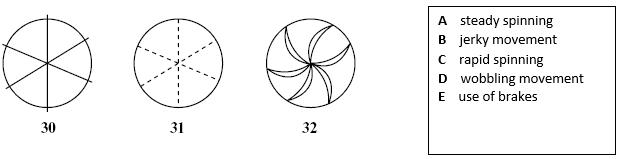
    To search out these answers, I created raised-line drawings of five different wheels, depicting spokes with lines that curved, bent, waved, dashed and extended beyond the perimeter of the wheel. I then asked eighteen blind volunteers to feel the wheels and assign one of the following motions to each wheel: wobbling, spinning fast, spinning steadily, jerking or braking. My control group consisted of eighteen sighted undergraduates from the University of Toronto.

    All but one of the blind subjects assigned distinctive motions to each wheel. Most guessed that the curved spokes indicated that the wheel was spinning steadily; the wavy spokes, they thought, suggested that the wheel was wobbling; and the bent spokes were taken as a sign that the wheel was jerking. Subjects assumed that spokes extending beyond the wheel’s perimeter signified that the wheel had its brakes on and that dashed spokes indicated the wheel was spinning quickly.

    In addition, the favoured description for the sighted was the favoured description for the blind in every instance. What is more, the consensus among the sighted was barely higher than that among the blind. Because motion devices are unfamiliar to the blind, the task I gave them involved some problem solving. Evidently, however, the blind not only figured out meanings for each line of motion, but as a group they generally came up with the same meaning at least as frequently as did sighted subjects.

    Part 2
    We have found that the blind understand other kinds of visual metaphors as well. One blind woman drew a picture of a child inside a heart – choosing that symbol, she said, to show that love surrounded the child. With Chang Hong Liu, a doctoral student from China, I have begun exploring how well blind people understand the symbolism behind shapes such as hearts that do not directly represent their meaning.

    We gave a list of twenty pairs of words to sighted subjects and asked them to pick from each pair the term that best related to a circle and the term that best related to a square. For example, we asked: What goes with soft? A circle or a square? Which shape goes with hard?

    All our subjects deemed the circle soft and the square hard. A full 94% ascribed happy to the circle, instead of sad. But other pairs revealed less agreement: 79% matched fast to slow and weak to strong, respectively. And only 51% linked deep to circle and shallow to square. (See Fig. 2.) When we tested four totally blind volunteers using the same list, we found that their choices closely resembled those made by the sighted subjects. One man, who had been blind since birth, scored extremely well. He made only one match differing from the consensus, assigning ‘far’ to square and ‘near’ to circle. In fact, only a small majority of sighted subjects – 53% – had paired far and near to the opposite partners. Thus, we concluded that the blind interpret abstract shapes as sighted people do.

    Questions 27-29

    Choose the correct letter, A, B, C or D. Write your answers in boxes 27–29 on your answer sheet.

    27 In the first paragraph the writer makes the point that blind people
    A may be interested in studying art.
    B can draw outlines of different objects and surfaces.
    C can recognise conventions such as perspective.
    D can draw accurately.

    28 The writer was surprised because the blind woman
    A drew a circle on her own initiative.
    B did not understand what a wheel looked like.
    C included a symbol representing movement.
    D was the first person to use lines of motion.

    29 From the experiment described in Part 1, the writer found that the blind subjects
    A had good understanding of symbols representing movement.
    B could control the movement of wheels very accurately.
    C worked together well as a group in solving problems.
    D got better results than the sighted undergraduates.

    Questions 30-32

    Look at the following diagrams (Questions 30–32), and the list of types of movement below.
    Match each diagram to the type of movement A–E generally assigned to it in the experiment.
    Choose the correct letter A–E and write them in boxes 30–32 on your answer sheet.

    Questions 33-39
    Complete the summary below using words from the box. Write your answers in boxes 33–39 on your answer sheet.
    NB You may use any word more than once.

    In the experiment described in Part 2, a set of word (33) ……………….. was used to investigate whether blind and sighted people perceived the symbolism in abstract (34) ……………….. in the same way. Subjects were asked which word fitted best with a circle and which with a square. From the (35) ……………….. volunteers, everyone thought a circle fitted ‘soft’ while a square fitted ‘hard’. However, only 51% of the (36) ……………….. volunteers assigned a circle to (37) ………………… When the test was later repeated with (38) ……………….. volunteers, it was found that they made (39) ……………….. choices.

    associationsblinddeephardhundred
    identicalpairsshapessightedsimilar
    shallowsoftwords

    Question 40
    Choose the correct letter, A, B, C or D. Write your answer in box 40 on your answer sheet.

    Which of the following statements best summarises the writer’s general conclusion?
    A The blind represent some aspects of reality differently from sighted people.
    B The blind comprehend visual metaphors in similar ways to sighted people.
    C The blind may create unusual and effective symbols to represent reality.
    D The blind may be successful artists if given the right training.

  • IELTS Reading Practice Test – Exercise 453

    Section 1

    Walk For Charity

    Dear Friend,

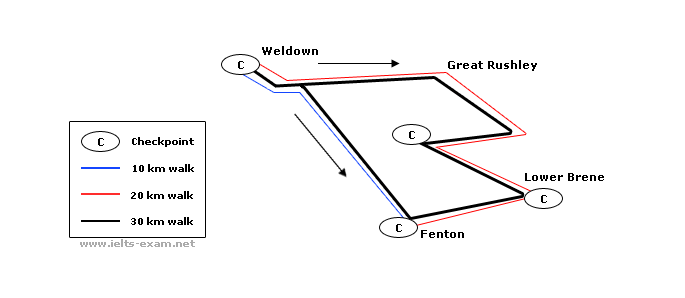
    Please join us for our annual Walk for Charity, starting in Weldown, you and your friends can choose a delightful 10, 20 or 30 km route. The money raised will provide support to help people all over the world. Start collecting your sponsors now and then simply come along on the day. Please read the instructions below carefully especially if you require transport to and from Weldown. See you on Sunday 14 May.

    V Jessop, Walk Co-ordinator

    P.S. Well done to last years’ walkers for helping to raise a grand total of £ 21,000. The money has already been used to build a children’s playground.

    START TIMES:

    30 km: 8-10 am, 20 km: 8-10.30 am, 10 km: 8-11.30 am

    The organisers reserve the right to refuse late comers.

    CLOTHING should be suitable for the weather. If rain is forecast, bring some protection and be prepared for all eventualities. It is better to wear shoes that have been worn in rather than ones that are new.

    ROUTE MAPS will be available from the registration point. The route will be sign-posted and marshelled. Where the route runs along the road, walkers should keep to one side in single file, facing oncoming traffic at all times. If you need help along the route please inform one of the marshals. Free car parking available in car parks and on streets in Weldown.

    BUSES – For the 10 and 20 km routes a bus will be waiting at Fenton to take walkers back to Weldown. The bus will leave every half hour starting at midday. The service is free and there is no need to book.

    Questions 1-7
    Look at the information on the given page about a walk for charity.
    Answer the questions below using NO MORE THAN THREE WORDS AND/OR A NUMBER from the text for each answer.

    Write your answers in boxes 1-7 on your answer sheet.
    1. What is the starting point for the 30 km walk?
    2. What is the latest start time for the 20 km walk?
    3. Regarding footwear, what are you warned against wearing?
    4. What are the officials who help participants on the route called?
    5. Where does the 20 km walk finish?
    6. What is the frequency of the Fenton to Weldown bus?
    7. Which walk does not pass through Lower Brene?

    Question 8-14
    Read the information below and answer question 8-14

    The Week’s Best

    A Wild Rose
    (Tuesday 19.00)
    This TV drama is about a young private detective employed by a team of New York businessmen who send her to Brazil to look into a series of hotel robberies. When she gets there, she discovers that the hotels, which are owned by the businessmen, have been empty for the last two years and the local authorities have no record of any robberies.

    B Animal Planet
    (Wednesday 23.00)
    This is a classic black-and-white film from the forties in which astronaut Charlie Huston crash-lands on a planet ruled entirely by animals. It is a first-class suspense adventure which also looks at the human condition, although this is not always a successful part of the film.

    C Strange Encounter
    (Saturday 21.00)
    Suspense is skilfully built up in this clever, small-scale supernatural story. A young couple view a deserted old house that they are interested in buying. They meet a strange old lady who tells them of the mystical powers of the house and haw previous owners have been able to travel back through the centuries to meet their. ancestors.

    D The Longest Walk
    (Tuesday 21.30)
    Ffyona Campbell is nearly there. All she has to do now is walk the length of France and Britain and she has succeeded in walking around the world. Tonight she drinks coffee in a tent and tells her story to Janet Street-Porter before she sets off for the Pyrenees mountains.

    E Rubicon 5
    (Thursday 20.30)
    This is a TV film being used to launch a new science fiction series. It has impressive special effects and a strong, believable cast of characters who travel to the twenty-third century. The action takes place in underground cities where the environment is controlled by computers.

    F New Science
    (Friday 19.30)
    This popular half-hour science magazine continues into its twenty-ninth year, proving itself to be a hardy survivor in the television world. Tonight it is presented by Carol Vorderman who introduces five reports, which include computer-driven cars and in-flight ten-pin bowling.

    G There and Back Again
    (Sunday 22.00)
    Paul Theroux’s account of his recent journey from London to Japan and back makes ideal material for this evening’s travel slot. Based on his own novel, the progress of his journey on the railways of Europe and Asia (Victoria station, Paris, Istanbul…) acts as a fascinating travelogue as the inhabitants gradually shift from the West to the East.

    Questions 8-14
    Look at the seven television programmes A-G on the given page and answer Questions 8-14.
    For which programme are the following statements true? Write the correct letter A-G in boxes 8-14 on your answer sheet.

    NB You may use any letter more than once.
    8. This programme is in the form of a personal interview.
    9. This programme is a documentary about technological developments.
    10. These TWO programmes are about time travel.
    11. This programme is taken from a book.
    12. This film is the introduction to a set of programmes.
    13. These TWO programmes are about present-day travellers.
    14. This programme is about investigating a possible crime.

    SECTION 2

    Question 15-27

    BINGHAM REGIONAL COLLEGE

    International Students’ Orientation Programme

    What is it?
    It is a course which will introduce you to the College and to Bingham. It takes place in the week before term starts, from 24th – 28th September inclusive, but you should plan to arrive in Bingham on the 22nd or 23rd September.

    Why do we think it is important?
    We want you to have the best possible start to your studies and you need to find out about all the opportunities that college life offers. This programme aims to help you do just that. It will enable you to get to know the College, its facilities and services. You will also have the chance to meet staff and students.

    How much will it cost?
    International students (non-European Union students)
    For those students who do not come from European Union (EU) countries, and who are not used to European culture and customs, the programme is very important and you are strongly advised to attend. Because of this, the cost of the programme, exclusive of accommodation, is built into your tuition fees.

    EU students
    EU students are welcome to take part in this programme for a fee of £195, exclusive of accommodation. Fees are not refundable.

    Accommodation costs (international and EU students)
    If you have booked accommodation for the year ahead (41 weeks) through the College in one of the College residences (Cambourne House, Hanley House, the Student Village or a College shared house), you do not have to pay extra for accommodation during the Orientation programme. If you have not booked accommodation in the College residences, you can ask us to pre-book accommodation for you for one week only (Orientation Programme week) in a hotel with other international students. The cost of accommodation for one week is approximately £165. Alternatively, you can arrange your own accommodation for that week in a flat, with friends or a local family.

    What is included during the programme?
    Meals: lunch and an evening meal are provided as part of the programme, beginning with supper on Sunday 23rd September and finishing with lunch at midday on Friday 28th September. Please note that breakfast is not available.

    Information sessions: including such topics as accommodation, health, religious matters, welfare, immigration, study skills, careers and other ‘essential information’.

    Social activities: including a welcome buffet and a half-day excursion round Bingham.

    Transport: between your accommodation and the main College campus, where activities will take place.

    Questions 15-20
    Do the following statements agree with the information given in the text above.
    In boxes 15-20 on your answer sheet, write

    TRUE                           if the statement agrees with the information
    FALSE                         if the statement contradicts the information
    NOT GIVEN             if there is no information on this

    15. Participants are advised to arrive one or two days early.
    16. The cost of the programme for European Union students, excluding accommodation, is £195.
    17. The number of places available is strictly limited.
    18. Some students are not charged extra for accommodation during the programme.
    19. The College will arrange accommodation with local families.
    20. You can obtain breakfast at the College for an extra charge.

    Student Accommodation

    The College offers five basic accommodation options. Here is some information to help you make your choice

    A CAMBOURNE HOUSE – self-catering, student residence, located in the town centre about 2 miles from the main College campus. Up to 499 students live in 6, 7 and 8 bedroom flats, all with en-suite shower rooms. Rent is £64 per week, including bills (not telephone). Broadband Internet connections and telephones, with communal kitchen/dining and lounge areas. Parking space is available, with permits costing £60 per term.

    B STUDENT VILLAGE – features 3, 4, 5 and 7 bedroom, self-catering shared houses for 250 students close to the main College campus. Rent is £60 per week inclusive of bills (except telephone). Parking is available with permits costing £90 for the academic year.

    C HANLEY HOUSE – a second, modern, self-catering residence in the town centre for 152 students. Eighteen rooms per floor with communal kitchens, lounges, bathrooms and toilets. Rent is £53 per week including bills (not telephone). There is no space for parking nearby.

    D GLENCARRICK HOUSE – a privately-owned and managed student residence in the town centre above a multi-storey car park, close to a major nightclub and housing 120 students. Rooms are allocated by the College Accommodation Service. Rents range from £58.50 to £68.50 for a single en-suite room or larger en-suite room respectively. A small extra charge is made for electricity.

    E HOUSE SHARES – this recent initiative is a range of shared houses for 140 students, conforming to standards set by us to meet all legal safety requirements. A room in a shared house costs between £45 and £55 per week, exclusive of bills, and will be within a 4-mile radius of both campuses. As with halls of residence, the rent is payable termly.

    Questions 21-27
    Look at the accommodation options A-E on previous page For which options are the following statements true?
    Write the correct letter A-E in boxes 21-27 on your answer sheet.

    NB You may use any letter more than once.
    21. This is possibly inconvenient for car owners.
    22. This is best if you like surfing the Web.
    23. Of the College residences, this has the fewest students.
    24. This is a new option offered by the College.
    25. You have to organise parking a year at a tim.
    26. This accommodation does not belong to the College.
    27. Here you definitely do not have your own bathroom.

    GLOW-WORMS

    A The glow-worm belongs to a family of beetles known as the Lampyridae or fireflies. The fireflies are a huge group containing over 2000 species, with new ones being discovered all the time. The feature which makes fireflies and glow-worms so appealing is their ability to produce an often dazzling display of light. The light is used by the adult fireflies as a signal to attract a mate, and each species must develop its own ‘call-sign’ to avoid being confused with other species glowing nearby. So within any one area each species will differ from its neighbours in some way, for example in the colour or pattern of its light, how long the pulses of light last, the interval between pulses and whether it displays in flight or from the ground.

    B The firefly’s almost magical light has attracted human attention for generations. It is described in an ancient Chinese encyclopaedia written over 2000 years ago by a pupil of Confucius. Fireflies often featured in Japanese and Arabian folk medicine. All over the world they have been the inspiration for countless poems, paintings and stories. In Britain, for example, there are plenty of anecdotes describing how glow-worms have been used to read by or used as emergency bicycle lamps when a cyclist’s batteries have failed without warning. Early travellers in the New World came back with similar stories, of how the native people of Central America would collect a type of click beetle and release them indoors to light up their huts. Girls threaded them around their feet to illuminate the forest paths at night.

    Fireflies very similar to those we see today have been found fossilised in rocks which were formed about 30 million years ago, and their ancestors were probably glowing long before then. It is impossible to be sure exactly when and where the first firefly appeared. The highest concentrations of firefly species today are to be found in the tropics of South America, which may mean either that this is where they first evolved, or simply that they prefer the conditions there.

    Wherever they first arose, fireflies have since spread to almost every part of the globe. Today members of the firefly family can be found almost anywhere outside the Arctic and Antarctic circles.

    C As with many insects, the glow-worm’s life is divided into four distinct stages: the egg, the larva (equivalent to the caterpillar of a butterfly), the pupa (or chrysalis) and the adult. The glow-worm begins its life in the autumn as a pale yellow egg. The freshly laid egg is extremely fragile but within a day its surface has hardened into a shell. The egg usually takes about 35 days to hatch, but the exact time varies according to the temperature, from about 27 days in hot weather to more than 45 days in cold weather. By the time it is due to hatch, the glow-worm’s light organ is fully developed, and its glow signals that the egg will soon hatch.

    After it has left the egg, the larva slowly grows from a few millimetres into the size and shape of a matchstick. The larval stage is the only time the insect can feed. The larva devotes much of its life to feeding and building up its food reserves so that as an adult it will be free to concentrate all its efforts on the task of finding a mate and reproducing. Throughout its time as a larva, approximately 15 months, the glow-worm emits a bright light. The larva’s light is much fainter than the adult female’s but it can still be seen more than five metres away.

    In the final stage of a glow-worm’s life, the larva encases itself in a pupa) skin while it changes from the simple larva to the more complex adult fly. When the adult fly emerges from the pupa the male seeks a female with whom it can mate. After mating, the female lays about 120 eggs. The adult flies have no mouth parts, cannot eat and therefore only live a few days. When people talk of seeing a glow-worm they normally mean the brightly glowing adult female.

    D In some countries the numbers of glow-worms have been falling. Evidence suggests that there has been a steady decrease in the British glow-worm population since the 1950s and possibly before that. Possible causes for the decline include habitat destruction, pollution and changes in climate. Thousands of acres of grassland have been built upon and glow-worm sites have become increasingly isolated from each other. The widespread use of pesticides and fertilisers may also have endangered the glow-worm. Being at the top of a food chain it is likely to absorb any pollutants eaten by the snails on which it feeds. The effect of global warming on rainfall and other weather patterns may also be playing a part in the disappearance of glow-worms. A lot more research will be needed, however, before the causes of the glow-worm’s gradual decline are clear.

    E Although glow-worms are found wherever conditions are damp, food is in good supply and there is an over-hanging wall, they are most spectacular in caves. For more than 100 years the glow-worm caves in New Zealand have attracted millions of people from all over the world. The caves were first explored in 1887 by a local Maori chief, Tane Tinorau, and an English surveyor, Fred Mace. They built a raft and, with candles as their only light, they floated into the cave where the stream goes underground. As their eyes adjusted to the darkness they saw myriad lights reflecting off the water. Looking up they discovered that the ceiling was dotted with the lights of thousands of glow-worms. They returned many times to explore further, and on an independent trip Tane discovered the upper level of the cave and an easier access. The authorities were advised and government surveyors mapped the caves. By 1888 Tane Tinorau had opened the cave to tourists.

    Questions 28-37
    The passage has five sections labelled A-E. Which section contains the following information?
    Write the correct letter A-E in boxes 28-33 on your answer sheet.

    NB You may use any letter more than once.
    28. threats to the glow-worm
    29. ways in which glow-worms have been used
    30. variations in type of glow-worm
    31. glow-worm distribution
    32. glow-worms becoming an attraction
    33. the life-cycle of a glow-worm

    Questions 34-40
    Do the following statements agree with the information given in the passage.
    In boxes 34-40 on your answer sheet, write

    TRUE                         if the statement agrees with the information
    FALSE                       if the statement contradicts the information
    NOT GIVEN            if there is no information on this

    34. Scientists have only recently been able to list the exact number of glow-worm species.
    35. The first fireflies appeared 30 million years ago.
    36. Glow-worm populations are decreasing faster in some countries than in others.
    37. Heat affects the production of glow-worm larvae.
    38. Adulthood is the longest stage of a glow-worm’s life.
    39. The exact reason why glow-worm numbers are decreasing is unknown.
    40. Glow-worms are usually found in wet areas.

  • IELTS Reading Practice Test – Exercise 452

    Reading

    MAIL ORDER BROCHURE
    Want some great clothing ideas for your family?

    Our key for clothing specials in July:
    M for men                 W for women                  C for children

    For under $10
    Cotton socks C – made of pure cotton for long wearing
    Woollen socks C – to keep young feet warm in winter
    Sports socks M – to go with jeans and other casual clothes
    Patterned belts W – to go with jeans and other casual clothes

    For under $25
    Cotton shirts W – for day and evening wear
    Silk shirts M – five sizes, in designer colours, for that special social occasion
    T-shirts C – hard-wearing, white with a variety of animal motifs
    Colour T-shirts M W – cotton and polyester blend, plain colours, no ironing

    For under $50
    Blue jeans M W – non-shrink, colourfast, small sizes only
    Silk shirts M W – plain and patterned, all sizes
    Hooded jacket C – protects from the wind, 4 sizes, large strong pockets
    jacket W – waterproof with zipper front, all sizes

    Or you can buy a gift voucher so that someone else can choose. These come in $10, $20 and $50 amounts.

    Additional monthly specials for July to September
    July – $10 voucher with any purchase over $60
    August – Travel alarm clock worth $19.95 free with purchases of $80 or more!
    September – Children’s backpacks. Free with any credit card purchase over $75!

    Note: Postage and packing charges
    These are applied to each order as follows:

    Within Australia:
    $7.95 per address, regular post
    $17.95 for Express Delivery Service (overnight)

    Overseas:
    Surface Mail (allow a minimum of two months for delivery)
    Airmail (allow around two weeks delivery to most destinations)

    Questions 1-7
    Do the following statements agree with the information given in the text?

    In boxes 1-7 on your answer sheet, write

    TRUE                          if the statement agrees with the information
    FALSE                        if the statement contradicts the information
    NOT GIVEN             if there is no information on this

    1. Women’s cotton socks cost less than men’s.
    2. Men’s silk shirts are available in more than five colours.
    3. Children’s 7-shirts come in a variety of colours.
    4. The child’s jacket has four pockets.
    5. If you buy clothes worth $80 in August, you will receive a free alarm clock.
    6. The charge for special next-day delivery in Australia is $7.95.
    7. All clothing is guaranteed to arrive within two months.

    Questions 8-14
    The list of New Book Releases on the following page has nine book descriptions A-I.

    Choose the correct title for each book from the list of book titles below.

    Write the correct number i-xi in boxes 8-14 on your answer sheet.

    List of Book Titles
    i Field Guide to Native Birds of Australia
    ii The Bush on Two Wheels: 100 Top Rides
    iii Bush Foods of Australian Aborigines
    iv A Pictorial History of the Dinosaur in Australia
    v Bushwalking in Australia
    vi World Geographica
    vii Driving Adventures for 4-wheel-drive Vehicles
    viii Survival Techniques in the Wild
    ix Encyclopaedia of Australian Wildlife
    x Guide to the Art of the Australian Desert
    xi Field Guide to Animals of the World

    8. Book A
    9. Book B
    10. Book C
    Example Book D vi
    11. Book E
    12. Book F
    13. Book G
    14. Book H
    Example Book I vii

    New Book Releases

    A This book describes the creativity of Aboriginal people living in the driest parts of Australia. Stunning reproductions of paintings, beautiful photography and informative text.

    B Pocket-sized maps and illustrations with detailed information on the nesting sites and migration patterns of Australia. This is a classic booklet suitable for both beginner and expert.

    C Packed full of information for the avid hiker, this book is a must. Photographs, maps and practical advice will guide your journeys on foot through the forests of the southern continent.

    D More than-an atlas – this book contains maps, photographs and an abundance of information on the land and climate of countries from around the globe.

    E Australia’s premier mountain biking guidebook – taking you through a host of national parks and state forests.

    F Here’s the A-Z of Australian native animals – take an in-depth look at their lives and characteristics, through fantastic photographs and informative text.

    G Graphic artists have worked with researchers and scientists to illustrate how these prehistoric animals lived and died on the Australian continent.

    H A definitive handbook on outdoor safety – with a specific focus on equipment, nutrition, first aid, special clothing and bush skills.

    I Detailed guides to 15 scenic car tours that will take you onto fascinating wilderness tracks and along routes that you could otherwise have missed.

    SECTION 2

    Read the advertisement below and answer questions 15-20.

    WORK & TRAVEL USA

    Do you want to have the best summer holiday ever?
    Have you just graduated and want to escape for a unique experience abroad?

    Only $1950 will make It all happen!
    This unbeatable program fee includes:
    • return flight from Sydney to Los Angeles (onward travel in USA not included)
    • 3 months’ insurance cover
    • 2 nights’ accommodation on arrival plus meet and greet and airport transfer
    • arrival orientation by experienced InterExchange staff
    • visa application fees

    You also have:
    • access to a J-l visa enabling you to work in the USA
    • an extensive directory of employers
    • InterExchange support throughout the program
    • 24-hour emergency support throughout the length of the program

    Call toll-free 1800 678 738

    InterExchange has 50 yeors’ experience in international student exchange programs. 18,000 students from around the world travel yearly to the USA on this very program. InterExchange con also offer you work opportunities in other countries.

    WHAT IS INTEREXCHANGE?
    InterExchange, one of the world’s leading operators of international exchange programs and related services:
    • is a non-profit, non-governmental organisation
    • has 700 professional staff in 30 countries worldwide
    • was founded in 1947

    InterExchange operates these programs for students all around the world. It offers you trained and travelled staff, plus full support during the application process. You can choose any job that interests you anywhere in the USA, whether that is working in a law firm in Boston, a famous ski resort in Colorado or serving coffee and doughnuts in the buzzing streets of New York. You can select the period you work and the period you travel; you may want to work for 1 month and travel for 3, or work the entire duration of your stay. The choice is yours.

    YOU CAN TAKE UP THIS OPPORTUNITY IF YOU ARE:
    • a full-time student at an Australian university or TAFE college
    • presently enrolled, or finishing this year, or you have deferred a year of study
    • over 18 years old by November in the academic year in which you apply to InterExchange
    • enthusiastic about the experience of a lifetime

    Questions 15-20
    Do the following statements agree with the information given in the advertisement.
    In boxes 15-20 on your answer sheet, write

    TRUE                         if the statement agrees with the information
    FALSE                       if the statement contradicts the information
    NOT GIVEN            if there is no information on this

    15. The program cost includes internal flights within the USA.
    16. Emergency assistance offered in the program includes legal advice.
    17. InterExchange offers similar programs in countries other than the USA.
    18. InterExchange is part of a government program.
    19. There are no restrictions on the type of job you can do.
    20. There is an upper age limit for applicants.

    Questions 21-27
    Each of the short paragraphs below (21-27) gives information about Arthur Phillip College.
    Read each paragraph and choose which of the linked sections of the website, A-L, would contain this information.
    Write the correct letter A-L in boxes 21-17 on your answer sheet.

    21. All students receive a transcript of results and relevant award documentation when they end their studies with the College.

    22. On enrolment, all students receive automatic membership to the Social Club and Public Speaking Club. Students may choose to participate in any arranged activities. The College encourages and promotes interaction between students and teaching and non-teaching staff.

    23. Successful completion and the achievement of an A or B result in some courses will enable students to achieve advanced standing in these subjects if they proceed to university study. For a list of the courses acceptable to a particular university, e-mail us your request with the name of the university and the course you are interested in.

    24. Arthur Phillip College is one of the top business colleges in Sydney, Australia. The College offers a wide range of educational and training programs in business and related areas. Its accredited vocational training courses are designed to meet the needs of individual students and industry.

    25. At Arthur Phillip College you will learn from lectures, seminars, case studies, group projects, individual assignments and class workshops. Lectures and seminars present concepts and ideas and provide for question-and-answer sessions. Students are expected to take an active role in the learning process through class participation, presentations and projects.

    26. Courses at Arthur Phillip College involve an average of 25 hours per week of tuition time, with supervised group study accounting for a further 5 hours per week. At least 10 hours per week of individual study is also recommended for most courses.

    27. During this program, you will meet the Director of Studies, teachers and key administrative staff such as the Accommodation Officer and Student Counsellor so that, right from your first day, you will know how each of them can help you during your time at the College.

    SECTION 3

    The Lack Of Sleep

    Section A
    It is estimated that the average man or woman needs between seven-and-a-half and eight hours’ sleep a night. Some can manage on a lot less. Baroness Thatcher, for example, was reported to be able to get by on four hours’ sleep a night when she was Prime Minister of Britain. Dr Jill Wilkinson, senior lecturer in psychology at Surrey University and co-author of ‘Psychology in Counselling and Therapeutic Practice’, states that healthy individuals sleeping less than five hours or even as little as two hours in every 24 hours are rare, but represent a sizeable minority.

    Section B
    The latest beliefs are that the main purposes of sleep are to enable the body to rest and replenish, allowing time for repairs to take place and for tissue to be regenerated. One supporting piece of evidence for this rest-and-repair theory is that production of the growth hormone somatotropin, which helps tissue to regenerate, peaks while we are asleep. Lack of sleep, however, can compromise the immune system, muddle thinking, cause depression, promote anxiety and encourage irritability.

    Section C
    Researchers in San Diego deprived a group of men of sleep between Sam and lam on just one night, and found that levels of their bodies’ natural defences against viral infections had fallen significantly when measured the following morning. ‘Sleep is essential for our physical and emotional well-being and there are few aspects of daily living that are not disrupted by the lack of it’, says Professor William Regelson of Virginia University, a specialist in insomnia. ‘Because it can seriously undermine the functioning of the immune system, sufferers are vulnerable to infection.’

    Section D
    For many people, lack of sleep is rarely a matter of choice. Some have problems getting to sleep, others with staying asleep until the morning. Despite popular belief that sleep is one long event, research shows that, in an average night, there are five stages of sleep and four cycles, during which the sequence of stages is repeated. In the first light phase, the heart rate and blood pressure go down and the muscles relax. In the next two stages, sleep gets progressively deeper. In stage four, usually reached after an hour, the slumber is so deep that, if awoken, the sleeper would be confused and disorientated. It is in this phase that sleep-walking can occur, with an average episode lasting no more than 15 minutes.

    In the fifth stage, the rapid eye movement (REM) stage, the heartbeat quickly gets back to normal levels, brain activity accelerates to daytime heights and above and the eyes move constantly beneath closed lids as if the sleeper is looking at something. During this stage, the body is almost paralysed. This REM phase is also the time when we dream.

    Section E
    Sleeping patterns change with age, which is why many people over 60 develop insomnia. In America, that age group consumes almost half the sleep medication on the market. One theory for the age-related change is that it is due to hormonal changes. The temperature General Training: Reading and Writing rise occurs at daybreak in the young, but at three or four in the morning in the elderly. Age aside, it is estimated that roughly one in three people suffer some kind of sleep disturbance. Causes can be anything from pregnancy and stress to alcohol and heart disease. Smoking is a known handicap to sleep, with one survey showing that ex-smokers got to sleep in 18 minutes rather than their earlier average of 52 minutes.

    Section F
    Apart from self-help therapy such as regular exercise, there are psychological treatments, including relaxation training and therapy aimed at getting rid of pre-sleep worries and anxieties. There is also sleep reduction therapy, where the aim is to improve sleep quality by strictly regulating the time people go to bed and when they get up. Medication is regarded by many as a last resort and often takes the form of sleeping pills, normally benzodiazepines, which are minor tranquillizers.

    Section G
    Professor Regelson advocates the use of melatonin for treating sleep disorders. Melatonin is a naturally secreted hormone, located in the pineal gland deep inside the brain. The main function of the hormone is to control the body’s biological clock, so we know when to sleep and when to wake. The gland detects light reaching it through the eye; when there is no light, it secretes the melatonin into the bloodstream, lowering the body temperature and helping to induce sleep. Melatonin pills contain a synthetic version of the hormone and are commonly used for jet lag as well as for sleep disturbance. John Nicholls, sales manager of one of America’s largest health food shops, claims that sales of the pill have increased dramatically. He explains that it is sold in capsules, tablets, lozenges and mixed with herbs. It is not effective for all insomniacs, but many users have weaned themselves off sleeping tablets as a result of its application.

    Questions 28-40
    The passage has seven sections labelled A-G.
    Which section contains the following information?

    Write the correct letter A-G in boxes 28-35 on your answer sheet.

    NB You may use any letter more than once.

    28 the different amounts of sleep that people require
    29 an investigation into the results of sleep deprivation
    30 some reasons why people may suffer from sleep disorders
    31 lifestyle changes which can help overcome sleep-related problems
    32 a process by which sleep helps us to remain mentally and physically healthy
    33 claims about a commercialised man-made product for sleeplessness
    34 the role of physical changes in sleeping habits
    35 the processes involved during sleep

    Questions 36-40
    Do the following statements agree with the information given in the passage?
    In boxes 36-40 on your answer sheet, write:

    TRUE                         if the statement agrees with the information
    FALSE                       if the statement contradicts the information
    NOT GIVEN            if there is no information on this

    36. Sleep can cure some illnesses.
    37. The various stages of sleep occur more than once a night.
    38. Dreaming and sleep-walking occur at similar stages of sleep.
    39. Sleepers move around a lot during the REM stage of sleep.
    40. The body temperature rises relatively early in elderly people.

  • IELTS Reading Practice Test – Exercise 451

    THE IMPACT OF WILDERNESS TOURISM

    A The market for tourism in remote areas is booming as never before. Countries all across the world are actively promoting their ‘wilderness’ regions – such as mountains, Arctic lands, deserts, small islands and wetlands – to high-spending tourists. The attraction of these areas is obvious: by definition, wilderness tourism requires little or no initial investment. But that does not mean that there is no cost. As the 1992 United Nations Conference on Environment and Development recognized, these regions are fragile (i.e. highly vulnerable to abnormal pressures) not just in terms of their ecology, but also in terms of the culture of their inhabitants. The three most significant types of fragile environment in these respects, and also in terms of the proportion of the Earth’s surface they cover, are deserts, mountains and Arctic areas. An important characteristic is their marked seasonality, with harsh conditions prevailing for many months each year. Consequently, most human activities, including tourism, are limited to quite clearly defined parts of the year.

    Tourists are drawn to these regions by their natural landscape beauty and the unique cultures of their indigenous people. And poor governments in these isolated areas have welcomed the new breed of ‘adventure tourist’, grateful for the hard currency they bring. For several years now, tourism has been the prime source of foreign exchange in Nepal and Bhutan. Tourism is also a key element in the economies of Arctic zones such as Lapland and Alaska and in desert areas such as Ayers Rock in Australia and Arizona’s Monument Valley.

    B Once a location is established as a main tourist destination, the effects on the local community are profound. When hill-farmers, for example, can make more money in a few weeks working as porters for foreign trekkers than they can in a year working in their fields, it is not surprising that many of them give up their farm-work, which is thus left to other members of the family. In some hill-regions, this has led to a serious decline in farm output and a change in the local diet, because there is insufficient labour to maintain terraces and irrigation systems and tend to crops. The result has been that many people in these regions have turned to outside supplies of rice and other foods.

    In Arctic and desert societies, year-round survival has traditionally depended on hunting animals and fish and collecting fruit over a relatively short season. However, as some inhabitants become involved in tourism, they no longer have time to collect wild food; this has led to increasing dependence on bought food and stores. Tourism is not always the culprit behind such changes. All kinds of wage labour, or government handouts, tend to undermine traditional survival systems. Whatever the cause, the dilemma is always the same: what happens if these new, external sources of income dry up?

    The physical impact of visitors is another serious problem associated with the growth in adventure tourism. Much attention has focused on erosion along major trails, but perhaps more important are the deforestation and impacts on water supplies arising from the need to provide tourists with cooked food and hot showers. In both mountains and deserts, slow-growing trees are often the main sources of fuel and water supplies may be limited or vulnerable to degradation through heavy use.

    C Stories about the problems of tourism have become legion in the last few years. Yet it does not have to be a problem. Although tourism inevitably affects the region in which it takes place, the costs to these fragile environments and their local cultures can be minimized. Indeed, it can even be a vehicle for reinvigorating local cultures, as has happened with the Sherpas of Nepal’s Khumbu Valley and in some Alpine villages. And a growing number of adventure tourism operators are trying to ensure that their activities benefit the local population and environment over the long term.

    In the Swiss Alps, communities have decided that their future depends on integrating tourism more effectively with the local economy. Local concern about the rising number of second home developments in the Swiss Pays d’Enhaut resulted in limits being imposed on their growth. There has also been a renaissance in communal cheese production in the area, providing the locals with a reliable source of income that does not depend on outside visitors.

    Many of the Arctic tourist destinations have been exploited by outside companies, who employ transient workers and repatriate most of the profits to their home base. But some Arctic communities are now operating tour businesses themselves, thereby ensuring that the benefits accrue locally. For instance, a native corporation in Alaska, employing local people, is running an air tour from Anchorage to Kotzebue, where tourists eat Arctic food, walk on the tundra and watch local musicians and dancers.

    Native people in the desert regions of the American Southwest have followed similar strategies, encouraging tourists to visit their pueblos and reservations to purchase high-quality handicrafts and artwork. The Acoma and San Ildefonso pueblos have established highly profitable pottery businesses, while the Navajo and Hopi groups have been similarly successful with jewellery.

    Too many people living in fragile environments have lost control over their economies, their culture and their environment when tourism has penetrated their homelands. Merely restricting tourism cannot be the solution to the imbalance, because people’s desire to see new places will not just disappear. Instead, communities in fragile environments must achieve greater control over tourism ventures in their regions; in order to balance their needs and aspirations with the demands of tourism. A growing number of communities are demonstrating that, with firm communal decision-making, this is possible. The critical question now is whether this can become the norm, rather than the exception.

    Questions 1-3

    Reading Passage 1 has six paragraphs, A-C.

    Choose the correct heading for each section from the list of headings below.

    List of Headings
    i The expansion of international tourism in recent years
    ii How local communities can balance their own needs with the demands of wilderness tourism
    iii Fragile regions and the reasons for the expansion of tourism there
    iv Traditional methods of food-supply in fragile regions
    v Some of the disruptive effects of wilderness tourism
    vi The economic benefits of mass tourism

    1 Section A
    2 Section B
    3 Section C

    Questions 4-9

    Do the following statements reflect the claims of the writer in Reading Passage 1?

    In boxes 4-9 on your answer sheet, write

    YES                            if the statement reflects the claims of the writer
    NO                              if the statement contradicts the claims of the writer
    NOT GIVEN           if it is impossible to say what the writer thinks about this

    4 The low financial cost of setting up wilderness tourism makes it attractive to many countries.
    5 Deserts, mountains and Arctic regions are examples of environments that are both ecologically and culturally fragile.
    6 Wilderness tourism operates throughout the year in fragile areas.
    7 The spread of tourism in certain hill-regions has resulted in a fall in the amount of food produced locally.
    8 Traditional food-gathering in desert societies was distributed evenly over the year.
    9 Government handouts do more damage than tourism does to traditional patterns of food-gathering.

    Questions 10-13
    Choose ONE WORD from Reading Passage 1 for each answer. Write your answers in boxes 10-13 on your answer sheet.

    THE POSITIVE WAYS IN WHICH SOME LOCAL COMMUNITIES HAVE RESPONDED TO TOURISM
    People/ LocationActivity
    Swiss Pays d’Enhautrevived production of (10)………………..
    Arctic communitiesoperate (11)………………….businesses
    Acoma and San Ildefonsoproduce and sell (12)…………………..
    Navajo and Hopi Activityproduce and sell (13)…………………..
    FLAWED BEAUTY: THE PROBLEM WITH TOUGHENED GLASS

    On 2nd August 1999, a particularly hot day in the town of Cirencester in the UK, a large pane of toughened glass in the roof of a shopping centre at Bishops Walk shattered without warning and fell from its frame. When fragments were analysed by experts at the giant glass manufacturer Pilkington, which had made the pane, they found that minute crystals of nickel sulphide trapped inside the glass had almost certainly caused the failure.

    ‘The glass industry is aware of the issue,’ says Brian Waldron, chairman of the standards committee at the Glass and Glazing Federation, a British trade association, and standards development officer at Pilkington. But he insists that cases are few and far between. ‘It’s a very rare phenomenon,’ he says.

    Others disagree. ‘On average I see about one or two buildings a month suffering from nickel sulphide related failures,’ says Barrie Josie, a consultant engineer involved in the Bishops Walk investigation. Other experts tell of similar experiences. Tony Wilmott of London-based consulting engineers Sandberg, and Simon Armstrong at CIadTech Associates in Hampshire both say they know of hundreds of cases. ‘What you hear is only the tip of the iceberg,’ says Trevor Ford, a glass expert at Resolve Engineering in Brisbane, Queensland. He believes the reason is simple: ‘No-one wants bad press.’

    Toughened glass is found everywhere, from cars and bus shelters to the windows, walls and roofs of thousands of buildings around the world. It’s easy to see why. This glass has five times the strength of standard glass, and when it does break it shatters into tiny cubes rather than large, razor-sharp shards. Architects love it because large panels can be bolted together to make transparent walls, and turning it into ceilings and floors is almost as easy.

    It is made by heating a sheet of ordinary glass to about 620°C to soften it slightly, allowing its structure to expand, and then cooling it rapidly with jets of cold air.

    This causes the outer layer of the pane to contract and solidify before the interior. When the interior finally solidifies and shrinks, it exerts a pull on the outer layer that leaves it in permanent compression and produces a tensile force inside the glass. As cracks propagate best in materials under tension, the compressive force on the surface must be overcome before the pane will break, making it more resistant to cracking.

    The problem starts when glass contains nickel sulphide impurities. Trace amounts of nickel and sulphur are usually present in the raw materials used to make glass, and nickel can also be introduced by fragments of nickel alloys falling into the molten glass. As the glass is heated, these atoms react to form tiny crystals of nickel sulphide. Just a tenth of a gram of nickel in the furnace can create up to 50,000 crystals.

    These crystals can exist in two forms: a dense form called the alpha phase, which is stable at high temperatures, and a less dense form called the beta phase, which is stable at room temperatures. The high temperatures used in the toughening process convert all the crystals to the dense, compact alpha form. But the subsequent cooling is so rapid that the crystals don’t have time to change back to the beta phase. This leaves unstable alpha crystals in the glass, primed like a coiled spring, ready to revert to the beta phase without warning.

    When this happens, the crystals expand by up to 4%. And if they are within the central, tensile region of the pane, the stresses this unleashes can shatter the whole sheet. The time that elapses before failure occurs is unpredictable. It could happen just months after manufacture, or decades later, although if the glass is heated – by sunlight, for example – the process is speeded up. Ironically, says Graham Dodd, of consulting engineers Arup in London, the oldest pane of toughened glass known to have failed due to nickel sulphide inclusions was in Pilkington’s glass research building in Lathom, Lancashire. The pane was 27 years old.

    Data showing the scale of the nickel sulphide problem is almost impossible to find. The picture is made more complicated by the fact that these crystals occur in batches. So even if, on average, there is only one inclusion in 7 tonnes of glass, if you experience one nickel sulphide failure in your building, that probably means you’ve got a problem in more than one pane. Josie says that in the last decade he has worked on over 15 buildings with the number of failures into double figures.

    One of the worst examples of this is Waterfront Place, which was completed in 1990. Over the following decade the 40 storey Brisbane block suffered a rash of failures. Eighty panes of its toughened glass shattered due to inclusions before experts were finally called in. John Barry, an expert in nickel sulphide contamination at the University of Queensland, analysed every glass pane in the building. Using a studio camera, a photographer went up in a cradle to take photos of every pane. These were scanned under a modified microfiche reader for signs of nickel sulphide crystals. ‘We discovered at least another 120 panes with potentially dangerous inclusions which were then replaced,’ says Barry. ‘It was a very expensive and time-consuming process that took around six months to complete.’ Though the project cost A$1.6 million (nearly £700,000), the alternative – re-cladding the entire building – would have cost ten times as much.

    Questions 14-17

    Look at the following people and the list of statements below.
    Match each person with the correct statement.
    Write the correct letter A-H in boxes 14-17 on your answer sheet.

    14 Brian Waldron
    15 Trevor Ford
    16 Graham Dodd
    17 John Barry

    List of Statements
    A suggests that publicity about nickel sulphide failure has been suppressed
    B regularly sees cases of nickel sulphide failure
    C closely examined all the glass in one building
    D was involved with the construction of Bishops Walk
    E recommended the rebuilding of Waterfront Place
    F thinks the benefits of toughened glass are exaggerated
    G claims that nickel sulphide failure is very unusual
    H refers to the most extreme case of delayed failure

    Questions 18-23

    Complete the summary with the list of words A-P below.
    Write your answers in boxes 18-23 on your answer sheet.

    Toughened Glass
    Toughened glass is favoured by architects because it is much stronger than ordinary glass, and the fragments are not as (18) ……………….. when it breaks. However, it has one disadvantage: it can shatter (19) ……………….. This fault is a result of the manufacturing process. Ordinary glass is first heated, then cooled very (20) ……………….. .
    The outer layer (21) ……………….. before the inner layer, and the tension between the two layers which is created because of this makes the glass stronger. However, if the glass contains nickel sulphide impurities, crystals of nickel sulphide are formed. These are unstable, and can expand suddenly, particularly if the weather is (22)…………………….. If this happens, the pane of glass may break. The frequency with which such problems occur is (23) ……………….. by glass experts. Furthermore, the crystals cannot be detected without sophisticated equipment.

    A numerousB detectedC quicklyD agreed
    E warmF sharpG expandsH slowly
    I unexpectedlyJ removedK contactsL disputed
    M coldN movedO smallP calculated

    Questions 24-26

    Do the following statements agree with the information given in the passage?

    TRUE if the statement agrees with the information

    FALSE if the statement contradicts the information

    NOT GIVEN if there is no information on this

    24. Little doubt was expressed about the reason for the Bishops Walk accident.

    25. Toughened glass has the same appearance as ordinary glass.

    26. There is plenty of documented evidence available about the incident of nickel sulphide failure.

    THE EFFECTS OF LIGHT ON PLANT AND ANIMAL SPECIES

    Light is important to organisms for two different reasons. Firstly it is used as a cue for the timing of daily and seasonal rhythms in both plant and animals, and secondly it is used to assist growth in plants.

    Breeding in most organisms occurs during a part of the year only, and so a reliable cue is needed to trigger breeding behaviour. Day length is an excellent cue, because it provides a perfectly predictable pattern of change within the year. In the temperate zone in spring, temperatures fluctuate greatly from day to day, but day length increases steadily by a predictable amount. The seasonal impact of day length on physiological responses is called photoperiodism, and the amount of experimental evidence for this phenomenon is considerable. For example, some species of birds’ breeding can be induced even in midwinter simply by increasing day length artificially (Wolfson 1964). Other examples of photoperiodism occur in plants. A short-day plant flowers when the day is less than a certain critical length. A long-day plant flowers after a certain critical day length is exceeded. In both cases the critical day length differs from species to species. Plant which flower after a period of vegetative growth, regardless of photoperiod, are known as day-neutral plants.

    Breeding seasons in animals such as birds have evolved to occupy the part of the year in which offspring have the greatest chances of survival. Before the breeding season begins, food reserves must be built up to support the energy cost of reproduction, and to provide for young birds both when they are in the nest and after fledging. Thus many temperate-zone birds use the increasing day lengths in spring as a cue to begin the nesting cycle, because this is a point when adequate food resources will be assured.

    The adaptive significance of photoperiodism in plant is also clear. Short-day plant that flower in spring in the temperate zone are adapted to maximising seedling growth during the growing season. Long-day plants are adapted for situations that require fertilization by insects, or a long period of seed ripening. Short-day plant that flower in the autumn in the temperate zone are able to build up food reserves over the growing season and over winter as seeds. Day-neutral plant have an evolutionary advantage when the connection between the favourable period for reproduction and day length is much less certain. For example, desert annuals germinate, flower and seed whenever suitable rainfall occurs, regardless of the day length.

    The breeding season of some plants can be delayed to extraordinary lengths. Bamboos are perennial grasses that remain in a vegetative state for many years and then suddenly flower, fruit and die (Evans 1976). Every bamboo of the species Chusquea abietifolio on the island of Jamaica flowered, set seed and died during 1884. The next generation of bamboo flowered and died between 1916 and 1918, which suggests a vegetative cycle of about 31 years. The climatic trigger for this flowering cycle is not-yet known, but the adaptive significance is clear. The simultaneous production of masses of bamboo seeds (in some cases lying 12 to 15 centimetres deep on the ground) is more than all the seed-eating animals can cope with at the time, so that some seeds escape being eaten and grow up to form the next generation (Evans 1976).

    The second reason light is important to organisms is that it is essential for photosynthesis. This is the process by which plants use energy from the sun to convert carbon from soil or water into organic material for growth. The rate of photosynthesis in a plant can be measured by calculating the rate of its uptake of carbon. There is a wide range of photosynthetic responses of plants to variations in light intensity. Some plants reach maximal photosynthesis at one-quarter full sunlight, and others, like sugarcane, never reach a maximum, but continue to increase photosynthesis rate as light intensity rises.

    Plants in general can be divided into two groups: shade-tolerant species and shade-intolerant species. This classification is commonly used in forestry and horticulture. Shade-tolerant plant have lower photosynthetic rates and hence have lower growth rates than those of shade-intolerant species. Plant species become adapted to living in a certain kind of habitat, and in the process evolve a series of characteristics that prevent them from occupying other habitats. Grime (1966) suggests that light may be one of the major components directing these adaptations. For example, eastern hemlock seedlings are shade-tolerant. They can survive in the forest understorey under very low light levels because they have a low photosynthetic rate.

    Questions 27-33

    Do the following statements agree with the information given in Reading Passage 3?

    In boxes 27-33 on your answer sheet, write

    TRUE                     if the statement agrees with the information
    FALSE                   if the statement contradicts the information
    NOT GIVEN        if there is no information on this

    27 There is plenty of scientific evidence to support photoperiodism.
    28 Some types of bird can be encouraged to breed out of season.
    29 Photoperiodism is restricted to certain geographic areas.
    30 Desert annuals are examples of long-day plants.
    31 Bamboos flower several times during their life cycle.
    32 Scientists have yet to determine the cue for Chusquea abietifolia’s seasonal rhythm.
    33 Eastern hemlock is a fast-growing plant.

    Questions 34-40

    Complete the sentences.

    Choose NO MORE THAN THREE WORDS from the passage for each answer.

    Write your answers in boxes 34-40 on your answer sheet.

    34 Day length is a useful cue for breeding in areas where …………………………………. are unpredictable.
    35 Plants which do not respond to light levels are referred to as …………………………………..
    36 Birds in temperate climates associate longer days with nesting and the availability of ………………………………….
    37 Plants that Bower when days are long often depend on …………………………………. to help them reproduce.
    38 Desert annuals respond to …………………………………. as a signal for reproduction.
    39 There is no limit to the photosynthetic rate in plants such as …………………………………..
    40 Tolerance to shade is one criterion for the …………………………………. of plants in forestry and horticulture.

  • IELTS Reading Practice Test – Exercise 450

    Early Childhood Education

    A ‘Education To Be More’ was published last August. It was the report of the New Zealand Government’s Early Childhood Care and Education Working Group. The report argued for enhanced equity of access and better funding for childcare and early childhood education institutions. Unquestionably, that’s a real need; but since parents don’t normally send children to pre-schools until the age of three, are we missing out on the most important years of all?

    B A 13-year study of early childhood development at Harvard University has shown that, by the age of three, most children have the potential to understand about 1000 words – most of the language they will use in ordinary conversation for the rest of their lives.

    Furthermore, research has shown that while every child is born with a natural curiosity, it can be suppressed dramatically during the second and third years of life. Researchers claim that the human personality is formed during the first two years of life, and during the first three years children learn the basic skills they will use in all their later learning both at home and at school. Once over the age of three, children continue to expand on existing knowledge of the world.

    C It is generally acknowledged that young people from poorer socio-economic backgrounds tend to do less well in our education system. That’s observed not just in New Zealand, but also in Australia, Britain and America. In an attempt to overcome that educational under-achievement, a nationwide programme called ‘Headstart’ was launched in the United States in 1965. A lot of money was poured into it. It took children into pre-school institutions at the age of three and was supposed to help the children of poorer families succeed in school.

    Despite substantial funding, results have been disappointing. It is thought that there are two explanations for this. First, the programme began too late. Many children who entered it at the age of three were already behind their peers in language and measurable intelligence. Second, the parents were not involved. At the end of each day, ‘Headstart’ children returned to the same disadvantaged home environment.

    D As a result of the growing research evidence of the importance of the first three years of a child’s life and the disappointing results from ‘Headstart’, a pilot programme was launched in Missouri in the US that focused on parents as the child’s first teachers. The ‘Missouri’ programme was predicated on research showing that working with the family, rather than bypassing the parents, is the most effective way of helping children get off to the best possible start in life.

    The four-year pilot study included 380 families who were about to have their first child and who represented a cross-section of socio-economic status, age and family configurations. They included single-parent and two-parent families, families in which both parents worked, and families with either the mother or father at home.

    The programme involved trained parent-educators visiting the parents’ home and working with the parent, or parents, and the child. Information on child development, and guidance on things to look for and expect as the child grows were provided, plus guidance in fostering the child’s intellectual, language, social and motor-skill development. Periodic check-ups of the child’s educational and sensory development (hearing and vision) were made to detect possible handicaps that interfere with growth and development. Medical problems were referred to professionals.

    Parent-educators made personal visits to homes and monthly group meetings were held with other new parents to share experience and discuss topics of interest. Parent resource centres, located in school buildings, offered learning materials for families and facilitators for child care.

    E At the age of three, the children who had been involved in the ‘Missouri’ programme were evaluated alongside a cross-section of children selected from the same range of socio-economic backgrounds and family situations, and also a random sample of children that age. The results were phenomenal. By the age of three, the children in the programme were significantly more advanced in language development than their peers, had made greater strides in problem solving and other intellectual skills, and were further along in social development. In fact, the average child on the programme was performing at the level of the top 15 to 20 per cent of their peers in such things as auditory comprehension, verbal ability and language ability.

    Most important of all, the traditional measures of ‘risk’, such as parents’ age and education, or whether they were a single parent, bore little or no relationship to the measures of achievement and language development. Children in the programme performed equally well regardless of socio-economic disadvantages. Child abuse was virtually eliminated. The one factor that was found to affect the child’s development was family stress leading to a poor quality of parent-child interaction. That interaction was not necessarily bad in poorer families.

    F These research findings are exciting. There is growing evidence in New Zealand that children from poorer socio-economic backgrounds are arriving at school less well developed and that our school system tends to perpetuate that disadvantage. The initiative outlined above could break that cycle of disadvantage. The concept of working with parents in their homes, or at their place of work, contrasts quite markedly with the report of the Early Childhood Care and Education Working Group. Their focus is on getting children and mothers access to childcare and institutionalized early childhood education. Education from the age of three to five is undoubtedly vital, but without a similar focus on parent education and on the vital importance of the first three years, some evidence indicates that it will not be enough to overcome educational inequity.

    Questions 1-4

    Reading Passage 1 has six sections, A-F.
    Which paragraph contains the following information?
    Write the correct letter A-F in boxes 1-4 on your answer sheet.

    1) details of the range of family types involved in an education programme
    2) reasons why a child’s early years are so important
    3) reasons why an education programme failed
    4) a description of the positive outcomes of an education programme

    Questions 5-10

    Classify the following features as characterising

    A the ‘Headstart’ programme
    В the ‘Missouri’ programme
    С both the ‘Headstart’ and the ‘Missouri’ programmes
    D neither the `Headstart’ nor the ‘Missouri’ programme

    Write the correct letter A, B, C or D in boxes 5-10 on your answer sheet.

    5 was administered to a variety of poor and wealthy families
    6 continued with follow-up assistance in elementary schools
    7 did not succeed in its aim
    8 supplied many forms of support and training to parents
    9 received insufficient funding
    10 was designed to improve pre-schoolers’ educational development

    Questions 11-13

    Do the following statements agree with the information given in Reading Passage 1?
    In boxes 11-13 on your answer sheet, write

    TRUE                       if the statement is true according to the passage
    FALSE                     if the statement is false according to the passage
    NOT GIVEN          if the information is not given in the passage

    11 Most ‘Missouri’ programme three-year-olds scored highly in areas such as listening, speaking, reasoning and interacting with others.
    12 ‘Missouri’ programme children of young, uneducated, single parents scored less highly on the tests.
    13 The richer families in the ‘Missouri’ programme had higher stress levels.

    Disappearing Delta

    A The fertile land of the Nile delta is being eroded along Egypt’s Mediterranean coast at an astounding rate, in some parts estimated at 100 metres per year. In the past, land scoured away from the coastline by the currents of the Mediterranean Sea used to be replaced by sediment brought dawn to the delta by the River Nile, but this is no longer happening.

    B Up to now, people have blamed this loss of delta land on the two large dams at Aswan in the south of Egypt, which hold back virtually all of the sediment that used to flow down the river. Before the dams were built, the Nile flowed freely, carrying huge quantities of sediment north from Africa’s interior to be deposited on the Nile delta. This continued for 7,000 years, eventually covering a region of over 22,000 square kilometres with layers of fertile silt. Annual flooding brought in new, nutrient-rich soil to the delta region, replacing what had been washed away by the sea, and dispensing with the need for fertilizers in Egypt’s richest food-growing area. But when the Aswan dams were constructed in the 20th century to provide electricity and irrigation, and to protect the huge population centre of Cairo and its surrounding areas from annual flooding and drought, most of the sediment with its natural fertilizer accumulated up above the dam in the southern, upstream half of Lake Nasser, instead of passing down to the delta.

    C Now, however, there turns out to be more to the story. It appears that the sediment-free water emerging from the Aswan dams picks up silt and sand as it erodes the river bed and banks on the 800-kilometre trip to Cairo. Daniel Jean Stanley of the Smithsonian Institute noticed that water samples taken in Cairo, just before the river enters the delta, indicated that the river sometimes carries more than 850 grams of sediment per cubic metre of water – almost half of what it carried before the dams were built. ‘I’m ashamed to say that the significance of this didn’t strike me until after I had read 50 or 60 studies,’ says Stanley in Marine Geology. ‘There is still a lot of sediment coming into the delta, but virtually no sediment comes out into the Mediterranean to replenish the Coastline. So this sediment must be trapped on the delta itself.’

    D Once north of Cairo, most of the Nile water is diverted into more than 10,000 kilometres of irrigation canals and only a small proportion reaches the sea directly through the rivers in the delta. The water in the irrigation canals is still or very slow-moving and thus cannot carry sediment, Stanley explains.

    E The farms on the delta plains and fishing and aquaculture in the lagoons account for much of Egypt’s food supply. But by the time the sediment has come to rest in the fields and lagoons it is laden with municipal, industrial and agricultural waste from the Cairo region, which is home to more than 40 million people. ‘Pollutants are building up faster and faster’ says Stanley.

    Based on his investigations of sediment from the delta lagoons, Frederic Siegel of George Washington University concurs. ‘In Manzalah Lagoon, for example, the increase in mercury, lead, copper and zinc coincided with the building of the High Dam at Aswan, the availability of cheap electricity, and the development of major power-based industries,’ he says. Since that time the concentration of mercury has increased significantly. Lead from engines that use leaded fuels and from other industrial sources has also increased dramatically. These poisons can easily enter the food chain, affecting the productivity of Fishing and Farming. Another problem is that agricultural wastes include fertilizers which stimulate increases in plant growth in the lagoons and upset the ecology of the area, with serious effects on the fishing industry.

    F According to Siegel, international environmental organisations are beginning to pay closer attention to the region, partly because of the problems of erosion and pollution of the Nile delta, but principally because they fear the impact this situation could have on the whole Mediterranean coastal ecosystem. But there are no easy solutions. In the immediate Future, Stanley believes that one solution would be to make artificial floods to flush out the delta waterways, in the same way that natural floods did before the construction of the dams. He says, however, that in the long term an alternative process such as desalination may have to be used to increase the amount of water available, ‘In my view, Egypt must devise a way to have more water running through the river and the delta,’ says Stanley. Easier said than done in a desert region with a rapidly growing population.

    Questions 14-17

    You should spend about 20 minutes on Questions 14-26, which are based on Reading Passage 2 on the following pages. Reading Passage 2 has six paragraphs, A-F.

    Choose the correct heading for paragraphs B and D-F from the list of headings below.

    List of Headings
    i Effects of irrigation on sedimentation
    ii The danger of flooding the Cairo area
    iii Causing pollution in the Mediterranean
    iv Interrupting a natural process
    v The threat to food production
    vi Less valuable sediment than before
    vii Egypt’s disappearing coastline
    viii Looking at the long-term impact

    Example) Paragraph A                  vii
    14) Paragraph B
    Example) Paragraph C                  vi
    15) Paragraph D
    16) Paragraph E
    17) Paragraph F

    Questions 18-23

    Do the following statements reflect the claims of the writer in Reading Passage 2?

    In boxes 18-23 on your answer sheet, write

    YES                             if the statement reflects the claims of the writer
    NO                               if the statement contradicts the claims of the writer
    NOT GIVEN            if it is impossible to say what the writer thinks about this

    18) Coastal erosion occurred along Egypt’s Mediterranean coast before the building of the Aswan dams.
    19) Some people predicted that the Aswan dams would cause land loss before they were built.
    20) The Aswan dams were built to increase the fertility of the Nile delta.
    21) Stanley found that the levels of sediment in the river water in Cairo were relatively high.
    22) Sediment in the irrigation canals on the Nile delta causes flooding.
    23) Water is pumped from the irrigation canals into the lagoons.

    Questions 24-26
    Complete the summary of paragraphs E and F with the list of words A-H below.

    Write the correct letter A-H in boxes 24-26 on your answer sheet.

    A artificial floods
    B desalination
    C delta waterways
    D natural floods
    E nutrients
    F pollutants
    G population control
    H sediment

    In addition to the problem of coastal erosion, there has been a marked increase in the level of (24) ……………….. contained in the silt deposited in the Nile delta. To deal with this, Stanley suggests the use of (25) ……………….. in the short term, and increasing the amount of water available through (26) ……………….. in the longer term.

    The Return of Artificial Intelligence

    A After years in the wilderness, the term ‘artificial intelligence’ (AI) seems poised to make a comeback. AI was big in the 1980s but vanished in the 1990s. It re-entered public consciousness with the release of Al, a movie about a robot boy. This has ignited public debate about AI, but the term is also being used once more within the computer industry. Researchers, executives and marketing people are now using the expression without irony or inverted commas. And it is not always hype. The term is being applied, with some justification, to products that depend on technology that was originally developed by AI researchers. Admittedly, the rehabilitation of the term has a long way to go, and some firms still prefer to avoid using it. But the fact that others are starting to use it again suggests that AI has moved on from being seen as an over-ambitious and under-achieving field of research.

    B The field was launched, and the term ‘artificial intelligence’ coined, at a conference in 1956 by a group of researchers that included Marvin Minsky, John McCarthy, Herbert Simon and Alan Newell, all of whom went on to become leading figures in the field. The expression provided an attractive but informative name for a research programme that encompassed such previously disparate fields as operations research, cybernetics, logic and computer science. The goal they shared was an attempt to capture or mimic human abilities using machines. That said, different groups of researchers attacked different problems, from speech recognition to chess playing, in different ways; AI unified the field in name only. But it was a term that captured the public imagination.

    C Most researchers agree that AI peaked around 1985. A public reared on science-fiction movies and excited by the growing power of computers had high expectations. For years, AI researchers had implied that a breakthrough was just around the corner. Marvin Minsky said in 1967 that within a generation the problem of creating ‘artificial intelligence’ would be substantially solved. Prototypes of medical-diagnosis programs and speech recognition software appeared to be making progress. It proved to be a false dawn. Thinking computers and household robots failed to materialise, and a backlash ensued. ‘There was undue optimism in the early 1980s,’ says David Leaky, a researcher at Indiana University. ‘Then when people realised these were hard problems, there was retrenchment. By the late 1980s, the term AI was being avoided by many researchers, who opted instead to align themselves with specific sub-disciplines such as neural networks, agent technology, case-based reasoning, and so on.’

    D Ironically, in some ways AI was a victim of its own success. Whenever an apparently mundane problem was solved, such as building a system that could land an aircraft unattended, the problem was deemed not to have been AI in the first plate. ‘If it works, it can’t be AI,’ as Dr Leaky characterises it. The effect of repeatedly moving the goal-posts in this way was that AI came to refer to ‘blue-sky’ research that was still years away from commercialisation. Researchers joked that AI stood for ‘almost implemented’. Meanwhile, the technologies that made it onto the market, such as speech recognition, language translation and decision-support software, were no longer regarded as AI. Yet all three once fell well within the umbrella of AI research.

    E But the tide may now be turning, according to Dr Leake. HNC Software of San Diego, backed by a government agency, reckon that their new approach to artificial intelligence is the most powerful and promising approach ever discovered. HNC claim that their system, based on a cluster of 30 processors, could be used to spot camouflaged vehicles on a battlefield or extract a voice signal from a noisy background – tasks humans can do well, but computers cannot. ‘Whether or not their technology lives up to the claims made for it, the fact that HNC are emphasising the use of AI is itself an interesting development,’ says Dr Leaky.

    F Another factor that may boost the prospects for AI in the near future is that investors are now looking for firms using clever technology, rather than just a clever business model, to differentiate themselves. In particular, the problem of information overload, exacerbated by the growth of e-mail and the explosion in the number of web pages, means there are plenty of opportunities for new technologies to help filter and categorise information – classic AI problems. That may mean that more artificial intelligence companies will start to emerge to meet this challenge.

    G The 1969 film, 2001: A Space Odyssey, featured an intelligent computer called HAL 9000. As well as understanding and speaking English, HAL could play chess and even learned to lipread. HAL thus encapsulated the optimism of the 1960s that intelligent computers would be widespread by 2001. But 2001 has been and gone, and there is still no sign of a HAL-like computer. Individual systems can play chess or transcribe speech, but a general theory of machine intelligence still remains elusive. It may be, however, that the comparison with HAL no longer seems quite so important, and AI can now be judged by what it can do, rather than by how well it matches up to a 30-year-old science-fiction film. ‘People are beginning to realise that there are impressive things that these systems can do,’ says Dr Leake hopefully.

    Questions 27-31

    Reading Passage 3 has seven paragraphs, A-G.
    Which paragraph contains the following information?
    Write the correct letter A-G in boxes 27-31 on your answer sheet.
    NB You may use any letter more than once.

    27 how AI might have a military impact
    28 the fact that AI brings together a range of separate research areas
    29 the reason why AI has become a common topic of conversation again
    30 how AI could help deal with difficulties related to the amount of information available electronically
    31 where the expression AI was first used

    Questions 32-37

    Do the following statements agree with the information given in Reading Passage 3?
    In boxes 32-37 on your answer sheet, write

    TRUE                        if the statement is true according to the passage
    FALSE                      if the statement is false according to the passage
    NOT GIVEN           if the information is not given in the passage

    32 The researchers who launched the field of AI had worked together on other projects in the past.
    33 In 1985, AI was at its lowest point.
    34 Research into agent technology was more costly than research into neural networks.
    35 Applications of AI have already had a degree of success.
    36 The problems waiting to be solved by AI have not changed since 1967.
    37 The film 2001: A Space Odyssey reflected contemporary ideas about the potential of AI computers.

    Questions 38-40

    Choose the correct letter, A, B, C or D.
    Write your answers in boxes 38-40 on your answer sheet.

    38 According to researchers, in the late 1980s there was a feeling that
    A a general theory of AI would never be developed.
    B original expectations of AI may not have been justified.
    C a wide range of applications was close to fruition.
    D more powerful computers were the key to further progress.

    39 In Dr Leake’s opinion, the reputation of AI suffered as a result of
    A changing perceptions
    B premature implementation
    C poorly planned projects
    D commercial pressures

    40 The prospects for AI may benefit from
    A existing AI applications
    B new business models.
    C orders from Internet-only companies
    D new investment priorities

  • IELTS Reading Practice Test – Exercise 449

    BAKELITE – The birth of modern plastics

    In 1907, Leo Hendrick Baekeland, a Belgian scientist working in New York, discovered and patented a revolutionary new synthetic material. His invention, which he named ‘Bakelite’, was of enormous technological importance, and effectively launched the modern plastics industry.

    The term ‘plastic’ comes from the Greek plassein, meaning ‘to mould’. Some plastics are derived from natural sources, some are semi-synthetic (the result of chemical action on a natural substance), and some are entirely synthetic, that is, chemically engineered from the constituents of coal or oil. Some are ‘thermoplastic’, which means that, like candlewax, they melt when heated and can then be reshaped. Others are ‘thermosetting’: like eggs, they cannot revert to their original viscous state, and their shape is thus fixed for ever, Bakelite had the distinction of being the first totally synthetic thermosetting plastic.

    The history of today’s plastics begins with the discovery of a series of semi-synthetic thermoplastic materials in the mid-nineteenth century. The impetus behind the development of these early plastics was generated by a number of factors – immense technological progress in the domain of chemistry, coupled with wider cultural changes, and the pragmatic need to find acceptable substitutes for dwindling supplies of ‘luxury’ materials such as tortoiseshell and ivory.

    Baekeland’s interest in plastics began in 1885 when, as a young chemistry student in Belgium, he embarked on research into phenolic resins, the group of sticky substances produced when phenol (carbolic acid) combines with an aldehyde (a volatile fluid similar to alcohol). He soon abandoned the subject, however, only returning to it some years later. By 1905 he was a wealthy New Yorker, having recently made his fortune with the invention of a new photographic paper. While Baekeland had been busily amassing dollars, some advances had been made in the development of plastics. The years 1899 and 1900 had seen the patenting of the first semi-synthetic thermosetting material that could be manufactured on an industrial scale. In purely scientific terms, Baekeland’s major contribution to the field is not so much the actual discovery of the material to which he gave his name, but rather the method by which a reaction between phenol and formaldehyde could be controlled, thus making possible its preparation on a commercial basis. On 13 July 1907, Baekeland took out his famous patent describing this preparation, the essential features of which are still in use today.

    The original patent outlined a three-stage process, in which phenol and formaldehyde (from wood or coal) were initially combined under vacuum inside a large egg-shaped kettle. The result was a resin known as Novalak, which became soluble and malleable when heated. The resin was allowed to cool in shallow trays until it hardened, and then broken up and ground into powder. Other substances were then introduced: including fillers, such as woodflour, asbestos or cotton, which increase strength and. moisture resistance, catalysts (substances to speed up the reaction between two chemicals without joining to either) and hexa, a compound of ammonia and formaldehyde which supplied the additional formaldehyde necessary to form a thermosetting resin. This resin was then left to cool and harden, and ground up a second time. The resulting granular powder was raw Bakelite, ready to be made into a vast range of manufactured objects. In the last stage, the heated Bakelite was poured into a hollow mould of the required shape and subjected to extreme heat and pressure; thereby ‘setting’ its form for life.

    The design of Bakelite objects, everything from earrings to television sets, was governed to a large extent by the technical requirements of the moulding process. The object could not be designed so that it was locked into the mould and therefore difficult to extract. A common general rule was that objects should taper towards the deepest part of the mould, and if necessary the product was moulded in separate pieces. Moulds had to be carefully designed so that the molten Bakelite would flow evenly and completely into the mould. Sharp corners proved impractical and were thus avoided, giving rise to the smooth, ‘streamlined’ style popular in the 1930s. The thickness of the walls of the mould was also crucial: thick walls took longer to cool and harden, a factor which had to be considered by the designer in order to make the most efficient use of machines.

    Baekeland’s invention, although treated with disdain in its early years, went on to enjoy an unparalleled popularity which lasted throughout the first half of the twentieth century. It became the wonder product of the new world of industrial expansion -‘the material of a thousand uses’. Being both non-porous and heat-resistant, Bakelite kitchen goods were promoted as being germ-free and sterilisable. Electrical manufacturers seized on its insulating: properties, and consumers everywhere relished its dazzling array of shades, delighted that they were now, at last, no longer restricted to the wood tones and drab browns of the pre-plastic era. It then fell from favour again during the 1950s, and was despised and destroyed in vast quantities. Recently, however, it has been experiencing something of a renaissance, with renewed demand for original Bakelite objects in the collectors’ marketplace, and museums, societies and dedicated individuals once again appreciating the style and originality of this innovative material.

    Questions 1-3

    Complete the summary. Choose ONE WORD ONLY from the passage for each answer.

    Write your answers in boxes 1-3 on your answer sheet.

    Some plastics behave in a similar way to (1) ……………….. in that they melt under heat and can be moulded into new forms. Bakelite was unique because it was the first material to be both entirely (2) ……………….. in origin, and thermosetting. There were several reasons for the research into plastics in the nineteenth century, among them the great advances that had been made in the field of (3) ……………….. and the search for alternatives to natural resources like ivory.

    Questions 4-8

    Complete the flow-chart. Choose ONE WORD ONLY from the passage for each answer.

    Write your answers in boxes 4-8 on your answer sheet.

    Questions 9-10

    Write your answers in boxes 9 and 10 on your answer sheet.

    Which TWO of the following factors influencing the design of Bakelite objects are mentioned in the text?

    A the function which the object would serve
    B the ease with which the resin could fill the mould
    C the facility with which the object could be removed from the mould
    D the limitations of the materials used to manufacture the mould
    E the fashionable styles of the period

    Questions 11-13

    Do the following statements agree with the information given in Reading Passage 1?

    In boxes 11-13 on your answer sheet, write

    TRUE                       if the statement is true according to the passage
    FALSE                     if the statement is false according to the passage
    NOT GIVEN          if the information is not given in the passage

    11 Modern-day plastic preparation is based on the same principles as that patented in 1907.
    12 Bakelite was immediately welcomed as a practical and versatile material.
    13 Bakelite was only available in a limited range of colours.

    John McCrone reviews recent research on humour

    The joke comes over the headphones: ‘Which side of a dog has the most hair? The left.’ No, not funny. Try again. ‘Which side of a dog has the most hair? The outside.’ Hah! The punchline is silly yet fitting, tempting a smile, even a laugh. Laughter has always struck people as deeply mysterious, perhaps pointless. The writer Arthur Koestler dubbed it the luxury reflex: ‘unique in that it serves no apparent biological purpose’.

    Theories about humour have an ancient pedigree. Plato expressed the idea that humour is simply a delighted feeling of superiority over others. Kant and Freud felt that joke-telling relies on building up a psychic tension which is safely punctured by the ludicrousness of the punchline. But most modern humour theorists have settled on some version of Aristotle’s belief that jokes are based on a reaction to or resolution of incongruity, when the punchline is either a nonsense or, though appearing silly, has a clever second meaning.

    Graeme Ritchie, a computational linguist in Edinburgh, studies the linguistic structure of jokes in order to understand not only humour but language understanding and reasoning in machines. He says that while there is no single format for jokes, many revolve around a sudden and surprising conceptual shift. A comedian will present a situation followed by an unexpected interpretation that is also apt.

    So even if a punchline sounds silly, the listener can see there is a clever semantic fit and that sudden mental ‘Aha!’ is the buzz that makes us laugh. Viewed from this angle, humour is just a form of creative insight, a sudden leap to a new perspective.

    However, there is another type of laughter, the laughter of social appeasement and it is important to understand this too. Play is a crucial part of development in most young mammals. Rats produce ultrasonic squeaks to prevent their scuffles turning nasty. Chimpanzees have a ‘play-face’ – a gaping expression accompanied by a panting ‘ah, ah’ noise. In humans, these signals have mutated into smiles and laughs. Researchers believe social situations, rather than cognitive events such as jokes, trigger these instinctual markers of play or appeasement. People laugh on fairground rides or when tickled to flag a play situation, whether they feel amused or not.

    Both social and cognitive types of laughter tap into the same expressive machinery in our brains, the emotion and motor circuits that produce smiles and excited vocalisations. However, if cognitive laughter is the product of more general thought processes, it should result from more expansive brain activity.

    Psychologist Vinod Goel investigated humour using the new technique of ‘single event’ functional magnetic resonance imaging (fMRl). An MRI scanner uses magnetic fields and radio waves to track the changes in oxygenated blood that accompany mental activity. Until recently, MRI scanners needed several minutes of activity and so could not be used to track rapid thought processes such as comprehending a joke. New developments now allow half-second ‘snapshots’ of all sorts of reasoning and problem-solving activities.

    Although Goel felt being inside a brain scanner was hardly the ideal place for appreciating a joke, he found evidence that understanding a joke involves a widespread mental shift. His scans showed that at the beginning of a joke the listener’s prefrontal cortex lit up, particularly the right prefrontal believed to be critical for problem solving. But there was also activity in the temporal lobes at the side of the head (consistent with attempts to rouse stored knowledge) and in many other brain areas. Then when the punchline arrived, a new area sprang to life -the orbital prefrontal cortex. This patch of brain tucked behind the orbits of the eyes is associated with evaluating information.

    Making a rapid emotional assessment of the events of the moment is an extremely demanding job for the brain, animal or human. Energy and arousal levels may need, to be retuned in the blink of an eye. These abrupt changes will produce either positive or negative feelings. The orbital cortex, the region that becomes active in Goel’s experiment, seems the best candidate for the site that feeds such feelings into higher-level thought processes, with its close connections to the brain’s sub-cortical arousal apparatus and centres of metabolic control.

    All warm-blooded animals make constant tiny adjustments in arousal in response to external events, but humans, who have developed a much more complicated internal life as a result of language, respond emotionally not only to their surroundings, but to their own thoughts. Whenever a sought-for answer snaps into place, there is a shudder of pleased recognition. Creative discovery being pleasurable, humans have learned to find ways of milking this natural response. The fact that jokes tap into our general evaluative machinery explains why the line between funny and disgusting, or funny and frightening, can be so fine. Whether a joke gives pleasure or pain depends on a person’s outlook.

    Humour may be a luxury, but the mechanism behind it is no evolutionary accident. As Peter Derks, a psychologist at William and Mary College in Virginia, says: ‘I like to think of humour as the distorted mirror of the mind. It’s creative, perceptual, analytical and lingual. If we can figure out how the mind processes humour, then we’ll have a pretty good handle on how it works in general.

    Questions 14-20

    Do the following statements agree with the information given in Reading Passage 2?

    In boxes 14-20 on your answer sheet, write

    TRUE                     if the statement is true according to the passage
    FALSE                   if the statement is false according to the passage
    NOT GIVEN        if the information is not given in the passage

    14 Arthur Koestler considered laughter biologically important in several ways.
    15 Plato believed humour to be a sign of above-average intelligence.
    16 Kant believed that a successful joke involves the controlled release of nervous energy.
    17 Current thinking on humour has largely ignored Aristotle’s view on the subject.
    18 Graeme Ritchie’s work links jokes to artificial intelligence.
    19 Most comedians use personal situations as a source of humour.
    20 Chimpanzees make particular noises when they are playing.

    Questions 21-23
    The diagram below shows the areas of the brain activated by jokes.
    Label the diagram.
    Choose NO MORE THAN TWO WORDS from the passage for each answer.

    Questions 24-27

    Complete each sentence with the correct ending A-G below.

    Write the correct letter A-G in boxes 24-27 on your answer sheet.

    A react to their own thoughts.
    B helped create language in humans.
    C respond instantly to whatever is happening.
    D may provide valuable information about the operation of the brain.
    E cope with difficult situations.
    F relate to a person’s subjective views.
    G led our ancestors to smile and then laugh.

    24 One of the brain’s most difficult tasks is to
    25 Because of the language they have developed, humans
    26 Individual responses to humour
    27 Peter Derks believes that humour

    The Birth of Scientific English

    World science is dominated today by a small number of languages, including Japanese, German and French, but it is English which is probably the most popular global language of science. This is not just because of the importance of English-speaking countries such as the USA in scientific research; the scientists of many non-English-speaking countries find that they need to write their research papers in English to reach a wide international audience. Given the prominence of scientific English today, it may seem surprising that no one really knew how to write science in English before the 17th century. Before that, Latin was regarded as the lingua franca for European intellectuals.

    The European Renaissance (c. 14th-16th century) is sometimes called the ‘revival of learning’, a time of renewed interest in the ‘lost knowledge’ of classical times. At the same time, however, scholars also began to test and extend this knowledge. The emergent nation states of Europe developed competitive interests in world exploration and the development of trade. Such expansion, which was to take the English language west to America and east to India, was supported by scientific developments such as the discovery of magnetism (and hence the invention of the compass), improvements in cartography and – perhaps the most important scientific revolution of them all – the new theories of astronomy and the movement of the Earth in relation to the planets and stars, developed by Copernicus (1473-1543).

    England was one of the first countries where scientists adopted and publicised Copernican ideas with enthusiasm. Some of these scholars, including two with interests in language -John Wall’s and John Wilkins – helped Found the Royal Society in 1660 in order to promote empirical scientific research.

    Across Europe similar academies and societies arose, creating new national traditions of science. In the initial stages of the scientific revolution, most publications in the national languages were popular works, encyclopaedias, educational textbooks and translations. Original science was not done in English until the second half of the 17th century. For example, Newton published his mathematical treatise, known as the Principia, in Latin, but published his later work on the properties of light – Opticks – in English.

    There were several reasons why original science continued to be written in Latin. The first was simply a matter of audience. Latin was suitable for an international audience of scholars, whereas English reached a socially wider, but more local, audience. Hence, popular science was written in English.

    A second reason for writing in Latin may, perversely, have been a concern for secrecy. Open publication had dangers in putting into the public domain preliminary ideas which had not yet been fully exploited by their ‘author’. This growing concern about intellectual property rights was a feature of the period – it reflected both the humanist notion of the individual, rational scientist who invents and discovers through private intellectual labour, and the growing connection between original science and commercial exploitation.

    There was something of a social distinction between ‘scholars and gentlemen’ who understood Latin, and men of trade who lacked a classical education. And in the mid-17th century it was common practice for mathematicians to keep their discoveries and proofs secret, by writing them in cipher, in obscure languages, or in private messages deposited in a sealed box with the Royal Society. Some scientists might have felt more comfortable with Latin precisely because its audience, though international, was socially restricted. Doctors clung the most keenly to Latin as an ‘insider language’.

    A third reason why the writing of original science in English was delayed may have been to do with the linguistic inadequacy of English in the early modern period. English was not well equipped to deal with scientific argument. First, it lacked the necessary technical vocabulary. Second, it lacked the grammatical resources required to represent the world in an objective and impersonal way, and to discuss the relations, such as cause and effect, that might hold between complex and hypothetical entities.

    Fortunately, several members of the Royal Society possessed an interest in language and became engaged in various linguistic projects. Although a proposal in 1664 to establish a committee for improving the English language came to little, the society’s members did a great deal to foster the publication of science in English and to encourage the development of a suitable writing style. Many members of the Royal Society also published monographs in English. One of the first was by Robert Hooke, the society’s first curator of experiments, who described his experiments with microscopes in Micrographia (1665). This work is largely narrative in style, based on a transcript of oral demonstrations and lectures.

    In 1665 a new scientific journal, Philosophical Transactions, was inaugurated. Perhaps the first international English-language scientific journal, it encouraged a new genre of scientific writing, that of short, focused accounts of particular experiments.

    The 17th century was thus a formative period in the establishment of scientific English. In the following century much of this momentum was lost as German established itself as the leading European language of science. It is estimated that by the end of the 18th century 401 German scientific journals had been established as opposed to 96 in France and 50 in England. However, in the 19th century scientific English again enjoyed substantial lexical growth as the industrial revolution created the need for new technical vocabulary, and new, specialised, professional societies were instituted to promote and publish in the new disciplines.

    Questions 28-34

    Complete the summary. Choose NO MORE THAN TWO WORDS from the passage for each answer.

    Write your answers in boxes 28-34 on your answer sheet.

    In Europe modem science emerged at the same time as the nation state. At first, the scientific language of choice remained (28) ……………….. It allowed scientists to communicate with other socially privileged thinkers while protecting their work from unwanted exploitation. Sometimes the desire to protect ideas seems to have been stronger than the desire to communicate them, particularly in the case of mathematicians and (29) ……………….. In Britain, moreover, scientists worried that English had neither the (30) ……………….. nor the (31) ……………….. to express their ideas.This situation only changed after 1660 when scientists associated with the (32) ……………….. set about developing English. An early scientific journal fostered a new kind of writing based on short descriptions of specific experiments. Although English was then overtaken by (33) ……………….. it developed again in the 19th century as a direct result of the (34) …………………

    Questions 35-37

    Do the following statements agree with the information given in Reading Passage 3?
    In boxes 35-37 on your answer sheet, write

    TRUE                        if the statement is true according to the passage
    FALSE                      if the statement is false according to the passage
    NOT GIVEN           if the information is not given in the passage

    35 There was strong competition between scientists in Renaissance Europe.
    36 The most important scientific development of the Renaissance period was the discovery of magnetism.
    37 In 17th-century Britain, leading thinkers combined their interest in science with an interest in how to express ideas.

    Questions 38-40

    Complete the table. Choose NO MORE THAN TWO WORDS from the passage for each answer.

  • IELTS Reading Practice Test – Exercise 448

    Reading Passage 1

    For the century before Johnson’s Dictionary was published in 1775, there had been concern about the state of the English language. There was no standard way of speaking or writing and no agreement as to the best way of bringing some order to the chaos of English spelling. Dr Johnson provided the solution.

    There had, of course, been dictionaries in the past, the first of these being a little book of some 120 pages, compiled by a certain Robert Cawdray, published in 1604 under the title A Table Alphabetical of hard usual English words. Like the various dictionaries that came after it during the seventeenth century, Cawdray’s tended to concentrate on ‘scholarly’ words; one function of the dictionary was to enable its student to convey an impression of fine learning.

    Beyond the practical need to make order out of chaos, the rise of dictionaries is associated with the rise of the English middle class, who were anxious to define and circumscribe the various worlds to conquer -lexical as well as social and commercial. It is highly appropriate that Dr Samuel Johnson, the very model of an eighteenth-century literary man, as famous in his own time as in ours, should have published his Dictionary at the very beginning of the heyday of the middle class.

    Johnson was a poet and critic who raised common sense to the heights of genius. His approach to the problems that had worried writers throughout the late seventeenth and early eighteenth centuries was intensely practical. Up until his time, the task of producing a dictionary on such a large scale had seemed impossible without the establishment of an academy to make decisions about right and wrong usage. Johnson decided he did not need an academy to settle arguments about language; he would write a dictionary himself; and he would do it single-handed. Johnson signed the contract for the Dictionary with the bookseller Robert Dosley at a breakfast held at the Golden Anchor Inn near Holborn Bar on 18 June 1764. He was to be paid £1,575 in instalments, and from this he took money to rent 17 Gough Square, in which he set up his ‘dictionary workshop’.

    James Boswell, his biographer described the garret where Johnson worked as ‘fitted up like a counting house’ with a long desk running down the middle at which the copying clerks would work standing up. Johnson himself was stationed on a rickety chair at an ‘old crazy deal table’ surrounded by a chaos of borrowed books. He was also helped by six assistants, two of whom died whilst the Dictionary was still in preparation.

    The work was immense; filing about eighty large notebooks (and without a library to hand), Johnson wrote the definitions of over 40,000 words, and illustrated their many meanings with some 114,000 quotations drawn from English writing on every subject, from the Elizabethans to his own time. He did not expel to achieve complete originality. Working to a deadline, he had to draw on the best of all previous dictionaries, and to make his work one of heroic synthesis. In fact, it was very much more. Unlike his predecessors, Johnson treated English very practically, as a living language, with many different shades of meaning. He adopted his definitions on the principle of English common law – according to precedent. After its publication, his Dictionary was not seriously rivalled for over a century.

    After many vicissitudes the Dictionary was finally published on 15 April 1775. It was instantly recognised as a landmark throughout Europe. ‘This very noble work;’ wrote the leading Italian lexicographer, will be a perpetual monument of Fame to the Author, an Honour to his own Country in particular, and a general Benefit to the republic of Letters throughout Europe. The fact that Johnson had taken on the Academies of Europe and matched them (everyone knew that forty French academics had taken forty years to produce the first French national dictionary) was cause for much English celebration.

    Johnson had worked for nine years, ‘with little assistance of the learned, and without any patronage of the great; not in the soft obscurities of retirement, or under the shelter of academic bowers, but amidst inconvenience and distraction, in sickness and in sorrow’. For all its faults and eccentricities his two-volume work is a masterpiece and a landmark, in his own words, ‘setting the orthography, displaying the analogy, regulating the structures, and ascertaining the significations of English words’. It is the cornerstone of Standard English, an achievement which, in James Boswell’s words, ‘conferred stability on the language of his country’.

    The Dictionary, together with his other writing, made Johnson famous and so well esteemed that his friends were able to prevail upon King George III to offer him a pension. From then on, he was to become the Johnson of folklore.

    Questions 1-3

    Choose THREE letters A-H. Write your answers in boxes 1-3 on your answer sheet.
    NB Your answers may be given in any order.

    Which THREE of the following statements are true of Johnson’s Dictionary?
    A It avoided all scholarly words.
    B It was the only English dictionary in general use for 200 years.
    C It was famous because of the large number of people involved.
    D It focused mainly on language from contemporary texts.
    E There was a time limit for its completion.
    F It ignored work done by previous dictionary writers.
    G It took into account subtleties of meaning.
    H Its definitions were famous for their originality.

    Questions 4-7

    Complete the summary. Choose NO MORE THAN TWO WORDS from the passage for each answer.

    In 1764 Dr Johnson accepted the contract to produce a dictionary. Having rented a garret, he took on a number of (4) ……………….. , who stood at a long central desk. Johnson did not have a (5) ……………….. available to him, but eventually produced definitions of in excess of 40,000 words written down in 80 large notebooks. On publication, the Dictionary was immediately hailed in many European countries as a landmark. According to his biographer, James Boswell, Johnson’s principal achievement was to bring (6) ……………….. to the English language. As a reward for his hard work, he was granted a (7) ……………….. by the king.

    Questions 8-13

    Do the following statements agree with the information given in Reading Passage 1? In boxes 8-13 on your answer sheet, write

    TRUE                         if the statement is true according to the passage
    FALSE                       if the statement is false according to the passage
    NOT GIVEN           if the information is not given in the passage

    8) The growing importance of the middle classes led to an increased demand for dictionaries.
    9) Johnson has become more well known since his death.
    10) Johnson had been planning to write a dictionary for several years.
    11) Johnson set up an academy to help with the writing of his Dictionary.
    12) Johnson only received payment for his Dictionary on its completion.
    13) Not all of the assistants survived to see the publication of the Dictionary.

    Nature or Nurture?

    A A few years ago, in one of the most fascinating and disturbing experiments in behavioural psychology, Stanley Milgram of Yale University tested 40 subjects from all walks of life for their willingness to obey instructions given by a ‘leader’ in a situation in which the subjects might feel a personal distaste for the actions they were called upon to perform. Specifically, Milgram told each volunteer ‘teacher-subject’ that the experiment was in the noble cause of education, and was designed to test whether or not punishing pupils for their mistakes would have a positive effect on the pupils’ ability to learn.

    B Milgram’s experimental set-up involved placing the teacher-subject before a panel of thirty switches with labels ranging from ’15 volts of electricity (slight shock)’ to ‘450 volts (danger – severe shock)’ in steps of 15 volts each. The teacher-subject was told that whenever the pupil gave the wrong answer to a question, a shock was to be administered, beginning at the lowest level and increasing in severity with each successive wrong answer. The supposed ‘pupil’ was in reality an actor hired by Milgram to simulate receiving the shocks by emitting a spectrum of groans, screams and writhings together with an assortment of statements and expletives denouncing both the experiment and the experimenter. Milgram told the teacher-subject to ignore the reactions of the pupil, and to administer whatever level of shock was called for, as per the rule governing the experimental situation of the moment.

    C As the experiment unfolded, the pupil would deliberately give the wrong answers to questions posed by the teacher, thereby bringing on various electrical punishments, even up to the danger level of 300 volts and beyond. Many of the teacher-subjects balked at administering the higher levels of punishment, and turned to Milgram with questioning looks and/or complaints about continuing the experiment. In these situations, Milgram calmly explained that the teacher-subject was to ignore the pupil’s cries for mercy and carry on with the experiment. If the subject was still reluctant to proceed, Milgram said that it was important for the sake of the experiment that the procedure be followed through to the end. His final argument was, ‘You have no other choice. You must go on.’ What Milgram was trying to discover was the number of teacher-subjects who would be willing to administer the highest levels of shock, even in the face of strong personal and moral revulsion against the rules and conditions of the experiment.

    D Prior to carrying out the experiment, Milgram explained his idea to a group of 39 psychiatrists and asked them to predict the average percentage of people in an ordinary population who would be willing to administer the highest shock level of 450 volts. The overwhelming consensus was that virtually all the out teacher-subjects would refuse to obey the experimenter. The psychiatrists felt that ‘most subjects would not go beyond 150 volts’ and they further anticipated that only four per cent would go up to 300 volts. Furthermore, they thought that only a lunatic fringe of about one in 1,000 would give the highest shock of 450 volts. Furthermore, they thought that only a lunatic cringe of about one in 1,000 would give the highest shock of 450 volts.

    E What were the actual results? Well, over 60 per cent of the teacher-subjects continued to obey Milgram up to the 450-volt limit! In repetitions of the experiment in other countries, the percentage of obedient teacher-subjects was even higher, reaching 85 per cent in one country. How can we possibly account for this vast discrepancy between what calm, rational, knowledgeable people predict in the comfort of their study and what pressured, flustered, but cooperative teachers’ actually do in the laboratory of real life?

    F One’s first inclination might be to argue that there must be some sort of built-in animal aggression instinct that was activated by the experiment, and that Milgram’s teacher-subjects were just following a genetic need to discharge this pent-up primal urge onto the pupil by administering the electrical shock. A modern hard-core sociobiologist might even go so far as to claim that this aggressive instinct evolved as an advantageous trait, having been of survival value to our ancestors in their struggle against the hardships of life on the plains and in the caves, ultimately finding its way into our genetic make-up as a remnant of our ancient animal ways.

    G An alternative to this notion of genetic programming is to see the teacher-subjects’ actions as a result of the social environment under which the experiment was carried out. As Milgram himself pointed out, ‘Most subjects in the experiment see their behaviour in a larger context that is benevolent and useful to society – the pursuit of scientific truth. The psychological laboratory has a strong claim to legitimacy and evokes trust and confidence in those who perform there. An action such as shocking a victim, which in isolation appears evil, acquires a completely different meaning when placed in this setting.’

    H Thus, in this explanation the subject merges his unique personality and personal and moral code with that of larger institutional structures, surrendering individual properties like loyalty, self-sacrifice and discipline to the service of malevolent systems of authority.

    I Here we have two radically different explanations for why so many teacher-subjects were willing to forgo their sense of personal responsibility for the sake of an institutional authority figure. The problem for biologists, psychologists and anthropologists is to sort which of these two polar explanations is more plausible. This, in essence, is the problem of modern sociobiology – to discover the degree to which hard-wired genetic programming dictates, or at least strongly biases, the interaction of animals and humans with their environment, that is, their behaviour. Put another way, sociobiology is concerned with elucidating the biological basis of all behaviour.

    Questions 14-19
    Reading Passage 2 has nine paragraphs, A-I. Which paragraph contains the following information?

    Write the correct letter A-I in boxes 14-19 on your answer sheet.

    14 a biological explanation of the teacher-subjects’ behaviour
    15 the explanation Milgram gave the teacher-subjects for the experiment
    16 the identity of the pupils
    17 the expected statistical outcome
    18 the general aim of sociobiological study
    19 the way Milgram persuaded the teacher-subjects to continue

    Questions 20-22
    Choose the correct letter. A, B. C or D. Write your answers in boxes 20-22 on your answer sheet.

    20 The teacher-subjects were told that they were testing whether
    A a 450-volt shock was dangerous
    B punishment helps learning
    C the pupils were honest
    D they were suited to teaching

    21 The teacher-subjects were instructed to
    A stop when a pupil asked them to
    B denounce pupils who made mistakes
    C reduce the shock level after a correct answer
    D give punishment according to a rule

    22 Before the experiment took place the psychiatrists
    A believed that a shock of 150 volts was too dangerous
    B failed to agree on how the teacher-subjects would respond to instructions
    C underestimated the teacher-subjects’ willingness to comply with experimental procedure
    D thought that many of the teacher-subjects would administer a shock of 450 volts

    Questions 23-26
    Do the following statements agree with the information given in Reading Passage 2?
    In boxes 23-26 on your answer sheet, write

    TRUE                         if the statement agrees with the information
    FALSE                       if the statement contradicts the information
    NOT GIVEN            if there is no information on this

    23 Several of the subjects were psychology students at Yale University.
    24 Some people may believe that the teacher-subjects’ behaviour could be explained as a positive survival mechanism.
    25 In a sociological explanation, personal values are more powerful than authority.
    26 Milgram’s experiment solves an important question in sociobiology.

    The Truth About the Environment

    For many environmentalists, the world seems to be getting worse. They have developed a hit-list of our main fears: that natural resources are running out; that the population is ever growing, leaving less and less to eat; that species are becoming extinct in vast numbers, and that the planet’s air and water are becoming ever more polluted.

    But a quick look at the facts shows a different picture. First, energy and other natural resources have become more abundant, not less so, since the book ‘The limits to Growth’ was published in 1972 by a group of scientists. Second, more food is now produced per head of the world’s population than at any time in history. Fewer people are starving. Third, although species are indeed becoming extinct, only about 0.7% of them are expelled to disappear in the next 50 years, not 25-50%, as has so often been predicted. And finally, most forms of environmental pollution either appear to have been exaggerated, or are transient – associated with the early phases of industrialisation and therefore best cured not by restricting economic growth, but by accelerating it. One form of pollution – the release of greenhouse gases that causes global warming – does appear to be a phenomenon that is going to extend well into our future, but its total impact is unlikely to pose a devastating problem. A bigger problem may well turn out to be an inappropriate response to it.

    Yet opinion polls suggest that many people nurture the belief that environmental standards are declining and four factors seem to cause this disjunction between perception and reality.

    One is the lopsidedness built into scientific research. Scientific funding goes mainly to areas with many problems. That may be wise policy but it will also create an impression that many more potential problems exist than is the case.

    Secondly, environmental groups need to be noticed by the mass media. They also need to keep the money rolling in. Understandably, perhaps, they sometimes overstate their arguments. In 1997, for example, the World Wide Fund for Nature issued a press release entitled: ‘Two thirds of the world’s forests lost forever’. The truth turns out to be nearer 20%.

    Though these groups are run overwhelmingly by selfless folk, they nevertheless share many of the characteristics of other lobby groups. That would matter less if people applied the same degree of scepticism to environmental lobbying as they do to lobby groups in other fields. A trade organisation arguing for, say, weaker pollution control is instantly seen as self-interested. Yet a green organisation opposing such a weakening is seen as altruistic, even if an impartial view of the controls in question might suggest they are doing more harm than good.

    A third source of confusion is the attitude of the media. People are dearly more curious about bad news than good. Newspapers and broadcasters are there to provide what the public wants. That, however, can lead to significant distortions of perception. An example was America’s encounter with EI Nino in 1997 and 1998. This climatic phenomenon was accused of wrecking tourism, causing allergies, melting the ski-slopes, and causing 22 deaths. However, according to an article in the Bulletin of the American Meteorological Society, the damage it did was estimated at US$4 billion but the benefits amounted to some US$19 billion. These came from higher winter temperatures (which saved an estimated 850 lives, reduced heating costs and diminished spring floods caused by meltwaters).

    The fourth factor is poor individual perception. People worry that the endless rise in the amount of stuff everyone throws away will cause the world to run out of places to dispose of waste. Yet, even if America’s trash output continues to rise as it has done in the past, and even if the American population doubles by 2100, all the rubbish America produces through the entire 21st century will still take up only one-12,000th of the area of the entire United States.

    So what of global warming? As we know, carbon dioxide emissions are causing the planet to warm. The best estimates are that the temperatures will rise by 2-3°C in this century, causing considerable problems, at a total cost of US$5,000 billion.

    Despite the intuition that something drastic needs to be done about such a costly problem, economic analyses dearly show it will be far more expensive to cut carbon dioxide emissions radically than to pay the costs of adaptation to the increased temperatures. A model by one of the main authors of the United Nations Climate Change Panel shows how an expected temperature increase of 2.1 degrees in 2100 would only be diminished to an increase of 1.9 degrees. Or to put it another way, the temperature increase that the planet would have experienced in 2094 would be postponed to 2100.

    So this does not prevent global warming, but merely buys the world six years. Yet the cost of reducing carbon dioxide emissions, for the United States alone, will be higher than the cost of solving the world’s single, most pressing health problem: providing universal access to clean drinking water and sanitation. Such measures would avoid 2 million deaths every year, and prevent half a billion people from becoming seriously ill.

    It is crucial that we look at the facts if we want to make the best possible decisions for the future. It may be costly to be overly optimistic – but more costly still to be too pessimistic.

    Questions 27-32

    Do the following statements agree with the information given in Reading Passage 3?
    In boxes 27-32 on your answer sheet, write

    YES                           if the statement agrees with the writer’s claims
    NO                             if the statement contradicts the writer’s claims
    NOT GIVEN          if there is impossible to say what the writer thinks about this

    27 Environmentalists take a pessimistic view of the world for a number of reasons.
    28 Data on the Earth’s natural resources has only been collected since 1972.
    29 The number of starving people in the world has increased in recent years.
    30 Extinct species are being replaced by new species.
    31 Some pollution problems have been correctly linked to industrialisation.
    32 It would be best to attempt to slow down economic growth.

    Questions 33-37

    Choose the correct letter, A, B, C or D. Write your answers in boxes 33-37 on your answer sheet.

    33 What aspect of scientific research does the writer express concern about in paragraph 4?
    A the need to produce results
    B the lack of financial support
    C the selection of areas to research
    D the desire to solve every research problem

    34 The writer quotes from the Worldwide Fund for Nature to illustrate how
    A influential the mass media can be
    B effective environmental groups can be
    C the mass media can help groups raise funds
    D environmental groups can exaggerate their claims

    35 What is the writer’s main point about lobby groups in paragraph 6?
    A Some are more active than others
    B Some are better organised than others
    C Some receive more criticism than others
    D Some support more important issues than others

    36 The writer suggests that newspapers print items that are intended to
    A educate readers
    B meet their readers’ expectations
    C encourage feedback from readers
    D mislead readers

    37 What does the writer say about America’s waste problem?
    A It will increase in line with population growth
    B It is not as important as we have been led to believe
    C It has been reduced through public awareness of the issues
    D It is only significant in certain areas of the country

    Questions 38-40

    Complete the summary with the list of words A-I below. Write the correct letter A-I in boxes 38-40 on your answer sheet.

    GLOBAL WARMING
    The writer admits that global warming is a (38) ……………….. challenge, but says that it will not have a catastrophic impact on our future, if we deal with it in the (39) ……………….. way. If we try to reduce the levels of greenhouse gases, he believes that it would only have a minimal impact on rising temperatures. He feels it would be better to spend money on the more (40) ……………….. health problem of providing the world’s population with clean drinking water.

    A unrealistic               B agreed              C expensive                D right               E long-term
    F usual                       G surprising          H personal                 I urgent

  • IELTS Reading Practice Test – Exercise 447

    Doctoring Sales

    A A few months ago Kim Schaefer, sales representative of a major global pharmaceutical company, walked into a medical center in New York to bring information and free samples of her company’s latest products. That day she was lucky- a doctor was available to see her. ‘The last rep offered me a trip to Florida. What do you have?’ the physician asked. He was only half joking.

    B What was on offer that day was a pair of tickets for a New York musical. But on any given day what Schaefer can offer is typical for today’s drugs rep -a car trunk full of promotional gifts and gadgets, a budget that could buy lunches and dinners for a small county hundreds of free drug samples and the freedom to give a physician $200 to prescribe her new product to the next six patients who fit the drug’s profile. And she also has a few $ 1,000 honoraria to offer in exchange for doctors’ attendance at her company’s next educational lecture.

    C Selling Pharmaceuticals is a daily exercise in ethical judgment. Salespeople like Schaefer walk the line between the common practice of buying a prospect’s time with a free meal, and bribing doctors to prescribe their drugs. They work in an industry highly criticized for its sales and marketing practices, but find themselves in the middle of the age-old chicken-or-egg question – businesses won’t use strategies that don’t work, so are doctors to blame for the escalating extravagance of pharmaceutical marketing? Or is it the industry’s responsibility to decide the boundaries?

    D The explosion in the sheer number of salespeople in the field- and the amount of funding used to promote their causes- forces close examination of the pressures, influences and relationships between drug reps and doctors. Salespeople provide much-needed information and education to physicians. In many cases the glossy brochures, article reprints and prescriptions they deliver are primary sources of drug education for healthcare givers. With the huge investment the industry has placed in face-to-face selling, sales people have essentially become specialists in one drug or group of drugs – a tremendous advantage in getting the attention of busy doctors in need of quick information.

    E But the sales push rarely stops in the office. The flashy brochures and pamphlets left by the sales reps are often followed up with meals at expensive restaurants, meetings in warm and sunny places, and an inundation of promotional gadgets. Rarely do patients watch a doctor write with a pen that isn’t emblazoned with a drug’s name, or see a nurse use a tablet not bearing a pharmaceutical company’s logo. Millions of dollars are spent by pharmaceutical companies on promotional products like coffee mugs, shirts, umbrellas, and golf balls. Money well spent? It’s hard to tell. I’ve been the recipient of golf balls from one company and I use them, but it doesn’t make me prescribe their medicine,’ says one doctor.’ I tend to think I’m not influenced by what they give me.’

    F Free samples of new and expensive drugs might be the single most effective way of getting doctors and patients to become loyal to a product. Salespeople hand out hundreds of dollars’ worth of samples each week-$7.2 billion worth of them in one year. Though few comprehensive studies have been conducted, one by the University of Washington investigated how drug sample availability affected what physicians prescribe. A total of 131 doctors self-reported their prescribing patterns-the conclusion was that the availability of samples led them to dispense and prescribe drugs that differed from their preferred drug choice.

    G The bottom line is that pharmaceutical companies as a whole invest more in marketing than they do in research and development. And patients are the ones who pay-in the form of sky-rocketing prescription prices-for every pen that’s handed out, every free theatre ticket, and every steak dinner eaten. In the end the fact remains that pharmaceutical companies have every right to make a profit and will continue to find new ways to increase sales. But as the medical world continues to grapple with what’s acceptable and what’s not, it is clear that companies must continue to be heavily scrutinized for their sales and marketing strategies.

    Questions 1-7
    Reading Passage I has seven paragraphs, A-G. Choose the correct heading for each paragraph from the list of headings below. Write the correct number, i-x, in boxes 1-7 on your answer sheet.

    List of Headings

    i Not all doctors are persuaded
    ii Choosing the best offers
    iii Who is responsible for the increase in promotions?
    iv Fighting the drug companies
    v An example of what doctors expect from drug companies
    vi Gifts include financial incentives
    vii Research shows that promotion works
    viii The high costs of research
    ix The positive side of drugs promotion
    x Who really pays for doctors’ free gifts?

    1 Paragraph A
    2 Paragraph B
    3 Paragraph C
    4 Paragraph D
    5 Paragraph E
    6 Paragraph F
    7 Paragraph G

    Questions 8-13
    Do the following statements agree with the views of the writer in Reading Passage 1? In boxes 8-13 on your answer sheet, write

    YES                               if the statement agrees with the views of the writer
    NO                                 if the statement contradicts the views of the writer
    NOT GIVEN              if it is impossible to say what the writer thinks about this

    8 Sales representatives like Kim Schaefer work to a very limited budget.
    9 Kim Schaefer’s marketing technique may be open to criticism on moral grounds.
    10 The information provided by drug companies is of little use to doctors.
    11 Evidence of drug promotion is clearly visible in the healthcare environment.12 The drug companies may give free drug samples to patients without doctors’ prescriptions.
    13 It is legitimate for drug companies to make money.

    Literate women make better mothers?

    Children in developing countries are healthier and more likely to survive past the age of five when their mothers can read and write. Experts in public health accepted this idea decades ago, but until now no one has been able to show that a woman’s ability to read in itself improves her children’s chances of survival.

    Most literate women learnt to read in primary school, and the fact that a woman has had an education may simply indicate her family’s wealth or that it values its children more highly. Now a long-term study carried out in Nicaragua has eliminated these factors by showing that teaching reading to poor adult women, who would otherwise have remained illiterate, has a direct effect on their children’s health and survival.

    In 1979, the government of Nicaragua established a number of social programmes, including a National Literacy Crusade. By 1985, about 300,000 illiterate adults from all over the country, many of whom had never attended primary school, had learnt how to read, write and use numbers.

    During this period, researchers from the Liverpool School of Tropical Medicine, the Central American Institute of Health in Nicaragua, the National Autonomous University of Nicaragua and the Costa Rican Institute of Health interviewed nearly 3,000 women, some of whom had learnt to read as children, some during the literacy crusade and some who had never learnt at all. The women were asked how many children they had given birth to and how many of them had died in infancy. The research teams also examined the surviving children to find out how well-nourished they were.

    The investigators’ findings were striking. In the late 1970s, the infant mortality rate for the children of illiterate mothers was around 110 deaths per thousand live births. At this point in their lives, those mothers who later went on to learn to read had a similar level of child mortality (105/1000). For women educated in primary school, however, the infant mortality rate was significantly lower, at 80 per thousand.

    In 1985, after the National Literacy Crusade had ended, the infant mortality figures for those who remained illiterate and for those educated in primary school remained more or less unchanged. For those women who learnt to read through the campaign, the infant mortality rate was 84 per thousand, an impressive 21 points lower than for those women who were still illiterate. The children of the newly-literate mothers were also better nourished than those of women who could not read.

    Why are the children of literate mothers better off? According to Peter Sandiford of the Liverpool School of Tropical Medicine, no one knows for certain. Child health was not on the curriculum during the women’s lessons, so he and his colleagues are looking at other factors. They are working with the same group of 3,000 women, to try to find out whether reading mothers make better use of hospitals and clinics, opt for smaller families, exert more control at home, learn modem childcare techniques more quickly, or whether they merely have more respect for themselves and their children.

    The Nicaraguan study may have important implications for governments and aid agencies that need to know where to direct their resources. Sandiford says that there is increasing evidence that female education, at any age, is ‘an important health intervention in its own right’ .The results of the study lend support to the World Bank’s recommendation that education budgets in developing countries should be increased, not just to help their economies, but also to improve child health. ‘We’ve known for a long time that maternal education is important,’ says John Cleland of the London School of Hygiene and Tropical Medicine. ‘But we thought that even if we started educating girls today, we’d have to wait a generation for the pay-off. The Nicaraguan study suggests we may be able to bypass that.’

    Cleland warns that the Nicaraguan crusade was special in many ways, and similar campaigns elsewhere might not work as well. It is notoriously difficult to teach adults skills that do not have an immediate impact on their everyday lives, and many literacy campaigns in other countries have been much less successful. ‘The crusade was part of a larger effort to bring a better life to the people,’ says Cleland. Replicating these conditions in other countries will be a major challenge for development workers.

    Questions 14-18
    Complete the summary using the list of words, A-J, below. Write the correct letters, A-J, in boxes 14-18 on your answer sheet. NB You may use any letter more than once.

    The Nicaraguan National Literacy Crusade aimed to teach large numbers of illiterate (14) ……………… to read and write. Public health experts have known for many years that there is a connection between child health and (15)……………… However, it has not previously been known whether these two factors were directly linked or not. This question has been investigated by (16)……………….. in Nicaragua. As a result, factors such as (17)…………………. and attitudes to children have been eliminated, and it has been shown that (18)……………. can in itself improve infant health and survival.

    A child literacy                B men and women                   C an international research team

    D medial care                 E mortality                                F maternal literacy

    G adults and children     H paternal literacy                    I a national literacy crusade

    J family health

    Questions 19-24
    Do the following statements agree with the claims of the writer in Reading Passage 2? In boxes 19-24 on your answer sheet, write:

    YES                                     if the statement agrees with the claims of the writer
    NO                                       if the statement contradicts the claims of the writer
    NOT GIVEN                    if it is impossible to say what the writer thinks about this

    19 About a thousand of the women interviewed by the researchers had learnt to read when they were children.
    20 Before the National Literacy Crusade, illiterate women had approximately the same levels of infant mortality as those who had learnt to read in primary school.
    21 Before and after the National Literacy Crusade, the child mortality rate for the illiterate women stayed at about 110 deaths for each thousand live births.
    22 The women who had learnt to read through the National Literacy Crusade showed the greatest change in infant mortality levels.
    23 The women who had learnt to read through the National Literacy Crusade had the lowest rates of child mortality.
    24 After the National Literacy Crusade, the children of the women who remained illiterate were found to be severely malnourished.

    Questions 25 and 26
    Choose TWO letters, A-E. Write the correct letters in boxes 25 and 26 on your answer sheet

    Which TWO important implications drawn from the Nicaraguan study are mentioned by the writer of the passage?
    A It is better to educate mature women than young girls
    B Similar campaigns in other countries would be equally successful
    C The effects of maternal literacy programmes can be seen very quickly
    D Improving child health can quickly affect a country’s economy
    E Money spent on female education will improve child health

    Reading Passage Three

    A Bullying can take a variety of forms, from the verbal -being taunted or called hurtful names- to the physical- being kicked or shoved- as well as indirect forms, such as being excluded from social groups. A survey I conducted with Irene Whitney found that in British primary schools up to a quarter of pupils reported experience of bullying, which in about one in ten cases was persistent. There was less bullying in secondary schools, with about one in twenty-five suffering persistent bullying, but these cases may be particularly recalcitrant.

    B Bullying is clearly unpleasant, and can make the child experiencing it feel unworthy and depressed. In extreme cases it can even lead to suicide, though this is thankfully rare. Victimised pupils are more likely to experience difficulties with interpersonal relationships as adults, while children who persistently bully are more likely to grow up to be physically violent, and convicted of anti-social offences.

    C Until recently, not much was known about the topic, and little help was available to teachers to deal with bullying. Perhaps as a consequence, schools would often deny the problem. ‘There is no bullying at this school’ has been a common refrain, almost certainty untrue. Fortunately more schools are now saying: There is not much bullying here, but when it occurs we have a clear policy for dealing with it.’

    D Three factors are involved in this change. First is an awareness of the severity of the problem. Second, a number of resources to help tackle bullying have become available in Britain. For example, the Scottish Council for Research in Education produced a package of materials, Action Against Bullying, circulated to all schools in England and Wales as well as in Scotland in summer 1992, with a second pack, Supporting Schools Against Bullying, produced the following year. In Ireland, Guidelines on Countering Bullying Behaviour in Post-Primary Schools was published in 1993. Third, there is evidence that these materials work, and that schools can achieve something. This comes from carefully conducted ‘before and after’ evaluations of interventions in schools, monitored by a research team. In Norway, after an intervention campaign was introduced nationally, an evaluation of forty-two schools suggested that, over a two-year period, bullying was halved. The Sheffield investigation, which involved sixteen primary schools and seven secondary schools, found that most schools succeeded in reducing bullying.

    E Evidence suggests that a key step is to develop a policy on bullying, saying clearly what is meant by bullying, and giving explicit guidelines on what will be done if it occurs, what record will be kept, who will be informed, what sanctions will be employed. The policy should be developed through consultation, over a period of time-not just imposed from the head teacher’s office! Pupils, parents and staff should feel they have been involved in the policy, which needs to be disseminated and implemented effectively.

    Other actions can be taken to back up the policy. There are ways of dealing with the topic through the curriculum, using video, drama and literature. These are useful for raising awareness, and can best be tied in to early phases of development while the school is starting to discuss the issue of bullying. They are also useful in renewing the policy for new pupils, or revising it in the tight of experience. But curriculum work alone may only have short-term effects; it should be an addition to policy work, not a substitute.

    There are also ways of working with individual pupils, or in small groups. Assertiveness training for pupils who are liable to be victims is worthwhile, and certain approaches to group bullying such as ‘no blame’, can be useful in changing the behaviour of bullying pupils without confronting them directly, although other sanctions may be needed for those who continue with persistent bullying.

    Work in the playground is important, too. One helpful step is to train lunchtime supervisors to distinguish bullying from playful fighting, and help them break up conflicts. Another possibility is to improve the playground environment, so that pupils are less likely to be led into bullying from boredom or frustration.

    F With these developments, schools can expect that at least the most serious kinds of bullying can largely be prevented. The more effort put in and the wider the whole school involvement, the more substantial the results are likely to be. The reduction in bullying – and the consequent improvement in pupil happiness- is surely a worthwhile objective.

    Questions 27-30
    Reading Passage 3 has six sections. Choose the correct heading for sections A-D from the list of headings below.
    Write the correct number, i-vii, in boxes 27-30 on your answer sheet.

    List of Headings

    i The role of video violence
    ii The failure of government policy
    iii Reasons for the increased rate of bullying
    iv Research into how common bullying is in British schools
    v The reaction from schools to enquiries about bullying
    vi The effect of bullying on the children involved
    vii Developments that have led to a new approach by schools

    27 Section A
    28 Section B
    29 Section C
    30 Section D

    Questions 31-34
    Choose the correct letter A, B, C or D. Write the correct letter in boxes 31-34 on your answer sheet.

    31 A recent survey found that in British secondary schools
    A there was more bullying than had previously been the case
    B there was less bullying than in primary schools
    C cases of persistent bullying were very common
    D indirect forms of bullying were particularly difficult to deal with

    32 Children who are bullied
    A are twice as likely to commit suicide as the average person
    B find it more difficult to relate to adults
    C are less likely to be violent in later life
    D may have difficulty forming relationships in later life

    33 The writer thinks that the declaration ‘There is no bullying at this school’
    A is no longer true in many schools
    B was not in fact made by many schools
    C reflected the school’s lack of concern
    D reflected a lack of knowledge and resources

    34 What were the findings of research carried out in Norway?
    A Bullying declined by 50% after an anti-bullying campaign
    B Twenty-one schools reduced bullying as a result of an anti-bullying campaign
    C Two years is the optimum length for an anti-bullying campaign.
    D Bullying is a less serious problem in Norway than in the UK.

    Questions 35-39
    Complete the summary below. Choose NO MORE THAN TWO WORDS from the passage for each answer.

    What steps should schools take to reduce bullying?

    The most important step is for the school authorities to produce a (35) ………………….. which makes the school’s attitude towards bullying quite clear. It should include detailed (36) …………………… as to how the school and its staff will react if bullying occurs.

    In addition, action can be taken through the (37) ……………………… This is particularly useful in the early part of the process, as a way of raising awareness and encouraging discussion. On its own, however, it is insufficient to bring about a permanent solution.

    Effective work can also be done with individual pupils and small groups. For example, potential (38)……………………. of bullying can be trained to be more self-confident. Or again, in dealing with group bullying, a ‘no blame’ approach, which avoids confronting the offender too directly, is often effective. Playground supervision will be more effective if members of staff are trained to recognise the difference between bullying and mere (39)……………………. .

    Question 40
    Choose the correct letter, A, B, C or D. Write the correct letter in box 40 on your answer sheet.

    Which of the following is the most suitable title for Reading Passage 3?
    A Bullying: what parents can do
    B Bullying: are the media to blame?
    C Bullying: the link with academic failure
    D Bullying: from crisis management to prevention