Month: February 2024

  • The graph below shows the quantities of goods transported

    Question – The graph below shows the quantities of goods transported in the UK between 1974 and 2002 by four different modes of transport.
    Summarise the information by selecting and reporting the main features, and make comparisons where relevant. Write at least 150 words.
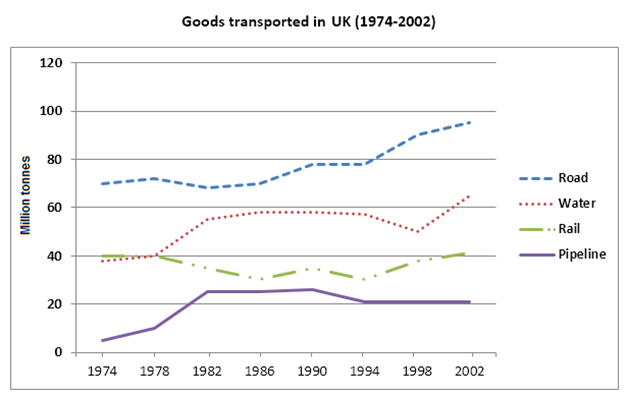
    From 1974 to 2002, the line charts illustrate the four distinct transportation modes in the UK: road, rail, water, and pipeline quality. The charts quantify the amount of goods transported in million tonnes.

    In the UK, roads and waterways surpassed pipelines and railroads in the overall amount of goods carried. Rail and water transport accounted for 40 million tonnes in 1974, remaining constant for four years, while road transportation dominated with 70 million tonnes. Following a notable fluctuation, the water mode peaked at 62 million tonnes in 2002, marking an increase of about 19 million tonnes since 1978 and remaining stable for 12 years. However, rail transport experienced a slight decline after four years of consistent demand, reaching 30 million tonnes in 1986. After a period of gradual fluctuation, it returned to the same million tonnes in 2002 as in the initial year. Additionally, the road stands out as the primary mode of transportation, showing growth.

    Pipelines were less preferred initially, with only 1 million tonnes in 1974. This amount increased to 21 million in 1982, maintaining stability for a decade before dropping to just 1 million in 1994 and remaining unchanged for an additional period.

    Significantly, there was an 80 million-tonne difference between 1990 and 1994, with 22 million tonnes more in 2002 than in 1974.
  • Increasing the price of petrol is the best way to solve

    Question – Increasing the price of petrol is the best way to solve the growing traffic and pollution problems.
    To what extent do you agree or disagree with the statement?
    What other measures do you think might be effective? Give reasons for your answer and include any relevant examples from your own knowledge or experience.
    Write at least 250 words.

    One of the most significant strategies for curbing the escalating issues of traffic and pollution involves raising the price of gasoline. However, I strongly believe that relying on other renewable energy sources, such as solar, wind, and hydro, can play a pivotal role in tackling these challenges.

    While some argue that an increase in gasoline prices would lead to a decrease in its use, consequently mitigating pollution and traffic congestion, it is essential to recognize that people will continue to rely on gasoline due to the lack of practical alternatives to power vehicles. Consequently, this approach may not have a substantial impact on addressing to the growing pollution and traffic problems. In fact, the escalating transportation expenses could contribute to a rise in the cost of goods, negatively affecting the economy.

    On the contrary, adopting less harmful gases like carbon monoxide and CFC can significantly reduce air pollution if we shift to using more renewable energy sources, such as solar, wind, and hydropower, to power factories and automobiles. Additionally, transitioning public transportation to solar energy can lead to reduced fares, promoting the use of affordable, environmentally friendly trams, trains, and buses.

    In conclusion, raising the price of gasoline is not the most effective method to address the increasing issues of pollution and traffic congestion. The integration of additional renewable energy sources into the public transportation system emerges as an efficient solution, with the potential to drastically reduce traffic and pollution problems.

  • The diagrams below show the stages and equipment

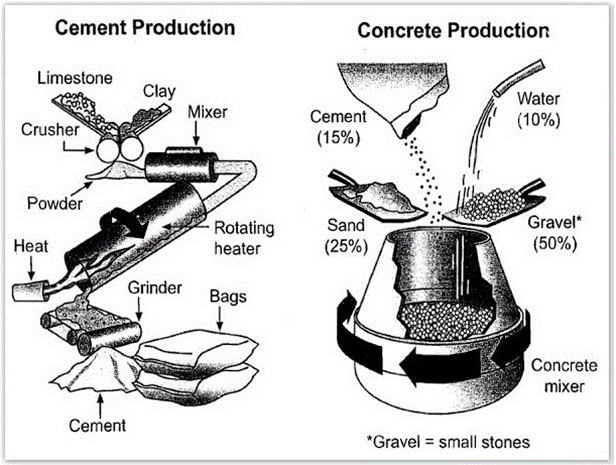
    Question – The diagrams below show the stages and equipment used in the cement-making process, and how cement is used to produce concrete for building purposes.
    Summarise the information by selecting and reporting the main features, and make comparisons where relevant.

    Write at least 150 words.

    The drawings illustrate the process of manufacturing cement and showcase an application where cement is used to create concrete for construction purposes.

    To produce cement, operators begin by combining raw materials like limestone and clay, which are then processed in a crusher. The resulting mixture is carefully blended to achieve the optimal combination. Following this, the mixture undergoes a heating process through rotation. Heat is applied from the end of the rotating heater tube before the blend is discharged onto the grinder. After completing the systematic process, the mixture transforms into cement and is subsequently sealed into bags.

    Simultaneously, a concrete mixer is employed to blend materials such as gravel, cement, water, and sand to create concrete. Among these materials, gravel or small stones constitute 50%, making it the most crucial component. Additional materials, including sand, which is the second most commonly used material after gravel, along with cement and water, contribute to the mix. Cement comprises 15% of all the materials required for constructing a new building. The concrete mixer efficiently combines all these materials.

    In essence, the production of concrete involves the straightforward mixing of necessary ingredients in the correct ratio using a simpler machine. On the other hand, manufacturing cement entails a more intricate process with multiple steps and sophisticated equipment. It’s essential to note that concrete production necessitates heat, which must be introduced into the mixture during the mixing process.

  • Nowadays the way many people interact with each other has

    Question – Nowadays the way many people interact with each other has changed because of technology.
    In what ways has technology affected the types of relationships people make?
    Has this become a positive or negative development?
    Give reasons for your answer and include any relevant examples from your own knowledge or experience. Write at least 250 words.

    Face-to-face communication and enough time to get to know each other well are prerequisites for a real relationship. People all like to feel wanted, even if it’s a false sense, despite what other people may believe. The perception that one can be whoever one wants to be online has been shaped by the digital age. But I think that relationships people form virtually and the way people get to know each other online have changed, mostly negatively.

    Most are becoming more inward-focused and have forgotten what it means to be a true friend to those around them, rather than being genuine friends. People are emotional creatures who occasionally feel sad and aren’t always happy, but the Internet only shares positive experiences, preventing people from knowing each other completely. Nowadays, people tend to form fast and transient friendships. In real life friendships, individuals support one another through each other’s highs and lows. This is not at all like a friendship on social media. Because the Internet cannot take the place of in-person interactions and shared experiences, getting to know someone requires spending time together.

    It is only fitting that life be experienced fully, forming bonds with the physical presence of others. Rather than truly being friends with those in their immediate vicinity, they are utilizing social media to establish connections. I consider this to be a drawback of the digital age.

    In conclusion, the digital age may have brought about benefits like reaching out to old friends and forming new ones, but it has also had unfavorable effects on our moral, social, and personal lives due to our growing reliance on technology and the ways we pretend to keep up our online friendships.

  • The three pie charts below show the changes in annual spending

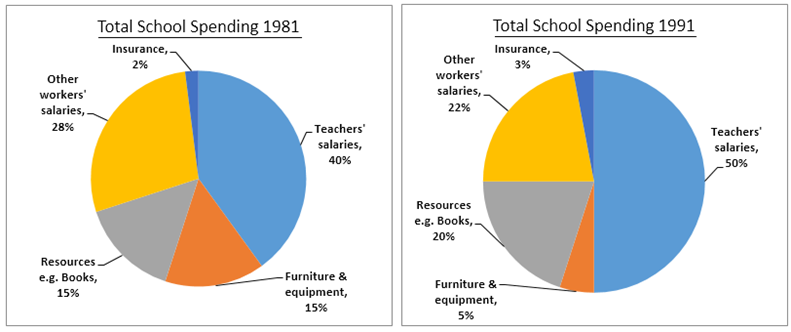
    Question – The three pie charts below show the changes in annual spending by a particular UK school in 1981, 1991 and 2001.
    Summarise the information by selecting and reporting the main features, and make comparisons where relevant. Write at least 150 words.

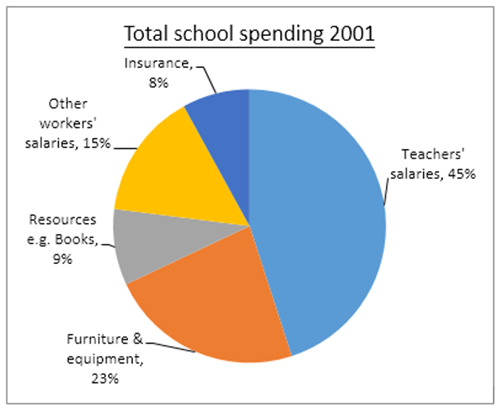
    The three distinct years of 1981, 1991, and 2001 are represented by pie charts that show the overall information regarding the change in annual spending at a particular UK school. All things considered, when it came to expenditures in the years under consideration, the portion of educators’ paychecks was the highest. In contrast, insurance contributed the least in terms of actual financial outlay.

    First off, in 1981, the salary of educators was precisely forty percent. It rose to half of the total expenditure ten years later. Nonetheless, expenditure in the same category decreased slightly to 45% in 2001.

    Furthermore, after the salaries of educators, the salaries of other employees also revealed a significant budgetary proportion. Between 28% in 1981, 22% in 1991, and only 15% in 2001, this area saw a slight decline in the observed years.

    Nonetheless, one field saw a steady improvement in yearly spending. The one that kept going up was insurance. In 1981, 1991, and 2001, the corresponding percentages were 2%, 3%, and 8%. Between 1991 and 2001, there was a notable 5% increase in improvement. Insurance, however, continued to be the least expensive sector in terms of spending.

  • Some people think that parents should teach children

    Question – Some people think that parents should teach children how to be good members of society. Others, however, believe that school is the place to learn this.
    Discuss both these views and give your own opinion. Give reasons for your answer and include any relevant examples from your own knowledge or experience. Write at least 250 words.

    Socialism and belonging to the community are essential values in today’s world. Everyone wants to make a good contribution to society. While some believe that it is the responsibility of the school, others see it as the duty of parents to encourage their children to participate in society and be members of it. Before coming to a decision, all sides of this argument will be examined.

    On the one hand, there are those who advocate for parents to teach their kids how to be decent members of society. Parents might, for instance, feed the hungry as a way of teaching and guiding their kids to help the underprivileged. This instance demonstrates how parents can take the initiative to help their kids grow up to be good people who are respected by society. As a result, many people agree with this notion. As a result of their closer relationship, parents are better able to impart to their children the values of being well-adjusted members of society. Since most kids imitate what their parents do, parents are in a better position to set a positive example for their children.

    Nonetheless, a lot of people think that education is a child’s life’s best guide. For example, a school might plan a campaign encouraging students to clean up specific areas of the city. Children who adopt this mindset gain firsthand experience making contributions to society. Therefore, a lot of people contend that it would be best to let the school handle this. Teaching pupils these responsibilities is a major responsibility of the teachers on behalf of the school. Students are more likely to follow their teachers’ instructions because they pay attention to their advice and commands. Lastly, in order to raise students’ awareness, these subjects may be covered in the curriculum and textbooks.

    In summary, the argument over who should be assigned this responsibility will never go away between the two sides. Since the kids spend the majority of the day in school, I believe that the schools should be the ones to take on this responsibility.

  • The pie chart below shows the main reasons

    Question – The pie chart below shows the main reasons why agricultural land becomes less productive. The table shows how these causes affected three regions of the world during the 1990s.
    Summarise the information by selecting and reporting the main features, and make comparisons where relevant. Write at least 150 words.

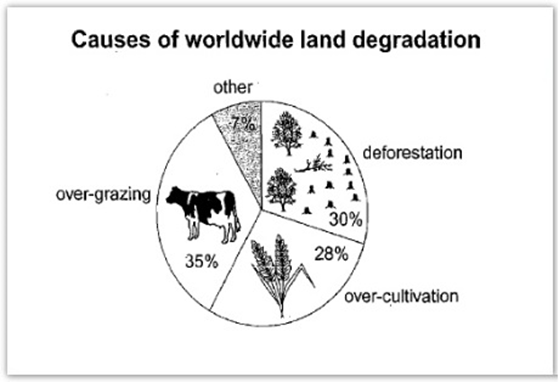
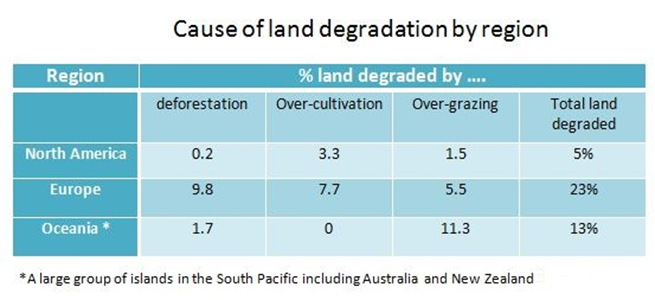
    A table that compares the degradation of agricultural land by region in the 1990s—including North America, Europe, and Oceania—and a pie chart that is divided into four sections show the main causes of agricultural land degradation worldwide.

    Overgrazing accounted for 35 percent of the total causes of land degradation, with deforestation coming in second with only five percent. The third main factor contributing to agricultural land degradation is overcultivation. The remaining factors only account for 7% of the chart, with each of the three reasons occupying approximately the same equation.

    With most of the land degraded due to deforestation, Europe has the worst degradation when compared to the other two regions. The two primary causes of the less productive agricultural land in Oceania, which has a total degradation rate of 13 percent, are overgrazing and deforestation. The table indicates that overcultivation, however, has no effect on the land in Oceania.

    According to the table below, North America has the least degraded land. According to this, over-cultivation accounted for 3.3 percent of the total land degradation in the 1990s, or only 5% of the land degradation.

  • Every year several languages die out.

    Question – Every year several languages die out. Some people think that this is not important because life will be easier if there are fewer languages in the world. To what extent do you agree or disagree with this opinion?
    Give reasons for your answer and include any relevant examples from your own knowledge or experience. Write atleast 250. Write at least 250 words.

    In a world characterized by globalization and technological advancements, the issue of vanishing languages sparks debate. Some argue that the extinction of languages is inconsequential, suggesting that life would be simpler with fewer languages. This essay aims to explore this perspective and argue for the importance of preserving linguistic diversity.

    Those who advocate for the reduction of languages often argue that a common global language facilitates communication, trade, and cultural exchange, making life more straightforward. They contend that a universal language minimizes misunderstandings and promotes efficiency in various domains, from business to international relations. However, I disagree with this viewpoint, as I believe that the preservation of diverse languages is crucial for several reasons. Firstly, languages are repositories of unique cultural and historical knowledge. Each language carries with it a distinct worldview, cultural nuances, and traditional practices that contribute to the rich tapestry of global heritage. Losing a language means losing a part of this invaluable cultural wealth.

    Furthermore, linguistic diversity fosters cognitive flexibility and creativity. Multilingual individuals often demonstrate enhanced problem-solving skills, adaptability, and cognitive abilities, contributing positively to intellectual growth and innovation. Additionally, diverse languages facilitate a deeper understanding of different perspectives, promoting tolerance and cultural appreciation. For instance, the preservation of indigenous languages is vital for the survival of indigenous cultures. Many indigenous communities rely on their languages to pass down traditional knowledge, maintain cultural identity, and sustain their unique ways of life.

    In conclusion, the idea that life would be easier with fewer languages oversimplifies the complex role that languages play in shaping human societies. Preserving linguistic diversity is not merely about maintaining linguistic differences but safeguarding the rich cultural, historical, and cognitive aspects embedded in each language. Embracing and valuing linguistic diversity contributes to a more enriched and interconnected global community.

  • The graph below gives information from a 2008 report about consumption of energy in the USA since 1980 with projections until 2030. IELTS Cambridge 9-Test 4 (Task 1)

    Question – The graph below gives information from a 2008 report about consumption of energy in the USA since 1980 with projections until 2030.
    Summarise the information by selecting and reporting the main features, and make comparisons where relevant.
    Write atleast 150 words.

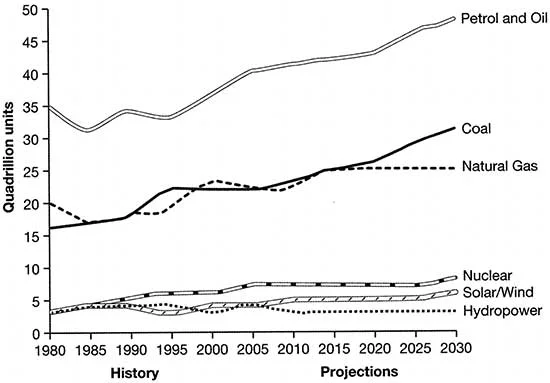
    The 2008 report graphically portrays the evolving energy consumption trends in the USA from 1980 to 2005, projecting trends until 2030. The primary features illuminate transitions in energy sources and consumption patterns.

    In 1980, conventional sources, predominantly coal, oil, and natural gas, constituted the majority of energy. Coal consumption witnessed a significant decrease over the years, giving way to a growing reliance on natural gas. By 2005, natural gas had surpassed coal as the second-largest energy source, while oil retained its dominance.

    Projections for 2030 anticipate a continued decline in coal consumption, with natural gas poised to become the leading energy source. Renewable energy, a minor fraction in 2005, is expected to experience substantial growth, making a significant contribution to the overall energy mix.

    In summary, the graph highlights a shift towards cleaner energy sources, with natural gas and renewables taking center stage. The diminishing role of coal aligns with a broader global trend towards embracing sustainable and environmentally friendly alternatives.

  • Some people say that the best way to improve public health is by increasing the number of sports facilities. IELTS Cambridge 9-Test 3 (Task 2)

    Question – Some people say that the best way to improve public health is by increasing the number of sports facilities. Others, however, say that this would have little effect on public health and that other measures are required.
    Discuss both these views and give your own opinion. Write at least 250 words.

    The complex nature of public health has spurred ongoing debates on the most effective strategies for improvement. While some advocate for expanding sports facilities, others argue that such measures may offer limited impact. This essay explores both perspectives and delves into additional measures contributing to enhanced public health, followed by my own viewpoint.

    Proponents assert that elevating public health hinges on promoting physical activity through sports. Accessible and well-maintained sports facilities inspire communities to embrace regular exercise, fostering a healthier lifestyle. Physical activity correlates with numerous health benefits, including weight management, cardiovascular health, and mental well-being. Additionally, these facilities serve as communal spaces that encourage social interaction, positively impacting mental health.

    Conversely, skeptics argue that merely expanding sports facilities may not comprehensively address public health challenges. They highlight the pivotal roles played by factors such as lifestyle choices, dietary habits, and socio-economic conditions. Relying solely on sports-centric approaches may overlook individuals disinclined to participate in such activities, necessitating alternative strategies for health improvement.

    Creating a holistic public health strategy involves considering factors beyond sports facilities. Crucial components include public health campaigns, education on healthy living, affordable healthcare access, and policies promoting nutritious diets. Addressing social determinants of health, such as income inequality and environmental factors, is equally vital for comprehensive health outcomes.

    While expanding sports facilities shows promise in promoting physical activity and community well-being, it may not serve as a panacea for all public health challenges. A multifaceted approach, incorporating public health campaigns, education, and policies addressing various determinants, is imperative. Personally, I believe that integrating diverse, community-tailored strategies is key to fostering a healthier society, striving for sustained improvements in public health.