Month: February 2024

  • The charts below give information on the ages of the populations of Yemen and Italy in 2000 and projections for 2050. IELTS Cambridge 9-Test 3 (Task 1)

    Question – The charts below give information on the ages of the populations of Yemen and Italy in 2000 and projections for 2050.
    Summarise the information by selecting and reporting the main features, and make comparisons where relevant. Write at least 150 words.
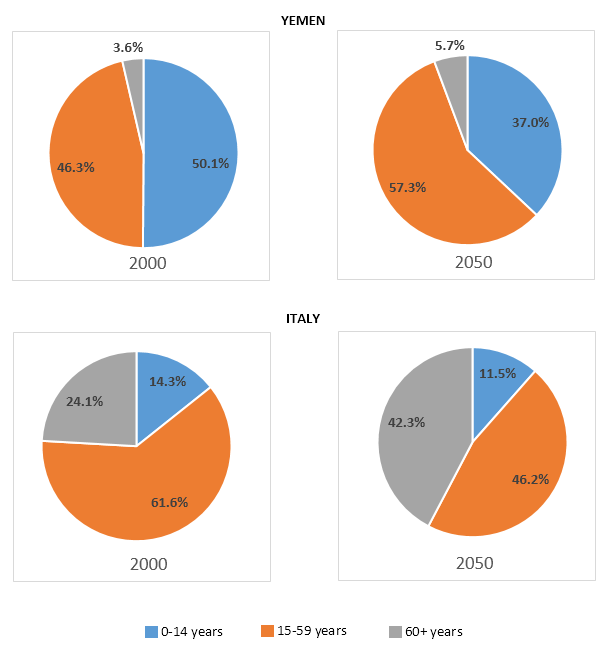
    The charts offer insights into the age distribution of Yemen and Italy in 2000, along with projections for the year 2050.

    In 2000, Yemen had a relatively young population, with about 43% constituting a substantial percentage under the age of 15. Meanwhile, Italy exhibited a more balanced age distribution, with approximately 63% of the population in the working-age range between 15 and 59 years.

    Looking ahead to 2050, projections unveil notable demographic shifts. Yemen expects to undergo a demographic transition, anticipating a decline in the younger population and a considerable increase in the elderly segment. The percentage of those aged 65 and above is expected to rise significantly, reaching around 20%. On the contrary, Italy envisions a more pronounced aging trend, projecting the elderly population to surge to nearly 40%, signifying a considerable shift from its more balanced age structure in 2000.

    In summary, the charts depict a stark contrast in the age demographics of Yemen and Italy in 2000, with distinct shifts foreseen by 2050. Yemen anticipates a move towards an older population, while Italy foresees a substantial increase in the elderly segment, highlighting the evolving dynamics in these two nations.

  • Some people believe that unpaid community service should be a compulsory part of high school programmes . IELTS Cambridge 9-Test 2 (Task 2)

    Question – Some people believe that unpaid community service should be a compulsory part of high school programmes (for example working for a charity, improving the neighbourhood or teaching sports to younger children).
    To what extent do you agree or disagree? Give reasons for your answer and include any relevant examples from your own knowledge or experience.Write at least 250 words.

    Numerous novel concepts and viewpoints aiming to enhance society and strengthen social cohesion have surfaced in recent decades. One suggestion under consideration is the mandatory inclusion of community service for high school students, currently under observation. This essay will clarify why I agree that it should be a requirement.

    First and foremost, encouraging students to actively participate in volunteer and charitable activities helps shape them into kind, responsible individuals. Fostering an informed generation capable of assisting others and taking responsibility aligns with one of education’s primary goals. Making community service an integral part of the high school curriculum is a commendable idea in this regard. Studies reveal that traits such as empathy, responsibility, and sensibility begin to develop during our teenage years. Thus, fostering these qualities in high school students is a wise approach.

    Furthermore, community service requirements provide young students with a priceless opportunity to advance their skills and personal development. Engaging in various community service projects enables them to acquire essential soft skills such as problem-solving, cooperation, leadership, and communication. For instance, volunteering as a tutor for younger children can improve students’ communication skills and patience as they learn to simplify complex ideas for others’ understanding. These acquired abilities can benefit their academic pursuits, future employment, and interpersonal interactions, broadening their horizons as individuals.

    In summary, community service plays a crucial role in fostering excellence in young learners and acquiring critical soft skills, while simultaneously benefiting the local population. Recommending the inclusion of community service as a mandatory component in the high school curriculum is based on the numerous advantages it can provide.

  • The chart below shows the total number of minutes (in billions) of telephone calls in the UK, divided into three categories, from 1995-2002. IELTS Cambridge 9-Test 2 (Task 1)

    Question – The chart below shows the total number of minutes (in billions) of telephone calls in the UK, divided into three categories, from 1995-2002.
    Summarise the information by selecting and reporting the main features, and make comparisons where relevant.
    Write at least 150 words.

    Examine the bar graph to observe the billions of minutes spent on phone conversations in Britain from 1995 to 2002. Local fixed-line calls dominated overall call types during this period, with a noticeable surge in cell phone usage in subsequent years.

    After four years, local call duration steadily rose to approximately 90 billion minutes from the 1995 figure of 70 billion minutes. However, the span of local calls quickly decreased to a range between 70 and 80 billion. In stark contrast, national and international fixed-line and mobile calls collectively exhibited upward trends.

    It is evident that the volume of fixed-line calls, both national and international, experienced a gradual increase from less than 40 to 60 billion in 2002. Meanwhile, mobile call volume showed a gradual increase in the first five years before rapidly surpassing 40 billion minutes.

    Remarkably, over an eight-year period, local fixed-line calls remained the most prevalent of the three call types in the UK.

  • Some experts believe that it is better for children to begin learning a foreign language at primary school rather than secondary school. IELTS Cambridge 9-Test 1 (Task 2)

    Question – Some experts believe that it is better for children to begin learning a foreign language at primary school rather than secondary school.
    Do the advantages of this outweigh the disadvantages?
    Give reasons for your answer and include any relevant example from your own knowledge or experience. Write at least 250 words.

    In our interconnected world, mastering a foreign language is deemed crucial for success, sparking debates about the optimal time to initiate language learning. Some linguists argue that introducing second languages in primary schools trumps waiting until secondary education. To shed light on this, we’ll explore the pros and cons, aiming to showcase the advantages of teaching foreign languages to elementary students.

    One notable concern is that teaching foreign languages to young learners may impede their mastery of their mother tongue. Critics point out that the pressure to acquire multiple languages, including their native tongue and widely spoken global languages, might overshadow proficiency in their mother language. This is evident in developing nations where English-medium students, proficient in English and French, often lack proficiency in their native language.

    Contrastingly, teaching foreign languages to elementary students boasts a significant advantage – organic language acquisition leading to enhanced fluency. Young minds absorb languages effortlessly, and cognitive development accelerates during this crucial stage. A survey conducted by the University of Metropolis, involving two thousand university students, revealed that those exposed to a foreign language in elementary school displayed greater proficiency than their counterparts who began later. Additionally, early language learners tend to develop a broader appreciation for diverse customs and cultures, fostering acceptance of others and adaptability to change.

    In conclusion, the benefits of early foreign language education far outweigh potential drawbacks. To optimize language learning, exposing elementary school students to second languages is essential. This approach not only enhances linguistic proficiency but also cultivates a global perspective, preparing students for a connected and diverse world.

  • The two maps below show an island, before and after the construction of some tourist facilities. IELTS Cambridge 9-Test 1 (Task 1)

    Question – The two maps below show an island, before and after the construction of some tourist facilities.
    Summarise the information by selecting and reporting the main features, and make comparisons where relevant. Write at least 150 words.

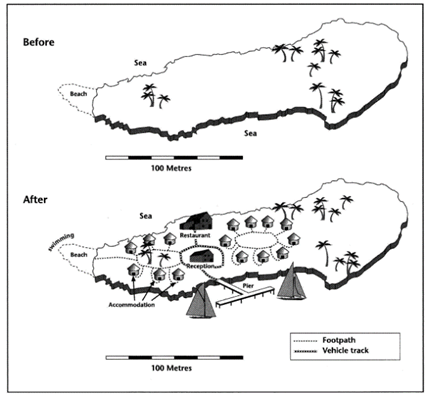
    The maps illustrate changes resulting from construction on the island, showing transformations before and after various renovations aimed at enhancing the tourist experience. Developers have executed the creation of extensive tourism infrastructure, including restaurants, lodging facilities, swimming pools, and other amenities, with minimal impact on the environment.

    Before implementing these facilities, the island was mostly deserted, retaining only the beach and trees. Subsequently, developers erected numerous new tourist amenities, such as lodging options, dining establishments, a reception area, a boat dock, and designated beach swimming areas. Notably, most constructions are in close proximity to the beach, and developers did not sacrifice any trees or plants for their creation.

    Moreover, to enhance accessibility for visitors, developers have constructed roads and walking pathways. Footpaths connect lodging areas to the beach, while motorways offer convenient access to the restaurant, reception area, and boat dock.

    In summary, construction endeavors prioritized preserving the natural environment, with no cutting down of trees or plants. The primary objective was to ensure a seamless and enjoyable experience for visitors during their stay and exploration of the island.

  • Many museums charge for admission while others are free. IELTS Cambridge 10-Test 4 (Task 2)

    Question-Many museums charge for admission while others are free.
    Do you think the advantages of charging people for admission to museums outweigh the disadvantages ?Write at least 250 words.

    The debate over whether museums should charge admission fees or remain free to the public is a complex issue that involves considering both advantages and disadvantages. Charging for museum entry has its merits, but the drawbacks must also be acknowledged.

    One major advantage of admission fees is the financial sustainability it provides to museums. These fees contribute to maintaining and improving exhibits, preserving artifacts, and ensuring the overall quality of the museum experience. In turn, this economic support aids in attracting knowledgeable staff, facilitating educational programs, and fostering a conducive environment for visitors to learn and engage with the exhibits.

    However, the disadvantages of charging for admission should not be overlooked. One primary concern is the potential exclusion of certain demographics, particularly those with lower socio-economic backgrounds. Admission fees can deter individuals and families from attending, limiting access to cultural and educational opportunities. This can create a divide where only those with financial means can benefit from the enriching experiences museums offer.

    In my opinion, the advantages of charging admission fees must be carefully weighed against the disadvantages. While generating revenue is crucial for maintaining museums, ensuring accessibility for all is equally essential. A compromise, such as offering discounted rates, free days, or a voluntary donation system, can strike a balance between financial sustainability and inclusivity. Museums should explore alternative funding sources, like grants and sponsorships, to reduce reliance on admission fees and mitigate the potential exclusion of certain groups.

    In conclusion, charging admission to museums provides financial support for their operation and development. However, the disadvantages, particularly the risk of excluding certain demographics, underscore the importance of finding a balanced approach. Museums should consider innovative ways to fund their activities while ensuring that cultural and educational experiences remain accessible to everyone, regardless of their financial situation.

  • The diagrams below show the life cycle of a species of large fish called the salmon.IELTS Cambridge 10 -Test 4 (Task 1)

    Question- The diagrams below show the life cycle of a species of large fish called the salmon.
    Summarise the information by selecting and reporting the main features, and make comparisons where relevant.Write atleast 150 words.

    The diagrams illustrate the intricate life cycle of a species of large fish known as the salmon. Comprising multiple stages, the life cycle showcases the salmon’s remarkable journey from egg to maturity.

    Initially, the process commences with the spawning of eggs in freshwater. Subsequently, the eggs undergo an incubation period, developing into alevins. These alevins, characterized by their distinctive appearance with a yolk sac, then emerge and transform into fry. The fry stage witnesses the salmon assuming a more recognizable fish form, characterized by increased mobility.

    As the fry matures, it transitions into the parr stage, marked by the development of more defined features. Following this stage, the salmon undergoes a crucial physiological change known as smoltification, where it adapts to the transition from freshwater to saltwater environments. The matured salmon then embarks on a journey downstream to the ocean, where it reaches adulthood and engages in the complex process of spawning, thus completing the life cycle.

    Comparatively, the diagrams highlight the multifaceted nature of the salmon’s life cycle, emphasizing its adaptability to both freshwater and saltwater environments. The visual representation effectively captures the stages of egg, alevin, fry, parr, smolt, and adult salmon, providing a comprehensive overview of this awe-inspiring natural process.

  • Countries are becoming more and more similar because people are able to buy the same products anywhere in the world. IELTS Cambridge 10 -Test 3 (Task 2)

    Question –Countries are becoming more and more similar because people are able to buy the same products anywhere in the world.
    Do you think this is a positive or negative development?Write aleast 250 words.

    The increasing globalization of markets has led to a phenomenon where people worldwide have access to the same products, fostering a sense of similarity among countries. This development sparks a debate over whether this trend is a positive or negative occurrence.

    On one hand, the availability of identical products globally can be viewed positively. It ensures that individuals across borders can access a wide range of goods, contributing to a more equitable distribution of resources and opportunities. This interconnectedness promotes cultural exchange and understanding, breaking down barriers and fostering a sense of a shared global community.

    However, on the flip side, the homogenization of products can be seen as a negative development. The proliferation of global brands may lead to the erosion of local cultures and traditions, as unique regional products and industries face competition from standardized, mass-produced alternatives. This could result in the loss of cultural diversity and the distinctiveness that makes each country unique.

    In my opinion, while the availability of the same products globally enhances accessibility and promotes a sense of interconnectedness, there is a risk of losing cultural diversity. Striking a balance is crucial to preserve the uniqueness of individual cultures and ensure that globalization does not lead to a monotonous, homogenous world. Governments and businesses need to work collaboratively to promote and protect local industries, thereby preserving the rich tapestry of global diversity.

    In conclusion, the global availability of the same products has both positive and negative implications. While it fosters global interconnectedness, there is a potential threat to cultural diversity. Striking a balance between the benefits of global accessibility and the preservation of local distinctiveness is crucial for a harmonious and culturally rich global society.

  • The charts below show what UK graduate and postgraduate students who did not go into full-time work did after leaving college in 2008. IELTS Cambridge 10-Test 3 (Task 1)

    Question – The charts below show what UK graduate and postgraduate students who did not go into full-time work did after leaving college in 2008.
    Summarise the information by selecting and reporting the main features, and make comparisons where relevant. Write at least 150 words.

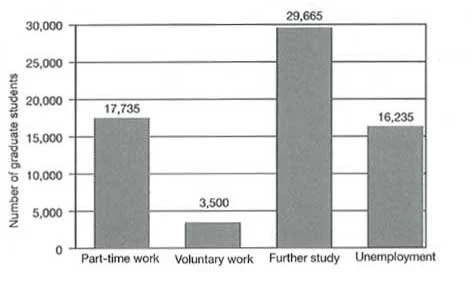
    The charts provide insights into the choices made by UK graduate and postgraduate students who did not pursue full-time work after leaving college in 2008. The data reveals diverse avenues that these individuals explored in the pursuit of their career aspirations.

    In 2008, a significant portion of both graduate and postgraduate students opted for further studies, with 45% and 55% respectively choosing to continue their education. Another prominent choice for graduates was temporary employment, with 30% engaging in part-time or voluntary work.

    On the other hand, postgraduates leaned towards temporary employment less, with only 20% opting for this route. Notably, a considerable number of both groups, 20% of graduates and 25% of postgraduates, engaged in other activities not specified in the charts.

    The data indicates a divergence in the post-college paths of graduates and postgraduates in 2008, showcasing varied preferences and pursuits among individuals who did not immediately enter full-time work. The choices made by these students reflect the complexity and diversity of career trajectories in a rapidly changing professional landscape.

  • Some people think that all university students should study whatever they like. IELTS Cambridge 10-Test 2 (Task 2)

    Question – Some people think that all university students should study whatever they like. Others believe that they should only be allowed to study subjects that will be useful in the future, such as those related to science and technology.
    Discuss both these views and give your own opinion. Write atleast 250 words.

    The question of whether university students should have the freedom to study any subject of their choice or be limited to disciplines with future utility is a subject of ongoing debate. One perspective argues for academic freedom, contending that students should have the liberty to explore their interests and passions. This viewpoint values the holistic development of individuals, fostering creativity and a diverse skill set beyond the confines of practicality.

    On the other hand, proponents of a more pragmatic approach advocate for a curriculum focused on subjects deemed essential for future employability, particularly those related to science and technology. They argue that in a rapidly evolving job market, specialized knowledge in fields such as STEM (science, technology, engineering, and mathematics) is crucial for economic competitiveness and individual career success.

    In my opinion, a balanced approach is essential. While it is valuable for students to pursue their passions, there is merit in incorporating practical considerations into the educational framework. A curriculum that combines core subjects essential for future employability with elective courses catering to individual interests strikes a balance. This approach ensures that students are equipped with both specialized skills and a well-rounded education that nurtures critical thinking and adaptability.

    In conclusion, the dichotomy between academic freedom and practical utility underscores the complexity of university education. Striking a balance between allowing students to study their chosen subjects and emphasizing practical, future-oriented disciplines is pivotal for producing graduates who are not only well-equipped for the job market but also intellectually versatile and capable of contributing to society in multifaceted ways.