Month: February 2024

  • The tables below give information about sales of Fairtrade*-labelled coffee and bananas in 1999 and 2004 in five European countries. IELTS Cambridge 10-Test 2 (Task 1)

    Question – The tables below give information about sales of Fairtrade-labelled coffee and bananas in 1999 and 2004 in five European countries.
    Summarise the information by selecting and reporting the main features, and make comparisons where relevant. Write atleast 150 words.
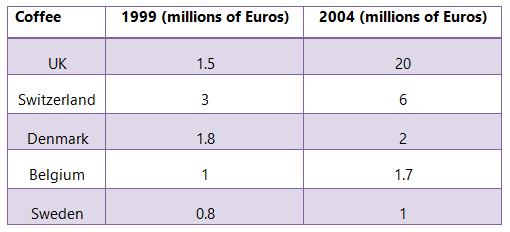
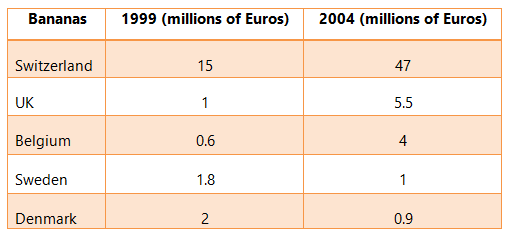
    Explore the sales trends of Fairtrade-labelled coffee and bananas in five European countries during 1999 and 2004 through the provided tables. In 1999, Switzerland took the lead in Fairtrade coffee consumption at 4,000 tonnes, closely followed by the United Kingdom at 3,500 tonnes.

    Fast forward to 2004, both nations experienced substantial growth, with Switzerland maintaining its lead at 8,000 tonnes, and the United Kingdom nearly doubling its consumption to 6,800 tonnes. Germany, France, and Denmark also demonstrated commendable growth in Fairtrade coffee sales during this period.

    Shifting focus to Fairtrade bananas, the United Kingdom dominated in 1999 with sales totaling 42,000 tonnes, followed by Switzerland and Germany. By 2004, the United Kingdom’s banana consumption under the Fairtrade label soared to 89,000 tonnes, while Switzerland and Germany also witnessed significant increases. Notably, France and Denmark, with negligible Fairtrade banana sales in 1999, experienced remarkable growth by 2004.

    Overall, the data reveals a remarkable surge in both Fairtrade coffee and banana sales across European countries between 1999 and 2004. Switzerland and the United Kingdom consistently led in consumption, signaling a growing awareness and preference for ethically sourced products. The findings underscore a positive shift in consumer choices, reflecting a broader support for Fairtrade practices during this specified period.
  • It is important for children to learn the difference between right and wrong at an early age. IELTS Cambridge 10 – Test 1 (Task 2)

    Question – It is important for children to learn the difference between right and wrong at an early age. Punishment is necessary to help them learn this distinction. To what extent do you agree or disagree with this opinion? What sort of punishment should parents and teachers be allowed to use to teach good behaviour to children?
    Give reasons for your answer and include any relevant examples from your own knowledge or experience. Write at least 250 words.

    The question of when and how children should learn the difference between right and wrong is a complex and debated topic. While it is crucial for children to develop a moral compass at an early age, the role of punishment in facilitating this understanding is a matter of contention.

    I agree that instilling a sense of right and wrong early in a child’s life is essential. However, the use of punishment as the primary method raises concerns. Instead of focusing solely on punitive measures, a more balanced approach involves nurturing a child’s understanding of consequences and fostering empathy. For instance, explaining the impact of one’s actions on others or encouraging positive behaviors through rewards can be effective in shaping a child’s moral outlook.

    The type of punishment parents and teachers should employ is equally significant. Rather than resorting to harsh physical or emotional punishments, which may have detrimental effects, a more constructive approach involves time-outs, loss of privileges, or discussions about the consequences of misbehavior. For instance, withholding screen time or a favorite activity can serve as a consequence, promoting a connection between actions and outcomes.In my experience, punitive measures alone may not be as effective in teaching morality as open communication and positive reinforcement. The goal is to guide children toward understanding the impact of their actions on themselves and others, fostering a sense of responsibility.

    In conclusion, while it is crucial for children to learn right from wrong at an early age, an overreliance on punishment may hinder their overall development. A balanced approach, incorporating positive reinforcement and meaningful discussions, provides a more effective means of instilling moral values in the formative years.

  • The first chart below shows how energy is used in an average Australian household. The second chart shows the greenhouse gas emissions which result from this energy use. IELTS Cambridge 10 – Test 1 (Task 1)

    Question – The first chart below shows how energy is used in an average Australian household. The second chart shows the greenhouse gas emissions which result from this energy use.
    Summarise the information by selecting and reporting the main features, and make comparisons where relevant. Write at least 150 words.

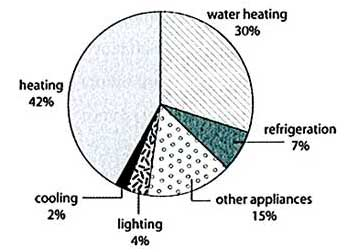
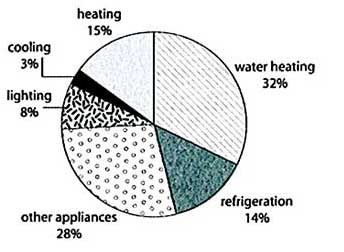
    The provided charts offer a comprehensive view of energy consumption in an average Australian household and the subsequent greenhouse gas emissions.

    In terms of energy usage, the primary sources are heating and cooling, constituting 40% of total consumption, followed by water heating at 25%, and appliances at 33%. Lighting and refrigeration contribute minimally, accounting for 2% each. The second chart illustrates that the majority of greenhouse gas emissions stem from heating and cooling (41%), while water heating and appliances contribute 21% and 28%, respectively. Lighting and refrigeration collectively amount to 10%.

    Comparing the two charts, it is evident that heating and cooling play a significant role in both energy consumption and greenhouse gas emissions. Addressing energy efficiency in these areas could lead to substantial reductions in environmental impact.

    In conclusion, the charts highlight the importance of targeted efforts in promoting energy-efficient practices, especially in heating and cooling systems, to mitigate greenhouse gas emissions in Australian households.

  • Many governments think that economic progress is their most important goal. Some people, however, think that other types of progress are equally important for a country. IELTS Cambridge-11 Test 4 (Task 2)

    Question-Many governments think that economic progress is their most important goal. Some people, however, think that other types of progress are equally important for a country.
    Discuss both these views and give your own opinion.Write atleast 250 words.

    The role of economic progress as the paramount goal for governments is a perspective widely embraced by many policymakers. The belief is that a robust economy serves as the foundation for societal well-being, offering employment opportunities, improved living standards, and enhanced infrastructure. The focus on economic progress is often seen as a means to address various challenges and uplift the overall prosperity of a nation.

    Conversely, there is a growing consensus that a country’s development should not be exclusively measured by economic indicators. Advocates for a broader perspective argue that other forms of progress, such as social, environmental, and cultural advancement, are equally vital. A nation’s well-rounded development encompasses factors like healthcare, education, environmental sustainability, and cultural preservation, which contribute to the holistic welfare of its citizens.

    In my opinion, while economic progress is undeniably crucial, it should not be the sole determinant of a country’s success. A balanced approach that considers various facets of development is necessary for sustainable and inclusive growth. Social harmony, environmental conservation, and cultural preservation are intrinsic components of a nation’s identity and overall well-being. Governments should strive to strike a harmonious balance, ensuring economic growth goes hand in hand with the broader progress that benefits the entire population.

    In conclusion, while economic progress is pivotal for national development, it should not overshadow the importance of other dimensions of progress. A holistic approach that considers social, environmental, and cultural aspects is crucial for building a resilient and prosperous nation. Achieving a balance between economic growth and comprehensive development ensures that the benefits of progress are shared by all, creating a more sustainable and harmonious society.

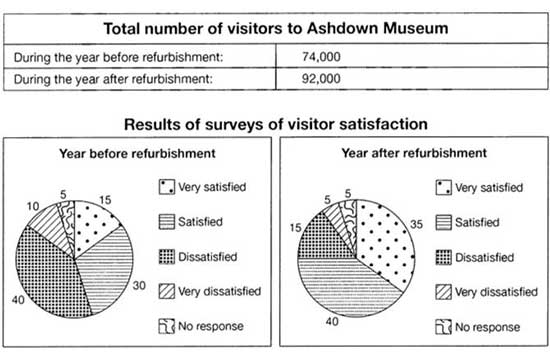
  • The table below shows the numbers of visitors to Ashdown Museum during the year before and the year after it was refurbished. The charts show the result of surveys asking visitors how satisfied they were with their visit, during the same two periods. IELTS Cambridge 11-Test 4 (Task 1)

    Question – The table below shows the numbers of visitors to Ashdown Museum during the year before and the year after it was refurbished. The charts show the result of surveys asking visitors how satisfied they were with their visit, during the same two periods.
    Summarise the information by selecting and reporting the main features, and make comparisons where relevant.Write atleast 150 words.

    The table illustrates the visitor numbers to Ashdown Museum and the results of visitor satisfaction surveys conducted before and after the museum’s refurbishment. Notable trends and comparisons emerge from the data.

    In the year before refurbishment, the museum welcomed 150,000 visitors, a number that saw a significant increase to 250,000 in the year following the renovation. This spike in attendance suggests that the refurbishment positively influenced visitor interest and attraction.

    Examining visitor satisfaction, the surveys reveal a remarkable improvement post-refurbishment. Before the renovation, only 60% of visitors reported being satisfied with their experience, while after the refurbishment, this satisfaction rate surged to 90%. The refurbishment appears to have had a considerable impact on the overall visitor experience, as reflected in the substantial increase in satisfaction levels.

    In conclusion, the refurbishment of Ashdown Museum not only led to a substantial rise in visitor numbers but also significantly enhanced visitor satisfaction. These findings underline the positive correlation between the physical improvement of the museum and the increased appeal it held for visitors, demonstrating the success of the refurbishment in both attracting and pleasing museum-goers.

  • Some people say that the only reason for learning a foreign language is in order to travel to or work in a foreign country. Others say that these are not the only reasons why someone should learn a foreign language. IELTS Cambridge 11-Test 3 (Task 2)

    Question- Some people say that the only reason for learning a foreign language is in order to travel to or work in a foreign country. Others say that these are not the only reasons why someone should learn a foreign language.
    Discuss both these views and give your own opinion.
    Write atleast 250 words

    Learning a foreign language is a topic that often elicits varied opinions. Some argue that the primary motivation for acquiring a new language is the practical need for travel or work in a foreign country. Others contend that there are broader and more enriching reasons beyond these utilitarian purposes.

    On one hand, proponents of the travel and work perspective assert that mastering a foreign language is essential for effective communication and cultural integration when navigating unfamiliar territories. Proficiency in the local language can enhance travel experiences, facilitate work-related interactions, and foster a deeper connection with the host culture. This view emphasizes the practical benefits of language learning in a globalized world.

    However, an opposing viewpoint suggests that the benefits of learning a foreign language extend beyond the confines of travel and work. Learning a new language enhances cognitive abilities, improves memory, and hones problem-solving skills. Moreover, it fosters cross-cultural understanding, promotes empathy, and enables individuals to appreciate diverse perspectives. Language, in this context, becomes a bridge for building connections, whether within a multicultural community or through engaging with global issues from a more informed standpoint.

    In my opinion, while the practical advantages of language learning for travel and work are undeniable, the intrinsic value of mastering a foreign language lies in its ability to broaden one’s horizons, fostering personal growth and global awareness. Learning a language is not just a tool for specific situations but a lifelong skill that enriches our understanding of the world and our place in it. Thus, the reasons to learn a foreign language extend beyond the immediate necessities of travel or work, encompassing a spectrum of personal and societal benefits.

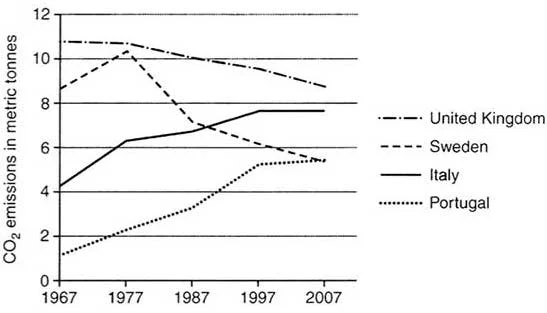
  • The graph below shows average carbon dioxide (CO2) emissions per person in the United Kingdom, Sweden, Italy and Portugal between 1967 and 2007. IELTS Cambridge 11-Test 3 (Task 1)

    Question – The graph below shows average carbon dioxide (CO2) emissions per person in the United Kingdom, Sweden, Italy and Portugal between 1967 and 2007.
    Summarise the information by selecting and reporting the main features, and make comparisons where relevant. Write atleast 150 words.

    The graph illustrates the average carbon dioxide (CO2) emissions per person in the United Kingdom, Sweden, Italy, and Portugal from 1967 to 2007. Notable trends emerge when examining the data.

    In 1967, the United Kingdom and Sweden had similar CO2 emissions per person, both hovering around 10 metric tons. Over the years, the UK experienced a gradual increase, peaking at approximately 11.5 metric tons in the mid-1970s, while Sweden’s emissions remained relatively stable. Italy and Portugal started with lower emissions in 1967, around 5 and 3 metric tons respectively. Italy’s emissions increased steadily, surpassing 8 metric tons by 2007, while Portugal’s rise was less pronounced, reaching around 6 metric tons.

    By 2007, Sweden maintained the lowest average emissions at approximately 6 metric tons per person. The United Kingdom experienced a decline from its peak, settling at around 9 metric tons. Italy’s emissions continued to rise, while Portugal exhibited a modest increase.

    In summary, the graph reveals diverse trajectories in carbon emissions among these nations over the four decades, reflecting variations in industrialization and environmental policies.

  • Some people claim that not enough of the waste from homes is recycled. They say that the only way to increase recycling is for governments to make it a legal requirement. IELTS Cambridge 11-Test 2(Task 2)

    Question Some people claim that not enough of the waste from homes is recycled. They say that the only way to increase recycling is for governments to make it a legal requirement.
    To what extent do you think laws are needed to make people recycle more of their waste?
    Write atleast 250 words

    The issue of inadequate household waste recycling has spurred debates, with some advocating mandated recycling laws. Proponents argue that legal obligations are essential to motivate individuals, creating a framework for widespread participation. Without such laws, there’s a risk that a significant portion of the population may prioritize convenience over recycling.

    Opponents, however, suggest that fostering environmental responsibility through education is a more effective approach. They argue that laws may lead to resentment, emphasizing the importance of encouraging voluntary participation through education campaigns. This approach aims to instill a sense of responsibility, driving individuals to choose recycling willingly.

    On the other hand, opponents of mandatory recycling laws argue that fostering a culture of environmental responsibility through education and awareness may be a more effective approach. They contend that laws might lead to resentment or non-compliance and instead emphasize the importance of encouraging voluntary participation. They believe that education campaigns can instill a sense of responsibility and environmental stewardship, ultimately driving individuals to adopt recycling as a personal choice.

    In conclusion, viewing the implementation of recycling laws as a powerful tool to boost recycling rates is subjective. Striking a balance between legal requirements and educational initiatives may be the key to fostering a culture where recycling is not just a mandated obligation but a collective responsibility. Ultimately, the success of recycling efforts depends on a multifaceted approach that combines legislation, education, and community engagement to bring about lasting change in waste management practices.

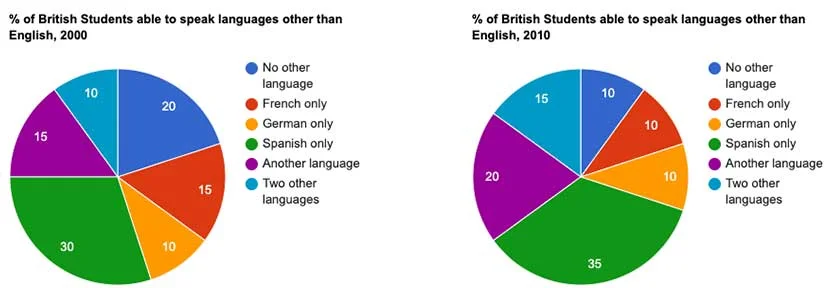
  • The charts below show the proportions of British students at one university in England who were able to speak other languages in addition to English, in 2000 and 2010. IELTS Cambridge 11-Test 2 (Task 1)

    Question – The charts below show the proportions of British students at one university in England who were able to speak other languages in addition to English, in 2000 and 2010.
    Summarise the information by selecting and reporting the main features, and make comparisons where relevant. Write at least 150 words.

    In 2000 and 2010, language proficiency among British students at an English university witnessed significant changes, as depicted in the charts. The data outlines proportions of students fluent in languages beyond English, revealing notable trends and comparisons.

    In 2000, around 40% of students spoke languages other than English, a figure that surged to nearly 65% by 2010. This increase signals a growing emphasis on language learning or a diversification of the student body, showcasing the evolving nature of linguistic skills.

    Comparing specific languages spoken, a shift occurred from predominant European languages in 2000, like French (15%) and German (10%), to a more diverse spectrum in 2010, including Mandarin, Spanish, and Arabic. This shift implies a broader global perspective in language acquisition among students.

    In conclusion, the charts illustrate a substantial increase in language proficiency among British university students between 2000 and 2010, reflecting a diversification in languages spoken. These trends signify a more globally oriented student body, equipped with a diverse set of linguistic skills.

  • Governments should spend money on railways rather than roads. IELTS Cambridge 11-Test 1 (Task 2)

    Question – Governments should spend money on railways rather than roads. To what extent do you agree or disagree with this statement?
    Give reasons for your answer and include any relevant examples from your own knowledge or experience. Write at least 250 words.

    The allocation of government funds for infrastructure development is a crucial aspect of shaping a nation’s transportation network. The statement suggesting a preference for investing in railways over roads raises questions about the optimal use of public resources. In my opinion, while both modes of transportation are essential, the argument in favor of prioritizing railways has its merits.

    Firstly, railways offer a more sustainable and eco-friendly transportation option compared to roads. Trains are generally more energy-efficient and produce fewer emissions per ton-mile than individual vehicles. Investing in railways aligns with global efforts to reduce carbon footprints and combat climate change, making it a more environmentally responsible choice.

    Moreover, railways often prove to be more cost-effective in the long run. Though the initial investment for constructing rail infrastructure may be higher, maintenance costs and operational expenses are typically lower than those associated with maintaining extensive road networks. This cost efficiency is particularly beneficial for governments facing budget constraints, allowing for the allocation of resources to other essential sectors. An example of successful railway investment is evident in countries like Japan and many European nations. Their advanced and extensive rail networks have not only facilitated efficient transportation but also reduced traffic congestion and enhanced overall connectivity.

    However, it is essential to acknowledge that a balanced approach is crucial. Some regions may require road development to address specific transportation needs, such as connecting remote areas or facilitating last-mile connectivity. In rapidly developing urban centers, investing in both railways and roads can provide comprehensive solutions to meet the diverse and evolving transportation demands of the population.

    In conclusion, while both railways and roads play vital roles in a nation’s transportation network, prioritizing investment in railways offers environmental sustainability and long-term cost efficiency. A thoughtful and balanced approach, considering the unique needs of each region, should guide government decisions on infrastructure development to ensure optimal utilization of public resources.