Month: April 2024

  • IELTS Reading Practice Test – Exercise 125

    Dressed to Dazzle

    As high-tech materials invade high-street fashion, prepare for clothes that are cooler than silk and warmer than wool, keep insects at arm’s length, and emit many pinpricks of coloured light.

    The convergence of fashion and high technology is leading to new kinds of fibres, fabrics and coatings that are imbuing clothing with equally wondrous powers. Corpe Nove, an Italian fashion company, has made a prototype shirt that shortens its sleeves when room temperature rises and can be ironed with a hairdryer. And at Nexia Biotechnologies, a Canadian firm, scientists have caused a stir by manufacturing spider silk from the milk of genetically engineered goats. Not surprisingly, some industry analysts think high-tech materials may soon influence fashion more profoundly than any individual designer.

    A big impact is already being made at the molecular level. Nano-Tex, a subsidiary of American textiles maker Burlington, markets a portfolio of nanotechnologies that can make fabrics more durable, comfortable, wrinkle-free and stain-resistant. The notion of this technology posing a threat to the future of the clothing industry clearly does not worry popular fashion outlets such as Gap, Levi Strauss and Lands’ End, all of which employ Nano-Tex’s products. Meanwhile, Schoeller Textil in Germany, whose clients include famous designers Donna Karan and Polo Ralph Lauren, uses nanotechnology to create fabrics that can store or release heat.

    Sensory Perception Technologies (Spn embodies an entirely different application of nanotechnology. Created in 2003 by Quest International, a flavour and fragrance company, and Woolmark, a wool textile organisation, SPT is a new technique of embedding chemicals into fabric. Though not the first of this type, SPT’s durability (evidently the microcapsule containing the chemicals can survive up to 30 washes) suggests an interesting future. Designers could incorporate signature scents into their collections. Sportswear could be impregnated with anti-perspirant. Hayfever sufferers might find relief by pulling on a T-shirt, and so on.

    The loudest buzz now surrounds polylactic acid (PLA) fibres – and, in particular, one brand-named Ingeo. Developed by Cargill Dow, it is the first man-made fibre derived from a 100% annually renewable resource. This is currently maize (corn), though in theory any fermentable plant material, even potato peelings, can be used. In performance terms, the attraction for the 30-plus clothes makers signed up to use Ingeo lies in its superiority over polyester (which it was designed to replace).

    As Philippa Watkins, a textiles specialist, notes, Ingeo is not a visual trend. Unlike nanotechnology, which promises to ‘transform what clothes can do, Ingeo’s impact on fashion will derive instead from its emphasis on using natural sustainable resources. Could wearing synthetic fabrics made from polluting and non-renewable fossil fuels become as uncool as slipping on a coat made from animal fur? Consumers should expect a much wider choice of ‘green’ fabrics. Alongside PLA fibres, firms are investigating plants such as bamboo, seaweed, nettles and banana stalks as raw materials for textiles. Soya bean fibre is also gaining ground. Harvested in China and spun in Europe, the fabric is a better absorber and ventilator than silk, and retains heat better than wool.

    Elsewhere, fashion houses – among them Ermenegildo Zegna, Paul Smith and DKNY – are combining fashion with electronics. Clunky earlier attempts Involved attaching electronic components to the fabrics after the normal weaving process. But companies such as SOFTswitch have developed electro-conductive fabrics that behave in similar ways to conventional textiles.

    Could electronic garments one day change colour or pattern? A hint of what could be achieved is offered by Luminex, a joint venture between Stabio Textile and Caen. Made of woven optical fibres and powered by a small battery, Luminex fabric emits thousands of pinpricks of light, the colour of which can be varied. Costumes made of the fabric wowed audiences at a production of the opera Aida in Washington, DC, last year.

    Yet this ultimate of ambitions has remained elusive in daily fashion, largely because electronic textiles capable of such wizardry are still too fragile to wear. Margaret Orth, whose firm International Fashion Machines makes a colour-changing fabric, believes the capability is a decade or two away. Accessories with this chameleon-like capacity – for instance, a handbag that alters its colour – are more likely to appear first.

    Questions 1-6
    Look at the following list of companies (1-6) and the list of new materials below. Match each company with the correct material.

    Write the correct letter A-H next to the companies 1-6. NB You may use any answer more than once.

    1 Corpe Nove
    2 Nexia Biotechnologies
    3 Nano-Tex
    4 Schoeller Textil
    5 Quest International and Wool mark
    6 Cargill Dow

    New materials
    A material that can make you warmer or cooler
    B clothing with perfume or medication added
    C material that rarely needs washing
    D clothes that can change according to external heat levels E material made from banana stalks
    F material that is environmentally-friendly
    G fibres similar to those found in nature
    H clothes that can light up in the dark

    Questions 7-14
    Complete the summary below.

    Write NO MORE THAN TWO WORDS from the Reading Passage for each answer.

    Major changes in fabrics

    Using plants
    Nanotechnology will bring changes we can see, while the brand called 7 _____________will help the environment. Fibre made from the 8 ___________plant has better qualities than silk and wool.

    Electronics
    In first attempts to use electronics, companies started with a material made by a standard 9 ____________method and then they fixed 10 ______________to the material.

    Luminex fabric

    • needs a 11 ___________to make it work.

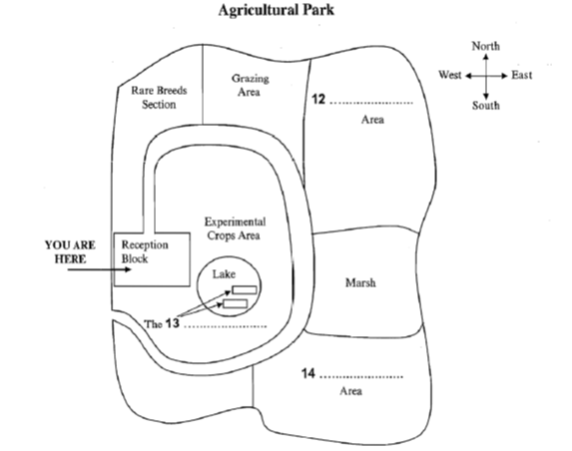
    • has already been used to make stage 12. _________________________ is not suitable for everyday wear because it is too 13 ______________________.

    The first products that can change colour are likely to be 14. _____________________

    UNMASKING SKIN

    A If you took off your skin and laid it flat, it would cover an area of about twenty-one square feet, making it by far the body’s largest organ. Draped in place over our bodies, skin forms the barrier between what’s inside us and what’s outside. It protects us from a multitude of external forces. It serves as an avenue to our most intimate physical and psychological selves.

    B This impervious yet permeable barrier, less than a millimetre thick in places, is composed of three layers. The outermost layer is the bloodless epidermis. The dermis includes collagen, elastin, and nerve endings. The innermost layer, subcutaneous fat, contains tissue that acts as an energy source, cushion and insulator for the body.

    C From these familiar characteristics of skin emerge the profound mysteries of touch, arguably our most essential source of sensory stimulation. We can live without seeing or hearing – in fact, without any of our other senses. But babies born without effective nerve connections between skin and brain can fail to thrive and may even die.

    D Laboratory experiments decades ago, now considered unethical and inhumane, kept baby monkeys from being touched by their mothers. It made no difference that the babies could see, hear and smell their mothers; without touching, the babies became apathetic, and failed to progress.

    E For humans, insufficient touching in early years can have lifelong results. “In touching cultures, adult aggression is low, whereas, in cultures where touch is limited, adult aggression is high,” writes Tiffany Field, director of the Touch Research Institutes at the University of Miami School of Medicine. Studies of a variety of cultures show a correspondence between high rates of physical affection in childhood and low rates of adult physical violence.

    F While the effects of touching are easy to understand, the mechanics of it are less so. “Your skin has millions of nerve cells of various shapes at different depths,” explains Stanley Bolanowski, a neuroscientist and associate director of the Institute for Sensory Research at Syracuse University. “When the nerve cells are stimulated, physical energy is transformed into energy used by the nervous system and passed from the skin to the spinal cord and brain. It’s called transduction, and no one knows exactly how it takes place.” Suffice it to say that the process involves the intricate, split-second operation of a complex system of signals between neurons in the skin and brain.

    G This is starting to sound very confusing until Bolanowski says: “In simple terms, people perceive three basic things via skin: pressure, temperature, and pain.” And then I’m sure he’s wrong. “When I get wet, my skin feels wet,” I protest. “Close your eyes and lean back,” says Bolanowski.

    H Something cold and wet is on my forehead – so wet, in fact, that I wait for water to start dripping down my cheeks. “Open your eyes.” Bolanowski says, showing me that the sensation comes from a chilled, but dry, metal cylinder. The combination of pressure and cold, he explains, is what makes my skin perceive wetness. He gives me a surgical glove to put on and has me put a finger in a glass of cold water. My finger feels wet, even though I have visual proof that it’s not touching water. My skin, which seemed so reliable, has been deceiving me my entire life. When I shower or wash my hands, I now realize, my skin feels pressure and temperature. It’s my brain that says I feel wet.

    I Perceptions of pressure, temperature and pain manifest themselves in many different ways. Gentle stimulation of pressure receptors can result in ticklishness; gentle stimulation of pain receptors, in itching. Both sensations arise from a neurological transmission, not from something that physically exists. Skin, I’m realizing, is under constant assault, both from within the body and from forces outside. Repairs occur with varying success.

    J Take the spot where I nicked myself with a knife while slicing fruit. I have a crusty scab surrounded by pink tissue about a quarter inch long on my right palm. Under the scab, epidermal cells are migrating into the wound to close it up. When the process is complete, the scab will fall off to reveal new epidermis. It’s only been a few days, but my little self-repair is almost complete. Likewise, we recover quickly from slight burns. If you ever happen to touch a hot burner, just put your finger in cold water. The chances are you will have no blister, little pain and no scar. Severe burns, though, are a different matter.

    Questions 15 – 18
    The passage has 10 paragraphs A–J. Which paragraph contains the following information?
    Answer the questions below by writing the correct letters, A-J, in boxes 1-4 on your answer sheet.

    15. the features of human skin, on and below the surface
    16. an experiment in which the writer can see what is happening
    17. advice on how you can avoid damage to the skin
    18. cruel research methods used in the past

    Questions 19 and 20
    Choose the correct letter, A, B, C or D from the following questions and write your answers in boxes 5 and 6 on your answer sheet.

    19. How does a lack of affectionate touching affect children?
    A It makes them apathetic.
    B They are more likely to become violent adults.
    C They will be less aggressive when they grow up.
    D We do not really know.

    20. After the ‘wetness’ experiments, the writer says that
    A his skin is not normal.
    B his skin was wet when it felt wet.
    C he knew why it felt wet when it was dry.
    D the experiments taught him nothing new.

    Questions 21 – 25
    Complete each sentence with the correct ending A–I from the box below. Write the correct letter A–I in boxes 7–11 on your answer sheet.

    21. Touch is unique among the five senses
    22. A substance may feel wet
    23. Something may tickle
    24. The skin may itch
    25. A small cut heals up quickly

    A because it is both cold and painful.
    B because the outer layer of the skin can mend itself.
    C because it can be extremely thin.
    D because there is light pressure on the skin.
    E because we do not need the others to survive.
    F because there is a good blood supply to the skin.
    G because of a small amount of pain.
    H because there is a low temperature and pressure.
    I because it is hurting a lot.
    J because all humans are capable of experiencing it.

    Questions 26 – 28
    Do the following statements agree with the information given in Reading Passage 107?

    In boxes 12-14 on your answer sheet, write:

    TRUE                        if the statement agrees with the information
    FALSE                      if the statement contradicts the information
    NOT GIVEN           if there is no information on this

    26. Even scientists have difficulty understanding how our sense of touch works.
    27. The skin is more sensitive to pressure than to temperature or pain.
    28. The human skin is always good at repairing itself.

    Colorblindness

    A Myths related to the causes and symptoms of “colorblindness” abound throughout the world. The term itself is misleading, since it is extremely rare for anyone to have a complete lack of color perception. By look ing into the myths related to color blindness, one can learn many facts about the structure and genetics o the human eye. It is a myth that colorblind people see the world as if it were a black and white movie. There are very few cases of complete colorblindness. Those who have a complete lack of color perception are referred to as monochromatics, and usually have a serious problem with their overall vision as well as an inability to see colors. The fact is that in most cases of colorblindness, there are only certain shades that a person cannot distinguish between. These people are said to be dichromatic. They may not be able to tell the difference between red and green, or orange and yellow. A person with normal color vision has what is called trichromatic vision. The difference between the three levels of color perception have to do with the cones in the human eye. A normal human eye has three cones located inside the retina: the red cone, the green cone, and the yellow cone. Each cone contains a specific pigment whose function is to absorb the light of these colors and the combinations of them. People with trichromatic vision have all three cones in working order. When one of the three cones does not function properly, dichromatic vision occurs.

    B Some people believe that only men can be colorblind. This is also a myth, though it is not completely untrue. In an average population, 8% of males exhibit some form of colorblindness, while only 0.5% of women do. While there may be some truth to the idea that more men have trouble matching their clothing than women, the reason that color vision deficiency is predominant in males has nothing to do with fashion. The fact is that the gene for color blindness is located on the X chromosome, which men only have one of. Females have two X chromosomes, and if one carries the defective gene, the other one naturally compensates. Therefore, the only way for a female to inherit colorblindness is for both of her X chromosomes to carry the defective gene. This is why the incidence of color deficiency is sometimes more prevalent in extremely small societies that have a limited gene pool.

    C It is true that all babies are born colorblind. A baby’s cones do not begin to differentiate between many different colors until he is approximately four months old. This is why many of the modern toys for very young babies consist of black and white patterns or primary colors, rather than traditional soft pastels. However, some current research points to the importance of developing an infant’s color visual system. In 2004, Japanese researcher Yoichi Sugita of the Neuroscience Research Institute performed an experiment that would suggest that color vision deficiency isn’t entirely genetic. In his experiment, he subjected a group of baby monkeys to monochromatic lighting for one year. He later compared their vision to normal monkey who had experienced the colorful world outdoors. It was found that the test monkeys were unable to perform the color-matching tasks that the normal monkeys could. Nevertheless, most cases of colorblindness are attributed to genetic factors that are present at birth.

    D Part of the reason there are so many inconsistencies related to colorblindness, or “color vision deficiency” as it is called in the medical world, is that it is difficult to know exactly which colors each human can see. Children are taught from a very young age that an apple is red. Naming colors allows children to associate a certain shade with a certain name, regardless of a color vision deficiency. Someone who never takes a color test can go through life thinking that what they see as red is called green. Children are generally tested for colorblindness at about four years of age. The Ishihara Test is the most common, though it is highly criticized’ because it requires that children have the ability to recognize numerals. In the Ishihara Test, a number made up of colored dots is hidden inside a series of dots of a different shade. Those with normal vision can distinguish the number from the background, while those with color vision deficiency will only see the dots.

    E While many of the myths related to colorblindness have been busted by modern science, there are still a few remaining beliefs that require more research in order to be labeled as folklore. For example, there is a long-standing belief that colorblindness can aid military soldiers because it gives them the ability to see through camouflage. Another belief is that everyone becomes colorblind in an emergency situation. The basis of this idea is that a catastrophic event can overwhelm the brain, causing it to utilize only those receptors needed to perform vital tasks. In general, identifying color is not considered an essential task in a life or death situation.

    Questions 29 – 33
    The following reading passage has five sections A-E.
    Choose the correct heading for each section from the list of headings.
    Write the correct number i-viii in boxes 1-5 on your answer sheet.

    NB. There are more headings than sections, so you will not use them all.

    29 Section A
    30 Section B
    31 Section C
    32 Section D
    33 Section E

    List of Headings

    i Colorblindness in different countries
    ii Diagnosing colorblindness
    iii What is colorblindness?
    iv Curing colorblindness
    v Unsolved myths
    vi Animals and colorblindness
    vii Developing the ability to see color
    viii Colorblindness and the sexes

    Questions 34 – 36
    Choose the correct letter, A, B, C, or D. Write your answers in boxes 6-8 on your Answer Sheet.

    34 People who see color normally are called
    A monochromatic.
    B dichromatic.
    C tichromatic.
    D colorblind.

    35 Children usually begin to see a variety of colors by the age of
    A one month.
    B four months.
    C one year.
    D four years.

    36 Children who take the Ishihara Test must be able to
    A distinguish letters.
    B write their names.
    C read numbers.
    D name colors.

    Questions 37 – 40
    Complete the summary using words from the box below. Write your answers in boxes 9-12 on your Answer Sheet.
    There are more answers than spaces, so you will not use them all.

    It is a common 37……………….. that only men suffer from colorblindness. On average 38……………….. than ten percent of men have this problem. Women have two 39……………….. For this reason, it is 40……………….. for a woman to suffer from colorblindness.

    myth                                        a little less
    X chromosomes                   defective genes
    fact                                          slightly more
    exactly                                    less likely
    more                                       probable

  • IELTS Reading Practice Test – Exercise 124

    Gondwanaland

    A. Meet Mesosaurus, a small reptile which lived in fresh-water lakes and streams millions of years ago during the Lower Permain age. Mesosaurus has had a big impact on how we view our planet, because he helped to prove the existence of the super-continent called Gondwanaland.

    B. Every schoolchild has probably looked at a map of the earth and noticed how Africa and South America fit together like pieces of a giant jigsaw, yet until just over a hundred and fifty years ago, no-one believed that this was more than an odd coincidence. It seemed impossible that the massive continents of the earth could ever be moved, let alone so far apart that they ended up half a planet from each other.

    C. Nevertheless, in 1912 Alfred Wegener, a German meteorologist came up with the theory that the continents of the earth had all existed in a single mass, which he called Pangaea (which is Greek for ‘all the world”) Later researchers decided that Pangaea had been two continents, one to the north of the other, which had existed about 250 million years ago. From the geological evidence found in the Gondwana area of India, an Austrian geologist, Eduard Suess coined the name ‘Gondwanaland’ for the southern supercontinent, of which India was once a part. (The northern continent was called Lurasia.)

    D. For many years super-continents were regarded as an interesting theory, but no-one knew how it might work in reality. Then the discovery of the mechanisms of plate tectonics showed how continents might drift across the face of the globe. Once it was accepted that the continents were floating on currents of lava, more evidence became apparent. A particular type of an early plant, the seed fern, was found on continents now scattered about the southern hemisphere of the world, as were tillates, a deposit left by glaciers in the Permo-Carboniferous era of 520 million years ago. And Mesosaurus, the little fresh-water reptile, left his remains in West Africa and Brazil. Since Mesosaurus had no way of crossing the Atlantic, researchers realized that it could not be coincidence that this reptile had left remains in exactly the place where Africa and South America fit together so neatly.

    E. By investigating similarities in animal fossils, different types of plants found in the southern hemisphere but not in the northern hemisphere, and patterns of rock formations, researchers have managed to put the continents of modern-day earth together like a huge jigsaw to make up the vanished super-continent. Sometimes rock formations can be seen to break off at the ocean’s edge, to carry on once more thousands of miles away on another continent. The evidence shows that not only were Africa and South America once joined to Antartica, but so were India and Australia, parts of south Western Europe, and Florida.

    F. Although Gondwanaland was located in the far southern hemisphere of the planet, where Antarctica remains today, the climate was much warmer, and we know that huge forests grew there. These forests, fossilized into coal, supply many Indians with energy today. The land animals were adapted to life on their cool continent, with its long dark winter days. Some of the best-known dinosaurs, such as Stegosaurus, Triceratops, and Tyrannosaurus lived on the northern continents, but Gondwanaland also had some fearsome predators such as Abelisaurus, a large meat-eater that lived during the cretaceous period. The seas were populated with fish called placoderms, a name which they get from their skin, which was so thick that they were practically armoured.

    G. The break-up of Gondwanaland had huge consequences for planet earth as we know it now. In geological terms, India has been a sprinter. Breaking from Gondwanaland the sub-continent drifted rapidly northward from the south pole, finally smashing into Asia about 45 million years ago in a collision that raised the Himalayas.

    H. When South America split off about 30 million years ago the effect was even more dramatic. Cold Antarctic water no longer mixed with warmer seas when pushed northward by the South American landmass. Instead, it circled the pole getting colder and colder, until Antartica lost its vegetation and animal life, and became the barren icy wilderness it is today.

    Questions 1-8
    The reading passage 124 has eight paragraphs.
    There are 8 paragraph Headings bellow and on your answer sheet write the appropriate paragraph numbers (A-H) from questions 1-8.

    1 Finding the evidence
    2 The living continent
    3 Small but significant
    4 Making modern Antartica
    5 Putting it all together
    6 Joining another continent
    7 An impossible idea
    8 What’s in a name?

    Questions 9-13
    Choose from the phrases below to complete sentences which best summarize the points made by the writer.
    Write the name of the phrases (A -J) that completes the point mentioned from 9-13.

    NB. There are more phrases than you need.

    9 For many years the existence of Gondwanaland
    10 The discovery of plate tectonics
    11 Evidence for Gondwanaland
    12 In the past Gondwanaland
    13 The break-up of Gondwanaland

    A. was dominated by the theories of European scientists
    B. had a large population of plants and animals
    C. demonstrated that continents can indeed drift apart
    D. partly explains why earthquakes and volcanoes happen
    E. was because Mesosaurus existed on two modern continents
    F. has been found in geological formations and fossils
    G. smashed into the Asian landmass 45 million years ago
    H. was nothing but speculation
    I. had huge effects on the climate of the Earth
    J. was believed to be a legendary lost continent

    Endangered chocolate

    A The cacao tree, once native to the equatorial American forest, has some exotic traits for a plant. Slender and shrubby, the cacao has adapted to life close to the leaf littered forest floor. Its large leaves droop down. away from the sun. Cacao doesn’t flower, as most plants do at the tips of its outer and uppermost branches. Instead. its sweet white buds hang from the trunk and along a few Fat branches which form where leaves drop off. These tiny Flowers transform into pulp-filled pods almost the size of rugby balls. The low-hanging pods contain the bitter-tasting magical seeds.

    B Somehow, more than 2,000 years ago. ancient humans in Mesoamerica discovered the secret of these beans. If you scoop them from the pod with their pulp. let them ferment and dry in the sun, then roast them over a gentle fire, something extraordinary happens: they become chocolaty. And if you then grind and press the beans, which are half-cocoa butter or more, you will obtain a rich crumbly. chestnut brown paste – chocolate at its most pure and simple.

    C The Maya and Aztecs revered this chocolate, which they Frothed up with water and spices to make bracing concoctions. It was edible treasure, offered up to their gods, used as money and hoarded like gold. Long after Spanish explorers introduced the beverage to Europe in the sixteenth century. chocolate retained an aura of aristocratic luxury. In 1753. the Swedish botanist Carolus Unnaeus gave the cacao tree genus the name Theobroma. which means ‘food of the gods’,

    D In the last 200 years the bean has been thoroughly democratized – transformed from an elite drink into ubiquitous candy bars, cocoa powders and confections. Today chocolate is becoming more popular worldwide, with new markets opening up in Eastern Europe and Asia. This is both good news and bad because. Although farmers are producing record numbers of cacao bean, this is not enough, some researchers worry, to keep pace with global demand. Cacao is also facing some alarming problems.

    E Philippe Petithuguenin, head of the cacao program at the Centre For International Cooperation in Development-Oriented Agricultural Research (CiRAD) in France, recently addressed a seminar in the Dominican Republic. He displayed a map of the world revealing a narrow band within 180 north and south of the equator. where cacao grows. In the four centuries since the Spanish first happened upon cacao, it has been planted all around this hot humid tropical belt – from South America and the Caribbean to West Africa, east Asia, and New Guinea and Vanuatu in the Pacific.

    F Today 70% of all chocolate beans come from West Africa and Central Africa. In many parts, growers practice so-called pioneer Farming. They strip patches of forest of all but the tallest canopy trees and then they put in cacao, using temporary plantings of banana to shade the cacao while it’s young. With luck, groves like this may produce annual yields of 50 to 60 pods per tree for 25 to 30 years. But eventually pests, pathogens and soil exhaustion take their toll and yields diminish. Then the growers move on and clear a new forest patch – unless farmers of other crops get there first. ‘You cannot keep cutting tropical forest, because the forest itself is endangered: said Petithuguenin. ‘World demand for chocolate increases by 3% a year on average. With a lack of land for new plantings in tropical forests, how do you meet that?’

    G Many farmers have a more imminent worry: outrunning disease. Cacao, especially when grown in plantations, is at the mercy of many afflictions, mostly rotting diseases caused by various species of fungi which cover the pods in fungus or kill the trees. These fungi and other diseases spoil more than a quarter of the world’s yearly harvest and can devastate entire cacao-growing regions.

    H One such disease, witches broom, devastated the cacao plantations in the Bahia region of Brazil. Brazil was the third largest producer of cacao beans but in the 1980s the yields fell by 75%. According to Petithuguenin, ‘if a truly devastating disease like witches broom reached West Africa (the world’s largest producer), it could be catastrophic.’ If another producer had the misfortune to falter now, the ripples would be felt the world over. In the United States, for example, imported cacao is the linchpin of an $8.6 billion domestic chocolate industry that in turn supports the nation’s dairy and nut industries; 20% of all dairy products in the US go into confectionery.

    Today research is being carried out to try to address this problem by establishing disease resistant plants. However. even the best plants are useless if there isn’t anywhere to grow them. Typically, farmers who grow cacao get a pittance for their beans compared with the profits reaped by the rest of the chocolate business. Most are at the mercy of local middlemen who buy the beans then sell them for a much higher price to the chocolate manufacturers. If the situation is to improve for farmers, these people need to be removed from the process. But the economics of cacao is rapidly changing because of the diminishing supply of beans. Some companies have realized that they need to work more closely with the farmers to ensure that sustainable farming practices are used. They need to replant areas and create a buffer for the forest, to have ground cover, shrubs and small trees as well as the canopy trees. Then the ‘soil will be more robust and more productive. They also need to empower the farmers by guaranteeing them a higher price for their beans so that they will be encouraged to grow cacao and can maintain their way of life.

    Questions 14 – 16
    Choose the correct letter, A, B, C or D.
    Write your answers on your answer sheet from 1-3

    14. The flowers of the cacao plant appear
    A. at the end of its top branches.
    B. along all of its branches.
    C. mainly on its trunk.
    D. close to its leaves.

    15. In Africa, banana trees are planted with the cacao plants in order to
    A. replace the largest trees.
    B. protect the new plants.
    C. provide an extra crop.
    D. help improve soil quality.

    16. In paragraph H, what is the writer referring to when he says ‘the ripples would be felt the world over’?
    A. the impact a collapse in chocolate production could have on other industries
    B. the possibility of disease spreading to other crops
    C. the effects of the economy on world chocolate growers
    D. the link between Brazilian growers and African growers

    Questions 17 – 22
    The Reading Passage has nine paragraphs labelled A-I.
    Which paragraph contains the following. Information?

    Write the correct letter A-I in your answer sheet from 4-9.

    17. a list of the cacao growing areas
    18. an example of how disease has affected one cacao growing region
    19. details of an ancient chocolate drink
    20. a brief summary of how the chocolate industry has changed in modern times
    21. the typical lifespan and crop size of a cacao plantation
    22. a reference to the scientific identification of the cacao plant

    Questions 23 – 26
    Complete the notes below. Write NO MORE THAN TWO WORDS from the passage for each answer.

    Write your answers on your answer sheet from 23-26

    Ways of dealing with the plant’s problems

    · Need to find plants which are not affected by 23__________.
    · Chocolate producers need to work directly with farmers instead of 24__________.
    · Need to encourage farmers to use 25__________. methods to grow cacao plants
    · Make sure farmers receive some of the 26__________. made by the chocolate industry

    The history of the biro

    A One chilly autumn morning in 1945, five thousand shoppers crowded the pavements outside Gimbels Department Store in New York City. The day before, Gimbels had taken out a full-page newspaper advertisement in the New York Times, announcing the sale of the first ballpoint pens in the United States. The new writing instrument was heralded as “fantastic … miraculous … guaranteed to write for two years without refilling!” Within six hours, Gimbels had sold its entire stock of ten thousand ballpoints at $12.50 each – approximately $130 at today’s prices.

    B In fact, this ‘new’ pen was not new after all, and was just the latest development in a long search for the best way to deliver ink to paper. In 1884 Lewis Waterman had patented the fountain pen, giving him the sole rights to manufacture it. This marked a significant leap forward in writing technology, but fountain pens soon became notorious for leaking. In 1888, a leather tanner named John Loud devised and patented the first “rolling-pointed marker pen” for marking leather. Loud’s design contained a reservoir of ink in a cartridge and a rotating ball point that was constantly bathed on one side with ink. Loud’s pen was never manufactured, however, and over the next five decades, 350 additional patents were issued for similar ball-type pens, though none advanced beyond the design stage. Each had their own faults, but the major difficulty was the ink: if the ink was thin, the pens leaked, and if it was too thick, they clogged. Depending on the climate or air temperature, sometimes the pens would do both.

    C Almost fifty years later, Ladislas and Georg Biro, two Hungarian brothers, came up with a solution to this problem. In 1935 Ladislas Biro was working as a journalist, editing a small newspaper. He found himself becoming more and more frustrated by the amount of time he wasted filling fountain pens with ink and cleaning up ink smudges. What’s more, the sharp tip of his fountain pen often scratched or tore through the thin newsprint paper. Ladislas and Georg (a chemist) set about making models of new pen designs and creating better inks to use in them. Ladislas had observed that the type of ink used in newspaper printing dried rapidly, leaving the paper dry and smudge-free. He was determined to construct a pen using the same type of ink. However, the thicker ink would not flow from a regular pen nib so he had to develop a new type of point. Biro came up with the idea of fitting his pen with a tiny ball bearing in its tip. As the pen moved along the paper, the ball bearing rotated and picked up ink from the ink cartridge which it delivered to the paper.

    D The first Biro pen, like the designs that had gone before it. relied on gravity for the ink to flow to the ball bearing at the tip. This meant that the pens only worked when they were held straight up, and even then the ink flow was sometimes too heavy, leaving big smudges of ink on the paper. The Biro brothers had a rethink and eventually devised a new design, which relied on capillary action rather than gravity to feed the ink. This meant that the ink could flow more smoothly to the tip and the pen could be held at an angle rather than straight up. In 1938, as World War II broke out, the Biro brothers fled to Argentina, where they applied for a patent for their pen and established their first factory.

    E The Biros’ pen soon came to the attention of American fighter pilots, who needed a new kind of pen to use at high altitudes. Apparently, it was ideal for pilots as it did not leak like the fountain pen and did not have to be refilled frequently. The United States Department of War contacted several American companies, asking them to manufacture a similar writing instrument in the U.S. Thus fortune smiled on the Biro brothers in May 1945, when the American company ‘Eversharp’ paid them $500,000 for the exclusive manufacturing and marketing rights of the Biro ballpoint for the North American market. Eversharp were slow to put their pen into production, however, and this delay ultimately cost them their competitive advantage.

    F Meanwhile, in June 1945 an American named Milton Reynolds stumbled upon the Biro pen while on vacation in Buenos Aires. Immediately seeing its commercial potential, he bought several pens and returned to Chicago, where he discovered that loud’s original 1888 patent had long since expired. This meant that the ballpoint was now in the public domain, and he, therefore, wasted no time making a copy based on the Biro design. Establishing his pen company with just $26,000, Reynolds quickly set up a factory with 300 workers who began production on 6th October 1945, stamping out pens from precious scraps of aluminum that hadn’t been used during the war for military equipment or weapons. Just 23 days later, it was Reynolds’ ballpoint pen that caused the stampede at Gimbels Department Store. Following the ballpoint’s debut in New York City, Eversharp challenged Reynolds in the law courts, but lost the case because the Biro brothers had failed to secure a U.S. patent on their invention.

    Questions 27 – 32
    The reading passage has six paragraphs A-F.

    Choose the most suitable heading for each paragraph from the list of headings below.
    Write the correct number i-ix in your answer sheet.

    List of Headings

    i Fountain pens are history
    ii Fame at last for the Biro brothers •
    iii A holiday helps bring the biro to America
    iv A second design and a new country
    v War halts progress
    vi Dissatisfaction leads to a new invention
    vii Big claims bring big crowds
    viii A government request brings a change of ownership
    ix Many patents and many problems

    27. Paragraph A
    28. Paragraph B
    29. Paragraph C
    30. Paragraph D
    31. Paragraph E
    32. Paragraph F

    Questions 33 – 35
    Choose the correct answer, A, B, C or D and write in your answer sheet from 33-35

    33. The problem with the ballpoint pens invented between 1888 and 1935 was that
    A. they cost a great deal of money to manufacture.
    B. the technology to manufacture them did not exist.
    C. they could not write on ordinary paper:
    D. they were affected by weather conditions.

    34. The design of the Biro brothers’ first pen
    A. was similar to previous pens.
    B. was based on capillary action,
    C. worked with heavy or light inks.
    D. worked when slanted slightly.

    35. Milton Reynolds was able to copy the Biro brothers’ design because
    A. the Biro brothers’ original patent was out of date.
    B. it was legal to copy other designs at the time.
    C. they did not have a patent for North America.
    D. the Biro brothers gave him permission.

    Questions 36 – 38
    Answer the questions below using NO MORE THAN TWO WORDS AND/OR A NUMBER for each answer.

    Write your answers from 10-12 in your answer sheet

    36. What material was the first ballpoint pen designed to write on?_____________
    37. Where did the Biro brothers open their first factory?_____________
    38. In what year did the first American biro factory begin production?____________

  • IELTS Reading Practice Test – Exercise 123

    Practical intelligence lends a hand

    This year, record numbers of high school students obtained top grades in their final exams, yet employers complain that young people still lack the basic skills to succeed at work. The only explanation offered is that exams must be getting easier. But the real answer could lie in a study just published by Professor Robert Sternberg, an eminent psychologist at Yale University in the USA and the world’s leading expert on intelligence. His research reveals the existence of a totally new variety: practical intelligence.

    Professor Sternberg’s astonishing finding is that practical intelligence, which predicts success in real life, has an inverse relationship with academic intelligence. In other words, the more practically intelligent you are, the less likely you are to succeed at school or university. Similarly, the more paper qualifications you hold and the higher your grades, the less able you are to cope with problems of everyday life and the lower your score in practical intelligence.

    Many people who are clearly successful in their place of work do badly in standard 10 (academic intelligence) tests. Entrepreneurs and those who have built large businesses from scratch are frequently discovered to be high school or college drop-outs. 10 as a concept is more than 100 years old. It was supposed to explain why some people excelled at a wide variety of intellectual tasks. But IQ ran into trouble when it became apparent that some high scorers failed to achieve in real life what was predicted by their tests.

    Emotional intelligence (EQ), which emerged a decade ago, was supposed to explain this deficit. It suggested that to succeed in real life, people needed both emotional as well as intellectual skills. EO includes the abilities to motivate yourself and persist in the face of frustrations; to control impulses and delay gratification; to regulate moods and keep distress from swamping the ability to think, and to understand and empathize with others. While social or emotional intelligence was a useful concept in explaining many of the real-world deficiencies of super intelligent people, it did not go any further than the 10 test in measuring success in real life. Again, some of the most successful people in the business world were obviously lacking in social charm.

    Not all the real-life difficulties we face are solvable with just good social skills – and good social acumen in one situation may not translate to another. The crucial problem with academic and emotional intelligence scores is that they are both poor predictors of success in real life. For example, research has shown that IQ tests predict only between 4% and 25% of success in life, such as job performance.

    Professor Sternberg’s group at Yale began from a very different position to traditional researchers into intelligence. Instead of asking what intelligence was and investigating whether it predicted success in life, Professor Sternberg asked what distinguished people who were thriving from those that were not. Instead of measuring this form of intelligence with mathematical or verbal tests, practical intelligence is scored by answers to real-life dilemmas such as: ‘If you were travelling by car and got stranded on a motorway during a blizzard, what would you do?’ An important contrast between these questions is that in academic tests there is usually only one answer, whereas in practical intelligence tests – as in real life – there are several different solutions to the problem.

    The Yale group found that most of the really useful knowledge which successful people have acquired is gained during everyday activities – but typically without conscious awareness. Although successful people’s behaviour reflects the fact that they have this knowledge. high achievers are often unable to articulate or define what they know. This partly explains why practical intelligence has been so difficult to identify.

    Professor Sternberg found that the best way to reach practical intelligence is to ask successful people to relate examples of crucial incidents at work where they solved problems demonstrating skills they had learnt while doing their jobs. It would appear that one of the best ways of improving your practical intelligence is to observe master practitioners at work and, in particular, to focus on the skills they have acquired while doing the job. Oddly enough, this is the basis of traditional apprentice training. Historically, the junior doctor learnt by observing the consultant surgeon at work and the junior lawyer by assisting the senior barrister.

    Another area where practical intelligence appears to resolve a previously unexplained paradox is that performance in academic tests usually declines after formal education ends. Yet most older adults contend that their ability to solve practical problems increases over the years. The key implication for organizations and companies is that practical intelligence may not be detectable by conventional auditing and performance measuring procedures. Training new or less capable employees to become more practically intelligent will involve learning from the genuinely practically intelligent rather than from training manuals or courses.

    Perhaps the biggest challenge is in recruitment, as these new studies strongly suggest that paper qualifications are unlikely to be helpful in predicting who will be best at solving your company’s problems. Professor Sternberg’s research suggests that we should start looking at companies in a completely different way – and see them as places where a huge number of problems are being solved all the time but where it may take new eyes to see the practical intelligence in action.

    Questions 1-5

    Choose the correct answer, A, B, C or D.
    Write the answers in your answer sheet from 1-5.

    1. Professor Sternberg’s study showed that
    A. qualifications are a good indicator of success at work.
    B. education can help people cope with real-life problems.
    C. intelligent people do not always achieve well at school.
    D. high grades can indicate a lack of practical intelligence.

    2. What is the ‘deficit’ referred to in the fourth paragraph?
    A. People with high IQ scores could not score well in EO tests.
    B. EO tests were unable to predict success at work.
    C. High 10 scores did not always lead to personal success.
    D. People with high EO scores could not cope with real life.

    3. Professor Sternberg’s research differed from previous studies because
    A. he used verbal testing instead of mathematics.
    B. he began by establishing a definition of intelligence.
    C. he analyzed whether intelligence could predict success in real life.
    D. he wanted to find out what was different about successful people.

    4. Part of the reason why practical intelligence had not been identified before Professor Sternberg’s study is that
    A. the behaviour of successful people had never been studied.
    B. successful people are too busy with their everyday lives.
    C. successful people cannot put their knowledge into words.
    D. successful people are unaware of their own abilities.

    5. In order to increase the practical intelligence of employees, companies need to
    A. adopt an apprentice-style system.
    B. organise special courses.
    C. devise better training manuals.
    D. carry out an audit on all employees.

    Questions 6-12

    Classify the following characteristics as belonging to

    A academic intelligence (AO) tests
    B emotional intelligence (EO) tests
    C practical intelligence tests

    Write the correct letter A, B or C, next to Questions 6-12 below.

    6. measures skills which are likely to improve with age
    7. assesses people’s social skills
    8. measures the ability to deal with real-life difficulties
    9. the oldest of the three tests
    10. high scorers learn from their actions
    11. high scorers are more likely to stay calm in difficult situations
    12. questions have more than one possible answer.

    Is There Really a War on Drugs?

    A In our contemporary society, the media constantly bombards us with horror stories about drugs like crack-cocaine. From them, and probably from no other source, we learn that crack is immediately addictive in every case, we learn that it causes corruption, crazed violence, and almost always leads to death. The government tells us that we are busy fighting a war on drugs and so it gives us various iconic models to despise and detest: we learn to stereotype inner-city minorities as being of drug-infested wastelands and we learn to “witchhunt” drug users within our own communities under the belief that they represent moral sin and pure evil. I believe that these titles and ideals are preposterous and based entirely upon unnecessary and even detrimental ideals promoted by the government to achieve purposes other than those they claim.

    B In Craig Renarman’s and Harry Levine’s article entitled “The Crack Attack: Politics and Media in America’s Latest Drug Scare,” the authors attempt to expose and to deal with some of the societal problems that have resulted from the over-exaggeration of crack-cocaine as an “epidemic problem” in our country. Without detracting attention away from the serious health risks for those few individuals who do use the drug, Renarman and Levine demonstrate how minimally detrimental the current “epidemic” actually is.

    C Early in the article, the authors summarize crack-cocaine’s evolutionary history in the U.S. They specifically discuss how the crack-related deaths of two star-athletes which first called wide-spread attention to the problem during the mid-1980’s. Since then, the government has reportedly used crack-cocaine as a political scapegoat for many of the nation’s larger inner-city problems. Thefts, violence, and even socioeconomic depression have been blamed on crack. They assert that the government has invested considerably in studies whose results could be used to wage the constant “war on drugs” while to politicians, that war has amounted to nothing more than a perceptual war on poverty and urban crime.

    D Since politicians have had little else of marketable interest to debate over the years, this aggressive attack on drugs has existed as one of their only colorful means by which to create debate, controversy, and campaign fuel. In other words, when balancing the budget and maintaining an effective foreign policy became too boring to handle, Reinarman and Levine assert that the “crack epidemic” became the focus of politicians with the intent of luring public interest to their flashy anti-drug campaigns.

    E Finally, in addition to the media’s excess attention on the ‘war against drugs,’Reinarman and Levine make the point the constant coverage of crack in the news media has only been counterproductive to the alleged goals of any anti-drug program. With descriptions of the “crack high” that glorify it considerably- the politically-charged media campaigns to fight drugs have worked somewhat ironically as huge advertising campaigns for crack-increasing public awareness and stimulating the interests of venturous junkies.

    F While Reinarman and Levine are rather adamant about their findings, they do maintain an overt respect for the reality that crack has had other causal factors and outcomes besides those described by them. Their main concern seems to be calling for a more realistic spotlight to be placed upon the problem- so that we can begin to deal with it as no more and no less than what should be.

    G The “war on drugs” is indeed based upon an exaggeration of facts. Although it is also evident that substances such as crack-cocaine may serve to pose great health risks to those that use them, there is not any widespread “epidemic” use of the drug nor any validity to the apparent myths that it causes such immediate devastation and is life-wrecking in every single case.

    It is obvious that we do indeed need to maintain a greater and more focused emphasis on the important and more widespread problems in society. Important energies and well-needed monies are being diverted from them to fight in an almost-imaginary battle against a controlled substance. Conclusively, we should allow drugs like crack-cocaine receive their due attention as social problems, but let them receive no more than that!

    Questions 13 – 16
    Choose the appropriate letter A–D and write your answers in boxes 1–4 on your answer sheet.

    13. From the media we learn that crack-cocaine …
    A. gives us various iconic models to despise and detest.
    B. represents moral sin can evil.
    C. is addictive in every case, causes corruption and violence and almost always leads to death.
    D. bombards us with horror.

    14. According to Craig Renarman and Harry Levine, …
    A. crack-cocaine is an ‘epidemic problem‘ in our country.
    B. crack-cocaine does not pose serious health risks for users.
    C. the current ̳epidemic‘ is really very serious.
    D. the current ̳epidemic‘ is not so serious despite the serious health risks for the few individual users.

    15. Based on Paragraph C, we know that …
    A. crack-cocaine became widely known as a problem since the mid -1980s.
    B crack-cocaine has caused many problems –from thefts, violence to socio-economic depression.
    C. the government has invested little fighting the ̳war on drugs‘.
    D. drugs have led to political as well as social problems.

    16. Politicians use the drug issue …
    A. to attack the drug dealers at the market.
    B. to lure the public interest to their flashy anti-drug campaign.
    C. to balance the budget and maintain an effective foreign policy.
    D. to attack drug users only.

    Questions 17 and 18
    Complete the table below describing the causes and effects. Write your answers in boxes 5–6 on your answer sheet.

    CAUSES                                                                                                            EFFECTS

    Example                                                                                                            Answer

    crack-cocaine                                                                                                   corruption, violence and deaths

    media‘s excess attention on the war against drugs‘                                 17…………………..

    Politically-charged media campaigns to fight drugs                                18………………….

    Questions 19 – 25
    Do the following statements agree with the views of the writer in Reading Passage 123?
    In boxes 19-25 on your answer sheet write

    YES                                      if the statement agrees with the writer
    NO                                        if the statement does not agree with the writer.
    NOT GIVEN                     if there is no information about this in the passage

    19. In our contemporary society, people all over the world should launch a war on drugs.
    20. Drug users within our won communities represent moral sin and pure evil.
    21. The ̳war on drugs‘ waged by the government is really a perceptual war on poverty and urban crimes.
    22. Drug use may lead to poverty and divorce.
    23. We should spend more money and maintain a more focused emphasis on the importance and more wide-spread problems in society rather than on an almost imaginary battle against drugs.
    24. We should not pay too much attention to drug users, instead, we should fight against the drug dealers.
    25. Drugs like crack-cocaine have received much more attention than is necessary.

    The Family of Germanicus

    Germanicus is not a name that many people are familiar with today, but the man and his family are central figures in the story of one of the most colourful imperial dynasties the world has ever known – the Julio-Claudians.

    The Julio-Claudians get their name from two families of the old Roman republic. Both families were old. The Julians had an impeccable aristocratic pedigree, while the Claudians were one of the most politically powerful families in the state. The two were thrown together into an alliance during the troubles which gripped Rome during the fall of the Republic.

    Julius Caesar, the most famous member of the Julian family, led his legions in the conquest of Rome. Though Caesar was a great general, he lacked the political skills to control the Roman Senate and Caesar was killed by the senators during one of their meetings. Another round of civil wars followed, and Caesar’s great-nephew, Augustus, became the ruler of Rome.

    In contrast to Caesar, Augustus was a superb, uncompromising and ruthless politician. Early in his career, he realized that his family could not rule alone, and he allied himself with the Claudians by marrying a woman called Livia Drusilla. Livia was not only a Claudian herself, but the former wife of another Claudian. She had two children by her first marriage, Tiberius and Drusus.

    When he grew up, Drusus married Antonia, the daughter of Mark Antony. They had two children, one called Claudius and the other named Tiberius after his uncle and grandfather (Tiberius was a common Roman name, and often used for members of the Claudian family.)

    Tiberius joined the army while he was still a young man, and turned out to be an excellent soldier. At the time, the Romans were busy with a major war in Germany. This war had not been going well, and the Romans lost a number of legions during a major battle in the Teutonwald forest. Tiberius was one of the commanders who helped to restore the power of Rome, and to celebrate his victories, and to distinguish him from his uncle, the soldiers started calling him Germanicus.

    Germanicus, or Nero Claudius Drusus Germanicus to give him his proper name, was not only an excellent commander, but one who took great care that his soldiers were well supplied and looked after. He was loved by the troops he commanded and this love helped him to bring the legions back under control when they mutinied on hearing of the death of Augustus.

    Since Augustus had no sons he had adopted Tiberius, the uncle of Germanicus. As the son of Augustus, Tiberius became emperor after him. Augustus had known how popular Germanicus was, and considered adopting him instead of Tiberius, but instead adopted Tiberius and made Tiberius adopt Germanicus. His plan was that power should go from himself, to Tiberius and then to Germanicus and his sons. Germanicus had already become closer to the Julian family by his marriage to Agrippina, the granddaughter of Augustus.

    Sadly, the glittering career of Germanicus did not happen. From Germany, he went to Asia Minor where he again won victories for Rome, but on his return from a trip to Egypt he became ill and died. Some modern historians believe that Germanicus died of malaria, but Germanicus and his wife were both convinced that he had been poisoned by his enemies. Among those they suspected was Tiberius, the emperor, since it was felt he wanted power to pass to his own son rather than to Germanicus.

    With the clear line of succession destroyed, members of the imperial court started to plot and scheme to see who would be emperor after Tiberius, who was already an old man. The conspiracies drew in the surviving members of the family of Germanicus, and the two eldest boys were accused of treason and killed. One daughter, Julia Livilla, was married to the son of Tiberius and is believed to have poisoned him – partly to help the plots of her lover and partly to avenge the ‘poisoning’ of her father. Agrippina, the wife of Germanicus was exiled and starved herself to death.

    One boy survived, a young man called Gaius. Tiberius made him live in his house where he could watch him carefully, but also because Tiberius was true to his promise that when he died the children of Germanicus would come to power. Gaius did indeed become emperor, but the mental stress of the earlier years could not be undone, and he is known today as the mad emperor Caligula.

    Gaius Caligula was assassinated, but history had not done with the children of Germanicus. The next emperor was Claudius, the brother of Germanicus. He married, another daughter of Germanicus called Agrippina after her mother. Agrippina, a direct descendant of Augustus, was thus the wife and niece of Claudius, the sister of Caligula, and eventually, the mother of another emperor. This was Nero, the tyrant emperor whose death marked the end of the descendants of Germanicus and the Julio-Claudian dynasty of emperors.

    Questions 26 –  28
    Look at the diagram (Family Diagram of Augustus) and Fill in the missing names in this family tree.

    Questions 29 – 36
    In boxes 29-36 on your answer sheet, write

    YES                           if the statement agrees with the claims of the writer
    NO                             if the statement contradicts the claims of the writer
    NOT GIVEN          if it is impossible to say what the writer thinks about this

    29. Agrippina, wife of Germanicus killed herself
    30. Augustus was the great-great-grandfather of Nero
    31. Claudius was the father-in-law of Caligula
    32. Antonia was Livia’s daughter-in-law
    33. Agrippina was the daughter of Tiberius
    34. Two of Germanicus’ children died soon after birth
    35. Nero had no brothers or sisters
    36. Julia Livilla plotted to poison her lover

    Questions 37 – 41
    A-G shows the family relationship.
    Fill in the family relationship described in the reading passage and write the answers on your answer sheet from 37-41

    A. Grandmother
    B. Stepson
    C. Brother
    D. Mother-in-law
    E. Daughter
    F. Grandson
    G. Nephew

    37. Livia was Antonia’s ………………..
    38. Gaius Caligula was Claudius’ ………………..
    39. Germanicus was Livia’s ………………
    40. Antonia was Gaius Caligula’s …………………
    41. Drusus was Augustus’ …………………..

  • IELTS Reading Practice Test – Exercise 122

    Jumping spiders

    A For a stalking predator, the element of surprise is crucial. And for jumping spiders that sneak onto other spiders’ webs to prey on their owners, it can be the difference between having lunch and becoming it. Now zoologists have discovered the secret of these spiders’ tactics: creeping forward when their prey’s web is vibrating.

    B The fifteen known species of Portia jumping spiders are relatively small, with adults being about two centimeters long (that’s smaller than the cap on most pens). They habitually stay in the webs of other spiders, and in an area of these webs that is as out-of-the-way as possible. Portia spiders live mostly in tropical forests, where the climate is hot and humid. They hunt a range of other spiders, some of which could easily turn the tables on them. ‘They will attack something about twice their own size if they are really hungry,’ says Stimson Wilcox of Binghamton University in New York State. Wilcox and his colleague, Kristen Gentile of the University of Canterbury in Christchurch, New Zealand, wanted to find out how Portia spiders keep the upper hand.

    C All jumping spiders have large eyes that look like binocular lenses, and they function pretty much the same way. Most jumping spiders locate their prey visually, and then jump and capture from one centimeter to over ten centimeters away. Only a few species of jumping spiders invade the webs of other spiders, and the Portia spider is among them. Jumping spiders, including Portia spiders, prey on insects and other arthropods by stalking. Sometimes the spiders lure their victims by vibrating the web to mimic the struggles of a trapped insect. But many web-weaving spiders appear to be wise to these tricks, so stalking is often a better strategy. Sometimes, the researchers found, Portia spiders take advantage of the vibrations created in the web by a gentle breeze. But if necessary, they will make their own vibrations.

    D The researchers allowed various prey spiders to spin webs in the laboratory and then introduced Portia spiders. To simulate the shaking effect of a breeze the zoologists used either a model aircraft propeller or attached a tiny magnet to the centre of the web which could be vibrated by applying a varying electrical field. The researchers noticed that the stalking Portia spiders moved more when the webs were shaking than when they were stilt and they were more likely to capture their prey during tests in which the webs were penorncally shaken than in those where the webs were undisturbed. If the spiders were placed onto unoccupied webs, they would make no attempt to change their movements.

    E It is the Portia spider’s tactic of making its victims’ webs shake that has most intrigued the researchers, They noticed that the spiders would sometimes shake their quarry’s web violently, then creep forwards up to five millimeters before the vibrations died down. ‘They’d make a big pluck with one of their hind legs,’ says Wilcox. These twangs were much more powerful than the gentler vibrations Portia spiders use to mimic a trapped insect, and the researchers were initially surprised that the prey spiders did not respond to them in any way. But they have since discovered that the violent twanging produces a pattern of vibrations that match those caused by a twig falling onto the web.

    F Other predators make use of natural ‘smokescreens’ or disguise to hide from their prey: lions hunting at night, for example, move in on their prey when clouds obscure the moon. ‘But this is the first example of an animal making its own smokescreen that we know of,’ says Wilcox. ‘Portia spiders are clearly intelligent and they often learn from their prey as they are trying to capture it. They do this by making different signals on the web of their prey until the prey spider makes a movement. In general, Portia spiders adjust their stalking strategy according to their prey and what the prey is doing. Thus, Portia spiders use trial-and-error learning in stalking. Sometimes they will even take an indirect route to reach a prey spider they can see from a distance. This can sometimes take one to two hours following a predetermined route. When it does this, the Portia spider is actually solving problems and thinking ahead about its actions.’

    Questions 1-9
    The Reading Passage has six paragraphs labelled A-F.
    Which paragraph contains the following information?

    Write the correct letter A-F in your answer sheet.
    NB You may use any letter more than once.

    1. the reaction of the Portia spider’s prey to strong web vibrations
    2. a description of how the researchers set up their experiment
    3. a comparison between Portia spiders and another animal species
    4. an explanation of how the researchers mimicked natural conditions
    5. a comparison between Portia spiders and their prey
    6. the reason why concealment is important to Portia spiders
    7. a description of the Portia spider’s habitat
    8. the number of species of Portia spiders
    9. an example of the Portia spider’s cleverness

    Questions 10-13
    Choose the correct letter, A, B, C or D and write in your answer sheet.

    10) In their laboratory experiments, the researchers found that the Portia spiders moved most when the web was
    A vibrating.
    B motionless.
    C undisturbed.
    D unoccupied.

    11) What discovery did the researchers make about Portia spiders?
    A They make very strong vibrations with one leg.
    B They move 5 mm at a time on a still web.
    C They move slowly when vibrations stop.
    D They use energetic vibrations to mimic a trapped insect.

    12) Portia spiders are the only known animal to
    A use the weather to disguise themselves.
    B mimic other prey-eating animals.
    C create their own smokescreen.
    D stalk using ‘trial and error’.

    13) The Portia spider demonstrates ‘thinking ahead’ when it
    A chooses prey that is a short distance away.
    B takes a longer route to reach its prey.
    C reaches its prey in a short time.
    D solves the problem of locating its prey.

    100 Years of the Western Workplace

    A Conditions in the working environment of Western countries changed significantly over the 20th century. Though not without some associated problems, these changes may be viewed generally as positive: child labour all but ceased, wages rose, the number of working hours in a week decreased, pension policies became standard, fringe benefits multiplied and concerns over health and safety issues were enforced.

    B The collection of data relating to work conditions also became a far more exact science. In particular, there were important developments in methodology and data gathering. Additionally, there was a major expansion of the data collection effort – more people became involved in learning about the workplace; and, for the first time, results started to be published. This being the case, at the end of the century, not only were most workers better off than their early 20th century predecessors had been, but they were also in a position to understand how and why this was the case. By carefully analyzing the statistical data made available, specific changes in the workplace – not least regarding the concept of what “work” should involve – became clearly discernible.

    C The most obvious changes to the workplace involved the size and composition of the countries’ workforces. Registering only 24 million in 1900 (and including labourers of age ten and up) and 139 million (aged 16 and older), the size of America’s workforce, for instance, increased by almost six-fold – in line with its overall population growth. At the same time, the composition of the workforce shifted from industries dominated by primary production occupations, such as farmers and foresters, to those dominated by professional, technical and, in particular, service workers. At the beginning of the 20th century, 38% of all American workers were employed on farms, by the end of the same century, that figure had fallen to less than 3 %.

    D In Europe, much the same process occurred. In the 1930’s, in every European country, bar Britain and Belgium, more than 20 per cent of the population worked in agriculture. By the 1980’s, however, the farming populations of all developed countries, excluding Eastern Europe, had dropped to ten per cent and often even lower. At the same time, capital intensive farming using highly mechanized techniques dramatically reduced the numbers needed to farm there.

    E And therein lay the problem. While the workplace became a safer and more productive environment, a world away from the harsh working conditions of our forefathers, the switch from an agricultural to a modern working environment also created massive unemployment in many countries. Fundamental to this problem was the widespread move from the countryside to the city. Having lost their livelihoods, the world’s peasant populations amassed in ever larger numbers in already crowded communities, where rates of job growth failed to keep up with internal migration. As a result, thousands were left squatting in shanty towns on the periphery of cities, waiting for jobs that might never arrive. While this was (and is) particularly true of Third World countries, the same phenomenon could also be witnessed in several American, French, English and German cities in the late 20th century.

    F From a different and more positive perspective, in the 20th century, women became visible and active members of all sectors of the Western workplace. In 1900, only 19% of European women of working age participated in the labour force; by 1999, this figure had risen to 60%. In 1900, only 1% of the country’s lawyers and 6% of its physicians were female; by contrast, the figures were 29% and 24% in 1999. A recent survey of French teenagers, both male and female, revealed that over 50% of those polled thought that, in any job (bar those involving military service), women make better employees, as they are less likely to become riled under stress and less overtly competitive than men.

    G The last and perhaps most significant change to the 20th-century workplace involved the introduction of technology. The list of technological improvements in the workplace is endless: communication and measuring devices, computers of all shapes and sizes, x-ray, lasers, neon lights, stainless steel, and so on and on. Such improvements led to a more productive, safer work environment. Moreover, the fact that medicine improved so dramatically led to an increase in the average lifespan among Western populations. In turn, workers of very different ages were able to work shoulder to shoulder, and continue in their jobs far longer.

    H By the end of 20th century, the Western workplace had undergone remarkable changes. In general, both men and women worked fewer hours per day for more years under better conditions. Yet, the power of agriculture had waned as farmers and foresters moved to cities to earn greater salaries as annalists and accountants. For those who could not make this transition, however, life at the dawn of the new century seemed less appealing.

    Questions 14 – 18
    Choose NO MORE THAN THREE WORDS from the reading paragraph for each answer.
    Write the answer on your answer sheet from 1-5.

    Several changes took place in the working environment in the 20th century: 14……………………….. stopped almost completely in most countries, salaries increased while the number of working hours in a week decreased.

    Because of the improvement in both the methodology and the carrying out of data collection, 15……………………….. at the end of the century were in a better position to understand how and why their lives had been made easier.

    The most significant changes to the work environment in the West concerned its 16…………………………

    In 1999, 17……………………….. of European women of working age participated in the workforce.

    A particularly significant change to the 20th-century workplace came via 18……………………….. which brought about a long list of innovations and improvements.

    Questions 19 – 23
    Do the following statements agree with the information given in the passage?

    Write:
    TRUE                            if the statement agrees with the writer
    FALSE                          if the statement contradicts the writer
    NOT GIVEN               if there is no specific information about this in the passage

    19. No significant drawbacks accompanied changes in the work environment during the 20th century.
    20. America and Europe shared the same overall trends in terms of the development of the workplace over the last century.
    21. The appearance of shanty towns after farmers move into city areas occurred primarily in the Third World.
    22. In 1900, 19% of North American women of working age participated in the workforce.
    23. Improvements in medicine led to workers earning more over a longer period.

    Questions 24 – 28
    Below is a summary of the passage. Using information from the passage, complete the summary.
    Choose NO MORE THAN FOUR WORDS from the passage to complete each space

    The Western workplace changed dramatically in the course of the 20th century. Most of these changes should be viewed as positive; and, thanks to important developments in 24……………………….. more people than ever were able to appreciate the improvements made. The most obvious changes concerned the 25……………………….. of the workforce.

    Another major trend was the gradual urbanization of countries, as farmers and other primary producers left their homes and went to the cities in search of work. Sadly, 26……………………….. grew up as many waited on the outskirts of cities throughout both developing and developed countries, waiting for work.

    Another significant difference between the beginning and close of the 20th century was the number of 27 ……………………….. that chose to take jobs. Impressively, moreover, many of the professions they chose had previously been considered the preserve of men alone.

    The last great change was the introduction of technology. Technological improvements in the field of 28 ……………………….. led to an increase in the average lifespan and, not surprisingly, also resulted in an older working population.

    Lessons from the Titanic

    A From the comfort of our modern lives we tend to look back at the turn of the twentieth century as a dangerous time for sea travellers. With limited communication facilities, and shipping technology still in its infancy in the early nineteen hundreds, we consider ocean travel to have been a risky business. But to the people of the time it was one of the safest forms of transport. At the time of the Titanic’s maiden voyage in 1912, there had only been four lives lost in the previous forty years on passenger ships on the North Atlantic crossing. And the Titanic was confidently proclaimed to be unsinkable. She represented the pinnacle of technological advance at the time. Her builders, crew and passengers had no doubt that she was the finest ship ever built. But still, she did sink on April 14, 1912, taking 1,517 of her passengers and crew with her.

    B The RMS Titanic left Southampton for New York on April 10, 1912. On board were some of the richest and most famous people of the time who had paid large sums of money to sail on the first voyage of the most luxurious ship in the world. Imagine her placed on her end: she was larger at 269 metres than many of the tallest buildings of the day. And with nine decks, she was as high as an eleven storey building. The Titanic carried 329 first class, 285-second class and 710 third class passengers with 899 crew members, under the care of the very experienced Captain Edward J. Smith. She also carried enough food to feed a small town, including 40,000 fresh eggs, 36,000 apples, 111,000 lbs of fresh meat and 2,200 lbs of coffee for the five-day journey.

    C RMS Titanic was believed to be unsinkable because the hull was divided into sixteen watertight compartments. Even if two of these compartments flooded, the ship could still float. The ship’s owners could not imagine that, in the case of an accident, the Titanic would not be able to float until she was rescued. It was largely as a result of this confidence in the ship and in the safety of ocean travel that the disaster could claim such a great loss of life.

    D In the ten hours prior to the Titanic’s fatal collision with an iceberg at 11.40pm, six warnings of icebergs in her path were received by the Titanic’s wireless operators. Only one of these messages was formally posted on the bridge; the others were in various locations across the ship. If the combined information in these messages of iceberg positions had been plotted, the ice field which lay across the Titanic’s path would have been apparent. Instead, the lack of formal procedures for dealing with information from a relatively new piece of technology, the wireless, meant that the danger was not known until too late. This was not the fault of the Titanic crew. Procedures for dealing with warnings received through the wireless had not been formalised across the shipping industry at the time. The fact that the wireless operators were not even Titanic crew, but rather contracted workers from a wireless company, made their role in the ship’s operation quite unclear.

    E Captain Smith’s seemingly casual attitude in increasing the speed on this day to a dangerous 22 knots or 41 kilometres per hour, can then be partly explained by his ignorance of what lay ahead. But this only partly accounts for his actions, since the spring weather in Greenland was known to cause huge chunks of ice to break off from the glaciers. Captain Smith knew that these icebergs would float southward and had already acknowledged this danger by taking a more southerly route than at other times of the year. So why was the Titanic travelling at high speed when he knew, if not of the specific risk, at least of the general risk of icebergs in her path? As with the lack of coordination of the wireless messages, it was simply standard operating procedure at the time. Captain Smith was following the practices accepted on the North Atlantic, practices which had coincided with forty years of safe travel. He believed, wrongly as we now know, that the ship could turn or stop in time if an iceberg was sighted by the lookouts.

    F There were around two and a half hours between the time the Titanic rammed into the iceberg and its final submersion. In this time 705 people were loaded into the twenty lifeboats. There were 473 empty seats available on lifeboats while over 1,500 people drowned. These figures raise two important issues. Firstly, why there were not enough lifeboats to seat every passenger and crew member on board. And secondly, why the lifeboats were not full.

    G The Titanic had sixteen lifeboats and four collapsible boats which could carry just over half the number of people on board her maiden voyage and only a third of the Titanic’s total capacity. Regulations for the number of lifeboats required were based on outdated British Board of Trade regulations written in 1894 for ships a quarter of the Titanic’s size, and had never been revised. Under these requirements, the Titanic was only obliged to carry enough lifeboats to seat 962 people. At design meetings in 1910, the shipyard’s managing director, Alexander Carlisle, had proposed that forty-eight lifeboats be installed on the Titanic, but the idea had been quickly rejected as too expensive. Discussion then turned to the ship’s décor, and as Carlisle later described the incident … ’we spent two hours discussing carpet for the first class cabins and fifteen minutes discussing lifeboats’.

    H The belief that the Titanic was unsinkable was so strong that passengers and crew alike clung to the belief even as she was actually sinking. This attitude was not helped by Captain Smith, who had not acquainted his senior officers with the full situation. For the first hour after the collision, the majority of people aboard the Titanic, including senior crew, were not aware that she would sink, that there were insufficient lifeboats or that the nearest ship responding to the Titanic’s distress calls would arrive two hours after she was on the bottom of the ocean. As a result, the officers in charge of loading the boats received a very halfhearted response to their early calls for women and children to board the lifeboats. People felt that they would be safer, and certainly warmer, aboard the Titanic than perched in a little boat in the North Atlantic Ocean. Not realising the magnitude of the impending disaster themselves, the officers allowed several boats to be lowered only half full.

    I Procedures again were at fault, as an additional reason for the officers’ reluctance to lower the lifeboats at full capacity was that they feared the lifeboats would buckle under the weight of 65 people. They had not been informed that the lifeboats had been fully tested prior to departure. Such procedures as assigning passengers and crew to lifeboats and lifeboat loading drills were simply not part of the standard operation of ships nor were they included in crew training at this time.

    J As the Titanic sank, another ship, believed to have been the Californian, was seen motionless less than twenty miles away. The ship failed to respond to the Titanic’s eight distress rockets. Although the officers of the Californian tried to signal the Titanic with their flashing Morse lamp, they did not wake up their radio operator to listen for a distress call. At this time, communication at sea through wireless was new and the benefits not well appreciated, so the wireless on ships was often not operated around the clock. In the case of the Californian, the wireless operator slept unaware while 1,500 Titanic passengers and crew drowned only a few miles away.

    K After the Titanic sank, investigations were held in both Washington and London. In the end, both inquiries decided that no one could be blamed for the sinking. However, they did address the fundamental safety issues which had contributed to the enormous loss of life. As a result, international agreements were drawn up to improve safety procedures at sea. The new regulations covered 24-hour wireless operation, crew training, proper lifeboat drills, lifeboat capacity for all on board and the creation of an international ice patrol.

    Questions 29 – 37
    Complete the summary below. Choose your answers from the box at the bottom of the page and write them in boxes 29-37 on your answer sheet.

    NB There are more words than spaces so you will not use them all. You may use any of the words more than once.

    List of words

    passengers                    happy                           float                            advanced
    lifeboats                        confident                     dangers                      ocean
    worried                         inadequate                  enormous                   excitement
    fast                                 handbook                    water                           afloat
    record                            fast                                procedures                orders
    drown                            size                                sink                             safety

    The Finest Ship Ever Built
    The North Atlantic Ocean crossing on the Titanic was expected to set a new standard for 29………… travel in terms of comfort and 30……….… The shipping industry had an excellent safety 31…………. on the North Atlantic Crossing over the previous forty years and the Titanic was the finest and safest liner ever built. The Titanic combined the greatest technology of the day with sheer 32………..…, luxury and new safety features. The Titanic’s owners were 33……………… that even if the Titanic were letting in 34………..… she would 35………… indefinitely until help arrived. In hindsight, we know that the Titanic was not unsinkable and that technology alone could not save lives when facilities were 36………… and humans did not follow safe 37….…….… whether because of arrogance or ignorance.

    Questions 38 – 42
    Choose the heading which best sums up the primary cause of the problem described in paragraphs D, E, G, H and I of the text.
    Write the appropriate numbers (i – x) in the boxes ( 10-14) on your answer sheet.

    List of Headings

    i Ignorance of the impending disaster
    ii Captain’s orders ignored
    iii Captain’s over-confidence
    iv Rough sea conditions
    v Faulty design
    vi Iceberg locations not plotted
    vii Low priority placed on safety
    viii Number of lifeboats adequate
    ix Inadequate training
    x Ice warnings ignored

    38 Paragraph D
    39 Paragraph E
    40 Paragraph G
    41 Paragraph H
    42 Paragraph I

  • IELTS Reading Practice Test – Exercise 121

    Experience versus speed

    Jake, aged 16, has a terrific relationship with his grandmother Rita, who is 70. They live close by, and they even take a Spanish class together twice a week at a local college. After class, they sometimes stop at a cafe for a snack. On one occasion, Rita tells Jake, ‘I think it’s great how fast you pick up new grammar. It takes me a lot longer.’ Jake replies, ‘Yeah, but you don’t seem to make as many silly mistakes on the quizzes as I do. How do you do that?’

    In that moment, Rita and Jake stumbled across an interesting set of differences between older and younger minds. Popular psychology says that as people age their brains ‘slow down’. The implication, of course, is that elderly men and women are not as mentally agile as middle-aged adults or even teenagers. However, although certain brain functions such as perception and reaction time do indeed take longer, that slowing down does not necessarily undermine mental sharpness. Indeed, evidence shows that older people are just as mentally fit as younger people because their brains compensate for some kinds of declines in creative ways that young minds do not exploit.

    Just as people’s bodies age at different rates, so do their minds. As adults advance in age, the perception of sights, sounds and smells takes a bit longer, and laying down new information into memory becomes more difficult. The ability to retrieve memories also quickly slides and it is sometimes harder to concentrate and maintain attention.

    On the other hand, the ageing brain can create significant benefits by tapping into its extensive hoard of accumulated knowledge and experience. The biggest trick that older brains employ is to use both hemispheres simultaneously to handle tasks for which younger brains rely predominantly on one side. Electronic images taken by cognitive scientists at the University of Michigan, for example, have demonstrated that even when doing basic recognition or memorization exercises, seniors exploit the left and right side of the brain more extensively than men and women who are decades younger. Drawing on both sides of the brain gives them a tactical edge, even if the speed of each hemisphere’s process is slower.

    In another experiment, Michael Falkenstein of the University of Dortmund in Germany found that when elders were presented with new computer exercises they paused longer before reacting and took longer to complete the tasks, yet they made 50% fewer errors, probably because of their more deliberate pace.

    One analogy for these results might be the question of who can type a paragraph ‘better’: a 16-year-old who glides along at 60 words per minute but has to double back to correct a number of mistakes or a 70-year-old who strikes keys at only 40 words per minute but spends less time fixing errors? In the end, if ‘better’ is defined as completing a clean paragraph. both people may end up taking the same amount of time.

    Computerized tests support the notion that accuracy can offset speed. In one so-called distraction exercise, subjects were told to look at a screen, wait for an arrow that pointed in a certain direction to appear, and then use a mouse to click on the arrow as soon as it appeared on the screen. Just before the correct symbol appeared, however, the computer displayed numerous other arrows aimed in various other directions. Although younger subjects cut through the confusion faster when the correct arrow suddenly popped up, they more frequently clicked on incorrect arrows in their haste.

    Older test takers are equally capable of other tasks that do not depend on speed, such as language comprehension and processing. In these cases, however. the elders utilize the brain’s available resources in a different way. Neurologists at Northwest University came to this conclusion after analyzing 50 people ranging from age 23 to 78. The subjects had to lie down in a magnetic resonance imaging (MRI) machine and concentrate on two different lists of printed words posted side by side in front of them. By looking at the lists, they were to find pairs of words that were similar in either meaning or spelling.

    The eldest participants did just as well on the tests as the youngest did, and yet the MRI scans indicated that in the elders’ brains, the areas which are responsible for language recognition and interpretation were much less active. The researchers did find that the older people had more activity in brain regions responsible for attentiveness. Darren Gleitman, who headed the study, concluded that older brains solved the problems just as effectively but by different means.

    Questions 1-3
    Choose the correct answer A, B, C or D and write them on your answer sheet from 1-3

    1 The conversation between Jake and Rita is used to give an example of
    A. the way we learn languages.
    B. the changes that occur in our brains over time.
    C. the fact that it is easier to learn a language at a young age.
    D. the importance of young and old people doing things together.

    2 In paragraph six, what point is the analogy used to illustrate?
    A. Working faster is better than working slower.
    B. Accuracy is less important than speed.
    C. Accuracy can improve over time.
    D. Working faster does not always save time.

    3 In the computerized distraction exercises, the subjects had to
    A. react to a particular symbol on the screen.
    B. type a text as quickly as possible.
    C. move an arrow in different directions around the screen.
    D. click on every arrow that appeared on the screen.

    Questions 4-7
    Complete each sentence with the correct ending A-F.
    Write the correct letter A-F in boxes 4-7 on your answer sheet

    4 According to popular psychology
    5 Researchers at the University of Michigan showed that
    6 Michael Falkenstein discovered that
    7 Scientists at Northwest University concluded that

    A. the older we get the harder it is to concentrate for any length of time.
    B. seniors take longer to complete tasks but with greater accuracy.
    C. old people use both parts of their brain more than young people.
    D. older people use their brains differently but achieve the same result.
    E. the speed of our brain decreases with age.
    F. older people do not cope well with new technology.

    Questions 8-12
    Complete the summary below.

    Choose NO MORE THAN ONE WORD from the passage for each answer.
    Write your answers in spaces 8-12 of your answer sheet.

    People’s bodies and 8 __________ grow older at varying stages. As we age our senses take longer to process information and our aptitude for recalling 9 __________ also decreases. However, older people’s brains do have several advantages. Firstly, they can call upon both the 10 __________ and 11 __________ which is already stored in their brain. Secondly, although the 12__________ of each side of their brain is reduced, they are able to use both sides at once.

    Robotic approach to crop breeding

    A The Australian sunflower industry is the major source of polyunsaturated fatty acids found in margarines and spreads. Recognised as the type of fatty acid most able to protect against heart disease, it is in everybody’s best interest that Australia has a competitive and healthy sunflower industry, but in Australia, there is a constant struggle with the harsh climate. However, thanks to one special robot, farmers may be able to win the battle against drought.

    B Dr Chris Lambrides, a research fellow at the University of Queensland, is nearing the end of a project that aims to develop more drought tolerant sunflowers by selecting flowers that use water more efficiently. He’s done this with the help of a robot developed by the Australian National University’s Research School of Biological Sciences.

    C Plants undergo photosynthesis to produce energy in the form of sugar. This involves allowing carbon dioxide to enter the leaves through pores called stomata. Transpiration is the mechanism by which plants lose water through their leaves. This system is thought to facilitate the passage of minerals through the plant and is vital for healthy plants.

    D However, in conditions of drought, the plants that can use the available water efficiently and lose less to the environment will be more likely to thrive and, in a commercial sense become more profitable. These plants are classified as having a high transpiration efficiency. When plants transpire, the leaves become cooler due to evaporation. Therefore, by measuring the temperature of the leaves, scientists can determine how much water is being lost through transpiration.

    E When the project first began, the researchers used hand-held infrared thermometers to measure the temperature difference between leaves of different varieties of sunflowers in an experimental plot. Wind can affect leaf temperature, and the research team discovered that its initial approach did not cater for changes in wind speed, which could not be controlled as an experimental variable. The team, therefore, needed a technique to measure temperature continuously that would allow it to examine the effects of other variables such as humidity. They needed a robot.

    F They designed a robot with two infrared thermometers set at 1800 to each other. The robot runs on an oblong track around the experimental plot and the thermometers operate on each side of the track. In order to minimize any variables from the two thermometers, they are rotated 1800 at the beginning of each run and the results are averaged. The infrared thermometers can be rotated on an angle to examine different parts of the foliage.

    G The robot is also able to detect light intensity. It has a garage on the track, where it waits until the light intensity is high enough to give useful results. If the skies darken due to rain, heavy cloud cover or sunset, the robot makes its way back to the garage to wait.

    H The main difficulty faced by the research group was to find an agronomist who could grow the perfect crop of sunflowers. The sunflower canopy had to be complete, with no visible soil, 50 that the thermometers would only measure the temperature of the plants and not the surrounding environment. Eight varieties of sunflower were examined. The data collected by the robot has been used by the research team to determine which variety has the highest transpiration efficiency.

    I This is not the first time such methods have been used to determine drought-resistance in plants. The team and their robot have already made a major breakthrough in the Australian wheat industry with Drysdale Wheat, which signalled the arrival of a new technique for selecting drought-resistant species.

    Questions 13-16

    Complete the sentences with words taken from the passage. Use NO MORE THAN TWO WORDS for each answer.

    Write your answers in boxes 1-4 on your answer sheet

    13 In terms of our health, sunflowers are important in defending humans against ……………………………………
    14 The research team wanted to find a sunflower that could cope well in conditions ……………………………………
    15 The name of the process which is believed to help keep plants in good condition is ……………………………………
    16 The research team had to rethink their initial approach when they realised they needed to measure the impact of external conditions such as……………………………………

    Questions 17-24
    The reading passage has nine paragraphs labelled A-I.

    Which paragraph contains the following information?
    Write the correct letter A-I in boxes 5-12 on your answer sheet.

    17 the precise growing conditions required to allow the experiment to work
    18 a description of the how the robot operates
    19 an explanation of two important processes used by plants
    20 a reference to a previous study using a different crop
    21 details of what the robot does when conditions are poor
    22 the name of the group responsible for making the robot
    23 the number of different types of sunflower tested
    24 the purpose of taking the temperature of the plants

    How consumers decide

    Understanding consumers
    Consumers are creatures of habit: they buy the same products time and time again, and such is their familiarity with big brands and the colours and logos that represent them, that they can register a brand they like with barely any conscious thought process. The packaging of consumer products is, therefore, a crucial vehicle for delivering the brand and the product into our shopping baskets.

    Having said this, understanding how consumers make decisions, and the crucial role of packaging in this process has been a neglected area of research so far. This is surprising given that organisations invest huge amounts of money in developing packaging that they believe is effective – especially at the retail level. Our Centre for Decision Research at Leeds University’s Business School, in collaboration with Faraday Packaging, is now undertaking work in this area. It has already led to some important findings that challenge the ways in which organisations think about consumer choice.

    The research has focused on two fundamental types of thinking. On the one hand, there’s ‘heuristic processing’, which involves very shallow thought and is based on very simple rules: 1) buy what you recognize, 2) choose what you did last time, or 3) choose what a trusted source suggests. This requires comparatively little effort, and involves looking at – and thinking about – only a small amount of the product information and packaging. One can do this with little or no conscious thought.

    On the other hand, ‘systematic processing’ involves much deeper levels of thought. When people choose goods in this way, they engage in quite detailed analytical thinking – taking account of the product information, including its price, its perceived quality and so on. This form of thinking, which is both analytical and conscious, involves much more mental effort.

    The role of packaging is likely to be very different for each of these types of decision making. Under heuristic processing, for example, consumers may simply need to be able to distinguish the pack from those of competitors since they are choosing on the basis of what they usually do. Under these circumstances, the simple perceptual features of the pack may be critical – so that we can quickly discriminate what we choose from the other products on offer. Under systematic processing, however, product-related information may be more important, so the pack has to provide this in an easily identifiable form.

    Comparing competition
    Consumers will want to be able to compare the product with its competitors, so that they can determine which option is better for them. A crucial role of packaging in this situation is to communicate the characteristics of the product, highlighting its advantages over possible competitors.

    So, when are people likely to use a particular type of thinking? First, we know that people are cognitive misers; in other words, they are economical with their thinking because it requires some effort from them. Essentially, people only engage in effort-demanding systematic processing when the situation justifies it, for example when they are not tired or distracted and when the purchase is important to them.

    Second, people have an upper limit to the amount of information they can absorb. If we present too much, therefore, they will become confused. This, in turn, is likely to lead them to disengage and choose something else.

    Third, people often lack the knowledge or experience needed, so will not be able to deal with things they do not already understand, such as the ingredients of food products, for example.

    And fourth, people vary in the extent to which they enjoy thinking. Our research has differentiated between people with a high need for thinking – who routinely engage in analytical thinking – and those low in the need for cognition, who prefer to use very simple forms of thinking.

    Effectiveness varies
    This work has an important impact on packaging in that what makes packaging effective is likely to vary according to the type of processing strategy that consumers use when choosing between products. You need to understand how consumers are selecting your products if you are to develop packaging that is relevant. Furthermore, testing the effectiveness of your packaging can be ineffective if the methods you are employing concern one form of thinking (e.g. a focus group involving analytical thinking) but your consumers are purchasing in the other mode (i.e. the heuristic, shallow form of thinking).

    For the packaging industry, it is important that retailers identify their key goals. Sustaining a consumer’s commitment to a product may involve packaging that is distinctive at the heuristic level (if the consumers can recognize the product they will buy it) but without encouraging consumers to engage in systematic processing (prompting deeper level thinking that would include making comparisons with other products).

    Conversely, getting consumers to change brands may involve developing packaging that includes information that does stimulate systematic processing and thus encourages consumers to challenge their usual choice of product. Our work is investigating these issues, and the implications they have for developing effective packaging.

    Questions 25-30
    Do the following statements agree with the information given in the Reading Passage?
    Write answers in your answer sheet write:

    TRUE                         if the statement agrees with the information
    FALSE                       if the statement contradicts the information
    NOT GIVEN             if there is no information on this

    25 Little research has been done on the link between packaging and consumers choosing a product.
    26 A person who buys what another person recommends is using heuristic thinking.
    27 Heuristic processing requires more energy than systematic processing.
    28 The concept of heuristic processing was thought up by Dr Maule’s team.
    29 A consumer who considers how mucha product costs, is using systematic processing.
    30 For heuristic processing, packaging must be similar to other products.

    Questions 31 and 32
    Choose the correct answer A, B, C or D and write the answers in your answer sheet.

    31 When trying to determine how effective packaging is, testing can be made ‘ineffective’ if
    A. you rely upon a very narrow focus group.
    B. your consumers use only heuristic thinking.
    C. the chosen consumers use only shallow thinking.
    D. your tests do not match the consumers’ thinking type.

    32 If a retailer wants consumers to change brands their packaging needs to be
    A. informative.
    B. distinctive.
    C. familiar.
    D. colourful.

    Questions 33-37
    Complete the summary below. Write NO MORE THAN TWO WORDS for each answer.
    Write your answers in boxes 33-37 on your answer sheet

    Comparing competition
    For consumers who want to compare products, it is important that your packaging stresses the 33 __________ of your product. We know that people only use systematic processing if the 34__________. makes it necessary or desirable. We also know that too much 35 __________ could make consumers choose another product. Furthermore, consumers may not fully understand details such as the 36__________ of a product. While some people like using systematic processing, others like to think in a 37 __________ way.

  • IELTS Listening Practice Test – Exercise 150

    Part 1: Questions 1-3
    Complete the form below. Write NO MORE THAN THREE WORDS OR A NUMBER.

    TOTAL INSURANCE INCIDENT REPORT
    Name: Michael Alexander
    Address: 24 Mainly Street, (1)  , Sydney
    Shipping agent: (2) 
    Place of origin: China
    Date of arrival: (3) 
    Reference number: 601ACK

    Questions 4-10
    Complete the table below. Write ONE WORD OR A NUMBER.

    ItemDamageCost to repair/ replace
    Televisionthe (4)…………….needs to be replacednot known
    The (5)…………..cabinetthe (6)…………..of the cabinet is damaged(7) $……………
    Dining room tablea (8)……………..is split$ 200
    Set of chinasix (9)…………….were brokenabout (10) $……………in total

    (4)                    (5) 
    (6)                    (7) 
    (8)                    (9) 
    (10) 

    Part 2: Question 11
    Choose the correct letter A, B or C.

    11. According to the speaker, the main purposes of the park are
     A education and entertainment
     B research and education
     C research and entertainment

    Questions 12-14
    Label the plan below. Write NO MORE THAN WORDS.

    (12) 
    (13) 
    (14) 

    Questions 15-20
    Choose the correct letter A, B or C.

    15. When are the experimental areas closed to the public?
     A all the year round
     B almost all the year
     C a short time every year

    16. How can you move around the park?
     A by tram, walking or bicycle
     B by solar car or bicycle
     C by bicycle, walking or bus

    17. The rare breed animals kept in the park include
     A hens and horses
     B goats and cows
     C goats and hens

    18. What is the main purpose of having the Rare Breeds Section?
     A to save unusual animals
     B to keep a variety of breeds
     C to educate the public

    19. What can you see in the park at the present time?
     A the arrival of wild birds
     B fruit tree blossom
     C a demonstration of fishing

    20. The shop contains books about
     A animals
     B local traditions
     C the history of the park

    Part 3: Questions 21-24
    Choose the correct letter A, B or C.

    Honey Bees in Australia
    21. Where in Australia have Asian honey bees been found in the past?
     A Queensland
     B New South Wales
     C several states

    22. A problem with Asian honey bees is that they
     A attack native bees
     B carry parasites
     C damage crops

    23. What point is made about Australian bees?
     A Their honey varies in quality
     B Their size stops them from pollinating some flowers
     C They are sold to customers abroad

    24. Grant Freeman says that if Asian honey bees got into Australia,
     A the country’s economy would be affected
     B they could be used in the study of allergies
     C certain areas of agriculture would benefit

    Questions 25-30
    Complete the summary below. Write ONE WORD ONLY.

    LOOKING FOR ASIAN HONEY BEES
    Birds called Rainbow Bee Eaters eat only (25)  and cough up small bits of skeleton and other products in a pellet.
    Researchers go to the locations the bee eaters like to use for (26) 
    They collect the pellets and take them to a (27)  for analysis.
    Here (28)  is used to soften them, and the researchers look for the (29)  of Asian bees in the pellets.
    The benefit of this research is that the result is more (30)  than searching for live Asian bees.

    Part 4: Questions 31-36
    Choose the correct letter A, B or C.

    Research on questions about doctors
    31. In order to set up her research programme, Shona got
     A advice from personal friends in other countries
     B help from students in- other countries
     C information from her tutor’s contacts in other countries

    32. What types of people were included in the research?
     A young people in their first job
     B men who were working
     C women who were unemployed

    33. Shona says that in her questionnaire her aim was
     A to get a wide range of data
     B to limit people’s responses
     C to guide people through interviews.

    34. What do Shona’s initial results show about medical services in Britain?
     A Current concerns are misrepresented by the press
     B Financial issues are critical to the government
     C Reforms within hospitals have been unsuccessful

    35. Shona needs to do further research in order to
     A present the government with her findings
     B decide the level of extra funding needed
     C identify the preferences of the public

    36. Shona has learnt from the research project that
     A it is important to plan projects carefully
     B people do not like answering questions
     C colleagues do not always agree

    Questions 37-40
    Which statement applies to each of the following people who were interviewed by Shona?

    Choose FOUR answers from the box and write the correct letter, A-F, next to questions 37-40.

    A gave false dataB decided to stop participatingC refusal to tell Shona about their job
    D kept changing their mind about participatingE became very angry with ShonaF was worried about confidentiality

    People interviewed by Shona

    37. a person interviewed in the street…………..

    38. an undergraduate at the university…………..

    39. a colleague in her department…………..

    40. a tutor in a foreign university

    (37)                  (38) 
    (39)                  (40) 

  • IELTS Listening Practice Test – Exercise 149

    Part 1: Questions 1 and 2
    Choose the correct letter A, B or C.

    1. In the lobby of the library George saw
     A a group playing music
     B a display of instruments
     C a video about the festival

    2. George wants to sit at the back so they can
     A see well
     B hear clearly
     C pay less

    Questions 3-10
    Complete the form below. Write NO MORE THAN TWO WORDS OR A NUMBER.

    (3)                       (4)  
    (5)                       (6)  
    (7)                       (8)  
    (9)                      (10) 

    Part 2: Questions 11-15
    Complete the sentences below. Write NO MORE THAN TWO WORDS OR A NUMBER.

    THE DINOSAUR MUSEUM
    11. The museum closes at  p.m. on Mondays.
    12. The museum is not open on 
    13. School groups are met by tour guides in the 
    14. The whole visit takes 90 minutes, including  minutes for the guided tour.
    15. There are  behind the museum where students can have lunch.

    Questions 16-18
    Choose THREE letter A-G.

    Which THREE things can students have with them in the museum?
     A food
     B water
     C cameras
     D books
     E bags
     F pens
     G worksheets

    Questions 19 and 20
    Choose TWO letters A-E.

    Which TWO activities can students do after the tour at present?
     A build model dinosaurs
     B watch films
     C draw dinosaurs
     D find dinosaur eggs
     E play computer games

    Part 3: Questions 21-24
    Choose the correct letter A, B or C.

    Field Trip Proposal

    21. The tutor thinks that Sandra’s proposal
     A should be re-ordered in some parts
     B needs a contents page
     C ought to include more information

    22. The proposal would be easier to follow if Sandra
     A inserted subheadings
     B used more paragraphs
     C shortened her sentences

    23. What was the problem with the formatting on Sandra’s proposal?
     A Separate points were not clearly identified
     B The headings were not always clear
     C Page numbering was not used in an appropriate way

    24. Sandra became interested in visiting the Navajo National Park through
     A articles she read
     B movies she saw as a child
     C photographs she found on the internet

    Questions 25-27

    Which THREE topics does Sandra agree to include in the proposal?
     A climate change
     B field trip activities
     C geographical features
     D impact of tourism
     E myths and legends
     F plant and animal life G social history

    Questions 28-30
    Complete the sentences below. Write ONE WORD OR A NUMBER.

    28. The tribal park covers  hectares.
    29. Sandra suggests that they share the  for transport.
    30. She says they could also explore the local 

    Part 4: Questions 31-40
    Complete the notes below. Write ONE WORD ONLY.

    Studying geography helps us to understand:
    • The effects of different processes on the (31)  of the Earth
    • The dynamic between (32)  and population
    Two main branches of study:
    • Physical features
    • Human lifestyles and their (33) 
    Specific study areas:
    • Biophysical, topographic, political, social, economic, historical and (34)  geography and also cartography
    Key point:
    • Geography helps us to understand our surroundings and the associated (35) 
    What do the geographers do?
    • Find data e.g. conduct censuses, collect information in the form of (36)  using computer and satellite technology
    • Analyse data – identify (37)  e.g. cause and effect
    • Publish findings in the form of:
    o Maps
     Easy to carry
     Can show physical features of large and small areas
     But a two-dimensional map will always have some (38) 
    o Aerial photos
     Can show vegetation problems (39)  density, ocean, floor etc.
    o Landsat pictures sent to receiving stations
     Used for monitoring (40)  conditions etc.

  • IELTS Listening Practice Test – Exercise 148

    Part 1: Questions 1-4
    Complete the table below. Write ONE WORD ONLY.

    HEALTH CENTRES
    Name of centreDoctors’ nameAdvantage
    The Harvey ClinicDr. Greenespecially good with (1)…………….
    The (2)………………Health PracticeDr. Fulleroffers (3)………………..appointments
    The Shore Lane Health CentreDr. (4)……………

    (1)                (2) 
    (3)               (4) 

    Questions 5 and 6
    Choose TWO letters A-E.

    Which TWO of the following are offered free of charge at Shore Lane Health Centre?
     A acupuncture
     B employment medicals
     C sports injury therapy
     D travel advice
     E vaccinations

    Questions 7-10
    Complete the table below. Write NO MORE THAN TWO WORDS OR A NUMBER.

    TALKS FOR PATIENTS AT SHORE LANE HEALTH CENTRE
    Subject of talkDate/ timeLocationNotes
    Giving up smoking25th Feb at 7 pmroom 4useful for people with asthma or (7)…………….problems
    Healthy eating1st March at 5 pmthe (8)………….(Shore Lane)anyone welcome
    Avoiding injuries during exercise9th March at (9)…………..room 6for all (10)………………

    (7)               (8)  
    (9)              (10) 

    Part 2: Questions 11-13
    Label the diagram below. Choose THREE answers from the box and write the correct letters A-E.


    (11) 
    (12) 
    (13) 

    Questions 14-18
    Where can each of the following items be found?

    Choose FIVE answers from the options and write the correct letter A-G.

    Locations
    A in box on washing machine
    B in cupboard on landing
    C in chest of drawers
    D next to window in living room
    E on shelf of back door
    F on top of television
    G under kitchen sink

    14. Pillows 
    15. Washing powder 
    16. Key 
    17. Light bulbs 
    18. Map 

    Questions 19 and 20
    Complete the notes below. Write ONE WORD OR A NUMBER.

    The best place to park in town – next to station
    Phone number for takeaway pizzas – (19) 
    Railway museum closed on (20) 

    Part 3: Questions 21 and 22
    Choose the correct letter, A, B or C.

    21. In her home country, Kira had
    A completed a course
    B done two years of a course
    C found her course difficult

    22. To succeed with assignments, Kira had to
    A read faster
    B write faster
    C change her way of thinking

    Questions 23-25
    Complete the sentences below. Write ONE WORD ONLY for each answer.

    23. Kira says that lecturers are easier to  than those in her home country.
    24. Paul suggests that Kira may be more  than when she was studying before.
    25. Kira says that students want to discuss things that worry them or that  them very much.

    Questions 26-30
    Answer the questions below. Write NO MORE THAN THREE WORDS AND/OR A NUMBER for each answer.

    26. How did the students do their practical sessions? 
    27. In the second semester how often did Kira work in a hospital? 
    28. How much full-time work did Kira do during the year? 
    29. Having completed the year, how does Kira feel? 
    30. In addition to the language, what do overseas students need to become familiar with? 

    Part 4: Questions 31-36
    Choose the correct letter, A, B or C.

    Wildlife in city gardens

    31. What led the group to choose their topic?
     A They were concerned about the decline of one species
     B They were interested in the effects of city growth
     C They wanted to investigate a recent phenomenon

    32. The exact proportion of land devoted to private gardens was confirmed by
     A consulting some official documents
     B taking large-scale photos
     C discussions with town surveyors

    33. The group asked garden owners to
     A take part in formal interviews
     B keep a record of animals they saw
     C get in contact when they saw a rare species

    34. The group made their observations in gardens
     A which had a large number of animal species
     B which they considered to be representative
     C which had stable populations of rare animals

    35. The group did extensive reading on
     A wildlife problems in rural areas
     B urban animal populations
     C current gardening practices

    36. The speaker focuses on three animal species because
     A a lot of data has been obtained about them
     B the group were most interested in them
     C they best indicated general trends

    Questions 37-40
    Complete the table below. Write ONE WORD ONLY.

    AnimalsReason for population increase in gardensComments
    (37)………………suitable stretches of watermassive increase in urban population
    Hedgehogssafe from (38)…………….when in citieseasy to (39)………………..them accurately
    Song Thrushes– a variety of (40)………………to eat
    – more nesting places available
    large survey starting soon

    (37)               (38) 
    (39)               (40) 

  • IELTS Listening Practice Test – Exercise 147

    Part 1: Questions 1-5
    Complete the table below. Write ONE WORD OR A NUMBER.

    ApartmentsFacilitiesOther informationCost
    Rose Garden Apartmentsstudio flatentertainment programme: Greek dancing£ 219
    Blue Bay Apartmentslarge salt water swimming pool– just (1)…………….meters from beach
    – near shops
    £ 275
    (2)………………Apartmentsterracewatersports£ 490
    The GrandGreek paintings and (3)…………..– overlooking (4)………….
    – near a supermarket and disco
    (5) £…………

    (1)                 (2) 
    (3)                (4) 
    (5) 

    Questions 6-10
    Complete the table below. Write ONE WORD OR A NUMBER.

    GREEK ISLAND HOLIDAYS
    Insurance benefitsMaximum amount
    Cancellation(6) £………………….
    Hospital£ 600, additional benefit allows a (7)………………to travel to resort
    (8)……………………departureup to £ 1000 depends on reason
    Personal belongingsup to £ 3000, £ 500 for one (9)……………

    Name of Assistant Manager: Ben (10)………………..

    (6)                    (7) 
    (8)                    (9) 
    (10) 

    Part 2: Questions 11-13
    Choose the correct letter A, B or C.

    WINRIDGE FOREST RAILWAY PARK
    11. Simon’s idea for a theme park came from
     A his childhood hobby
     B his interest in landscape design
     C his visit to another park

    12. When they started, the family decided to open the park only when
     A the weather was expected to be good
     B the children weren’t at school
     C there were fewer farming commitments

    13. Since opening, the park has had
     A 50,000 visitors
     B 1,000,000 visitors
     C 1,500,000 visitors

    Questions 14-18
    What is currently the main area of work of each of the following people?

    Choose FIVE answers from the box and write the correct letter A-H next to questions 14-18.

    AREA OF WORK
    A advertisingB animal careC buildingD educational links
    E engine maintenanceF food and drinkG salesH staffing

    People
    14. Simon 
    15. Liz 
    16. Sarah 
    17. Duncan 
    18. Judith 

    Questions 19 and 20
    Complete the table below. Write ONE WORD OR A NUMBER.

    FeatureSizeBiggest challengeTarget age group
    Railway1.2 kmmaking tunnels
    Go-kart arema(19)…………..sq mtremoving mounds on the track(20)……………..year olds

    (19)  
    (20) 

    Part 3: Questions 21-30
    Complete the notes below. Write NO MORE THAN TWO WORDS OR A NUMBER.

    Study Skills Tutorial – Caroline Benning

    Dissertation topic: the (21) 
    Strengths: (22)  and Computer modeling
    Weaknesses: lack of background information
    Poor (23)  skills

    Possible strategyBenefitsProblems
    Peer group discussionincrease (24)………………dissertations tend to contain the same (25)…………………
    Use the (26)……………serviceprovides structured programmelimited (27)…………………..
    Consult study skills booksare a good source of referencecan be too (28)……………….

    (24)                 (25) 
    (26)                 (27) 
    (28) 

    Recommendations: use a card index and Real all notes (29) 
    Next tutorial date: (30)  January

    Part 4: Questions 31 and 32

    31. The owners of the underground house
     A had no experience of living in a rural area
     B were interested in environmental issues
     C wanted a professional project manager

    32. What does the speaker say about the site of the house?
     A The land was quite cheap
     B Stone was being extracted nearby
     C It was in a completely unspoilt area

    Questions 33-40
    Complete the notes below. Write ONE WORD OR A NUMBER.

    THE UNDERGROUND HOUSE
    Design
    • Built in the earth, with two floors
    • The south-facing side was constructed of two layers of (33) 
    • Photovoltaic tiles were attached
    • A layer of foam was used to improve the (34)  of the building

    Special features
    • To increase the light, the building has many internal mirrors and (35) 
    • In future, the house may produce more (36)  than it needs
    • Recycled wood was used for the (37)  of the house
    • The system for processing domestic (38)  is organic

    Environmental issues
    • The use of large quantities of (39)  in construction was environmentally harmful
    • But the house will have paid its ‘environmental debt’ within (40) 

  • IELTS Listening Practice Test – Exercise 146

    Part 1: Questions 1-10
    Complete the form below. Write ONE WORD OR A NUMBER.

    ACCOMODATION FORM – STUDENT INFORMATION
    Type of accommodation: hall of residence
    Name: Anu (1) 
    Date of birth: (2) 
    Country of origin: India
    Course of study: (3) 
    Number of years planned in hall: (4) 
    Preferred catering arrangement: half board
    Special dietary requirements: no (5)  (red)
    Preferred room type: a single (6) 
    Interests: the (7)  and badminton
    Priorities in choice of hall: to be with other students who are (8) 
    To live outside the (9) 
    To have a (10)  area for socializing

    Part 2: Questions 11-13
    Complete the table below. Write NO MORE THAN THREE WORDS.

    PARKS AND OPEN SPACES
    Name of placeOf particular interestOpen
    Halland Commonsource of river Ouse24 hours
    Hot Islandmany different (11)………………..between (12)…………………..and………………
    Longfield Country Parkreconstruction of a 2,000 year old (13)………………with activities for childrendaylight hours

    (11) 
    (12) 
    (13) 

    Questions 14-16
    Choose the correct letter, A, B or C.

    Longfield Park
    14. As part of Monday’s activity, visitors will
     A prepare food with herbs
     B meet a well-known herbalist
     C dye cloth with herbs

    15. For the activity on Wednesday,
     A only group bookings are accepted
     B visitors should book in advance
     C attendance is free

    16. For the activity on Saturday, visitors should
     A come in suitable clothing
     B make sure they are able to stay for the whole day
     C tell the rangers before the event what they wish to do

    Questions 17-20
    Label the map below. Write the correct letter A-I next to questions 17-20.

    17. bird hide 
    18. dog-walking area 
    19. flower garden 
    20. wooded area 

    Part 3: Questions 21-24
    Choose the correct letter, A, B or C.

    Self-Access Centre
    21. Students want to keep the Self-Access Centre because
     A they enjoy the variety of equipment
     B they like being able to work on their own
     C it is an important part of their studies

    22. Some teachers would prefer to
     A close the Self-Access Centre
     B move the Self-Access Centre elsewhere
     C restrict access to the Self-Access Centre

    23. The students’ main concern about using the library would be
     A the size of the library
     B difficulty in getting help
     C the lack of materials

    24. The Director of Studies is concerned about
     A the cost of upgrading the centre
     B the lack of space in the centre
     C the difficulty in supervising the centre

    Questions 25-30
    Complete the notes below. Write NO MORE THAN TWO WORDS.

    Necessary improvements to the existing Self-Access Centre
    Equipment
    Replace computers to create more space
    Resources
    The level of the (25)  materials, in particular, should be more clearly shown.
    Update the (26)  collection.
    Buy some (27)  and divide them up.
    Use of the room
    Speak to the teachers and organize a (28)  for supervising the centre.
    Install an (29) 
    Restrict personal use of (30)  on computers.

    Part 4: Questions 31-40
    Complete the notes below. Write ONE WORD ONLY.

    BUSINESS CULTURE
    Power Culture

    Characteristics of organisation:
    – small
    – (31)…………….power source
    – few rules and procedures
    – communication by (32)……………
    Advantages:– can act quickly
    Disadvantages:– might not act (33)………………
    Suitable employee:– not afraid of (34)…………….
    – does not need job security
    Role Culture
    Characteristics of organisation:– large, many (35)…………….
    – specialized departments
    – rules and procedures e.g. job (36)……………………..and rules for discipline
    Advantages:– economies of scale
    – successful when (37)…………………..ability is important
    Disadvantages:– slow to see when (38)………………..is needed
    – slow to react
    Suitable employee:– does not want (39)………………
    Task Culture
    Characteristics of organisation:– project oriented
    – in competitive market or making product with short life
    Advantages:– (40)…………………..

    (31)                          (32) 
    (33)                         (34) 
    (35)                         (36) 
    (37)                         (38) 
    (39)                         (40)