Author: theieltsbridge

  • The diagrams below show the life cycle of the silkworm

    Question –The diagrams below show the life cycle of the silkworm and the stages in the production of silk cloth. Summarise the information by selecting and reporting the main features, and make comparisons where relevant. Write at least 150 words.

    The illustrations show different stages in the process of creating silk cloth as well as the life cycle of the silkworm.

    There are four main stages in the silkworm life cycle, starting with eggs and ending with the cocoon. Similar to this, there are four primary steps in the creation of silk fabric, which start with boiling in water and conclude with dying.

    Bees deposit eggs on mulberry leaves, which is where the silkworm life cycle begins. It transforms into silkworm larva on mulberry leaves after this point in the cycle. After that, it takes four to six weeks to develop into silk thread. Following the final major stage of its life cycle, it changes into cocoons, which are needed to produce silk fabric.

    Selected cocoons are boiled in water to produce silk fabrics. The second step, known as unwinding, produces threads that range in diameter from 300 to 900 mm. At some point, it is twisted, which helps create waves. At last, the wave can be dyed any color to be used in the final silk clothing production.

  • Successful sports professionals can earn a great deal more money

    Question –Successful sports professionals can earn a great deal more money than people in other important professions. Some people think this is fully justified while others think it is unfair. Discuss both these views and give your own opinion. Give reasons for your answer and include any relevant examples from your own knowledge or experience. Write at least 250 words.

    The substantial earnings of successful sports professionals have long been a subject of debate, with opinions divided on whether such lucrative remuneration is justified or unfair in comparison to individuals in other essential professions. Both perspectives hold merit, reflecting the complex dynamics of societal values and economic structures.

    On one hand, proponents argue that the high earnings of successful sports professionals are fully justified. Athletes often endure rigorous training regimens, face intense competition, and carry the weight of representing their nations or teams. Their careers are physically demanding, with limited peak years, and the associated risks of injuries are significant. The immense popularity of sports generates substantial revenue through sponsorships, broadcasting rights, and merchandise sales, justifying the athletes’ financial rewards. This argument asserts that the economic principles of supply and demand play a role in determining the earnings of sports professionals.

    Conversely, the opposing view contends that the income disparity is unfair, especially when compared to the wages of individuals in other crucial professions, such as healthcare, education, and public service. Teachers, doctors, and emergency responders, for instance, contribute significantly to societal well-being and often work under challenging conditions. Critics argue that the disproportionate earnings in favor of sports professionals reflect skewed societal priorities, where entertainment is valued more than fundamental services that contribute to the betterment of society.

    In my opinion, while the earnings of successful sports professionals may seem disproportionately high, they are justified within the context of the entertainment industry’s economic dynamics. The revenue generated by sports contributes significantly to the economy, and athletes’ earning potential is often tied to the industry’s financial success.

    However, it is crucial for societies to ensure fair compensation across all professions, acknowledging the invaluable contributions of individuals in essential roles that contribute to the overall welfare of the community. Striking a balance between recognizing entertainment value and essential services is essential for a more equitable and sustainable society.


  • The table below gives information about changes in modes of travel

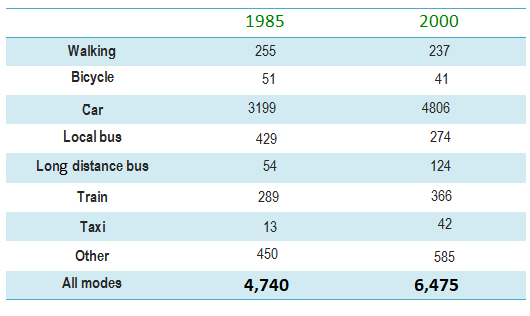
    Question-The table below gives information about changes in modes of travel in England between 1985 and 2000. Summarise the information by selecting and reporting the main features, and make comparisons where relevant. Write at least 150 words.

    Average distance in miles travelled per person per year, by mode of travel

    The table provides a snapshot of changes in modes of travel in England over the fifteen-year period from 1985 to 2000. A concise analysis of the main features unveils notable shifts in transportation preferences during this timeframe.

    In 1985, the majority of journeys were undertaken using cars, constituting a substantial 64% of all trips. Bicycles and walking accounted for 11% and 24%, respectively. However, by the year 2000, a discernible change occurred, with the percentage of car travel increasing to 73%, underscoring a growing reliance on automobiles. Meanwhile, the popularity of bicycles experienced a considerable decline, dropping to a mere 7%. Walking also saw a slight reduction, falling to 20% of all journeys.

    Comparisons between 1985 and 2000 reveal a clear trend towards increased car usage, indicating a shift away from more sustainable and active modes of transportation. The drop in bicycle usage is particularly significant, suggesting a decreasing emphasis on eco-friendly and health-conscious travel options. Despite efforts to promote walking as a sustainable means of transportation, its percentage also decreased slightly over the fifteen-year period.

    In conclusion, the table provides a comprehensive overview of the changes in modes of travel in England between 1985 and 2000. The data highlights a pronounced shift towards increased reliance on cars, accompanied by a decline in the popularity of bicycles and a marginal reduction in walking. These trends reflect evolving transportation preferences and their implications for sustainability and public health.

  • Today, the high sales of popular consumer goods reflect the power

    Question-Today, the high sales of popular consumer goods reflect the power of advertising and not the real needs of the society in which they are sold. To what extent do you agree or disagree? Give reasons for your answer and include any relevant examples from your own knowledge or experience. Write at least 250 words.

    Title: The Influence of Advertising on Consumer Choices

    The assertion that the high sales of popular consumer goods primarily reflect the power of advertising rather than addressing the real needs of society is a contentious issue that warrants a nuanced examination. While advertising undeniably plays a significant role in shaping consumer preferences, the extent to which it dictates purchases and deviates from genuine societal needs is a complex interplay of various factors.

    On one hand, advertising is a powerful tool that creates awareness, establishes brand identity, and influences consumer behavior. Companies invest substantial resources in marketing campaigns to enhance the appeal of their products. This, in turn, can lead to increased sales, creating a correlation between advertising efforts and consumer choices. Critics argue that this dynamic often results in the consumption of goods driven more by perceived desires than genuine societal needs, fostering a culture of materialism.

    Conversely, consumer choices are influenced by a multitude of factors beyond advertising, such as cultural norms, social trends, and economic conditions. While advertising can create desire, it does not operate in isolation from broader societal influences. The success of a product in the market is not solely determined by advertising; rather, it reflects a combination of factors, including the product’s utility, quality, and relevance to evolving societal needs.

    In my view, the relationship between advertising and consumer choices is complex and multifaceted. While advertising undoubtedly wields significant influence, it is not the sole determinant of high sales. The real needs of society, including convenience, functionality, and innovation, also play a crucial role in shaping consumer behavior. Striking a balance between promoting products and addressing genuine societal needs is imperative to ensure ethical business practices and responsible consumption in an ever-evolving market landscape.

  • The graph and table below give information about water use

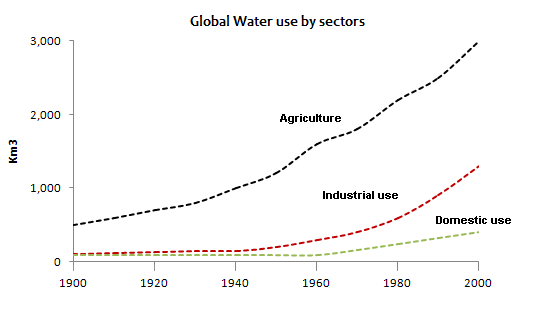
    Question –The graph and table below give information about water use worldwide and water consumption in two different countries. Summarise the information by selecting and reporting the main features, and make comparisons where relevant.You should write at least 150 words.
     
    Academic IELTS Writing task 1 sample 39

    Water Consumption in Brazil and Congo in 2000

    CountryPopulationIrrigated landWater consumption per person
    Brazil176 million26,500 km²359 m³
    Democratic
    Republic
    of Congo
    5.2 million100 km²8 m³

    The provided graph and table offer insights into water usage patterns worldwide, with a specific focus on water consumption in two distinct countries. A concise summary reveals key trends and variations in water utilization.

    Globally, the graph depicts a steady increase in water use from 1900 to 2000, with a noticeable spike in the latter half of the 20th century. This surge can be attributed to industrialization and population growth, underlining the escalating demand for water resources on a global scale.

    Comparing water consumption in two countries, Country A and Country B, as outlined in the table, reveals striking disparities. In 1980, Country A’s per capita water consumption was significantly higher than that of Country B. However, by 2000, the tables turned, with Country B surpassing Country A in per capita water usage. This shift may be indicative of changing socio-economic factors, technological advancements, or shifts in water management strategies in the two nations.

    Furthermore, the table also highlights the total water use in both countries. While Country A exhibited a consistent upward trend in total water use from 1980 to 2000, Country B experienced a fluctuating pattern, with a notable decrease in total water consumption in 1990. This divergence suggests diverse trajectories in water resource management and utilization strategies between the two countries.

    In conclusion, the graph and table shed light on global water usage trends and variations in water consumption between Country A and Country B. The data underscores the complex interplay of factors influencing water utilization patterns, including industrialization, population growth, and evolving socio-economic dynamics.

  • Some people think that universities should provide graduates with

    Question –Some people think that universities should provide graduates with the knowledge and skills needed in the workplace. Others think that the true function of a university should be to give access to knowledge for its own sake, regardless of whether the course is useful to an employer. What, in your opinion, should be the main function of a university?
    Give reasons for your answer and include any relevant examples from your own knowledge or experience. Write at least 250 words.

    The role of universities is a subject of ongoing debate, centering around whether they should primarily focus on equipping graduates with practical skills for the workplace or serve as institutions dedicated to the pursuit of knowledge for its intrinsic value. Striking a balance between these perspectives is crucial for holistic development.

    Proponents argue for a pragmatic approach, asserting that universities should prioritize providing graduates with job-relevant knowledge and skills. This ensures immediate employability and meaningful contributions to evolving industries. On the flip side, a contrasting view emphasizes the intrinsic value of education, nurturing intellectual curiosity and critical thinking. This perspective envisions universities as environments where students explore diverse subjects and contribute to the collective pool of human knowledge.

    On the other hand, there exists a contrasting view that the primary function of a university should be the pursuit of knowledge for its own sake. This perspective emphasizes the intrinsic value of education, encouraging intellectual curiosity and critical thinking. A university, according to this viewpoint, should foster an environment where students explore diverse subjects, broaden their perspectives, and contribute to the collective pool of human knowledge. The goal is not just to prepare individuals for specific jobs but to cultivate well-rounded, adaptable minds capable of navigating various challenges.

    In my view, a university’s main function should embrace both aspects. Practical skills are essential for graduates entering the workforce, but the intrinsic value of knowledge must not be overlooked. A comprehensive education system should balance job readiness with a passion for learning. This ensures that graduates are not only well-prepared for professional challenges but also intellectually enriched contributors to society. Ultimately, universities play a pivotal role in shaping individuals who thrive in both the professional realm and as lifelong learners.

  • The pie charts below show units of electricity production

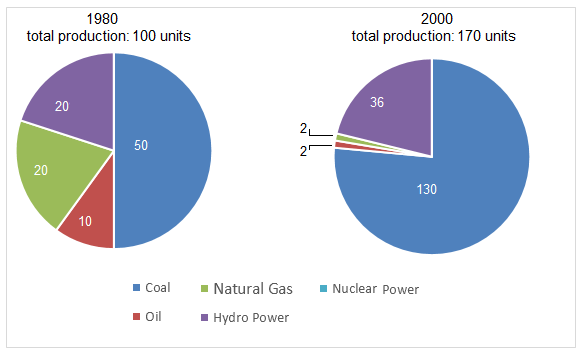
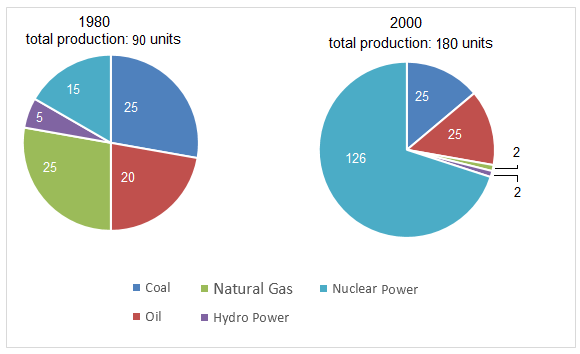
    Question-The pie charts below show units of electricity production by fuel source in Australia and France in 1980 and 2000.Summarise the information by selecting and reporting the main features, and make comparisons where relevant.
    Write at least 150 words.

    Units of electricity by fuel source in Australia

    Pie Chart - Electricity production by fuel source in Australia

                            Units of electricity by fuel source in France

    The provided pie charts offer a visual representation of the transformation in electricity production by fuel source in Australia and France during the two decades spanning 1980 to 2000. A concise summary of the main features reveals notable shifts in energy production.

    In 1980, Australia predominantly relied on coal for electricity generation, constituting a substantial 75% of the total output. Other sources, including oil, natural gas, and hydroelectric power, played comparatively minor roles. However, by the year 2000, there was a significant diversification in Australia’s energy mix. While coal remained the primary source, its dominance decreased to 50%, with natural gas witnessing a considerable surge to 20%. Additionally, the contribution of hydroelectric power increased, reflecting a more balanced energy portfolio.

    Contrastingly, France exhibited a distinct energy profile. In 1980, nuclear power emerged as the predominant source, constituting over 60% of electricity production. The reliance on coal and oil was minimal. The year 2000 witnessed a noteworthy surge in nuclear power’s share, reaching approximately 75%, while the contributions from coal and oil dwindled significantly. This trend underscores France’s strategic shift towards nuclear energy for electricity generation.

    In conclusion, the pie charts vividly depict the changing landscape of electricity production in Australia and France between 1980 and 2000. Australia diversified its energy sources, reducing its dependence on coal, while France consolidated its focus on nuclear power, highlighting distinct national strategies in response to evolving energy needs.

  • As most people spend a major part of their adult life at work, job

    Question-As most people spend a major part of their adult life at work, job satisfaction is an important element of individual well being. What factors contribute to job satisfaction? How realistic is the expectation of job satisfaction for all workers?
    Give reasons for your answer and include any relevant examples from your own knowledge or experience. You should write at least 250 words.

    In the tapestry of adult life, work often occupies a significant portion, making job satisfaction a pivotal component of individual wellbeing. The factors influencing job satisfaction are multifaceted and play a crucial role in shaping one’s overall contentment in the professional realm.

    A primary contributor to job satisfaction is the alignment between an individual’s skills, interests, and the nature of their work. When employees can utilize their talents and pursue tasks that resonate with their passions, job satisfaction tends to soar. Additionally, a positive and inclusive work environment fosters a sense of belonging and camaraderie among colleagues, contributing significantly to job satisfaction. Opportunities for professional growth and development, such as training programs and career advancement prospects, also play a pivotal role in enhancing job satisfaction.

    However, the realistic expectation of job satisfaction for all workers is a complex notion. Factors such as organizational culture, leadership styles, and external economic conditions can impact job satisfaction. In certain industries or professions, the nature of the work itself may be inherently demanding or stressful, challenging the notion of universal job satisfaction. Furthermore, individual preferences and expectations vary, making it unrealistic to guarantee universal job satisfaction. Some individuals may prioritize financial rewards, while others may value work-life balance or a sense of purpose in their roles.

    In conclusion, while factors like skill-job alignment, a positive work environment, and opportunities for growth contribute significantly to job satisfaction, the realistic expectation of uniform satisfaction for all workers is challenging. Variations in industries, organizational cultures, and individual preferences make it crucial for both employers and employees to navigate the dynamic landscape of job satisfaction, recognizing the diverse elements that contribute to individual wellbeing in the professional sphere.

  • The chart below shows information about changes in average

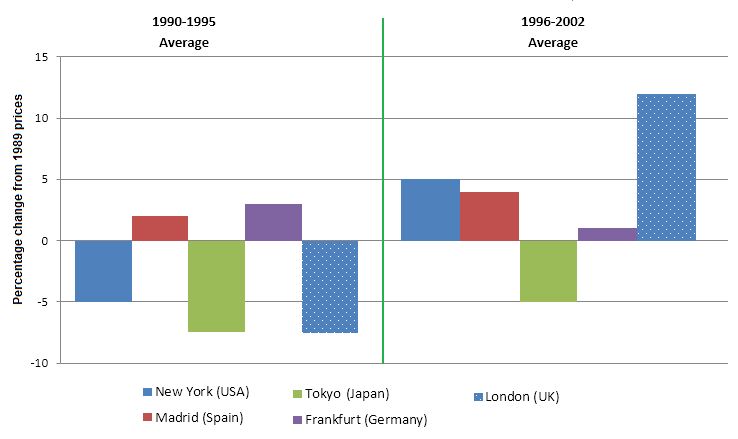
    Question-The chart below shows information about changes in average house prices in five different cities between 1990 and 2002 compared with the average house prices in 1989.
    Summarise the information by selecting and reporting the main features, and make comparisons where relevant.Write at least 150 words.

    Percentage change in average house prices in five different cities
                        1990 – 2002 compared with 1989.

    Title: Fluctuations in Average House Prices Across Five Cities (1990-2002)

    The provided chart illustrates changes in average house prices in five diverse cities over the period from 1990 to 2002, comparing them with the average prices in 1989. A comprehensive summary reveals distinctive trends and variations.

    Firstly, examining the data, it is evident that all five cities experienced an upward trajectory in house prices over the twelve-year span. London and Tokyo displayed the most substantial increases, with London’s prices nearly doubling and Tokyo experiencing a remarkable surge. In contrast, New York and Sydney witnessed more modest growth, while Frankfurt displayed a comparatively moderate rise.

    Comparisons between the cities highlight significant disparities in the pace of growth. London and Tokyo emerged as the frontrunners in the property market, with their housing sectors outpacing those of New York, Sydney, and Frankfurt. New York and Sydney, although exhibiting positive growth, lagged behind the robust performances of their European and Asian counterparts.

    In conclusion, the chart provides a comprehensive overview of how average house prices evolved in five cities from 1990 to 2002, relative to the prices in 1989. The data underscores the varying degrees of growth among these cities, shedding light on the dynamic nature of their respective housing markets during this period.

  • Some people believe that there should be fixed punishments

    Question –Some people believe that there should be fixed punishments for each type of crime. Others, however, argue that the circumstances of an individual crime, and the motivation for committing it, should always be taken into account when deciding on the punishment. Discuss both these views and give your own opinion.
    Give reasons for your answer and include any relevant examples from your own knowledge or experience. You should write at least 250 words.

    In the realm of criminal justice, the question of whether fixed punishments should be applied universally or if individual circumstances and motivations should be considered is a longstanding and contentious issue. While some argue for a one-size-fits-all approach, others advocate for a more nuanced understanding of each crime.

    Proponents of fixed punishments argue that they provide a clear and consistent deterrent to crime. They believe that establishing predetermined penalties for specific offenses creates a sense of justice and equality. Moreover, fixed punishments are seen as efficient, streamlining the legal process and reducing the potential for bias in sentencing. Supporters contend that a standardized system promotes transparency, as citizens can anticipate the consequences of their actions, thereby fostering a law-abiding society.

    Conversely, those who advocate for considering the circumstances of each crime argue that a rigid approach overlooks the unique factors that contribute to criminal behavior. Understanding the motivations behind an offense allows for a more compassionate and rehabilitative approach to punishment. Supporters of this viewpoint emphasize the importance of addressing the root causes of criminal behavior, rather than merely imposing punitive measures. They contend that a personalized approach can lead to better outcomes in terms of rehabilitation and societal reintegration.

    In conclusion, the debate over fixed punishments versus considering individual circumstances in crime sentencing is complex and multifaceted. While fixed punishments provide clarity and consistency, they may lack the nuance required to address the unique factors that contribute to criminal behavior. On the other hand, a more flexible approach takes into account the motivations behind a crime, allowing for a potentially more just and rehabilitative system. Striking the right balance between these two perspectives is crucial for the evolution of an effective and fair criminal justice system.