Author: theieltsbridge

  • Some people believe that allowing children to make their own choices on everyday matters. IELTS Cambridge 12 – Test 4 (Task 2)

    Question – Some people believe that allowing children to make their own choices on everyday matters (such as food, clothes and entertainment) is likely to result in a society of individuals who only think about their own wishes. Other people believe that it is important for children to make decisions about matters that affect them.
    Discuss both these views and give your own opinion. Write atleast 250 words.

    The ongoing debate surrounding whether children should have the autonomy to make decisions on daily matters has raised questions about its potential impact on society. While some argue that granting children this freedom may lead to a self-centered society, others emphasize the importance of nurturing decision-making skills to foster autonomy and responsibility.

    Advocates for children making their own choices believe that this autonomy contributes to the development of independent thinkers. Allowing children to decide on aspects like food, clothes, and entertainment empowers them to explore preferences and interests, cultivating a strong sense of self and the ability to make informed decisions. This approach is seen as crucial for shaping responsible individuals capable of navigating life’s complexities with confidence.

    However, opponents express concerns about the potential for a self-centered society if decision-making is left unchecked in early stages. They argue that a lack of guidance may result in children growing up with limited understanding of the consequences their choices can have on themselves and others.

    In conclusion, finding the right balance between autonomy and responsibility is key when allowing children to make choices on everyday matters. Empowering them to make decisions can foster independence and critical thinking skills, but this should be accompanied by guidance to ensure the development of a sense of responsibility and an awareness of the impact of their choices on the broader society.
  • The diagram below shows how geothermal energy is used to produce electricity. IELTS Cambridge 12- Test 4 (Task 1)

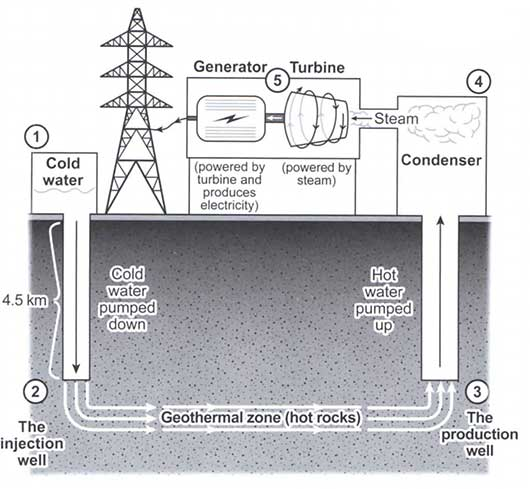
    Question – The diagram below shows how geothermal energy is used to produce electricity.
    Summarise the information by selecting and reporting the main features, and make comparisons where relevant. Write atleast 150 words.

    The diagram details the process of tapping geothermal energy to generate electricity, offering a sustainable and renewable power source. Initially, the illustration depicts a reservoir of hot water and steam deep within the Earth, serving as the primary geothermal energy source. Engineers strategically drill pipes to extract high-pressure steam, directing it to turbines. These turbines convert the steam’s kinetic energy into mechanical energy, initiating electricity generation.

    The subsequent phase involves generators transforming mechanical energy into electrical energy. Power lines then distribute the generated electricity, providing a continuous and reliable power supply for households, industries, and consumers.

    Geothermal energy stands out for its low environmental impact, producing minimal greenhouse gas emissions. Its constant availability ensures a stable power output, distinguishing it from some intermittent renewable sources.

    In conclusion, the diagram showcases key stages of geothermal energy utilization in electricity production, emphasizing efficiency and sustainability. With minimal environmental impact and dependable output, geothermal energy emerges as a promising contributor to the global shift towards cleaner and more sustainable energy solutions.

  • In a number of countries, some people think it is necessary to spend large sums of money on constructing new railway lines for very fast trains between cities. IELTS Cambridge 12-Test 3 (Task 2)

    Question – In a number of countries, some people think it is necessary to spend large sums of money on constructing new railway lines for very fast trains between cities. Others believe the money should be spent on improving existing public transport.
    Discuss both these views and give your own opinion. Write at least 250 words.

    The allocation of funds for transportation infrastructure has ignited a global debate, with proponents advocating for substantial investments in new high-speed railway lines between cities, while others argue for improving existing public transport. This blog explores the merits of both perspectives, delving into the optimal use of funds to enhance transportation networks.

    Supporters of high-speed railway lines contend that these projects can revolutionize inter-city travel, reducing commute times and enhancing economic connectivity. Fast trains, seen as symbols of modernity, have the potential to attract business investments and tourism, stimulating economic growth and regional development.

    Conversely, advocates for enhancing existing public transport systems highlight the practicality of such investments. They argue that allocating funds to improve buses, trams, and metro systems addresses the immediate needs of the majority. Enhancing accessibility and reliability of current public transport provides a more inclusive and sustainable solution, benefiting a larger population on a daily basis.

    The crux of the dilemma lies in finding a balance between the two approaches. While high-speed railway projects promise to transform long-distance travel, investing in existing public transport systems ensures daily convenience for a broader demographic. Governments must carefully weigh the potential economic benefits of futuristic railway lines against the immediate impact of accessible and efficient public transport.

    In conclusion, the ongoing debate between investing in high-speed rail or improving existing public transport underscores the complexity of transportation planning. Striking a balance between forward-thinking projects and practical solutions is vital to meet the diverse needs of the population, ensuring efficient and sustainable movement within and between cities. A thoughtful and comprehensive approach to transportation investment is ultimately crucial for fostering economic development and enhancing citizens’ quality of life.

  • The chart below shows how frequently people in the USA ate in fast food restaurants between 2003 and 2013. IELTS Cambridge 12-Test 3 (Task 1)

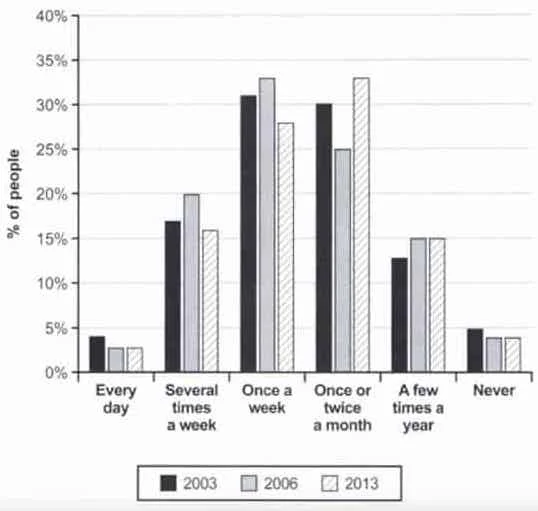
    Question – The chart below shows how frequently people in the USA ate in fast food restaurants between 2003 and 2013.
    Summarise the information by selecting and reporting the main features, and make comparisons where relevant. Write at least 150 words.

    The provided chart offers a glimpse into the changing eating habits of people in the USA in terms of their frequency of visits to fast food restaurants from 2003 to 2013. Over the decade, a discernible trend emerges, reflecting shifts in dietary preferences and lifestyle choices.

    In 2003, the majority of individuals frequented fast food establishments once or twice a week, with approximately 40% falling into this category. Meanwhile, a relatively smaller proportion, around 20%, indicated a preference for less frequent visits, limiting their fast food consumption to once or twice a month. Notably, a significant segment, nearly 30%, claimed to avoid fast food entirely.

    As the years progressed, a noteworthy transformation unfolded. By 2013, the percentage of those opting for weekly fast food visits surged to approximately 50%, showcasing a substantial increase. Conversely, the proportion of individuals who abstained from fast food entirely dropped to around 20%, indicating a diminishing trend in avoiding fast food establishments.

    In summary, the chart illustrates a notable shift in the frequency of fast food consumption in the USA from 2003 to 2013. While the majority of individuals leaned towards weekly indulgence, there was a simultaneous decline in those avoiding fast food altogether. This data provides insights into the evolving eating patterns of the American population over the specified time frame.

  • At the present time, the population of some countries includes a relatively large number of young adults, compared with the number of older people. IELTS Cambridge 12 – Test 2 (Task 2)

    Question – At the present time, the population of some countries includes a relatively large number of young adults, compared with the number of older people. Do the advantages of this situation outweigh the disadvantages?
    Give reasons for your answer and include any relevant examples from your own knowledge or experience. Write at least 250 words.

    In contemporary society, some countries grapple with a demographic imbalance, where a substantial number of young adults outnumber older individuals. This situation prompts questions about the overall implications for these nations. This essay aims to analyze whether the advantages of this situation outweigh the disadvantages.

    A higher proportion of young adults offers a significant advantage by fostering a dynamic and energetic workforce. A youthful population often translates to a more innovative and adaptable labor force, capable of driving economic growth through creativity and technological advancements. This demographic structure can lead to increased productivity and competitiveness in the global market, fostering a robust and vibrant economy.

    However, the demographic imbalance also presents several challenges. One notable disadvantage involves the strain on social welfare systems and healthcare infrastructure. A larger population of older individuals typically demands more extensive healthcare services and pensions, increasing financial pressure on the government. Addressing the needs of an aging population becomes a critical concern, requiring careful planning and resource allocation to sustain social welfare programs.

    Another disadvantage stems from the potential for societal imbalances. A skewed age distribution may cause a shortage of experienced professionals and leaders, impacting the overall stability and governance of a nation. Furthermore, a high concentration of young adults might lead to increased competition in the job market, potentially causing unemployment issues and social unrest.

    In conclusion, although a demographic structure with a relatively large number of young adults brings undeniable advantages, such as a dynamic workforce and potential economic growth, the disadvantages cannot be ignored. The strain on healthcare systems, social welfare, and the potential for societal imbalances necessitate careful consideration and strategic planning by governments to ensure a harmonious and sustainable development path. Ultimately, finding a balance between the advantages and disadvantages of this demographic situation is crucial for the long-term prosperity and well-being of these countries.

  • The maps below show the centre of a small town called Islip as it is now, and plans for its development. IELTS Cambridge 12 – Test 2 (Task 1)

    Question – The maps below show the centre of a small town called Islip as it is now, and plans for its development.
    Summarise the information by selecting and reporting the main features, and make comparisons where relevant. Write atleast 150 words.

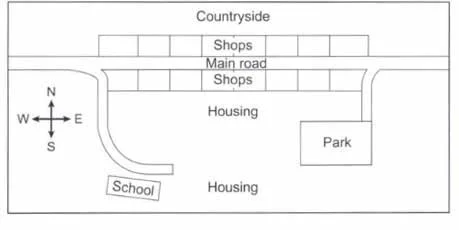
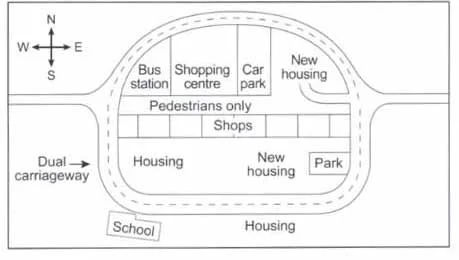
    The given maps show the current layout of the small town of Islip and the proposed plans for its development. The present infrastructure includes a central square surrounded by a few residential areas, while the development plan foresees significant changes to improve the town’s functionality and aesthetic appeal.

    At present, Islip’s central square functions as a focal point, bordered by a handful of residential areas and a local market. The road network that connects these regions appears straightforward, with a few minor intersections. Limited parks and open spaces contribute to a somewhat cramped feel in the town’s center.

    In contrast, the proposed development plans show a substantial transformation. They expand and redesign the central square, incorporating green spaces, walkways, and recreational areas. There is a notable increase in residential zones, including the addition of new housing clusters. The road network undergoes a revamp, introducing wider avenues and improved connectivity. These changes aim to create a more harmonious balance between urban infrastructure and natural elements.

    Comparatively, the current town layout lacks the aesthetic and functional elements proposed in the development plan. The revamped design not only addresses existing shortcomings but also anticipates future needs, emphasizing sustainable and people-centric development. Overall, the proposed changes demonstrate a thoughtful approach to urban planning, with the aim of elevating Islip into a more modern and livable town.

  • Some people believe that it is good to share as much information as possible in scientific research, business and the academic world. Others believe that some information is too important or too valuable to be shared freely. IELTS Cambridge 12 – Test 1 (Task 2)

    Question – Some people believe that it is good to share as much information as possible in scientific research, business and the academic world. Others believe that some information is too important or too valuable to be shared freely.
    Discuss both these views and give your own opinion. Give reasons for your answer and include any relevant examples from your own knowledge or experience. Write at least 250 words.

    In the realms of scientific research, business, and academia, the debate over the extent to which information should be shared has been a longstanding issue. Some advocate for maximum transparency, arguing that widespread sharing fosters innovation and collaboration, while others contend that certain information, deemed too crucial or valuable, should be guarded. Striking a balance between these perspectives is essential for fostering progress without compromising critical knowledge.

    Those in favor of unrestricted information sharing argue that openness accelerates progress and innovation. In scientific research, the free exchange of findings allows researchers to build upon each other’s work, advancing collective knowledge. In the business world, transparent communication can enhance competition and market dynamics, leading to more robust industries. Similarly, academia thrives on shared insights, with open access to information fostering a rich academic environment.

    On the contrary, proponents of restricted information sharing emphasize the importance of safeguarding critical data. In certain scientific research, proprietary information might be central to breakthroughs, and premature disclosure could hinder potential advancements. In business, protecting trade secrets and intellectual property is paramount for maintaining a competitive edge. Likewise, in academia, not all knowledge may be suitable for unrestricted dissemination, particularly when considering ethical or security concerns.

    The optimal approach lies in finding a middle ground. Encouraging openness in less sensitive areas of scientific research, business, and academia can stimulate collaboration and innovation. Simultaneously, implementing safeguards to protect truly valuable or sensitive information ensures that certain crucial aspects remain protected. A nuanced approach to information sharing allows for progress while preserving the integrity of valuable knowledge.

    In conclusion, the debate over information sharing in scientific research, business, and academia reflects a tension between openness and protection. Striking the right balance is essential to harness the benefits of collaboration and innovation while safeguarding critical information that may be too valuable to share freely. A thoughtful and measured approach is crucial for the continued advancement of these fields.

  • The bar chart below shows the percentage of Australian men and women in different age groups who did regular physical activity in 2010. IELTS Cambridge 12 – Test 1 (Task 1)

    Question – The bar chart below shows the percentage of Australian men and women in different age groups who did regular physical activity in 2010.
    Summarise the information by selecting and reporting the main features, and make comparisons where relevant. Write atleast 150 words.

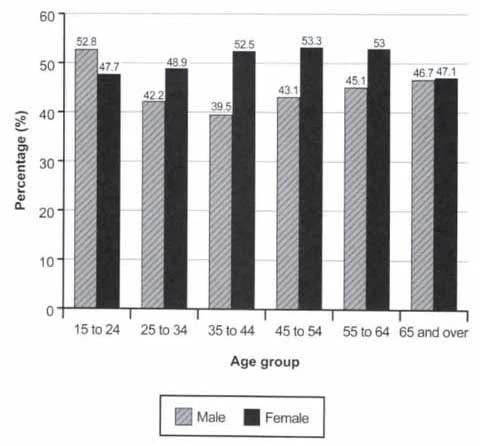
    The bar chart presents the 2010 data on the percentage of Australian men and women participating in regular physical activity across different age groups. Analyzing the chart reveals age-dependent variations in engagement levels. Younger individuals, both men and women, exhibit higher activity rates, reflecting positive health-conscious trends among the youth.

    In middle age groups, a noticeable decline in physical activity percentages is observed for both genders. Factors such as increased work and family commitments may contribute to this decline, limiting available time for recreational activities.

    Contrastingly, there is a surprising resurgence in physical activity among older men, indicating a growing awareness of its importance for health and well-being. However, women in older age groups maintain lower participation rates.

    In conclusion, the bar chart provides a snapshot of physical activity prevalence among Australian men and women in 2010. Age proves pivotal, with younger individuals generally displaying higher engagement. Understanding these patterns is crucial for health policymakers and educators to tailor interventions, particularly for demographics at risk of reduced physical activity.

  • In spite of the advances made in agriculture, many people around the world still go hungry. IELTS Cambridge Test 13 – Test 4 (Task 2)

    Question – In spite of the advances made in agriculture, many people around the world still go hungry.
    Why is this the case?
    What can be done about this problem? Write atleast 250 words.

    In an era witnessing significant strides in agricultural technology, the paradox of persistent global hunger amidst agricultural progress remains a stark reality. Despite advancements like increased yields, innovative farming techniques, and improved resource access, millions worldwide continue to suffer from hunger. This essay explores the intricate factors contributing to this issue and considers potential solutions.

    A major factor sustaining global hunger is the unequal distribution of resources. Regions with surplus food production coexist with others facing limitations due to inadequate infrastructure, technology, and education. The widening gap between developed and developing nations hampers effective food distribution, leaving vulnerable populations struggling for an adequate supply despite agricultural advancements.

    Moreover, challenges from climate change, natural disasters, and conflicts exacerbate issues for agriculture-dependent communities. Unpredictable weather and environmental degradation disrupt crop cycles, resulting in food shortages. Conflict-ridden areas face perilous farming conditions, frequently disrupting food supply chains and amplifying the hunger crisis. Addressing global hunger requires a multifaceted approach considering not only agricultural advancements but also the environmental and socio-political contexts in which these advancements operate.

    Efforts to combat hunger must extend beyond boosting agricultural productivity to include education and sustainable development. Empowering communities with knowledge about modern farming techniques, crop diversification, and resource management can significantly enhance their capacity to produce food. Simultaneously, investing in sustainable practices for environmental protection and long-term agricultural viability is crucial in mitigating the impact of climate change and ecological challenges.

    In conclusion, the coexistence of agricultural progress and global hunger necessitates a comprehensive approach. Reducing resource distribution inequality, addressing environmental challenges, and promoting education and sustainable development are vital components of a strategy aimed at eradicating hunger globally. Only through collaborative and sustained efforts can we bridge the gap between agricultural progress and the unfortunate prevalence of hunger worldwide.

  • The Plans Below Show the Layout of a University Sports Centre Now. IELTS Cambridge 13 – Test 4 (Task 1)

    Question – The plans below show the layout of a university’s sports centre now, and how it will look after redevelopment.
    Summarise the information by selecting and reporting the main features, and make comparisons where relevant. Write atleast
    150 words.

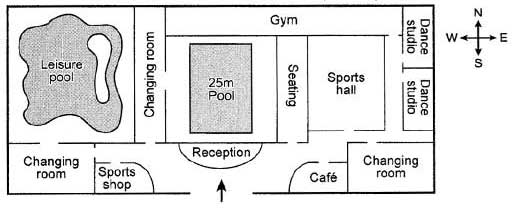
    The provided plans illustrate the current layout of a university’s sports centre and the anticipated changes after redevelopment.

    In the existing configuration, the sports facility comprises outdoor courts on both the west and east sides, with a central 25-meter pool and associated amenities like reception, changing areas, and seating near the pool. The west side also features a gym. After redevelopment, significant alterations are planned to enhance the overall sports facility.

    On the west side, the outdoor court will be replaced by a leisure swimming pool, now directly linked to a newly proposed dressing room in the extreme southwest corner. The lobby area is set to undergo expansion, and a sports store will be introduced near the changing facilities. Importantly, the central 25-meter pool and its adjacent areas will remain unchanged, ensuring continuity in the core features of the sports centre.

    Turning to the east side, the existing outdoor courts will be eliminated to accommodate new facilities. A second changing room will be constructed in the extreme southeast, connecting to a new café situated next to the sports hall. Furthermore, two dance studios are planned to be built side by side, with one adjoining the recently expanded gym. These redevelopment plans aim to offer an enhanced and diversified sports centre experience, introducing new amenities while preserving the central pool and gym areas.