Month: April 2024

  • IELTS Reading Practice Test – Exercise 170

    The Spice of Life!

    A When thinking of the most popular restaurant dish in the UK, the answer ‘chicken tikka masala’ does not spring readily to mind. But it is indeed the answer, often now referred to as a true ‘British national dish’. It may even have been invented by Indian immigrants in Scotland, who roasted chicken chunks (tikka), mixed them with spices and yoghurt, and served this in a bowl of masala sauce. The exact ingredients of the sauce vary from restaurant to restaurant, but the dish usually includes purced tomatoes and cream, coloured orange by turmeric and paprika. British cuisine? Yes, spices have come a long way.

    B Spices are dried seeds, fruit, roots, bark, or vegetative parts of plants, added to food in small amounts to enhance flavour or colour. Herbs, in contrast, are only from the leaves, and only used for flavouring. Looking at the sources of some common spices, mustard and black pepper arc from seeds, cinnamon from bark, cloves from dried flower buds, ginger and turmeric from roots, while mace and saffron are from seed covers and stigma tips, respectively. In the face of such variety, it is becoming increasingly common for spices to be offered in pre-made combinations. Chili powder is a blend of chili peppers with other spices, often cumin, oregano, garlic powder, and salt. Mixed spice, which is often used in baking, is a British blend of sweet spices, with cinnamon being the dominant flavour. The ever-popular masala, as noted, could be anything, depending on the chef.

    C Although human communities were using spices tens of thousands of years ago, the trade of this commodity only began about 2000 BC, around the Middle Last. Early uses were less connected with cooking, and more with such diverse functions as embalming, medicine, religion, and food preservation. Eventually, extensive overland trade routes, such as the Silk Road, were established, yet it was maritime advances into India and East Asia which led to the most dramatic growth in commercial activities. From then on, spices were the driving force of the world economy, commanding such high prices that it pitted nation against nation, and became the major impetus to exploration and conquest, It would be hard to underestimate the role spices have played in human history.

    D Originally, Muslim traders dominated these routes, seeing spice-laden ships from the Orient crossing the Indian Ocean to Red Sea and Persian Gulf ports, from where camel caravans transported the goods overland. However, although slow to develop, European nations, using aggressive exploration and colonisation strategies, eventually came to rule the Far East and, consequently, control of the spice trade. At first, Portugal was the dominant power, but the British and Dutch eventually gained the upper hand, so that by the 19th century, the British controlled India, while the Dutch had the greater portion of the East Indies (Indonesia). Cloves, nutmeg, and pepper were some of the most valuable spices of the time.

    E But why were spices always in such demand? There are many answers. In the early days, they were thought to have strong medicinal properties by balancing ‘humours’, or excesses of emotions in the blood. Other times they were thought to prevent maladies such as the plague, which often saw prices of recommended spices soar. But most obviously, spices flavoured the bland meat-based European cuisines. Pepper, historically, has always been in highest demand for this reason, and even today, peppercorns (dried black pepper kernels) remain, by monetary value, the most widely traded spice in the world. However, saffron, by being produced within the small saffron flower, has always been among the world’s most costly spice by weight, valued mostly for its vivid colour.

    F Predictably, the majority of the world’s spices are produced in India, although specific spices arc often produced in greater amounts in other countries. Vietnam is the largest producer and exporter of pepper, meeting nearly one third of the world’s demand. Indonesia holds a clear lead in nutmeg production, Iran in saffron, and Sri Lanka in cinnamon. However, exportation of such spices is not always simple. Most are dried as a whole product, or dried and ground into powder, both forms allowing bulk purchase, easier storage and shipping, and a longer shelf life. For example, the rhizomes (underground stems) of turmeric are boiled lor several hours, then dried in ovens, after which they are ground into the yellow powder popular in South-Asian and Middle-Eastern cuisines.

    G However, there are disadvantages in grinding spices. It increases their surface area many fold, accelerating the rate of evaporation and oxidation of their flavour-bearing and aromatic compounds. In contrast, whole dried spices retain these for much longer. Thus, seed-based varieties (which can be packaged and stored well) are often purchased in this form. This allows grinding to be done at the moment of cooking or eating, maximising the flavour and effect, a fact which often results in pepper ‘grinders’, instead of ‘shakers’, gracing the tables of the better restaurants around the world.

    Questions 1-6
    Reading Passage One has seven paragraphs, A-G. Choose the correct heading for Paragraphs B-G from the list of headings.

    List of Headings
    i Uses of spice
    ii Spices for cooking
    iii Changing leaders
    iv A strange choice
    v Preserving flavours
    vi Famous spice routes
    vii The power of spice
    viii Some spices
    ix Medicinal spices
    x Spice providers

    Example Answer Paragraph A iv

    1. Paragraph B
    2. Paragraph C
    3. Paragraph D
    4. Paragraph E
    5. Paragraph F
    6. Paragraph G

    Questions 7-9
    Complete the sentence. Choose NO MORE THAN TWO WORDS from the passage for each answer.

    Saffron, from the small (7)……………………of flowers, has a (8)……………………….and is mostly grown in (9)…………………..

    Questions 10-13
    Do the following statements agree with the information given in Reading Passage One?

    TRUE if the statement agrees with the information
    FALSE if the statement contradicts the information
    NOT GIVEN If there is no information on this

    10. The ingredients of masala are fairly standardised.
    11. The demand for spices led to greater exploration.
    12. Vietnam consumes a lot of pepper.
    13. Seed-based spices can be easily stored.

    Unsung and Lowly Creatures

    Earthworms are not creatures likely to attract much attention. Socretive, silent, slow-moving, and featureless, almost no one would ever think. Let’s quote Charles Darwin, who wrote: ‘It may be doubted wheather there are many other animals whichs have played so important a part in the history of the world as have these lowly-organised creatures’.

    That is high praise indeed for what is basically a slimy, muscular, moist, segmented tube. This tube is also hermaphroditic, meaning that there are both male and female segments in the one creature. Some segment contain testes, others eggs, released ooze, exchange, and store fluids, and then a long complicated process eventually leads to the secretion of an egg case. From this, small but fully-formed worms will emerge, reaching full size in about one year, and living for one or two years after that.

    Yet earthworms are rarely seen, spending as they do their whole lives underground. Only after heavy rains can they sometimes be found on the surface, apparently stranded. Three hypotheses are put forward to explain this. The stormwater may flood their burrows, forcing them upwards. Alternatively, the worms may be taking advantage of the wet conditions to either travel more quickly through the open air (compared to burrowing beneath the ground), or otherwise to meet and mate. Whatever the case, if they find themselves on concreted, rocky, or hardened earth, they are effectively trapped. If this is during dawn, in high summer, or in the daytime, these earthworms quickly die due to bird predation or dehydration.

    Normally, however, worms quietly go about their hidden business, and this often leads to an underestimation of their actual numbers. Darwin himself thought that arable land contained about 50,000 worms per acre, yet modern research has suggested that the figure could reach as high as almost two million. Putting this another way, the weight of earthworms beneath the soil is often greater than that of the cows, horses, and sheep are zing upon is surface. And those worms are just as hungry. Worms do, in fact, have a small mouth and a simple but effective digestive system, similar to the animals above, Food is sucked into the body, then pushed along the length of the worm through muscular action, passing through the crop, gizzard, intestine, and finally the anus.

    Perhaps surprisingly, it is this constant eating which so benefits the chemistry of the soil. Earthworms feed on undecayed leaf litter and organic matter. They pull pieces down into their burrows, shred them into smaller parts, and then consume each of these, along with small soil particles. In the worms’ gut, everything is ground into a a fine paste, to be eventually excreted , releasing essential minerals in an easily accessible form. One single worm may produce over four kilograms of this digested paste per year. Multiply that by a million worms, and one can understand Darwin’s comment about ‘unsung creatures which, in their untold millions, transformed the land’.

    The other great benefit relates to earthworms’ search for food. It might surprise many to know that these creatures are very mobile, moving to the surface then down into the safer depths on a daily basis. Aided by the secretion of lubricating mucus, they push themselves through the soil using waves of bodily contractions, which alternately shorten and lengthen their form. The point is, water can also move through their tunnels. More importantly, as the worms travel, they push air in and out of the soil on a continuous basis. In the same way that animals need oxygen, so too do the myriad micro-organisms in the soil. Thus, without worms, the ground would become waterlogged, airless, and less productive for farming purposes.

    Naturally, with so many worms in the soil, they form the base of many food chains. Not only birds, but also some mammals, such as hedgehogs, moles, and even larger ones, such as foxes and bears, will actively dig into the ground of worms. Such predation is natural, and has little effect on worm populations. However, the use of certain fertilisers is a different case. Earthworms depend on the temperature, texture, and moisture content of the soil, but it is its acidity to which they are most sensitive. Nitrogenous fertilisers can raise this to levels fatal to these creatures, often causing disastrous drops in numbers. The more ecologically-aware farmer avoids such chemicals, and regularly adds a surface mulch of organic matter raising worm numbers for the natural benefit of both soil and man.

    Questions 14-17
    Choose the correct letter, A, B, C, or D.

    14. Charles Darwin thought that worms
    A were only moderately important.
    B were organised.
    C liked arable land.
    D numbered in the many millions.

    15. A single worm
    A is either male or female.
    B has many segments.
    C is a complicated organism.
    D lives for about a year.

    16. Stormwater may possibly
    A clean out worm burrows.
    B slow down worms.
    C help worms encounter others.
    D harden the earth.

    17. Grazing animals
    A often weigh less than the worms below.
    B are hungrier than the worms below.
    C have very different digestive systems from worms.
    D have simpler digestive systems than worms.

    Questions 18-24
    Complete the diagram. Choose NO MORE THAN TWO WORDS from the passage for each answer.

    Questions 25-26
    Complete the sentences. Choose NO MORE THAN TWO WORDS from the passage for each answer.

    Worm numbers will especially fall when the soil has high (25)………………..

    Adding mulch to the soil shows (26)……………………..

    Organisational Conflict and Change

    Change is a natural process. As humans, we are born, we grow, we mature, we decline, and we eventually die. On a bigger scale, modern existence is similarly in a constant state of flux, with global change, life strategic change, and personal change constantly upon us. With the current rate of technological advance, this is only happening at a faster pace. Putting it simply, life is change, and in a manner never before experienced.

    Organisations, also, are analogous to organisms. They similarly grow, mature, suffer injury and crises, and may well die (for example, become bankrupt). The implications of this new ‘change paradigm’ are that the stable structures and static systems which in the past made organisations strong, now only contribute to their decline. Textbooks cite many examples of this: large monolithic institutions that failed to respond to external circumstances. Many were former government monopolies, and their break-up into smaller divisions was one attempt to deal with this issue. The message was clear: respond to change, or fail to thrive.

    However, the big problem is that change promotes resistance among people. It brings a degree of discomfort, which in turns results in conflict. Thus, since change is constant, so too must be this conflict, and it is this which must be considered. The word ‘conflict’ has negative connotations, and deservedly so. It is often the result of negative forces, producing negative results. Resources are diverted, judgements distorted, co-ordination reduced, and ill-feeling generated. It thus seems strange to argue that conflict is not necessarily unwelcome, and can, in fact, be necessary, yet that is exactly what I propose.

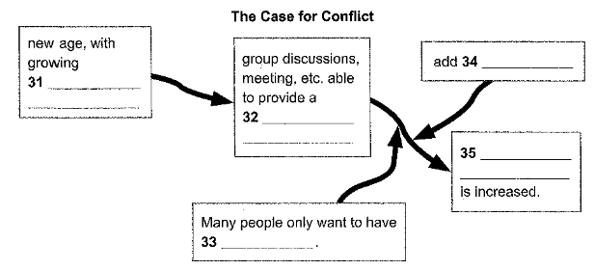
    To understand this, we must first accept one crucial fact: in this new era of increasing change and complexity, accurate and considered decision-making is critical, and can no longer be considered the province of just one person. There is simply too much information to be processed, and too much knowledge needed, to be within the capability of single individuals. As a result, decision making in modern organisations is now based on group discussions, meetings, and presentations, all to allow the exchange of a variety of perspectives from appropriately qualified people.

    The next fact that we must accept is that such gatherings are often affected by ‘groupthink’. This is when tightly-knit cohorts of workers uncritically accept the feelings of the group (rather than ‘lighting it out’). Individual dissent is squashed, leaving decision-making not as a product of a pool of thinking individuals, all with valuable insights, but merely a collective desire to promote harmony. Clearly, this is not a method likely to optimise the chances of making the best decision.

    So, two facts, which when brought together lead to the interesting conclusion: that some degree of conflict is necessary in order to produce better decision-making and, ultimately, higher organisational performance. Extending this further, somewhat paradoxically, very low levels or an absence of conflict may actually be worrying, indicating a lack of staff involvement or interest, or that problems are being hidden, new ideas stifled, and morale low. The focus thus shifts to conflict management (reducing conflict or creating it, as deemed optimum for the organisation), not conflict removal.

    So, this is the contradiction. Change must happen, causing significant resistance and conflict, some of which is constructive and necessary, but some of which impedes progress. These feelings can originate from even the most level-headed, open-minded, and rational of people; thus, the next issue is how change agents can deal with it. One essential strategy is to listen to all those involved, even the angriest, most strident and difficult (since, after all, they may be right). Another strategy is to concur with what is factually accurate. People find it difficult to argue with those who agree with them, and this means resistance is reduced, communication enhanced, and insights into the situation will certainly come.

    The third strategy for change agents is to always remind themselves of two basic facts. The first is not to expect complete rationality from those around them at all times. Expecting such ideal behaviour is itself irrational, and by resigning oneself to the inevitability of human failings, conflict can become more manageable. The other basic fact is that human beliefs are not necessarily encapsulations of the truth. Instead, they are often constructions of the mind, serving to maximise the security of the self. Thus, when encountering difficulties in implementing change, there is a good chance that the stakeholders are merely protecting such beliefs, and this should also be taken into account.

    The experienced change agent realises that everyone’s perspective needs to he examined with an open mind. Conflicting viewpoints should be promoted in a healthy way, where people are disarmed and not reacting as a result of ill-feeling or malice. Yet. when such emotions emerge, the important point is to understand that it is not unnatural, and by understanding where it comes from and how to handle it. one can follow- constructive, rather than destructive, paths. It is not easy, but it is certainly possible.

    Questions 27-30
    Choose the correct letter, A, B, C, or D.

    27. Organisations
    A should be broken into divisions.
    B need stable structures.
    C are similar to living things.
    D must be responsible.

    28. Conflict
    A is sometimes welcome.
    B is usually good.
    C should be removed.
    D comes and goes.

    29. Groupthink can
    A be better than fighting.
    B produce valuable insights.
    C lead to wrong decisions.
    D optimise chances.

    30. Very little conflict is often
    A better for organisations.
    B good for morale.
    C constructive.
    D a warning sign.

    Questions 31-35
    Complete the flow chart. Choose NO MORE THAN THREE WORDS from the passage for each answer.
    Questions 36-40
    Answer the questions. Choose NO MORE THAN THREE WORDS from the passage for each answer.

    36. What can even rational people still produce?
    37. What sort of information should a change agent agree with?
    38. What quality does not constantly come from people?
    39. People often lie to enhance what feeling?
    40. What emotions can produce unhealthy conflict?
  • IELTS Reading Practice Test – Exercise 169

    Could You Pass Me My Glasses, Please?

    The human eye was not designed for the years of intensive book learning that are now common in modern society. The result is eye strain and deterioration, often at an early age, but this same society has provided the obvious answer: corrective lensed eyeglasses. Ubiquitous and ever present, coming in all styles, colours, and designs, the optical correction of faulty vision with these devices is a phase which probably everyone will have to face at some stage in their lives.

    It is not surprising that the first eyeglasses were made by the Catholic monks dedicated to the writing, translation, and reproduction of finely written religious texts. In contrast to the general undereducation and illiteracy of the times, these monks were versed in many languages, and worked for years in badly-illuminated candle-lit ‘scriptoriums’ – an effort which took its toll on their eyesight. Thus, the earliest pictorial evidence for the use of eyeglasses is a 1352 portrait of the Catholic cardinal, Hugh de Provence. However, the usefulness of glasses had already long been realised by the population at large, and by 1300 the trade of lens-grinding was widespread enough to require formal guilds and regulations.

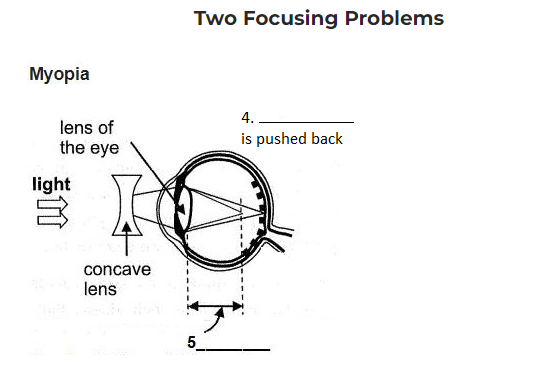
    Although popular and effective, no one was quite sure of the mechanics of it all. The first detailed mathematical explanation would not come until Johannes Kepler published his work on optics in 1604. Basically, glasses modify the focal length of the eye’s lens. There are two main focusing disorders: myopia and hyperopia. In the case of the first (near-sightedness, in which it is difficult to see objects at a distance), concave lenses are used, compensating for the eye’s refractive error by pushing the focal point back, to the retina. Hyperopia (far-sightedness) uses convex lenses to do the opposite, bringing the focal point forward, to the retina.

    Yet, to accommodate the range of situations in which clear vision is needed, from reading books and computer monitors, to television watching and driving cars, some glasses are equipped with more than one lens type. The most common are bi-focal lenses, with two distinct horizontal viewing areas. A conscious effort is thus necessary to focus through the band of the lens necessary to solve the visual challenge faced. A variation which helps with this are lenses which allow progressive transitions, rather than distinct changes between viewing angles. The simplest system of all is to merely have several pairs of glasses, reserving them for specific tasks.

    These days, lenses are most commonly a plastic polycarbonate material, offering lower weight and higher scratch resistance, as well as the ability to screen out harmful ultraviolet and infrared rays from the sun. Similarly, the frames are flexible and lightweight, offering less friction and irritation for the skin. Nevertheless, glasses cannot be said to be convenient devices. Grease, dirt, sweat, and vapour can streak them when eating or cooking, or from natural condensation due to temperature changes (such as when exiting a heated building into the colder outdoors). Glasses are also awkward during fast-motion sports or labouring jobs, are rather easily broken, and not cheap to repair.

    Obviously then, contact lenses have considerable advantages. These are inserted directly over the pupil, and have the additional benefit of a perceived aesthetic appeal. Traditional glasses are sometimes seen as unfashionable, carrying associations of age or infirmity. The almost invisible contacts avoid this, which is perhaps one reason why most wearers are female. Having said that, by completely covering the pupil, contacts also offer better peripheral vision, and are more appropriate for certain less common vision impairments. Their disadvantage is the difficulty and discomfort involved in putting them on and taking them off. They can also result in dryness and irritation.

    Interestingly though, the modern era has seen eyeglasses become somewhat of a fashion accessory. The musicians Buddy Holly and John Lennon were so characterised by their glasses that their names have been given to the style they wore. Glasses can now even be bought ‘off the shelf’, without an eye examination, cashing in on the need for quick solutions that people want in a busy society. Although they are a source of much revenue, opticians advise people to first have proper eye examinations, not only to ensure the best results, but also for early detection of potential eye diseases, such as glaucoma, which might actually be the root cause of focusing problems.

    The lace of the future may well be ‘laser eye surgery’. In this process, laser beams are used, usually to alter the curvature of the cornea and thus provide long-term corrective benefits. Although straightforward enough and increasingly safe and affordable, given the delicacy of the eye, there remains a small risk of failure and resultant vision problems, such as ghosting or halos. It is an interesting fact, that, despite the growth of such surgery, and the use of contacts, traditional lenses remain as popular as ever. Nothing, it seems, can match the simple convenience of putting on a pair of glasses.

    Questions 1-3
    Do the following statements agree with the information given in Reading Passage One?

    TRUE if the statement agrees with the information
    FALSE if the statement contradicts the information
    NOT GIVEN If there is no information on this

    1. Most people study hard today.
    2. When glasses were invented, most people could read.
    3. Most monks suffered eye problems.

    Questions 4-6
    Complete the diagram. Choose NO MORE THAN TWO WORDS from the passage for each answer.

    Questions 7-10
    Answer the questions. Choose NO MORE THAN TWO WORDS from the passage for each answer.

    7. Who first explained how glasses function?
    8. What is needed when viewing through bi-focal glasses?
    9. What can cause condensation on glasses?
    10. What aspect of sight do contact lenses improve better than glasses?

    Questions 11-13
    Choose the correct letter, A, B, C, or D.

    11. Modern lenses are
    A safer.
    B heavier.
    C softer.
    D more flexible.

    12. ‘Off-the-shelf’ glasses
    A are not popular.
    B can cause glaucoma.
    C earn shops good money.
    D are recommended.

    13. Laser eye surgery is
    A of limited benefit.
    B more convenient than glasses.
    C becoming more popular.
    D complex.

    Subtitling: Some Strategies

    When movies made in one language are shown to speakers of another, the two methods of resolving the language barrier are subtitling and dubbing. Subtitling is the written translation of the words, usually appearing discreetly at the bottom of the screen, while dubbing is the recording of voices in the target language.

    Dubbing, although seemingly more accessible to movie watches, comes with many disadvantages. For a start, it is expensive, hence it needs a large audience to justify the cost, yet even big films carry no guarantee of such commercial success. In addition, the dubbed voices may seem detached or inappropriate to the characters, or otherwise, the absurdity of having an undereducated American ranffian saying. ‘Je voudrais déclarer un vol’ becomes too much, affecting appreciation of the film. Finally, films and TV programs now have an increasingly rapid turnover rate, and subtitling is faster and more practical in such situations.

    However, one should not assume subtitling is easier than dubbing. Subtitling requires careful strategies, and here I will outline some of them. In order to do this, a sample movie is needed, and the one examined here is an Italian movie subtitled into English. Comprehension of subtitles will always be affected by lack of familiarity with the values, beliefs, and interactive differences between the host and viewing cultures. The subtitlers need to be aware of this in order to translate true meaning. Thus, before beginning any work, a brief ‘cultural audit’ is absolutely necessary, involving a comparison of the two cultures in relation to the storyline of the movie.

    The movie is set in the late 1960s, at a time when the wealth and materialism of American society was very high, contrasting the relative poverty of Italian village life. The plot tells the story of a poor couple who dream of winning large sums of money by gambling in a card game against a wealthy elderly American woman, who occasionally visits Italy just for that purpose. The final thematic assertion that there are more important factors than money reflects the warmth and solidarity of the Italian village in the face of adversity. Although these themes are universal, one could speculate that a Western audience might not like or identify with them as much, give the increasing urbanisation and materialism of their own society.

    The most immediate translation issue relates to the movie’s title, ‘Lo Scopone Scientifico’, translates as ‘Scientific Scopone’, whereas the English title is, ‘The Scientific Card Player’. ‘Scopone’ is the name of a traditional Italian card game of great antiquity. Obviously, the translators could not use this name, obscure to the Westren viewers, but they insert a blander and inappropriate term. An even clearer subtitling lapse is that the betting is always done using, apparently, ludicrously high figures. Subtitles such as, ‘Let’s start with a million’ regularly jump out. This is a literal translation of the figures (in Italian lira), yet it is the dollar with which the English-speaking audience would associate. The result is an apparent lack of plausibility, changing the comedic nature of the film.

    With respect to the specific subtitling used, there are five. Let us begin with the subtitle, ‘The old bag’s here.’ This is idiomatic in English, being an insulting term for an elderly woman. However, it is a simple expression comprising only two words, one of which is literally intended (‘old’). I would speculate that the same idiom occurs in Italian (that is, the direct translation of ‘old’ and ‘bag’ in Italian carries the same idiomatic meaning). This is the strategy of Transfer, where the full expression without time or space consideration is given. Otherwise, there could well be a closely aligned idiom, in which case the strategy would be Imitation, where there are similar lexical elements between both languages.

    Continuing with idioms, we read, ‘Catches win matches’. This derives from certain ball games, such as cricket, where catching the ball after it is struck by the batsman contributes towards winning the game. There are no such sporting cultures in Italy followed. Thus, one can be certain that other words were used in the original Italian, but that these have a similar pragmatic effect (in meaning and idiomatic nature). The strategy used is thus Paraphrasing, where different expressions specific to the source language (Italian) and target language (English) are required.

    Later on, we read, ‘A sign of destiny’. When this subtitle appears, there are actually two to three people speaking with equal force at the same time. Space and time constraints render it impossible to have them all translated, so only the quoted subtitle appears, using the strategy known as Condensation. Finally, we read scopa – an Italian word referring to a variation of the central card game. Being unique to Italy, there is no equivalent word in English, so the strategy used here is Regination, where the subtitler leaves the word in the original language. The meaning remains obvious from the context, and only in such minimal and unlikely situations does this strategy become acceptable.

    Questions 14-17
    Choose the correct letter A, B, C or D.

    14. Dubbing can
    A appeal to larger audiences.
    B seem silly.
    C increase appreciation of the film.
    D be faster

    15. Cultural audits
    A look at one culture.
    B are long and involved.
    C help comprehension.
    D are not normally required.

    16. The movie which was examined
    A has common human themes.
    B has a surprising ending.
    C is set in an Italian city.
    D involves two main actors.

    17. Scopone
    A is a relatively new game.
    B is known to the Western audience.
    C is a bland term.
    D has a variation called scopa.

    Questions 18-22
    Do the following statements agree with the information given in Reading Passage One?

    TRUE if the statement agrees with the information
    FALSE if the statement contradicts the information
    NOT GIVEN If there is no information on this

    18. The English title is a subtitling lapse.
    19. Transfer and imitation are interesting strategies.
    20. Paraphrasing is often used.
    21. Resignation can be used in many situations.
    22. Almost all Italians love scopa.

    Questions 23-26
    Match the translation example with its associated fact.

    Write the correct letter, A-D, next to the questions.

    A a practical decision
    B clarified by the situation
    C using other words, but with the same meaning
    D probably exists in the source language

    23. The old bag’
    24. ‘Catches win matches’
    25. ‘A sign of destiny’
    26. ‘Scopa’

    Continents Collide!

    The idea that the continents are moving was first proposed by a German meteorologist, Alfred Wegener, in a book published in 1915. He had gathered a great deal of careful and tantalising evidence, the most obvious being the simple observation that the great landmasses of the world seem to fit together, jigsaw-like, a striking example being the coastlines of either side of the Atlantic ocean. Wegener was even able to theorise, correctly, that all the continents were once assembled into a supercontinent (now called Pangaea). Pangaea broke up into Laurasia (which became North America and Eurasia) and Gondwana (which became the remaining continents).

    Unfortunately, Wegener could propose no propulsive force for this movement, apart from the vague and erroneous suggestion that it might be centrifugal forces. He also severely overestimated the speed of this motion. These problems, and the fact that he was a meteorologist (rather than a geologist), meant that, upon publishing his ideas, the scientific community was resolutely and implacably hostile. It is an interesting example of that not uncommon instance in which a scientist who was fundamentally correct was denied any recognition in his lifetime. Semmelweis, who advocated the washing of hands before surgery as a way to reduce hospital fatalities, is another example. Wegener was to unexpectedly die on an expedition in Greenland, probably of a heart attack – in his death, as in his life, left out in the cold.

    The first hints of the existence of Gondwana came from the similarity of fossil plants and animals distributed in the same geological period over South America, Africa, Antarctica, India, and Australia. Similarly, the composition and nature of the rocks along relevant coastlines spoke the same story, yet to become scientifically credible, the theory needed evidence of a propulsive force to move such huge continents (in the same way that Semmelweis’s ideas needed the germ theory of disease). It was only in the 1960s, decades after Wegener’s death, that hard evidence for his theory began amassing to eventually become overwhelming.

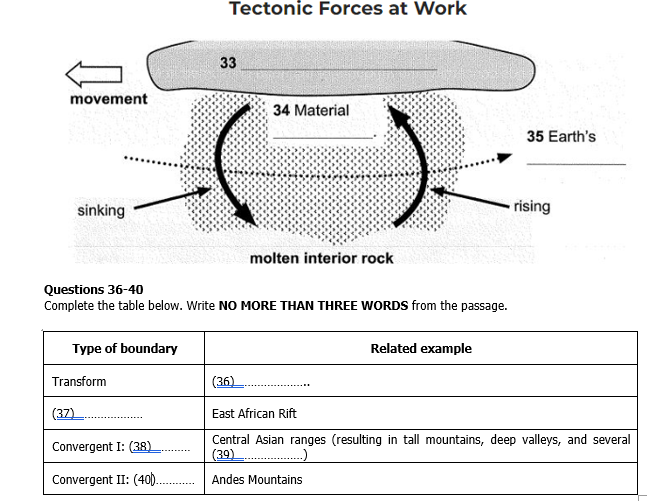
    The theory is now called ‘plate tectonics’, since it was proven that the Earth’s surface is fractured into ‘plates’. These bump and grind as they steadily move at infinitesimally slow rates in given directions, driven by ‘convention forces’. These are formed by the vast circular rising of superheated rock from the planet’s molten interior. This material cools as it nears the surface, eventually sinking once again towards the centre. Add to this the rotation of the Earth itself, and there is a complicated and barely understood set of cyclic swirls of molten rock, producing drags and pulls on each tectonic plate, the sum of which results in a steady migration.

    Of course, this motion is slow, typically at the speed at which fingernails grow, and at its fastest, the rate at which hair does. But by being consistent and essentially unstoppable, the results can be spectacular, particularly when plates meet. Here, the release of heat, as well as the buckling and melting which results, gives rise to geological events such as earthquakes, and geological features such as mountains, volcanoes, and oceanic ridges and trenches. Plate boundaries see most of the world’s active volcanoes, with the Pacific Plate’s ‘Ring of Fire’ being a good example. Volcanism may sometimes occur in the middle of plates, but this has been theorised to be a result of ‘hotspots’: anomalously hot areas of interior rock which melt through the plate, forcing an escape to the surface.

    Plate boundaries come in three types. First, Transform boundaries, where the plates grind past each other. It was once thought that the well-known Aegir Ridge was an example, until studies showed that it had never been active, whereas the periodic earthquakes along California’s San Andreas Fault show the very opposite case. The second type is Divergent boundaries, where the two plates slide apart from each other. Mid-oceanic ridges, such as in the Atlantic, and active rift zones, such as in East Africa, are examples. Finally, there are Convergent boundaries, where the two plates slide towards each other. This can form either a subduction zone (if one plate moves underneath the other) or a continental collision. Deep marine trenches are formed in the former case, and with the descending plate releasing its trapped water on being heated in the Earth’s interior, huge amounts of heat and pressure rise to the surface, causing mountains and volcanoes to form, such as in the Andes mountain range.

    The best example of a continental collision is the Indian plate, which is steadily and implacably migrating straight into central Asia. The Himalayas of Nepal and Northern India, the Karakoram Ranges of Northern Pakistan, and the highlands of Afghanistan, are all part of the complex fold system that resulted, producing some of the highest peaks in the world. There are also some deep valleys receiving the run-off melt-water from the far side of these mountains, creating some mighty rivers, such as the Indus, the Irrawaddy, and the Mekong. Interestingly, the Himalayas are still growing, meaning that the summit of Mount Everest is perhaps a couple of metres higher now than when people first stood there in 1953, presumably making it just that little bit harder to reach.

    Questions 27-28
    Complete the sentences. Choose ONE WORD from the passage for each answer.

    The combination of North America and Eurasia had the name (27)……………….

    The combination of Laurasia and Gondwana had the name (28)……………………..

    Questions 29-32
    Choose the correct letter, A, B, C, or D.

    29. Scientists disliked Wegener’s idea because he
    A was German.
    B made simple observations.
    C was a meteorologist.
    D made too many suggestions.

    30. Both Wegener and Semmelweis
    A died prematurely.
    B lacked crucial evidence.
    C were never given recognition.
    D were German.

    31. The motion of tectonic plates
    A is faster than hair growth.
    B does not change.
    C is well understood.
    D can start cyclic swirls.

    32. Volcanos are formed away from plate boundaries due to
    A buckling and melting.
    B oceanic effects.
    C geological events.
    D heated regions.

    Questions 33-35
    Complete the diagram. Choose NO MORE THAN TWO WORDS from the passage for each answer.

  • IELTS Reading Practice Test – Exercise 168

    The Birds Of London

    There are more than two hundred different species and sub-species of birds in the London area, ranging from the magpie to the greenfinch, but perhaps the most ubiquitous is the pigeon. It has been suggested that the swarms of feral pigeons are all descended from birds which escaped from dovecotes in the early medieval period; they found a natural habitat in the crannies and ledges of buildings as did their ancestors, the rock doves, amid the sea-girt cliffs. ‘They nest in small colonies,’ one observer has written, ‘usually high up and inaccessible’ above the streets of London as if the streets were indeed a sea. A man fell from the belfry of St Stephens Walbrook in 1277 while in quest of a pigeon’s nest, while the Bishop of London complained in 1385 of ‘malignant persons’ who threw stones at the pigeons resting in the city churches. So pigeons were already a familiar presence, even if they were not treated with the same indulgence as their more recent successors. A modicum of kindness to these creatures seems to have been first shown in the late nineteenth century, when they were fed oats rather than the customary stale bread.

    From the end of the nineteenth century, wood pigeons also migrated into the city; they were quickly urbanised, increasing both in numbers and in tameness. ‘We have frequently seen them on die roofs of houses,’ wrote the author of Bird Life in London in 1893, apparently as much at home as any dovecote pigeon.’ Those who look up today may notice their ‘fly-lines’ in the sky. from Lincoln’s Inn Fields over Kingsway and Trafalgar Square to Battersea, with other lines to Victoria Park and to Kenwood. The air of London is filled with such ‘fly-lines’, and to trace the paths of the birds would be to envisage the city in an entirely different form; then it would seem linked and unified by thousands of thoroughfares and small paths of energy, each with its own history of use.

    The sparrows move quickly in public places, and they are now so much part of London that they have been adopted by the native population as the sparred; a friend was known to Cockneys as a ‘cocksparrer’ in tribute to a bird which is sweet and yet watchful, blessed with a dusky plumage similar to that of the London dust, a plucky little bird darting in and out of the city’s endless uproar. They are small birds which can lose body heat very quickly, so they are perfectly adapted to the ‘heat island’ of London. They will live in any small cranny or cavity, behind drainpipes or ventilation shafts, or in public statues, or holes in buildings; in that sense diet are perfectly suited to a London topography. An ornithologist who described the sparrow as peculiarly attached to man’ said it never now breeds at any distance from an occupied building’. This sociability, bred upon the fondness of the Londoner, is manifest in many ways. One naturalist, W.H. Hudson, has described how any stranger in a green space or public garden will soon find that ‘several sparrows are keeping him company … watching his every movement, and if he sits down on a chair or a bench several of them will come close to him, and hop this way and that before him, uttering a little plaintive note of interrogation — Have you got nothing for us? They have also been described as die urchins of the streets — ‘thievish, self-assertive and pugnacious’ — a condition which again may merit the attention and admiration of native Londoners. Remarkably attached to their surroundings, they rarely create ‘fly-lines’ across the city; where they are born, like other Londoners, they stay.

    There are some birds, such as the robin and the chaffinch, which are less approachable and trustful in the city than in the country. Other species, such as the mallard, grow increasingly shyer as they leave London. There has been a severe diminution of the number of sparrows, while blackbirds are more plentiful. Swans and ducks have also increased in number. Some species, however, have all but vanished. The rooks of London are, perhaps, the most notable of the disappeared, their rookeries destroyed by building work or by tree-felling. Areas of London were continuously inhabited by rooks for many hundreds of years. The burial ground of St Deinstalls in the East and the college garden of the Ecclesiastical Court in Doctors’ Commons, the turrets of the Tower of London and the gardens of Grays Inn, were once such localities. There was a rookery in the Inner Temple dating from at least 1666, mentioned by Oliver Goldsmith in 1774. Rooks nested on Bow Church and on St Olave’s. They were venerable London birds, preferring to cluster around ancient churches and the like as if they were their local guardians. Yet, in the words of the nineteenth-century song, ‘Now the old rooks have lost their places’. There was a grove in Kensington Gardens devoted to the rooks; it contained some seven hundred trees forming a piece of wild nature, a matter of delight and astonishment to those who walked among them and listened to the endless cawing that blotted out the city’s noise. But the trees were torn down in 1880. The rooks have never returned.

    Questions 1-4
    Answer the questions below using NO MORE THAN THREE WORDS for each answer. Write your answers in boxes 1-4 on your answer sheet.

    1. What kind of birds are the London pigeons descended from?
    2. What were pigeons given to eat before attitudes towards them changed?
    3. What are the routes taken by wood pigeons known as?
    4. What TWO activities have contributed to the drastic reduction in the number of rooks?

    Questions 5-9
    Complete the notes below. Choose NO MORE THAN THREE WORDS from the passage for each answer.

    SPARROWS

    Word meaning (5)………………….is derived from the bird’s name suited to atmosphere of London because of tendency to rapidly (6)………………………always likely to reproduce close to (7)…………………….characteristic noted: (8)……………………….because of attitude of people in London make a sound that seems to be a kind of (9)……………………..

    Question 10-13
    Classify the following as being stated of

    A pigeons
    B wood pigeons
    C sparrows
    D chaffinches
    E blackbirds
    F rooks

    10. They are happier with people when they are in rural areas.
    11. They rapidly became comfortable being with people.
    12. They used to congregate particularly at old buildings.
    13. They used to be attacked by people.

    Psychology And Personality Assessment

    A Our daily lives are largely made up of contacts with other people, during which we are constantly making judgments of their personalities and accommodating our behaviour to them in accordance with these judgments. A casual meeting of neighbours on the street, an employer giving instructions to an employee, a mother telling her children how to behave, a journey in a train where strangers eye one another without exchanging a word – all these involve mutual interpretations of personal qualities.

    B Success in many vocations largely depends on skill in sizing up people. It is important not only to such professionals as the clinical psychologist, the psychiatrist or the social worker, but also to the doctor or lawyer in dealing with their clients, the businessman trying to outwit his rivals, the salesman with potential customers, the teacher with his pupils, not to speak of the pupils judging their teacher. Social life, indeed, would be impossible if we did not. to some extent, understand, and react to the motives and qualities of those we meet; and clearly we are sufficiently accurate for most practical purposes, although we also recognize that misinterpretations easily arise – particularly on the pare of others who judge us!

    C Errors can often be corrected as we go along. But whenever we are pinned down to a definite decision about a person, which cannot easily be revised through his ‘feed-back’, the Inadequacies of our judgments become apparent. The hostess who wrongly thinks that the Smiths and the Joneses will get on well together can do little to retrieve the success of her party. A school or a business may be saddled for years with an undesirable member of staff, because the selection committee which interviewed him for a quarter of an hour misjudged his personality.

    D Just because the process is so familiar and taken for granted, It has aroused little scientific curiosity until recently. Dramatists, writers and artists throughout the centuries have excelled in the portrayal of character, but have seldom stopped to ask how they, or we, get to know people, or how accurate is our knowledge. However, the popularity of such unscientific systems as Lavater’s physiognomy in the eighteenth century, Gall’s phrenology in the nineteenth, and of handwriting interpretations by graphologists, or palm-readings by Gypsies, show that people are aware of weaknesses in their judgments and desirous of better methods of diagnosis. It is natural that they should turn to psychology for help, in the belief that psychologists are specialists in ‘human nature’.

    E This belief is hardly justified: for the primary aim of psychology had been to establish the general laws and principles underlying behaviour and thinking, rather than to apply these to concrete problems of the individual person. A great many professional psychologists still regard it as their main function to study the nature of learning, perception and motivation in the abstracted or average human being, or in lower organisms, and consider it premature to put so young a science to practical uses. They would disclaim the possession of any superior skill in judging their fellow-men. Indeed, being more aware of the difficulties than is the non-psychologist, they may be more reluctant to commit themselves to definite predictions or decisions about other people. Nevertheless, to an increasing extent psychologists are moving into educational, occupational, clinical and other applied fields, where they are called upon to use their expertise for such purposes as fitting the education or job to the child or adult, and the person to the job, Thus a considerable proportion of their activities consists of personality assessment.

    F The success of psychologists in personality assessment has been limited, in comparison with what they have achieved in the fields of abilities and training, with the result that most people continue to rely on unscientific methods of assessment. In recent times there has been a tremendous amount of work on personality tests, and on carefully controlled experimental studies of personality. Investigations of personality by Freudian and other ‘depth’ psychologists have an even longer history. And yet psychology seems to be no nearer to providing society with practicable techniques which are sufficiently reliable and accurate to win general acceptance. The soundness of the methods of psychologists in the field of personality assessment and the value of their work are under constant fire from other psychologists, and it is far from easy to prove their worth.

    G The growth of psychology has probably helped responsible members of society to become more aware of the difficulties of assessment. But it is not much use telling employers, educationists and judges how inaccurately they diagnose the personalities with which they have to deal unless psychologists are sure that they can provide something better. Even when university psychologists themselves appoint a new member of staff, they almost always resort to the traditional techniques of assessing the candidates through interviews, past records, and testimonials, and probably make at least as many bad appointments as other employers do. However, a large amount of experimental development of better methods has been carried out since 1940 by groups of psychologists in the Armed Services and in the Civil Service, and by such organizations as the (British) National Institute of Industrial Psychology and the American Institute of Research.

    Questions 14-20
    Reading passage has seven paragraphs A-G. Choose the correct heading for each paragraph from the list of headings below.

    List of Headings
    i The advantage of an intuitive approach to personality assessment
    ii Overall theories of personality assessment rather than valuable guidance
    iii The consequences of poor personality assessment
    iv Differing views on the importance of personality assessment
    v Success and failure in establishing an approach to personality assessment
    vi Everyone makes personality assessments
    vii Acknowledgement of the need for improvement in personality assessment
    viii Little progress towards a widely applicable approach to personality assessment
    ix The need for personality assessments to be well judged
    x The need for a different kind of research into personality assessment

    14. Paragraph A
    15. Paragraph B
    16. Paragraph C
    17. Paragraph D
    18. Paragraph E
    19. Paragraph F
    20. Paragraph G

    Question 21
    Choose THREE letters A-F.

    Which THREE of the following are stated about psychologists involved in personality assessment?

    A Depth psychologists are better at it than some other kinds of psychologist
    B many of them accept that their conclusions are unreliable
    C they receive criticism from psychologists not involved in the field
    D they have made people realise how hard the subject is
    E they have told people what not to do rather than what they should do
    F they keep changing their minds about what the best approaches are

    Questions 22-26
    Do the following statements agree with the views of the writer in Reading Passage 21 in boxes 22-26 on your answer sheet write

    YES if the statement agrees with the views of the writer
    NO if the statement contradicts the views of the writer
    NOT GIVEN if it is impossible to say what the writer thinks about this

    22. People often feel that they have been precisely assessed.
    23. Unscientific systems of personality assessment have been of some use.
    24. People make false assumptions about the expertise of psychologists.
    25. It is likely that some psychologists are no better than anyone else at assessing personality.
    26. Research since 1940 has been based on acceptance of previous theories.

    TITAN of Technology

    Gordon Moore is the scientific brain behind Intel, the world’s biggest maker of computer chips. Both funny and self-deprecating, he’s a shrewd businessman too, but admits to being an ‘accidental entrepreneur’, happier in the back room trading ideas with techies than out selling the product or chatting up the stockholders. When he applied for a job at Dow Chemical after gaining his PhD, the company psychologist ruled that it was okay technically, but that I’d never manage anything’. This year Intel is set to turn over $28 billion.

    When Moore co-founded Intel (short for Integrated Electronics) to develop integrated circuits thirty-five years ago, he provided the motive force in R&D (Research & Development) while his more extrovert partner Robert Noyce became the public face of the company. Intel’s ethos was distinctively Californian: laid- back, democratic, polo shirt and chinos. Moore worked in a cubicle like everyone else, never had a designated parking space and flew Economy. None of this implied lack of ambition. Moore and Noyce shared a vision, recognising that success depended just as much on intellectual pizazz as on Intel’s ability to deliver a product. Noyce himself received the first patent for an integrated circuit in 1961, while both partners were learning the business of electronics at Fair child Semiconductor.

    Fair child’s success put money in Moore and Noyce’s pockets, but they were starved of R&D money. They resigned, frustrated, to found Intel in 1968. ‘It was one of those rare periods when money was available,’ says Moore. They put in $250,000 each and drummed up another $2.5m of venture capital ‘on the strength of a one-page business plan that said essentially nothing’. Ownership was divided 50:50 between founders and backers. Three years later, Intel’s first microprocessor was released: the 4004, carrying 2,250 transistors. Progress after that was rapid. By the time the competition realised what was happening, Intel had amassed a seven-year R&D lead that it was never to relinquish.

    By the year 2000, Intel’s Pentium-4 chip was carrying 42 million transistors. ‘Now,’ says Moore, ‘we put a quarter of a billion transistors on a chip and are looking forward to a billion in the near future.’ The performance gains have been phenomenal. The 4004 ran at 108 kilohertz (108,000 hertz), the Pentium*4 at three gigahertz (3 billion hertz). It’s calculated that if automobile speed had increased similarly over the same period, you could now drive from New York to San Francisco in six seconds.

    Moore’s prescience in forecasting this revolution is legendary. In 1965, while still head of the R&D laboratory at Fair child, he wrote a piece for Electronics magazine observing ‘that over the first few years we had essentially doubled the complexity of integrated circuits every year. I blindly extrapolated for the next ten years and said we’d go from about 60 to about 60,000 transistors on a chip. It proved a much more spot-on prediction than I could ever have imagined, up until then, integrated circuits had been expensive and had had principally military applications. But I could see that the economics were going to switch dramatically. This was going to become the cheapest way to make electronics.’

    The prediction that a chip’s transistor-count – and thus its performance – would keep doubling every year soon proved so accurate that Carver Mead, a friend from Caltech, dubbed it ‘Moore’s Law’. The name has stuck. ‘Moore’s Law’ has become the yardstick by which the exponential growth of the computer industry has been measured ever since. When, in 1975, Moore looked around him again and saw transistor-counts slowing, he predicted that in future chip-performance would double only every two years. But that proved pessimistic. Actual growth since then has split the difference between his two predictions, with performance doubling every 1 8 months.

    And there’s a corollary, says Moore. ‘If the cost of a given amount of computer power drops 50 per cent every 1 8 months, each time that happens the market explodes with new applications that hadn’t been economical before.’ He sees the microprocessor as ‘almost infinitely elastic’. As prices fall, new applications keep emerging: smart light bulbs, flashing trainers or greetings cards that sing ‘Happy Birthday’. Where will it all stop? Well, it’s true, he says, ‘that in a few more generations [of chips], the fact that materials are made of atoms starts to be a real problem. Essentially, you can’t make things any smaller.’ But in practice, the day of reckoning is endlessly postponed as engineers find endlessly more ingenious ways of loading more transistors on a chip. ‘I suspect I shared the feelings of everybody else that when we got to the dimensions of a micron [about 1986Ị, we wouldn’t be able to continue because we were touching the wavelength of light. But as we got closer, the barriers just melted away,’

    When conventional chips finally reach their limits, nanotechnology beckons. Researchers are already working on sci-fi sounding alternatives such as molecular computers, built atom by atom, that theoretically could process hundreds of thousands times more information than today’s processors. Quantum computers using the state of electrons as the basis for calculation could operate still faster. On any measure, there looks to be plenty of life left in Moore’s Law yet.

    Questions 27-29
    Choose the correct letter, A, B, C or D.

    27. What do we learn about Gordon Moore’s personality in the first two paragraphs?
    A It has changed noticeably as his career has developed.
    B It was once considered unsuitable for the particular type of business he was in.
    C It made him more suited to producing things than to selling them.
    D It is less complicated than it may at first appear.

    28. What do we learn about Intel when it was first established?
    A It was unlike any ocher company in its field at the time.
    B It combined a relaxed atmosphere with serious intent.
    C It attracted attention because of the unconventional way in which it was run.
    D It placed more emphasis on ingenuity than on any other aspect.

    29. What is stated about the setting up of Intel in the third paragraph?
    A It was primarily motivated by the existence of funds that made it possible.
    B It involved keeping certain sensitive information secret.
    C It resulted from the founders’ desire to launch a particular product.
    D It was caused by the founders’ dissatisfaction with their employer’s priorities.

    Questions 30-34
    Do the following statements agree with the information given in Reading -Passage 3? In boxes 30-34 on your answer sheet write

    TRUE if the statement agrees with the information
    FALSE if the statement contradicts the information
    NOT GIVEN If there is no information on this

    30. Competitors soon came close to catching up with Intel’s progress.
    31. Intel’s Pentium 4 chip was more successful than Moore had anticipated.
    32. Moore’s prediction in 1975 was based on too little evidence.
    33. Flashing trainers are an example of Moore’s theory about the relationship between cost and applications.
    34. Moore has always been confident that problems concerning the sire of components will be overcome.

    Questions 35-40
    Complete the summary below using words from the box. Write your answers in boxes 35-40 on your answer sheet.

    MOORE’S LAW

    Gordon Moore’s ability to foresee developments is well-known. In 1965, he referred to the increase in the (35)………………of integrated circuits and guessed that the number of transistors would go on rising for a decade. The (36)………………………..of his prediction surprised him. Previously, the (37)…………………..and main (38)……………………of integrated circuits had been the major (39)……………………..with regard to their development. But Moore observed that the (40)…………………………of integrated circuits was going to improve dramatically. His resulting forecasts concerning chips led to the creation of the term ‘Moore’s Law’.

    designuseopinioninvention
    cost-effectivenessfailuresophisticationproposition
    productioninfluenceunderstandingcost
    accuracydemandtheoryinter-dependence
    familiarityreceptionappearancereference
  • IELTS Reading Practice Test – Exercise 167

    How to run a… Publisher and author David Harvey on what makes a good management book

    A Prior to the Second World War, all the management books ever written could be comfortably stacked on a couple of shelves. Today, you would need a size able library, with plenty of room for expansion, to house them. The last few decades have seen the stream of new titles swell into a flood. In 1975, 771 business books were published. By 2000, the total for the year had risen to 3,203, and the trend continues.

    B The growth in publishing activity has followed the rise and rise of management to the point where it constitutes a mini-industry in its own right. In the USA alone, the book market is worth over $1bn. Management consultancies, professional bodies and business schools were part of this new phenomenon, all sharing at least one common need: to get into print. Nor were they the only aspiring authors. Inside stories by and about business leaders balanced the more straight-laced textbooks by academics. How-to books by practising managers and business writers appeared on everything from making a presentation to developing a business strategy. With this upsurge in output, it is not really surprising that the quality is uneven.

    C Few people are probably in a better position to evaluate the management canon than Carol Kennedy, a business journalist and author of Guide to the Management Gurus, an overview of the world’s most influential management thinkers and their works. She is also the books editor of The Director. Of course, it is normally the best of the bunch that are reviewed in the pages of The Director. But from time to time, Kennedy is moved to use The Director’s precious column inches to warn readers off certain books. Her recent review of The Leader’s Edge summed up her irritation with authors who over-promise and under-deliver. The banality of the treatment of core competencies for leaders, including the ‘competency of paying attention’, was a conceit too far in the context of a leaden text. ‘Somewhere in this book,’ she wrote, ‘there may be an idea worth reading and taking note of, but my own competency of paying attention ran out on page 31.’ Her opinion of a good proportion of the other books that never make it to the review pages is even more terse. ‘Unreadable’ is her verdict.

    D Simon Caulkin, contributing editor of the Observer’s management page and former editor of Management Today, has formed a similar opinion. A lot is pretty depressing, unimpressive stuff.’ Caulkin is philosophical about the inevitability of finding so much dross. Business books, he says, ‘range from total drivel to the ambitious stuff. Although the confusing thing is that the really ambitious stuff can sometimes be drivel.’ Which leaves the question open as to why the subject of management is such a literary wasteland. There are some possible explanations.

    E Despite the attempts of Frederick Taylor, the early twentieth-century founder of scientific management, to establish a solid, rule-based foundation for the practice, management has come to be seen as just as much an art as a science. Once psychologists like Abraham Maslow, behaviouralists and social anthropologists persuaded business to look at management from a human perspective, the topic became more multi­dimensional and complex. Add to that the requirement for management to reflect the changing demands of the times, the impact of information technology and other factors, and it is easy to understand why management is in a permanent state of confusion. There is a constant requirement for reinterpretation, innovation and creative thinking: Caulkin’s ambitious stuff. For their part, publishers continue to dream about finding the next big management idea, a topic given an airing in Kennedy’s book. The Next Big Idea.

    F Indirectly, it tracks one of the phenomena of the past 20 years or so: the management blockbusters which work wonders for publishers’ profits and transform authors’ careers. Peters and Waterman’s In Search of Excellence: Lessons from America’s Best-Run Companies achieved spectacular success. So did Michael Hammer and James Champy’s book. Reengineering the Corporation: A Manifesto for Business Revolution. Yet the early euphoria with which such books are greeted tends to wear off as the basis for the claims starts to look less than solid. In the case of In Search of Excellence, it was the rapid reversal of fortunes that turned several of the exemplar companies into basket cases. For Hammer’s and Champy’s readers, disillusion dawned with the realisation that their slash-and-burn prescription for reviving corporate fortunes caused more problems than it solved.

    G Yet one of the virtues of these books is that they could be understood. There is a whole class of management texts that fail this basic test. ‘Some management books are stuffed with jargon,’ says Kennedy. ‘Consultants are among the worst offenders.’ She believes there is a simple reason for this flight from plain English. ’They all use this jargon because they can’t think clearly. It disguises the paucity of thought.’

    H By contrast, the management thinkers who have stood the test of time articulate their ideas in plain English. Peter Drucker, widely regarded as the doyen of management thinkers, has written a steady stream of influential books over half a century. ‘Drucker writes beautiful, dear prose.’ says Kennedy, ‘and his thoughts come through.’ He is among the handful of writers whose work, she believes, transcends the specific interests of the management community. Caulkin also agrees that Drucker reaches out to a wider readership. ‘What you get is a sense of the larger cultural background,’ he says. ‘That’s what you miss in so much management writing.’ Charles Handy, perhaps the most successful UK business writer to command an international audience, is another rare example of a writer with a message for the wider world.

    Questions 1-2
    Choose the correct letter, A, B, C or D.

    1. What does the writer say about the increase in the number of management books published?
    A It took the publishing industry by surprise.
    B It is likely to continue.
    C It has produced more profit than other areas of publishing.
    D It could have been foreseen.

    2. What does the writer say about the genre of management books?
    A It includes some books that cover topics of little relevance to anyone.
    B It contains a greater proportion of practical than theoretical books.
    C All sorts of people have felt that they should be represented in it.
    D The best books in the genre are written by business people.

    Questions 3-7
    Reading Passage 1 has eight paragraphs A-H. Which paragraph contains the following information!

    3. reasons for the deserved success of some books
    4. reasons why managers feel the need for advice
    5. a belief that management books are highly likely to be very poor
    6. a reference to books nor considered worth reviewing
    7. an example of a group of people who write particularly poor books

    Questions 8-13
    Look at the statements (Questions 8-13) and the list of books below. Match each statement with the book it relates to.

    8. It examines the success of books in the genre.
    9. Statements made in it were later proved incorrect.
    10. It tails to live up to claims made about it.
    11. Advice given in it is seen to be actually harmful.
    12. It examines the theories of those who have developed management thinking
    13. It states die obvious in an unappealing way.

    List of Books
    A Guide to the Management Gurus
    B The Leader’s Edge
    C The Next Big Idea
    D In Search of Excellence
    E Reengineering the Corporation

    Stadium Australia

    A You might ask, why be concerned about the architecture of a stadium? Surely, as Long as die action is entertaining and the building is safe and reasonably comfortable, why should the aesthetics matter’ This one question has dominated my professional life, and its answer is one 1 find myself continually rehearsing. If one accepts that sporting endeavour is as important an outlet for human expression as, say, the theatre or cinema, fine art or music, why shouldn’t the buildings in which we celebrate this outlet he as grand and as inspirational as those we would expect, and demand, in those other areas of cultural life? Indeed, one could argue that because stadiums are, in many instances, far more popular than theatres or art galleries, we should actually devote more, and nor less, attention to their form. Stadiums have frequently been referred to as ‘cathedrals’. Football has often been dubbed ‘the opera of the people’. What better way, therefore, to raise the general public’s awareness and appreciation of quality design than to offer them the very’ best buildings in the one area of life that seems to touch them most? Could it even be drat better stadiums might just make tor better citizens?

    B But then maybe, as my detractors have labelled me in the past, 1 am a snob. Maybe I should just accept that sport, and its associated accoutrements and products, is an essentially tacky and ephemeral business, while stadium design is all too often driven by pragmatists and penny-pinchers. Certainly, when 1 first started writing about stadium architecture, one of the first and most uncomfortable truths 1 had to confront was that some of the mast popular stadiums in the world were also amongst the least attractive or innovative in architectural terms. ‘Worthy and predictable’ has usually won more votes than ’daring and different’. Old Trafford football ground in Manchester, the Yankee Stadium in New York, Ellis Park in Johannesburg. The list is long and is not intended to suggest that these are necessarily poor buildings. Rather, that each has derived its reputation more from the events that it has staged, from its associations, than from the actual form it takes. Equally, those stadiums whose forms have been revered – such as the Maracana in Rio, oi the San Siro in Milan – have turned out to be rather poorly designed in several respects, once one analyses them not as icons but as functioning ‘public assembly facilities’ (to use the current jargon). Finding the balance between beauty and practicality has never been easy.

    C Homebush Bay was the site of the main Olympic Games complex for the Sydney Olympics of 2000. To put it politely, 1 am no great admirer of the Olympics as an event, or, rather, of the insane pressures its past bidding procedures have placed upon candidate cities. Nor, as a spectator, do 1 much enjoy the bloated Games programme and the consequent demands this places upon the designers of stadiums. Yet in my calmer moments it would be churlish to deny that, if approached sensibly and imaginatively, the opportunity to stage the Games can yield enormous benefits in the long term (as well they should, considering the expenditure involved), if not (or sport then at least for the cause of urban regeneration. Following in Barcelona’s footsteps, Sydney undoubtedly set about its urban regeneration in a wholly impressive way. To an outsider, the 760-hectare sire at Homebush Bay, once the home of an abattoir, a racecourse, a brickworks and light industrial units, seemed miles from anywhere – it was actually fifteen kilometres from the centre of Sydney and pretty much in the heart of the city’s extensive conurbation. Some £1.3 billion worth of construction and reclamation was commissioned, all of it, crucially, with an eye to post- Olympic usage- Strict guidelines, studiously monitored by Greenpeace, ensured that the 2000 Games would be the most environmentally friendly ever. What’s more, much of the work was good-looking, distinctive and lively. ‘That’s a reflection of the Australian spirit,’ I was told.

    D At the centre of Homebush lay the main venue for the Olympics, Stadium Australia. It was funded by means of a BOOT (Budd, Own, Operate and Transfer) contract, which meant that the Stadium Australia consortium, led by the contractors Multiplex and the financiers Hambros, bore i he bulk of the construction costs, in return for which it was allowed to operate the facility for thirty years, and thus, it hopes, recoup its outlay, before handing the whole building over to the New South Wales government in the year 2030.

    E Stadium Australia was the most environmentally friendly Olympic stadium ever built. Every single product and material used had to meet strict guidelines, even if it turned our to he more expensive. All the timber was either recycled or derived from renewable sources. In order to reduce energy’ costs, the design allowed for natural lighting in as many public areas as possible, supplemented by solar-powered units. Rainwater collected from the roof ran off into storage- ranks, where it could be tapped for pitch irrigation. Stormwater run-off was collected for toilet flushing. Wherever possible, passive ventilation was used instead of mechanical air- conditioning. Even the steel and concrete from the two end stands due to be demolished at the end of the Olympics was to be recycled. Furthermore, no private cars were allowed on the Homebush site. Instead, every spectator was to arrive by public transport, and quite right too. If ever there was a stadium to persuade a sceptic like myself that the Olympic Games do, after all, have a useful function in at least setting design and planning trends, this was the one. 1 was, and still am, I freely confess, quite knocked out by Stadium Australia.

    Questions 14-18
    Choose the correct heading for each paragraph from the list of headings below. Write the correct number i—x in boxes 14—18 on your answer sheet.

    List of Headings
    i A strange combination
    ii An overall requirement
    iii A controversial decision
    iv A strong contrast
    v A special set-up
    vi A promising beginning
    vii A shift in attitudes
    viii A strongly held belief
    ix A change of plan
    x A simple choice

    14. Paragraph A
    15. Paragraph B
    16. Paragraph C
    17. Paragraph D
    18. Paragraph E

    Questions 19-22
    In boxes 19-22 on your answer sheet unite

    TRUE if the statement agrees with the information
    FALSE if the statement contradicts the information
    NOT GIVEN If there is no information on this

    19. The public have been demanding a better quality of stadium design.
    20. It is possible that stadium design has an effect on people’s behaviour in life in general.
    21. Some stadiums have come in for a lot more criticism than others.
    22. Designers of previous Olympic stadiums could easily have produced far better designs.

    Question 23-26
    Label the diagram below. Choose NO MORE THAN THREE WORDS from the reading passage for each answer. Write your answers in boxes 23-26 on your answer sheet.

    A Theory of Shopping

    For a one-year period I attempted to conduct an ethnography of shopping on and around a street in North London. This was carried out in association with Alison Clarke. I say ‘attempted’ because, given the absence of community and the intensely private nature of London households, this could not be an ethnography in the conventional sense. Nevertheless, through conversation, being present in the home and accompanying householders during their shopping, I tried to reach an understanding of the nature of shopping through greater or lesser exposure to 76 households.

    My part of the ethnography concentrated upon shopping itself. Alison Clarke has since been working with the same households, but focusing upon other forms of provisioning such as the use of catalogues (see Clarke 1997). We generally first met these households together, but most of the material that is used within this particular essay derived from my own subsequent fieldwork. Following the completion of this essay, and a study of some related shopping centres, we hope to write a more general ethnography of provisioning. This will also examine other issues, such as the nature of community and the implications for retail and for the wider political economy. None of this, however, forms part of the present essay, which is primarily concerned with establishing the cosmological foundations of shopping.

    To state that a household has been included within the study is to gloss over a wide diversity of degrees of involvement. The minimum requirement is simply that a householder has agreed to be interviewed about their shopping, which would include the local shopping parade, shopping centres and supermarkets. At the other extreme are families that we have come to know well during the course of the year. Interaction would include formal interviews, and a less formal presence within their homes, usually with a cup of tea. It also meant accompanying them on one or several ‘events’, which might comprise shopping trips or participation in activities associated with the area of Clarke’s study, such as the meeting of a group supplying products for the home.

    In analysing and writing up the experience of an ethnography of shopping in North London, I am led in two opposed directions. The tradition of anthropological relativism leads to an emphasis upon difference, and there are many ways in which shopping can help us elucidate differences. For example, there are differences in the experience of shopping based on gender, age, ethnicity and class. There are also differences based on the various genres of shopping experience, from a mall to a corner shop. By contrast, there is the tradition of anthropological generalisation about ‘peoples’ and comparative theory. This leads to the question as to whether there are any fundamental aspects of shopping which suggest a robust normativity that comes through the research and is not entirely dissipated by relativism. In this essay I want to emphasize the latter approach and argue that if not all, then most acts of shopping on this street exhibit a normative form which needs to be addressed. In the later discussion of the discourse of shopping I will defend the possibility that such a heterogenous group of households could be fairly represented by a series of homogenous cultural practices.

    The theory that I will propose is certainly at odds with most of the literature on this topic. My premise, unlike that of most studies of consumption, whether they arise from economists, business studies or cultural studies, is that for most households in this street the act of shopping was hardly ever directed towards the person who was doing the shopping. Shopping is therefore not best understood as an individualistic or individualising act related to the subjectivity of the shopper. Rather, the act of buying goods is mainly directed at two forms of ‘otherness’. The first of these expresses a relationship between the shopper and a particular other individual such as a child or partner, either present in the household, desired or imagined. The second of these is a relationship to a more general goal which transcends any immediate utility and is best understood as cosmological in that it takes the form of neither subject nor object but of the values to which people wish to dedicate themselves.

    It never occurred to me at any stage when carrying out the ethnography that I should consider the topic of sacrifice as relevant to this research. In no sense then could the ethnography be regarded as a testing of the ideas presented here. The Literature that seemed most relevant in the initial analysis of the London material was that on thrift discussed in chapter 3. The crucial element in opening up the potential of sacrifice for understanding shopping came through reading Bataiile. Bataille, however, was merely the catalyst, since I will argue that it is the classic works on sacrifice and, in particular, the foundation to its modern study by Hubert and Mauss (1964) that has become the primary grounds for my interpretation. It is important, however, when reading the following account to note that when I use the word ‘sacrifice’, I only rarely refer to the colloquial sense of the term as used in the concept of the ‘self-sacrificial’ housewife. Mostly the allusion is to this Literature on ancient sacrifice and the detailed analysis of the complex ritual sequence involved in traditional sacrifice. The metaphorical use of the term may have its place within the subsequent discussion but this is secondary to an argument at the level of structure.

    Questions 27-29
    Choose THREE letters A-F.

    Which THREE of the following are problems the writer encountered when conducting his study?

    A uncertainty as to what the focus of the study should be
    B the difficulty of finding enough households to make the study worthwhile
    C the diverse nature of the population of the area
    D the reluctance of people to share information about their personal habits
    E the fact that he was unable to study some people’s habits as much as others
    F people dropping out of the study after initially agreeing to take part

    Questions 30-37
    Do the following statements agree with the views of the writer in Reading Passage 3? In boxes 30-37 on your answer sheet write

    YES if the statement agrees with the views of the writer
    NO if the statement contradicts the views of the writer
    NOT GIVEN if it is impossible to say what the writer thinks about this

    30. Anthropological relativism is more widely applied than anthropological generalisation.
    31. Shopping lends itself to analysis based on anthropological relativism.
    32. Generalisations about shopping are possible.
    33. Tire conclusions drawn from this study will confirm some of the findings of other research.
    34. Shopping should be regarded as a basically unselfish activity.
    35. People sometimes analyse their own motives when they are shopping.
    36. The actual goods bought are the primary concern in the activity of shopping.
    37. It was possible to predict the outcome of the study before embarking on it.

    Questions 38-40
    Complete the sentences below with words taken from Reading Passage 3. Use NO MORE THAN THREE WORDS for each answer.

    The subject of written research the writer first thought was directly connected with his study was (38)…………….

    The research the writer has been most inspired by was carried out by (39)……………………

    The writer mostly does not use the meaning of ‘sacrifice’ that he regards as (40)……………………

  • IELTS Reading Practice Test – Exercise 166

    Bilingualism In Children

    A One misguided legacy of over a hundred years of writing on bilingualism is that children’s intelligence will suffer if they are bilingual. Some of the earliest research into bilingualism examined whether bilingual children were ahead or behind monolingual2 children on IQ tests. From the 1920s through to the 1960s, the tendency was to find monolingual children ahead of bilinguals on IQ tests. The conclusion was that bilingual children were mentally confused. Having two languages in the brain, it was said, disrupted effective thinking. It was argued that having one well-developed language was superior to having two half-developed languages.

    B The idea that bilinguals may have a lower IQ still exists among many people, particularly monolinguals. However, we now know that this early research was misconceived and incorrect. First, such research often gave bilinguals an IQ test in their weaker language – usually English. Had bilinguals been tested in Welsh or Spanish or Hebrew, a different result may have been found. The testing of bilinguals was thus unfair. Second, like was not compared with like. Bilinguals tended to come from, for example, impoverished New York or rural Welsh backgrounds. The monolinguals tended to come from more middle class, urban families. Working class bilinguals were often compared with middle class monolinguals. So the results were more likely to be due to social class differences than language differences. The comparison of monolinguals and bilinguals was unfair.

    C The most recent research from Canada, the United States and Wales suggests that bilinguals are, at least, equal to monolinguals on IQ tests. When bilinguals have two well- developed languages (in the research literature called balanced bilinguals), bilinguals tend to show a slight superiority in IQ tests compared with monolinguals. This is the received psychological wisdom of the moment and is good news for raising bilingual children. Take, for example, a child who can operate in either language in the curriculum in the school. That child is likely to be ahead on IQ tests compared with similar (same gender, social class and age) monolinguals. Far from making people mentally confused, bilingualism is now associated with a mild degree of intellectual superiority.

    D One note of caution needs to be sounded. IQ tests probably do not measure intelligence. IQ tests measure a small sample of the broadest concept of intelligence. IQ tests are simply paper and pencil tests where only ’right and wrong ’answers are allowed. Is all intelligence summed up in such right and wrong, pencil and paper tests? Isn’t there a wider variety of intelligences that are important in everyday functioning and everyday life?

    E Many questions need answering. Do we only define an intelligent person as somebody who obtains a high score on an IQ test? Are the only intelligent people those who belong to high IQ organisations such as MENSA? Is there social intelligence, musical intelligence, military intelligence, marketing intelligence, motoring intelligence, political intelligence? Are all, or indeed any, of these forms of intelligence measured by a simple pencil and paper IQ test which demands a single, acceptable, correct solution to each question? Defining what constitutes intelligent behaviour requires a personal value judgement as to what type of behaviour, and what kind of person is of more worth.

    F The current state of psychological wisdom about bilingual children is that, where two languages are relatively well developed, bilinguals have thinking advantages over monolinguals. Take an example. A child is asked a simple question: How many uses can you think offer a brick? Some children give two or three answers only. They can think of building walls, building a house and perhaps that is all. Another child scribbles away, pouring out ideas one after the other: blocking up a rabbit hole, breaking a window, using as a bird bath, as a plumb line, as an abstract sculpture in an art exhibition.

    G Research across different continents of the world shows that bilinguals tend to be more fluent, flexible, original and elaborate in their answers to this type of open-ended question. The person who can think of a few answers tends to be termed a convergent thinker. They converge onto a few acceptable conventional answers. People who think of lots of different uses for unusual items (e.g. a brick, tin can, cardboard box) are called divergers. Divergers like a variety of answers to a question and are imaginative and fluent in their thinking.

    H There are other dimensions in thinking where approximately ’balanced’ bilinguals may have temporary and occasionally permanent advantages over monolinguals: increased sensitivity to communication, a slightly speedier movement through the stages of cognitive development, and being less fixed on the sounds of words and more centred on the meaning of words. Such ability to move away from the sound of words and fix on the meaning of words tends to be a (temporary) advantage for bilinguals around the ages four to six This advantage may mean an initial head start in learning to read and learning to think about language.

    Questions 1-3
    Complete the sentences. Choose NO MORE THAN THREE WORDS from the passage for each answer.

    For more than (1)……………………, books and articles were wrong about the intelligence of bilingual children.

    For approximately 40 years, there was a mistaken belief that children who spoke two languages were (2)………………….

    It was commonly thought that people (3)………………………with a single were more effective thinkers.

    Questions 4-9
    Reading Passage 1 has eight paragraphs, A-H. Choose the correct heading for paragraphs B-G from the list of headings below

    List of Headings
    i No single definition of intelligence
    ii Faulty testing, wrong conclusion
    iii Welsh research supports IQ testing
    iv Beware: inadequate for Selling intelligence
    v International research supports bilingualism
    vi Current thought on the advantage bilinguals have
    vii Early beliefs regarding bilingualism
    viii Monolinguals ahead of their bilingual peers
    ix Exemplifying the bilingual advantage

    Example Paragraph A vii

    4. Paragraph B
    5. Paragraph C
    6. Paragraph D
    7. Paragraph E
    8. Paragraph F
    9. Paragraph G

    Questions 10-13
    Do the following statements agree with the information given in Reading Passage 1? Write

    TRUE if the statement agrees with the information
    FALSE if the statement contradicts the information
    NOT GIVEN If there is no information on this

    10. Balanced bilinguals have more permanent than temporary advantages over monolinguals.
    11. Often bilinguals concentrate more on the way a word sounds than on its meaning.
    12. Monolinguals learn to speak at a younger age than bilinguals.
    13. Bilinguals just starting school might pick up certain skills faster than monolinguals.

    Changing Rules For Health Treatment

    People who are grossly overweight, who smoke heavily or drink excessively could be denied surgery or drugs. The National Institute for Health and Clinical Excellence (NICE), which advises on the clinical and cost effectiveness of treatments for the National Health Service (NHS) in the UK, said that in some cases the ’self-inflicted’ nature of an illness should be taken into account.

    NICE stressed that people should not be discriminated against by doctors simply because they smoked or were overweight. Its ruling should apply only if the treatment was likely to be less effective, or not work because of an unhealthy habit The agency also insisted that its decision was not an edict for the whole NHS but guidance for its own appraisal committees when reaching judgements on new drugs or procedures. But the effect is likely to be the same.

    NICE is a powerful body and the cause of much controversy. It is seen by some as a new way of rationing NHS treatment Across the UK, primary care trusts (PCTs) regularly wait for many months for a NICE decision before agreeing to fund a new treatment. One group of primary care trusts is ahead of NICE. Three PCTs in east Suffolk have already decided that obese people would not be entitled to have hip or knee replacements unless they lost weight The group said the risks of operating on them were greater, the surgery may be less successful and the joints would wear out sooner. It was acknowledged that the decision would also save money.

    NICE said no priority should be given to patients based on income, social class or social roles at different ages when considering the cost effectiveness of a treatment. Patients should not be discriminated against on the grounds of age either, unless age has a direct relevance to the condition. NICE has already ruled that IVF should be available on the NHS to women aged 23 to 39 as the treatment has less chance of success in older women. It also recommends that flu drugs should be available to over-65s, as older people are more vulnerable.

    But NICE also said that if self-inflicted factors meant that drugs or treatment would be less clinically and cost effective, this may need to be considered when producing advice for the NHS. They state that If the self-inflicted cause of the condition will influence the likely outcome of a particular treatment, then it may be appropriate to take this into account in some circumstances. ’They acknowledge that it can be difficult to decide whether an illness such as a heart attack was self-inflicted in a smoker. ‘A patient’s individual circumstances may only be taken into account when there will be an impact on the clinical and cost effectiveness of the treatment’

    Prof Sir Michael Rawlins, the chairman of NICE, said: ‘On age we are very clear – our advisory groups should not make recommendations that depend on people’s ages when they are considering the use of a particular treatment unless there is clear evidence of a difference in its effectiveness for particular age groups. Even then, age should only be mentioned when it provides the only practical ‘marker1 of risk or benefit NICE values people, equally, at all ages.’

    But Steve Webb, the Liberal Democrat health spokesman, said there was a danger of primary care trusts following the same course of action. There is no excuse for cash-strapped hospitals denying treatment to people whose lifestyle they disapprove of/ he said. Treatment decisions involving people’s lifestyle should be based on clinical reasons, not grounds of cost The NHS is there to keep people healthy, not to sit in judgement on individual lifestyles.’

    A spokesman for NICE said: ‘We want to reassure people that in producing our guidance we are not going to take into consideration whether or not a particular condition was or is self-inflicted. The only circumstances where that may be taken into account is where that treatment may be less effective because of lifestyle choices.’

    Jonathan Ellis, the policy manager at Help the Aged, said it was pleased NICE had finally shown an understanding of the importance of tackling age discrimination. ’While this is a major feat, there is still some way to go to banish the evident inherent age discrimination that exists within health care services,’ he said. The NHS now has much to leam. It will ensure a fairer deal all round for older people using the NHS.’

    Questions 14-16
    Choose THREE letters A-H.
    Which THREE of the following statements are true of NICE, according to the text?

    A it feels that people with bad health habits should not receive treatment
    B it is an agency that offers advice to the NHS
    C some of the reports they produce discriminate against the elderly
    D it insists its decision should only be applicable in certain situations
    E it is an agency that controls all NHS policy regarding treatments
    F its powers are not as extensive as those of the NHS
    G many PCTs base their decisions concerning funding on ones made by NICE
    H it has made a statement that overweight people will not receive new joints

    Questions 17-19
    Choose the correct letter, A, B, C or D.

    17. NICE argues that
    A rich people should not be given special consideration over the poor.
    B only patients from certain classes should be considered for treatment
    C social roles should be considered when deciding treatment.
    D cost of treatment would depend on patients’ income.

    18. What recommendations has NICE made?
    A to provide older women with IVF treatments
    B to make flu drugs accessible to women under 40
    C to give people between 23-39 flu drugs
    D to allow certain women to have IVF treatments

    19. NICE admits that
    A some drugs used by the NHS were not clinically effective.
    B their advice is sometimes ignored by the NHS.
    C it is often hard to determine if a patient has caused his or her condition.
    D they are more concerned about cost effectiveness than patients

    Questions 20-26
    Look at the following statements (Questions 20-26) and the list of people below. Match each statement with the correct person A-C.

    20. This person was happy that-NICE realised age discrimination needed dealing with.
    21. This person holds a very high position in the NICE agency.
    22. This person is a member of a political party.
    23. This person says their policy regarding age is precise and easy to understand.
    24. This person does not agree with the position taken by NICE.
    25. This person feels the NHS must further improve its relations with the elderly.
    26. This person says that NICE does not discriminate on the grounds of age.

    A Michael Rawlins
    B Steve Webb
    C Jonathan Ellis

    The Romantic Poets

    One of the most evocative eras in the history of poetry must surely be that of the Romantic Movement. During the late eighteenth and early nineteenth centuries a group of poets created a new mood in literary objectives, casting off their predecessors’ styles in favour of a gripping and forceful art which endures with us to this day.

    Five poets emerged as the main constituents of this movement – William Wordsworth, Samuel Taylor Coleridge, George Gordon Byron, Percy Bysshe Shelley and John Keats. The strength of their works lies undoubtedly in the power of their imagination. Indeed, imagination was the most critical attribute of the Romantic poets. Each poet had the ability to portray remarkable images and visions, although differing to a certain degree in their intensity and presentation. Nature, mythology and emotion were of great importance and were used to explore the feelings of the poet himself.

    The lives of the poets often overlapped and tragedy was typical in most of them. Byron was born in London in 1788. The family moved to Aberdeen soon after, where Byron was brought up until he inherited the family seat of Newstead Abbey in Nottinghamshire from his great uncle. He graduated from Cambridge University in 1808 and left England the following year to embark on a tour of the Mediterranean. During this tour, he developed a passion for Greece which would later lead to his death in 1824. He left for Switzerland in 1816 where he was introduced to Shelley.

    Shelley was born to a wealthy family in 1792. He was educated at Eton and then went on to Oxford. Shelley was not happy in England, where his colourful lifestyle and unorthodox beliefs made him unpopular with the establishment In 1818 he left for Italy, where he was reunited with Byron. However, the friendship was tragically brought to an end in July 1822, when Shelley was drowned in a boating accident off the Italian coast. In somewhat dramatic form, Shelley’s body was cremated on the beach, witnessed by a small group of friends, including Byron.
    Historically, Shelley and Byron are considered to have been the most outspoken and radical of the Romantic poets. By contrast, Wordsworth appears to have been of a pleasant and acceptable personality, even receiving the status of Poet Laureate in 1843. He was born in 1770 in Cockermouth, Cumbria. By the time he entered his early teens, both his parents had died. As he grew older, Wordsworth developed a passion for writing.

    In 1798 Wordsworth published a collection of poems with Coleridge, whom he had met, a few years earlier, when he settled in Somerset with his sister Dorothy. He married in 1802 and, as time passed, he deserted his former political views and became increasingly acceptable to popular society. Indeed, at the time of his death in the spring of 1850, he had become one of the most sought-after poets of his time.

    Wordsworth shared some of the years at Dove Cottage in Somerset with his friend and poetical contemporary, Coleridge. Coleridge was born in Devon in 1772. He was a bright young scholar but never achieved the same prolific output of his fellow Romantic poets. In 1804 he left for a position in Malta for three years. On his return he separated from his wife and went to live with the Wordsworths, where he produced a regular periodical.

    With failing health, he later moved to London. In 1816 he went to stay with a doctor and his family. He remained with them until his death in 1834. During these latter years, his poetry was abandoned for other forms of writing equally outstanding in their own right.

    Perhaps the most tragic of the Romantic poets was Keats. Keats was born in London in 1795. Similar to Wordsworth, both his parents had died by his early teens. He studied as a surgeon, qualifying in 1816. However, poetry was his great passion and he decided to devote himself to writing. For much of his adult life Keats was in poor health and fell gravely ill in early 1820. He knew he was dying and in the September of that year he left for Rome hoping that the more agreeable climate might ease his suffering. Keats died of consumption in February 1821 at the age of twenty-five.

    It is sad that such tragedy often accompanies those of outstanding artistic genius. We can only wonder at the possible outcome had they all lived to an old age. Perhaps even Byron and Shelley would have mellowed with the years, like Wordsworth. However, the contribution to poetry by all five writers is immeasurable. They introduced the concepts of individualism and imagination, allowing us to explore our own visions of beauty without retribution. We are not now required to restrain our thoughts and poetry to that of the socially acceptable.

    Questions 27-32
    Do the following statements agree with the information given in Reading Passage 3?

    TRUE if the statement agrees with the information
    FALSE if the statement contradicts the information
    NOT GIVEN If there is no information on this

    27. The Romantic Movement lasted for more than a century.
    28. The Romantic poets adopted a style dissimilar to that of poets who had come before them.
    29. Unfortunately, the works of the Romantics had no lasting impression on art.
    30. The Romantics had no respect for any style of poetry apart from their own.
    31. The Romantics were gifted with a strong sense of imagination.
    32. Much of the Romantics’ poetry was inspired by the natural world.

    Questions 33-39
    Complete the table below. Write NO MORE THAN THREE WORDS for each answer.

    Date of birthEducation
    Bryon1788Cambridge Universitywent on journey around (33)…………………; came to love (34)……………………
    Shelley1972Eton and Oxford Universitysome people disapproved of (35)………………….and the beliefs he held
    Wordsworth1770became more accepted when he changed his (36)……………….
    Coleridge1772bright scholarhis (37)………………was smaller than the other Romantic poets; left the Wordsworths due to (38)…………………….
    Keats1795qualified as a surgeonleft England for a change of (39)…………………..

    Question 40
    Complete the sentence. Choose NO MORE THAN THREE WORDS from the passage for the answer.

    40. According to the writer, the Romantic poets left us with the ideas of………………

  • IELTS Reading Practice Test – Exercise 165

    Seed vault guards resources for the future

    Fiona Harvey paid a visit to a building whose contents are very precious.

    About 1,000 km from the North Pole, Svalbard is one of the most remote places on earth. For this reason, it is the site of a vault that will safeguard a priceless component of our common heritage – the seeds of our staple crops. Here, seeds from the world’s most vital food crops will be locked away for hundreds or even thousands of years. If something goes wrong in the world, the vault will provide the means to restore farming. We, or our descendants, will not have to retread thousands of years of agriculture from scratch.

    Deep in the vault at the end of a long tunnel, are three storage vaults which are lined with insulated panels to help maintain the cold temperatures. Electronic transmitters linked to a satellite system monitor temperature, etc. and pass the information back to the appropriate authorities at Longycarbyen and the Nordic Gene Bank which provide the technical information for managing the seed vaults. The seeds are placed in scaled boxes and stored on shelves in the vaults. The minimal moisture level and low temperature ensure low metabolic activity. The remote location, as well as the rugged structure, provide unparalleled security for the world’s agricultural heritage.

    The three vaults are buried deep in the hillside. To reach them, it is necessary to proceed down a long and surprisingly large corridor. At 93.3 metres in length, it connects the 26-metre long entrance building to the three vaults, each of which extends a further 27 metres into the mountain. Towards the end of this tunnel, after about 80 metres, there are several small rooms on the right-hand side. One is a transformer room to which only the power company officials have access – this houses the equipment needed to transform the incoming electrical current down to 220 volts. A second is an electrical room housing controls for the compressor and other equipment. I he oilier room is an office which can be heated to provide comfortable working conditions for those who will make an inventory of the samples in and out of the vault.

    Anyone seeking access to the seeds has to pass through four locked doors: the heavy steel entrance doors, a second door approximately 90 metres down the tunnel and finally the two keyed doors separated by an airlock, from which it is possible to proceed directly into the seed vaults. Keys are coded to allow access to different levels of the facility. A work of art will make the vault visible for miles with reflective sheets of steel and mirrors which form an installation acting as a beacon. It reflects polar light in the summer months, while in the winter, a network of 200 fibre-optic cables will give the piece a muted greenish-turquoise and white light. Cary Fowler, the mastermind behind the vault, stands inside the echoing cavern. For him, this is the culmination of nearly 30 years of work. ‘It’s an insurance policy,’ he explains, ‘a very cheap insurance policy when you consider what we’re insuring – the earth’s biological diversity.’

    Seeds are being brought here from all over the world, from seed banks created by governments, universities and private institutions. Soon, there will be seed varieties from at least 100 crops in the Svalbard vault – extending to examples of all of the 1.5 million known crop seed varieties in the world. If any more are unearthed. either in the wild or found in obscure collections, they can be added, too – the vault has room for at least 4.5 million samples. Inside the entrance area it is more than 10® C below freezing, but in the chambers where the seeds are kept, refrigerators push down the temperature even further, to -18oC. At this temperature, which will be kept constant to stop the seeds germinating or rotting, the wheat seeds will remain viable for an estimated 1.700 vears. the years.

    Svalbard’s Arctic conditions will keep the seeds cold. In order to maintain the temperature at a constant -10° C to -20® C, the cold Arctic air will be drawn into the vault during the winter, automatically and without human intervention. The surrounding rock will maintain the temperature requirements during the extremely cold season and, during warmer periods, refrigeration equipment will engage. Looking out across the snow-covered mountains of Svalbard, it is hard not to feel respect for the 2,300 or so people who live here, mainly in Longyearbyen, a village a few miles away. There are three months without light in winter.
    Svalbard is intended 3s the seed bank of last resort. Each sample is made up of a few hundred seeds, sealed inside a watertight package which will never be tampered with while it is in the vault. The packages of seeds remain the property of the collections they have come from. Svalbard will disburse samples ‘only if all the other seeds in other collections around the world are gone,’ explains Fowler. If seeds do have to be given out, those who receive them are expected to germinate them and generate new samples, to be returned to the vault.

    Questions 1-6
    Label the diagram below. Choose NO MORE THAN TWO WORDS OR A NUMBER from the passage for each answer.

    Question 7-13
    Do the following statements agree with the information given in Reading Passage 1? In boxes 7-13 on your answer sheet, write

    TRUE if the statement agrees with the information
    FALSE if the statement contradicts the information
    NOT GIVEN If there is no information on this

    7. The vault has the capacity to accommodate undiscovered types of seed at a later date.
    8. There are different levels of refrigeration according to the kinds of seeds stored.
    9. During winter, the flow of air entering the vault is regularly monitored by staff.
    10. There is a back-up refrigeration system ready to be switched on if the present one fails.
    11. The people who work at Svalbard are mainly locals.
    12. Once a seed package Is In the vault, it remains unopened.
    13. If seeds are sent from Svalbard to other banks, there is an obligation for the recipient to send replacements back.

    WHAT COOKBOOKS REALLY TEACH US

    A Shelves bend under their weight of cookery books. Even a medium-sized bookshop contains many more recipes than one person could hope to took in a lifetime. Although the recipes in one book are often similar to those in another, their presentation varies wildly, from an array of vegetarian cookbooks to instructions on cooking the food that historical figures might have eaten. The reason for this abundance is that cookbooks promise to bring about a kind of domestic transformation for the user. The daily routine can be put on one side and they liberate the user, if only temporarily. To follow their instructions is to turn a task which has to be performed every day into an engaging, romantic process. Cookbooks also provide an opportunity to delve into distant cultures without having to turn up at an airport to get there.

    B The first Western cookbook appeared just over 1,600 years ago. De re couquinara (it means ‘concerning cookery’) is attributed to a Roman gourmet named Apicius. It is probably a compilation of Roman and Greek recipes, some or all of them drawn from manuscripts that were later loss. The editor was sloppy, allowing several duplicated recipes to sneak in. Yet Apicius’s book set the tone of cookery advice in Europe for more than a thousand years. As a cookbook it is unsatisfactory with very basic instructions. Joseph Vehling, a chef who translated Apicius in the 1930s, suggested the author had been obscure on purpose, in ease his secrets leaked out.

    C But a more likely reason is that Apicius’s recipes were written by and for professional cooks, who could follow their shorthand. This situation continued for hundreds of years. There was no order to cookbooks: a cake recipe might be followed by a mutton one. But then, they were not written for careful study. Before the 19th century few educated people cooked for themselves. The wealthiest employed literate chefs; others presumably read recipes to their servants. Such cooks would have been capable of creating dishes from the vaguest of instructions.

    D The invention of printing might have been expected to lead to greater clarity but at first the reverse was true. As words acquired commercial value, plagiarism exploded. Recipes were distorted through reproduction. A recipe for boiled capon in Vk Good Huswives Jewell, printed in 1596, advised the cook to add three or four dates. By 1653. when the recipe was given by a different author in A Book of Fruits & Flowers, the cook was told to see the dish aside for three or four days.

    E The dominant theme in 16th and 17th century cookbooks was order. Books combined recipes and household advice, on the assumption that a well-made dish, a well-ordered larder and well- disciplined children were equally important. Cookbooks thus became a symbol of dependability in chaotic times. They hardly seem to have been affected by the English civil war or the revolutions in America and France.

    F In the 1850s, Isabella Becton published the Book of Household Management. Like earlier cookery writers she plagiarized freely, lifting not just recipes bur philosophical observations from other books. If Becton’s recipes were not wholly new. though, the way in which she presented them certainly was. She explains when the chief ingredients are most likely to be in season, how long the dish will take to prepare and even how much it is likely to cost. Bee ton’s recipes were well suited to her times. Two centuries earlier, an understanding of rural ways had been so widespread that one writer could advise cooks to heat water until it was a little hotter than milk comes from a cow. By the 1850s Britain was industrializing. The growing urban middle class needed details, and Becton provided them in hill.

    G In France, cookbooks were fast becoming even more systematic. Compared with Britain, France had produced few books written for the ordinary householder by the end of the 19th century. The most celebrated French cookbooks were written by superstar chefs who had a clear sense of codifying a unified approach to sophisticated French cooking. The 5.000 recipes in Auguste Escoffiers Le Guide CuJinaire (The Culinary Guide), published in 1902, might as well have been written in stone, given the book’s reparation among French chefs, many of whom still consider it the definitive reference book.

    H What Escoffier did for French cooking. Fannie Farmer did for American home cooking. She not only synthesized American cuisine; she elevated it to the status of science. ‘Progress in civilization has been accompanied by progress in cookery,’ she breezily announced in The Boston Cooking-School Cook Book, before launching into a collection of recipes that sometimes resembles a book of chemistry experiments. She was occasionally over-fussy. She explained that currants should be picked between June 28th and July 3rd, but not when it is raining. But in the main her book is reassuringly authoritative. Its recipes are short, with no unnecessary that and no unnecessary spices.

    I In 1950, Mediterranean Food by Elizabeth David launched a revolution in cooking advice in Britain. In some ways Mediterranean Food recalled even older cookbooks but the smells and noises that filled David’s books were not mere decoration for her recipes. They were the point of her books. When she began to write, many ingredients were not widely available or affordable. She understood this, acknowledging in a later edition of one of her books that even if people could not very often make the dishes here described, it was stimulating to think about them. David’s books were not so much cooking manuals as guides to the kind of food people might well wish to cat.

    Questions 14-16
    Complete the summary below. Choose NO MORE THAN TWO WORDS from the passage for each answer. Write your answers in boxes 14-16 on your answer sheet.

    Why are there so many cookery books?

    There are a great number more cookery books published than is really necessary and it is their (14)……………………which makes them differ from each other. There are such large numbers because they offer people an escape from their (15)………………………..and some give the user the chance to inform themselves about other (16)……………………..

    Questions 17-21
    Reading Passage 2 has nine paragraphs, A-I. Which paragraph contains the following information? Write the correct letter, A-l, in boxes 17-21 on your answer sheet. NB You may use any letter more than once.

    17. cookery books providing a sense of stability during periods of unrest
    18. details in recipes being altered as they were passed on
    19. knowledge which was in danger of disappearing
    20. the negative effect on cookery books of a new development
    21. a period when there was no need for cookery books to be precise

    Questions 22-26
    Look at the following statements (Questions 22-26) and list of books (A-E) below. Match each statement with the correct book A-E.

    22. Its recipes were easy to follow despite the writer’s attention to detail.
    23. Its writer may have deliberately avoided passing on details.
    24. It appealed to ambitious ideas people have about cooking.
    25. Its writer used ideas from other books but added additional related information.
    26. It put into print ideas which are still respected today.

    List of cookery books
    A De re couquinara
    B The Book of Household Management
    C Le Guide Culinaire
    D The Boston Cooking-School Cook Book
    E Mediterranean Food

    Is there more to video games than people realize?

    Many people who spend a lot of time playing video games insist that they have helped them in areas like confidence-building, presentation skills and debating. Yet this way of thinking about video games can be found almost nowhere within the mainstream media, which still tend to treat games as an odd mix of the slightly menacing and the alien. This lack of awareness has become increasingly inappropriate, as video games and the culture that surrounds them have become very big business indeed.

    Recently, the British government released the Byron report into the effects of electronic media on children. Its conclusions set out a clear, rational basis for exploring the regulation of video games. The ensuing debate, however, has descended into the same old squabbling between partisan factions: the preachers of mental and moral decline, and the innovative game designers. In between are the gamers, busily buying and playing while nonsense is talked over their heads.

    Susan Greenfield, renowned neuroscientist, outlines her concerns in a new book. Every individual’s mind is the product of a brain that has been personalized by the sum total of their experiences; with an increasing quantity of our experiences from very early childhood taking place ‘on screen’ rather than in the world, there is potentially a profound shift in the way children’s minds work. She suggests that the fast-paced, second-hand experiences created by video games and the Internet may inculcate a worldview that is less empathetic, more risk-taking and less contemplative than what we tend to think of as healthy.

    Greenfield’s prose is full of mixed metaphors and self-contradictions and is perhaps the worst enemy of her attempts to persuade. This is unfortunate, because however much technophiles may snort, she is articulating widely held fears that have a basis in fact. Unlike even their immediate antecedents, the latest electronic media are at once domestic and work-related, their mobility blurring the boundaries between these spaces, and video games are at their forefront. A generational divide has opened that is in many ways more profound than the equivalent shifts associated with radio or television, more alienating for those unfamiliar with new’ technologies, more absorbing for those who are. So how do our lawmakers regulate something that is too fluid to be fully comprehended or controlled?

    Adam Martin, a lead programmer for an online games developer, says:’ Computer games teach and people don’t even notice they’re being taught.’ But isn’t the kind of learning that goes on in games rather narrow? ‘A large part of the addictiveness of games does come from the fact that as you play you are mastering a set of challenges. But humanity’s larger understanding of the world comes primarily through communication and experimentation, through answering the question “What if?’ Games excel at teaching this too.’

    Steven Johnson’s thesis is not that electronic games constitute a great, popular art, but that the mean level of mass culture has been demanding steadily more intellectual engagement from consumers. Games, he points out, generate satisfaction via the complexity of their virtual worlds, not by their robotic predictability. Testing the nature and limits of the laws of such imaginary worlds has more in common with scientific methods than with a pointless addiction, while the complexity of the problems children encounter within games exceeds that of anything they might find at school.

    Greenfield argues that there are ways of thinking that playing video games simply cannot teach. She has a point. We should never forget, for instance, the unique ability of books to engage and expand the human imagination, and to give us the means of more fully expressing our situations in the world. Intriguingly, the video games industry is now growing in ways that have more in common with an old-fashioned world of companionable pastimes than with a cyber future of lonely, isolated obsessives. Games in which friends and relations gather round a console to compete at activities are growing in popularity. The agenda is increasingly being set by the concerns of mainstream consumers – what they consider acceptable for their children, what they want to play at parties and across generations.

    These trends embody a familiar but important truth: games are human products, and lie within our control. This doesn’t mean we yet control or understand them fully, but it should remind us that there is nothing inevitable or incomprehensible about them. No matter how deeply it may be felt, instinctive fear is an inappropriate response to technology of any kind.

    So far, the dire predictions many traditionalists have made about the ‘death’ of old-fashioned narratives and imaginative thought at the hands of video games cannot be upheld. Television and cinema may be suffering, economically, at the hands of interactive media. But literacy standards have failed to decline. Young people still enjoy sport, going out and listening to music And most research – including a recent $1.5m study funded by the US government – suggests that even pre- teens are not in the habit of blurring game worlds and real worlds.

    The sheer pace and scale of the changes we face, however, leave little room for complacency. Richard Battle, a British writer and game researcher, says Times change: accept it; embrace it.’ Just as, today, we have no living memories of a time before radio, we will soon live in a world in which no one living experienced growing up without computers. It is for this reason that we must try to examine what we stand to lose and gain, before it is too late.

    Questions 27-32
    Do the following statements agree with the views of the writer in Reading Passage 3? In boxes 27-32 on your answer sheet, write

    YES if the statement agrees with the views of the writer
    NO if the statement contradicts the views of the writer
    NOT GIVEN if it is impossible to say what the writer thinks about this

    27. Much media comment ignores the impact that video games can have on many people’s lives.
    28. The publication of the Byron Report was followed by a worthwhile discussion between those for and against video games.
    29. Susan Greenfield’s way of writing has become more complex over the years.
    30. It is likely that video games will take over the role of certain kinds of books in the future.
    31. More sociable games are being brought out to satisfy the demands of the buying public.
    32. Being afraid of technological advances is a justifiable reaction.

    Questions 33-37
    Choose the correct letter A, B, C or D. Write the correct letter A-D in boxes on your answer sheet.

    33. According to the writer, what view about video games does Susan Greenfield put forward in tier new book?
    A They are exposing a child to an adult view of the world too soon.
    B Children become easily frightened by some of the situations in them.
    C They are changing the way children’s view of the world develops.
    D Children don’t learn from them because they are too repetitive.

    34. According to the writer, what problems are faced when regulating video games?
    A The widespread and ever-changing use of games makes it difficult for lawmakers to control them.
    B The appeal of the games to a younger generation isn’t really understood by many lawmakers.
    C The lawmakers try to apply the same rules to the games as they did to radio and television.
    D Many lawmakers feel it is too late for the regulations to have much effect on the use of games.

    35. What main point does Adam Martin make about video games?
    A People are learning how to avoid becoming addicted to them.
    B They enable people to learn without being aware of it happening.
    C They satisfy a need for people to compete with each other.
    D People learn a narrow range of skills but they are still useful.

    36. Which of the following does Steven Johnson disagree with?
    A the opinion that video games offer educational benefits to the user
    B the attitude that video games are often labelled as predictable and undemanding
    C the idea that children’s logic is tested more by video games than at school
    D the suggestion that video games can be compared to scientific procedures

    37. Which of the following is the most suitable subtitle for Reading Passage 3?
    A A debate about the effects of video games on other forms of technology.
    B An examination of the opinions of young people about video games.
    C A discussion of whether attitudes towards video games are outdated.
    D An analysis of the principles behind the historical development of video games.

    Questions 38-40
    Complete each sentence with the correct ending, A-E, below.

    38. There is little evidence for the traditionalists’ prediction that
    39. A recent study by the US government found that
    40. Richard Battle suggests that it Is important for people to accept the fact that

    A young people have no problem separating their own lives from the ones they play on the screen.
    B levels of reading ability will continue to drop significantly.
    C new advances in technology have to be absorbed into our lives.
    D games cannot provide preparation for the skills needed in real life.
    E young people will continue to play video games despite warnings against doing so.

  • IELTS Reading Practice Test – Exercise 164

    How Mobile Telephony Turned into a Health Scare

    The technology which enabled mobile phones was previously used in the kind of two- way radio which could be found in taxis and emergency vehicles. Although this was a great development, it was not really considered mobile telephony because it could not be used to dial into existing phone networks. It was known as simplex technology, operating on the same principles as a walkie-talkie, which required that a user press a button, meaning that only one person at a time could talk. Simplex meant that there was only one communication frequency in use at any one time.

    The first mobile phones to connect to telephone networks were often installed in cars before the hand-held version came on the market and the revolution in mobile technology began. The first generation of mobile phones (called 1G) were large, heavy and analogue and it was not until the invention of the second generation (2G) in the 1990s that digital networks could be used. The digital element enabled faster signalling. At the same time, developments in battery design and energy-saving electronics allowed the phones themselves to become smaller and therefore more truly mobile. The second generation allowed for text messaging too, and this began with the first person-to-person text message in Finland in 1993, although a machine-generated text message had been successfully sent two years earlier.

    None of this would have been possible without the development of duplex technology to replace the relatively primitive simplex technology of the first phase of mobile communication. In duplex technology, there are two frequencies available simultaneously. These two frequencies can be obtained by the principle of Frequency Division Duplex (FDD). To send two signals wirelessly, it is necessary to create a paired spectrum, where one band carries the uplink (from phone to antenna) and the other carries the downlink (from antenna to phone).Time Division Duplex (TDD) can achieve the same thing, but instead of splitting the frequency, the uplink and downlink are switched very rapidly, giving the impression that one frequency is used.

    For mobile telephony to work to its fullest potential, it needs to have a network through which it can relay signals.This network depends on base stations which send and receive the signals. The base stations tend to be simple constructions, or masts, on top of which are mounted the antennas. With the rapid increase in demand for mobile services, the infrastructure of antennas in the United Kingdom is now huge.

    Many thousands of reports have appeared claiming that the signals relayed by these antennas are harmful to human and animal health. The claims focus on the fact that the antennas are transmitting radio waves in microwave form. In some ways, public demand is responsible for the increase in the alleged threat to health. Until quite recently, voice and text messages were transmitted using 2G technology. A 2G mast can send a low-frequency microwave signal approximately 35 kilometres. Third generation (3G) technology allows users to wirelessly download information from the internet and is extremely popular. The difference is that 3G technology uses a higher frequency to carry the signals, allowing masts to emit more radiation. This problem Is intensified by the need to have masts in closer proximity to each other and to the handsets themselves. Whatever danger there was in 2G signals is greatly multiplied by the fact that the 3G masts are physically much closer to people.

    Government authorities have so far refused to accept that there is a danger to public health, and tests carried out by governments and telecommunications companies have been restricted to testing to see if heat is being produced from these microwaves. According to many, however, the problem is not heat, but electromagnetic waves which are found near the masts.

    It is believed that some people, though not all, have a condition known as electro- sensitivity or electro-hypersensitivity (EHS), meaning that the electromagnetism makes them ill in some way. The actual health threat from these pulsed microwave signals is an area which greatly needs more research. It has been claimed that the signals affect all living organisms, including plants, at a cellular level and cause symptoms in people ranging from tiredness and headaches to cancer. Of particular concern is the effect that increased electromagnetic fields may have on children and the fear is that the negative effects on their health may not manifest themselves until they have had many years of continued exposure to high levels. Tests carried out on animals living close to this form of radiation are particularly useful because scientists can rule out the psychological effect that humans might be exhibiting due to their fear of possible contamination.

    Of course, the danger of exposure exists when using a mobile phone but since we do this for limited periods, between which it is believed our bodies can recover, it is not considered as serious as the effect of living or working near a mast (sometimes mounted on the very building we occupy) which is transmitting electromagnetic waves 24 hours a day.

    Questions 1-6
    Answer the questions below. Write NO MORE THAN THREE WORDS for each answer.

    1. What were early two-way radios unable to use?
    2. What do you have to do in order to talk on a radio using simplex tech?
    3. Where were early mobile phones generally used?
    4. What development introduced digital technology into mobile telephony?
    5. Apart from the area of electronics, in which area did developments help make phones more mobile?
    6. What type of text message was the first one ever sent?

    Questions 7-10
    Complete the diagram. Choose NO MORE THAN TWO WORDS from the passage for each answer.

    Questions 11-13
    Choose the correct letter, A, B, C or D.

    11. 3G technology is believed to be more of a threat to health because
    A the signals are transmitted over much greater distances than before.
    B the masts are closer together and emit higher frequencies.
    C the signals are carrying both voice and text messages.
    D the modern handsets needed emit more radiation.

    12. Why might the testing of animals give us more reliable results?
    A because most of them live closer to the masts
    B because they are continually exposed to higher levels of radiation
    C because they are not affected at a cellular level
    D because they are not afraid of the effects of radiation

    13. What is believed to limit the danger from mobile phones?
    A not using them continuously
    B turning them off when not in use
    C mounting a mast on the building where you live or work
    D keeping healthy and getting enough sleep

    Some Facts and Theories about Flu

    The flu, more properly known as influenza, takes its name from the fact that it is so easily transmitted from person to person (influenza is the Italian word for ’influence’). Usually, contamination occurs through direct contact with secretions from an infected person. Its spread is also possible from contaminated airborne particles, such as those that occur when someone coughs or sneezes. However, it should be made clear that the risk is not great from simply being in the same room as an infected person, since the flu virus, unlike other respiratory viruses, does not dissolve in the air. Within 4-6 hours of someone catching the flu, the virus multiplies in infected cells and the cells burst, spreading the virus to other cells nearby.

    The spread continues for up to 72 hours, the exact length of time depending on the body’s immune system response and the strength of the particular strain of flu. The range of human responses to the flu virus has been of interest to scientists for many years. This is because the effect can vary from no infection to a rapid and deadly spread of the virus to many people. One area of study that has received particular attention is the immune system response of the individual. Where a person’s immune system is healthy, the virus is attacked as it enters the body, usually in the respiratory tract. This lessens the severity of the illness. In contrast, people with compromised immune systems (typical in the young, where it is not fully developed, or in the old and the sick, where it is not working efficiently), often suffer the worst effects.

    One of the body’s responses to flu is the creation of antibodies which recognise and destroy that particular strain of flu virus. What fascinates most researchers in the field is that the human body seems capable of storing these antibodies over a whole lifetime in case of future attack from the same or similar strains of flu. It was while researching these antibodies that scientists turned their attention back to what was possibly the worst ever flu pandemic in the world. The actual number of deaths is disputed, but the outbreak in 1918 killed between 20 and 50 million people. It is also estimated that one fifth of the population of the world may have been infected.

    Through tests done on some of the survivors of the 1918 outbreak, it was discovered that, 90 years later, they still possessed the antibodies to that strain of flu, and some of them were actually still producing the antibodies. Work is now focused on why these people survived in the first place, with one theory being that they had actually been exposed to an earlier, similar strain, therefore developing immunity to the 1918 strain. It is hoped that, in the near future, we might be able to isolate the antibodies and use them to vaccinate people against further outbreaks.

    Yet vaccination against the flu is an imprecise measure. At best, the vaccine protects us from the variations of flu that doctors expect that year. If their predictions are wrong in any particular year, being vaccinated will not prevent us from becoming infected. This is further complicated by the fact that there are two main types of flu, known as influenza A and influenza B. Influenza B causes less concern as its effects are usually less serious. Influenza A, however, has the power to change its genetic make-up. Although these genetic changes are rare, they create entirely new strains of flu against which we have no protection. It has been suggested that this is what had happened immediately prior to the 1918 outbreak, with research indicating that a genetic shift had taken place in China.

    In 2005, another genetic shift in an influenza A virus was recorded, giving rise to the H5N1 strain, otherwise known as avian flu, or bird flu. Typical of such new strains, we have no way of fighting it and many people who are infected with it die. Perhaps more worrying is that it is a strain only previously found in birds but which changed its genetic make-up in a way that allowed it to be transmitted to humans. Most of the fear surrounding this virus is that it will change again, developing the ability to pass from human to human. If that change does happen, scientists and doctors can reasonably expect a death rate comparable to that which occurred in 1918 and, given that we can now travel more quickly and more easily between countries, infecting many more people than was previously possible, it could be several times worse.

    Questions 14-20
    Do the following statements agree with the information given in Reading Passage 2?

    TRUE if the statement agrees with the information
    FALSE if the statement contradicts the information
    NOT GIVEN If there is no information on this

    14. The only way to catch flu is if someone coughs or sneezes near you.
    15. You become aware of the symptoms of flu within 4-6 hours of infection.
    16. The effect of a flu infection can depend on how strong the strain is.
    17. Those who are more likely to suffer badly with the flu include very young or very old people
    18. Although antibodies last a lifetime, scientists have found they get weaker with age.
    19. Vaccination is largely ineffective against flu.
    20. Another change in the genetic make-up of the H5N1 strain could kill more people than the 1918 epidemic.

    Questions 21 -24
    Classify the following statements as characterising

    A something known by scientists to be true
    B something believed by scientists to be true
    C something known by scientists to be false

    21. Sharing a room with a flu sufferer presents a very high risk to your health.
    22. One fifth of the people in the world caught the flu in 1918.
    23. Influenza A viruses do not change their genetic make-up frequently.
    24. The H5N1 strain evolved in or before 2005.

    Questions 25-26
    Answer the questions below. Write NO MORE THAN THREE WORDS for each answer.

    25. In which part of the body do antibodies normally attack the flu virus?
    26. What kind of transmission of the H5N1 strain are people afraid might become reality?

    Changes in International Commerce How ethics and fair trade can make a difference

    The purpose of international commerce is to buy things from and sell things to people in other countries. Hundreds, and indeed thousands, of years ago, this actually worked quite well. People who travelled to foreign lands, often by ship, would take with them items for trade. Agricultural countries would, for example, trade olive oil or wine for weapons or other worked items. All that needed to be negotiated was a fair ’price’ for the items. (How many axes is a barrel of oil worth, for example?) Currency did not enter into the first deals but, even when it did, few problems existed to complicate matters barring disagreements over the value of goods.

    Today, fixing a fair price remains at the centre of international commerce. When we look at the deal from the point of view of the seller, market research must determine the price at which the goods will be sold. This may vary greatly from country to country and people are often surprised to see exactly the same item for sale at two or three times the price it sells for in another country. Taxation and local government controls are sometimes behind this, but often it comes down to the fact that people in poor countries simply cannot afford to pay the same amount of money as those in rich countries. These are the things a seller has to bear in mind when preparing a price list for goods in each country.

    In most cases, the purpose of setting a suitable price is to sell the maximum number of units. Usually, this is the way to guarantee the biggest profit. One exception is in the selling of luxury or specialist goods. These are often goods for which there is a limited market Here, slightly different rules apply because the profit margin (the amount of money a producer makes on each item) is much higher. For instance, nearly everyone wants to own a television or a mobile phone, and there is a lot of competition in the area of production, forcing the prices to be competitive too. The producers have to sell a large number of items to make a profit because their profit margin is small. But not everyone wants to buy hand-made jewellery, or a machine for sticking labels onto bottles. This enables the producer to charge a price much higher than the cost of making the item, increasing the profit margin. But at the heart of any sale, whether they sell many items for a small profit, or a few items for a large profit the prime motivation for the producer is to make as much profit as possible.

    At least, that was the case until relatively recently when, to the great surprise of many, companies started trading without profit as their main objective. Ethical trade began as an attempt to cause as little damage as possible to the producers of raw materials and manufactured goods in poor countries. This movement put pressure on the industry to see to it that working conditions and human rights were not damaged by the need for poorer people to produce goods. In short, it drew to the world’s attention the fact that many poor people were being exploited by big businesses in their drive to make more profit.

    There have been many examples throughout the developing world where local producers were forced by economic pressure to supply cash crops such as tea, coffee and cotton to major industries. These people are frequently not in a position to fix their prices, and are often forced by market conditions to sell for a price too low to support the producers and their community. Worse still, while the agricultural land is given over to cash crops, it robs the local people of the ability to grow their own food. In time, through over-production, the land becomes spent and infertile, leading to poverty, starvation, and sometimes the destruction of the whole community.

    Fair trade policies differ from ethical trade policies in that they take the process a stage further. Where ethical policies are designed to keep the damage to a minimum, fair trade organisations actually work to improve conditions among producers and their communities. Fair trade organisations view sustainability as a key aim. This involves implementing policies where producers are given a fair price for the goods they sell, so that they and their communities can continue to operate.

    Although many big businesses are cynical about an operation that does not regard profit as a main driving force, the paradox is that it will help them too. With sustainability as their main aim, fair trade organisations not only help the poorer producers obtain a reasonable standard of living, but they also help guarantee a constant supply of raw materials. This form of sustainability benefits everyone, whether their motive is making a profit or improving the lives of the world’s poorer people.

    Questions 27-31
    Classify the following as being a result of

    A fair trade policies
    B ethical trade policies
    C a country being poor

    27. Manufactured goods are obtainable at a lower price than elsewhere.
    28. Harm to producers of raw materials is minimised.
    29. Human rights are respected.
    30. Land is not used to produce food for the local population.
    31. The local community has more chance of survival.

    Questions 32-36
    Complete the summary below. Use NO MORE THAN THREE WORDS from the passage for each answer.

    Companies carry out (32)…………………….to decide the price that their goods are sold at in each country. The prices of the same goods can vary in different countries because of (33)…………………..or taxes. The (34)…………………is finalised, depending on how much customers in a particular market can afford. To ensure a profit, manufacturers aim to sell the (35)………………..of a particular item. Manufacturers can have a higher profit margin on luxury or specialist goods which often have a (36)………………….

    Questions 37-40
    Choose the correct letter, A, B, C or D.

    37. According to the writer, what might early traders have disagreed about?
    A the comparative values of the goods
    B which currency to use for their deal
    C which items they wanted as exchange
    D the quality of the goods being traded

    38. What is the main consequence of a product being in demand?
    A higher prices
    B smaller profit margins
    C fewer items being produced
    D less market competition

    39. How might an agricultural community be destroyed?
    A because companies in richer countries steal from them
    B because they ask an unrealistically high price for their produce
    C because they over-use the land in order to grow cash crops
    D because the crops take much too long to grow

    40. The word paradox in the final paragraph refers to the fact that
    A poorer people will become richer than the people who run big businesses.
    B by being cynical, the big businesses have helped produce a result they do not want.
    C the suppliers of raw materials will sell them to big businesses for a huge profit.
    D big businesses will gain from these policies although they don’t support them.

  • IELTS Reading Practice Test – Exercise 163

    Can Animals Count?

    Prime among basic numerical faculties is the ability to distinguish between a larger and a smaller number, says psychologist Elizabeth Brannon. Humans can do this with ease – providing the ratio is big enough – but do other animals share this ability? In one experiment, rhesus monkeys and university students examined two sets of geometrical objects that appeared briefly on a computer monitor. They had to decide which set contained more objects. Both groups performed successfully but, importantly, Brannon’s team found that monkeys, like humans. make more errors when two sets of objects are close in number. The students’ performance ends up looking just like a monkey’s. It’s practically identical.’ she says.

    Humans and monkeys are mammals, in the animal family known as primates. These are not the only animals whose numerical capacities rely on ratio, however. The same seems to apply to some amphibians. Psychologist Claudia Uller’s team tempted salamanders with two sets of fruit flies held in clear tubes. In a series of trials, the researchers noted which tube the salamanders scampered towards, reasoning that if they had a capacity to recognize number, they would head for the larger number. The salamanders successfully discriminated between tubes containing 8 and 16 flies respectively, but not between 3 and 4. 4 and 6, or 8 and 12. So it seems that for the salamanders to discriminate between two numbers, the larger must be at least twice as big as the smaller. However, they could differentiate between 2 and 3 flies just as well as between 1 and 2 flies, suggesting they recognize small numbers in a different way from larger numbers.

    Further support for this theory comes from studies of mosquitofish, which instinctively join the biggest shoals they can. A team at the University of Padova found that while mosquitofish can tell the difference between a group containing 3 shoal-mates and a group containing 4, they did not snow a preference between groups of 4 and 5. The team also found that mosquitofish can discriminate between numbers up to 16, but only if the ratio between the fish in each shoal was greater than 2:1. This indicates that the fish, like salamanders, possess both the approximate and precise number systems found in more intelligent animals such as infant humans and other primates.

    While these findings are highly suggestive, some critics argue that the animals might be relying on other factors to complete the tasks, without considering the number itself. ‘Any study that’s claiming an animal is capable of representing number should also be controlling for other factors,’ says Brannon. Experiments have confirmed that primates can indeed perform numerical feats without extra clues, but what about the more primitive animals? To consider this possibility, the mosquitofish tests were repeated, this time using varying geometrical shapes in place of fish. The team arranged these shapes so that they had the same overall surface area and luminance even though they contained a different number of objects. Across hundreds of trials on 14 different fish, the team found they consistently discriminated 2 objects from 3. The team is now testing whether mosquitofish can also distinguish 3 geometric objects from 4.

    Even more primitive organisms may share this ability. Entomologist Jurgen Tautz sent a group of bees down a corridor, at the end of which lay two chambers – one which contained sugar water, which they like, while the other was empty. To test the bees’ numeracy, the team marked each chamber with a different number of geometrical shapes – between 2 and 6. The bees quickly learned to match the number of shapes with the correct chamber. Like the salamanders and fish, there was a limit to the bees’ mathematical prowess – they could differentiate up to 4 shapes, but failed with 5 or 6 shapes.

    These studies still do not show whether animals learn to count through training, or whether they are born with the skills already intact. If the latter is true, it would suggest there was a strong evolutionary advantage to a mathematical mind. Proof that this may be the case has emerged from an experiment testing the mathematical ability of three- and four-day-old chicks. Like mosquitofish, chicks prefer to be around as many of their siblings as possible, so they will always head towards a larger number of their kin. It chicks spend their first few days surrounded by certain objects, they become attached to these objects as if they were family. Researchers placed each chick in the middle of a platform and showed it two groups of balls of paper. Next, they hid the two piles behind screens, changed the quantities and revealed them to the chick. This forced the chick to perform simple computations to decide which side now contained the biggest number of its “brothers”. Without any prior coaching, the chicks scuttled to the larger quantity at a rate well above chance. They were doing some very simple arithmetic, claim the researchers.

    Why these skills evolved is not hard to imagine, since it would help almost any animal forage for food. Animals on the prowl for sustenance must constantly decide which tree has the most fruit, or which patch of flowers will contain the most nectar. Them are also other, less obvious, advantages of numeracy. In one compelling example, researchers in America found that female coots appear to calculate how many eggs they have laid – and add any in the nest laid by an intruder – before making any decisions about adding to them. Exactly how ancient these skills are is difficult to determine, however. Only’ by studying the numerical abilities of more and more creatures using standardized procedures can we hope to understand the basic preconditions for the evolution of number.

    Questions 1-7
    Complete the table below. Choose NO MORE THAN THREE WORDS from the passage for each answer.

    SubjectsExperimentResults
    Rhesus monkeys and humanslooked at two sets of geometrical on computer screenperformance of two groups is almost (1)………………..
    Chickschose between two sets of (2)…………………which are alteredchicks can do calculations in order to choose larger group
    Cootsbehaviour of (3)…………………birds was observedbirds seem to have ability to count eggs
    Salamandersoffered clear tubes containing different quantities of (4)……………………….salamanders distinguish between numbers over four if bigger number is at least two times larger
    (5)………………..shown real shoals and later artificial ones of geometrical shapes; there are used to check influence of total (6)……………. and brightnesssubjects know difference between two and three and possibly three and four, but not between four and five
    Beeshad to learn where (7)…………………was storedcould soon choose correct place

    Questions 8-13
    Do the following statements agree with the information given in Reading Passage 1? In boxes 8-13 on your answer sheet, write

    TRUE if the statement agrees with the information
    FALSE if the statement contradicts the information
    NOT GIVEN If there is no information on this

    8. Primates are better at identifying the larger of two numbers if one is much bigger than the other.
    9. Jurgen Tautz trained the insects in his experiment to recognize the shapes of individual numbers.
    10. The research involving young chicks took place over two separate days.
    11. The experiment with chicks suggests that some numerical ability exists in newborn animals.
    12. Researchers have experimented by altering quantities of nectar or fruit available to certain wild animals.
    13. When assessing the number of eggs in their nest, coots take into account those of other birds.

    Is It Time To Halt The Rising Tide Of Plastic Packaging?

    A Close up, plastic packaging can be a marvellous thing. Those who make a living from it call it a forgotten infrastructure that allows modem urban life to exist. Plastics have helped society defy natural limits such as the seasons, the rotting of food and the distance most of us live from where our food is produced. And yet we do not like it. Partly we do not like waste, but plastic waste, with its hydrocarbon roots and industrial manufacture, is especially galling. In 2008, the UK, for example, produced around two million tonnes of plastic waste, twice as much as in tire early 1990s. The very qualities of plastic – its cheapness, its indestructible aura – make it a reproachful symbol of an unsustainable way of life. The facts, however, do not justify our unease. All plastics are, at least theoretically, recyclable. Plastic packaging makes up just 6 to 7 per cent of the contents of British dustbins by weight and less than 3 per cent of landfill. Supermarkets and brands, which are under pressure to reduce the quantity of packaging of all types that they use, are finding good environmental reasons to turn to plastic: it is lighter, so requires less energy for transportation than glass, for example; it requires relatively little energy to produce; and it is often re-usable. An Austrian study found that if plastic packaging were removed from tire supply chain, other packaging would have to increase fourfold to make up for it.

    B So are we just wrong about plastic packaging?

    Is it time to stop worrying and learn to love the disposable plastic wrapping around sandwiches? Certainly there are bigger targets for environmental savings such as improving household insulation and energy emissions. Naturally, tire plastics industry is keen to point them out. What’s more, concern over plastic packaging has produced a squall of conflicting initiatives from retailers, manufacturers and local authorities. It’s a squall that dies down and then blows harder from one month to the next. ‘It is being left to the individual conscience and supermarkets playing the market,’ says Tim Lang, a professor specializing in food polio’. ‘It’s a mess.’

    C Dick Scarle of the Packaging Federation points out that societies without sophisticated packaging lose half their food before it reaches consumers and that in the UK, waste in supply chains is about 3 per cent. In India, it is more titan 50 per cent. The difference comes later: the British throw out 30 per cent of the food they buy – an environmental cost in terms of emissions equivalent to a fifth of the cars on their roads. Packagers agree that cardboard, metals and glass all have their good points, but there’s nothing quite like plastic. With more than 20 families of polymers to choose from and then sometimes blend, packaging designers and manufacturers have a limitless variety of qualities to play with.

    D But if there is one law of plastic that, in environmental terms at least, prevails over all others, it is this: a little goes a long way. This means, first, that plastic is relatively cheap to use – it represents just over one-third of the UK packaging market by value but it wraps more than half die total number of items bought. Second, it means that even though plastic encases about 53 per cent of products bought, it only makes up 20 per cent by weight of the packaging consumed. And in the packaging equation, weight is the main issue because die heavier something is, the more energy you expend moving it around. In view of this, righteous indignation against plastic can look foolish.

    E One store commissioned a study to find precise data on which had less environmental impact: selling apples loose or ready-wrapped. Helene Roberts, head of packaging, explains that in fact they found apples in fours on a tray covered by plastic film needed 27 per cent less packaging in transportation than those sold loose. Sieve Kelsey, a packaging designer, finds die debate frustrating. He argues that the hunger to do something quickly is diverting effort away from more complicated questions about how you truly alter supply chains. Rather than further reducing the weight of a plastic bottle, more thought should be given to how packaging can be recycled. Helene Roberts explains that their greatest packaging reduction came when the company switched to re-usable plastic crates and stopped consuming 62,000 tonnes of cardboard boxes every year. Plastic packaging is important, and it might provide a way of thinking about broader questions of sustainability. To target plastic on its own is to evade the complexity’ of the issues. There seems to be a universal eagerness to condemn plastic. Is this due to an inability to make die general changes in society that are really required? ‘Plastic as a lightweight food wrapper is now built in as the logical thing,’ Lang says. ‘Does that make it an environmentally sound system of packaging? It only makes sense if you have a structure such as exists now. An environmentally driven packaging system would look completely different’ Dick Scarle put the challenge another way. “The amount of packaging used today is a reflection of modern life.”

    Questions 14-18
    Reading Passage 2 has five paragraphs A-E. Choose the correct heading for each paragraph, A-E from the list of headings below. Write the correct number, i-viii in boxes 14-18 on your answer sheet.

    List of Headings
    i A lack of consistent policy
    ii Learning from experience
    iii The greatest advantage
    iv The role of research
    v A unique material
    vi An irrational anxiety
    vii Avoiding the real challenges
    viii A sign of things to come

    14. Paragraph A
    15. Paragraph B
    16. Paragraph C
    17. Paragraph D
    18. Paragraph E

    Questions 19-23
    Look at the following statements (Questions 19-23) and the list of people below. Match each statement to the correct person A-D. Write the correct letter, A-D in boxes 19-23 on your answer sheet. NB You may use any letter more than once.

    19. Comparison of two approaches to packaging revealed an interesting result.
    20. People are expected to do the right thing.
    21. Most food roaches UK shops in good condition.
    22. Complex issues are ignored in the search for speedy solutions.
    23. It is merely because of the way societies operate that using plastic seems valid.

    People
    A Tim Lang
    B Dick Seatle
    C Helene Roberts
    D Steve Kelsey

    Questions 24-26
    Complete the summary below. Write NO MORE THAN ONE WORD from the text for each answer.

    A revolutionary material

    Plastic packaging has changed the way we consume food. However, we instinctively dislike it partly because it is the product of (24)…………………….processes, but also because it seems to be (25)……………….so we feel it is wasteful. Nevertheless, it is thanks to plastic that for many people their choice of food is no longer restricted by the (26)………………………in which it is available or the location of its source.

    The Growth Of Intelligence

    No one doubts that intelligence develops as children grow older. Yet the concept of intelligence has proved both quite difficult to define in unambiguous terms and unexpectedly controversial in some respects. Although, at one level, there seem to be almost as many definitions of intelligence as people who have tried to define it, there is broad agreement on two key features. That is, intelligence involves the capacity not only to learn from experience but also to adapt to one’s environment. However, we cannot leave the concept there. Before turning to what is known about the development of intelligence, it is necessary to consider whether we are considering the growth of one or many skills. That question has been tackled in rather different ways by psychometricians and by developmentalists.

    The former group has examined the issue by determining how children’s abilities on a wide range of tasks intercorrelate, or go together. Statistical techniques have been used to find out whether the pa Hems are best explained by one broad underlying capacity’, general intelligence, or by a set of multiple, relatively separate, special skills in domains such as verbal and visuospatial ability’. While it cannot be claimed that everyone agrees on what the results mean, most people now accept that for practical purposes it is reasonable 10 suppose that both are involved. In brief, the evidence in favour of some kind of general intellectual capacity is that people who are superior (or inferior) on one type of task tend also to be superior (or inferior) on others. Moreover, general measures of intelligence tend to have considerable powers to predict a person’s performance on a wide range of tasks requiring special skills. Nevertheless, it is plain that it is not at all uncommon for individuals to be very’ good at some sons of task and yet quite poor at some others. Furthermore the influences that affect verbal skills are not quite the same as those that affect other skills.

    This approach to investigating intelligence is based on the nature of the task involved but studies of age-related changes show that this is not the only, or necessarily the most important, approach. For instance, some decades ago, Horn and Cattell argued fora differentiation between what they termed ‘fluid’ and ‘crystallized’ intelligence. Fluid abilities are best assessed by tests that require mental manipulation of abstract symbols. Crystallized abilities, by contrast, reflect knowledge of the environment in which we live and past experience of similar tasks; they may be assessed by tests of comprehension and information. It scents that fluid abilities peak in early adult life, whereas crystallized abilities increase up to advanced old age.

    Developmental studies also show that the interconnection’s between different skills vary with age. Titus in the first year of life an interest in perceptual patterns is a major contributor to cognitive abilities, whereas verbal abilities are more important later on. These findings seemed to suggest a substantial lack of continuity between infancy and middle childhood. However, it is important to realize that the apparent discontinuity will vary according to which of the cognitive skills were assessed in infancy. It has been found that tests of coping with novelty do predict later intelligence. These findings reinforce the view that voting children’s intellectual performance needs to be assessed from their interest in and curiosity about the environment, and the extent to which this is applied to new situations, as well as by standardized intelligence testing.

    These psychometric approaches have focused on children’s increase in cognitive skills as they grow older. Piaget brought about a revolution in the approach to cognitive development through his arguments (backed up by observations) that the focus should be on the thinking processes involved rather than on levels of cognitive achievement. These ideas of Piaget gave rise to an immense body of research and it would be true to say that subsequent thinking has been heavily dependent on his genius in opening up new ways of thinking about cognitive development. Nevertheless, most of his concepts have had to be so radically revised, or rejected, that his theory’ no longer provides an appropriate basis for thinking about cognitive development. To appreciate why that is so, we need to focus on some rather different elements of Piaget s theorizing.

    The first element, which has stood the test of time, is his view that the child is an active agent of learning and of the importance of this activity in cognitive development. Numerous studies have shown how infants actively scan their environment; how they prefer patterned to non-patterned objects, how they choose novel over familiar stimuli, and how they explore their environment as if to see how it works. Children’s questions and comments vividly illustrate the ways in which they are constantly constructing schemes of what they know and trying out their ideas of how to fit new knowledge into those schemes or deciding that the schemes need modification. Moreover, a variety’ of studies have shown that active experiences have a greater effect on learning than comparable passive experiences. However, a second element concerns the notion that development proceeds through a scries of separate stages that have to he gone through step-by-step, in a set order, each of which is characterized by a particular cognitive structure. That has tinned out to be a rather misleading way of thinking about cognitive development, although it is not wholly wrong.

    Questions 27-30
    Choose the correct letter, A, B, C or D. Write your answers in boxes 27-30 on your answer sheet.

    27. Most researchers accept that one feature of intelligence is the ability to ________
    A change our behaviour according to our situation.
    B react to others’ behaviour patterns.
    C experiment with environmental features.
    D cope with unexpected setbacks.

    28. What have psychometricians used statistics for?
    A to find out if cooperative tasks are a useful tool In measuring certain skills
    B to explore whether soveral abilities are involved in the development of intelligence
    C to demonstrate that mathematical models can predict test results for different skills
    D to discover whether common sense is fundamental to developing children’s abilities

    29. Why are Horn and Cattell mentioned?
    A They disagreed about the interpretation of different intelligence tests.
    B They research concerned both linguistic and mathematical abilities.
    C They were the first to prove that intelligence can be measured by testing a range of special skills.
    D Their work was an example of research into how people’s cognitive skills vary with age.

    30. What was innovative about Piaget’s research?
    A He refused to accept that children developed according to a set pattern.
    B He emphasised the way children thought more than how well they did in tests.
    C He used visually appealing materials instead of traditional intelligence tests.
    D He studied children of all ages and levels of intelligence.

    Questions 31-36
    Do the following statements agree with the views of the writer in Reading Passage 3? In boxes 31-36 on your answer sheet, write

    YES if the statement agrees with the views of the writer
    NO if the statement contradicts the views of the writer
    NOT GIVEN if it is impossible to say what the writer thinks about this

    31. A surprising number of academics have come to the same conclusion about what the term intelligence means.
    32. A general test of intelligence is unlikely to indicate the level of performance in every type of task.
    33. The elderly perform less well on comprehension tests than young adults.
    34. We must take into account which skills are tested when comparing intelligence at different ages.
    35. Piaget’s work influenced theoretical studies more than practical research.
    36. Piaget’s emphasis on active learning has been discredited by later researchers.

    Questions 37-40
    Complete the summary using the list of words, A-I below.

    Researchers investigating the development of intelligence have shown that (37)………………skills become more significant with age. One good predictor of (38)……………….intelligence is the degree to which small children are (39)……………..about their surroundings and how much interest they show on finding themselves in an (40)…………………setting.

    A adult
    B practical
    C verbal
    D spatial
    E inquisitive
    F uncertain
    G academic
    H plentiful
    I unfamiliar

  • IELTS Reading Practice Test – Exercise 162

    The Need To Belong

    No one likes to feel left out, ignored by colleagues at meetings or not be invited to the big party that everyone is talking about Imagine not being part of a joke, or worse still, if the joke is on you. For most people, living the life of an outsider can have a negative effect on self­esteem and mood. It can even lead to negative behaviour. The pull to belong is extremely strong. Scientists believe that, in part, there is an evolutionary explanation for why we have this need to belong.

    In the past, people hunted and cooked together in tribes and each member of the group would be assigned a role. As each member had a purpose, it meant that in the event of the loss of one person, the group as a whole would suffer. For this reason, they had a vested interest in protecting each other. To our prehistoric ancestors, membership of a group meant the difference between survival and death. Those who were rejected and excluded from joining a group had to fend for themselves and struggled to stay alive alone in the wild. Apart from protection, being part of a group also ensured that genes could be passed on to future generations. Although it is very different now from the way our primitive ancestors lived, our brains have not had time to evolve to fit today’s lifestyles. In this day and age, it is no longer a matter of survival to be affiliated to a tribe or group, but the evolutionary instinct to find protection still lingers.

    This inherent feeling of security that comes with being part of a group is powerful enough to make people employ both conscious and unconscious strategies to gain membership. One obvious way people try to be accepted into a group is self-presentation, which is the act of portraying yourself in the best possible light An individual will attempt to outwardly display the characteristics which are important to the group’s advancement At the same time, they will conceal any parts of their personality that may be seen as undesirable or not useful to a group. An example of self-presentation is the job application process. A candidate applying for a job will promote themselves as motivated, but is likely to hide the fact that they are disorganised. These conscious tactics that people use are not a surprise to anyone, but we also use other strategies unknowingly.

    Psychologists Jessica Larkin, Tanya Chartrand and Robert Arkin suggested that people often resort to automatic mimicry to gain affiliation into groups, much like our primitive ancestors used to do. Before humans had the ability to speak, physical imitation was a method of begging for a place in the group. Most will be unaware they are doing it Larkin and her co-workers decided to test this hypothesis.

    They took a group of student volunteers and had them play a game called Cyberball, a ball­tossing arcade game that resembled American football. The volunteers were led to believe they were all playing against each other, but in actual fact they were not The computer was manipulating the game by passing the ball to some volunteers and excluding others.

    The ‘accepted’ and ‘rejected’ students were then asked if they enjoyed the game and about their opinions of the other players. Participants were then put alone in a room and their natural foot movements were filmed. Then a female entered the room under the pretence of conducting a fake photo description task. The female deliberately moved her foot during the task, but not in a way that would be noticeable to the volunteer. It turned out that the rejected students mimicked the female’s foot movements the most This revealed that after exclusion, people will automatically mimic to affiliate with someone new.

    However, Larkin and her colleagues wanted to go further. They believed that more often than not, in the real world, we actually know the people that reject us. How do we behave towards the group that we know has excluded us? The experiment was repeated with this question in mind. In the second experiment, only female volunteers played the Cyberball game, during which they experienced rejection by either men or women. Then each volunteer did the fake photo task, but this time with a man and then a woman. The results clearly indicated that the female students that felt rejected would unconsciously make more of an effort to mimic members of their own in-group – that is, other women – rather than men. This deep-wired instinct to mimic was not only directed towards random people, as initially thought, but targeted to specific groups, the particular group that did the rejecting in the first place.

    To some, it is inconceivable why people will go to great lengths to be accepted into one of life’s social groups or clubs, enduring rejection and sometimes humiliation in order to be accepted. You only have to look at college campuses, which are notorious for strict initiations inflicted on candidates desperately seeking membership. But it happens and will continue to happen, because the desire to belong is a very powerful force and a fundamental part of human nature.

    Questions 1-5
    Complete the summary. Choose NO MORE THAN TWO WORDS from the passage for each answer.

    Modern mans basic need to belong to clubs and groups dates back to early history. Each person within the group had a (1)…………………….to play and was considered integral to the entire groups dynamics and success. For an individual, belonging to a group could affect their chances of (2)……………………..In those times, few could avoid death living alone in (3)………………………. Living with other humans offered (4)…………………….from danger. Staying in a group also meant that (5)…………………….could be passed down to descendants.

    Question 6-10
    Complete the flow chart below. Use NO MORE THAN THREE WORDS from the passage for each answer.

    PROCEDURE FOR LARKIN’S EXPERIMENT

    • Volunteers believed they were playing a computer game, similar to (6)……………………….
    • The computer was controlling the gameplay, (7)………………………to some and not others.
    • The volunteers gave their (8)…………………….after the game.
    • Each volunteer first sat on their own in a room and had their foot movements (9)……………….
    • The volunteer took part in a task with a woman who (10)……………………on purpose

    Question 11-13
    Choose the correct letter A, B, C or D.

    11. Which of the following is NOT mentioned in the first paragraph?
    A one experts view on evolution
    B the consequences of being excluded
    C being made fun of by the people around you
    D a social event that people are eagerly awaiting

    12. According to the article, which method do people consciously use to obtain membership into their chosen group?
    A They tell the group they are strongly motivated.
    B They convey the best parts of their personality to the group.
    C They show how the group will be important to their lives. They show how the group will be important to their lives.
    D They alter aspects of their personality to suit others.

    13. The writers main purpose in writing this article is to
    A explain how people feel when they face rejection.
    B encourage people to go it alone and not be part of a group.
    C show the unconscious drive behind the need to belong.
    D compare how the modern lifestyle is different to the past.

    Is Technology Harming Our Children’s Health?

    Technology is moving at such a breakneck speed that it is enough to make your head spin. It can be difficult to keep up. However, with each new technological marvel come consequences. Much of the research conducted has shown the extent of the damage being done to our health by technology. It is a scary thought, and with teenagers and children being heavy consumers and users of these gadgets, they run the risk of being harmed the most.

    The digital revolution in music has enabled people to download, store and listen to songs on a tiny, portable device called an MP3 player. The process is quick and afterwards you can have access to a library of thousands of songs that can fit into your palm. But experts say that continuously listening to loud music on these small music players can permanently damage hair cells in the inner ear, resulting in hearing loss. Tor instance, old-fashioned headphones have been replaced with smaller ones that fit neatly into the ear, instead of over them, which intensifies the sound. In addition to that, digital music does not distort and keeps its crystal clear sound, even on loud settings, which encourages children to crank up the volume. Combine that with the fact that many children will spend hours listening to their iPods, and you have the recipe for hearing loss. Put into further perspective, most MP3 players can reach levels of 120 decibels, which is louder than a chainsaw or lawnmower. When you consider 85 decibels is the maximum safe decibel level set by hearing experts over the course of a working day, and that children will listen to music at higher decibel levels than that for long periods of time, hearing will invariably suffer.

    Apart from hearing damage, there are other serious health risks. We are living in a wireless age. Calls can be made and received on mobiles from anywhere and the internet can be accessed without the need for cables. The advantages are enormous, bringing ease and convenience to our lives. It is clear that mobiles and wireless technology are here to stay but are we paying the price for new technology? Studies have shown that the rapid expansion in the use of wireless technology has brought with it a new form of radiation called ‘electropollution’.

    Compared to two generations ago, we are exposed to 100 million times more radiation. The human body consists of trillions of cells which use faint electromagnetic signals to communicate with each other, so that the necessary biological and physiological changes can happen. It is a delicate, natural balance. But this balance is being upset by the constant exposure to electromagnetic radiation (EMR) that we face in our daily lives and it is playing havoc with our bodies. EMR can disrupt and alter the way in which our cells communicate and this can result in abnormal cell behaviour. Some studies have shown that exposure to wireless technology can affect our enzyme production, immune systems, nervous system and even our moods and behaviour. The most dangerous part of the phone is around the antenna. This area emits extremely potent radiation which has been shown to cause genetic damage and an increase in the risk of cancer.

    Research shows that teenagers and young adults are the largest group of mobile phone users. According to a recent Eurobarometer survey, 70 per cent of Europeans aged 12-13 own a mobile phone and the number of children five to nine years old owning mobiles has greatly increased over the years. Children are especially vulnerable because their brains and nervous systems are not as immune to attack as adults. Sir William Stewart, chairman of the National Radiological Protection Board, says there is mounting evidence to prove the harmful effects of wireless technologies and that families should monitor their children’s use of them.

    Besides the physical and biological damage, technology can also have serious mental implications for children. It can be the cause of severe, addictive behaviour. In one case, two children had to be admitted into a mental health clinic in Northern Spain because of their addiction to mobile phones. An average of six hours a day would be spent talking, texting and playing games on their phones. The children could not be separated from their phones and showed disturbed behaviour that was making them fail at school. They regularly deceived family members to obtain money to buy phone cards to fund their destructive habit. There have been other cases of phone addiction like this. Technology may also be changing our brain patterns. Professor Greenfield, a top specialist in brain development, says that, thanks to technology, teenage minds are developing differently from those of previous generations. Her main concern is over computer games. She claims that living in a virtual world where actions are rewarded without needing to think about the moral implications makes young people lose awareness of who they are’. She claims that technology brings a decline in linguistic creativity.

    As technology keeps moving at a rapid pace and everyone clamours for the new must- have gadget of the moment, we cannot easily perceive the long-term effects on our health. Unfortunately, it is the most vulnerable members of our society that will be affected.

    Questions 14-18
    Complete the table below. Write NO MORE THAN TWO WORDS AND/OR A NUMBER from the passage for each answer.

    HOW MP3 PLAYERS CAN THREATEN HEALTH
    MP3 players featuresHarmful resultsEffects
    Problem Anew (14)……………..fit inside earscreates intense sounddamage to hair cells and loss of hearing
    Problem B(15)………………..is distortion free with clear quality soundinvites children to increase (16)…………………..damage to hair cells and loss of hearing
    Problem Ccapable of producing sound at (17)……………….as loud as a lawnmower or chainsaw – over recommended safe (18)……………….damage to hair cells and loss of hearing

    Questions 19-23
    Do the following statements agree with the claims of the writer in Reading Passage 2? Write

    YES if the statement agrees with the views of the writer
    NO if the statement contradicts the views of the writer
    NOT GIVEN if it is impossible to say what the writer thinks about this

    19. There are considerable benefits to our wireless world.
    20. Wireless technology is a permanent part of our lives.
    21. Exposure to EMR can lead to criminal behaviour.
    22. It is possible to become obsessed with technology.
    23. Using technology always helps with academic success.

    Questions 24-26
    Answer the questions below using NO MORE THAN THREE WORDS for each answer.

    24. According to Professor Greenfield, what kind of world do children occupy when playing computer games?
    25. What does Professor Greenfield feel children don’t pay attention to when playing computer games?
    26. According to Professor Greenfield, what may be lower in teenagers who play a lot of computer games?

    A History Of Fingerprinting

    A To detectives, the answers lie at the end of our fingers. Fingerprinting offers an accurate and infallible means of personal identification. The ability to identify a person from a mere fingerprint is a powerful tool in the fight against crime. It is the most commonly used forensic evidence, often outperforming other methods of identification. These days, older methods of ink fingerprinting, which could take weeks, have given way to newer, faster techniques like fingerprint laser scanning, but the principles stay the same. No matter which way you collect fingerprint evidence, every single person’s print is unique. So, what makes our fingerprints different from our neighbour’s?

    B A good place to start is to understand what fingerprints are and how they are created. A fingerprint is the arrangement of skin ridges and furrows on the tips of the fingers. This ridged skin develops fully during foetal development, as the skin cells grow in the mother’s womb. These ridges are arranged into patterns and remain the same throughout the course of a person’s life. Other visible human characteristics, like weight and height, change over time whereas fingerprints do not. The reason why every fingerprint is unique is that when a baby’s genes combine with environmental influences, such as temperature, it affects the way the ridges on the skin grow. It makes the ridges develop at different rates, buckling and bending into patterns. As a result, no two people end up having the same fingerprints. Even identical twins possess dissimilar fingerprints.

    C It is not easy to map the journey of how the unique quality of the fingerprint came to be discovered. The moment in history it happened is not entirely dear. However, the use of fingerprinting can be traced back to some ancient civilisations, such as Babylon and China, where thumbprints were pressed onto clay tablets to confirm business transactions. Whether people at this time actually realised the full extent of how fingerprints were important for identification purposes is another matter altogether. One cannot be sure if the act was seen as a means to confirm identity or a symbolic gesture to bind a contract, where giving your fingerprint was like giving your word.

    D Despite this uncertainty, there are those who made a significant contribution towards the analysis of fingerprinting. History tells us that a 14th century Persian doctor made an early statement that no two fingerprints are alike. Later, in the 17th century, Italian physician Marcello Malpighi studied the distinguishing shapes of loops and spirals in fingerprints.

    In his honour, the medical world later named a layer of skin after him. It was, however, an employee for the East India Company, William Herschel, who came to see the true potential of fingerprinting. He took fingerprints from the local people as a form of signature for contracts, in order to avoid fraud. His fascination with fingerprints propelled him to study them for the next twenty years. He developed the theory that fingerprints were unique to an individual and did not change at all over a lifetime. In 1880 Henry Faulds suggested that fingerprints could be used to identify convicted criminals. He wrote to Charles Darwin for advice, and the idea was referred on to Darwin’s cousin, Sir Francis Galton. Galton eventually published an in-depth study of fingerprint science in 1892.

    E Although the fact that each person has a totally unique fingerprint pattern had been well documented and accepted for a long time, this knowledge was not exploited for criminal identification until the early 20th century. In the past branding, tattooing and maiming had been used to mark the criminal for what he was. In some countries, thieves would have their hands cut off. France branded criminals with the fleur-de-lis symbol. The Romans tattooed mercenary soldiers to stop them from becoming deserters.

    F For many years police agencies in the Western world were reluctant to use fingerprinting, much preferring the popular method of the time, the Bertillon System, where dimensions of certain body parts were recorded to identify a criminal. The turning point was in 1903 when a prisoner by the name of Will West was admitted into Leavenworth Federal Penitentiary. Amazingly, Will had almost the same Bertillon measurements as another prisoner residing at the very same prison, whose name happened to be William West. It was only their fingerprints that could tell them apart. From that point on, fingerprinting became the standard for criminal identification.

    G Fingerprinting was useful in identifying people with a history of crime and who were listed on a database. However, in situations where the perpetrator was not on the database and a crime had no witnesses, the system fell short. Fingerprint chemistry is a new technology that can work alongside traditional fingerprinting to find more clues than ever before. From organic compounds left behind on a print, a scientist can tell if the person is a child, an adult, a mature person or a smoker, and much more. It seems, after all these years, fingers continue to point the way.

    Questions 27-32
    Reading Passage 3 has seven paragraphs, A-G. Choose the correct heading for paragraphs B-G from the list of headings below.

    List of Headings
    i Key people that made a difference
    ii An alternative to fingerprinting
    iii The significance of prints
    iv How to identify a criminal
    v Patterns in the making
    vi Family connections
    vii Exciting new developments
    viii A strange coincidence
    ix Punishing a criminal
    x An uncertain past

    Example Paragraph A iii

    27. Paragraph B
    28. Paragraph C
    29. Paragraph D
    30. Paragraph E
    31. Paragraph F
    32. Paragraph G

    Questions 33-35
    Complete the sentences. Choose NO MORE THAN TWO WORDS from the passage for each answer.

    Unlike other (33)…………………….that you can see, fingerprints never change.
    Although genetically the same, (34)…………………….do not share the same fingerprints.
    A fingerprint was a substitute for a (35)………………………..in Indian contracts.

    Questions 36-40
    Do the following statements agree with the information given in Reading Passage 3? Write

    TRUE if the statement agrees with the information
    FALSE if the statement contradicts the information
    NOT GIVEN If there is no information on this

    36. Fingerprinting is the only effective method for identifying criminals.
    37. The ridges and patterns that make up fingerprints develop before birth.
    38. Malpighi conducted his studies in Italy.
    39. Roman soldiers were tattooed to prevent them from committing violent crimes.
    40. Fingerprint chemistry can identify if a fingerprint belongs to an elderly person.

  • IELTS Reading Practice Test – Exercise 161

    The politics of pessimism

    Newspaper headlines and TV or radio news bulletins would have us believe erroneously that a new age has come upon us, the Age of Cassandra. People are being assailed not just with contemporary doom, or past gloom, but with prophecies of disasters about to befall. The dawn of the new millennium has now passed; the earth is still intact, and the fin de siècle Jeremiahs have now gone off to configure a new date for the apocalypse.

    It can, I believe, be said with some certainty that the doom-mongers will never run out of business. Human nature has an inclination for pessimism and anxiety, with each age hav­ing its demagogues, foretelling doom or dragging it in their wake. But what makes the modern age so different is that the catastrophes are more “in your face”, Their assault on our senses is relentless. Whether it be sub-conscious or not, this is a situation not lost on politicians. They play upon people’s propensity for unease, turning it into a very effective political tool.

    Deluding the general public
    All too often, when politicians want to change the status quo, they take advantage of peo­ple’s fears of the unknown and their uncertainties about the future. For example, details about a new policy may be leaked to the press. Of course, the worst case scenario is pre­sented in all its depressing detail. When the general public reacts in horror, the government appears to cave in. And then accepting some of the suggestions from their critics, ministers water down their proposals. This allows the government to get what It wants, while at the same time fooling the public into believing that they have got one over on the government. Or even that they have some say in the making of policy.

    There are several principles at play here. And both are rather simple: unsettle people and then play on their fears; and second, people must be given an opportunity to make a con­tribution, however insignificant, in a given situation; otherwise, they become dissatisfied, not fearful or anxious.

    A similar ruse, at a local level, will further illustrate how easily people’s base fears are ex­ploited. A common practice is to give people a number of options, say in a housing devel­opment, ranging from no change to radical transformation of an area. The aim is to persuade people to agree significant modifications, which may involve disruption to their lives, and possibly extra expenditure. The individuals, fearful of the worst possible outcome, plump for the middle course. And this, incidentally, is invariably the option favoured by the authorities. Everything is achieved under the guise of market research, but it is obviously a blatant exercise in the manipulation of people’s fears.

    Fear and survival
    Fear and anxieties about the future affect us still. People are wracked with self-doubt and low self-esteem. In the struggle to exist and advance in life, a seemingly endless string, of obstacles is encountered, so many, in fact, that any accomplishment seems surprising. liven when people do succeed they are still nagged by uncertainty.

    Not surprisingly, feelings like doubt, fear, anxiety and pessimism are usually associated with failure. Yet, if properly harnessed, they are the driving force behind success, the very engines of genius.

    if things turn out well for a long time, there is a further anxiety: that of constantly waiting for something to go wrong. People then find themselves propitiating the gods: not walking on lines on the pavements, performing rituals before public performances, wearing particu­lar clothes and colours so that they can blame the ritual not themselves when things go wrong,

    But surely the real terror cornea when success continues uninterrupted for such a long period of time that we forget what failure is like!

    We crave for and are fed a daily diet of anxiety, Horror films and disaster movies have an increasing appeal. Nostradamus pops his head up now and again. And other would-be prophets make a brief appearance, predicting the demise of human kind. Perhaps, this is all just a vestige of the hardships of early man – our attempt to recreate the struggles of a past age, as it’s becomes more and more comfortable.

    Mankind cannot live by contentment alone. And so, a world awash with anxieties and pessimism has been created. Being optimistic is you struggle. Hut survival dictates that mankind remain ever sanguine.

    Questions 1-5
    Choose one phrase (A-K) from the List of phrases to complete each Key point below. Write the appropriate letters (A-K) in Boxes 1-5 on your answer sheet.

    The information in the completed sentences should be an accurate summary of the points made by the writer. NB. There are more phrases (A-K) than sentences, so you wilt not need to use them all. You may use each phrase once only.

    Key points

    1. Newspaper headlines and TV or radio news bulletins
    2. Doom-mongers are popular, because people
    3. Today, catastrophes
    4. To politicians, people’s Inclination for fear
    5. The government

    List of phrases
    A are not as threatening as in the past
    B tell the truth
    C blame them
    D try to make us believe mistakenly that we are in a new era
    E calm people down
    F are uncertain about the future
    G are less comfortable
    H are natural pessimists and worriers
    I are more immediate
    J get what they want by deceiving the public
    K is something they can make use of

    Questions 6-9
    Choose the appropriate letters A-D and write them in Boxes 6-9 on your answer sheet.

    6. The housing development example shows that people …
    A are not that easily deceived
    B like market research
    C lead their fears
    D are easy to delude

    7. Which one of the following statements is true, according to the passage?
    A Market research uses people’s fears for their own good
    B People are scared by market research techniques
    C Market research techniques are used as a means of taking advantage of people’s fears
    D Market research makes people happy

    8. The engines of genius are …
    A properly harnessed
    B the driving force behind success
    C driven by feelings like fear
    D usually associated with failure

    9. Continual success …
    A makes people arrogant
    B worries people
    C does not have any negative effects on people
    D increases people’s self-esteem

    Questions 10-13
    Do the statements below agree with the information in Reading Passage 1? In Boxes 10-13, write:

    YES if the statement agrees with the views of the writer
    NO if the statement contradicts the views of the writer
    NOT GIVEN if it is impossible to say what the writer thinks about this

    10. The complex relationship between failure and success needs to be addressed carefully.
    11. People perform certain rituals to try to avoid failure.
    12. Anxiety in daily life is what we want.
    13. The writer believes that Nostradamus and certain other prophets are right about their predictions for the end of the human race.

    Crows Can be Craftsmen too

    A remarkable colony of inventors has emerged on an isolated Pacific island. They can fashion tools out of materials scavenged from the rainforest. They can even customise a tool for a given job. Meet the crows of New Caledonia.

    Thinkers as diverse as Freud, Engels and Thomas Carlyle once pointed to the use of tools as being a defining behaviour of human beings. Then it was found that many animals also used them, from the ’fishing sticks’ of apes to the rocks dropped on ostrich eggs by Egyptian vultures. Crows are particularly crafty. Earlier studies showed that they are almost human-like in their use of tools, with technological features that match the stone and bone tool cultures that emerged among primitive humans between 2.5 million and 70,000 BC.

    But only humans were thought to have the brain power required for cumulative technological evolution. This is the skill for innovation that took our ancestors two million years ago from creating flakes of flint, for use in cutting, to honing knives, blades, arrowheads and axeheads.

    Now this ‘unique’ attribute of humans has also turned out to be a flattering delusion. A new study shows that the crows of New Caledonia are inventive. With their evolving leaf tools, the birds have levered man off his pedestal.

    Dr Gavin Hunt and Dr Russell Gray of the University of Auckland have spent the past decade studying feathered technology in New Caledonia, 900 miles north-east of Australia. After an intensive field survey of local crow industry, the scientists found that the birds rip the leaves of the pandanus tree to fashion three distinct types of tool for grub and insect extraction: wide, narrow and tapered.

    Long ago, the birds discovered that they could rip the serrated edge off the leaves to make a wide tool. The skill spread and the crows honed tools with finer working tips, by either narrowing tools or tapering them. (Because the leaves are reinforced by tough parallel fibres, the tapered design is made in steps. The crow nips the leaf, rips along the fibres, makes another cut and tears again, repeating until it has a tool with usually two, three or four steps.)

    Leaf tool manufacture is an example of culture: the birds leam through example and their tool-making wisdom grows in sophistication down the generations. The crows appear to have the cognitive requirements for cumulative, though rudimentary, technological evolution, said Dr Gray. Tool manufacture in New Caledonian crows shows striking flexibility and innovation.’ The ability of the birds to innovate is further shown by their making of other tools. They often strip a twig of leaves and cut it off just below a shortened offshoot to create a hook to get bugs out. They also use simpler tools to extract grubs from the dead wood of trees.

    Prof Alex Kacelnik, fellow of Pembroke College, Oxford, praised the study as extremely important’. It complements his own research, with Dr Jackie Chappell and Alex Weir, which has turned Betty the New Caledonian crow into a star by revealing her to be the first animal, other than man, to show a basic understanding of cause and effect.

    Betty began making tools after her partner snatched away a hook made for her by the researchers, forcing her to make her own from garden wire to fish out morsels from a tube. She wedged the end of the wire into the base of the food tube and turned her head to form the hook. What amazed the researchers is that she can even adapt her hooks if they are not up to the job, something that even chimpanzees are unable to do. Although chimps use sticks in experiments, they have not shown any human-like understanding of basic physical laws. ’When she starts bending the wire it is as if she has a clear objective, even correcting the angle of the hook if it is not right,’ said Prof Kacelnik. ’Although many animals use tools, purposeful modification of objects to solve new problems, without training or prior experience, is virtually unknown.’

    ‘While we have been emphasising the individual ability of animals like Betty to solve problems, the New Zealand team has been emphasising tool manufacture, the cultural traditions and transmission of information in the wild,’ said Prof Kacelnik. Both strands of research are related by how the crows are not genetically programmed to use a tool, like a spider and his web. Instead, the birds creatively invent new kinds of tools to solve problems and can share skills with others.

    The crow family are the Einsteins of the avian world, though Prof Kacelnik added that, at least in terms of tool making, the Pacific crows are smarter than their British cousins. We have not yet identified what it is that makes these crows so special, though it is something to do with ecological circumstances, ’said Prof Kacelnik.

    Once scientists have got to the bottom of what makes Pacific crows master toolmakers, they may have to think again about how this skill evolved in humans.

    Questions 14-17
    Complete the diagrams. Choose NO MORE THAN TWO WORDS from the passage for each answer.

    Questions 18-22
    Classify the following statements as referring to the crow(s) in

    A the study by Hunt and Gray
    B the study by Kacelnik, Chappell and Weir
    C both studies

    18. can share tool-making skills with other crows
    19. can make special tools for a particular purpose
    20. can solve problems by understanding rather than learning
    21. can make tools better than British crows can
    22. can manufacture hooks to extract food

    Questions 23-26
    Complete the summary. Choose NO MORE THAN TWO WORDS from the passage for each answer.

    It used to be thought that only human beings used tools. Even after we learned that many other (23)…………….also do so, it was still believed that only humans were intelligent enough to gradually evolve better tools. A study of crows in (24)…………………..however, shows that these birds use a leaf tool which has been evolved over several generations. A crow in another study has shown the human­like ability to understand (25)…………………..in order to manufacture tools, which not even (26)………………………can do.

    Coming into the World A little-known island community comes in from the cold

    Back in early 1961, few outside the corridors of dwindling British power had heard of the archipelago centred on the main island of Tristan da Cunha, from which the scattered islands that make up the group took their name.

    It would take a dramatic volcanic eruption, and an emergency evacuation that would grab the attention of the media, to bring attention to this mysterious outpost of the British Empire. It seemed that the islands, no more than pin-pricks in the Southern Atlantic Ocean, almost equidistant between Buenos Aires in South America and Cape Town in South Africa, preferred not to be found.

    The same can be said of the 290 or so residents of Tristan da Cunha at that time. They lived on the remotest island on the entire planet. There was no airport, nor was there space to build one on this mountainous carbuncle projecting from the ocean. The only harbour, impenetrable during rough weather, was 1,500 miles distant from the nearest mainland port. Cape Town. Communications with the outside world relied predominantly on signals to passing fishing boats and the annual visit of the vessel that supplied the islanders with the goods they could not produce themselves.

    For this was a self-reliant community, proud of their ability to survive and help each other in times of adversity. Colonised early in the 19th century, until December 1942, money had not been exchanged on the island. However, war-time conditions and new development, in particular a new fishing industry, saw the beginnings of links which meant that the islanders had to accept they were now part of the modern world, however much the older members of the community might resist such change.

    The lives of the islanders ticked quietly along, largely ignored as the government of Britain struggled with larger events on the world stage, until the beginning of August 1961. Earth tremors and rock falls began on the 6th, but by October the situation had got so bad that the island had to be evacuated. The entire population eventually found themselves in England, where they were met with unwanted and unexpected attention from the media. They were housed at a military camp just outside the port of Southampton.

    Coming from a sub-tropical island and having had little exposure to the illnesses and chill endured by the natives of the British Isles during winter, several of the elder islanders succumbed. The government did not seem to know what to offer the islanders, there was no news about what was happening to their homeland, and the future looked very bleak. These were people who had built up their own way of life for over one hundred and fifty years. They were a compact community who shared only seven family names between them, and now it seemed that their way of life was to be destroyed.

    Fortunately, and despite the islanders reluctance to have any dealings with the media, who they suspected looked on them as historical curiosities, the attention helped keep their plight in the public eye. Eventually, word came through that the island was again habitable and, despite strong resistance from the British Government, the vast majority of the islanders voted to return, turning their backs on the temptations of the brighter lights of their temporary home in favour of their own.

    The last of the returning islanders arrived in November 1963 and, with the rebuilding of the crawfish canning industry and a growing demand for the island’s stamps amongst dedicated collectors following the publicity caused by the volcanic eruption, the local economy soon recovered, although communications remained as difficult as they had ever been. Michael Parsons, a young British teacher who was employed on the island, recalls that there was no television and mail from the outside world arrived just eight times a year. ‘I was allowed to send a 100-word telegram home once a month, ’he recalls,’ and getting news from home brought a lump to my throat’

    Things have changed with developments in technology, but at the beginning of the present century the island was again cut off from the rest of the world when, on May 23rd2001, a hurricane tore through the area. It caused extensive damage, knocking out the radio station and satellite telephone link as well as leaving the islanders without electricity. It would be a week before news of the disaster reached London and several more weeks before a rescue package could be agreed to help the islanders rebuild.

    Today the island boasts its own internet café. For the first time people can see what the items they wish to obtain from abroad actually look like before they purchase them – a big bonus in a place where you have to wait many months to receive an order which might prove to be unsuitable for the purpose you had in mind. At last, it seems, Tristan da Cunha has joined the world.

    Questions 27-28
    Choose the correct letter, A, B, C or D.

    27. The writer describes the islands of Tristan da Cunha as
    A difficult to find in an emergency.
    B a place the media didn’t understand.
    C somewhere different countries claimed to own.
    D unknown to most members of the public.

    28. What does the writer say about the islanders?
    A They could go for years with no contact with outsiders.
    B They had no means of leaving the island to speak to others.
    C They exchanged messages with boats that went past them.
    D They travelled to the mainland on the supply ship.

    Questions 29-34
    Do the following statements agree with the claims of the writer in Reading Passage 3? Write

    YES if the statement agrees with the views of the writer
    NO if the statement contradicts the views of the writer
    NOT GIVEN if it is impossible to say what the writer thinks about this

    29. People living on Tristan da Cunha are totally self-sufficient.
    30. The islanders often get ill.
    31. Some islanders were reluctant to return after the volcanic eruption.
    32. The selling of postage stamps has generated revenue for the islanders.
    33. There is no television service on Tristan da Cunha.
    34. Communications with the island are often interrupted.

    Questions 35-40
    Complete the summary. Choose NO MORE THAN TWO WORDS from the passage for each answer.

    First colonised in the early part of the 19th century, Tristan da Cunha remained unknown to many people in the rest of the world until a (35)…………………….forced the small population of this remote island to evacuate their homes and brought their existence to the attention of (36)……………………After spending two years as refugees in (37)…………………………, the British Government reluctantly allowed them to return to the island once it had been established that the danger had passed. The (38)………………………of the island improved when rebuilding work had been completed, partly because of a new interest in the (39)……………………..Disaster was to strike the island again nearly forty years later when a (40)…………………………destroyed many buildings on the island.