Author: theieltsbridge

  • The graph below shows average carbon dioxide (CO2) emissions per person in the United Kingdom, Sweden, Italy and Portugal between 1967 and 2007. IELTS Cambridge 11-Test 3 (Task 1)

    Question – The graph below shows average carbon dioxide (CO2) emissions per person in the United Kingdom, Sweden, Italy and Portugal between 1967 and 2007.
    Summarise the information by selecting and reporting the main features, and make comparisons where relevant. Write atleast 150 words.
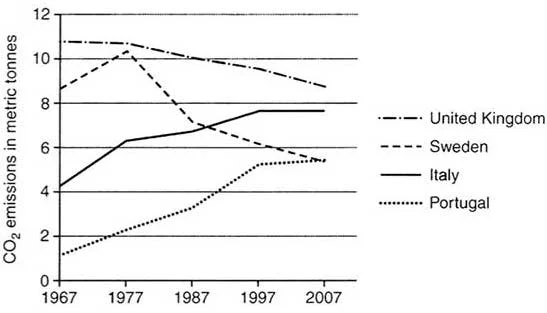
    The graph illustrates the average carbon dioxide (CO2) emissions per person in the United Kingdom, Sweden, Italy, and Portugal from 1967 to 2007. Notable trends emerge when examining the data.

    In 1967, the United Kingdom and Sweden had similar CO2 emissions per person, both hovering around 10 metric tons. Over the years, the UK experienced a gradual increase, peaking at approximately 11.5 metric tons in the mid-1970s, while Sweden’s emissions remained relatively stable. Italy and Portugal started with lower emissions in 1967, around 5 and 3 metric tons respectively. Italy’s emissions increased steadily, surpassing 8 metric tons by 2007, while Portugal’s rise was less pronounced, reaching around 6 metric tons.

    By 2007, Sweden maintained the lowest average emissions at approximately 6 metric tons per person. The United Kingdom experienced a decline from its peak, settling at around 9 metric tons. Italy’s emissions continued to rise, while Portugal exhibited a modest increase.

    In summary, the graph reveals diverse trajectories in carbon emissions among these nations over the four decades, reflecting variations in industrialization and environmental policies.
  • Some people claim that not enough of the waste from homes is recycled. They say that the only way to increase recycling is for governments to make it a legal requirement. IELTS Cambridge 11-Test 2(Task 2)

    Question Some people claim that not enough of the waste from homes is recycled. They say that the only way to increase recycling is for governments to make it a legal requirement.
    To what extent do you think laws are needed to make people recycle more of their waste?
    Write atleast 250 words

    The issue of inadequate household waste recycling has spurred debates, with some advocating mandated recycling laws. Proponents argue that legal obligations are essential to motivate individuals, creating a framework for widespread participation. Without such laws, there’s a risk that a significant portion of the population may prioritize convenience over recycling.

    Opponents, however, suggest that fostering environmental responsibility through education is a more effective approach. They argue that laws may lead to resentment, emphasizing the importance of encouraging voluntary participation through education campaigns. This approach aims to instill a sense of responsibility, driving individuals to choose recycling willingly.

    On the other hand, opponents of mandatory recycling laws argue that fostering a culture of environmental responsibility through education and awareness may be a more effective approach. They contend that laws might lead to resentment or non-compliance and instead emphasize the importance of encouraging voluntary participation. They believe that education campaigns can instill a sense of responsibility and environmental stewardship, ultimately driving individuals to adopt recycling as a personal choice.

    In conclusion, viewing the implementation of recycling laws as a powerful tool to boost recycling rates is subjective. Striking a balance between legal requirements and educational initiatives may be the key to fostering a culture where recycling is not just a mandated obligation but a collective responsibility. Ultimately, the success of recycling efforts depends on a multifaceted approach that combines legislation, education, and community engagement to bring about lasting change in waste management practices.

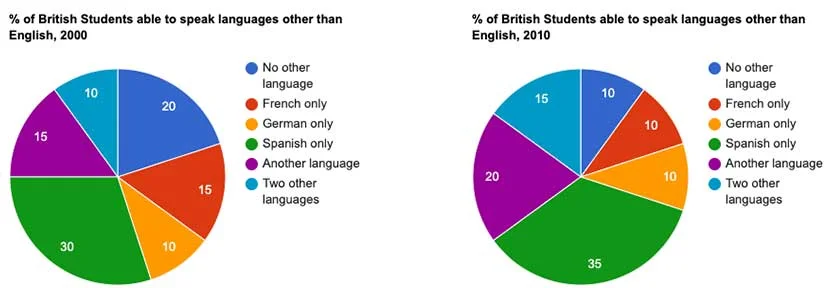
  • The charts below show the proportions of British students at one university in England who were able to speak other languages in addition to English, in 2000 and 2010. IELTS Cambridge 11-Test 2 (Task 1)

    Question – The charts below show the proportions of British students at one university in England who were able to speak other languages in addition to English, in 2000 and 2010.
    Summarise the information by selecting and reporting the main features, and make comparisons where relevant. Write at least 150 words.

    In 2000 and 2010, language proficiency among British students at an English university witnessed significant changes, as depicted in the charts. The data outlines proportions of students fluent in languages beyond English, revealing notable trends and comparisons.

    In 2000, around 40% of students spoke languages other than English, a figure that surged to nearly 65% by 2010. This increase signals a growing emphasis on language learning or a diversification of the student body, showcasing the evolving nature of linguistic skills.

    Comparing specific languages spoken, a shift occurred from predominant European languages in 2000, like French (15%) and German (10%), to a more diverse spectrum in 2010, including Mandarin, Spanish, and Arabic. This shift implies a broader global perspective in language acquisition among students.

    In conclusion, the charts illustrate a substantial increase in language proficiency among British university students between 2000 and 2010, reflecting a diversification in languages spoken. These trends signify a more globally oriented student body, equipped with a diverse set of linguistic skills.

  • Governments should spend money on railways rather than roads. IELTS Cambridge 11-Test 1 (Task 2)

    Question – Governments should spend money on railways rather than roads. To what extent do you agree or disagree with this statement?
    Give reasons for your answer and include any relevant examples from your own knowledge or experience. Write at least 250 words.

    The allocation of government funds for infrastructure development is a crucial aspect of shaping a nation’s transportation network. The statement suggesting a preference for investing in railways over roads raises questions about the optimal use of public resources. In my opinion, while both modes of transportation are essential, the argument in favor of prioritizing railways has its merits.

    Firstly, railways offer a more sustainable and eco-friendly transportation option compared to roads. Trains are generally more energy-efficient and produce fewer emissions per ton-mile than individual vehicles. Investing in railways aligns with global efforts to reduce carbon footprints and combat climate change, making it a more environmentally responsible choice.

    Moreover, railways often prove to be more cost-effective in the long run. Though the initial investment for constructing rail infrastructure may be higher, maintenance costs and operational expenses are typically lower than those associated with maintaining extensive road networks. This cost efficiency is particularly beneficial for governments facing budget constraints, allowing for the allocation of resources to other essential sectors. An example of successful railway investment is evident in countries like Japan and many European nations. Their advanced and extensive rail networks have not only facilitated efficient transportation but also reduced traffic congestion and enhanced overall connectivity.

    However, it is essential to acknowledge that a balanced approach is crucial. Some regions may require road development to address specific transportation needs, such as connecting remote areas or facilitating last-mile connectivity. In rapidly developing urban centers, investing in both railways and roads can provide comprehensive solutions to meet the diverse and evolving transportation demands of the population.

    In conclusion, while both railways and roads play vital roles in a nation’s transportation network, prioritizing investment in railways offers environmental sustainability and long-term cost efficiency. A thoughtful and balanced approach, considering the unique needs of each region, should guide government decisions on infrastructure development to ensure optimal utilization of public resources.

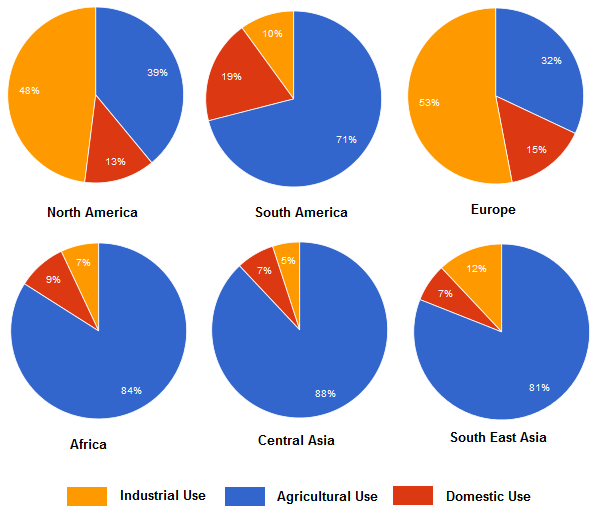
  • The charts below show the percentage of water used for different purposes in six areas of the world. IELTS Cambridge 11 – Test 1 (Task 1)

    Question – The charts below show the percentage of water used for different purposes in six areas of the world.
    Summarise the information by selecting and reporting the main features, and make comparisons where relevant. Write at least 150 words.

    The provided charts offer insights into the percentage of water usage across six distinct regions worldwide. A comprehensive analysis of the data reveals interesting patterns and disparities in water consumption for various purposes.

    Firstly, the data indicates that the highest percentage of water usage is attributed to agriculture across all regions. Areas such as South Asia and Sub-Saharan Africa allocate a substantial portion of their water resources to farming, representing a common trend in regions heavily reliant on agriculture for sustenance and economic stability.

    Secondly, domestic use accounts for a considerable portion of water usage, with variations among regions. Developed regions like North America and Europe exhibit a higher percentage of water allocation for domestic purposes compared to less developed areas such as Sub-Saharan Africa, where domestic water usage is relatively lower. In contrast, industrial water usage shows significant variability among the regions. Developed regions, including North America and Europe, allocate a substantial proportion of water resources to industrial activities, highlighting the influence of industrialization on water consumption patterns.

    Overall, while agriculture consistently claims the largest share of water usage globally, the distribution of water resources for domestic and industrial purposes varies significantly among the six regions. This data underscores the importance of region-specific water management strategies to address diverse needs and challenges associated with water consumption across the world.

  • Some people believe that allowing children to make their own choices on everyday matters. IELTS Cambridge 12 – Test 4 (Task 2)

    Question – Some people believe that allowing children to make their own choices on everyday matters (such as food, clothes and entertainment) is likely to result in a society of individuals who only think about their own wishes. Other people believe that it is important for children to make decisions about matters that affect them.
    Discuss both these views and give your own opinion. Write atleast 250 words.

    The ongoing debate surrounding whether children should have the autonomy to make decisions on daily matters has raised questions about its potential impact on society. While some argue that granting children this freedom may lead to a self-centered society, others emphasize the importance of nurturing decision-making skills to foster autonomy and responsibility.

    Advocates for children making their own choices believe that this autonomy contributes to the development of independent thinkers. Allowing children to decide on aspects like food, clothes, and entertainment empowers them to explore preferences and interests, cultivating a strong sense of self and the ability to make informed decisions. This approach is seen as crucial for shaping responsible individuals capable of navigating life’s complexities with confidence.

    However, opponents express concerns about the potential for a self-centered society if decision-making is left unchecked in early stages. They argue that a lack of guidance may result in children growing up with limited understanding of the consequences their choices can have on themselves and others.

    In conclusion, finding the right balance between autonomy and responsibility is key when allowing children to make choices on everyday matters. Empowering them to make decisions can foster independence and critical thinking skills, but this should be accompanied by guidance to ensure the development of a sense of responsibility and an awareness of the impact of their choices on the broader society.

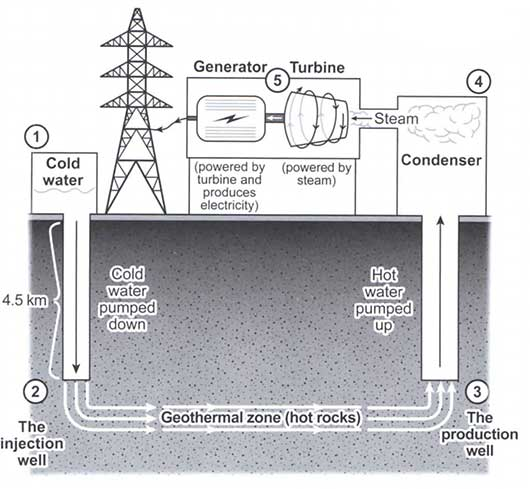
  • The diagram below shows how geothermal energy is used to produce electricity. IELTS Cambridge 12- Test 4 (Task 1)

    Question – The diagram below shows how geothermal energy is used to produce electricity.
    Summarise the information by selecting and reporting the main features, and make comparisons where relevant. Write atleast 150 words.

    The diagram details the process of tapping geothermal energy to generate electricity, offering a sustainable and renewable power source. Initially, the illustration depicts a reservoir of hot water and steam deep within the Earth, serving as the primary geothermal energy source. Engineers strategically drill pipes to extract high-pressure steam, directing it to turbines. These turbines convert the steam’s kinetic energy into mechanical energy, initiating electricity generation.

    The subsequent phase involves generators transforming mechanical energy into electrical energy. Power lines then distribute the generated electricity, providing a continuous and reliable power supply for households, industries, and consumers.

    Geothermal energy stands out for its low environmental impact, producing minimal greenhouse gas emissions. Its constant availability ensures a stable power output, distinguishing it from some intermittent renewable sources.

    In conclusion, the diagram showcases key stages of geothermal energy utilization in electricity production, emphasizing efficiency and sustainability. With minimal environmental impact and dependable output, geothermal energy emerges as a promising contributor to the global shift towards cleaner and more sustainable energy solutions.

  • In a number of countries, some people think it is necessary to spend large sums of money on constructing new railway lines for very fast trains between cities. IELTS Cambridge 12-Test 3 (Task 2)

    Question – In a number of countries, some people think it is necessary to spend large sums of money on constructing new railway lines for very fast trains between cities. Others believe the money should be spent on improving existing public transport.
    Discuss both these views and give your own opinion. Write at least 250 words.

    The allocation of funds for transportation infrastructure has ignited a global debate, with proponents advocating for substantial investments in new high-speed railway lines between cities, while others argue for improving existing public transport. This blog explores the merits of both perspectives, delving into the optimal use of funds to enhance transportation networks.

    Supporters of high-speed railway lines contend that these projects can revolutionize inter-city travel, reducing commute times and enhancing economic connectivity. Fast trains, seen as symbols of modernity, have the potential to attract business investments and tourism, stimulating economic growth and regional development.

    Conversely, advocates for enhancing existing public transport systems highlight the practicality of such investments. They argue that allocating funds to improve buses, trams, and metro systems addresses the immediate needs of the majority. Enhancing accessibility and reliability of current public transport provides a more inclusive and sustainable solution, benefiting a larger population on a daily basis.

    The crux of the dilemma lies in finding a balance between the two approaches. While high-speed railway projects promise to transform long-distance travel, investing in existing public transport systems ensures daily convenience for a broader demographic. Governments must carefully weigh the potential economic benefits of futuristic railway lines against the immediate impact of accessible and efficient public transport.

    In conclusion, the ongoing debate between investing in high-speed rail or improving existing public transport underscores the complexity of transportation planning. Striking a balance between forward-thinking projects and practical solutions is vital to meet the diverse needs of the population, ensuring efficient and sustainable movement within and between cities. A thoughtful and comprehensive approach to transportation investment is ultimately crucial for fostering economic development and enhancing citizens’ quality of life.

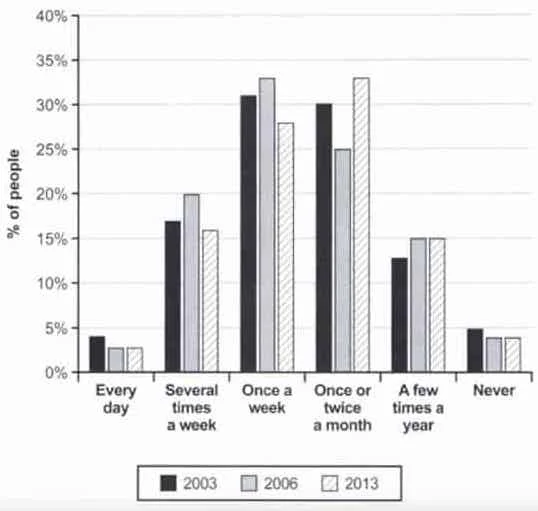
  • The chart below shows how frequently people in the USA ate in fast food restaurants between 2003 and 2013. IELTS Cambridge 12-Test 3 (Task 1)

    Question – The chart below shows how frequently people in the USA ate in fast food restaurants between 2003 and 2013.
    Summarise the information by selecting and reporting the main features, and make comparisons where relevant. Write at least 150 words.

    The provided chart offers a glimpse into the changing eating habits of people in the USA in terms of their frequency of visits to fast food restaurants from 2003 to 2013. Over the decade, a discernible trend emerges, reflecting shifts in dietary preferences and lifestyle choices.

    In 2003, the majority of individuals frequented fast food establishments once or twice a week, with approximately 40% falling into this category. Meanwhile, a relatively smaller proportion, around 20%, indicated a preference for less frequent visits, limiting their fast food consumption to once or twice a month. Notably, a significant segment, nearly 30%, claimed to avoid fast food entirely.

    As the years progressed, a noteworthy transformation unfolded. By 2013, the percentage of those opting for weekly fast food visits surged to approximately 50%, showcasing a substantial increase. Conversely, the proportion of individuals who abstained from fast food entirely dropped to around 20%, indicating a diminishing trend in avoiding fast food establishments.

    In summary, the chart illustrates a notable shift in the frequency of fast food consumption in the USA from 2003 to 2013. While the majority of individuals leaned towards weekly indulgence, there was a simultaneous decline in those avoiding fast food altogether. This data provides insights into the evolving eating patterns of the American population over the specified time frame.

  • At the present time, the population of some countries includes a relatively large number of young adults, compared with the number of older people. IELTS Cambridge 12 – Test 2 (Task 2)

    Question – At the present time, the population of some countries includes a relatively large number of young adults, compared with the number of older people. Do the advantages of this situation outweigh the disadvantages?
    Give reasons for your answer and include any relevant examples from your own knowledge or experience. Write at least 250 words.

    In contemporary society, some countries grapple with a demographic imbalance, where a substantial number of young adults outnumber older individuals. This situation prompts questions about the overall implications for these nations. This essay aims to analyze whether the advantages of this situation outweigh the disadvantages.

    A higher proportion of young adults offers a significant advantage by fostering a dynamic and energetic workforce. A youthful population often translates to a more innovative and adaptable labor force, capable of driving economic growth through creativity and technological advancements. This demographic structure can lead to increased productivity and competitiveness in the global market, fostering a robust and vibrant economy.

    However, the demographic imbalance also presents several challenges. One notable disadvantage involves the strain on social welfare systems and healthcare infrastructure. A larger population of older individuals typically demands more extensive healthcare services and pensions, increasing financial pressure on the government. Addressing the needs of an aging population becomes a critical concern, requiring careful planning and resource allocation to sustain social welfare programs.

    Another disadvantage stems from the potential for societal imbalances. A skewed age distribution may cause a shortage of experienced professionals and leaders, impacting the overall stability and governance of a nation. Furthermore, a high concentration of young adults might lead to increased competition in the job market, potentially causing unemployment issues and social unrest.

    In conclusion, although a demographic structure with a relatively large number of young adults brings undeniable advantages, such as a dynamic workforce and potential economic growth, the disadvantages cannot be ignored. The strain on healthcare systems, social welfare, and the potential for societal imbalances necessitate careful consideration and strategic planning by governments to ensure a harmonious and sustainable development path. Ultimately, finding a balance between the advantages and disadvantages of this demographic situation is crucial for the long-term prosperity and well-being of these countries.