Month: February 2024

  • The Plans Below Show the Layout of a University Sports Centre Now. IELTS Cambridge 13 – Test 4 (Task 1)

    Question – The plans below show the layout of a university’s sports centre now, and how it will look after redevelopment.
    Summarise the information by selecting and reporting the main features, and make comparisons where relevant. Write atleast
    150 words.

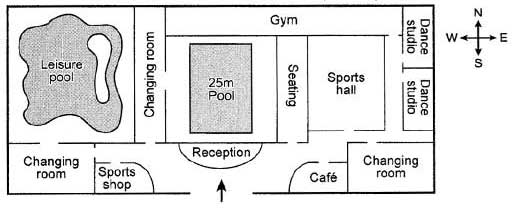
    The provided plans illustrate the current layout of a university’s sports centre and the anticipated changes after redevelopment.

    In the existing configuration, the sports facility comprises outdoor courts on both the west and east sides, with a central 25-meter pool and associated amenities like reception, changing areas, and seating near the pool. The west side also features a gym. After redevelopment, significant alterations are planned to enhance the overall sports facility.

    On the west side, the outdoor court will be replaced by a leisure swimming pool, now directly linked to a newly proposed dressing room in the extreme southwest corner. The lobby area is set to undergo expansion, and a sports store will be introduced near the changing facilities. Importantly, the central 25-meter pool and its adjacent areas will remain unchanged, ensuring continuity in the core features of the sports centre.

    Turning to the east side, the existing outdoor courts will be eliminated to accommodate new facilities. A second changing room will be constructed in the extreme southeast, connecting to a new café situated next to the sports hall. Furthermore, two dance studios are planned to be built side by side, with one adjoining the recently expanded gym. These redevelopment plans aim to offer an enhanced and diversified sports centre experience, introducing new amenities while preserving the central pool and gym areas.

  • Some People Say History Is One of the Most Important School Subjects. IELTS Cambridge 13 – Test 3 (Task 2)

    Question – Some people say History is one of the most important school subjects. Other people think that, in today’s world, subjects like Science and Technology are more important than History.
    Discuss both these views and give your own opinion. Write atleast 250 words.

    Ongoing discussions surround the prioritization of history courses over science and technology subjects in school curricula. Proponents of history argue that it fosters patriotism by emphasizing ancestral sacrifices. However, I contend that science and technology courses should take precedence due to their potential to yield higher future earnings.

    Although history courses may nurture a sense of love for one’s country through the recognition of past sacrifices, they fall short in equipping students with practical skills essential for contributing meaningfully to the nation. In my perspective, patriotism lacks utility without the hard skills that can drive substantial contributions.

    In contrast, students dedicating effort to science and technology courses enhance their prospects for lucrative employment. These courses cultivate innovation, empowering students to make valuable contributions to future employers. This proficiency often translates into higher salaries, as exemplified by entry-level software engineers at Facebook, who earn an impressive $166,000 annually. I align with the argument that the primary motivation for pursuing education is the prospect of securing well-paid employment post-graduation.

    In summary, while history courses may instill students with a sense of patriotism, I assert that subjects related to science and technology hold greater significance. They offer a pathway to high-paying employment opportunities, ensuring that education serves not only as a means of fostering national pride but also as a strategic investment in future career success. The dynamic landscape of science and technology positions individuals to actively contribute to society and secure rewarding professional pathways, making them a more pragmatic choice in contemporary educational settings.

  • The Bar Chart Below Shows the Top Ten Countries for the Production and Consumption of Electricity. IELTS Cambridge 13 – Test 3 (Task 1)

    Question – The bar chart below shows the top ten countries for the production and consumption of electricity in 2014. Summarise the information by selecting and reporting the main features, and make comparisons where relevant. Write atleast 150 words.
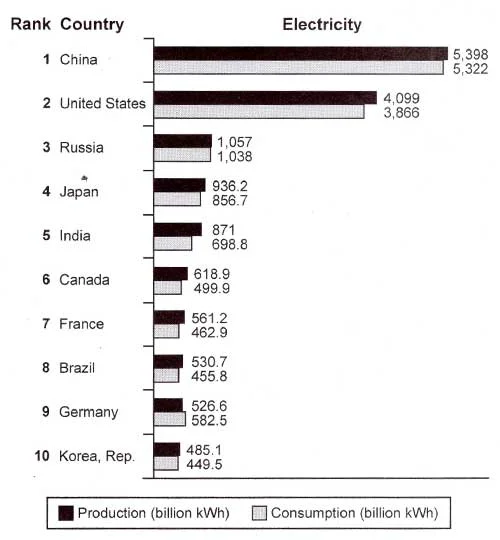
    The bar graph outlines the electricity production and consumption figures for the top ten countries in 2014, highlighting China and the United States as the primary leaders in both categories. With all countries except Germany showcasing a surplus in generation over consumption, China emerged at the forefront, producing and consuming a staggering 5,398 and 5,322 billion kWh of electricity, respectively. Following closely, the United States ranked second in both production and consumption, registering 4,099 and 3,866 billion kWh, respectively.

    Among the remaining eight nations, Russia stood out as the sole country with both production and consumption exceeding 1,000 billion kWh, reaching 1,057 and 1,038 billion kWh, respectively. Conversely, the Republic of Korea emerged as the smallest electricity-producing and consuming country, with figures of 485.1 and 449.5 billion kWh, respectively.

    In the case of Japan, India, Canada, France, Brazil, and Germany, their electricity outputs ranged from 526 to 937 billion kWh, while their consumption figures varied from 455 to 857 billion kWh.

    A noteworthy observation was that Germany was the sole country in this group to consume more electricity than it generated, recording figures of 582.5 and 526.6 billion kWh, respectively.

  • Some People Believe That Nowadays We Have Too Many Choices.IELTS Cambridge 13-Test 2 (Task 2)

    Question – Some people believe that nowadays we have too many choices.
    To what extent do you agree or disagree with this statement? Write atleast 250 words.

    The assertion that individuals today grapple with an overwhelming array of choices holds true, and I wholeheartedly concur with this perspective, particularly due to the constant influx of information facilitated by online retailers and search engines.

    The digital shopping landscape has ushered in an era where consumers are inundated with an extensive array of products. Unlike brick-and-mortar stores, online platforms like Amazon and eBay face no physical space constraints. Consequently, when a consumer initiates a search on these platforms, they are met with not just a handful, but often hundreds or even thousands of related products. To make informed choices, consumers must invest considerable time delving into product descriptions and reviews. The sheer volume of options, however, can lead to decision fatigue, leaving individuals paralyzed by the overwhelming selection.

    Furthermore, search engines contribute to the phenomenon of information overload. The surplus of search results may leave individuals feeling inundated, ultimately hindering their ability to acquire meaningful knowledge. Consider someone seeking guidance on achieving a band 7 on the IELTS writing test through a YouTube search. Instantaneously, the platform’s algorithm bombards them with numerous video recommendations. The perceived need to watch each video to glean valuable insights may result in confusion as disparate advice from various creators leaves them uncertain about the key strategies for scoring high on the writing test.

    In summary, the preponderance of choices confronting individuals today stems from the inundation of suggestions propagated by online retailers and search engines. The expansive offerings and information available have created a landscape where decision-making is not merely a process but a potential source of fatigue and confusion.

  • The Chart Below Shows the Percentage of Households in Owned and Rented. IELTS Cambridge 13 – Test 2 (Task 1)

    Question – The chart below shows the percentage of households in owned and rented accommodation in England and Wales between 1918 and 2011.
    Summarise the information by selecting and reporting the main features, and make comparisons where relevant. Write atleast 150 words.

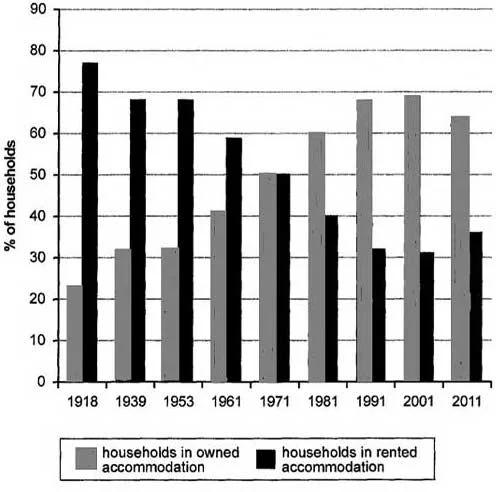
    From 1918 to 2011, the bar graph delineates the shifts in the proportions of households owning and renting their residences in England and Wales.

    Over the 93-year span, there was a discernible decline in the percentage of households opting to rent, while an upward trend was observed in those choosing ownership. Pre-1971, the prevalence of renting surpassed ownership, but post-1971, this pattern reversed.

    In 1918, approximately 75 percent of households resided in rented accommodations. This figure experienced a significant plunge, reaching just over 30 percent in 2001, before a slight rebound to about 35 percent in 2011.

    In contrast, only about a quarter of households were owner-occupied in 1918. This proportion began a steady ascent, aligning with the percentage of renter-occupied households in 1971, both at 50 percent. Ownership continued its upward trajectory, peaking in 2001 at just under 70 percent. Subsequently, there was a marginal decline to around 65 percent in 2011.

  • Living in a country where you have to speak a foreign language can cause serious problems. IELTS Cambridge 13 – Test 1 (Task 2)

    Question – Living in a country where you have to speak a foreign language can cause serious social problems, as well as practical problems.
    To what extent do you agree or disagree with this statement? Write atleast 250 words.

    In today’s globalized world, an increasing number of individuals find themselves residing in countries where they must converse in a foreign language. Some argue that this circumstance can give rise to severe social and practical issues. I concur wholeheartedly with this perspective, and this essay will expound upon the reasons for my agreement, substantiated by illustrative examples.

    Primarily, language stands as a pivotal component of communication, and inhabiting a country where one is not proficient in the local language can engender notable practical challenges. Notably, effective communication with locals, especially in critical areas like healthcare or legal affairs, becomes a daunting task. This predicament may precipitate misunderstandings, misinterpretations, and potentially grave consequences. Furthermore, accessing essential services, such as public transportation, becomes an arduous feat if the language barrier persists. For instance, the inability to comprehend signs or understand announcements may pose difficulties in navigating the intricacies of the public transport system.

    Secondarily, social predicaments may manifest when individuals encounter difficulty communicating due to language barriers. In such instances, a sense of isolation and exclusion from the community may permeate. This, in turn, can precipitate a dearth of social interaction and contribute to mental health issues like depression and anxiety. For instance, immigrants struggling to articulate themselves in the language of their new country may find challenges in forging friendships, securing employment, and fostering a sense of belonging within their newfound community.

    In conclusion, I firmly align with the assertion that residing in a country necessitating the use of a foreign language can give rise to profound social and practical predicaments. Consequently, it becomes imperative for governments to furnish immigrants with ample language support, while individuals must exert effort in acquiring proficiency in the local language to facilitate effective communication and integration into their new community.

  • The two maps below show road access to a city hospital in 2007 and in 2010. IELTS Cambridge 13 – test 1 (Task 1)

    Question – The two maps below show road access to a city hospital in 2007 and in 2010.
    Summarise the information by selecting and reporting the main features, and make comparisons where relevant. Write atleast 150 words.

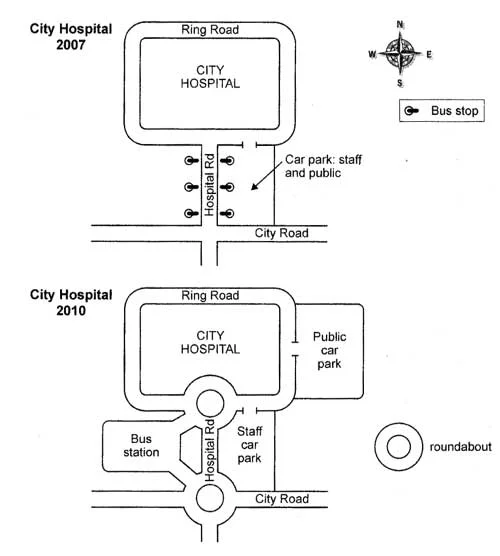
    The presented maps illustrate the evolution of road access to a city hospital in the years 2007 and 2010.

    In 2007, the primary access point was a single road extending from the northwest, with a supplementary road connecting from the south. By 2010, significant changes occurred as a new road was introduced from the west, expanding access options. Moreover, the southern road underwent extension and now interconnected with the newly constructed western road, creating a more intricate road network.

    Comparing the two periods, a clear enhancement in road infrastructure is evident. The addition of the western road in 2010 diversified access routes, potentially alleviating congestion. The extension of the southern road further contributed to improved connectivity.

    Overall, the transformation from a simpler road layout in 2007 to a more intricate and well-connected network in 2010 signifies a positive development in the accessibility of the city hospital.

  • Some people believe that it is best to accept a bad situation, such as an unsatisfactory job or shortage of money. Others argue that it is better to try and improve such situations. IELTS Cambridge 14 – Test 1 (Task 2)

    Question – Some people believe that it is best to accept a bad situation, such as an unsatisfactory job or shortage of money. Others argue that it is better to try and improve such situations.
    Discuss both these views and give your own opinion. Give reasons for your answer and include any relevant examples from your own knowledge or experience. Write at least 250 words.

    Divergent views exist regarding the necessity of either attempting to find solutions or accepting unfavourable circumstances as they arise. This essay will go through both sides of the debate and explain why I think the latter is more compelling.

    Accepting challenging circumstances in life is the best course of action, according to numerous people, for two main reasons. Firstly, people should adopt a more philosophical perspective and accept unfortunate circumstances for what they are, as they are frequently unavoidable. Differing opinions, habits, or backgrounds between the spouses in a marriage, for instance, inevitably lead to conflicts. To avoid endangering their relationship, a husband must learn to accept his wife for who she is rather than for what he wants her to be. Furthermore, attempting to handle difficult circumstances and get out of bad ones constantly can cause a great deal of stress and anxiety. People can keep a cheerful attitude and live happier lives if they can accept bad things as inevitable events in life.

    Despite this, I contend that we ought to be proactive and look for solutions to any problems we encounter. The primary benefit of taking proactive action is that it maintains our state of ongoing learning and development, which will offer us priceless chances to raise our consciousness and promote personal development. Our chances of success in both our personal and professional lives are increased as a result. Additionally, people can transform some of their destructive emotions into more constructive ones by concentrating on making bad situations better. For instance, unpleasant feelings like fear or rage can be transformed into a sense of empowerment when we solve our problems, no matter how challenging they may be. Long-term effects on mental health would result from people’s desire to just ignore their unfavourable circumstances and let the negative mental states fester.

    In summary, even though there are advantages to embracing unfavourable circumstances in life, I continue to believe that it would be preferable to concentrate on making them better for the reasons outlined above.

  • The charts below show the average percentages in typical meals of three types of nutrients, all of which may be unhealthy if eaten too much. IELTS Cambridge 14 – Test 1 (Task 1)

    Question – The charts below show the average percentages in typical meals of three types of nutrients, all of which may be unhealthy if eaten too much.
    Summarise the information by selecting and reporting the main features and make comparisons where relevant. Write atleast 150 words.

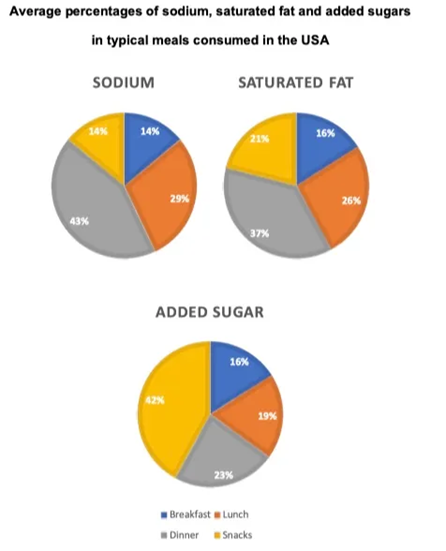
    Embark on a nutritional exploration as we delve into the intricacies of four standard meals through revealing pie charts. These charts meticulously outline the average amounts of three vital nutrient types—sodium, saturated fats, and added sugars. It’s crucial to note that an overindulgence in these nutrients can potentially lead to detrimental effects on one’s health.

    Considering all factors, it becomes apparent that dinner, among the four meals examined, boasts the highest levels of both saturated fat and sodium. In stark contrast, breakfast emerges as the frontrunner with the lowest amounts of these nutrients. However, breaking the mold, the snack takes center stage by showcasing the highest concentration of added sugar.

    A deeper dive into the charts uncovers that both lunch and dinner claim the top spots for the highest percentages of saturated fat, standing at 37% and 26% respectively. Similarly, in the sodium arena, dinner leads the pack with 43%, closely followed by lunch at 29%. Interestingly, when it comes to added sugars, lunch and dinner play catch-up with only 23% and 19% respectively.

    Turning our attention to the composition aspect, breakfast and the snack share a common ground, each containing 14% sodium. However, the snack slightly edges out breakfast in saturated fats, registering a marginally higher 21% compared to the latter’s 16%. A notable distinction surfaces in the realm of added sugars, where breakfast commands a substantial 42%, in stark contrast to the snack’s more modest 16%.

    In navigating these nutrient percentages, it becomes abundantly clear that our meal choices wield significant influence over our nutritional intake. Stay tuned for further insights into crafting a balanced and health-conscious diet!